Can You Walk Between Terminals At Schiphol Airport?
Yes, you can walk between all of Schiphol's gates and piers. The airport is one connected building, and this guide explains the walks, passport control and timing.
Can You Walk Between Terminals At Schiphol Airport?
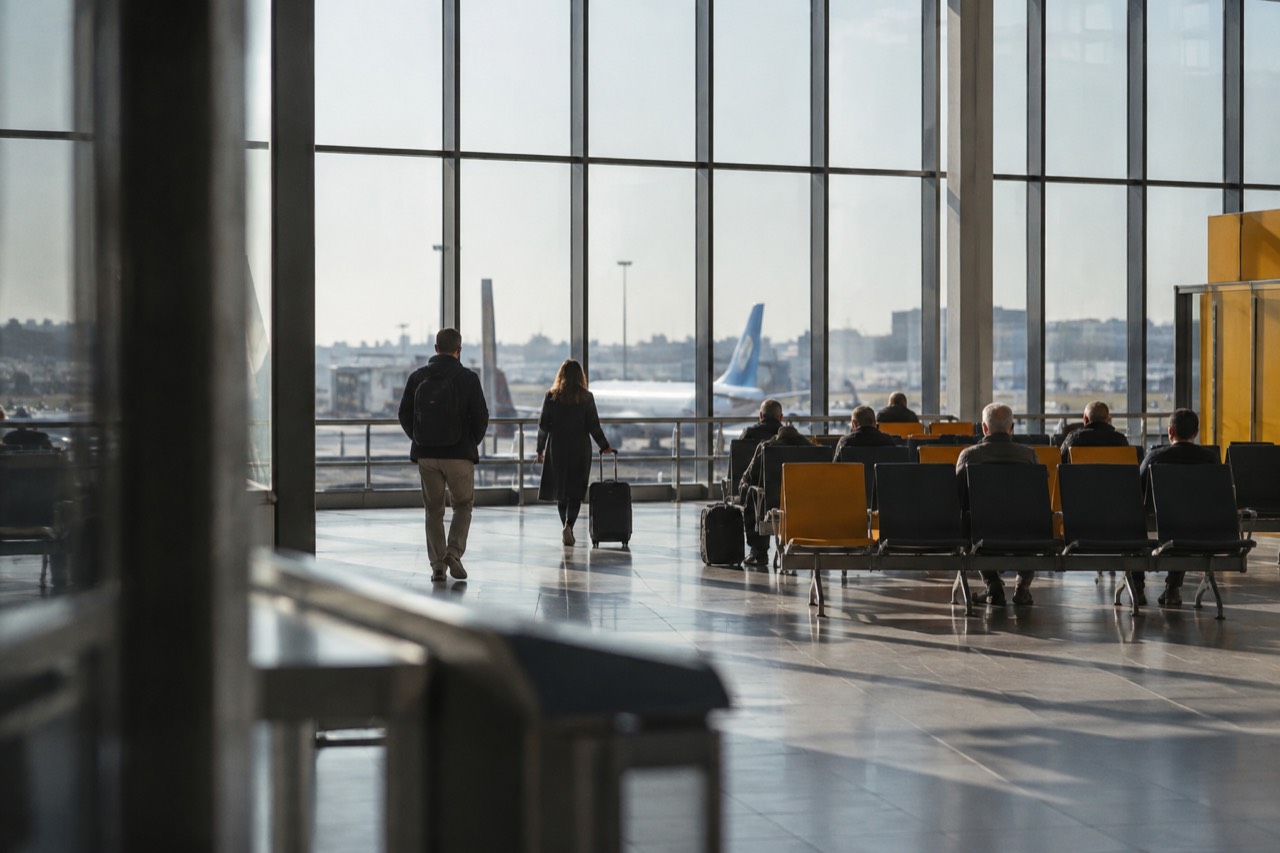
Yes, you can walk between all of them, because Schiphol does not really have separate terminals in the way most hub airports do. The entire airport operates as a single, connected building: one row of departure halls feeds into one security area, and the gates sit in piers that radiate from a shared central hall. Every pier is reachable on foot from every other pier, and walking is the standard, signposted way to get between gates.
That single fact causes a lot of confusion, because people arrive expecting the terminal one, terminal two, terminal three layout they know from London, New York or Madrid. Schiphol has nothing like that. There is one integrated terminal complex, and the word you will actually see on the signs is not "terminal" but a pier letter: gates are numbered by the pier they sit on, and the piers all connect back to the same central spine. If your boarding pass says gate D something and your connection arrives at gate G something, you are not transferring between buildings. You are making a walk inside one very large building.
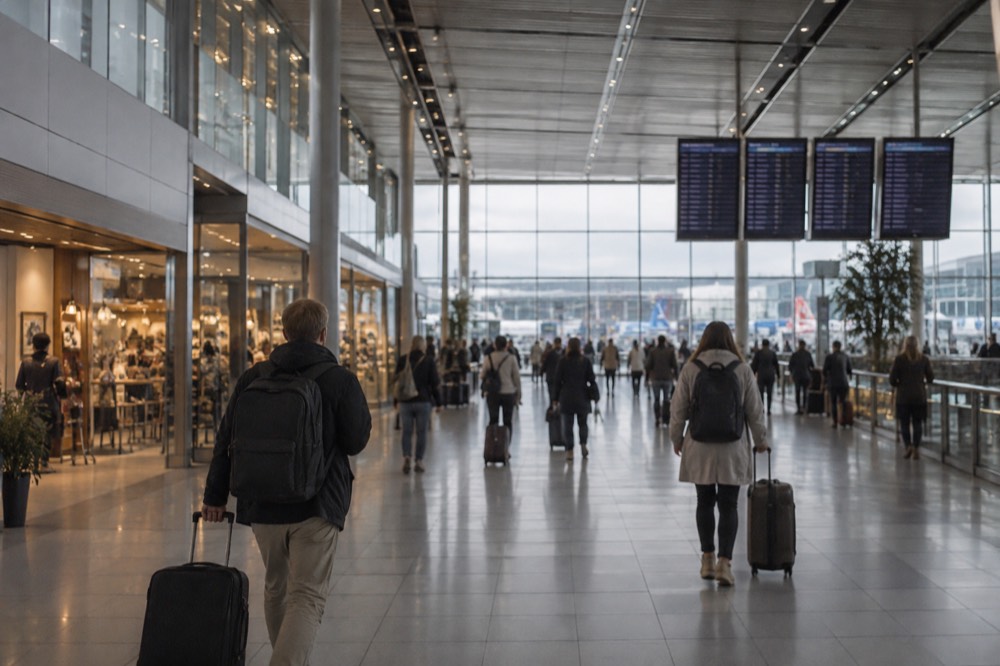
The airport is built as a single-level loop for passengers, which is why the walking is straightforward even when it is long. You follow the yellow signs to your gate number, and the signs count the walking time down in minutes as you approach. There are travelators on the longer stretches, and the route between piers is fully indoors, so weather is never a factor. This design is also why Schiphol markets itself as an efficient transfer airport: one building means no shuttle buses between terminals, no re-checking your bag mid-connection and no risk of a missed bus between buildings.
There are a few practical exceptions worth knowing about before you set off. Some low-cost and holiday carriers operate from a separate corner of the complex with their own modest check-in area, and private and general aviation sit apart from the main passenger building. For scheduled passenger flights, though, the answer holds: everything is one walkable whole, and the airport's own transfer information pages treat connections as walks with a security or passport step in between, not as transfers between separate terminals.
If your connection at Schiphol is a short one, the walking question is really a timing question, and the timing depends on whether your route crosses a border checkpoint. The rest of this article works through both parts: how the walks actually feel, and where passport control sits in the layout.
How Long Does the Walk Between Gates Take?
Walking between gates at Schiphol is measured in minutes rather than in terminal changes, and the airport's yellow signs quote the remaining walking time to each gate. Short hops between neighbouring piers take only a few minutes, while a walk from the far end of one pier to the far end of another can feel like a proper hike. Because everything is one building, the walk is flat, indoors and travelator-assisted the whole way.
The honest answer is that the distance varies a lot, and Schiphol is a big airport. The piers fan out from the central hall, and a gate at the tip of one pier can be a substantial walk from a gate at the tip of the pier on the opposite side. The airport knows this, which is why the signage does not just point, it estimates. When you follow the yellow gate signs, you will see the minutes tick down as you get closer, which is genuinely useful when you are deciding whether you have time for a coffee.

A few things make the walks longer than the raw distance suggests. Security lines at transfer points can add waiting time mid-walk, shops and restaurants are deliberately placed along the route to slow you down commercially, and during peak waves the concourses are crowded. If you are connecting from a long-haul arrival to a European departure, you will also be walking off a jet bridge, through the transfer corridor and possibly through passport control before the gate-to-gate walk even starts. Build in buffer for the checkpoints, not just the metres.
For anyone who prefers not to walk the longer stretches, there are alternatives. Schiphol runs electric passenger transport carts for people with reduced mobility or tight connections, and these can be arranged through your airline or at the transfer desks. There is no airside train or people-mover between distant piers the way some mega-airports have; the travelators are the main mechanical help. In practice, most travellers simply walk, and comfortable shoes matter more at Schiphol than at almost any other European hub precisely because everyone is a pedestrian there.
If the walking time worries you because your connection is tight, read the section on tight connections further down, and pair it with our piece on whether 45 minutes is enough for a Schiphol connection, which breaks down the minimum transfer windows the airport itself recommends.
Do You Pass Passport Control When Walking Between Gates?
Sometimes, and this is the real divider at Schiphol. The airport's single building is split internally into a Schengen zone and a non-Schengen zone, and walking between gates in different zones means passing through passport control in the middle of your walk. Walking between two gates in the same zone means no passport check at all, just the ordinary walk.
This is the part that catches people out. The Netherlands is inside the Schengen area, so flights to and from other Schengen countries, most of continental Europe, depart from Schengen gates with no exit or entry stamping. Flights to and from the United Kingdom, the United States, Ireland and other non-Schengen countries use a separate set of gates behind border control. If you fly in from New York and connect to a flight to Rome, your walk between gates will include an entry passport check. If you fly in from Berlin and connect to Lisbon, it will not.
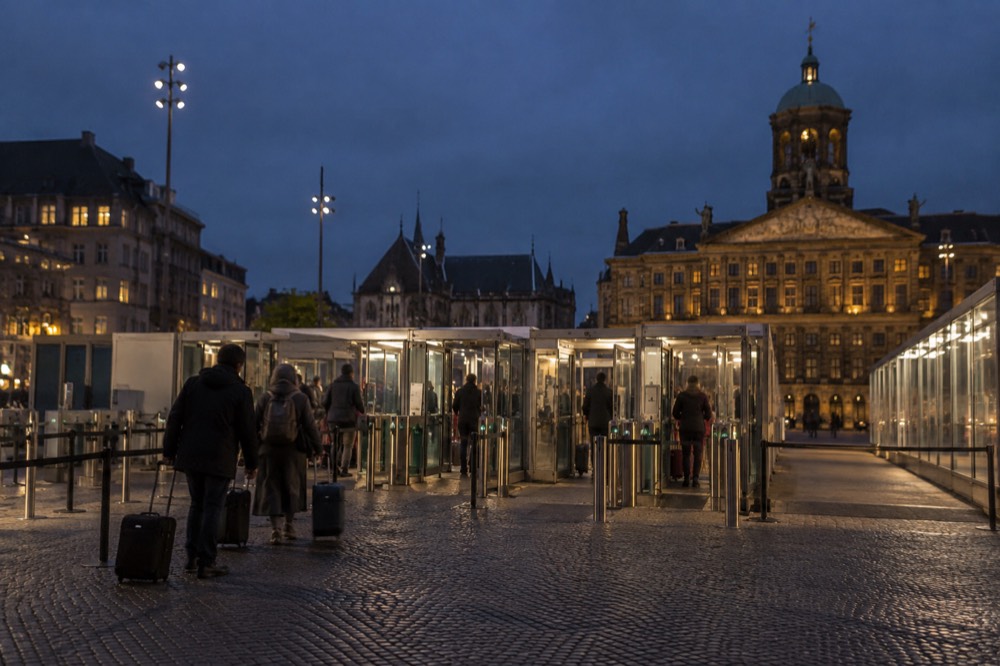
The direction matters too. Arriving from outside Schengen and connecting to a Schengen flight means clearing entry passport control and, depending on the setup of your arrival pier, possibly a transfer security check as well. Arriving from inside Schengen and connecting to a flight to London means an exit check. The signs are explicit, and the airport routes you through dedicated transfer corridors rather than sending you back out to the main departures hall, but the queues at those checkpoints are real queues, and they are the reason a walk that looks short on the map can take a long time in person.
 airport transfer corridor" width="1000" height="667" loading="lazy">
A few practical points make this easier. Have your passport, boarding pass and any required documents out before you join the queue. Automatic e-gates serve many passports, but staffing and eligibility vary, so watch which lane the staff are directing people into. And if you are connecting between two non-Schengen flights, Schiphol can sometimes keep you airside without a full entry check, but this depends on the specific gate pairing and the airline's transfer process, so follow the transfer signs rather than assuming either way. When in doubt, ask at a transfer desk: the airport operates them precisely because the zone layout confuses people.
The zone split also explains a quirk visitors notice in the shops. Airside shopping differs between the Schengen and non-Schengen halves, because duty-free rules differ. If you buy something in one zone and your gate is in the other, you will be carrying it through a border checkpoint, and liquids rules can bite. Buy what you need on the side your gate is on.
Can You Walk Between Departure Halls Before Security?
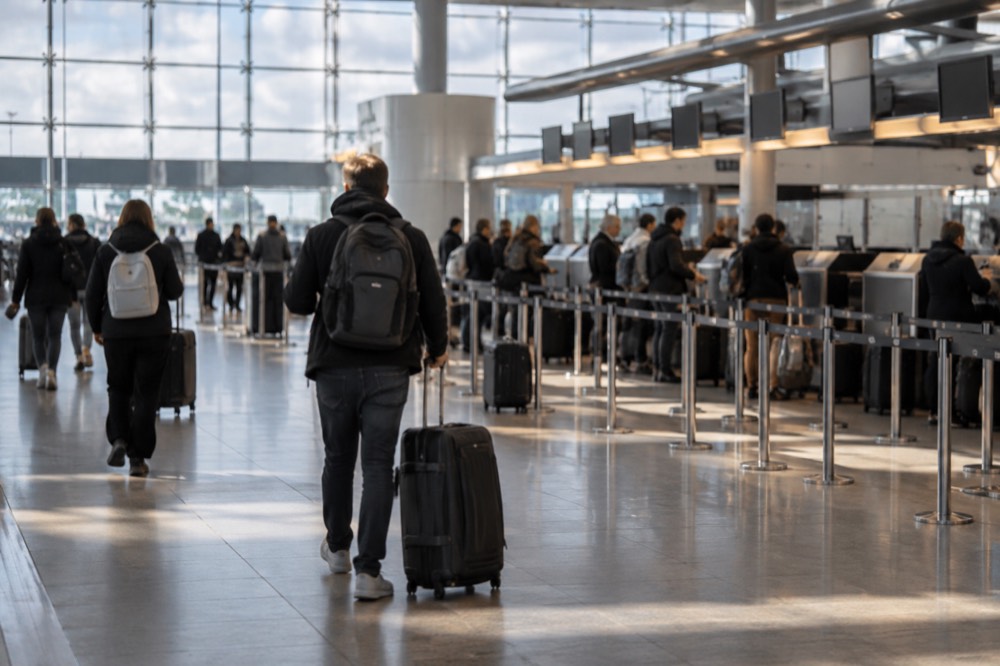
Yes, all of Schiphol's departure halls are connected landside, and you can walk freely between them before you pass security. The halls sit in a row along the single terminal facade, numbered and linked through the shared check-in floor, so moving from one hall to the next is a short indoor walk with no checkpoint in between.
This matters when your airline's check-in desk is not in the hall you wandered into, or when you arrive by train and pop up in a different hall than the one your flight departs from. The halls share one connected landside floor, with the railway station and plaza at one end, so you simply walk along the front of the building until you find your desk row. The whole stretch is level, under cover and lined with seating and cafés, and there is no barrier or ticket needed to move between halls. The rest of the planning pages sit on Things to Do in Amsterdam.
The situation changes once you clear security. Airside, the concept of departure halls disappears and the pier system takes over, so the hall you checked in at has no bearing on where your gate is. A traveller who checked in at one end of the building can easily face the longest walk in the airport to reach their gate. That is why the airport urges you to check the gate number and the walking time on the signs immediately after security rather than lingering near the shops closest to where you happened to enter.
For people meeting arriving passengers, the landside connection is equally useful. Arrivals spill out into the same connected public floor, so you can wait in any hall and walk to whichever exit the flight uses. There is no need to guess the right hall in advance, and no internal transport to catch, because again, it is all one building.
| Where you are walking | Checkpoint on the way | What to expect |
|---|---|---|
| Between departure halls, landside | None | Short indoor walk along the connected check-in floor |
| Between gates in the same zone, airside | None | Follow yellow signs; travelators on longer stretches |
| Between Schengen and non-Schengen gates | Passport control | Transfer corridor with border booths and possible e-gates |
| From a long-haul arrival to a European gate | Passport control, sometimes transfer security | Longest total time; allow a buffer for queues |
How Do You Get From Schiphol Into Amsterdam After Landing?
Walking ends at the airport boundary: you cannot walk from Schiphol into central Amsterdam, but the railway station sits directly under the terminal, and the train covers the distance in just over 17 minutes, with tickets from €5.50 when booked online. Bus 397 is the surface alternative from €6.50, and taxis run on the meter with no fixed fare.
Once you have walked out of arrivals, the city is a train ride away rather than a stroll. The station is inside the airport complex, reached by lift and escalator from the arrivals floor, and trains run frequently through the day and night toward Amsterdam Centraal and stations beyond. The operator's own route page for Schiphol to Amsterdam quotes the journey at just over 17 minutes and e-tickets from €5.50, which makes it one of the fastest airport-to-city links in Europe. For a full breakdown of every option into the centre, see our guide to getting from Schiphol Airport to central Amsterdam.
The bus suits travellers staying in the western neighbourhoods or carrying awkward luggage, since it stops at street level along its route rather than requiring a transfer at Centraal. The Amsterdam Airport Express 397 runs on a single ticket from €6.50, and that same ticket is also valid on the Niteliner N97, which covers the route overnight when the trains thin out. Taxis queue outside the arrivals halls, but Schiphol publishes no fixed fare for the trip: you pay the meter, so agree on nothing less transparent than that.
| Option into the city | Price | Notes |
|---|---|---|
| NS train to Amsterdam Centraal | From €5.50 online | Just over 17 minutes; station is under the terminal |
| Amsterdam Airport Express bus 397 | From €6.50 single | Ticket also valid on the N97 night service |
| Taxi | Metered, no fixed fare | Ranks outside the arrivals halls |
If you have a long wait before a flight, or an early departure, it is worth knowing you do not have to choose between the city and the airport floor. Our overview of hotels you can walk to from Schiphol covers the properties closest to the terminal, which pair naturally with the walking-everywhere layout described above.
And if you land with a free afternoon ahead of you, the walk-friendly airport is a good warm-up for a walk-friendly city. Amsterdam is compact, and a short guided walk is one of the most efficient ways to spend a half day. The Anne Frank Story small-group walking tour is a strong pick: it runs for one hour through the Jewish Quarter with a local guide, is rated 4.8 across 15,104 reviews, and starts at $22.00 per person. It is a streets-only walk, so it never implies entry to the Anne Frank House itself, whose tickets are sold solely through the museum's own website.
For travellers who want the same compact format aimed at the city's most famous, and most misunderstood, district, the small-group Red Light District tour covers the history in ninety minutes with a guide, rated 4.9 across 9,142 reviews and priced from $26.00. Amsterdam's rules for guided tours in De Wallen are strict: groups are capped, tours run only in permitted hours, and no route passes the windows, so a licensed small-group format is the way to see the area properly.
What If Your Connection at Schiphol Is Tight?
If your connection is tight, the walk itself is rarely the problem; the checkpoints along it are. Schiphol is one building, so there is no terminal transfer to miss, but passport control queues, transfer security and the sheer length of some pier-to-pier walks can consume a short window. Check your gate and the walking time the moment you land, and head straight for the yellow signs.
The single-terminal layout is a genuine advantage here. At an airport with separate terminals, a tight connection means gambling on a bus, a train or a security re-run in a different building. At Schiphol, it means a brisk walk, and brisk walks are predictable in a way shuttle transfers are not. The airport leans into this: transfer routes are signed by walking time, transfer desks sit along the main corridors, and staff at the desks can sometimes expedite passengers whose connections are collapsing. Airlines operating through Schiphol generally plan connections on the assumption that everything is walkable, which is why the airport can offer shorter minimum connection times than a multi-terminal hub.
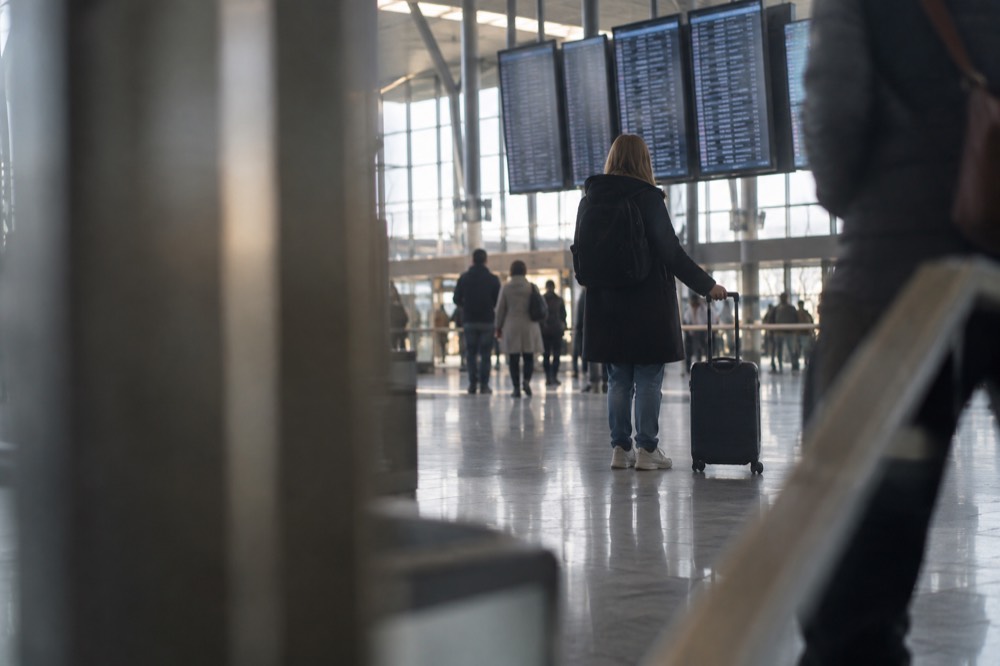
That said, do not treat "walkable" as "instant". A long-haul arrival can park at a remote stand, which adds a bus leg before your walk even begins. Passport queues at the Schengen boundary move at their own pace regardless of your departure time. And Schiphol is a busy airport at peak waves, when the corridors fill and the travelators jam. The disciplined move is to look at the flight information screens the moment you step off your first flight, confirm the gate and the walking estimate, and decide then whether there is time for anything other than the walk itself.
If you miss a connection despite all this, the walkability works in your favour again: rebooking desks and airline transfer desks are inside the same building you are already standing in, and you will not be shuttling between terminals to sort out a new flight. For a full treatment of the tightest windows, including whether 45 minutes is ever enough, read our article on minimum connection times at Schiphol. And once the flying is done, the same one-building logic applies to the onward journey: the station is a short walk from arrivals, and the city is 17 minutes beyond that.
Common Questions About Walking Between Terminals at Schiphol Airport
Can You Walk Between Terminals At Schiphol Airport?
Yes. Schiphol operates as one connected terminal complex rather than separate terminals, and every gate pier is reachable on foot from every other one. Walking is the standard way to move between gates, signposted in yellow with estimated walking times.
How long does it take to walk between gates at Schiphol?
It varies with the pier pairing. Neighbouring gates can be a couple of minutes apart, while opposite ends of the airport can take considerably longer. The yellow signs quote remaining walking time in minutes, so check them as soon as you clear security or land.
Do I go through passport control when walking between gates?
Only if your walk crosses between the Schengen and non-Schengen zones. Flights within the Schengen area connect without a border check. Flights to or from countries outside it, such as the United Kingdom or the United States, involve passport control in the middle of the walk.
Can I walk between departure halls before security at Schiphol?
Yes. The departure halls form one connected landside row along the terminal facade, and you can walk freely between them without passing any checkpoint. This makes it easy to reach any airline desk or to meet arriving passengers regardless of which hall they use.
Can I walk from Schiphol into Amsterdam?
No, the city is beyond walking distance. The railway station sits directly under the terminal, and the train reaches Amsterdam Centraal in just over 17 minutes, with online tickets from €5.50. Bus 397 runs from €6.50 and taxis charge by the meter.
Is there a shuttle or train between Schiphol gates?
There is no airside people-mover between piers. The main mechanical help on the longer stretches is a set of travelators, along with electric carts arranged for passengers with reduced mobility or very tight connections. Everyone else walks.