Do Us Citizens Need A Visa For The Netherlands?
No, US citizens do not need a visa for the Netherlands for tourism stays up to 90 days. Here is what American travellers need to know before flying to Amsterdam.
Amsterdam has been pulling American travellers back in record numbers, and the first question most of them type into a search bar is not about canals or museums. It is about paperwork. The good news is simple: for a normal holiday, a US passport is all an American needs to enter the Netherlands. The details around that headline, passport validity, how long you can stay, and the European entry systems that keep getting postponed, are where travellers get tripped up. This page walks through the whole picture, from the border to the tourist tax line on your hotel bill.
Do Us Citizens Need A Visa For The Netherlands?
No. US citizens do not need a visa to enter the Netherlands for tourism, business meetings or family visits of up to 90 days within any 180-day period. A valid US passport is enough at the border, because the Netherlands is part of the Schengen area and the United States is on its visa-free list. The 90-day allowance covers the whole Schengen zone, not just the Netherlands.
That last sentence is the part that causes real trouble. The 90 days are not 90 days in the Netherlands alone. They are 90 days across the entire Schengen area, which includes the Netherlands, France, Germany, Italy, Spain and more than twenty other countries. An American who spends a week in Paris, then ten days in Italy, then arrives in Amsterdam has already burned more than two weeks of the allowance. Border officers in the Netherlands can and do look at the entry and exit stamps in a passport to work out how many days a traveller has already used, and overstaying, even by a few days, can mean a fine, a ban on returning, or a stressful interview at the airport.
The stay is measured on a rolling basis: at any given moment, you look back at the previous 180 days and count how many of them you spent inside Schengen. As long as that count stays at 90 or below, you are within the rules. There is no extension you can file from inside the country as a tourist. If an American wants to stay longer, the honest answer is that a visa or residence permit is needed, and those applications are made through Dutch immigration authorities before travel, not after arrival.
It is also worth being clear about what counts as tourism. Sightseeing, visiting friends, attending a conference, and short business meetings all fall under visa-free entry. Paid work for a Dutch employer, studying at a Dutch institution, and living in the Netherlands do not. The line is not about whether you answer emails from your hotel room, it is about whether a Dutch organisation is paying you or you are enrolling in something long term.
For most American visitors this is all academic, because a city break or a two-week European holiday fits comfortably inside the allowance. But if your itinerary is a grand tour of five countries over three months, the Schengen clock matters more than any single destination page, and it is worth sketching your nights on a calendar before you book flights.
If Amsterdam is the destination itself, the practical planning questions start right after the passport question, and the biggest one is which tickets to book before you fly. The three below are the ones American travellers book most often.
How Long Can US Citizens Stay in the Netherlands Without a Visa?
The limit is 90 days in any rolling 180-day period across the whole Schengen area, not 90 days per country. For the Netherlands alone there is no separate shorter cap, so a US passport holder can spend the full 90 days in Amsterdam if they wish. The count starts on the day of entry and includes arrival and departure days.
Because the window rolls, long-stay travellers need to do the arithmetic at the border, not before they leave home. Say you enter Schengen in Rome on 1 May and stay until 20 May, then return to Schengen through Amsterdam on 10 June. Your previous 180 days contain about thirty days of presence, so roughly sixty remain. The counting is done in calendar days, and the day you enter counts as day one. Airlines do not check this when you board a flight to Amsterdam, but the Dutch border police do check it on arrival, and "my travel agent said it was fine" is not a defence.
There are a few practical points that make the system easier to live with. First, the UK and Ireland are not in Schengen, so time in London does not consume your days. Second, common side trips from Amsterdam, such as a day in Brussels or a long weekend in Paris, do consume them, because Belgium and France are Schengen members. A traveller based in Amsterdam who pops over to Bruges for the day has still used one of the 90 days, even though there is usually no visible border check on the train. Third, cruise passengers get a different treatment: many cruise calls count as a day visit, and Amsterdam's day-tripper rules apply rather than a full entry stamp.
| Travel pattern | Visa needed? | What to watch |
|---|---|---|
| City break in Amsterdam, under a week | No | Nothing to calculate, far inside the allowance |
| Two-week holiday across several Schengen countries | No | Count all Schengen nights together, not per country |
| Three-month grand tour of Europe | No, if planned carefully | 90 days total across Schengen; build in non-Schengen stops like the UK or Ireland |
| Working remotely for a US employer from Amsterdam | No visa for short stays | Grey area for long stays; do not accept Dutch employment or clients |
| Study, paid work in the Netherlands, or stays over 90 days | Yes | Apply through Dutch immigration before travel |
The rolling window also means the "reset" idea people sometimes quote is wrong. You cannot leave Schengen for a weekend in London and start a fresh 90 days. Days simply age out of the 180-day lookback one day at a time. For a detailed look at how long a first trip to the city realistically needs, our guide on how many days in Amsterdam is enough is a better starting point than the visa rules, because almost every American visitor is nowhere near the limit.
Once the length of stay is settled, the next thing to sort is what to actually do with the time. The Van Gogh Museum is the one Amsterdam attraction where Americans most often regret not booking ahead, since every visitor needs a timed entry slot and summer dates go fast.
What Passport Rules Apply to US Citizens Visiting Amsterdam?
A US passport must be valid for at least three months beyond the planned departure date from Schengen and should have been issued within the last ten years. It also needs at least one blank page for entry stamps. In practice, if your passport expires more than three months after your return flight, you are fine; if it is close, renew before booking.
The three-month validity buffer is the requirement that actually turns travellers away, and it is a quiet one because the US itself will happily let you fly out on a passport with two months left. European rules are stricter than American ones. The ten-year issuance rule matters for older passports: a passport issued more than ten years ago, even one that has not expired, can be refused at the Dutch border. Since US adult passports are valid for ten years exactly, this mostly bites people whose passports were issued on the very edge of the window and who travel near the expiry date.
Blank pages sound trivial until you consider how many stamps a multi-country trip generates. One blank page is the stated minimum, but a grand tour through five countries with entry and exit stamps at each can fill a page quickly. If your passport is near the end of its life, renewing it before a big European trip costs far less stress than arguing at passport control.
Beyond the passport itself, the Dutch border check for visa-free arrivals is short but real. The officer will usually ask the purpose of the visit and how long you are staying, may ask for a return ticket, and stamps the passport in or out. Americans are used to clearing immigration quickly with a machine, but Schengen entry for third-country nationals, which includes US citizens, is a human check. Answering "tourism, five days, staying near the centre" is all that is normally needed.

Do US Citizens Need ETIAS or a New European Travel Authorisation?
Not yet. ETIAS, the European travel authorisation that will apply to US citizens, is not currently in force, so Americans do not need to apply for anything beyond a passport today. It has been delayed repeatedly and no purchase is possible before it launches. Check official European Commission sources shortly before travel rather than paying any third-party site that claims to sell it.
ETIAS is the detail most likely to have changed between when you read an old forum thread and when you board your plane. It is designed as a lightweight online authorisation, similar in spirit to the US ESTA, covering visa-free visitors including Americans. Travellers will apply online, pay a modest fee, and receive an authorisation linked to their passport. Until the system actually launches, no application exists, no fee exists, and any website selling an "ETIAS registration" today is selling nothing.
The companion system, the Entry/Exit System that records non-EU travellers electronically instead of stamping passports, is also being phased in across Schengen. When it applies to US citizens, it means fingerprints and a face photo at the first Schengen entry instead of just a stamp. It does not change how long you may stay, only how the stay is recorded. Because launch dates for both systems have slipped more than once, the honest advice is to check the European Commission's official pages in the week before you travel, and to ignore any site that charges a "processing fee" for what will eventually be a simple official form.
For now, the practical takeaway for an American flying into Schiphol is unchanged: passport, return ticket, and a clear answer at the desk. Nothing else is required at the border for a tourist stay.
What Documents Should US Citizens Carry at the Border?
Carry a passport valid three months past departure, proof of a return or onward ticket, and evidence of how you are supporting yourself, such as a credit card. Dutch border officers rarely ask visa-free Americans for more, but they can request proof of accommodation and travel insurance, so having a hotel confirmation on your phone closes every gap.
The legal framing is that visa-free entry is a privilege, not a right, and the officer at the desk can ask any arriving traveller to show they meet the conditions of entry. In practice, an American with a passport, a return booking and a hotel reservation passes through in minutes. The questions are routine: purpose of the trip, length of stay, where you are staying. Answer plainly. The travellers who have problems are almost always the ones with no onward ticket and vague plans, or the ones whose 90-day count looks close to the limit.
A few documents are worth having in your phone's downloads folder rather than relying on airport wifi. A return-flight confirmation, a hotel or apartment booking for at least the first nights, and travel insurance details cover the standard requests. If you are visiting friends rather than staying in a hotel, a short note with their address helps. Americans do not need an International Driving Permit to drive in the Netherlands on a short visit, but if a road trip is on the itinerary, carrying one costs little and removes a possible argument at a rental counter.
| Document | Legally required? | Practical advice |
|---|---|---|
| Valid US passport | Yes | Three months validity beyond departure, issued within ten years |
| Return or onward ticket | Can be requested | Have the confirmation saved offline |
| Proof of accommodation | Can be requested | Hotel booking or a friend's address |
| Proof of funds | Can be requested | A credit card is normally enough |
| Travel insurance | Not checked routinely | Worth having regardless; US health plans rarely cover Dutch care fully |
| ETIAS authorisation | Not yet | Not in force; check official EU sources before travel |
None of this needs to be printed. Digital copies satisfy the checks, and the Dutch border process is efficient by global standards. The queue moves quickly, and the whole exchange is usually under a minute for a straightforward tourist.
How Does the Amsterdam Tourist Tax Affect American Visitors?
Amsterdam charges a tourist tax of 12.5 percent of the overnight price, excluding VAT, on hotels and holiday rentals, and the city's official rate is published by the municipality. Americans often notice it as a line on the hotel bill at checkout, and it applies per night, so it scales with where you stay rather than how long the border lets you stay.
The tax is not a visa requirement and has nothing to do with entry, but it surprises enough American visitors to deserve a place on this page. The rate is set by the city's official tourist tax page on amsterdam.nl, which is the source to check if your bill looks off. Because it is a percentage of the room price, an expensive canal-side hotel collects more per night than a budget property, and a one-week stay collects seven nights' worth. Cruise passengers pay a separate day-tripper tax instead, charged per passenger.
The other cost that lands on Americans used to US pricing is transport. A single GVB tram or metro ticket costs €3,40, while a 24-hour day ticket is €10,00, per the fare table on the official GVB fares page. Tapping a contactless American credit card works on trams, buses and metros, which removes the old anxiety about buying transit cards. The airport train from Schiphol runs from about €5.50 and takes just over seventeen minutes to Centraal.
None of these are entry requirements, but they are the numbers that shape the first hour of an American trip, and knowing them before landing keeps the budget honest.
Booking Museums and Tickets Before You Fly
Americans do not need a visa, but they do need advance bookings for Amsterdam's headline museums, and this is where the real planning pressure sits. The Van Gogh Museum requires every visitor to pre-book a timed entry ticket, the Anne Frank House sells only through its own official site, and the Rijksmuseum requires a booked start time even for pass holders.
The Van Gogh Museum is the clearest case. Its own ticketing rules state that all visitors need a pre-booked timed entry slot, and tickets sell out, especially in summer and around holidays. Adults pay €25 at the museum, and under-18s enter free. A skip-the-line ticket through the operator's live listing starts at $31 and is rated 4.7 across 57,096 reviews, which is the option most Americans take so the time slot is locked before the flight. You can also look at the Van Gogh Museum skip-the-line ticket directly on this site.
The Anne Frank House is stricter still. Tickets cost €16.50 for adults, €7 for ages 10 to 17 and €1 for under-tens, and the museum's own page states clearly that a ticket must always be booked online for a specific date and time, with no door sales and no resellers of any kind. The official ticket page is the only legitimate place to buy, and slots are released in batches ahead of time, so Americans planning a summer trip should set a reminder rather than assume tickets will be there. A walking tour of the Jewish Quarter is a different product entirely and never includes entry to the house.
The Rijksmuseum charges adults €25, is free for ages 18 and under, and requires a timed start time for everyone, including card holders. Our Amsterdam museum tickets and queue-skipping guide goes through the whole roster, and the Van Gogh Museum guide covers that museum in depth.
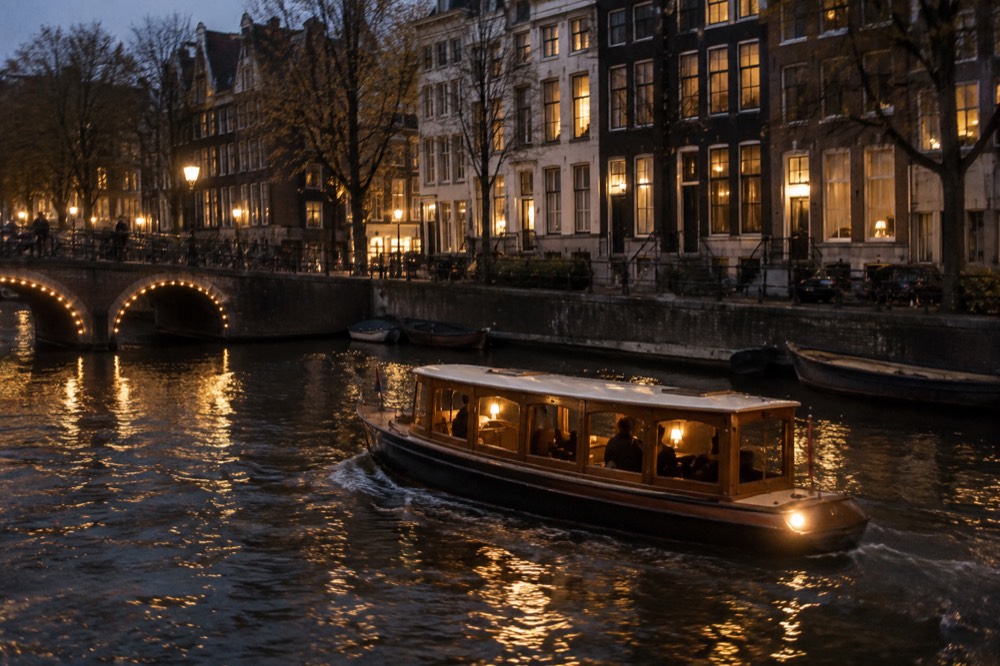
For the evenings, the classic saloon boat cruise is the other product Americans book early: a one-hour cruise on a restored wooden boat, rated 4.8 across 33,435 reviews and priced from $19.56. The Heineken Experience, in the original brewery, runs about 90 minutes, costs from $23 and carries a 4.6 rating across 39,581 reviews. Between a museum slot, a cruise and a brewery visit, a three-day trip fills quickly, which is exactly why the booking question matters more to most Americans than the visa question that brought them to this page.
Common Questions About US Citizens and the Netherlands
Do Us Citizens Need A Visa For The Netherlands?
No. US citizens can enter the Netherlands visa-free for tourism and short business trips of up to 90 days in any 180-day period, using only a valid US passport. The allowance covers the whole Schengen area, not just the Netherlands.
How long can an American stay in Amsterdam without a visa?
Up to 90 days within any rolling 180-day period across the Schengen area. Time spent in other Schengen countries, such as France or Germany, counts toward the same 90 days, so a multi-country itinerary needs a calendar check before booking.
Does a US passport need to be valid for six months to visit the Netherlands?
No, the Schengen requirement is three months of validity beyond the intended departure date, not six months. The passport should also have been issued within the last ten years and have at least one blank page for stamps.
Do Americans need ETIAS to visit Amsterdam yet?
Not at present. ETIAS, the planned European travel authorisation for visa-free visitors including US citizens, has been delayed repeatedly and is not yet in force. No application or fee exists today, so ignore any third-party site claiming to sell one, and check official European Commission sources shortly before travel.
Can US citizens work remotely from Amsterdam on a tourist stay?
Working for a US employer from a Amsterdam hotel room during a short stay is generally tolerated, but taking Dutch employment, enrolling in study, or staying beyond 90 days requires a proper permit applied for before travel. There is no tourist extension available from inside the Netherlands.
Do Americans need travel insurance to enter the Netherlands?
Border officers can ask for proof of insurance but rarely do for obvious tourists. It is still worth carrying, because US health plans often cover little or no care in the Netherlands, and a single hospital visit can cost more than the whole trip.
The short version of this entire page: your passport is your visa for an ordinary holiday, the 90-day Schengen clock is the only maths you need to do, and everything else, ETIAS, entry systems, tourist tax, is a detail to check the week before you fly. For more on planning the trip itself, start with Things to Do in Amsterdam and work outward from there.