How Much Does It Cost To Rent A Houseboat Per Night?
Houseboat nightly rates in Amsterdam vary by boat, season and location. This guide explains what drives the price, what the tourist tax adds, and how a stay on the water compares with a hotel.
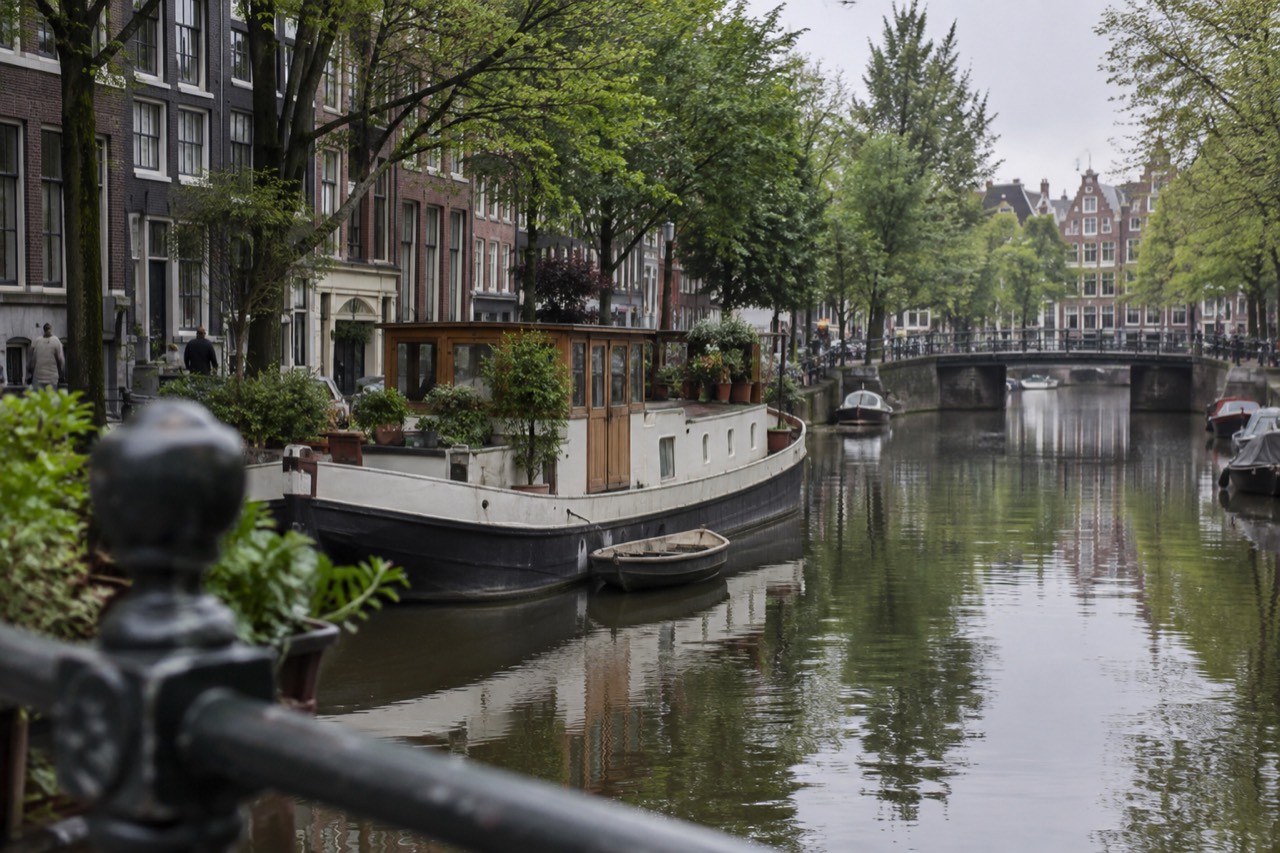
Amsterdam's houseboats are private homes, most moored on protected canal walls, and each owner sets a nightly rate the way a homeowner sets a price, not the way a hotel chain does. That is why two boats moored fifty metres apart on the same canal can charge wildly different amounts for the same week, and why no honest desk will print a single figure as "the" houseboat rate for this city.
This article breaks down what actually moves the price per night, what the city adds on top, and how to judge whether a listing is fair before you commit. Along the way it points at the cheaper way to get onto the water if a full night afloat is beyond the budget.
How Much Does It Cost To Rent A Houseboat Per Night?
There is no fixed nightly rate for an Amsterdam houseboat, because every boat is an individual home priced by its owner. Rates swing with boat size, season, location and amenities, and the city adds a 12.5 percent tourist tax on overnight stays. Treat any single figure quoted online as one boat's price, not the market's.
The honest answer is a range, and the range is wide. A compact floating cabin on an outlying canal in February is a different product from a renovated barge with a deck and a canal-ring address in July. The price a listing shows is set by that owner, for that boat, for those dates, and it moves with demand the same way hotel rates do.
What the desk can verify from primary sources is the structure around the price, not the price itself. The city's official tourist tax page confirms a 12.5 percent charge on the overnight price for hotels and holiday rentals, and that percentage applies on top of whatever the owner charges. Short-stay rentals are also regulated: the city's holiday rental permit page sets a maximum of four guests at a time and requires the owner to hold a registration number and report each rental period in advance. A legitimate houseboat listing should sit inside that framework.
So when a listing quotes a nightly figure, that figure answers only half the question. The other half is whether the boat is legal to let, what the tax adds, and whether the season you have chosen is the season that price deserves. The rest of this article works through each of those.
If the goal is simply to be on the water rather than in it overnight, a canal cruise does that for the price of a sandwich and a drink. These are the three cruises this desk compares most often:
What Drives the Price of a Houseboat Stay?
Four factors move a houseboat nightly rate more than anything else: the size and condition of the boat, the season, the mooring location, and what the owner bundles in. A listing that looks expensive may simply be a large boat in the canal ring in summer, and a cheap one may be small, far out, or in low season.
Size is the biggest single driver. A one-cabin floating cabin sleeps two and heats a small space; a converted barge with a full kitchen, a living room and a rooftop deck sleeps four to six and costs far more to buy, maintain and moor. Owners price accordingly. Condition matters just as much: a boat refitted last year with underfloor heating and a proper bathroom commands a premium over a charming but dated interior, and listings that mention a recent refit usually charge for it.
Season follows the same curve as the city's hotels. Amsterdam recorded 23.7 million tourist overnight stays in 2025, and the municipal forecast for 2026 runs between 23.7 and 25.1 million, so demand is not exactly gentle. Summer weeks, the King's Day period and the December lights season are peak, and canal-side owners know it. February and November are the soft spots, and a boat that is out of reach in July can be a bargain then.
Location is the third lever. A mooring inside the seventeenth-century canal ring, steps from the Jordaan or De Negen Straatjes, is the most desirable address in the city and priced like it. Boats on the Amstel towards the centre carry a similar premium. Boats moored in the Oosterdok, on the IJ, or in the Eastern Docklands are often newer and larger for the money, at the cost of a longer walk or tram ride into the centre.
| Factor | What it does to the price | What to check on the listing |
|---|---|---|
| Boat size and berths | Largest single driver; more cabins and space mean a higher rate | Sleeping capacity and whether bedding is included |
| Season | Peak summer, King's Day and December cost most; winter is softest | Flexible dates, even by a week, can change the rate sharply |
| Mooring location | Canal ring and Amstel moorings carry a premium; dock areas are cheaper per square metre | The exact mooring and the tram or walk to the centre |
| Condition and refit | A recent refit with modern heating and bathrooms commands more | Photo dates and any mention of a recent renovation |
| Inclusions | Wi-Fi, heating, bikes, kitchen use and mooring fees may or may not be in the rate | The full inclusions list, not the headline amenities |
The fourth factor is what the rate bundles. Some owners include bicycles, which saves a rental fee per day. Some include heating, which matters from October to March more than almost anything else on the listing, because a boat is a steel box on cold water. Some charge a cleaning fee on top of the nightly rate, and some price the tourist tax separately. Read the total for your dates, not the headline number.
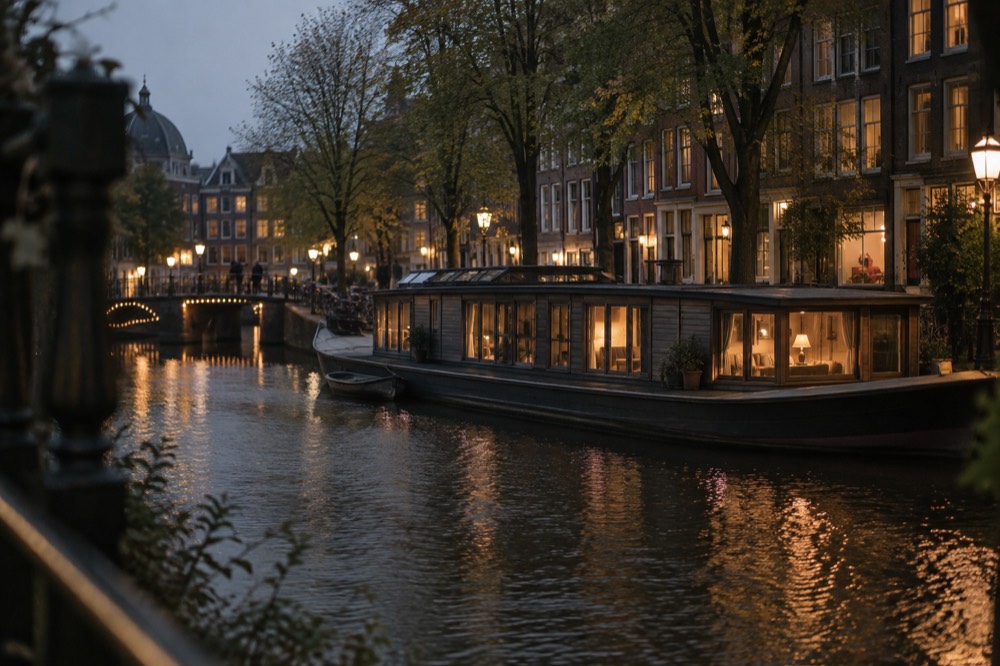
A useful way to sanity-check a nightly rate is to ask what the same money buys on the water for an evening. The Classic Saloon Boat Cruise with Drinks and Cheese runs one hour on a restored wooden saloon boat, some of which have sailed these canals since 1902, from $19.56 with a 4.8 rating across 33,435 reviews. That is the price of the water itself, without a bed. A houseboat night is that experience plus a mooring, heating, a kitchen and a bed, and the premium you pay is for the night, not the float.
Is a Houseboat Cheaper Than a Hotel in Amsterdam?
Sometimes, but not usually in the centre in high season. A houseboat competes with hotels on space and character, not on price, and the city's hotel market is large enough to include genuine budget options. The tourist tax applies to both at 12.5 percent, so it does not tilt the comparison either way.
Amsterdam has roughly 544 hotels with around 41,000 to 42,000 rooms, according to the municipal statistics office, and the average daily rate softened in 2025 even as overnight stays rose two percent, the largest increase of any major Dutch city. That means the hotel market contains real budget inventory, especially outside the canal ring. A houseboat sleeping four or six can beat two hotel rooms on total cost, but for a couple it usually does not, because you are renting a whole home rather than a room.
The fair comparison is per person per night, including everything. Add the nightly rate, the cleaning fee, the tourist tax and any heating or service charge, then divide by sleepers. Then compare that with the total for a hotel room or two, including the same 12.5 percent tax, which the city confirms applies to the overnight price excluding VAT. On that arithmetic, a large boat shared by a family or a group of friends frequently wins, and a small boat for two in summer rarely does.
| Comparison point | Houseboat | Hotel |
|---|---|---|
| Space per euro | Whole home, kitchen, often a deck | A room and a bathroom |
| Best value for | Groups of four or more sharing the cost | Solo travellers and couples |
| Tourist tax | 12.5 percent of the overnight price | 12.5 percent of the overnight price |
| Location choice | Fixed by the mooring, so check it first | Widest choice across every neighbourhood |
| Heating in winter | Costs money and matters; confirm it is adequate | Included and central |
| Cancellation terms | Set by the individual owner, often stricter | Often free-cancellation rates |
One more structural point worth knowing, and it is the kind of detail most guides miss: the rules that govern a houseboat let are holiday-rental rules, and they tightened in 2026. Since 1 April 2026, holiday rentals in designated central neighbourhoods, including the Jordaan, the Grachtengordel and Nieuwmarkt, are capped at 15 nights per calendar year instead of 30. Owners who let legally are therefore scarce in exactly the neighbourhoods people most want to sleep on the water in, and scarcity pushes prices up. A listing in the canal ring is a limited-inventory product, and the rate reflects it.
Before committing hundreds of euros to a week afloat, it is worth asking whether the water itself is the part you want. An evening cruise answers that for the price of a dinner, and it is the cheapest research you will ever do:
What Should You Check Before Booking a Houseboat?
Check four things before paying: the owner's registration number, the exact mooring, the heating, and the full cost including fees and tax. A listing without a registration number is a listing outside the city's holiday-rental framework, and the rest of the stay inherits that risk.
The registration number is the first gate. Amsterdam requires a free, one-time registration for holiday lets and a permit, and the registration number must appear in the listing. If it does not, ask. A legitimate owner will show it; the rules also cap guests at four at a time, so a listing promising a party of eight is either outside the framework or misdescribed. The permit system exists because the city is actively managing visitor pressure, and enforcement tightened, not loosened, in 2026. The wider set of guides lives on Things to Do in Amsterdam.
The mooring is the second check. Ask for the street or the nearest landmark, then open a transit map. A boat moored beyond the centre changes the daily rhythm of the trip: the GVB day ticket is €10.00 per adult, and a 24-hour pass covers the trams, buses, metro and ferries, but every evening out now ends with a ride home. Some visitors love that quiet; some discover too late that they wanted to walk home.
Heating is the third, and it is the one cold-weather guests forget. Ask when the boat was last refitted and how it is heated. Winter canal temperatures drop well below anything a hotel guest notices, and a boat with an old heating system in January is a different product from the same boat in the photographs taken in June.
The fourth check is arithmetic. Get the owner or the platform listing to state the total for your dates: nightly rate times nights, plus cleaning fee, plus the 12.5 percent tourist tax, plus any heating or service charge. Only that total answers the question this article is titled with. For more on the practical side of choosing a boat, the desk's guide to renting a houseboat in Amsterdam covers the mooring types and what to expect on board, and the neighbourhood-by-neighbourhood guide to where to stay in Amsterdam helps match a mooring to the trip you actually want.
Can You Try Canal Life Without Sleeping on It?
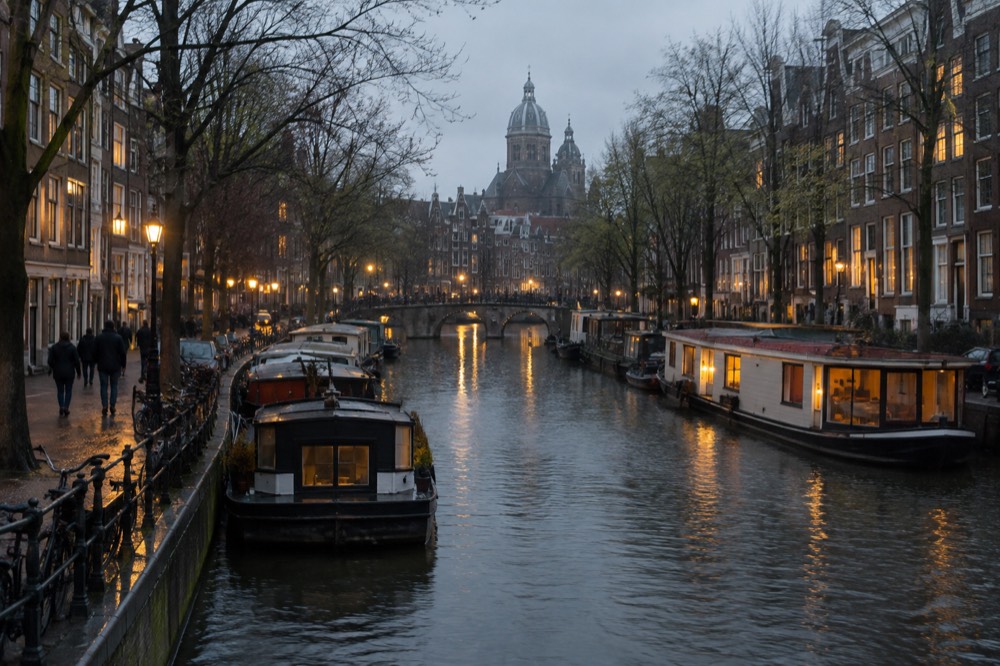
Yes, and for most visitors it is the better first step. An hour-long saloon boat cruise delivers the water-level view, the quiet electric glide and the historic boat for the cost of a dinner, and it tells you whether a night afloat would thrill you or make you seasick before you commit hundreds of euros.
The canal cruise market is deep, and the saloon boats are the closest cousins to the houseboats you would sleep on. The Saloon Boat Cruise with optional Cheese and Wine runs one hour on a late-nineteenth-century saloon boat with a quiet electric engine, from $16 with a 4.6 rating across 31,369 reviews. The Luxury Canal Cruise with Unlimited Drinks and Bites option runs an electric luxury boat, open in summer and covered in bad weather, from $23.13 with a 4.9 rating across 31,736 reviews. Both are live-listing products with free cancellation, which a houseboat booking usually is not.
There is also a structural argument for trying before sleeping. Amsterdam's houseboats are homes first and rentals second, so cancellation terms are set by individuals and tend to be strict, deposits are real, and a bad fit is expensive to discover. A cruise is reversible in a way a week in February on a cold barge is not. Spend an evening on the water first, watch how the canal light changes, count the boats you pass, and then decide whether the romance survives the arithmetic.
For travellers who fall somewhere between the two, there is a middle path worth naming. Some owners offer single nights or short two-night lets, which lowers the total commitment, though the nightly rate for a short stay is usually higher than for a week. And the desk's coverage of the Amsterdam canal belt explains why a Grachtengordel mooring costs what it does, which is useful context when a listing price looks either absurd or too good.
How Do Fees and Taxes Change the Final Bill?
The nightly rate is not the bill. Add the cleaning fee, the 12.5 percent tourist tax and any heating or service charge, and the total for your dates can sit meaningfully above the headline figure, exactly as it does with hotel rates excluding VAT.
The tourist tax is the largest and the most predictable add-on. The city charges 12.5 percent of the overnight price, excluding VAT, for hotels and holiday rentals alike, under the regulation in force since 1 January 2026. On a week-long stay that is a substantial line item, and it is charged on the accommodation price, so a higher nightly rate compounds it. Some owners fold it into the displayed rate and some add it at checkout, which is why the total-for-your-dates question matters more than any single number.
The cleaning fee is the second add-on, and on short stays it can distort the per-night cost badly. A fee that looks modest across seven nights looks very different across two. The honest way to compare boats is to compute the all-in total, divide by nights, and only then compare with other boats and with hotels. The desk's breakdown of what a trip to Amsterdam costs places accommodation in the context of the whole budget, which is where this decision really belongs.
| Add-on | Typical treatment | What to ask |
|---|---|---|
| Tourist tax | 12.5 percent of the overnight price, excluding VAT | Whether it is inside the displayed rate or added at checkout |
| Cleaning fee | Flat fee per stay, set by the owner | The exact amount, and whether it scales with nights |
| Heating | Sometimes included, sometimes metered, always material in winter | How the boat is heated and who pays in cold months |
| Security deposit | Common for whole-home lets | The amount and the release conditions |
| Amenity extras | Bikes, kayaks or late check-out may cost more | Which amenities are genuinely included |
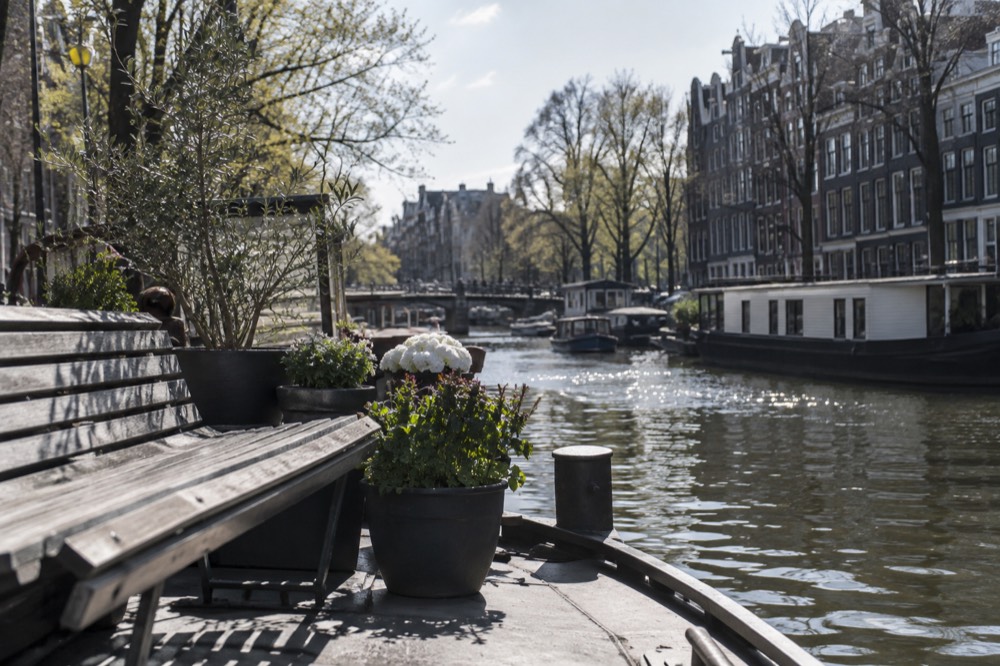
One closing thought on value. The question "how much per night" treats the houseboat as a bed, but the product is a perspective: waking level with the water, herons on the deck rail, the city arriving by boat rather than by door. For some travellers that is worth a premium over any hotel. For others an hour on a saloon boat captures ninety percent of it for less than the cost of the cleaning fee. Both answers are correct, and the price is the only way to find out which one is yours.
If the water is the part that appeals, these three cruises are the desk's standing comparison set, and any of them will tell you more about whether you belong on a houseboat than another hour of browsing listings will:
Common Questions About Houseboat Rental Costs in Amsterdam
How Much Does It Cost To Rent A Houseboat Per Night?
There is no fixed rate: every Amsterdam houseboat is a private home priced individually by its owner, and rates vary widely with boat size, season, mooring location and inclusions. The city adds a 12.5 percent tourist tax on the overnight price. Always price the total for your specific dates, including fees and tax, before comparing with hotels.
Is a houseboat cheaper than a hotel in Amsterdam?
For groups of four or more sharing one boat, the all-in cost per person can beat hotel rooms. For couples and solo travellers, city hotels usually win on price, especially outside the canal ring. The 12.5 percent tourist tax applies to both, so it does not change the comparison.
What extra fees are added to the nightly rate?
Expect a cleaning fee set by the owner, the 12.5 percent tourist tax on the overnight price excluding VAT, sometimes a security deposit, and possibly a heating charge in winter. Ask for the total for your dates rather than relying on the headline nightly figure.
When is the cheapest time to rent a houseboat?
Winter, and especially the quiet weeks of January through March outside school holidays, is the softest period. Summer, the King's Day period and the December lights season are peak. Shifting dates by even a week can change the rate noticeably.
How can I tell if a houseboat listing is legitimate?
Amsterdam requires holiday lets to carry a registration number, hold a permit, cap guests at four at a time and report each rental period. Since 1 April 2026, rentals in designated central neighbourhoods are limited to 15 nights per calendar year. Ask for the registration number before you pay.
Can I try canal life without renting a houseboat?
Yes. A one-hour saloon boat cruise gives you the water-level view and the historic boat for the price of a dinner: the classic saloon cruise with drinks and cheese starts from $19.56, and the saloon boat with an optional cheese and wine upgrade starts from $16. It is a low-commitment test of whether a night afloat would suit you.