What Are The Must-try Foods In Amsterdam?
The foods worth crossing Amsterdam for: stroopwafel, haring, bitterballen, poffertjes and more, with where to eat each one and which food tour earns its price.
What Are The Must-try Foods In Amsterdam?
The must-try foods in Amsterdam are stroopwafel, raw herring (haring), bitterballen, poffertjes, Dutch cheese, thick pea soup called snert or erwtensoep, and thick-cut fries with satay sauce called patatje oorlog. Most of them were born as cheap street or market food, which is why the best versions still sit in markets like Albert Cuyp rather than in restaurants. Eat them where locals queue, not where menus have photographs.
Amsterdam does not have the celebrity-chef profile of Paris or the pasta-and-pizza gravity of Rome. Its food tradition is humbler and, honestly, better for a visitor with a day or two: small, hot, savoury things sold from windows, market stalls and brown cafes, most of them designed centuries ago to be eaten standing up by people who worked on the water. That is the honest frame for this list. None of these dishes needs a reservation, and almost all of them cost less than a tram day ticket.
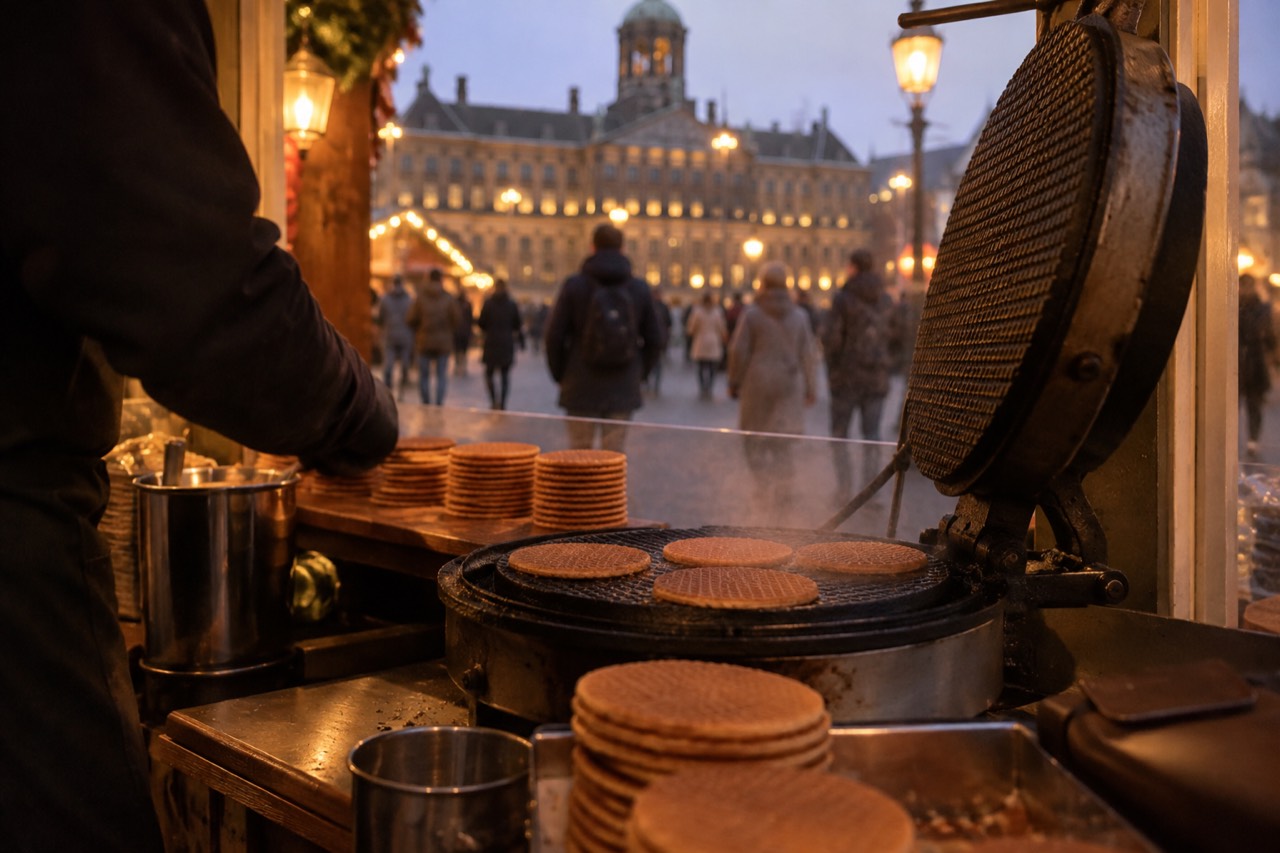
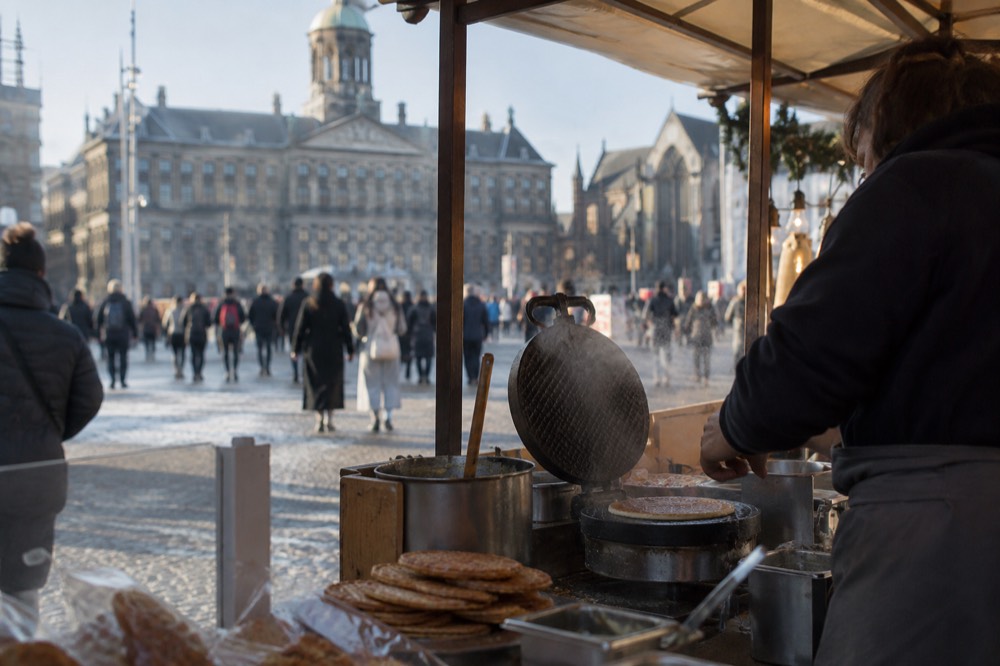
The single most famous one is the stroopwafel, two thin waffles pressed together with a molten caramel syrup in the middle. The trick almost nobody tells you is that a fresh one, made on the spot at a market stall, is a completely different object from the packaged version sold in souvenir shops. The fresh waffle is soft, the syrup actually flows, and it is worth walking to a market for. The packaged one is a biscuit. Both are "authentic", but only one is worth the calories.
Then there is haring, the raw herring that divides visitors more sharply than anything else on this list. The Dutch eat it by lifting the filleted fish by the tail and lowering it into the mouth in one or two bites, ideally with chopped raw onion and pickles on the side. It is not "rotten", a myth that circulates because the fish is lightly salted and frozen to preserve it in the traditional way rather than cooked. Properly handled haring tastes clean, firm and faintly sweet, closer to good sashimi than to anything brined. If raw fish defeats you, the kibbeling next to it on the same stall menu, chunks of battered and fried white fish, is the safe order and still a genuinely Dutch one.
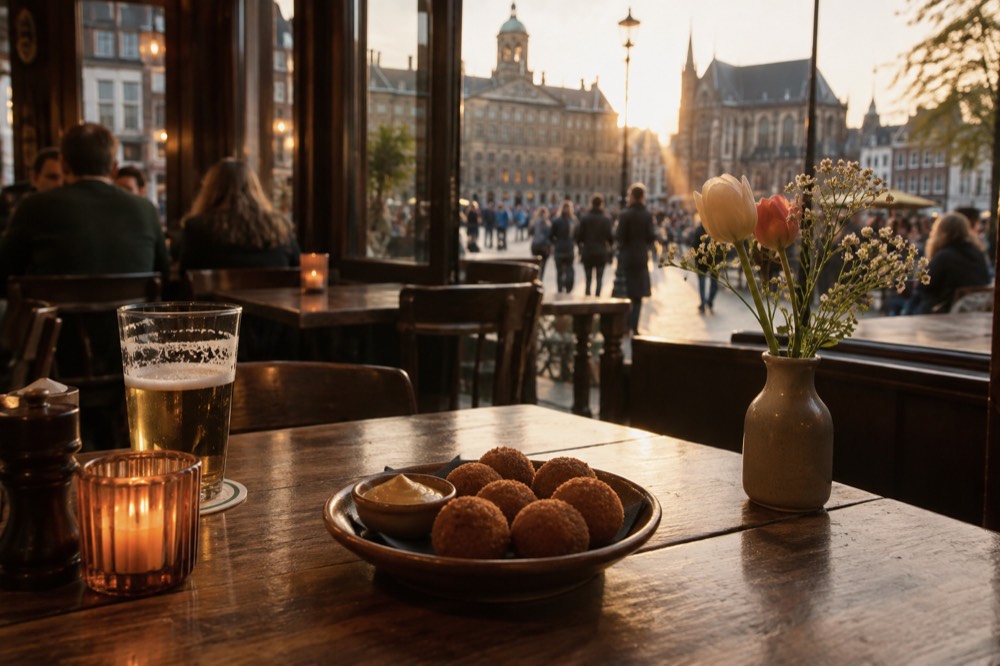
Bitterballen belong to the brown cafe, the candle-lit Amsterdam pub that has barely changed in a century. They are croquettes with a ragout filling, beef or veal stewed until it can be rolled into a ball, breaded and deep fried, served with sharp mustard. The first bite is a small engineering hazard: the inside is molten. Locals eat them with beer, and a plate of bitterballen is the standard thing to order when you sit down in a brown cafe for an hour and watch the neighbourhood go past the window.
A few practical notes before the eating starts. Street drinking is prohibited in Amsterdam's city centre, so a beer bought to go is not a thing here; sit down for it. And the city's food economy runs through its markets, which is where the freshest versions of nearly everything on this list live. The full lay of the land, market by market and dish by dish, is in our Dutch food guide to Amsterdam, which goes deeper on restaurants than this page does.
Which Dutch Snacks Should You Try First?
Start with stroopwafel from a market stall that presses them fresh, then haring or kibbeling from a fish stall, then bitterballen in a brown cafe with a beer. Those three cover the sweet, the raw and the fried in one afternoon. Poffertjes, small puffed pancakes, come fourth, and thick fries with satay sauce fifth. All five are cheap street foods, so a first-timer can eat the whole list for the price of one sit-down dinner.
The order matters less than the venue. The Albert Cuyp Market in De Pijp is the classic one-stop answer: it has the fresh stroopwafel stall, fish stalls for haring and kibbeling, cheese stalls with samples, and vendors for poffertjes, all within a few hundred metres. The Albert Cuyp Market guide covers opening days and how to work the stalls. If you are staying near the centre, the Nine Streets and the Jordaan each have their own bakeries and brown cafes doing the same dishes in quieter rooms.
Poffertjes deserve their own sentence because they get overlooked. They are tiny, puffed pancakes, cooked in a special cast-iron pan with dimples, served in a paper tray with melted butter and a heavy snow of icing sugar. Children order them without hesitation; adults hesitate, then order them. They are a fairground food that migrated into cafes, and a plate of them with coffee is the standard Dutch antidote to a cold afternoon.
| Dish | What it actually is | Where to eat the best version | When it shines |
|---|---|---|---|
| Stroopwafel | Two thin waffles with molten caramel syrup | A market stall pressing them fresh, not a packet | Morning, straight off the iron |
| Haring | Raw herring, salted and frozen the traditional way | A dedicated fish stall with a queue | Lunch, with onion and pickles |
| Kibbeling | Battered, deep-fried chunks of white fish | The same fish stalls that sell haring | Any time, with tartar sauce |
| Bitterballen | Fried croquettes with molten beef ragout inside | A brown cafe, with mustard and a beer | Late afternoon, in a candle-lit pub |
| Poffertjes | Small puffed pancakes with butter and icing sugar | A cafe with the proper dimpled pan | After coffee, or on a cold day |
| Patatje oorlog | Thick fries with satay sauce, onion and mayo | A fry shop, eaten from the paper cone | After dark, on the walk home |
Cheese deserves a mention here too, even though the Netherlands' most famous export food is not a "snack" as such. Amsterdam's cheese shops hand out samples freely, and the traditional styles to look for are aged gouda, boerenkaas (the farmhouse version, made from raw milk) and the cumin-seeded leidse. The aged gouda is the revelation for most visitors: a two-year or three-year wheel is crystalline, nutty and nothing like the plastic-wrapped young gouda sold abroad. Taste before buying, and buy the aged ones, which keep well for the flight home.
If you would rather have someone walk you between these stalls and explain them, a guided tasting route is the shortcut. The ten-tastings food and culture walk is the strongest one on the roster: a local guide leads a three-and-a-half-hour route through the centre with ten tastings built in, and it holds a 5.0 rating across 1,157 reviews. At $92 per person it is the most expensive item on this page, but it replaces a whole day of guesswork.
What Should You Drink in Amsterdam?
Beer is the default Dutch drink, and the two experiences worth planning around are the Heineken Experience, a walk-through of the original brewery with tastings, and the brown cafe, where the local order is a simple pilsner or a dark dubbel from a Dutch monastery brewery. Jenever, the Dutch ancestor of gin, is the traditional chaser with a plate of bitterballen. Coffee, not tea, is the cafe default.
The Heineken Experience is the one drink attraction in Amsterdam that behaves like a museum, and it earns its place on a food itinerary. It sits in the original Heineken brewery building in the centre, runs about an hour and a half, and walks you through the brewing process with multimedia rooms and tastings included. The listing holds a 4.6 rating across 39,581 reviews, and tickets start at $23, with a rooftop option for the view over the city. It is the closest thing Amsterdam has to a beer museum, and it is a good rainy-day answer. The wider set of guides lives on Things to Do in Amsterdam.
For the other end of the beer spectrum, duck into any brown cafe, the dark wooden bars with sand scattered on the floor and candles on the tables, and order whatever Dutch pilsner is on tap. The big national names are fine, but the more interesting pours are the dark beers from Belgian-influenced Dutch breweries and the trappist-adjacent doubles that brown cafes keep for regulars. Our Amsterdam brown cafes guide lists the rooms worth crossing the centre for, and the beer and breweries guide covers the craft side of the city.
Jenever is the historic one. This is the Dutch juniper spirit that gin descended from, served in a tulip-shaped glass, traditionally drunk as a slug alongside a beer in the arrangement the Dutch call a "kopstootje", a headbutt. Old brown jenever is aged and smooth; young jenever is sharper and more like the gin you know. A few traditional proeflokaalen, tasting rooms, survive around the centre, and ordering one is the most time-travel thing you can do with two euros in Amsterdam.
One rule to know before you plan a picnic with a drink: the city prohibits street drinking in the centre, so the canal-side beer you may be picturing is not on. Buy it, then sit down with it at a cafe terrace or on a bench outside the busiest blocks, and check the city's own visitor rules page at amsterdam.nl if you want the boundaries. The same page covers the coffeeshop question, and the short version is this: the national rulebook contains a residents-only criterion for cannabis sales, but Amsterdam has never applied it, so tourists can still buy in coffeeshops, and smoking cannabis outdoors is prohibited in the centre. Our coffeeshop rules for tourists guide unpacks the whole thing properly.
What Are the Hearty Dutch Dishes Beyond Snacks?
The sit-down Dutch canon is stamppot, mashed potato mixed with a green vegetable and served with a sausage; snert, a thick split-pea soup eaten with rye bread and bacon; and thick fries with satay sauce. Indonesian food, a legacy of colonial history, is the other must-try, and a rijsttafel, a rice table of many small dishes, is the single best-value dinner in the city.
Stamppot is the winter dish: potato mashed with kale, endive or carrot-and-onion, with a smoked sausage laid on top and a well of gravy in the middle. It is farmhouse food, and Amsterdam's traditional Dutch restaurants serve it exactly as the countryside does, in portions sized for people who spent the day outdoors. Snert is the soup version of the same instinct, split peas cooked with pork until the spoon stands up in it, served with slices of rye bread and bacon on the side. If your visit falls between November and February, one bowl of snert will explain the entire Dutch winter to you.
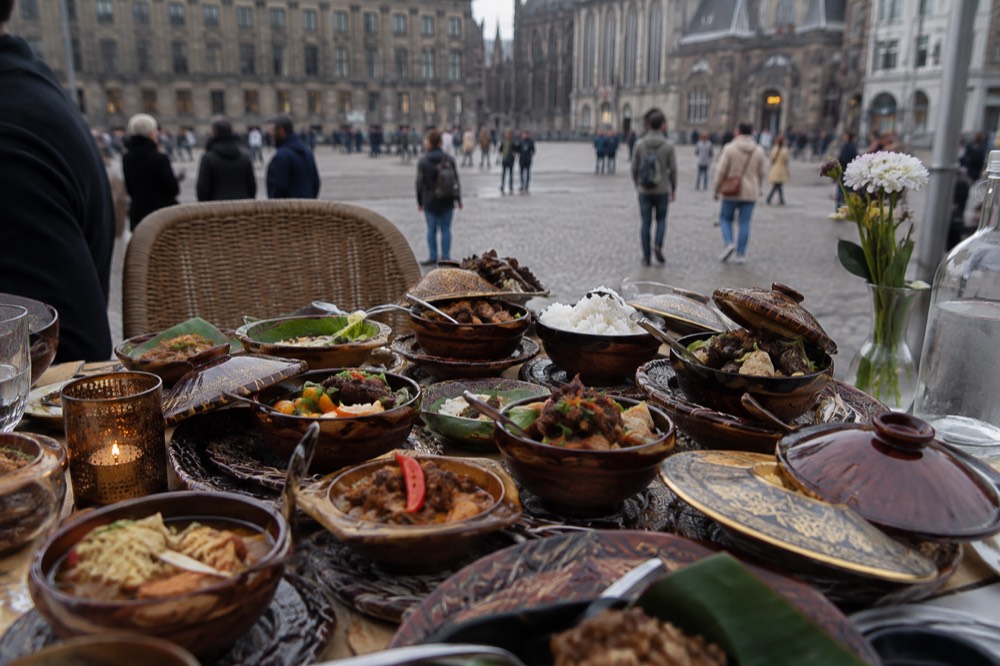
The Indonesian thread is not optional, and any Amsterdam food list that omits it is incomplete. The Netherlands' colonial history in Indonesia left the country with the best Indonesian food in Europe, and the rijsttafel, a "rice table" of a dozen or more small dishes brought in sequence, was actually invented by Dutch colonists who wanted a banquet from a single cuisine. Amsterdam has a dense cluster of Indonesian restaurants, several of them decades old, and a rijsttafel for two costs less than a main course in a tourist restaurant on Damrak. Vegetarian and vegan versions are easy to find too; our vegetarian and vegan Amsterdam guide covers the plant-based side of the city, including Indonesian tempeh dishes.
| Dish | Type | Best setting | Vegetarian possible? |
|---|---|---|---|
| Stamppot | Mashed potato with greens and sausage | A traditional Dutch restaurant, in winter | Yes, without the sausage |
| Snert | Thick split-pea soup with pork | A brown cafe on a cold day | Ask, but usually no |
| Rijsttafel | Indonesian rice table, many small dishes | An old-school Indonesian restaurant | Yes, widely |
| Bami or nasi goreng | Fried noodles or rice, Indonesian style | Any Indonesian takeaway | Yes |
| Patatje oorlog | Fries with satay sauce, onion, mayo | A fry shop, late evening | Yes |
| Appelmoes | Smooth, cold apple sauce | As a side with fries or bitterballen | Yes |
A note on dessert, because the Dutch have one that nobody expects: appeltaart, a tall, dense apple pie with a lattice top, served with a cloud of whipped cream and eaten with a fork in a cafe. It is the standard order in the classic Amsterdam cafes around the Jordaan and the Nine Streets, and it is a legitimate lunch if the day is going badly. Warm, with coffee, it beats almost every pastry case in the city.
Is a Guided Food Tour in Amsterdam Worth It?
A guided food tour is worth it if you have one or two days and want the market and cafe traditions decoded rather than discovered by trial and error. The strongest option on the roster is the ten-tastings food and culture walk, $92 for three and a half hours with a local guide, rated 5.0 across 1,157 reviews. Skip it if you have four days or more, the markets are walkable and the stalls explain themselves.
The economics are simple. Ten tastings across a three-and-a-half-hour route works out cheaper than buying the same ten things separately at market prices, and the guide adds the one thing a stall cannot: context, which stall has been there forty years, which haring stall the locals actually use, which brown cafe pours the interesting beer. For a short visit that context is the product. For a long visit, you will find most of it yourself by your third day, and the money is better spent on a rijsttafel.
The other pairing worth naming, because food days and museum days collide in Amsterdam, is a food morning followed by an art afternoon. The classic combination is a market breakfast in De Pijp, a short walk to Museumplein, and the Van Gogh Museum in the early afternoon; tickets start at $31 and the museum holds a 4.7 rating across 57,096 reviews. The museum's own cafe is a respectable coffee stop, though the museum's shop and cafe hours, 9am to 6pm, run an hour past the galleries, so time the exit accordingly, as the Van Gogh Museum guide explains.
If you are building the whole trip around eating rather than just one day, the planning pages that matter are the best restaurants in Amsterdam guide for sit-down meals, and where locals eat in Amsterdam for the rooms tourists rarely find. Between those two and this page, the eating is covered from street stall to tablecloth.
One last honest note: Amsterdam food is not fine dining, and pretending otherwise sets the wrong expectations. The city's own tourism numbers, 23.7 million overnight stays in 2025, mean the centre has more than its share of overpriced tourist restaurants, and the list of things to avoid is short and easy: any restaurant with a photo menu on a board on the street, any fry shop with no queue, and any haring stall that smells of anything other than clean salt. Eat where the queue is, order what the person ahead of you ordered, and the must-try list takes care of itself.
Common Questions About Must-try Foods in Amsterdam
What Are The Must-try Foods In Amsterdam?
Stroopwafel pressed fresh at a market stall, raw haring with onion, bitterballen in a brown cafe, poffertjes, aged gouda, thick fries with satay sauce, and an Indonesian rijsttafel for the sit-down meal. Add snert or stamppot in winter, and a Heineken Experience visit for the drink side of the tradition.
Is raw herring safe to eat in Amsterdam?
Yes. Haring is salted and deep-frozen to the traditional preservation standard before sale, which is the same principle that makes sashimi safe. Buy from a busy fish stall with a fast turnover, take the onion and pickles, and lower it in by the tail the local way.
What is the difference between a stroopwafel from a market and one from a shop?
The market version is pressed fresh, so the waffle is soft and the caramel inside is still molten. The packaged version is a firm biscuit with set syrup, made for a shelf life of months. Both are traditional, but the fresh one is the food worth crossing the city for.
Where should I eat bitterballen in Amsterdam?
In a brown cafe, with a beer and mustard, in the late afternoon. The classic rooms are in the Jordaan, the Nine Streets and along the oldest canal streets. The first bite is molten inside, so test the heat before committing to the whole ball.
Is Indonesian food really a must in Amsterdam?
Yes. The Netherlands has the best Indonesian food in Europe, and the rijsttafel, a sequence of many small dishes around rice, was invented under Dutch colonial influence. A rijsttafel for two is one of the best-value dinners in the city, and vegetarian versions are common.
How much does eating the must-try foods cost?
The street items are cheap: a stroopwafel, a portion of kibbeling, a cone of fries and a plate of bitterballen together cost less than a single main course in a centre restaurant. The two bigger spends are the ten-tastings food walk at $92 and a rijsttafel dinner, both of which replace a full meal rather than adding to one.