What Kind Of Food Is Amsterdam Known For?
Amsterdam's food identity in plain terms: raw haring, stroopwafel, bitterballen, cheese, brown cafés and beer, plus what a food visit actually costs.
What Kind Of Food Is Amsterdam Known For?
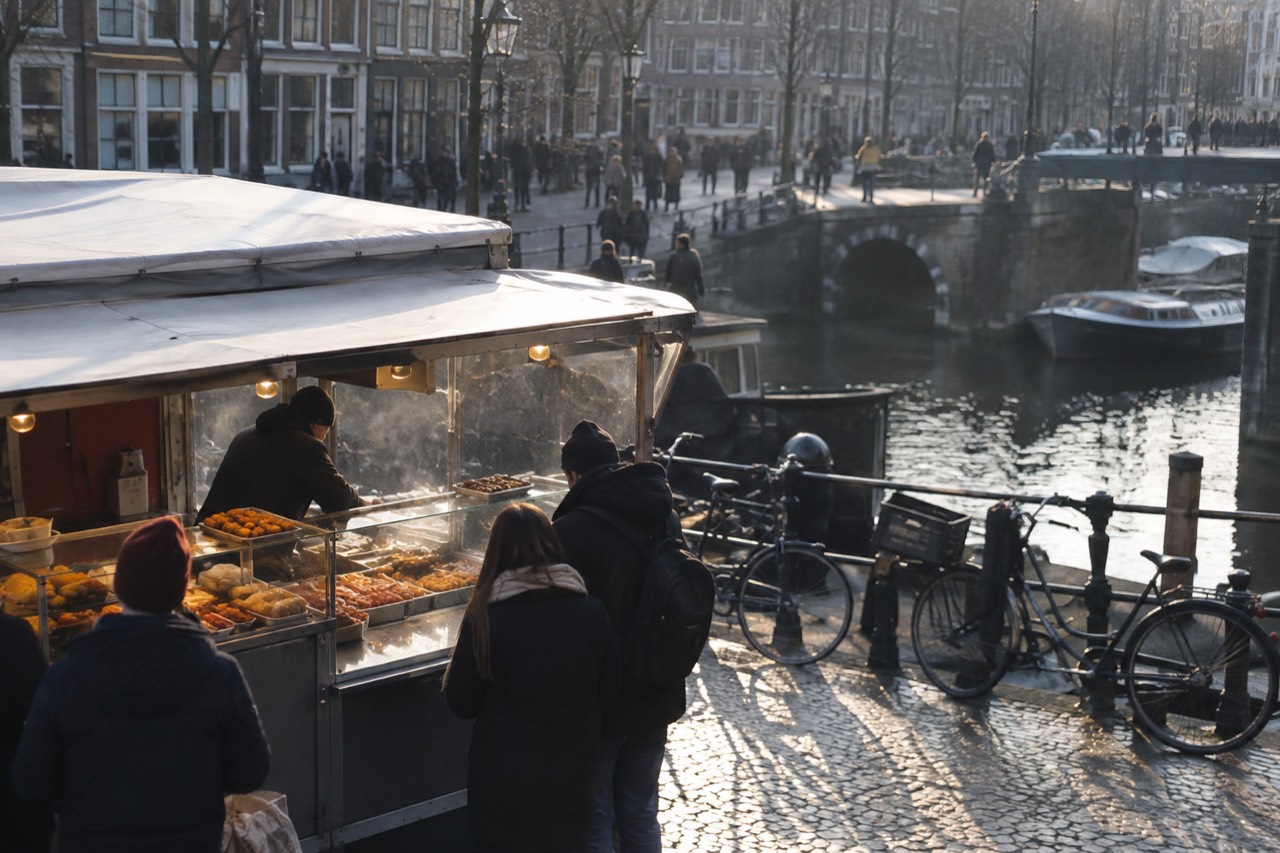
Amsterdam is known for Dutch snacking food eaten standing up or in a pub: raw herring (haring) with onion, warm stroopwafel, deep-fried bitterballen, thick pea soup, thick-cut fries with mayo, and cheese from nearby Edam and Gouda. Underneath that sits a brown-café culture of beer and simple hot food, and a brewing heritage that produced Heineken. The city's own food guide covers the full plate.
The honest answer to this question is narrower than most visitors expect. Amsterdam is not the place to find one signature showpiece dish in the way Naples has pizza or Lisbon has bacalhau. What it has instead is a set of small, cheap, fiercely local foods that Amsterdammers have eaten for centuries, most of them designed for cold weather, busy ports and short breaks between work. The herring stand, the waffle iron and the fryer are the real Amsterdam kitchen.
That port history explains almost everything on the plate. Herring arrived as preserved fish for sailors. Pea soup and stamppot are winter fuel. Bitterballen exist because Dutch gin, jenever, is bitter and demands something salty alongside. Even the famous tolerance for beer over water is a brewing-city inheritance: Amsterdam's canal water was never drinkable, and the city drank beer instead for hundreds of years.
Visitors who arrive expecting restaurants are often surprised by how much of the food culture happens in the street and in the café. The stalls around the centre sell single portions for a few euros, and the classic Dutch approach is to graze across a day rather than commit to one long dinner. That is also why the organised tasting walk has become one of the most booked food experiences in the city: it turns the grazing into a route.
For travellers who want the food and the city's biggest non-food landmark in one trip, these three picks cover the spread: the brewery experience that anchors Amsterdam's beer identity, a guided tasting walk through the snack canon, and the museum ticket that pairs with a Museumplein café stop.
Which Dutch Snacks Should You Try First?
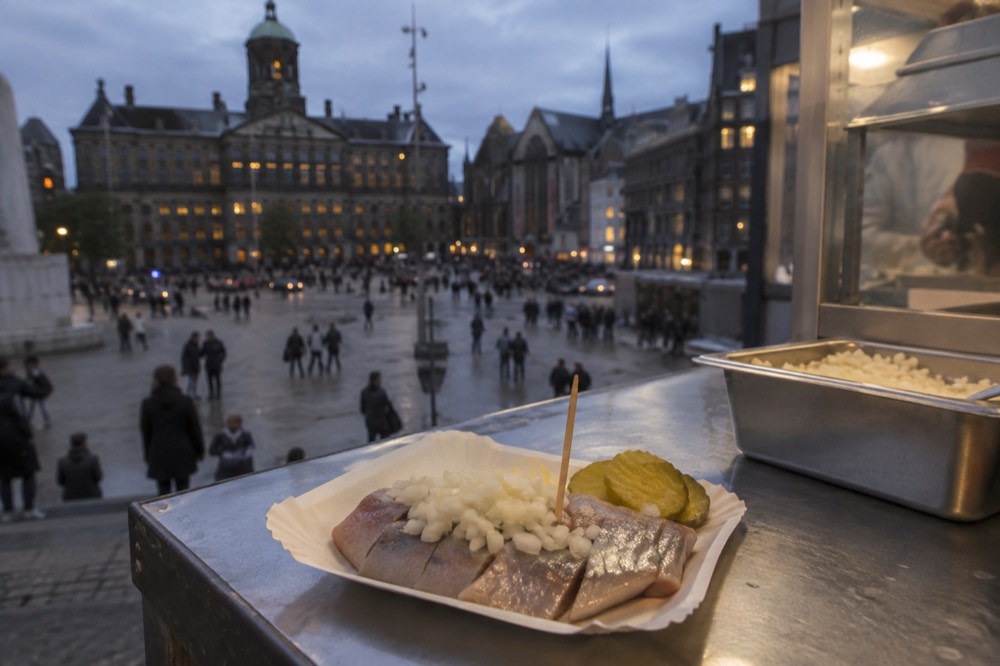
Start with haring, stroopwafel and bitterballen, in that order of importance. Haring is the defining Amsterdam food: raw, salt-cured herring eaten with chopped onion and pickles, held by the tail and bitten. Stroopwafel is a thin waffle glued with caramel syrup, best bought warm from a market stall. Bitterballen are breaded, deep-fried gravy-and-beef ragout balls, the standard bar snack in any brown café.
Haring deserves the top spot because it is the one food that is genuinely, historically Amsterdam's. The Dutch herring fishery, with its curing technique that kept the fish edible for months, is one of the foundations of the country's entire golden-age prosperity, and Amsterdam was its trading capital. The season matters: the best herring, called Hollandse Nieuwe, comes from the early summer catch when the fish is fattest. Stalls sell it year round from frozen stock, but connoisseurs watch for the new season.
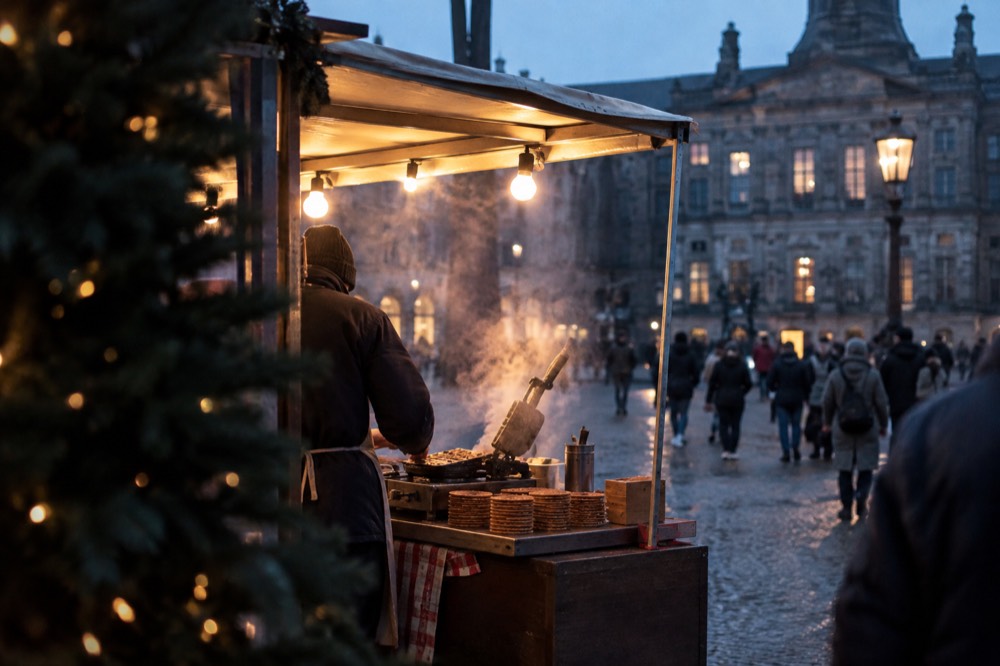
Stroopwafel is the friendliest of the three. The original version is made in Gouda, but the fresh ones pressed on market stalls across Amsterdam are the ones worth queuing for: soft, pliable and served warm, so the syrup inside is still liquid. The supermarket packet version, years old and brittle, is a different product entirely. The trick locals use is to rest the waffle briefly over a hot cup of coffee so the caramel loosens.
Bitterballen are the social one. You order them with a beer, they arrive in a small dish with mustard, and the first bite is a small hazard: the inside is molten. The classic Dutch snacks guide walks through the full list, but the short version of the canon looks like this.
| Snack | What It Is | Where to Eat It Well |
|---|---|---|
| Haring | Raw salt-cured herring with onion and pickles | Herring stalls in the centre and at Albert Cuyp Market |
| Stroopwafel | Thin waffle with caramel syrup, served warm | Market stalls with a fresh press, not supermarket packs |
| Bitterballen | Deep-fried beef ragout balls with mustard | Any brown café, ordered with a beer |
| Poffertjes | Small puffed pancakes with butter and powdered sugar | Winter food stands and pancake houses |
| Frites | Thick-cut fries with mayonnaise or satay sauce | Fry shops (frietkraam) around the centre |
| Jenever | Dutch gin, drunk neat, the reason bitterballen exist | Traditional tasting houses (proeflokaal) |
One warning worth carrying: eating while walking is tolerated, but the city centre has firm rules about drinking alcohol on the street, and the municipality's own visitor guidance, published on the official How to Amsterdam page, sets out what is and is not allowed in the centre. Sit down for the beer, walk with the waffle.
Where Do Locals Actually Eat: Brown Cafés and Markets
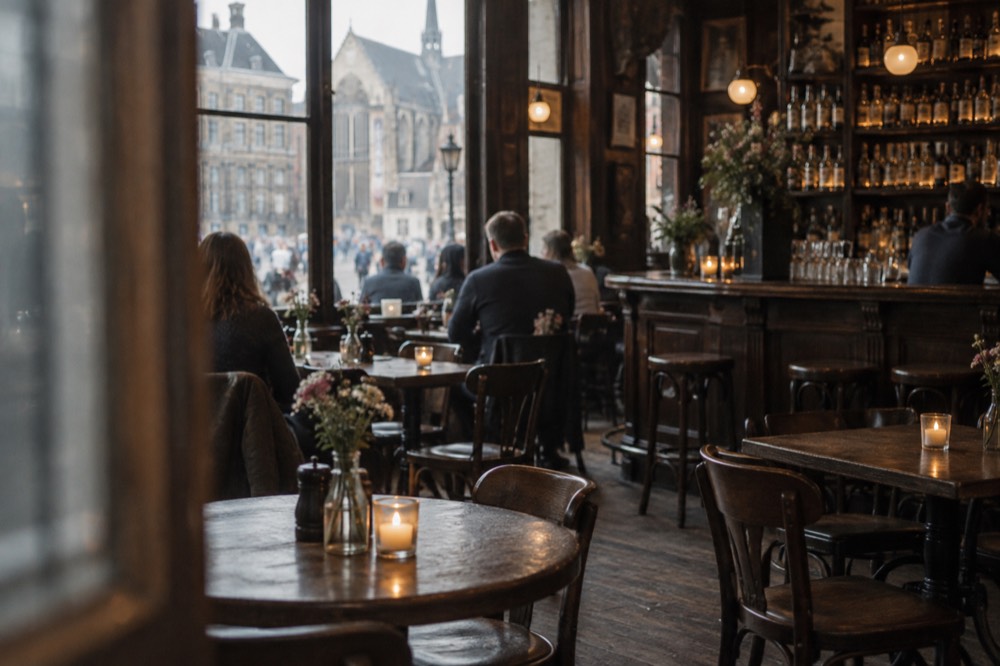
Locals eat in brown cafés and at street markets, not at restaurants on the main canals. A brown café (bruin café) is a traditional Dutch pub with dark wood, low light, candles and a short menu of simple hot food. The main food markets are Albert Cuyp Market in De Pijp and the Dapper Market in Amsterdam Oost, plus the Foodhallen for a modern indoor version.
The brown café is the institution visitors most often miss. The name comes from decades of smoke and candle soot staining the walls, and the format is closer to a living room than a bar: wooden tables, sand on the floor in the oldest ones, a beer list that starts and ends with the local pils, and a menu of one-pot food such as mustard soup, pea soup in winter, or a broodje (roll) with cheese. The brown café guide lists the best of them, and the point is not the food alone but the pace: you stay, you talk, you order another round.
Markets are the other half of the answer. Albert Cuyp Market is the largest street market in the Netherlands in the country's most-visited food neighbourhood, and its stalls are where the herring, the fresh stroopwafels and the cheese vendors actually live. The Dapper Market in Oost is less touristy and better priced. Both are ordinary working markets first, which is exactly why the food is honest: the customers come back every week and would notice a bad herring.
For a sit-down version of the same idea, the Foodhallen in Oud-West collect two dozen independent food vendors under one industrial roof. It is the modern, international face of Amsterdam eating, and a fair contrast with the brown café: the city's food scene today runs on both, the centuries-old pub and the migration-driven food hall, and any honest answer to what Amsterdam is known for has to include Indonesian rijsttafel, Surinamese broodjes and Turkish pizza alongside the herring and the pea soup.
Beer belongs in this section because in Amsterdam it is food culture, not just a drink. The city's biggest brewing name started here as a 19th-century brewery in the centre, and the building it grew from is now a visitor experience where you walk the old vats, taste the beer and learn why Amsterdam, of all cities, became a beer exporter to the world.
Is Cheese and Beer the Real Amsterdam Food Culture?
Partly, yes. Cheese and beer are the two products Amsterdam traded on for centuries, and both still anchor its food image. The cheese sold in the centre is mostly from Gouda and Edam, towns within day-trip distance, and the beer culture runs from brown café pils to the Heineken brewing dynasty. But the deeper food culture is Indonesian rijsttafel, a colonial-era dinner format Amsterdam made its own.
Cheese first. The wheels stacked in every centre shop are Gouda and Edam, and the names are the towns, both reachable from Amsterdam in well under an hour. The cheese shops in the centre are aimed at visitors, and the tasting is free, but the same cheeses are sold cheaper at the markets. The classic Dutch pairing is cheese with mustard, and the classic drink alongside is a small jenever, which is how the tasting houses serve it. The wider set of guides lives on Things to Do in Amsterdam.
Beer is the other pillar. Amsterdam's position as a trading port made it a brewing city, and the biggest story in that history is Heineken, which began in a building on the Stadhouderskade and grew into one of the world's most recognised beers. That original brewery is today the Heineken Experience, a self-guided walk through the old building with tastings included, rated 4.6 across 39,581 reviews, with tickets from $23 and a visit lasting around an hour and a half. It sits in the centre, close to the museum district, which makes it an easy pairing with a day of eating.
The third pillar, and the one that surprises people, is Indonesian food. The rijsttafel, a "rice table" of many small dishes served together, was invented by Dutch colonials in the East Indies and was brought back to the Netherlands, where Amsterdam became its European home. Today the city has a serious claim to some of the best Indonesian food outside Indonesia, and asking for a rijsttafel is the local way to eat it. Alongside it, Surinamese roti shops and Turkish bakeries are ordinary lunch stops for Amsterdammers, not curiosities.
For visitors who want the cheese story at the source, the day trips to the cheese towns are among the most booked excursions from the city, and the Zaanse Schans, Volendam and Edam routes all include a cheese farm stop.
Which Food Tour or Experience Is Worth Booking?
The strongest all-round option is a guided food and culture walking tour with ten tastings, rated 5.0 across 1,157 reviews, from $92 per person for three and a half hours. It walks the centre while tasting the canon, which solves the single biggest problem with Amsterdam food: the best snacks are scattered and the tourist traps are concentrated. A cheaper alternative is to self-guide the markets.
The case for a food tour in Amsterdam is stronger than in most cities, and the reason is geography. The genuinely good snack stalls sit inside working markets and brown cafés a tram ride apart, while the stalls on the most-photographed streets sell to people who will never return. A local guide collapses that search into one afternoon, and the best-rated walks include the herring, the warm stroopwafel, the cheese and the bitterballen in a single route, with the history told between stops.
The flagship option on the roster is the food and culture walking tour: ten tastings across three and a half hours with a local guide, rated a perfect 5.0 across 1,157 reviews, from $92. That is at the premium end, and the honest comparison is what the same afternoon costs self-guided: a herring, a stroopwafel, a portion of bitterballen and a beer bought separately at market prices will run to a fraction of that, but you will need to find the right stalls yourself and you will get no stories.
There is a middle path that many visitors take: one paid experience that is food-adjacent rather than a food tour proper. The Heineken Experience is the obvious one, because it explains the beer that every brown café pours, and it is centrally located. Families and mixed groups often split the day this way, a museum in the morning, the brewery in the afternoon, and a self-guided snack route through De Pijp in the evening.
| Experience | Duration | From (USD) | Rating |
|---|---|---|---|
| Food and culture walking tour, ten tastings | 3 hours 30 minutes | $92 | 5.0 from 1,157 reviews |
| Heineken Experience, self-guided with tastings | 1 hour 30 minutes | $23 | 4.6 from 39,581 reviews |
| Self-guided market snack route (Albert Cuyp) | Half a day | Market prices per item | Free to plan |
| Evening canal cruise with pizza and drinks | 1 hour 30 minutes | $40 | 4.5 from 3,046 reviews |
The pizza cruise in that table is not Dutch food, and it is not trying to be. It earns a place because Amsterdam's canals are part of the food experience too: the evening cruise with a drink is how the city looks at its best, and pairing it with food is a reasonable way to spend a first night. Book any of these through the operator's live listing, where current times and prices are shown.
Can You Eat Well in Amsterdam Without Overspending?
Yes, comfortably. The snack canon is cheap by design: herring, fries, stroopwafel and a cheese roll are market-priced street food, and the brown cafés serve hot one-pot meals at pub prices rather than restaurant prices. The expensive mistakes are eating on the main tourist streets, sitting down for table-service meals three times a day, and buying cheese in centre souvenir shops instead of markets.
The budget arithmetic works because the Dutch snack meal is a working-class format. A herring at a stall, a portion of bitterballen in a café and a beer together cost less than a main course at a mid-range restaurant, and they are the authentic version. The same logic applies to lunch: a broodje haring or a Surinamese roti roll is what the city's office workers eat, and the queue outside the good shops is the review system.
Where the money leaks is in the centre's tourist economy. Amsterdam recorded 23.7 million tourist overnight stays in 2025, and the city's own statistics office expects the number to keep climbing, which means the stalls with the best locations do not need repeat customers. Walk two streets off the main drag, or take a tram to De Pijp or Oost, and the same food costs less and tastes better.
A realistic eating day for a careful traveller looks something like this: a cheese roll or pastry from a bakery for breakfast, a market snack crawl for lunch, a brown café for a simple hot dinner, and a beer or jenever somewhere in between. Visitors planning a full budget for the whole trip will find the numbers broken down in the site's dedicated two-day budget plan, which covers rooms and transport alongside food.
One last cultural note that saves money and embarrassment: service is included in Dutch menu prices, and tipping is a small rounding-up rather than a percentage calculation. The bill on the table is close to the bill you pay, which makes the cheap-eating strategy easier to stick to than in cities where the menu price is only the start.
These three picks cover the eating trip end to end: the beer experience in the old brewery, the guided tasting walk through the snack canon, and the museum ticket for the afternoon when the food plan says walk it off.
Common Questions About Amsterdam Food
What Kind Of Food Is Amsterdam Known For?
Amsterdam is known for Dutch snack food: raw herring with onion, warm stroopwafels, deep-fried bitterballen, thick pea soup, fries with mayo, and Gouda and Edam cheese, eaten at market stalls and in brown cafés rather than at formal dinners. Indonesian rijsttafel and the Heineken brewing story complete the picture.
What is the most famous food to try in Amsterdam?
Haring, raw salt-cured herring with chopped onion and pickles, is the city's defining food. It is eaten by the tail or in a soft roll, and the fattest fish arrives with the Hollandse Nieuwe season in early summer.
Is Amsterdam good for vegetarians?
Yes. Stroopwafels, poffertjes, fries, most cheeses and pea soup options are meat-free, and the city has a strong modern vegetarian and vegan restaurant scene. Bitterballen, the standard bar snack, are beef-based, but many cafés offer a cheese version.
Where should I eat to avoid tourist traps?
Eat at street markets such as Albert Cuyp Market or the Dapper Market, and in brown cafés two or three streets off the main canals. The stalls and shops on the most-photographed streets sell to one-time visitors; the markets sell to people who come back weekly.
Is Indonesian food really part of Amsterdam's food culture?
Yes, and it is one of the best answers to this question. The rijsttafel, a shared table of many small Indonesian dishes, was developed under Dutch colonial rule and became a Dutch institution, and Amsterdam is now one of the best cities outside Indonesia to eat it.
How much does eating cost in Amsterdam?
Street snacks are cheap by design: a herring, a stroopwafel or a portion of fries each cost a few euros at market stalls. A guided food tour with ten tastings runs from $92, and the Heineken Experience with tastings is from $23. Restaurant prices on the main tourist streets are the ones to avoid.