Giethoorn Day Trip from Amsterdam: How to Plan It
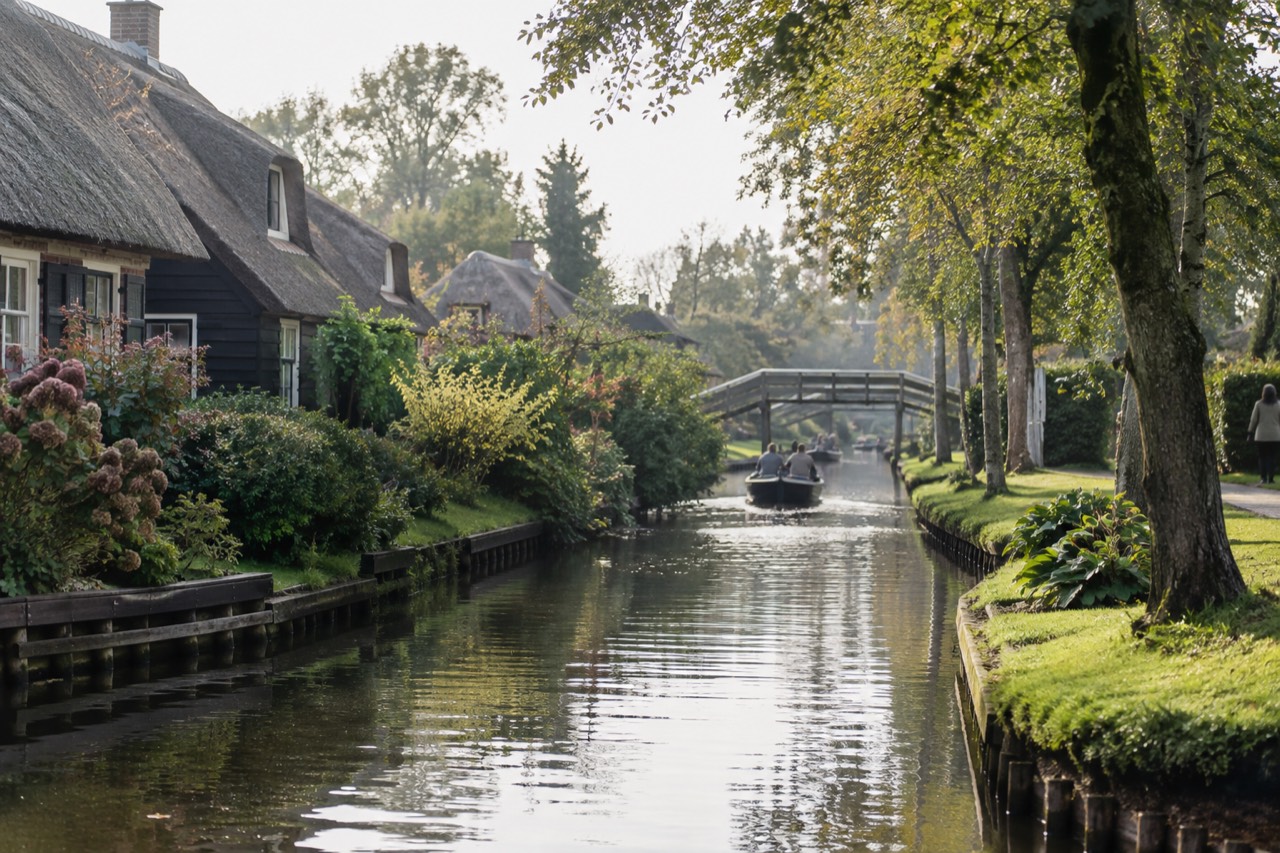
Giethoorn is the Dutch village with no roads through its centre: canals, footbridges and electric boats instead. Here is how the day trip from Amsterdam actually works, what it costs and which tour earns its price.
Short answer
Giethoorn sits about 120 kilometres northeast of Amsterdam and takes roughly two hours to reach by organised tour bus. A guided day trip costs from $100.80 per person and runs 7 to 10 hours. The village itself is small, car-free in its centre and best seen from the water on the included one-hour canal cruise.
Giethoorn does the one thing no other Dutch village can claim quite so neatly: its centre has no roads. Boats, bicycles and footbridges carry people between thatched cottages built along narrow waterways, and the roughly two-hour drive from Amsterdam crosses the polders and dikes that make the landscape look the way first-time visitors expect the Netherlands to look. The village has become one of the country's most photographed day trips, and it earns that status honestly, but it rewards travellers who understand what they are signing up for: a long transfer, a small walkable core and a lot of water.
This guide lays out the journey from Amsterdam in practical terms: how the transport works, what the two main guided tours cost and include, what a realistic hour-by-hour schedule looks like, and how to fold the trip into a wider Amsterdam itinerary without burning a full day of your city break on logistics you could have avoided.
What Is Giethoorn and Why Do Day Trippers Go?
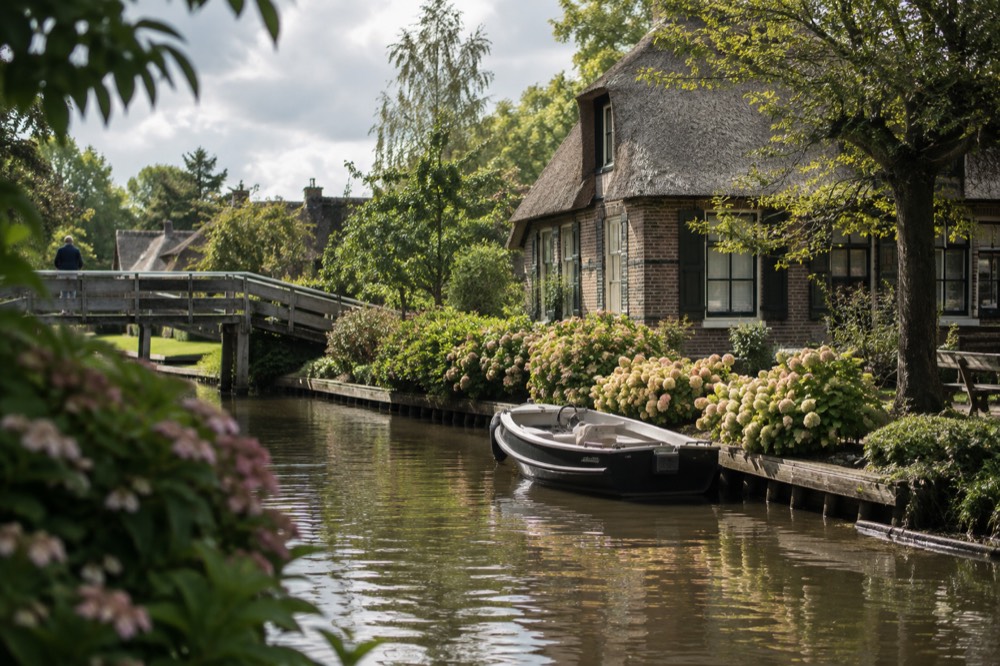
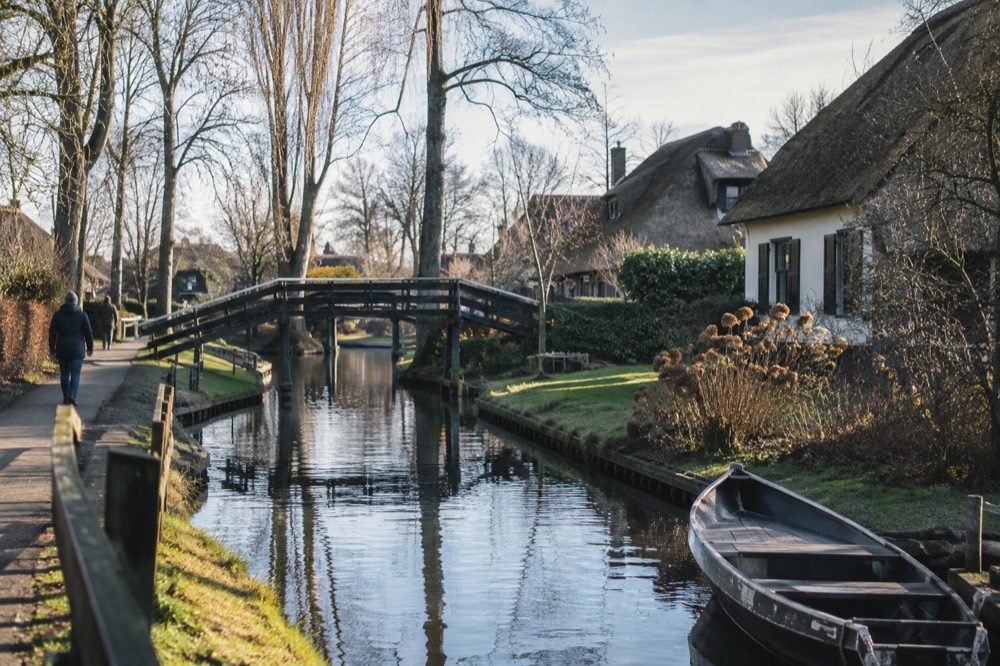
Giethoorn is a village in the province of Overijssel, about 120 kilometres northeast of Amsterdam, where the historic centre was dug out of peatland by canals used to transport thatch and reed. There are no roads through that core, only about 30 centimetres of footbridge and water between cottage doors. Day trippers go for the boat-level view, the quiet and the polder scenery on the drive.
The canals are not a modern tourist installation. They were cut by peat diggers centuries ago, and the spoil heaped alongside them became the narrow strips of land the houses now stand on. That origin explains the village's strange geometry: long straight waterways, thin garden plots and footpaths that end at private bridges. The absence of car traffic in the centre is genuine, though the outer village has normal roads, car parks and bus access, so "no roads" means the old core, not the whole settlement.
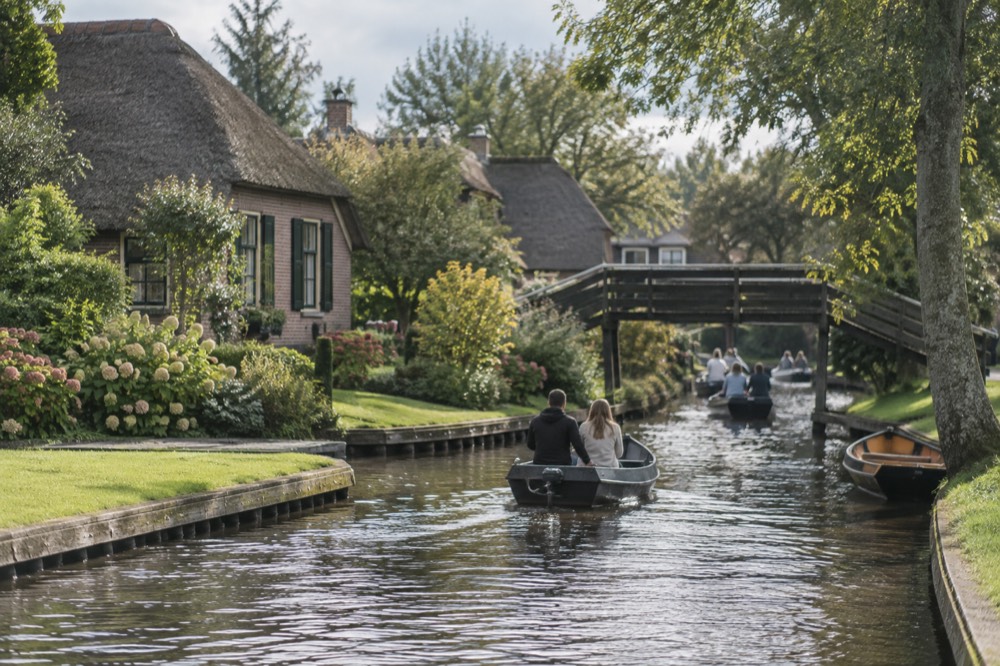
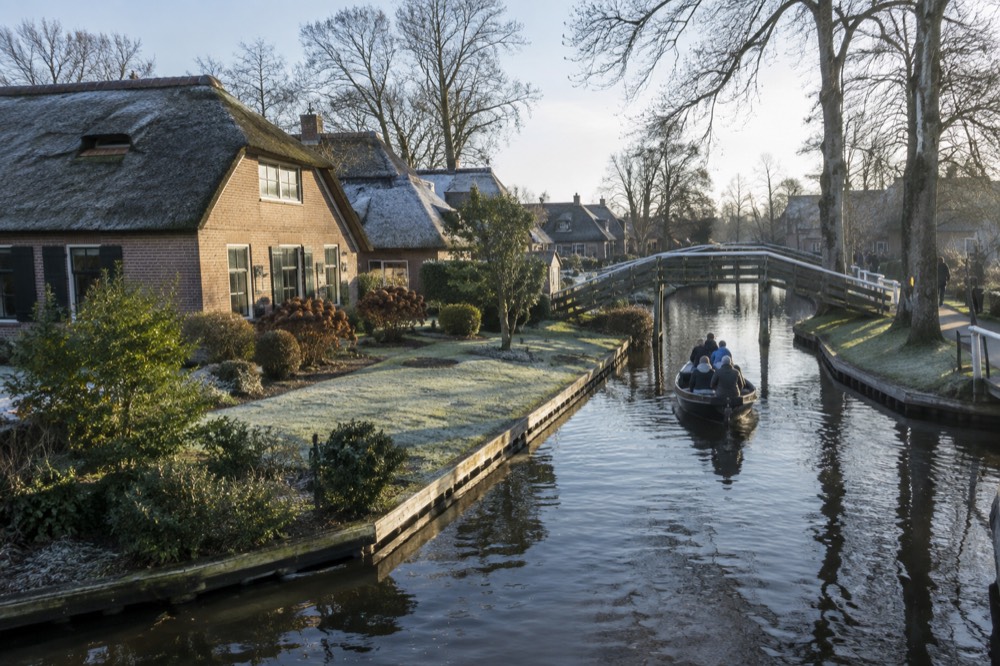
The appeal is largely visual and seasonal. In summer the water is busy with rental punts and electric boats; in late autumn the same channels sit empty and misty, and the cottages look more like a painting than a destination. That swing matters when you pick a date, and the section on timing below covers it in detail. What the village does not offer is a long list of conventional sights: there is no grand museum, no castle, no single must-see landmark. People come to drift through it, on a boat or on foot, and leave.
The village's popularity is real and sometimes overwhelming. On peak summer weekends the main canal can feel like a slow-motion boat traffic jam, and the restaurants near the main landing fill by noon. An organised tour that arrives mid-morning and leaves by mid-afternoon sees the busiest window; independent travellers with a car can time around it. Either way, the experience you get depends heavily on when you go, which is why the schedule section of this guide is written around the clock rather than around the sights.
How Do You Get from Amsterdam to Giethoorn?
There is no direct train from Amsterdam to Giethoorn. The realistic public-transport route is a train to Zwolle or Steenwijk followed by a bus, taking roughly two and a half to three hours each way, which is why most visitors take a guided coach tour, a drive of about two hours each way. A rental car gives the most flexibility and lets you stop in towns such as Zwolle on the way.
The coach option is the one most people should take. Both main tours from the roster include round-trip transport from Amsterdam, and the transfer is not dead time: the route crosses the Noordoostpolder and the reclaimed land of Flevoland, some of it metres below sea level, and a guide uses the drive to explain the dike and polder systems that keep it dry. That context genuinely improves the arrival, because Giethoorn's waterways make more sense once you know the whole region is a managed bathtub.
Doing it by train means an Intercity from Amsterdam Centraal to Steenwijk, roughly an hour and twenty minutes, then a local bus toward Giethoorn, with the total each-way time landing near two and a half to three hours including connections. It is cheaper than a tour but consumes more of the day and removes the guide, the boat cruise and the guaranteed parking. For a traveller with a Netherlands rail pass and a slow travel style, it works; for a two-or-three-day city break, it rarely does.
If you drive, note that you park at the edge of the village and walk or boat in, and that the approach roads are single-carriage and slow through the villages. Before you leave Amsterdam, the practical detail worth knowing is that a GVB 24-hour day ticket costs €10.00 and covers trams, buses, metro and the city's ferries, which is what gets you to Centraal or your tour's departure point in the morning, per the operator's fare page at GVB's current prices. And if you are considering an overnight in the region instead of a day trip, Amsterdam's tourist tax of 12.5% of the overnight price applies to accommodation inside the city, per the municipal page on Amsterdam's tourist tax.
| Option | Each-way time | Approximate cost | Best for |
|---|---|---|---|
| Guided coach tour | ~2 hours | From $100.80 per person, tour price | Most visitors; includes cruise and guide |
| Train plus bus | 2.5 to 3 hours | Standard NS and bus fares | Budget travellers with time |
| Rental car | ~2 hours | Day rate plus fuel and parking | Flexibility, adding Zwolle or other stops |
Whichever way you travel, book the earliest departure you can manage. The village changes character between 10:00 and 15:00 in high season, and the difference between arriving with the morning mist and arriving with three coach loads is the difference between two different destinations.
Which Giethoorn Day Trip Tour Should You Book?
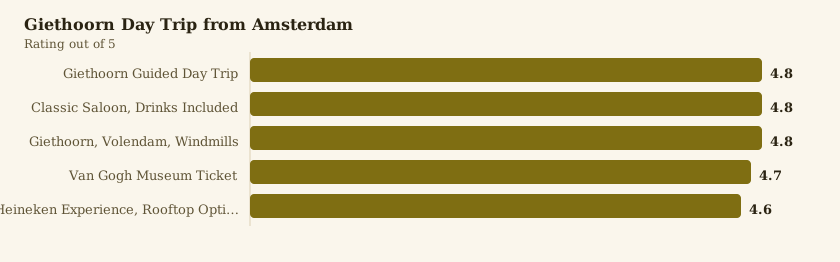
Two tours dominate the Amsterdam roster. The Giethoorn Guided Day Trip costs from $100.80, runs 7 to 8 hours and includes a one-hour canal cruise through the village, rated 4.8 across 575 reviews. The Giethoorn, Volendam and Zaanse Schans Tour costs from $161, runs 10 hours and adds windmills and a fishing village, rated 4.8 across 812 reviews. Pick the first for Giethoorn itself, the second for a full-country sampler.
The single-stop tour is the honest choice if Giethoorn is what you came for. You get the drive, the guide's commentary on the polders, roughly two to three hours in the village, and the one-hour boat cruise through the main canals, which is the correct way to see a place built at water level. At 7 to 8 hours total it also leaves you a workable evening back in Amsterdam, which the 10-hour version does not. Reviews consistently single out the cruise and the guide's polder commentary as the parts that justify the price.
The combination tour makes sense for travellers on a short first visit who want windmills, a touristy-but-pretty lakeside village and Giethoorn in one long day. The trade is real: with 10 hours of driving and stops, your time in Giethoorn compresses, and you experience each place as a highlight reel rather than a visit. It is also the more expensive ticket at $161 from, though it removes the need to book two separate day trips. If your Amsterdam stay is five days or more, doing Zaanse Schans and Volendam on a separate, shorter excursion is usually the better plan; see the Zaanse Schans guide and the Volendam and Marken guide for how those half-day options compare.
Both tours depart from central Amsterdam stops and return to the same area, and both are live-listing products, so exact departure points, seasonal schedules and inclusions should be confirmed on the operator's listing before you book. The listing for the single-stop tour is the one to read most carefully: the included boat cruise is the centrepiece, and winter sailings occasionally adjust their schedule. You can also check the guided day trip's live details on its tour page.
| Tour | Price from | Duration | Rating | Includes |
|---|---|---|---|---|
| Giethoorn Guided Day Trip | $100.80 | 7 to 8 hours | 4.8 (575 reviews) | Round-trip transport, guide, 1-hour boat cruise |
| Giethoorn, Volendam and Zaanse Schans Tour | $161 | 10 hours | 4.8 (812 reviews) | Three stops, round-trip transport, guide |
A note on doing it independently: it is entirely possible, and the train-and-bus route above costs less than either tour. What you give up is the boat cruise unless you rent one yourself, the guide's explanation of the landscape, and the schedule discipline that gets you back to Amsterdam at a predictable hour. For most city-break travellers, the guided version is the rational buy.
What Does a Giethoorn Day Trip Actually Look Like Hour by Hour?
A typical guided day runs like this: depart Amsterdam around 08:30 to 09:00, drive about two hours across the polders with commentary, arrive in Giethoorn late morning, take the one-hour canal cruise, then get two to three hours of free time for lunch, footbridges and museum visits, and depart around 15:00 to 16:00, landing back in Amsterdam by early evening. Total elapsed time is 7 to 8 hours.
The morning drive is better than it sounds. Crossing Flevoland means long straight causeways between lakes and farmland reclaimed from the sea in the twentieth century, and the guide's stories about dike breaks and land reclamation set up the village perfectly. Sit on the left side heading out for the open water views. Most tours make a short comfort stop partway through the drive.
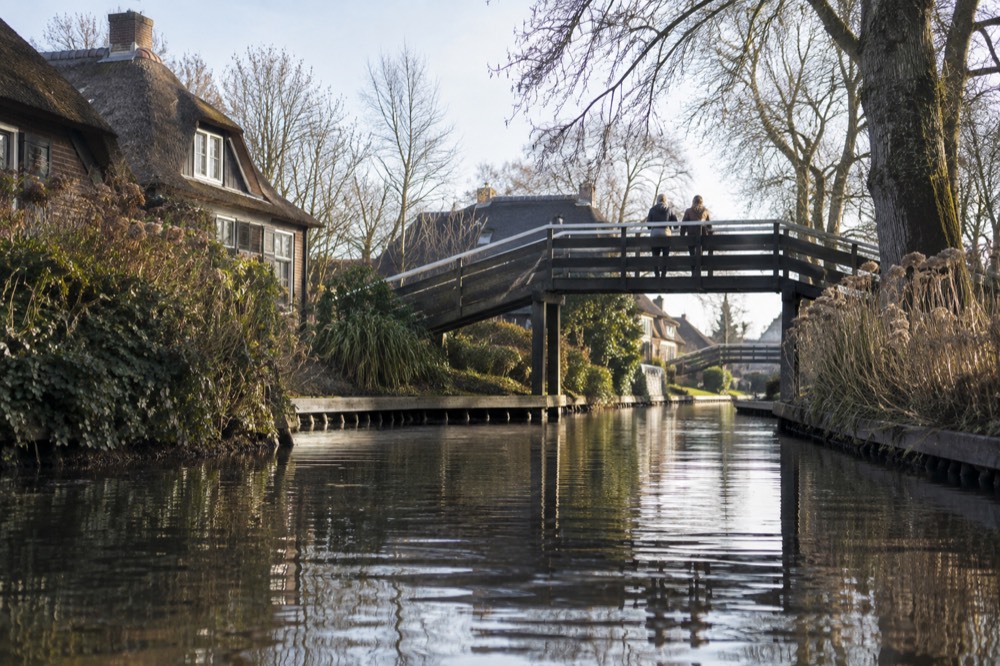
Arrival is the moment the tour earns its money. The coach parks at the village edge and the group walks or boats into the car-free core. The one-hour cruise comes first on most departures, which is the right order: you see the whole canal system from the water while your legs are fresh and the light is still interesting, then your free time is spent on specifics rather than on orienting. After the cruise, the standard free-time menu is lunch at a waterside terrace, the small local history museums, and walking the footbridge loop between the main canals.
| Time | What happens | Notes |
|---|---|---|
| 08:30 to 09:00 | Departure from central Amsterdam | Arrive 15 minutes early; coaches leave on time |
| 09:00 to 11:00 | Drive across Flevoland and the polders | Guide commentary, one comfort stop |
| 11:00 to 12:00 | One-hour canal cruise in Giethoorn | Included in the tour price |
| 12:00 to 14:30 | Free time: lunch, footbridges, museums | Confirm the meeting point and time in writing |
| 15:00 to 15:30 | Depart Giethoorn | Return drive, usually quieter |
| 17:00 to 17:30 | Back in central Amsterdam | Evening free for dinner or a cruise |
Two practical warnings from the schedule. First, the free time is genuinely free: the guide will name a meeting point and a return time, and missing the coach in a village two hours from your hotel is an expensive mistake. Second, lunch options in the core are limited and peak at exactly the hour your free time starts, so either eat immediately on release or accept a wait. The simple fix is to ask the guide where the crew eats.
What Does a Giethoorn Day Trip Cost in Total?
The tour is the biggest line item: from $100.80 for the single-stop day trip or from $161 for the three-stop version, both including transport, guide and, on the first, the canal cruise. On top of that, budget for lunch in the village, optional museum entries and drinks, plus your morning transport to the departure point, where a GVB 24-hour ticket costs €10.00.
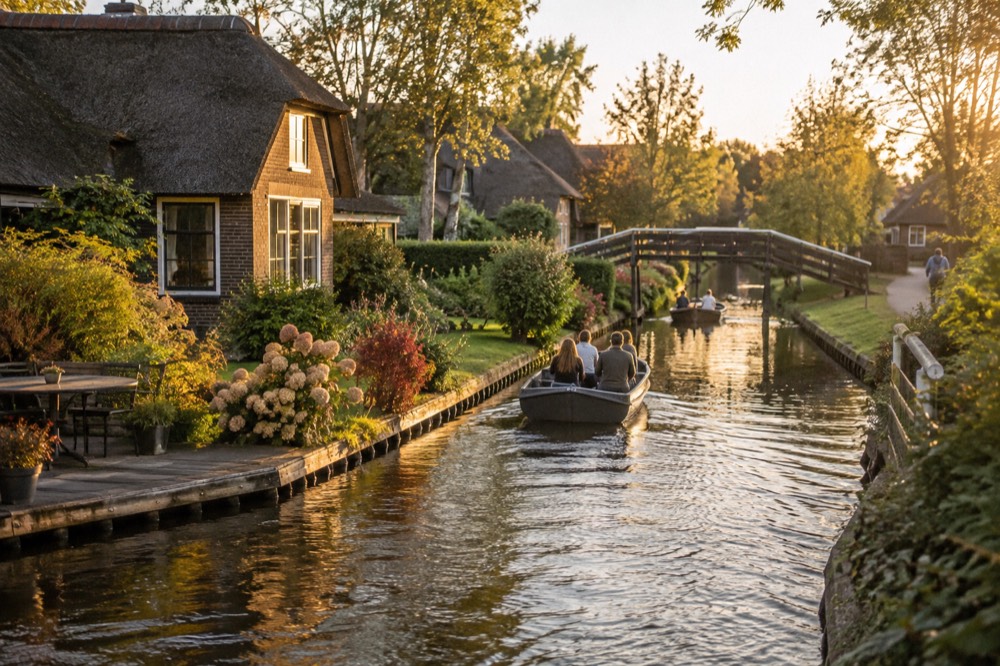
The tour price covers the expensive parts: the coach, the driver, the guide and the boat. What it does not cover is food and any optional extras, and Giethoorn's restaurants are priced for a captive day-trip audience, so a simple lunch for two with drinks lands noticeably above what the same meal costs in Amsterdam's outer neighbourhoods. The village's small museums charge modest entry fees on the door.
The false economy to avoid is booking the cheaper independent route and then renting a boat, buying lunch and paying train and bus fares, which closes much of the gap to the guided price while adding hours of logistics. The tour is expensive because the day is expensive; the polders are a long way from the canal ring.
If you are running a tight overall budget, the honest alternative is not a cheaper Giethoorn day but a different day entirely. Zaanse Schans is reachable in well under an hour and shares the windmill-and-water theme at a fraction of the transport cost, and the best day trips from Amsterdam guide ranks the options by cost and travel time. Giethoorn is worth its price when the car-free water village specifically is what you want to see, not merely "Dutch countryside", which nearer destinations deliver more cheaply.
When Is the Best Time of Year to Visit Giethoorn?
Late May through September is the comfortable window: boats run on full schedules, terraces are open and the reeds are green, at the price of peak crowds. September and early October are the connoisseur's pick, with thinner coach traffic, morning mist on the canals and autumn colour, though some boat operators shorten their season after summer. Winter is quiet and atmospheric but cold, grey and partly shut.
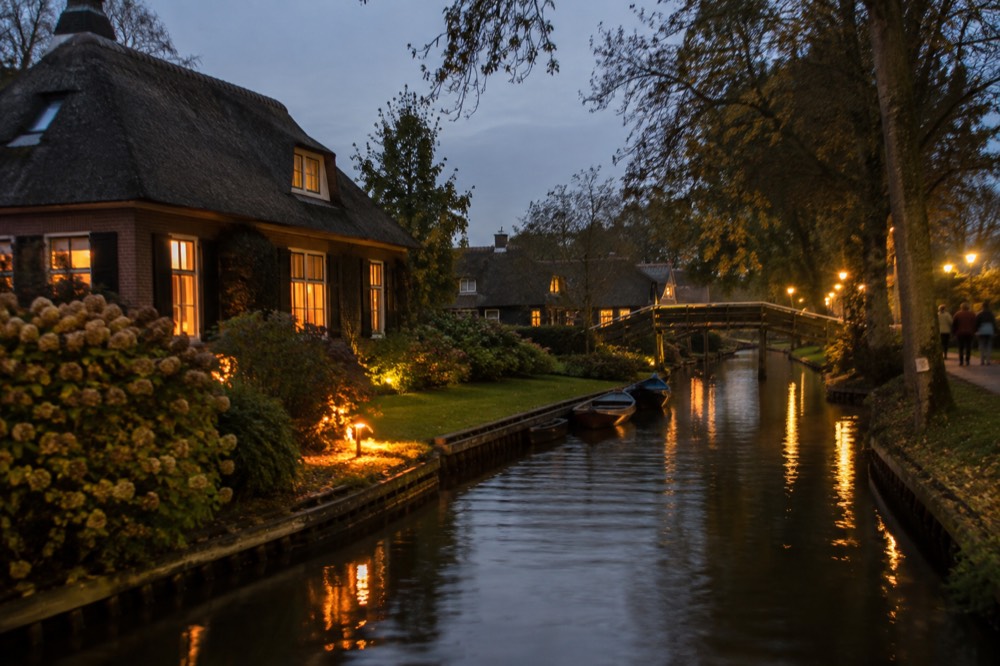
The crowd curve is steep. Dutch school holidays and the July-August European holiday season put the village at its busiest between late June and mid-August, with weekends the worst of it. If summer is your only option, take the earliest departure available and be on the water before 11:00; the village is transformed by the afternoon coach waves. Midweek departures are noticeably calmer than Saturdays.
Spring is a mixed proposition. The reeds are cut and the water is high, but so is the rain, and the boat fleets are only partly back on their full schedules before late April. What spring does offer is the combination with the tulip season: the three-stop tour's Zaanse Schans leg sits in a region that blooms, though Giethoorn itself is not a flower destination and the famous fields are elsewhere, as the tulip season guide explains.
Autumn deserves more attention than it gets. The tour calendar keeps running, the day-trip volume drops sharply after the school holidays, and the village's photography shifts from postcard-green to low-sun-and-mist, which is when the place looks most like the images that made it famous. Bring layers: the cruise boats are open-sided and the open water is cold well into May.
Should You Combine Giethoorn with Another Stop?
Only if your Amsterdam stay is short. The 10-hour Giethoorn, Volendam and Zaanse Schans tour bundles the water village with windmills and a lakeside town in one long day, and for a two-or-three-night first visit it is a defensible way to see three Dutch icons. With four nights or more, splitting them into separate days gives you better experiences of each and saner evenings.
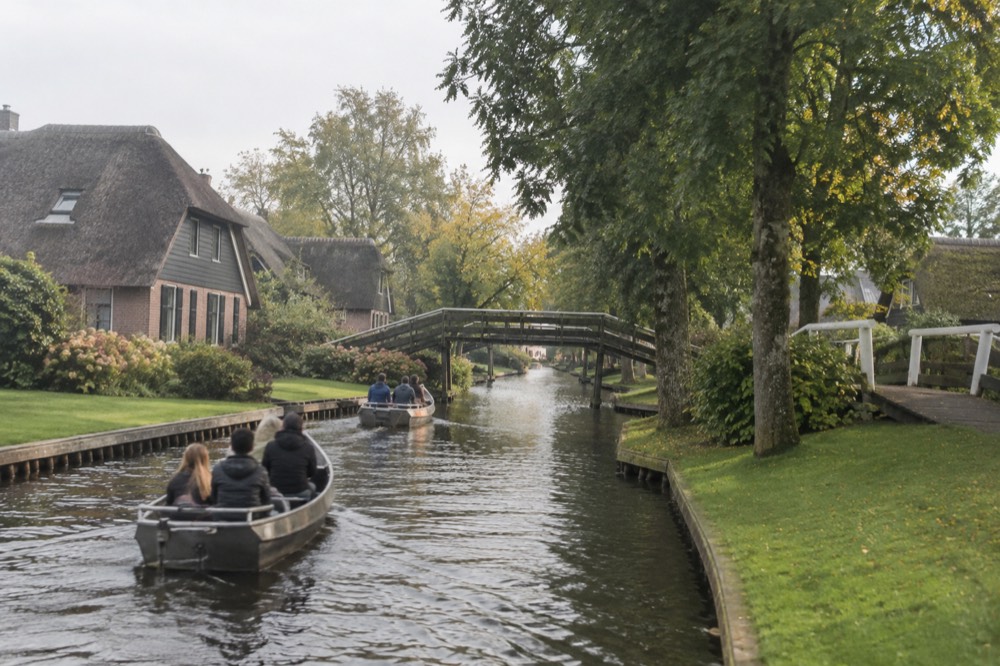
The arithmetic is the deciding factor. The combination tour spends roughly 10 hours on the road and at stops, returning to Amsterdam in the early evening with no energy left. Two separate half-day excursions, Zaanse Schans in one morning and Giethoorn as a full day, cost more in total but return you to the city mid-afternoon with a usable evening both times. On a short break, one exhausted evening is a fair trade; on a week, it is not.
The combination also dilutes Giethoorn specifically. With three stops, your water-village time shrinks toward two hours, which is enough for the cruise and a quick walk but not for lunch on a terrace or the small museums. Travellers who report the three-stop tour as their trip highlight tend to be those for whom any one of the stops would have been enough; travellers who came specifically for the car-free canals tend to wish they had booked the single-stop version.
One combination worth considering in the other direction: because the single-stop tour returns by about 17:30, your evening in Amsterdam is intact, and the canal ring is at its best after dark. A one-hour evening cruise on a classic saloon boat costs from $19.56 and is a natural bookend to a day spent on the water in Giethoorn, running 4.8 across 33,435 reviews on its live listing.
What Should You Do Back in Amsterdam After the Trip?
Most Giethoorn tours return between 17:00 and 17:30, which leaves a full evening. The smart moves are the ones that do not need a car or fresh legs: a one-hour evening canal cruise, dinner in a brown café, or, if you booked ahead, a timed evening slot at a museum. The Van Gogh Museum stays open late on Fridays and requires a pre-booked timed ticket, so it must be arranged before you leave in the morning.
The booking-ahead point matters more than people expect. The Van Gogh Museum requires every visitor to pre-book a timed entry ticket, and slots for popular days sell out, so a Friday-evening visit after a Giethoorn day only works if you secured the ticket days earlier. An entry ticket costs from $31 through the live listing, rated 4.7 across 57,096 reviews, and the museum's own pages confirm the timed-entry rule for all visitors.
If a museum feels like too much structure after seven hours of coach, the low-effort alternatives are strong. The evening cruise needs no planning beyond a departure time, and the city's brown cafés serve as the perfect decompression after a day of polder air: a beer, a bitterbal and a booth in a 17th-century interior. The Amsterdam brown cafés guide lists the ones worth walking to.
The other evening option is to plan nothing, which in Amsterdam is a plan. The canal ring after dark, the bridges lit and the water black and still, is the image most visitors take home, and it costs nothing. After a day in a village built entirely on water, the symmetry is the point: the same engineering, at city scale. It is one of the reasons this site, Things to Do in Amsterdam, spends as much time on evenings as on the headline sights.
Is a Giethoorn Day Trip Worth It from Amsterdam?
For most travellers on a first visit of three days or fewer, no: nearer destinations like Zaanse Schans deliver windmills and water in a quarter of the travel time. For travellers with four days or more, or for anyone specifically drawn to the car-free canals rather than generic Dutch scenery, yes: Giethoorn is genuinely unlike anything within an hour of Amsterdam, and the guided day trip at from $100.80 is a fair price for it.
The honest framing is that Giethoorn is a destination with one idea, and you should go because of that idea rather than despite it. The one idea, canals as streets, is executed completely: there is no half measure, no compromise road sneaking through the core. Villages that close to Amsterdam have roads; Giethoorn's isolation is what preserved it, and the two-hour drive is the entry fee.
Judge it against what you would otherwise do with the day. A seventh hour in the Rijksmuseum, a second canal cruise, an afternoon in Haarlem: these are strong competitors. But if your mental image of the Netherlands is a thatched cottage reflected in still water, no other day trip delivers it, and the reviews on both main tours, 4.8 on each, suggest most travellers feel they got their money's worth.
Practical bottom line: book the single-stop tour unless you are certain you want the sampler, go between September and early October if you can, take the earliest departure, and reserve your evening in Amsterdam before the coach leaves. Do those four things and Giethoorn will feel like the postcard. Skip them and you will still enjoy it, but you will share it with everyone else who had the same idea that morning.
Common Questions About a Giethoorn Day Trip from Amsterdam
How long does it take to get from Amsterdam to Giethoorn?
About two hours each way by coach or car, and roughly two and a half to three hours each way by train and bus via Steenwijk. There is no direct train to the village.
Can you visit Giethoorn without a tour?
Yes. Take the train to Steenwijk and a local bus onward, or drive and park at the village edge. You give up the included one-hour canal cruise, the guide and the fixed schedule, and the total cost is lower but the day is longer.
How much does a Giethoorn day trip cost?
From $100.80 for the guided day trip including transport, guide and the one-hour boat cruise, or from $161 for the 10-hour tour that adds Volendam and Zaanse Schans. Add lunch, drinks and any museum entries on top.
Is one day in Giethoorn enough?
Yes, comfortably. The car-free core is small and walkable in a couple of hours, and the standard tour gives you two to three hours of free time plus the cruise. An overnight adds atmosphere but little else.
When is Giethoorn too crowded to enjoy?
Peak summer weekends between late June and mid-August, roughly from 11:00 to 15:00. Take the earliest departure, cruise before 11:00 if possible, or travel in September or early October for thinner crowds and morning mist.
Is Giethoorn suitable for children or visitors with limited mobility?
Children generally love the boat cruise and the footbridges. The core's paths are flat but the many small footbridges and waterside edges demand supervision and care; check the tour listing directly for accessibility details before booking.