A Rainy Day in Amsterdam: The Best Indoor Plans for Wet Weather
Amsterdam averages more than its share of grey, drizzly days, and the city is built for them. This plan keeps you indoors, undercover and on the water without wasting a single hour of your trip.
Short answer
A rainy day in Amsterdam is best spent on a covered canal cruise, in the Rijksmuseum or Van Gogh Museum (both €25, timed entry), and in the brown cafés of the centre. The I amsterdam City Card covers the Rijksmuseum and transport from €67 for 24 hours, but never the Van Gogh Museum or Anne Frank House.
Rain does not close Amsterdam. The canals stay open, the museums stay open, and the brown cafés get better. The city's indoor stock is unusually deep for its size: a museum quarter that holds four world-class collections within a five minute walk of each other, a canal network built for covered boats, and a food-hall culture that exists precisely because the Dutch spend half the year indoors. A wet Tuesday here is not a lost day, it is the day the city was designed for.
The mistake travellers make is treating rain as an obstacle to the plan rather than a prompt to reorder it. The outdoor items, the Jordaan wander, the Vondelpark picnic, the NDSM wharf photo loop, move to the margins or drop out. The indoor items, which on a sunny day would feel like a chore, become the whole point. This guide sets out that reordering: what to book before you leave the hotel, what to do when the showers set in for the whole afternoon, and where to end the evening without ever standing in the open for longer than a tram stop.
What Does a Rainy Day in Amsterdam Actually Look Like?
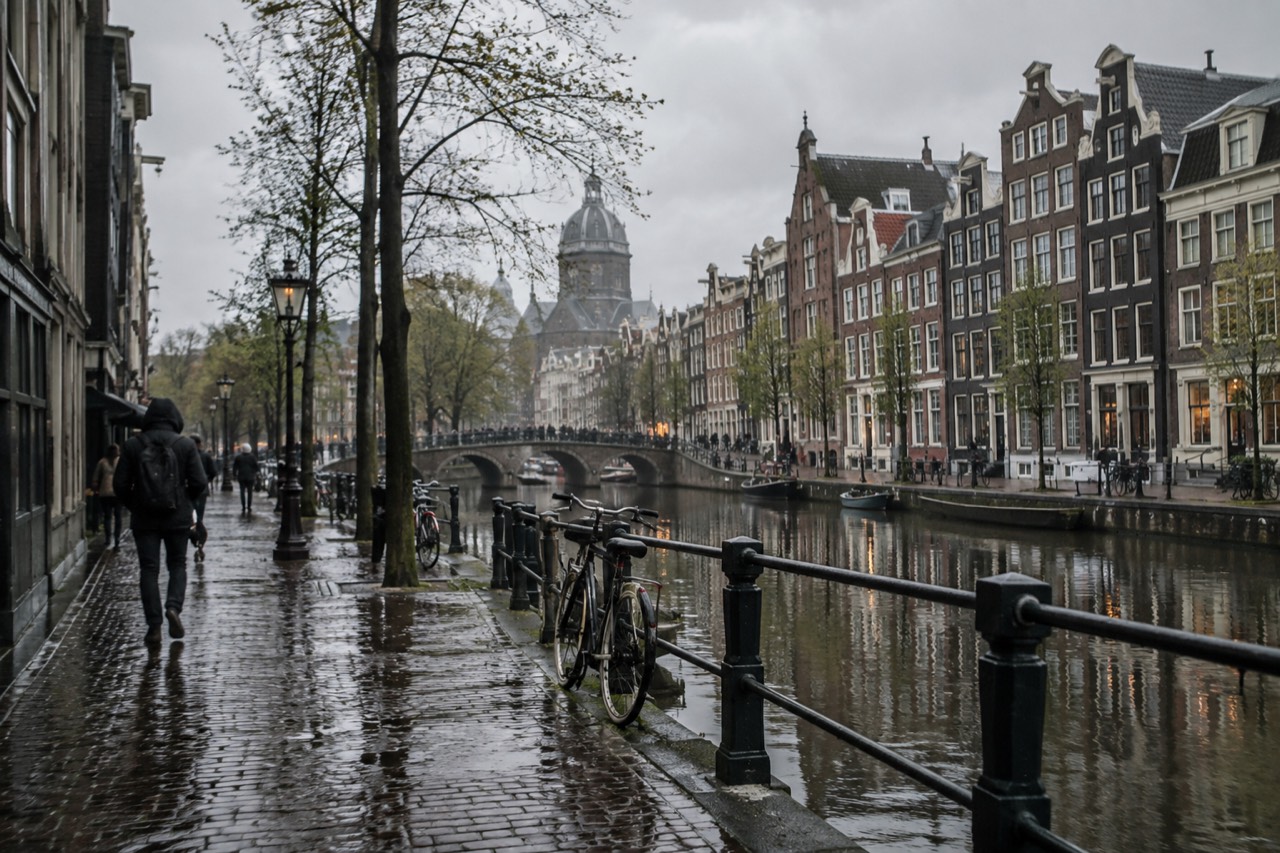
Amsterdam rain is usually frontal and persistent rather than tropical: long grey spells of light-to-moderate drizzle, often with a wind off the water, rather than the short violent downpours of southern Europe. That matters for planning, because a waterproof jacket and a plan built around indoor anchors beats an umbrella and optimism. The city's compact centre means you are rarely more than a few minutes' walk or one tram from shelter.
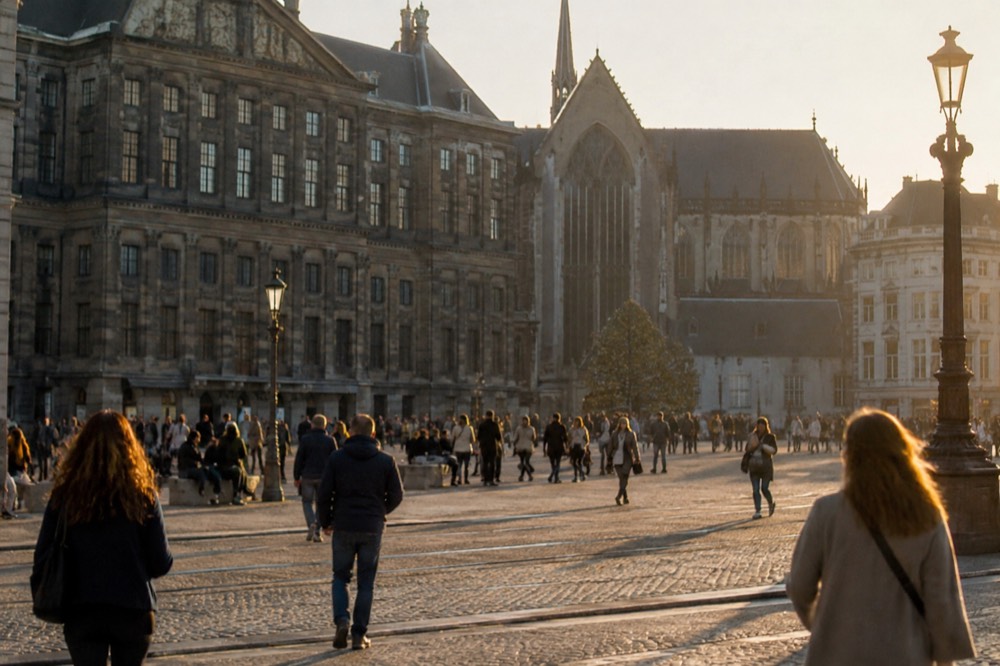
The practical consequence is that distances stop mattering and queues start mattering. On a dry day you would walk from the Rijksmuseum to the Nine Streets in fifteen minutes without thinking about it. On a wet one, the same walk happens twice as slowly, twice as miserably, and you arrive with wet shoes that stay wet, because canal-side cobblestones hold water for hours.
So the shape of a good rainy day is hub-and-spoke. Pick one indoor hub, exhaust it, then make one short covered move, by tram, by boat or by a two minute dash, to the next. Amsterdam rewards this pattern better than almost any city in Europe because its indoor attractions cluster: the Museumplein holds the Rijksmuseum, the Van Gogh Museum and the Stedelijk around a single square, and the centre holds the canal cruise docks, the Anne Frank story locations and several hundred cafés within a triangle you can cross in twenty minutes.
The transport layer is cheap and dry. A GVB 24 hour ticket is €10.00 and covers trams, buses, metro and the ferries, per the operator's own fare page (GVB prices). Trams run every few minutes on the centre's spine routes, so waiting under a canopy is a two minute exercise, not a ten minute one.
Which Museums Fill a Wet Afternoon Best?
The Rijksmuseum and the Van Gogh Museum are the two anchors, both €25 for adults, both free for under-18s, and both requiring a pre-booked start time. The Rijksmuseum is open 9am to 5pm every day of the year and needs the most hours; the Van Gogh Museum is the one that sells out first on grey days, because everyone in the city has the same backup plan. Book both before you leave the hotel.
Start with the Rijksmuseum if you have a long afternoon ahead of you. It is the deepest collection in the country, arranged over a building you can genuinely get lost in, which is exactly what you want from a rain shelter: the museum's own practical info page (Rijksmuseum opening hours and prices) confirms the daily 9am to 5pm schedule, including public holidays, and the €25 adult price with free entry for ages 18 and under. A start time must be booked even by card holders, and a limited number of tickets is held at the entrance while stocks last, which on a wet Saturday means none.
The Van Gogh Museum is the tighter, more crowded experience, and the one where pre-booking is not optional in any sense. The museum states that all visitors require a pre-booked timed entry ticket, and under-18s enter free but still need their slot. With 200 paintings, 500 drawings and 750 letters on show across the collection, two hours goes quickly, and the queue for people without a booked time goes nowhere. If your day starts wet and the forecast says it stays wet, this is the first thing you should secure, and a pre-booked Van Gogh Museum entry ticket from $31 is the simplest way to do it.
Around those two, the Museumplein gives you two more covered options within a hundred metres. The Stedelijk, the Netherlands' premier modern art museum, holds the design and contemporary collections, with tickets from $26 on the live listing. The Moco Museum, a short walk across the square, is the small independent one, with Banksy, Warhol and Keith Haring on its walls and tickets from $20. Neither needs a full afternoon; either fills a ninety minute gap between showers comfortably.
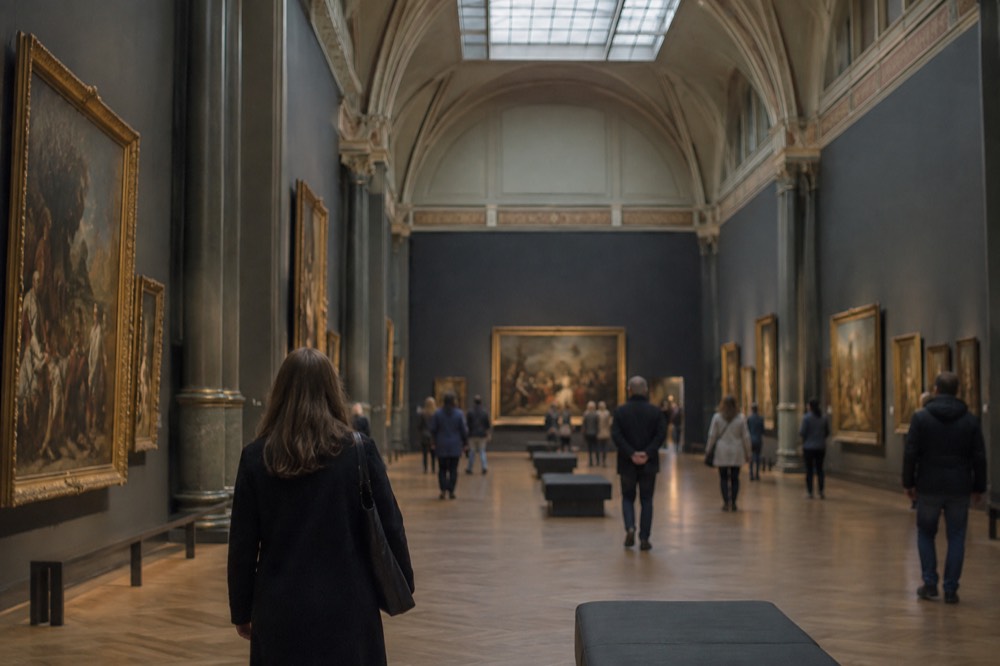
If you are staying in or near the centre, the same logic applies to the smaller museums. The Rembrandt House Museum, the actual house where Rembrandt lived and worked for almost twenty years, is a dense, atmospheric hour and a half, with tickets from $23. The Fabrique des Lumières in the Westergas park is the opposite experience: a former gasworks turned into a huge immersive projection space, where the current Klimt show covers the walls and floor of an industrial hall with moving imagery. It is arguably the single best wet-weather venue in the city, because it is an attraction that is improved by being indoors and dark.
| Museum | Adult Price | Under-18s | Timed Entry |
|---|---|---|---|
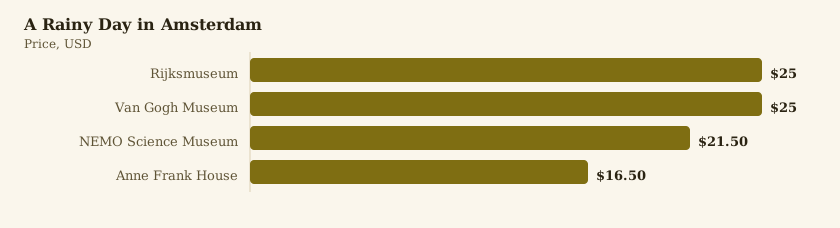
| Rijksmuseum | €25 | Free | Required, book a start time |
| Van Gogh Museum | €25 | Free, slot still required | Required for all visitors |
| NEMO Science Museum | €21.50 flat, ages 4 and over | Free under 4 | Yes, tickets carry a start time |
| Anne Frank House | €16.50 | €7 ages 10–17, €1 ages 0–9 | Yes, official site only |
One Anne Frank note, because it is the question every visitor asks. The Anne Frank House is not a rainy-day fallback you can decide on at 2pm. Tickets exist only on the museum's own site (Anne Frank House tickets), for a specific date and time, with no door sales and no reseller, and the museum's own price table states plainly that the I amsterdam City Card gets no discount. If you have a slot, rain makes the visit better, because the queue is under cover. If you do not, a guided walk through the Jewish Quarter is the honest alternative, and the two hour small-group Anne Frank walking tour, from $33 with a 4.9 rating, covers that story in the open, so save it for a drier window if you can.
For the full museum-by-museum queue strategy, including which collections you can see free with the right pass, read our guide to Amsterdam museum tickets, and for a deeper dive into the big three, see a museum day in Amsterdam.
Is a Canal Cruise Still Worth It When It Rains?
Yes, and it is arguably better. Almost every cruise operator in Amsterdam runs covered or fully enclosed boats, with glass roofs on the classic saloon vessels, so a cruise in the rain means warm seats, fogged windows and empty decks. The standard one hour cruise costs from about €15.50 direct, and pre-booked options on the live listings start at $15, so it is also the cheapest covered sightseeing hour in the city.
The saloon boat is the format built for bad weather. These are the late 19th century vessels, some sailing since 1902, restored with wooden interiors and quiet electric engines, and the better ones run with a glass canopy so the canal houses stay in view while the rain stays outside. The classic saloon boat cruise with drinks and cheese, from $19.56 with a 4.8 rating across 33,435 reviews, is the standard bearer: one hour, live guide commentary, and an optional upgrade with Dutch cheese and unlimited drinks, which turns a shelter from the rain into the best value hour of your day.
The big-operator alternative is the one hour cruise with an audio guide in 19 languages, departing from three docks including one by the Rijksmuseum itself, from $15. On a rainy day the departure-point flexibility matters more than usual, because it lets you board from whatever museum you are already inside rather than walking to a central jetty.
| Cruise | From (Live Listing) | Duration | Best for a Wet Day |
|---|---|---|---|
| Classic saloon boat with drinks and cheese | $19.56 | 1 hour | Glass canopy, cheese and drinks included |
| Canal cruise from three docks | $15 | 1 hour | Boards next to the Rijksmuseum |
| Pizza dinner cruise with unlimited drinks | $40 | 1 hour 30 minutes | Dinner and the cruise in one covered move |
| Evening city lights cruise | $21 | 1 hour 30 minutes | Wet evenings, illuminated bridges |
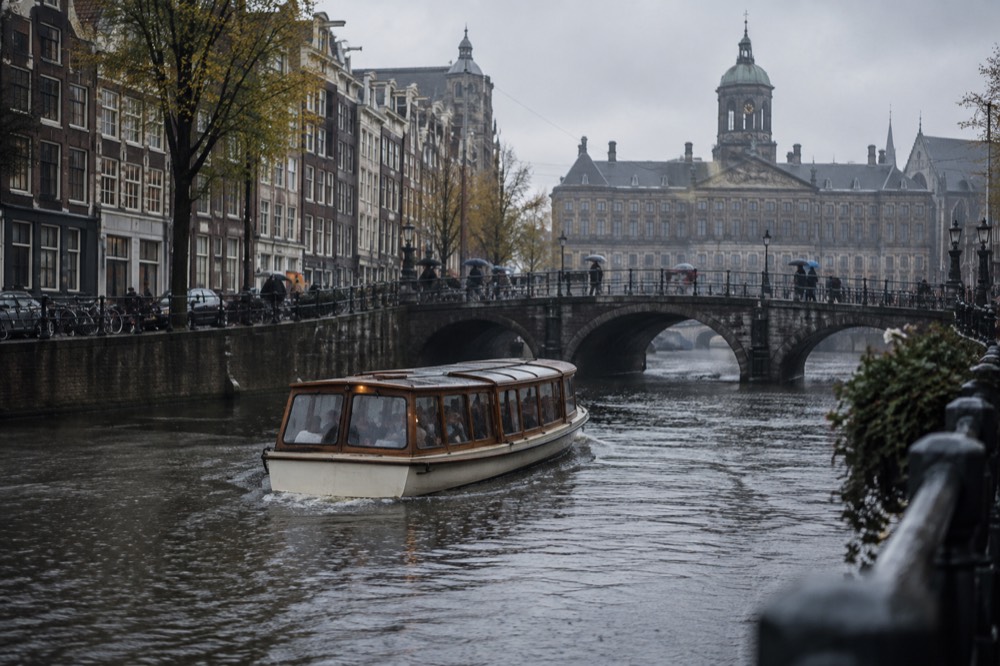
The evening version deserves a special mention. An evening city lights cruise, from $21, or the sunset cruise with optional drinks, from $23, puts you on the water exactly when a wet day is at its most photogenic: the bridges lit, the rain on the canal surface, the gabled houses glowing. Rain thins the decks too. Reviewers on the live listings consistently note that the wet-weather departures are the quiet ones, which on a boat that holds thirty people is the difference between a sightseeing cruise and a private one.
One planning note: the free GVB ferries behind Centraal Station run whatever the weather, so if you want the water experience without paying for it, the crossing to Amsterdam Noord is a covered, heated five minutes each way. It is a ferry, not a cruise, but on a day of solid rain it is the driest free thing in the city.
What Indoor Attractions Are Worth Booking Beyond the Museums?
The Heineken Experience is the flagship non-museum indoor attraction: a 90 minute interactive walkthrough of the original 19th century brewery, from $23, rated 4.6 across 39,581 reviews. Around it sit the Amsterdam Dungeon, THIS IS HOLLAND's flight simulation, Fabrique des Lumières and STRAAT, the street art museum, all fully indoors and all bookable, which on a wet day is worth more than any of them being famous.
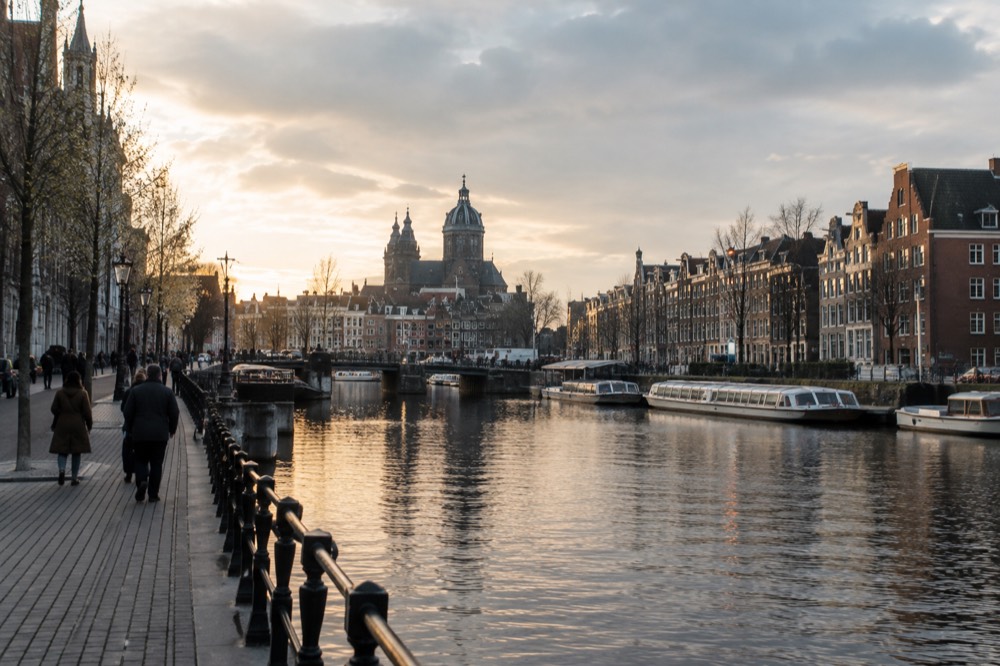
The Heineken Experience works in rain because it is built like a museum but paced like a ride. You move through the historic brewery buildings on a set route, with multimedia exhibits, a brewing demonstration and the tasting room at the end, and the whole thing runs about an hour and a half. It sits on the Stadhouderskade, a ten minute walk from the Rijksmuseum, which makes it the natural second half of a Museumplein afternoon when one museum is not enough and two feels like work.
The Amsterdam Dungeon, from $22, is the theatrical option: an hour of live-actor shows on the grimmer episodes of Dutch history, fully indoors and deliberately dark. THIS IS HOLLAND, from $26, is the other one worth knowing about on a rain day: a flight-simulation attraction that flies you over the whole country on a moving platform with a domed screen, an experience that only makes sense indoors. STRAAT, the street art museum in a former warehouse on the NDSM wharf, holds more than 180 works by over 170 artists and pairs well with the free ferry crossing mentioned above, since the ferry lands a short walk from its door.
If the afternoon is half gone and you are near the centre rather than the Museumplein, the honest advice is to stop adding attractions and start sitting down. Amsterdam's indoor culture is not only ticketed. The Begijnhof, the Oude Kerk and the canal-house museums of the centre all offer an hour of shelter with centuries attached, and none of them needs a booking.
Before you book anything else, though, settle the Van Gogh question, because it is the slot most likely to be gone by the time you decide. If you have not secured a timed entry yet, do that first and build the rest of the day around it.
Where Do You Eat When the Weather Turns?
Brown cafés and food halls are Amsterdam's wet-weather dining system: the brown café is a small, candle-lit pub with a wood-and-brass interior and a menu built around beer and bitterballen, while the Foodhallen is a converted tram depot in Oud-West holding two dozen food stands under one roof. Both are at their best precisely when it is raining, and neither requires a reservation.
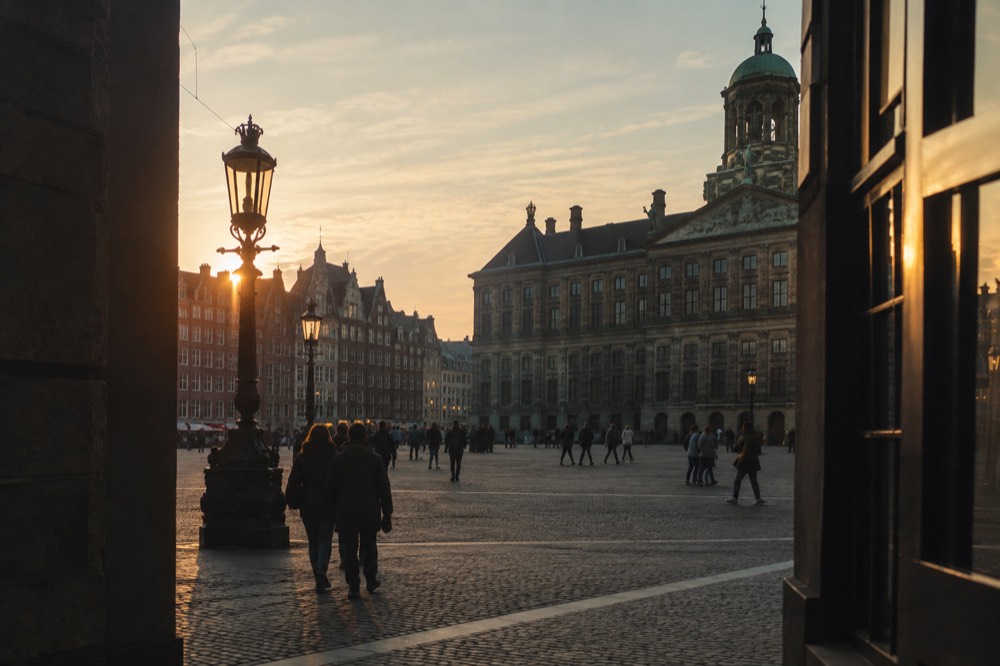
The brown café is the institution to understand. These are not pubs in the British sense and not bars in the American sense: they are small, dim, wooden rooms, often centuries old, where the day's weather is the main conversation and the food is deliberately simple, cheese, bitterballen, thick soup, and a beer list that starts and ends with the local classics. On a wet afternoon a brown café with a window seat is the most Amsterdam experience available at any price, and most of them are free to enter and cheap to stay in.
The Foodhallen is the modern equivalent for groups and picky eaters: one roof, dozens of kitchens, everything from Vietnamese to Dutch street food, and seating that means nobody has to agree on one restaurant. It is a fifteen minute tram ride from the centre and it turns a rainy dinner decision into a two minute walk between counters.
The covered middle ground is the food tour. The three and a half hour food and culture walking tour, from $92 with a perfect 5.0 rating across 1,157 reviews, runs ten tastings through the centre with a local guide, and while it involves street time between stops, the stops themselves are all indoors. On a day of light drizzle rather than steady rain, it is the best value food experience in the city. Our Dutch food guide covers what to order once you are seated.
The dinner cruise is the move that solves two problems at once. The pizza dinner cruise with unlimited drinks, from $40, runs an hour and a half on a covered boat with Wi-Fi and a toilet on board, which means dinner, a canal cruise and shelter from the rain in a single booking. It is not fine dining and does not pretend to be, but as a wet-evening plan it is hard to beat, and the 4.5 rating across 3,046 reviews suggests most guests arrive at the same conclusion.
Can You Turn a Rainy Day Into a Full Itinerary?
Yes, and the order matters more than the content. Book the Van Gogh Museum slot first because it is the scarcest, put the Rijksmuseum or Heineken opposite it on the Museumplein, run a covered saloon-boat cruise in the darkest hour of the afternoon, and finish in a brown café or a dinner cruise. The sample schedule below assumes steady rain all day and still leaves you indoors for all but the walks between doors.
The schedule works because each block is covered and each move is short. Trams connect every stop in under ten minutes, the cruise dock by the Rijksmuseum removes the one long open walk of the day, and the evening ends somewhere with a roof and a beer. Swap the morning and afternoon if your Van Gogh slot dictates it; the structure holds either way.
| Time | Plan | Why It Works in Rain |
|---|---|---|
| 09:00 | Breakfast in a centre brown café | Indoors from the first hour, no booking needed |
| 10:00 | Van Gogh Museum, booked slot | Timed entry means no outdoor queue |
| 12:30 | Lunch on Museumplein or in the museum cafés | Both museum cafés are inside the ticket perimeter |
| 14:00 | Rijksmuseum, or the Heineken Experience | Five to ten minutes apart, both fully indoors |
| 16:30 | Covered saloon-boat cruise from the Rijksmuseum dock | Glass canopy, warm seats, thin crowds |
| 18:30 | Brown café in the Jordaan, or the pizza dinner cruise | Dinner and shelter in one move |
| 21:00 | Evening city lights cruise, or a final café | Wet evenings are the prettiest on the water |
Families get a variant of the same plan. NEMO Science Museum is the anchor: a flat €21.50 for everyone aged four and over, free under four, with a start time on the ticket and a roof terrace you can reach free from the street steps even without entering. The building is a green copper ship-shape on the water east of Centraal, its five floors are almost entirely hands-on, and it absorbs children for a full wet afternoon in a way few museums anywhere manage. The full family version of this planning is laid out in three days in Amsterdam with kids.
What Does a Rainy Day in Amsterdam Cost?
A rainy Amsterdam day can cost as little as €50 per person before food: a €10.00 GVB 24 hour transport ticket, a canal cruise from about €15.50 booked direct, and one big museum at €25 add up quickly. The €67 I amsterdam City Card only pays off with three or more paid attractions, and it never covers the Van Gogh Museum or the Anne Frank House.
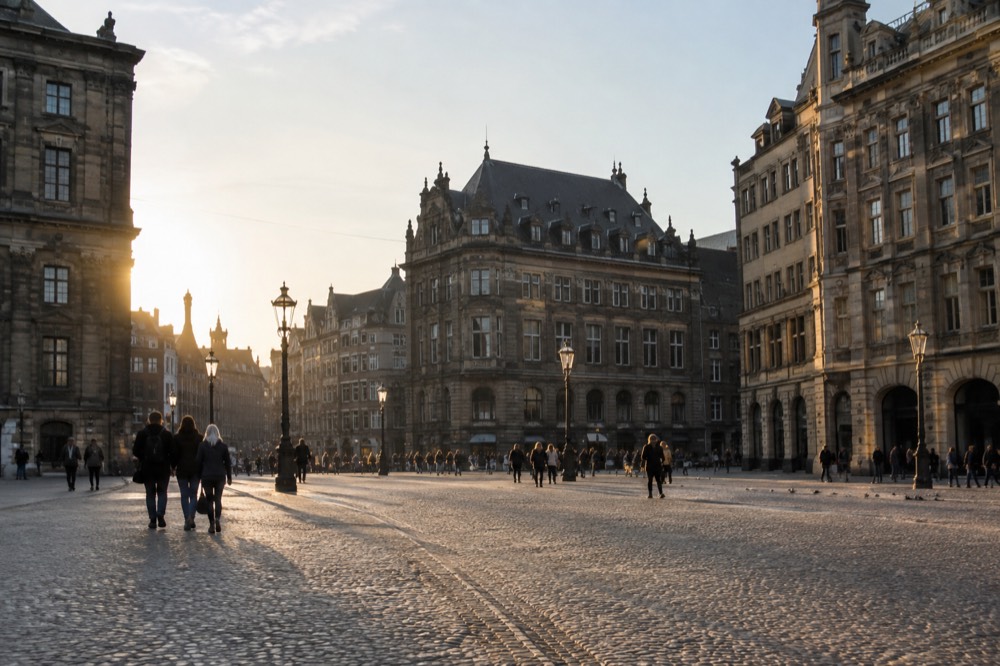
The pass arithmetic is the one place wet-weather travellers routinely overspend or underspend. The card includes free entry to the Rijksmuseum and 70-plus other museums, unlimited GVB transport for the card's duration, one canal cruise and a 24 hour bike rental, and the 24 and 48 hour versions cost €67 and €94 respectively. It excludes the Van Gogh Museum and the Anne Frank House, both confirmed by the museums' own pages, and both of which need separate timed tickets regardless. If your rainy day is Rijksmuseum plus cruise plus transport, the card roughly breaks even; add NEMO or the Stedelijk and it pulls ahead. The full breakdown is in is the I amsterdam City Card worth it.
| Item | Cost | Notes |
|---|---|---|
| GVB 24 hour transport ticket | €10.00 | Trams, buses, metro, ferries; child ticket €5.00 |
| One hour canal cruise, direct | from about €15.50 | The only operator price verified to its own site |
| Rijksmuseum or Van Gogh Museum | €25 | Under-18s free at both, timed entry required |
| I amsterdam City Card, 24 hours | €67 | Covers Rijksmuseum, transport, one cruise; never Van Gogh or Anne Frank |
| Anne Frank House | €16.50 | Official site only, fixed time slot, no resellers |
| A'DAM Lookout | €16.50 online, €18.50 at the counter | Open daily 10:00 to 22:00, mostly indoors |
Two closing notes on the money. First, the A'DAM Lookout is a legitimate rain option people forget: the observation deck is indoors behind glass, the free ferry gets you there dry, and booking online saves €2 per ticket against the counter price. Second, do not buy the card for a single museum day out of guilt; a wet day spent well in two museums and a café costs less than a card used for one museum and a cruise, and the maths is on the museums' own pages if you want to run it for your own itinerary.
However your day sorts itself, the principle holds: Things to Do in Amsterdam in rain is not a shorter list than in sunshine, it is the same list re-ordered, with the boats covered, the museums first and the cafés doing the work they have done for four hundred years. Book the scarce slot, buy the transport day ticket, and let the weather make the decisions it is going to make anyway.
Common Questions About a Rainy Day in Amsterdam
Is a canal cruise still enjoyable in the rain?
Yes. Nearly all Amsterdam cruise boats are covered or fully enclosed, and the classic saloon boats have glass canopies, so you stay dry with full views. Rain also thins the crowds, and the evening cruises, when the bridges are lit, are arguably at their best in wet weather.
Which museum should I book first for a rainy day?
The Van Gogh Museum, because every visitor needs a pre-booked timed entry ticket and it is the slot most likely to sell out on a grey day. The Rijksmuseum also requires a booked start time but holds more tickets across longer hours, so it is the more flexible second choice.
Does the I amsterdam City Card cover the Van Gogh Museum?
No. The card includes the Rijksmuseum and more than 70 other museums, plus GVB transport, one canal cruise and a bike rental, from €67 for 24 hours. The Van Gogh Museum and the Anne Frank House are both excluded, and both require separate timed tickets booked in advance.
What can I do in Amsterdam in the rain for free?
The GVB ferries behind Centraal Station are free and covered, the NEMO roof terrace is reachable free from the street steps, the Begijnhof courtyard and the city's historic churches offer shelter for a small donation, and window-shopping the Nine Streets keeps you under awnings most of the way.
Is Amsterdam walkable when it is raining?
The centre is compact and mostly walkable in light rain with a waterproof jacket, but canal-side cobbles hold water and stay slick for hours. On a day of steady rain, switch to the hub-and-spoke approach: one indoor anchor at a time, connected by trams, which run every few minutes on the main centre routes.
What is the best rainy evening plan in Amsterdam?
A covered dinner cruise, such as the pizza cruise with unlimited drinks, combines dinner and a canal cruise under one roof. The alternative is a brown café in the Jordaan or the centre, where the evening's weather is the point rather than the problem.