Is It Better To Fly Or Get The Train To Amsterdam?
A plain comparison of flying into Schiphol and taking the train to Amsterdam, with verified fares, journey times and the costs most guides forget to mention.
Is It Better To Fly Or Get The Train To Amsterdam?
For most travellers from outside the Netherlands, flying into Amsterdam Schiphol is faster door to door for any journey that would take a train more than about five hours, while the train wins on city-centre convenience, predictability and often the total bill once airport transfers and tourist taxes are counted. The last leg is the same either way: Schiphol sits on a main rail line, and the NS train covers the 17 minutes to Amsterdam Centraal from €5.50.
That last sentence is the part most comparisons skip. Amsterdam is unusual among European capitals in that its airport and its railway network are the same story. Schiphol has a railway station directly under the terminal, and Intercity trains from across the country, plus international services, stop there. So the question "fly or train" is rarely a choice between two separate arrival experiences. It is a choice about the long middle leg, and both options end with the same short, cheap hop into town.
The honest comparison therefore has three layers. The first is the long leg: a plane from your home airport versus a train through the tunnel, across the channel or along the high-speed lines. The second is the arrival layer, where the train often wins outright because you step off in the centre rather than 17 minutes and one transfer away. The third is the hidden layer: taxes, transfer costs and the value of your time at each end.
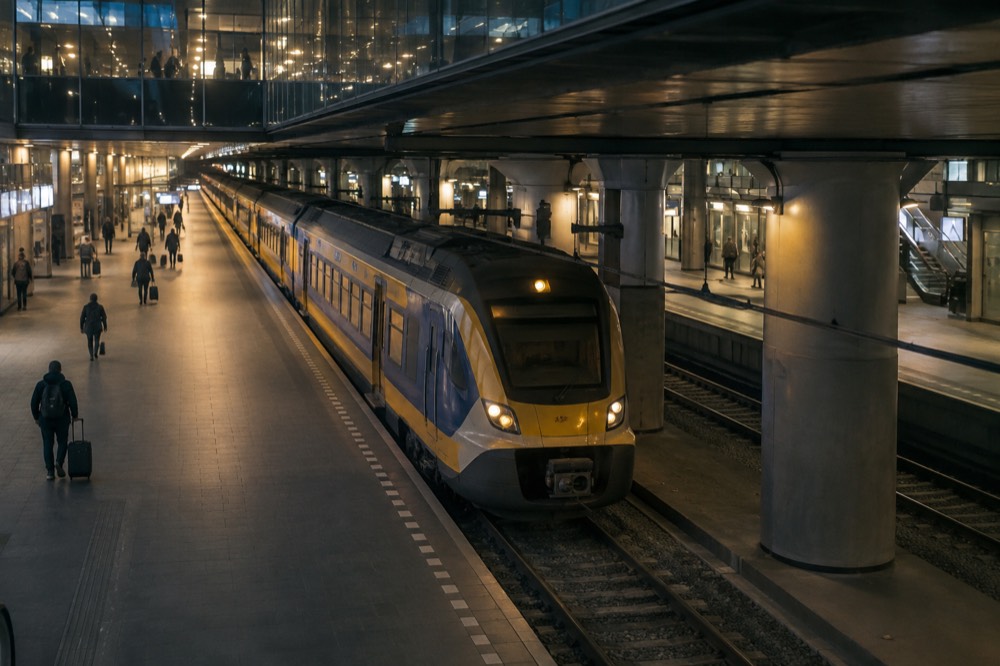 Intercity train standing at Schiphol Plaza station beneath the airport terminal" width="1000" height="667" loading="lazy">
For anyone weighing the two options from Britain, the trains to Amsterdam from London, Paris and Brussels guide covers the international routes in detail, including the direct London service and the change-at-Brussels alternative. The short version: the direct train competes seriously with flying on total journey time once you count getting to each end of the route, and it lands you in the middle of the city rather than at an edge.
If you have already booked the flight and are now working out the arrival, the companion piece on getting from Schiphol Airport to central Amsterdam walks through every option with current fares. This article stays on the bigger question: which mode should you choose in the first place?
Whichever way you arrive, the same rule applies to your first afternoon: Amsterdam's headline museums sell timed slots, and the popular ones fill them. The Van Gogh Museum requires every visitor to pre-book, so a ticket sorted before you travel is one less queue on day one.
How Fast Is Each Option Really?
A flight's headline time is gate to gate, not door to door, and the gap is bigger than most people expect. Add the typical two hours at the departure airport, the transfer from Schiphol into the centre and the walk from the platform, and a 70-minute flight behaves like a four-to-five-hour journey. A direct train of three to four hours behaves like exactly that, because stations sit in the centres of the cities they serve.
The comparison only works when you count the same things on both sides. On the flying side, the realistic total is: travel to your departure airport, check-in and security, the flight itself, baggage reclaim, passport control where it applies, and then the Schiphol-to-centre leg. On the train side it is: travel to your departure station, a short wait, the journey, and stepping off in the centre. The train loses the extra layers at both ends, which is why a rail journey can be competitive in total time even when the moving time is an hour or two longer.
Where the train genuinely cannot compete is distance. From anywhere that requires a connection, or from any origin beyond roughly a day of rail travel, flying wins and the discussion is over. From Paris, Brussels, London, Cologne or the German border region, the maths is close enough that comfort and price decide it. From anywhere further, fly.
There is also the reliability question, and it cuts both ways. Flights are more exposed to weather, strikes and slot delays, but a delayed flight usually still arrives the same day. A rail disruption on a single-track stretch can cascade badly, and international rail passengers have fewer rebooking options than airline passengers. Neither mode is immune; both are recoverable. The practical difference is that a train delay costs you the waiting-room time you already budgeted, while an airport delay costs you time in a building designed to sell you things.
What Does the Journey Cost?
The train usually wins the headline price battle for short-haul routes, but the honest comparison adds the costs that hide behind the ticket: airport transfers at both ends, the 12.5% Amsterdam tourist tax on your accommodation, and the fact that a Schiphol taxi runs on the meter with no fixed fare. The NS train from Schiphol to Amsterdam Centraal costs from €5.50 and takes just over 17 minutes.
The fare from Schiphol is worth stating precisely because it anchors everything else. The national rail operator sells the airport-to-centre e-ticket online from €5.50, and the journey takes just over 17 minutes, figures the operator publishes on its own Schiphol to Amsterdam route page. The Amsterdam Airport Express bus 397 runs from €6.50 and shares its ticket with the night service N97. A taxi has no fixed price: Schiphol's own guidance says you pay whatever the meter shows, per the airport's taxi page.
| Option, Schiphol to Centre | Fare | Journey Time | Notes |
|---|---|---|---|
| NS train to Amsterdam Centraal | from €5.50 | just over 17 minutes | Station directly under the terminal; e-ticket online |
| Amsterdam Airport Express bus 397 | from €6.50 single | slower than the train | Same ticket valid on the N97 night service |
| Taxi | metered, no fixed fare | traffic-dependent | Schiphol publishes no flat rate to the centre |
Against that, compare what the long leg costs on each side. Short-haul flights to Amsterdam swing wildly with season and how far ahead you book, and this desk does not publish airfare numbers it has not verified. What can be said with confidence is structural: airlines price the last leg separately from the journey, and airports charge passengers for the privilege of the shops, the transfers and the queues through taxes and fees baked into the ticket. Rail operators in the Netherlands, Belgium, France and Germany all sell advance-purchase fares that are often competitive with the bare flight price, before a single transfer cost is added.
The hidden layer deserves its own paragraph. Amsterdam charges a tourist tax of 12.5% of the overnight price on hotels and holiday rentals, a rate the city confirms on its municipal tax page, and day-tripping cruise passengers pay €15 per passenger. That tax applies identically whichever way you arrive, so it does not change the fly-versus-train answer, but it belongs in any honest budget, and plenty of "cheap flight" comparisons quietly leave it out.
Once you are in the city, the arrival-day transport costs are the same for everyone. A GVB day ticket covering trams, buses and metro for 24 hours costs €10.00, a single one-hour ticket €3.40, and a 48-hour ticket €16.00, per the operator's published fare table.
| GVB Ticket | Price |
|---|---|
| Single, 1 hour | €3.40 |
| Day ticket, 24 hours, adult | €10.00 |
| Day ticket, 24 hours, child | €5.00 |
| 48 hours | €16.00 |
| 72 hours | €21.50 |
There is a planning dividend that the train often delivers and the plane rarely does: arrival time control. A train that gets you into the centre by mid-morning leaves a whole first day usable, and the Van Gogh Museum, which needs a pre-booked timed slot for every visitor, is one of the sights best sorted before you leave home. The timed Van Gogh Museum entry ticket costs from $31, or Check availability on the live listing.
When Flying Clearly Wins
Fly when the rail journey needs more than about six hours, when your home airport has direct Amsterdam flights and your home station does not have direct trains, when you are travelling with bulky luggage or small children, or when the airfare is genuinely far below any rail combination. Distance, directness and luggage decide it, not loyalty to either mode.
The directness test is the sharpest one. A traveller in, say, northern Scotland or the far south of Europe faces a rail journey with three or more changes and a night in a hotel somewhere en route. That is not a fly-or-train comparison any more; it is a fly-or-holiday-by-rail comparison, and the two answer different needs. The same applies to anyone whose nearest station is a bus ride from a station that itself needs a connection: every extra leg adds both time and a fresh chance for delay. The wider set of guides lives on Things to Do in Amsterdam.
Luggage is the underrated factor. Rail travel is forgiving of a suitcase you can lift, and brutal on nothing. Air travel is the reverse: forgiving of checked volume, brutal of anything over the cabin limit or the weight cap. A family with a pram, a bike bag or a month of luggage should lean toward whichever mode handles the bulk without surcharges, and that is usually the plane for volume and the train for flexibility.
Price spikes cut the other way. When a rail operator's advance fares have sold out and only flex tickets remain, a low-cost flight plus the airport transfers can undercut the train even after every hidden cost. The reverse also happens, hard, in peak season when airfares triple. The only universal advice is to price both on the same day for the same date, counting the transfers, and to do it early: both modes reward booking ahead and punish the walk-up traveller.
When the Train Clearly Wins
Take the train when the rail journey is under about four hours door to door, when you are starting from a city centre rather than an airport region, when you value arriving rested and on time more than arriving fast, or when you want your travel day to produce something other than a seat in a terminal. City-centre to city-centre routing is the train's structural advantage and no airline can match it.
Comfort is not a soft factor on these routes. A high-speed train seat with a table, a phone signal that works the whole way, a cafe car and the freedom to stand up whenever you like turns four hours into working or resting time. A short-haul flight turns the same four hours into a sequence of queues with 70 minutes of constrained sitting in the middle. For business travellers and for anyone who finds airports genuinely stressful, this is decisive before any price comparison begins.
The carbon argument is real but belongs honestly: rail's advantage on short European routes is large, and it is the reason several countries have been shifting official travel policy toward train for journeys under a day. This desk reports it as a fact of the mode rather than a sermon, because most readers weigh it somewhere between "decisive" and "irrelevant", and both positions are defensible.
There is also the arrival-quality argument specific to Amsterdam. Amsterdam Centraal is not just a station: it sits on the edge of the historic centre, with the canal ring a five-minute walk from the front doors. A rail arrival means you are in your neighbourhood before you have thought about a transfer. A Schiphol arrival means one more leg, cheap and quick as it is, plus the platform shuffle with everyone else from your flight. Small costs, but they land at the moment of the day when travellers are tiredest.
How the Airport Layer Changes the Maths
Amsterdam Schiphol is one of the better airports in Europe to arrive at, which narrows the train's convenience lead, but the airport layer still adds fixed costs and fixed time that a centre-to-centre train does not: a transfer leg, a wait for bags, and a terminal designed around dwell time. Travellers who forget this layer consistently misjudge the comparison by an hour and a transfer.
The Schiphol layer is genuinely thin by airport standards. The station is under the terminal, trains are frequent, and the fare into town is modest. Compare that with airports that require a 45-minute dedicated express train at a premium fare, and the fly-versus-train gap in Amsterdam's case is smaller than in, say, the London comparison. This is worth saying plainly because it means the usual European rule of thumb, "the train wins the arrival", is weaker here than elsewhere.
But thin is not zero. The transfer still costs a ticket, a platform change and roughly 20 to 30 minutes from aircraft door to Centraal platform on a good day. Baggage reclaim adds its own variance. And the departure side is heavier: the standard advice of arriving two hours before a short-haul flight is not airport paranoia, it is the price of security theatre, and it is time the train passenger spends at home or at a desk.
The tax layer deserves a second look here because it interacts with the mode choice in one subtle way. The tourist tax of 12.5% applies per night regardless of arrival mode, and the cruise day-tripper tax of €15 per passenger applies to sea arrivals. A rail traveller staying a night and a cruise passenger paying the day rate face different tax treatments, and anyone comparing a cruise arrival with a city break should know the two are taxed differently. That is a nuance almost no comparison article mentions.
That last point, crowding, is the quiet argument for the train that nobody prices. A rail arrival spreads your day: you can leave mid-morning, work on board and land in the centre at a civilised hour. An early flight concentrates your fatigue at the exact hours when the city's most-visited streets are at their densest. On a practical note, anyone arriving with hours to spare before hotel check-in can find the details in the Amsterdam luggage storage and left luggage guide, which covers the lockers at Centraal and the private services around it.
Which Should You Actually Book?
Book the train if your door-to-door rail time is under five hours and the fare is within about 20% of the flight-plus-transfers total. Book the flight if the rail route needs a connection you would rather not make, if the airfare is dramatically cheaper, or if total journey time matters more than comfort. If the two totals are close, take the train: the arrival is calmer, the day is longer and the price is more honest.
The tie-breaker logic is worth writing down because the comparison genuinely is close on the routes where people ask the question. From London, Brussels, Paris and the Rhineland, both modes deliver you to the same city within an hour of each other on total time, at prices that swing with booking timing rather than with mode. In that band, the deciding factors are the ones no fare table captures: whether you sleep better on a train, whether your home-to-airport journey is worse than your home-to-station one, and whether the idea of an airport day fills you with dread or with the mild anticipation of duty-free.
Two practical footnotes for the flight bookers. First, Schiphol is a large, busy hub and connection times matter: if you are flying onward or connecting through, treat the minimum connection guidance seriously, because the airport's own information on walking times between gates is the honest source. Second, if an early arrival or a late departure leaves you needing a bed within walking distance of the terminal, the Schiphol Airport hotels guide covers which ones you can actually reach on foot.
And one footnote for the train bookers: international rail tickets are cheapest bought early and on the operator's own channels, exactly as flights are. The travellers who report that "the train was expensive" are usually the ones who priced a flex ticket against a sale airfare, or who bought through a reseller. Price the advance fares on both sides and the train's reputation for expense mostly evaporates on the short-haul routes.
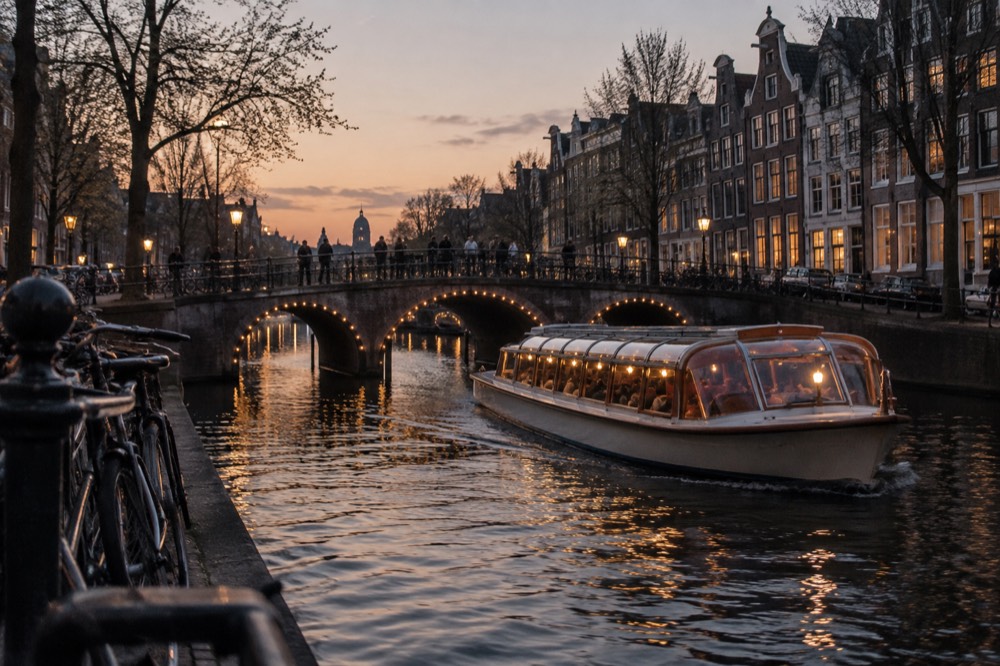
Whichever mode wins your comparison, the first evening in Amsterdam has a shape that suits both arrivals. A one-hour canal cruise is the standard soft landing, and the classic saloon boat option, with drinks and Dutch cheese on a restored wooden vessel, is the version most worth the money. It requires no planning energy, it starts within walking distance of Centraal, and it turns a travel day into a first taste of the city, which is the one thing neither the plane nor the train can do for you.
For the museum-minded, the Van Gogh Museum remains the booking to make before you travel, because its timed slots are mandatory and the popular ones go first.
If the Heineken Experience is more your speed, it sits a short walk from the Rijksmuseum and makes an easy second stop on a first afternoon, with the rooftop option worth adding in good weather.
Common Questions About Getting to Amsterdam
Is It Better To Fly Or Get The Train To Amsterdam?
It depends on your starting point. For door-to-door rail journeys under about five hours, the train usually wins on total time, comfort and often price, and it lands you in the centre. For longer distances, or when a direct flight beats a multi-change rail route, flying wins. Both arrivals end the same way if you fly: the NS train from Schiphol to Amsterdam Centraal costs from €5.50 and takes just over 17 minutes.
How much is the train from Schiphol to Amsterdam Centraal?
The national operator sells the e-ticket online from €5.50, and the journey takes just over 17 minutes. The station is directly under the terminal, so there is no transfer between the airport and the platform.
Is there a fixed taxi fare from Schiphol to the city centre?
No. Schiphol's own guidance says you pay the price shown on the meter, and the airport publishes no fixed fare. The train and the Airport Express bus 397, from €6.50, are both cheaper and more predictable.
Does Amsterdam charge a tourist tax?
Yes. Hotels and holiday rentals charge 12.5% of the overnight price, excluding VAT, and day-tripping cruise passengers pay €15 per passenger. The tax applies however you arrive, so it belongs in every budget.
Which is cheaper, flying or the train?
There is no fixed answer, because both airfares and rail fares swing with booking timing and season. The fair comparison adds the airport transfers and the travel time to and from each terminal or station to the headline ticket price. On short-haul routes with advance booking, the train is often competitive or cheaper; on long routes, flying usually is.
Where does the train arrive in Amsterdam?
Amsterdam Centraal, which sits on the edge of the historic centre with the canal ring a short walk from the main exit. That city-centre arrival is the train's main structural advantage over flying, which always requires one more leg from Schiphol.