Is It Worth Doing A Canal Cruise In Amsterdam?
A straight answer on whether an Amsterdam canal cruise is worth the money, with verified prices, cruise types compared, and when to book.
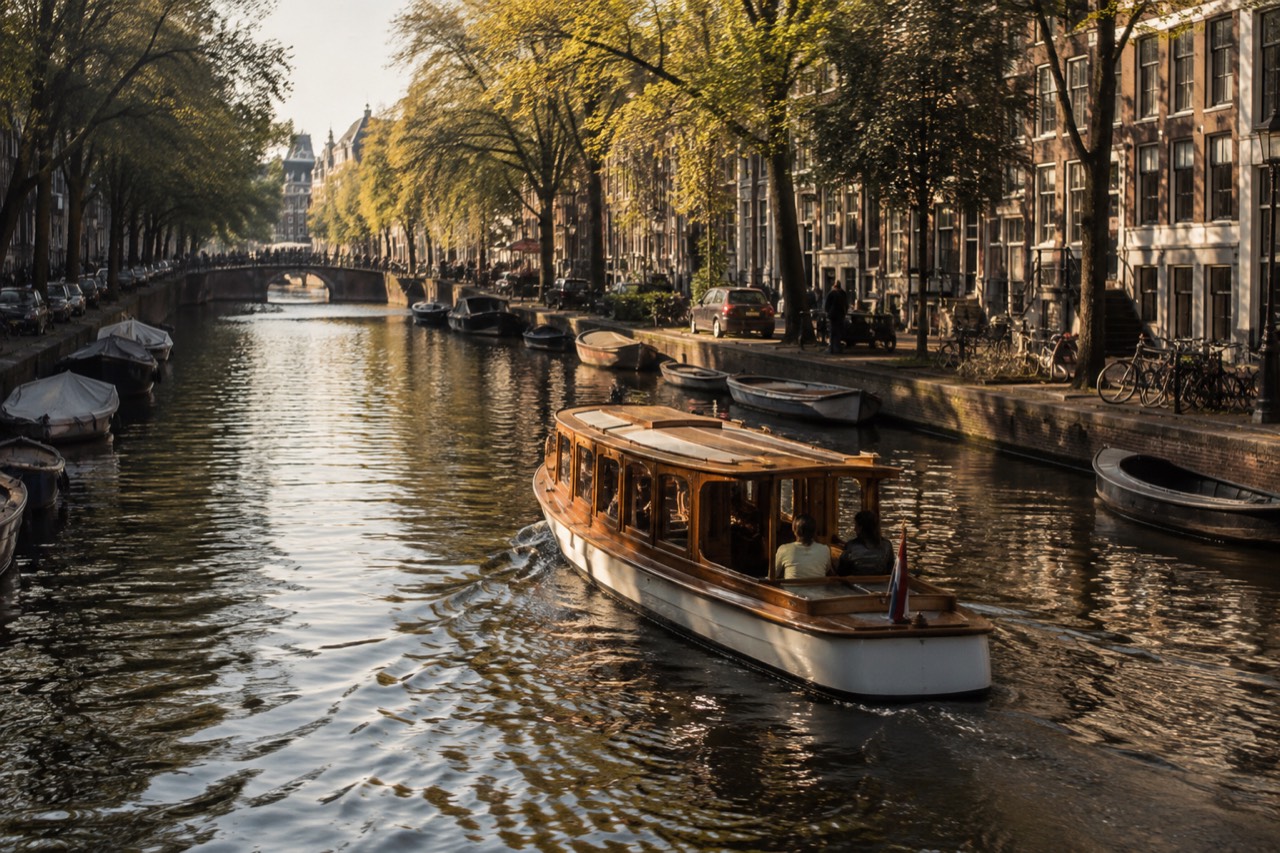
Is It Worth Doing A Canal Cruise In Amsterdam?
Yes, for almost every visitor, a canal cruise is worth both the money and the hour it takes. The canal ring is UNESCO World Heritage, most of its architecture is only legible from the water, and verified operator pricing starts from about €15.50 for a basic one-hour cruise with audio guide. A paid walking tour covers ground faster, but no street-level walk reproduces the view from the middle of the Prinsengracht.
That is the short version. The longer version depends on which cruise you buy, because "canal cruise" in Amsterdam covers everything from a €15.50 audio-guide loop on a large boat to a $71.09 two-hour small-group sloop with an open bar. The category is enormous: the most-reviewed cruise on this site's roster carries 33,435 reviews at 4.8, and several other operators carry review counts in the tens of thousands as well. When a product collects that many repeat customers at those ratings, the interesting question is no longer "is it good" but "which version suits you".
The case against is real but narrow. Critics say the big-boat audio-guide cruises feel like a conveyor belt, that the recorded commentary flattens the city into a list of dates, and that on a sunny Saturday you share the water with so much traffic the magic thins. All three criticisms are fair, and all three apply mostly to the cheapest tier. Spend ten dollars more and the experience changes shape: smaller boats, live guides, drinks, and departure times the crowds ignore.
The honest framing is this: Amsterdam recorded 23.7 million tourist overnight stays in 2025, and the overwhelming majority of those visitors will never stand on a canal bridge at 7am when the water is empty and the light is low. The cruise is the closest most trips get to that Amsterdam, and it costs about the same as two tram day passes.
If those three options already answer your question, the rest of this article helps you choose between them and decide when to go. If you are still undecided, the next section deals with the objection that usually sits underneath the question: the price.
What Does A Canal Cruise Actually Cost?
Verified Amsterdam canal cruise pricing runs from about €15.50 for a one-hour audio-guide cruise to roughly $71.09 for a two-hour small-group sloop with an open bar. The mainstream paid tier, classic saloon and luxury boats with live guides, sits between $15 and $30 per person. Nearly every operator's listing prices are dynamic, so treat every figure here as a starting price, not a promise.
The only operator price verified directly to its own site is Rederij Kooij, which sells its original one-hour canal cruise with audio guide at €15,50 for adults, with departures every 30 minutes and no time slots. That is the floor of the honest range, and it is the figure to use when comparing against the booking platforms, whose listings for comparable cruises start at $15 to $16.
Here is how the roster on this site compares. Prices are per person, in US dollars, as listed on each operator's live listing.
| Cruise | From | Rating | Reviews | Duration |
|---|---|---|---|---|
| Three Docks, One Hour Cruise | $15 | 4.3 | 21,335 | 1 hour |
| Saloon Boat With Cheese Option | $16 | 4.6 | 31,369 | 1 hour |
| Classic Saloon, Drinks Included | $19.56 | 4.8 | 33,435 | 1 hour |
| Luxury Cruise, Drinks And Bites | $23.13 | 4.9 | 31,736 | 1 hour |
| Unlimited Drinks Canal Cruise | $23 | 4.5 | 26,504 | 1 hour |
| Ninety Minutes, All Inclusive | $29.65 | 4.9 | 18,656 | 1 hour 30 minutes |
| Two Hours, Small Group, Snacks | $71.09 | 4.9 | 2,841 | 2 hours |
Two patterns jump out of that table. First, the price curve is shallow: for roughly the cost of a sandwich and a beer you move from a 4.3 large-boat cruise to a 4.8 or 4.9 saloon boat with a live guide. Second, review volume does not follow price. The two most-reviewed cruises on the roster, at 33,435 and 31,736 reviews, both cost under $24. The market has already voted, and it voted for the mid-tier wooden boats.
One more cost angle matters. The I amsterdam City Card includes one free canal cruise alongside museum entry, unlimited GVB transport and a 24-hour bike rental, per the card's own how-to-use page. If you were buying the card anyway for the museums, the cruise is effectively already paid for. The card does not include the Van Gogh Museum or the Anne Frank House, so do the arithmetic against your own museum list before assuming it wins.
Which Canal Cruise Type Fits Your Trip?
Pick a large audio-guide boat for the cheapest overview, a classic saloon boat with a live guide for the best value, and a small-group or all-inclusive cruise if you want drinks, commentary you can ask questions of, or a longer run. The saloon-boat tier, historic wooden vessels restored and electrically powered, is where the ratings concentrate: 4.6 to 4.9 across the board.
The category splits into four recognisable tiers, and knowing which one you are buying prevents most disappointment.
| Tier | Typical boat | Commentary | Best for | Trade-off |
|---|---|---|---|---|
| Budget overview | Large covered boat | Recorded audio, many languages | First-time visitors on a tight budget | Crowded, set route, no interaction |
| Classic saloon | Historic wooden boat, electric engine | Live guide | Most visitors; the sweet spot | Slightly higher price |
| Luxury or all-inclusive | Modern electric boat, open or covered | Live guide, drinks included | Couples, celebrations, bad-weather days | Pay for drinks you may not want |
| Small-group sloop | Open boat, max 14 or so | Local skipper, conversational | Travellers who dislike crowds | Top of the price range, books out first |
The saloon-boat tier deserves its own paragraph, because it is the one this site keeps returning to. These are late-19th-century vessels, some sailing the Amsterdam canals since 1902, restored and running on quiet electric engines. The Classic Saloon Boat Cruise pairs that boat with a live guide, drinks and Dutch cheese, and its 4.8 across 33,435 reviews makes it the most-reviewed product on the entire roster. A guest review on the live listing calls the guide's commentary the difference between seeing Amsterdam and understanding it, which is the exact gap a recorded audio track leaves open.
If your budget stretches further, the two-hour small-group cruise is the connoisseur's pick: 14 passengers maximum, an open bar, bitterballen, cheese and stroopwafels, and a skipper who can detour when someone spots a heron or an interesting gable stone. At $71.09 it is nearly four times the floor price, and for a three-day trip it is probably too much. For a honeymoon or a last-night-in-city splurge, it is the version people describe in reviews as the best money they spent in the Netherlands.
When Is The Best Time To Take A Canal Cruise?
The best canal cruise times are the first departure of the morning, when the water is quiet and the light is soft, and the last hour before sunset, when the gables glow and the bridges light up. Midday Saturday is the worst slot: peak boat traffic, peak queues and flat photography light. Evening cruises trade visibility for atmosphere and lit bridges.
The morning argument is simple. Amsterdam's working day starts late on the water, and a 9 or 10am departure often shares the canals with delivery barges rather than with fifteen other cruise boats. The queues at the central departure docks, which at midday can snake past the ticket office, are short or absent. The light before noon comes in low across the canal ring, which is what makes the narrow-gabled architecture photograph so well from the water.
The evening argument is different in kind rather than degree. The city's own tourism data counted 21.9 million day visits in 2025, and a large share of those visitors leave between five and seven in the evening, which thins the centre precisely as the lamps come on. An evening cruise, such as the City Lights cruise at 4.4 across 23,214 reviews from $21, or the sunset cruise at 4.8 from $23, shows a city that the midday crowds never see: the Magere Brug lit from below, the floating houses with their lamps on, the Amstel wide and dark.
The sunset cruise is the one to pick if photography matters. Its 4.8 rating across 4,737 reviews is unusually high for the evening category, and the drinks are optional rather than bundled, which keeps the base price at $23.
Weather matters less than visitors expect. The classic saloon boats are covered and heated, the luxury boats switch between open and covered configurations, and rain in Amsterdam is usually a drizzle rather than a downpour. The genuinely bad conditions are high wind, which closes some of the smaller open boats, and a hard frost, which is rare. Check the listing's weather policy when booking; most operators allow rescheduling or cancellation up to a day ahead.
Can You Actually See Amsterdam Properly From The Water?
Yes, and in one specific sense better than from the street: the canal ring's merchant houses, gable stones and hoisting beams were designed to be read from the water, since the canals were the delivery route. What you cannot see from a boat is the interior detail, the hofjes and the street life, which is why a cruise works best paired with a walking tour rather than instead of one.
The canal ring is UNESCO World Heritage for a reason that only becomes obvious from a boat. The Grachtengordel was dug in the 17th century as a cargo system, and the houses along it were built as warehouses with their narrow fronts facing the water. The hoisting beam at the roofline, the gable shape that dates the building, the deliberate tilt of many facades: all of it faces the canal. From the pavement you see a front door. From the water you see the machine the city was built as.
The standard one-hour route covers the core of that heritage: the Herengracht with its Golden Bend, the Prinsengracht past the Westerkerk, the Amstel, and the Magere Brug. A good live guide stitches in the two or three facts that change how the whole thing reads, for instance that the canal ring was a speculative property development, financed and parcelled while the digging was still under way.
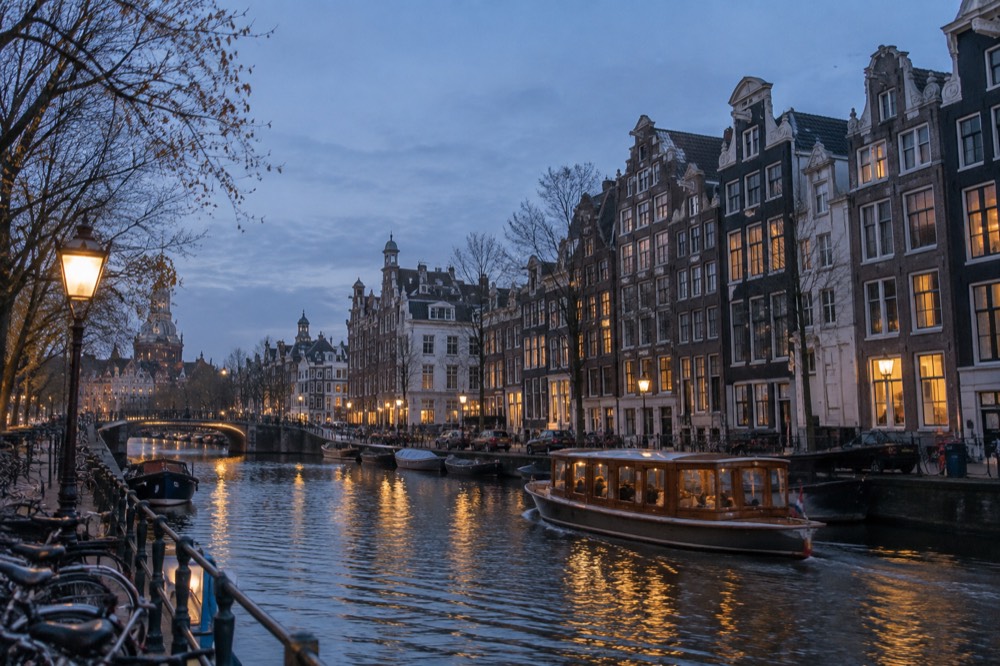
What the cruise cannot do is stand still. No boat gets you into the Begijnhof, the Nine Streets' shops or a brown café, and the guides' recommendations are necessarily compressed. The strongest one-day structure pairs a cruise with a self-guided walk through the same district; the Amsterdam canal ring guide on this site maps which streets repay the walking half of that pairing.
What If You Skip The Cruise Altogether?
Skipping the cruise is defensible if you replace it with something that gets you on or beside the water: the free GVB ferries across the IJ, a walk across the Magere Brug at dusk, or a picnic on a canal-side bench. What is not defensible is skipping the water entirely. The canals are the city's founding infrastructure, and a trip that never touches them misses the organising idea of Amsterdam.
The free alternatives are genuinely good, which is worth saying plainly. The GVB ferries that cross the IJ to Amsterdam Noord cost nothing, run day and night, and give a working-harbour view of the city that no cruise matches. A round trip behind the ferry's wheelhouse, watching the NDSM wharf close in, is one of the best free experiences in the Netherlands. The free things to do guide on this site lists several more, including the ferry routes in detail.
The middle option is to buy the water without the cruise: renting a small boat, which this site covers in its own rental guide, or taking a one-way ferry and walking back along the water. The trade-off is effort. A self-drive rental in the canal ring demands confidence, a licence check and a sober afternoon; a cruise demands an hour of sitting still. After a flight and a hotel check-in, most travellers correctly choose the chair.
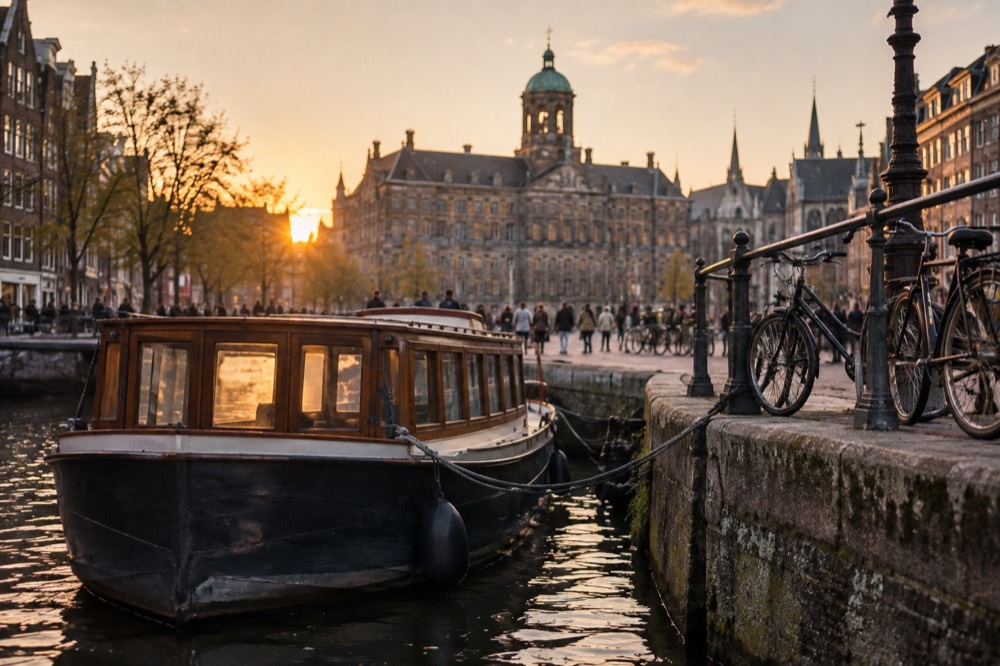
The strongest argument for the cruise over the alternatives is density. In one hour, seated, in any weather, you pass the Westerkerk, the Anne Frank House's canal facade, the Golden Bend, the Skinny Bridge and several hundred listed buildings. Doing that on foot takes half a day and a good map. Doing it from the pavement-facing side of the street, you miss half of it by design.
So Is The Cruise Worth It? A Verdict By Traveller Type
For first-time visitors, families and anyone with limited time, the cruise is unambiguously worth it: it compresses the city's defining landscape into one inexpensive hour. For repeat visitors, the answer is the small-group or evening tier, which shows a different Amsterdam. Only budget travellers with more time than money should skip it, and even they should ride the free ferries.
First-timers should book the saloon-boat tier, once, early in the trip, because the cruise doubles as an orientation. You will leave knowing which bridge is which, where the Jordaan sits relative to the centre, and which museum you want to walk back to. The classic saloon cruise at $19.56 is the default recommendation: the highest review count on the roster, a live guide, and a historic boat.
Families get a specific benefit: children who tire of walking do not tire of boats, and the one-hour length is short enough to hold an eight-year-old's attention. The pizza dinner cruise, at 4.5 across 3,046 reviews from $40 for a 90-minute sail with unlimited drinks, is the family-evening variant, dinner and cruise in a single ticket.
Couples and repeat visitors should aim at the evening or luxury tier. The luxury cruise at 4.9 across 31,736 reviews, from $23.13, is the polished version: an electric boat that opens up in summer, a live guide, and an optional unlimited drinks-and-bites package. For a longer, slower, more conversational hour, the small-group cruise at $71.09 remains the ceiling of the category.
The one traveller type that should skip it: the long-stay visitor with a bike, a week and no agenda. If you are in the city for ten days, you will cross the canals two hundred times on a bicycle, watch the evening light from a different bridge each night, and get the same views for free. Buy the cruise on your second visit instead, when the perspective will surprise you.
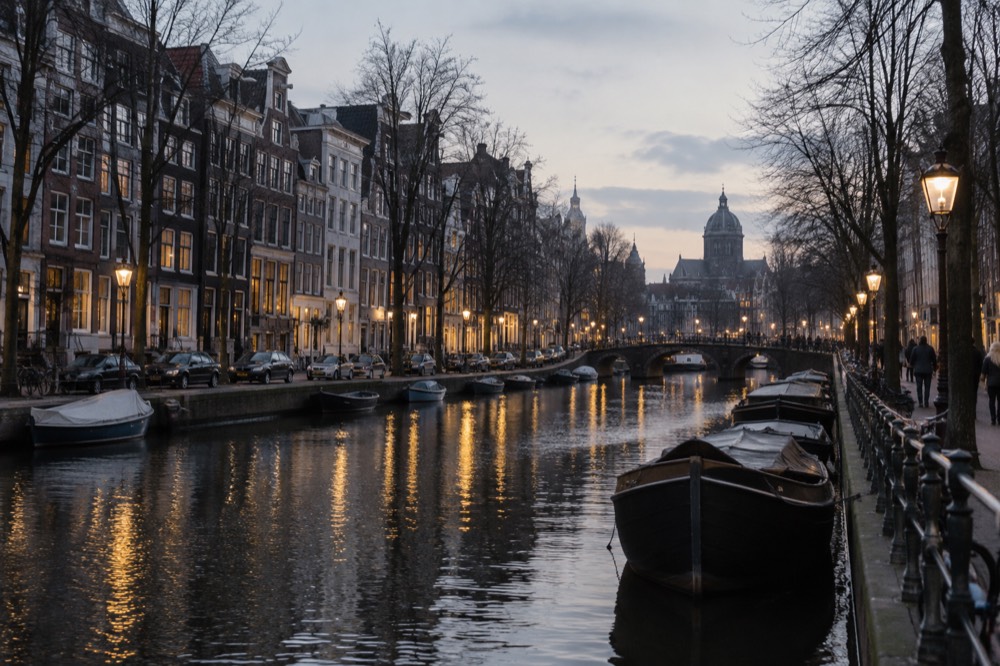
Whatever you decide, book the mid-tier cruises a day or two ahead in high season, since the small boats sell their seats first, and check the operator's live listing for the departure dock, because Amsterdam's cruise piers are scattered between the centre, the Rijksmuseum and Central Station. The rest of the planning, from the seasonal guides to the wider advice on Things to Do in Amsterdam, starts from the same place the city did: the water.
Common Questions About Canal Cruises in Amsterdam
Is It Worth Doing A Canal Cruise In Amsterdam?
Yes, for most visitors. The canal ring is UNESCO World Heritage and much of its architecture faces the water by original design, so a cruise shows you a version of the city the pavement cannot. With verified pricing from about €15.50 and the mid-tier saloon boats rating 4.6 to 4.9 across tens of thousands of reviews, it is one of the highest-value hours in the city.
How much does a canal cruise in Amsterdam cost?
Basic one-hour audio-guide cruises start from about €15.50, verified to the operator's own site. The classic saloon and luxury boats with live guides run from about $16 to $24, all-inclusive 90-minute cruises from $29.65, and two-hour small-group cruises from $71.09. Prices are dynamic, so treat every figure as a starting price on the operator's live listing.
Which canal cruise is best for first-time visitors?
A classic saloon boat with a live guide, roughly $19 to $24. It combines a historic wooden boat, commentary you can ask questions of, and a one-hour route covering the Herengracht, Prinsengracht and Amstel. It also works as orientation for the rest of your trip.
Is the evening canal cruise worth it?
Yes, if you have already seen the centre by day or want the lit bridges. Evening cruises trade daylight for atmosphere: the Magere Brug and the canal houses are illuminated, the day-trip crowds have gone, and the sunset tier rates 4.8. Bring a layer, the water is cooler than the street.
Is a canal cruise included in the I amsterdam City Card?
Yes. The card includes one free canal cruise from a participating operator, alongside entry to more than 70 museums and locations, unlimited GVB transport and a 24-hour bike rental. It excludes the Van Gogh Museum and the Anne Frank House, so weigh it against your museum list.
Can you see the Anne Frank House from a canal cruise?
Yes, from the water. Standard routes along the Prinsengracht pass the canal facade of the building, and the Westerkerk next door is a regular commentary stop. House entry is a separate matter: Anne Frank House tickets are sold only through the museum's own website, with online time slots and no door sales.