Should Tourists Ride Bikes In Amsterdam?
A straight answer for visitors weighing up cycling in Amsterdam: safety, the rules tourists break, costs, and whether a guided bike tour beats renting.
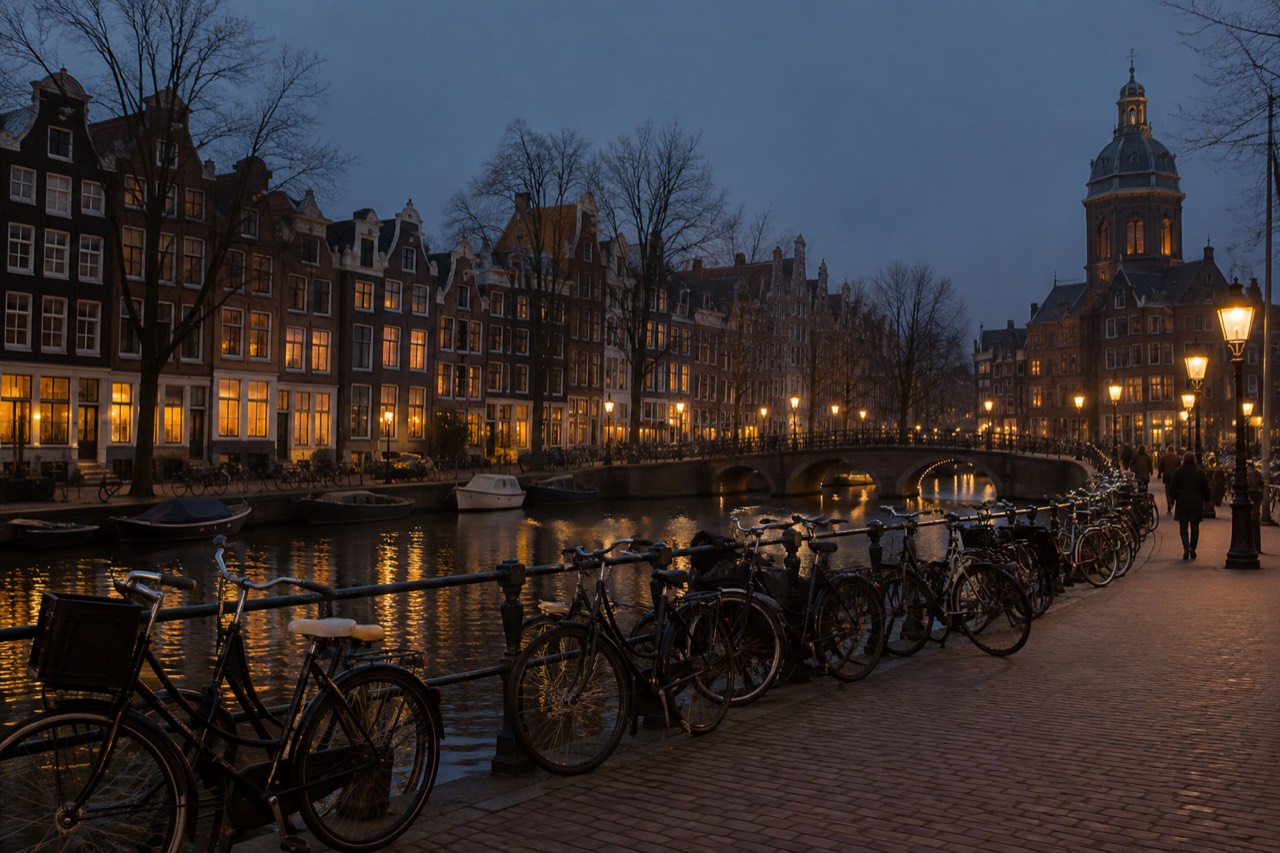
Amsterdam is a city built around two wheels. There are bike lanes on most major streets, traffic lights with their own bicycle signals, and a rhythm to junctions that locals read without thinking. Visitors watch this from a pavement cafe and often ask the same question: is this something a tourist should actually try, or is it a spectator sport? The honest answer is that most visitors can cycle in Amsterdam safely, provided they understand what they are stepping into. This page works through the real considerations: how safe it is, which rules trip up newcomers, what it costs, and whether a guided tour or a solo rental suits a first visit.
Should Tourists Ride Bikes In Amsterdam?
Yes, in most cases. Cycling in Amsterdam is safe for visitors who can already ride a bike confidently, follow the lane markings and the local flow, and avoid improvising at junctions. The city's infrastructure is built for it, and it is the fastest way to cover real ground. Visitors who are wobbly on a bike, or who plan to ride late at night after drinking, should walk, use the excellent trams or join a guided tour instead.
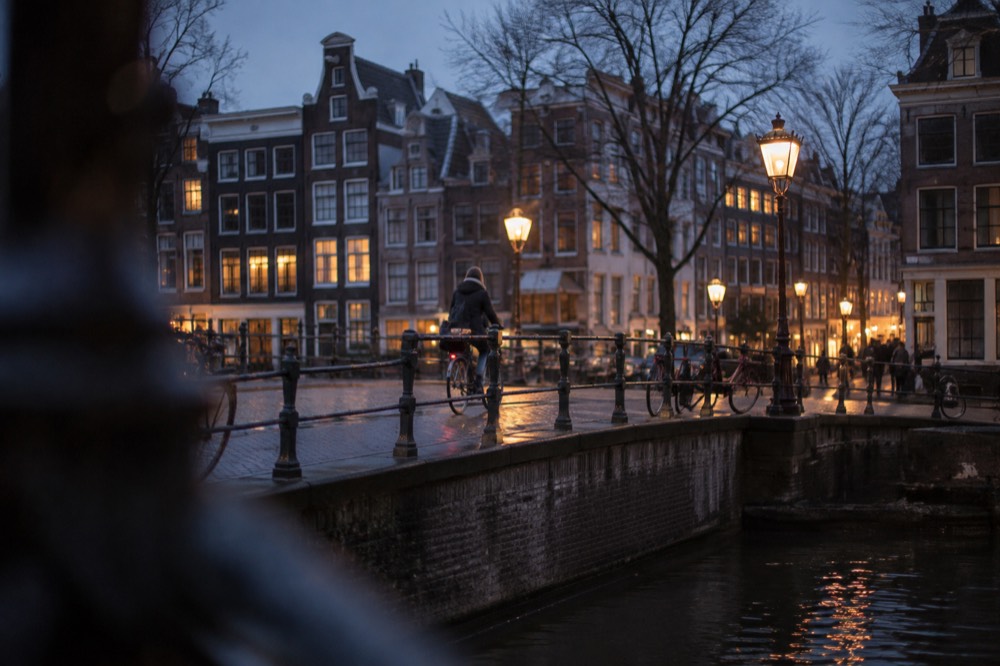
The case for cycling is simple: Amsterdam's street plan rewards it. The canal ring is a loop of narrow streets where cars crawl and trams cannot reach, and the distances between the sights that matter are ideal on two wheels. Central Station to the Rijksmuseum is a short ride. The Jordaan, the Nine Streets and the eastern docklands all sit within a comfortable half-hour radius of almost any hotel in the centre. Walking covers a fraction of that ground in the same time, and the tram, while excellent, runs on fixed rails with fixed waits.
The case against is equally simple, and pretending it does not exist would be dishonest. Amsterdam's traffic is not dangerous in the way a fast road is dangerous, but it is dense and it is fast-moving in a way that surprises people. Bicycles here travel at the speed of confident commuters, mopeds share some lanes, trams cut across junctions on rails you must not get stuck in, and pedestrians wander into bike lanes constantly because they are looking for cars, not bikes. A first-time visitor who mounts a bike and hesitates mid-junction creates a problem for everyone around them, including themselves.
The distinction that matters is confidence, not experience. Someone who cycles weekly at home will adapt within an hour. Someone who has not sat on a bicycle since childhood should not treat Amsterdam as the place to relearn, because the learning curve happens in live traffic. For that second group, the answer is not "never ride", it is "ride with a guide first", which is exactly what the city's bike tours exist to do. A guided ride takes the navigation, the junction decisions and the route choice off the visitor's plate for the first few hours.
The city's own visitor guidance, published at How to Amsterdam by the gemeente, treats cycling as a normal part of visiting but pairs it with clear behavioural expectations: stay in the lane, follow the lights, do not block the path, and be predictable. That is the local contract. Meet it and the city opens up; ignore it and the first person to notice will be a local on a heavy omafiets ringing a bell two centimetres from your elbow.
For most visitors the practical decision is not whether to ride but how. The three realistic options are a guided city tour, a countryside tour, or an independent rental, and each suits a different kind of traveller. The comparison below comes back to that in detail.
One more framing point worth making early: the bike is not a sightseeing accessory in Amsterdam, it is the local mode of transport. Riding it well is a small act of fitting in, and residents notice. The visitor who stops dead in the middle of a bike path to photograph a canal house is a genuine nuisance in a way that the visitor doing the same on a pavement is not. Ride like you belong, or do not ride.
How Safe Is Cycling In Amsterdam For Visitors?
Cycling in Amsterdam is statistically safe and the infrastructure is among the best in the world, but visitors face two real risks: inattention at junctions and riding outside their ability. Most incidents involving tourists come from hesitation, wrong-lane riding or alcohol, not from speeding traffic. Helmets are rare among locals, the lanes are largely separated from cars, and the tram rails demand respect in wet weather.
The safety question deserves a straight answer rather than reassurance. Amsterdam's cycling infrastructure is genuinely world class: physically separated lanes on major routes, dedicated signals at most large junctions, and a driving culture that has spent decades learning to expect bicycles everywhere. Cars here do not resent cyclists the way they can in cities where cycling is marginal, because half the drivers were on bikes themselves that morning. That structural reality is why the city can move enormous volumes of cyclists daily with comparatively few serious injuries.
The risks that remain are concentrated and predictable. Junctions are where nearly everything happens, because that is where bike lanes, car lanes, tram rails and pedestrian crossings intersect. The classic tourist error is the half-decision: starting across, changing your mind, and stopping in the middle. A stopped bike in a live junction is far more dangerous than a slightly wrong one that keeps moving predictably. The second classic is the tram rail. Wet steel is slick, and a thin wheel dropped into the rail groove at an angle will throw a rider instantly. Cross rails squarely, at a right angle where you can.
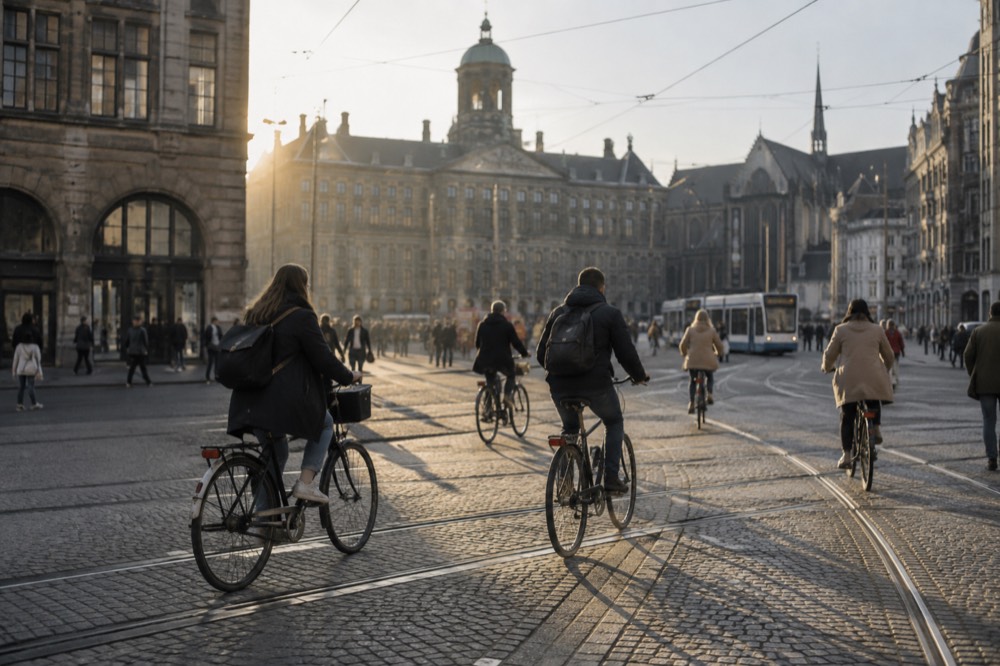
Alcohol deserves its own paragraph. Riding a bike under the influence is an offence in the Netherlands, and it is enforced, and it is also simply a bad idea in traffic this dense. The evening bike ride home from a brown cafe is a local tradition for people who know their route blindfolded. A visitor doing the same on an unfamiliar hire bike, on unfamiliar streets, at night, is stacking every risk factor at once. Take the tram or walk after drinking; the night network exists for exactly this.
Helmets are worth addressing because visitors ask constantly. The overwhelming majority of Amsterdam's daily cyclists do not wear one, and rental bikes almost never include one. That is a local norm, not a legal requirement, and adults make their own call. What the norm reflects is that the city's design has removed the high-speed car-versus-bike collision, which is the crash type helmets matter most for. A visitor who wants a helmet should ask the rental shop, and the better shops have a few, but nobody will look twice either way.
For families, the calculus differs by age. Small children ride in front seats or cargo bikes with a parent, which is how local families do it and is a genuinely good option on quiet routes. Teenagers who cycle at home will manage fine. The site's Amsterdam with kids guide covers the family options in more depth, including where the calm routes are.
The honest summary for a nervous rider: the danger is not ambient, it is specific. Junctions, tram rails, night riding after drinking, and riding beyond your skill are the four things that go wrong. All four are avoidable with attention, and none of them is a reason for a competent cyclist to skip the best cycling city in Europe.
What Are the Dutch Cycling Rules Tourists Break Most?
Tourists most often break four rules: riding on the pavement, riding against the flow in a bike lane, ignoring red bicycle signals, and stopping in the middle of the path to take photos. All four are offences or strong violations of local norms, and the bicycle traffic light is legally binding, not advisory. Hand signals before turning are expected, lights are required after dark, and a bell is standard equipment.
The legal side is short and worth knowing. Cycling on the pavement is prohibited and is the single most common visitor mistake, usually made innocently by someone who sees other people on foot and assumes the space is shared. It is not. Bike lanes in Amsterdam are marked with a bicycle symbol and are usually reddish asphalt; the pavement is for feet. Riding against the flow in a one-way bike lane is the second, and it is more dangerous than it looks, because oncoming cyclists read a contraflow rider as an obstacle at speed. The wider set of guides lives on Things to Do in Amsterdam.
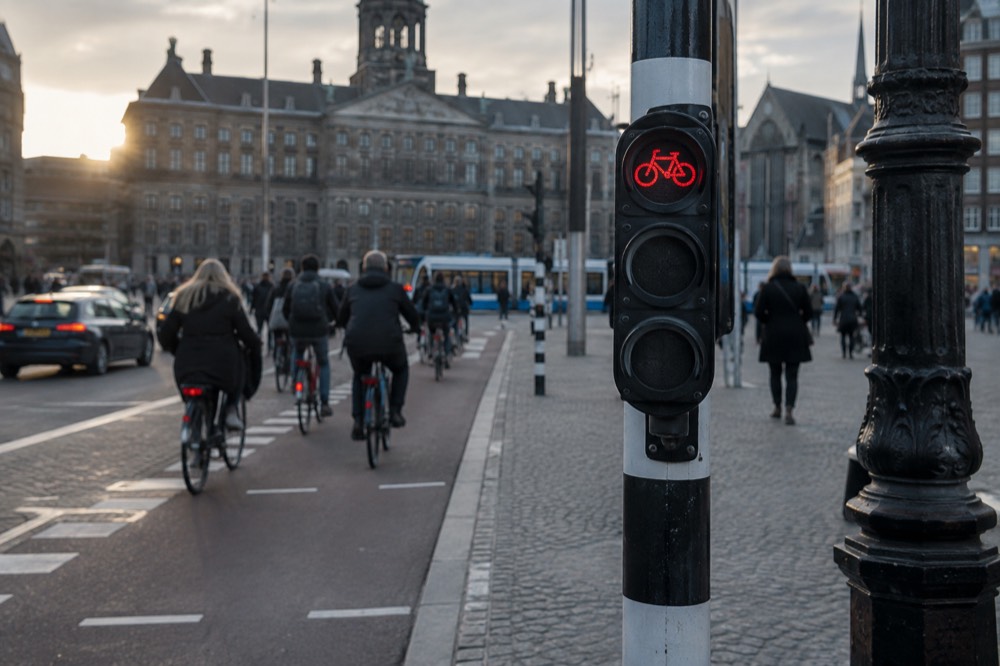
The bicycle traffic light is real. Amsterdam junctions have small signals with a bike icon, and they are legally binding for cyclists, not a suggestion. The local habit of rolling through on amber is exactly that, a local habit, and a visitor copying it on unfamiliar streets is taking a risk the locals are pricing in with years of pattern recognition. Wait for the green bike. It is rarely long.
The unwritten rules matter as much as the written ones, and the community's cycling and bike rental guide covers them in full. The core ones: keep right in the lane, overtake on the left, ring the bell early rather than late, and never stop dead. If you need to check a map or answer a phone, pull fully out of the lane and stop beside the kerb first. The photo rule bears repeating because it is the one that makes locals genuinely angry: stepping off the pavement into a bike lane for a picture puts you in a corridor where bicycles arrive at 20 km/h from behind you.
| Situation | What locals do | What visitors should do |
|---|---|---|
| Approaching a junction | Read the bike signal, commit early | Slow, look for the bike signal, cross squarely and keep moving |
| Tram rails in the road | Cross at a right angle without thinking | Cross as close to 90 degrees as possible, extra care when wet |
| Need to check a phone or map | Pull out of the lane and stop at the kerb | Same, before lifting the phone, never mid-lane |
| Pedestrian steps into the bike lane | Ring the bell early, slow slightly | Ring once from a distance, do not swerve into traffic |
| Turning left at a junction | Hand signal, or use the two-stage right-around-right crossing | Signal clearly, or dismount and use the pedestrian crossing |
Lights after dark are a legal requirement, and rental shops supply them because they have to. If a rental bike's lights are dead, ask for another bike; riding unlit at night on unlit canal streets is both illegal and genuinely hard for everyone else to deal with. One-way streets: the rule is that many Amsterdam streets are one-way for cars but two-way for bikes, so a lane marked against the car's flow may still be legal for you. Read the bicycle symbol and the arrow, not the car signs. When in doubt, walk the bike for a block and watch what other cyclists do.
None of this is complicated, and that is the point. The rules are few, they are visible, and following them is what converts a tourist from an obstacle into a participant. A visitor who spends ten minutes on the first-timer mistakes guide before mounting up will avoid nearly every error that gives tourists on bikes a bad name here.
Bike Tour or Rental: Which Suits a First Visit?
A guided bike tour suits first-time visitors and nervous riders, because the guide handles navigation, junction timing and route safety while explaining the city. An independent rental suits confident cyclists who want freedom and their own pace. A three-hour city tour costs from $42 and a four-hour countryside tour from $52.06, while a rental plus a transit day pass is the budget option for riders who need no guidance.
This is the decision most visitors actually face, and the honest answer depends on one question: how confident are you on a bike in unfamiliar traffic? A guided tour is not a tourist trap here, it is a training environment with commentary attached. The guide rides at the front, sets the pace, calls the junctions, and stops the group in safe places. For a first day in the city it removes the two hardest things, navigation and junction decisions, and it delivers context that no rental comes with.
The flagship city option is the Big Bike Tour, a three-hour guided ride rated 4.7 across 5,890 reviews, from $42. It sets off from the harbour area and loops the city's major sights with a guide riding alongside the whole way. Three hours is the right length for a first ride: long enough to feel the city open up, short enough that saddle fatigue does not set in for casual riders. For visitors whose main worry is "will I be able to keep up", a tour also answers that in the first ten minutes, and a guide will tell someone honestly if the group pace is wrong for them.
The countryside option flips the equation. The Countryside Bike Tour from Amsterdam runs four hours, rated 4.8 across 1,674 reviews, from $52.06, and rides out past the city edge to a windmill, a cheese tasting and a clog demonstration. Traffic thins dramatically once you clear the centre, which makes this the better pick for riders who want the Dutch landscape, windmills and all, but are less keen on dense urban junctions. It is also the one that feels most like the postcard Netherlands, and families with cycling-age children tend to do better out here than in the centre.
The rental option is right for a different visitor entirely. Someone who cycles at home, has read the rules section above, and wants to spend a day drifting between the Vondelpark, the Jordaan and the eastern docklands does not need a guide, and a day's rental plus a tram backup is the cheaper and freer day out. The trade is that everything is on you: the route, the junctions, the lock, and the walk-back-if-it-rains. Rent from a shop that explains the lock properly, because bike theft is common and an unlocked hire bike in the centre is a donation.
| Option | Best for | Duration | From | Rating |
|---|---|---|---|---|
| Big Bike Tour, city sights | First visit, guided pace, main landmarks | 3 hours | $42 | 4.7 (5,890 reviews) |
| Countryside bike tour | Windmills, cheese, quieter roads, families | 4 hours | $52.06 | 4.8 (1,674 reviews) |
| Independent rental | Confident cyclists, flexible days | Your choice | Set by the shop | Depends on the shop |
One honest caveat about mixing cycling with museum time: a bike tour and a museum visit do not stack well on the same legs. If the Van Gogh Museum is the day's priority, do it first and ride later, or split them across days. The museum's timed-entry tickets, covered in the Van Gogh Museum guide, fix your entry slot, and a three-hour ride does not fit neatly around a fixed slot. Riders who try to compress both usually end up rushing the ride and arriving at the museum sweaty and late, which is nobody's good afternoon.
What Does It Cost to Cycle In Amsterdam?
A guided city bike tour costs from $42 and a countryside tour from $52.06. Independent rental day rates are set by individual shops and vary, so check the shop's own price. A GVB 24-hour transit pass costs €10.00 as the non-cycling backup, a single one-hour ticket is €3.40, and contactless OVpay charges a €1.16 base fare plus €0.217 per kilometre with a daily cap.
Budgeting a cycling day is mostly about the bike itself plus a contingency plan for weather and tired legs. The tour prices above are fixed and easy to plan around: from $42 for the city tour, from $52.06 for the countryside ride. Rental pricing is the awkward one, because rates are set shop by shop and there is no single verified standard rate to quote, so treat any number a blog hands you as a guess and get the price from the shop you intend to use. What can be stated with confidence is the shape of the market: basic single-speed city bikes rent cheapest, e-bikes and cargo bikes cost multiples of that, and most shops charge by the day with discounts for multi-day hires.
The contingency plan matters more than people expect. Amsterdam weather can turn a planned cycling day into a tram day in an hour, and the beauty of the city is that the fallback is excellent. A GVB 24-hour day pass is €10.00, a 72-hour pass is €21.50, and contactless OVpay works on every tram, bus, metro and ferry with a base fare of €1.16 plus €0.217 per kilometre, capped daily. Full fares are on the operator's own price page at GVB prices. The practical budget move is to decide the cycling day the night before, buy the transit pass only when you actually need it, and never pre-buy a multi-day pass for days you might spend on a bike.
| Item | Figure | Notes |
|---|---|---|
| Big Bike Tour, guided, 3 hours | From $42 | City sights, guide riding alongside |
| Countryside bike tour, 4 hours | From $52.06 | Windmill, cheese tasting, clog demo |
| Independent bike rental | Set per shop | Confirm the day rate with the shop |
| GVB 24-hour transit pass | €10.00 | Trams, buses, metro, ferries |
| GVB single, 1 hour | €3.40 | Backup for one-off trips |
| OVpay contactless | €1.16 + €0.217/km | Daily cap applies, no ticket needed |
Two small costs people forget. The lock: most shops include one, but a serious lock matters because bike theft in Amsterdam is a civic sport, and the deposit on a stolen hire bike lands on the renter. Check the theft terms before riding off. The second is the ferry: crossing to the north of the city by bike is one of the best rides in the region, behind the ferry, which is part of the GVB network and carries cyclists at no charge. The Amsterdam Noord and NDSM Wharf guide lays out what to do once you are over the water.
Add it up and a cycling day is one of the better value days in an expensive city. From $42 buys three guided hours with a local at the front; €10.00 covers every tram in the city for a day; and the two combined cover the plan and the backup plan. Compare that with a single museum ticket at €25 and the bike looks even better, though the sensible visitor does both across a few days rather than choosing.
The last word on cost is about what you get for it. The city's core experiences, its canals, its streetscapes, its noise and its pace, are free to anyone moving through them, and a bike is the fastest way to move through them. The question "should tourists ride bikes in Amsterdam" is really a question about confidence, and confidence can be bought cheaply here: a guide for the first three hours, a bell, a light, and a willingness to stop at the kerb when unsure. Most visitors who ride properly come back saying it was the best thing they did in the city, and the ones who do not usually say they wish they had.
Common Questions About Riding Bikes in Amsterdam
Should Tourists Ride Bikes In Amsterdam?
Yes, if they can ride confidently and follow the lane markings and signals. Cycling is the fastest way to see the city and the infrastructure is built for it. Visitors who are unsteady on a bike, or who would ride after drinking, should walk, take the tram or join a guided tour instead.
Is cycling in Amsterdam dangerous for tourists?
The infrastructure is among the safest in the world, and most incidents involving visitors come from hesitation at junctions, tram rails in wet weather, or riding beyond their ability, not from speeding traffic. Ride predictably, cross rails squarely and keep moving once you commit to a junction.
Do you have to wear a helmet in Amsterdam?
No. Helmets are not required by law and almost no local commuter wears one. Rental shops rarely provide them, though some keep a few on request. Adults make their own call and nobody will comment either way.
Can you ride a bike on the pavement in Amsterdam?
No. Cycling on the pavement is prohibited and it is the most common mistake visitors make. Bike lanes are marked with a bicycle symbol, usually on reddish asphalt, and the pavement is for pedestrians only.
Is a bike tour better than renting for a first visit?
For most first-time visitors, yes. A guided tour handles navigation, junction timing and route safety while explaining the city, from $42 for a three-hour city ride. Confident cyclists who know the rules can rent independently and enjoy more freedom at a lower cost.
How much does it cost to cycle in Amsterdam?
A guided city bike tour costs from $42 and a four-hour countryside tour from $52.06. Independent rental rates are set by each shop, so confirm the day rate before you book. A GVB 24-hour transit pass at €10.00 is the standard non-cycling backup.