What Are Some Hidden Gems In The Netherlands?
Six underrated Dutch places you can reach on a day trip from Amsterdam, from Giethoorn's car-free canals to the island of Texel, with honest planning advice.
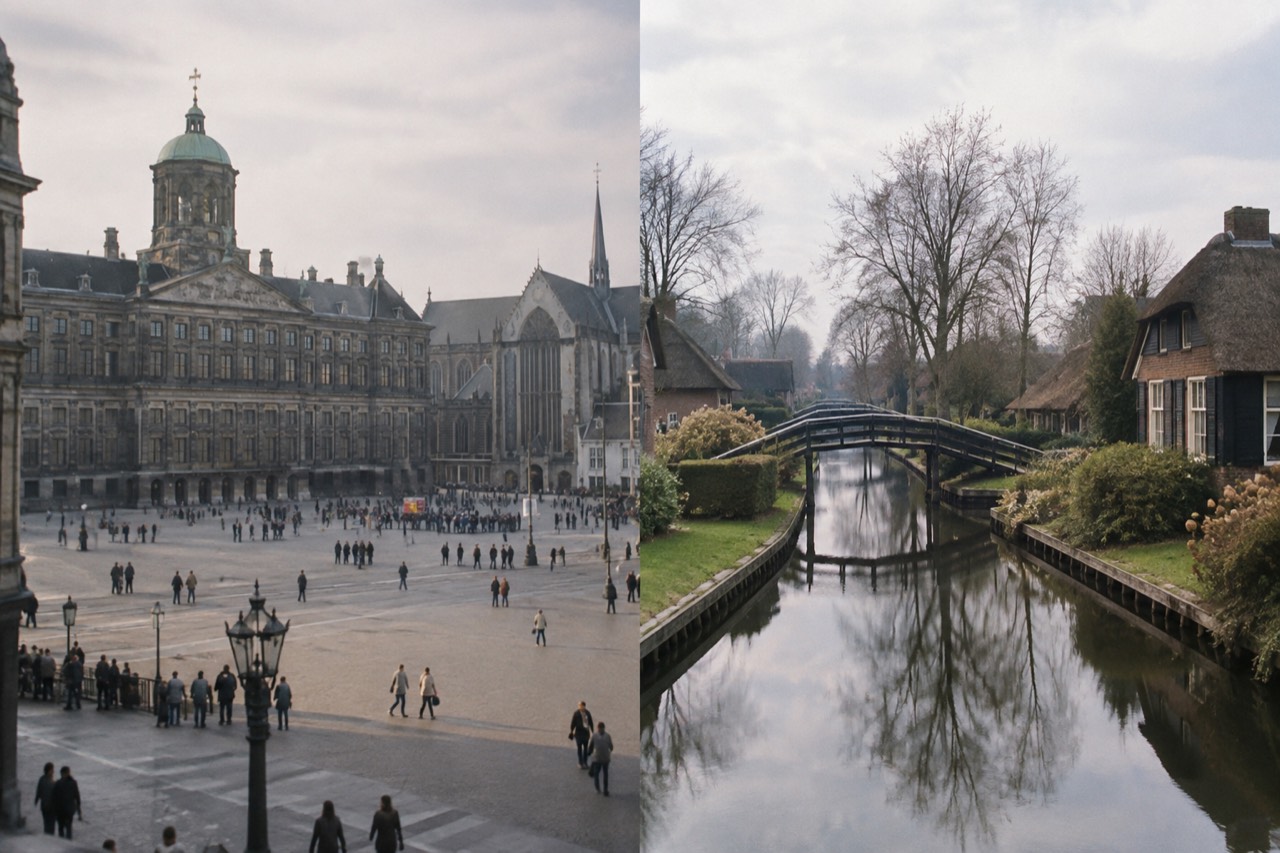
What Are Some Hidden Gems In The Netherlands?
The Netherlands hides its best places in plain sight, all of them reachable from Amsterdam in a day: Giethoorn, a village with canals instead of roads; Kinderdijk's working windmills; Utrecht's split-level canals; Haarlem's quiet centre; the Hanseatic town of Deventer; and Texel, the largest of the Wadden islands. None of them needs a car, and none appears on the standard weekend itinerary.
Amsterdam took 23.7 million tourist overnight stays in 2025, and almost all of that pressure lands on the same square kilometre of canal ring. The rest of the country, meanwhile, is a 30-to-90-minute train ride away and largely empty of camera phones. That gap is the entire argument for this list. These six places are not obscure because they are hard to reach. They are obscure because the average visitor never looks past the Rijksmuseum queue.
The desk's rule for calling somewhere a hidden gem is simple: it has to be genuinely under-visited relative to what it offers, and it has to work as a day trip from Amsterdam without a rental car. Giethoorn and Kinderdijk are the headline names, and both earn it. Utrecht and Haarlem are the two that surprise people most, because they are close enough to see in half a day and yet feel like different countries. Deventer and Texel are the deep cuts, for a second or third visit or a long layover turned into an adventure.
Here is the short version of what each one is and who it suits:
| Place | What it is | Why it stays quiet | Best for |
|---|---|---|---|
| Giethoorn | Village where canals replace roads | It sits in the far north-east, a long ride from the coast | Slow boats, photographers, romantics |
| Kinderdijk | Concentration of historic drainage windmills | Most tours sell Zaanse Schans instead, which is closer | Engineering history, classic photos |
| Utrecht | Canal city with wharf-level walkways | Everyone assumes Amsterdam is the only canal city | Cafes at water level, a full day out |
| Haarlem | Compact historic city, 15 minutes by train | It is treated as a suburb rather than a destination | Short on time, first-time visitors |
| Deventer | Hanseatic river town in the east | An hour-plus ride discourages the day-trip crowd | Book lovers, old streets, fewer tourists |
| Texel | Largest Wadden Sea island, ferries from Den Helder | It needs a ferry on top of a train, so few bother | Beaches, dunes, birds, a full day |
If you only have one spare day, the choice is really between water and windmills: Giethoorn for the car-free village, Kinderdijk for the machinery that made the country possible. If you have two, add Utrecht or Haarlem, because the short train ride means you can be back in Amsterdam for dinner. Deventer and Texel ask for a fuller day and give a fuller return.
Before you plan the trains, though, most visitors still want their Amsterdam anchors booked first. These are the three the desk sees booked most often alongside a day-trip plan:
Why Is Giethoorn Called the Venice of the Netherlands?
Giethoorn is a village in Overijssel where the main roads are water: farms and cottages sit on private islands linked by more than 170 bridges, and locals do their shopping by punt boat. Day trips from Amsterdam run around 7 to 8 hours and cost from $100.80 with a guided option, or you can ride the train and rent a boat on arrival. It is quietest on weekdays outside the Dutch school holidays.
The nickname is only half a joke. There is no through traffic in the old centre because there are no through streets, just water. Visitors arrive, rent a whisper boat, and putter along the same canals the residents use to reach the bakery. The village has been drawing a steady trickle of Dutch weekenders for decades, but the international crowd still mostly goes to Zaanse Schans, which is a quarter of the distance from Amsterdam and a fraction of the atmosphere.
The trade-off is honest: Giethoorn is a long way out. A guided day trip such as the Giethoorn Guided Day Trip runs 7 to 8 hours door to door, includes a one-hour boat cruise through the village canals and a drive past the polders and dikes, and is rated 4.8 across 575 reviews at from $100.80. That is the comfortable option. The Giethoorn, Volendam and Zaanse Schans Tour compresses the village together with two more famous stops into a 10-hour day at from $161, rated 4.8 across 812 reviews, and suits visitors who want the whole postcard set in one outing.
Going independently works too, and costs less in cash if not in effort. You train to Steenwijk or Zwolle and take a bus the last stretch, then rent a boat by the hour in the village. Go on a Tuesday in September and you will share the canals with a handful of Dutch pensioners. Go on a sunny Saturday in July and you will queue for a boat, which is why the desk quietly recommends the guided version in peak season: someone else handles the logistics while you handle the camera.
One planning note that most write-ups skip: Giethoorn's silence is the point, and it is fragile. The village has asked day visitors to keep noise down and to park outside the centre, and the boat rental outfits close earlier than the cafes. Treat the second half of the afternoon as the return window, not the arrival window, and the day works.
What Makes Kinderdijk Worth the Trip From Amsterdam?
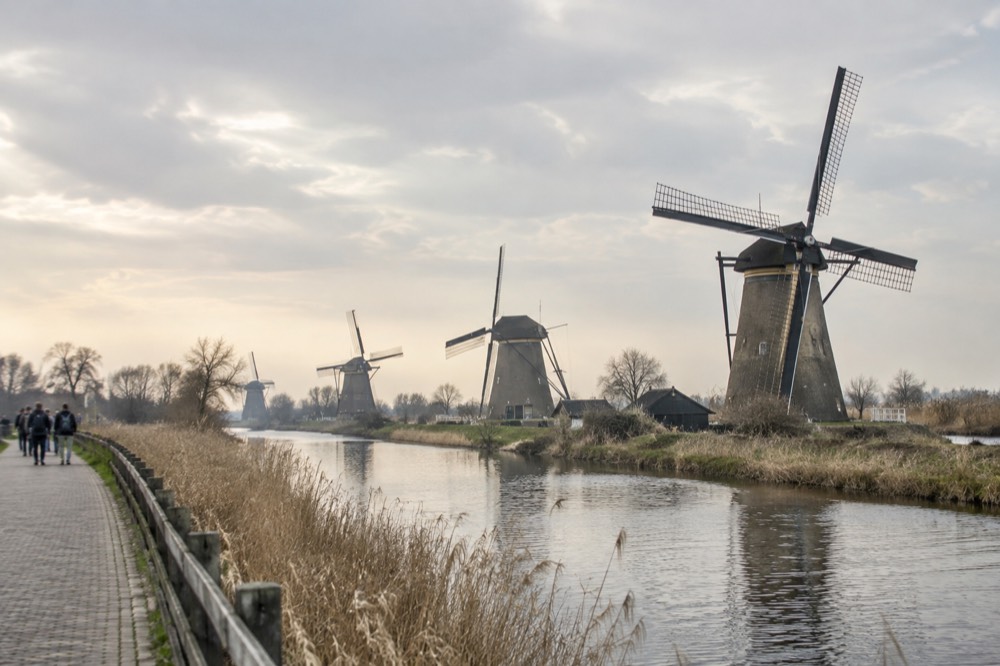
Kinderdijk is the densest surviving collection of historic drainage windmills in the Netherlands, standing in working order along a single waterway in the polder south-east of Rotterdam. It is the place to understand how the Dutch physically made their country, and it receives a fraction of the visitors of the windmills near Amsterdam because it sits further out. Expect a half-day visit with walking paths between the mills.
Zaanse Schans, the windmill cluster nearest Amsterdam, is where the tour buses go. Kinderdijk is where the actual World Heritage-grade drainage system lives, a chain of mills that pumped water out of the polder for two centuries and still functions as a backup today. The difference matters. Zaanse Schans is partly a reconstructed open-air museum with shops and clog-making demonstrations; Kinderdijk is a landscape, and you walk through it rather than around it.
The honest comparison lives in our Zaanse Schans versus Kinderdijk breakdown, but the short version is this: if you want photos with minimum effort, take the closer cluster. If you want the engineering story, the wide skies and the walk, take the ride south. There is no direct tour product in our roster for Kinderdijk alone, which itself tells you something, so most visitors reach it by train to Rotterdam and a bus, or as part of a wider southern loop.
Practicalities are simple. The site is open-air and free to walk through; the mills that charge admission are the ones you can enter, and the visitor ferry runs the length of the waterway for those who would rather ride. Wear shoes you can walk a few kilometres in, because the paths between the mills are the whole experience. A grey day is not a disaster here, the low clouds make the landscape look more itself, not less.
One thing to book before you lock the day in, if a museum morning in Amsterdam is also on your list:
Is Utrecht a Good Alternative to Amsterdam?
Utrecht is the Netherlands' fourth-largest city and, in the desk's view, the best day trip on this list. Its canals are unique: the water level sits below street level, with cellars converted into wharf-side cafes you descend to by stair. It is under an hour from Amsterdam by direct train, so you can go for lunch and be back for dinner. Few international visitors go at all.
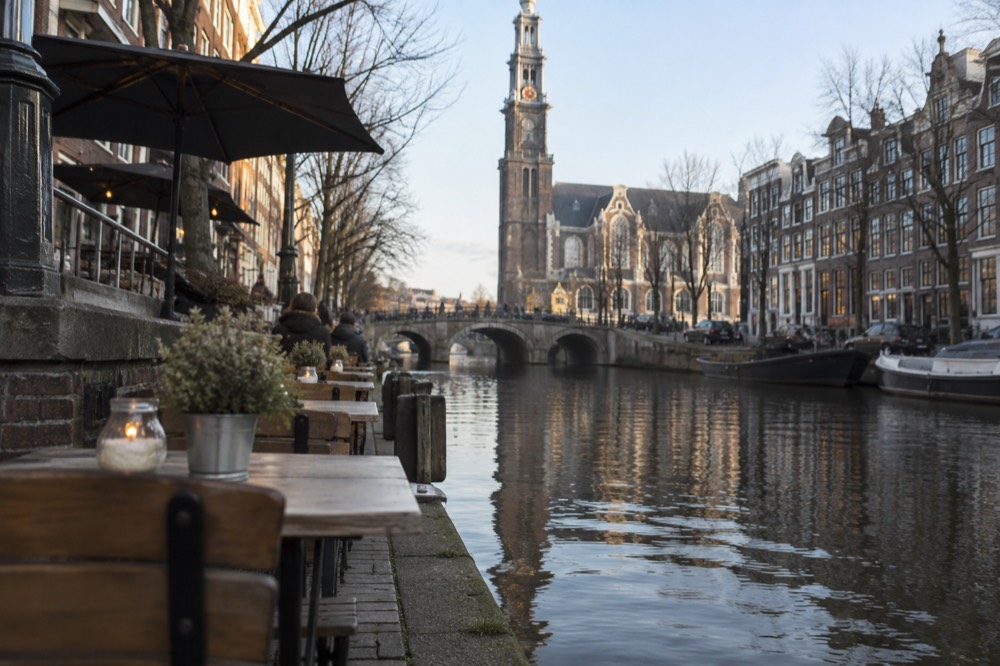
The split-level canal is the thing. In Amsterdam the water is at street level and you look across it; in Utrecht you walk down to it, and the old warehouse cellars are now restaurants with tables at the water's edge, boats drifting past at eye level. The effect is intimate in a way the Amsterdam canal ring, for all its grandeur, is not. Add a Gothic tower, the Dom, whose nave collapsed in 1674 and left the choir standing detached from the tower across a square, and you have a city that looks like a happy accident of history.
It is also a student city, which keeps the price of lunch and beer honest and the streets lively on weekdays. The main shopping street runs through the centre, the museum quarter sits a short walk east, and everything of interest fits inside a loop you can walk in an afternoon. Our Utrecht day trip guide covers the detail, but the desk's honest advice is to go with low expectations and no itinerary: Utrecht rewards wandering more than it rewards a checklist.
The train is the quiet advantage. Direct services run from Amsterdam Centraal throughout the day, the journey is short, and the station empties you straight into the city centre, so there is no transfer friction at either end. Compare that with Giethoorn's bus-and-train chain or Texel's ferry, and Utrecht becomes the obvious choice for anyone with a spare half-day rather than a spare day.
Why Do Locals Send Visitors to Haarlem?
Haarlem is a compact, genuinely lived-in city 15 minutes west of Amsterdam by train, with a great market square, a monumental church and a museum dedicated to Frans Hals, who lived and worked there. Amsterdammers go to Haarlem for dinner when they want the beauty without the crowds. As a day trip it is the cheapest and shortest on this list, and it works even with a late start.
Fifteen minutes. That is the whole pitch. Haarlem is close enough that you can decide to go over breakfast and be standing in the Grote Markt by mid-morning, and the city rewards that spontaneity because it does not need a plan. The Grote Kerk dominates the square, the Frans Hals Museum holds the painter's group portraits in the building complex they were made for, and the shopping streets around the square mix Dutch chains with the kind of independent shops Amsterdam has mostly priced out.
The reason locals send people there is the contrast. Haarlem has Amsterdam's architecture and none of its crush: the same stepped gables, the same hofjes, the hidden courtyards where almshouses once stood, but at a pace where you can actually look up. The city also sits at the edge of the dune landscape, so a day can be split between the centre and a walk or bike ride into the dunes toward the coast, which is the two-trips-in-one move.
For timing, the weekend market on the Grote Markt is the liveliest moment, and Monday is the quietest, when some shops close. Go in the morning, eat lunch on a terrace on the square, and be back in Amsterdam by mid-afternoon. If the day trip is competing with a last museum slot in the city, remember that the big Amsterdam museums require pre-booked time slots, so book the slot first and fit Haarlem around it rather than the other way round.
What About Deventer and Texel for Something Different?
Deventer is a Hanseatic river town in the east of the country, all brick streets, an old harbour and one of the oldest public libraries in the Netherlands, and it hosts a famous book market each August. Texel is the largest Wadden Sea island, reached by train to Den Helder and a short ferry, offering dunes, beaches, seal nurseries and bird reserves. Both ask for a full day and both are the answer when you have already seen everything else.
Deventer first. The town was a member of the Hanseatic League, the medieval trading network, and the money shows: a great square church, a weigh house, warehouses along the IJssel river, and a street plan that has barely moved since the Middle Ages. It is the sort of place Dutch people mean when they complain that foreigners only see Amsterdam. The August book market on the main square is one of the largest in Europe and draws the whole country for a weekend; on any other day you will have the streets to yourself.
Texel is the opposite of a city trip. You train to Den Helder at the tip of North Holland, take the ferry across, and you are on an island of dunes, sheep farms, forests and beaches. The Ecomare centre covers the Wadden Sea ecosystem and rehabilitates seals, the lighthouse sits in the dunes at the north end, and bicycles are the natural way to get around once you are off the boat. It is a big day out, the ferry crossing alone takes about 20 minutes and the train ride is the longest on this list, so start early and accept that you will be tired in a good way.
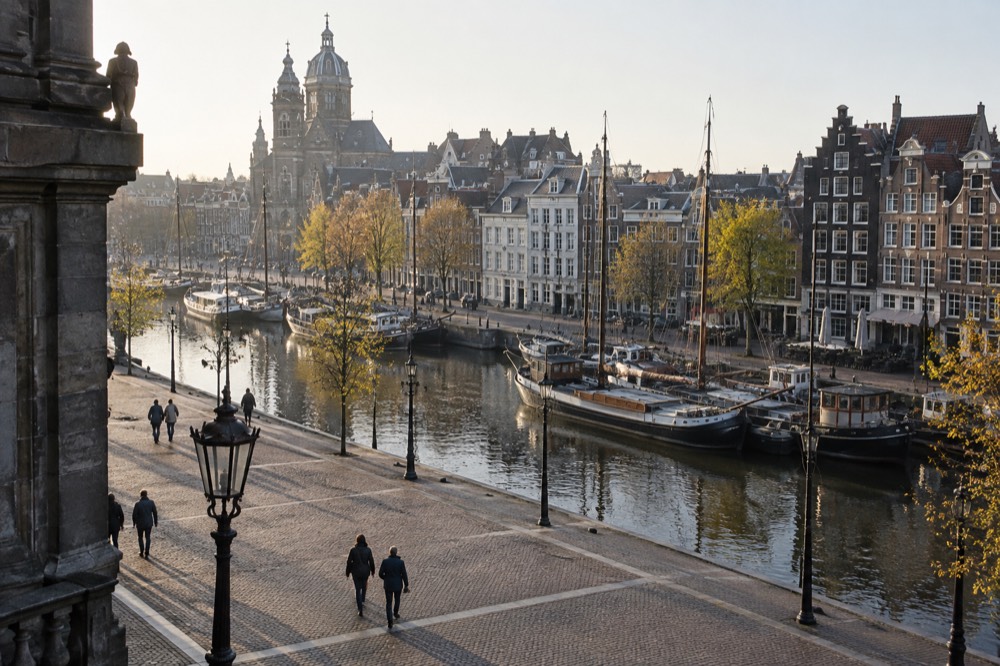
Neither is a first-visit pick. If Amsterdam is a once-in-a-lifetime weekend, do Giethoorn or Haarlem and be content. But if you are on a second trip, or a long stay, or you simply hate crowds more than you hate train rides, these two are the places where the Netherlands stops performing for visitors and just gets on with being itself.
How Do You Plan a Day Trip From Amsterdam Without a Car?
Every place on this list works by public transport: Dutch trains run frequently from Amsterdam Centraal, you pay by tapping a contactless bank card under the OVpay system, and a GVB day card for city transport costs €10.00 if you also need trams on the same day. Book any timed museum slot before you commit to a day out, and check the last train home.
The Netherlands is one of the easiest countries in Europe to travel without a car, which is the quiet reason this list exists at all. Trains from Amsterdam Centraal fan out across the country, the booking systems sell e-tickets online, and contactless payment works on the trains as well as on city trams and buses. You tap in, you tap out, and the fare is calculated for you. For the city legs around your departure, a 24-hour GVB day card is €10.00, and children pay €5.00.
That last point deserves a second look. If your day trips include museums, and in Utrecht and Haarlem they should, the Museumkaart can change the arithmetic: a temporary version bought at a participating museum runs 31 days and covers a maximum of 5 visits, and the card is accepted at more than 500 museums across the country. The official museum.nl card page lists the adult price at €75 and the under-19 rate at €39. For a week-long stay with two or three museum visits planned outside Amsterdam, it pays for itself; for a weekend, it usually does not.
The other planning habit that separates a good day trip from a stressful one: book the anchor first. If you want a morning in the Van Gogh Museum before an afternoon train, the museum requires every visitor to pre-book a timed entry ticket, and slots for popular days go early. The entry ticket starts at $31 and carries a 4.7 rating across 57,096 reviews, and the desk's standing advice is to fix that slot, then build the day trip around it.
Here is how the main organised options compare if you would rather not handle the trains yourself:
| Tour | From | Rating | Reviews | Duration |
|---|---|---|---|---|
| Giethoorn Guided Day Trip | $100.80 | 4.8 | 575 | 7 to 8 hours |
| Giethoorn, Volendam and Zaanse Schans Tour | $161 | 4.8 | 812 | 10 hours |
| Countryside Bike Tour With Cheese and Clogs | $52.06 | 4.8 | 1,674 | 4 hours |
| Zaanse Schans, Edam, Volendam and Marken | $45 | 4.8 | 5,559 | 6 hours 30 minutes |
The bike tour deserves a word, because it is the sleeper option on that table. Four hours, from $52.06, rated 4.8 across 1,674 reviews, and it gets you out of the city on two wheels with a cheese tasting and a clog demonstration folded in. It is the closest thing on the roster to a hidden-gem experience without the long ride.
For the rest, the desk's honest summary is this site's whole reason for existing, and the homepage's Things to Do in Amsterdam rundowns cover the city half of any split day. Book the anchors, check the last train, and the rest of the country opens up for the price of a tap of a bank card.
If you are still building the Amsterdam half of the trip, these are the three most-booked pairings:
Common Questions About Hidden Gems in the Netherlands
What Are Some Hidden Gems In The Netherlands?
Giethoorn, Kinderdijk, Utrecht, Haarlem, Deventer and Texel are the six the desk recommends as day trips from Amsterdam. All are reachable by public transport, none needs a rental car, and each offers something the canal ring does not: car-free waterways, working windmills, split-level canals, a compact historic centre, a Hanseatic river town and a Wadden Sea island.
Can you visit Giethoorn as a day trip from Amsterdam?
Yes. Guided day trips run around 7 to 8 hours from from $100.80, or you can take the train toward Steenwijk or Zwolle and a bus for the last stretch, then rent a boat in the village. Count a full day either way, and go on a weekday outside Dutch school holidays if you want the canals to yourself.
Is Kinderdijk worth the journey compared with Zaanse Schans?
If you care about the engineering history behind the windmills, yes. Kinderdijk is a working drainage landscape you walk through, while Zaanse Schans is closer to Amsterdam and easier to combine with a short day. Kinderdijk takes longer to reach, which is exactly why it stays quieter.
Do you need a car for these day trips?
No. Dutch trains run frequently from Amsterdam Centraal and contactless bank cards work for payment under the OVpay system. A GVB 24-hour day card for city trams and buses costs €10.00 if your day also involves getting across Amsterdam to the station.
Which hidden gem is closest to Amsterdam?
Haarlem, at roughly 15 minutes by direct train. It is the one you can decide on over breakfast, which makes it the best pick for a spare half-day or a late start.
Are these places crowded in summer?
Less than Amsterdam by a wide margin, but not empty. Giethoorn gets busy on sunny Saturdays, and Texel fills on warm weekends. Weekdays, early starts and the shoulder months are the reliable way to have any of them quietly.