Utrecht Day Trip from Amsterdam: What to See, Do and How to Get There
Utrecht is the Dutch city that locals keep recommending when Amsterdam feels too busy, and it is an easy day trip by train. Here is how to plan the day, what to see and what it costs.
Short answer
Utrecht is a straightforward day trip from Amsterdam: direct intercity trains run between the two Centraal stations and the ride is a short hop. Plan on the Dom Tower, the two-level Oudegracht canal with its wharf cellars, and a museum or two. A day here is walkable, compact and noticeably calmer than Amsterdam.
Utrecht does not need much selling once you have been there, but most first-time visitors to the Netherlands never make it out of Amsterdam. That is a shame, because Utrecht is one of the country's oldest cities, it has a canal structure unlike anywhere else, and the train connection from Amsterdam is about as easy as Dutch rail travel gets. This guide covers how to get there, what to do with a single day, where to eat, and how the costs compare with staying put in Amsterdam.
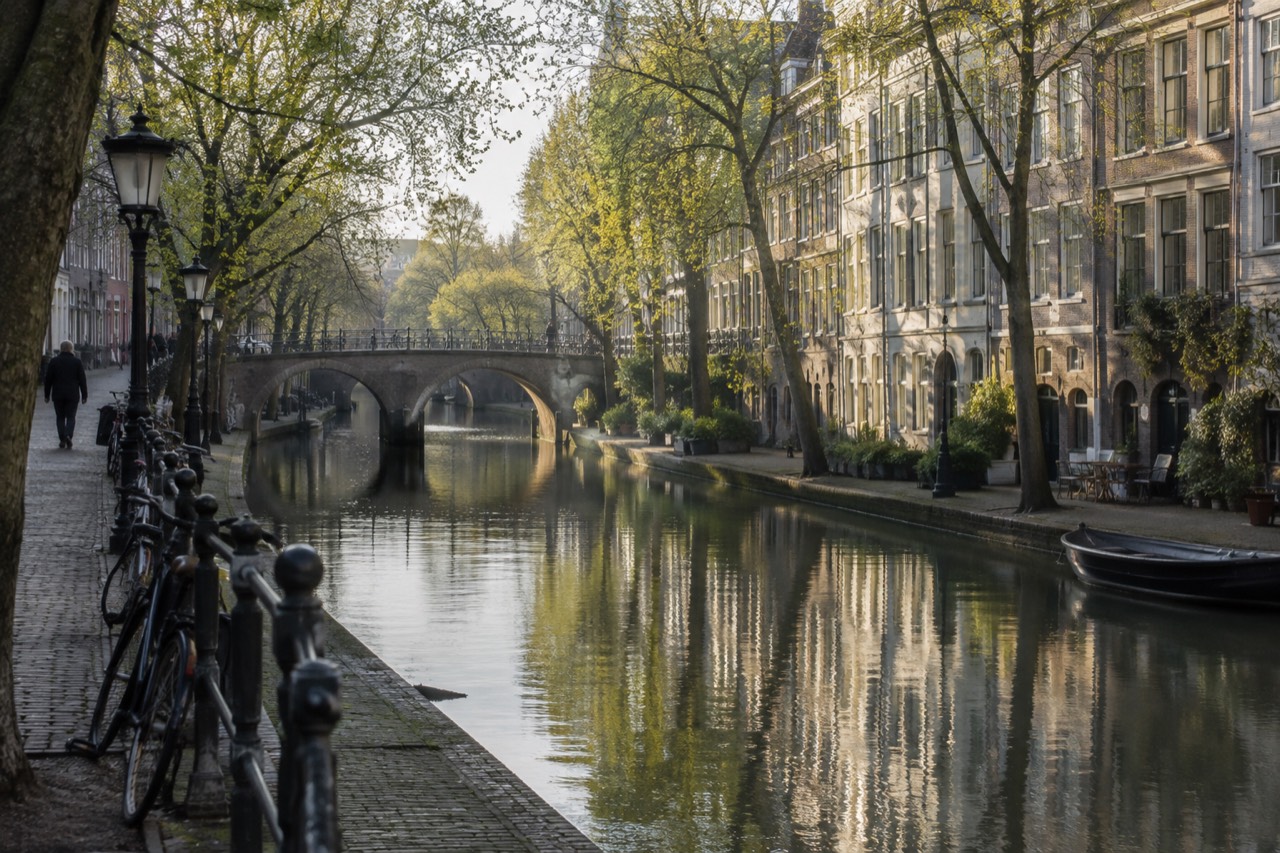
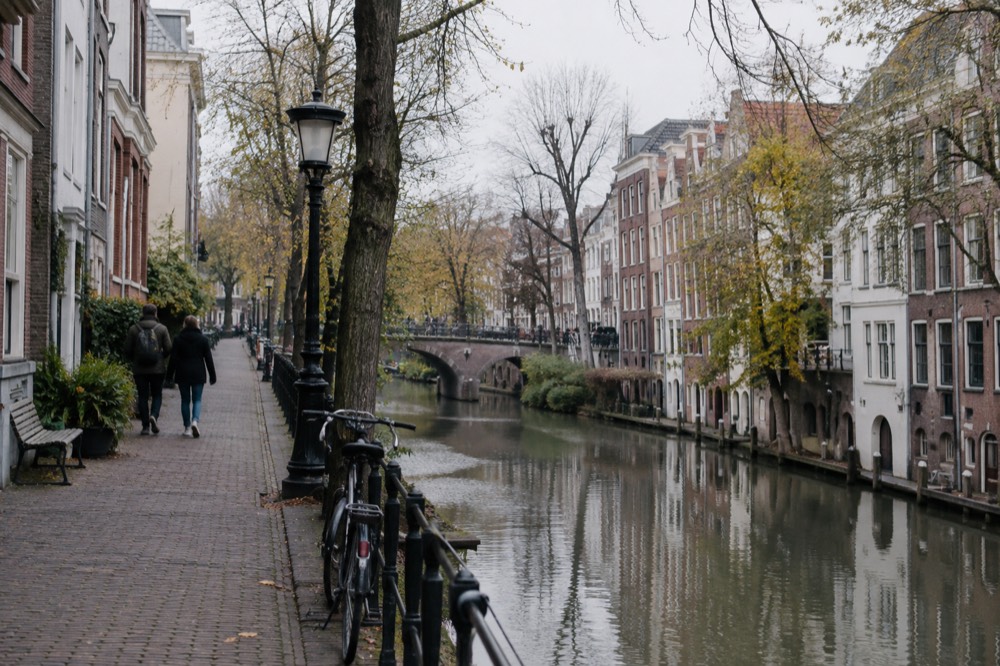
The city's defining feature is the Oudegracht, a canal that runs below street level, with centuries-old wharf cellars along the waterline that now house restaurants, bars and workshops. You walk along the water at one level and along the street at another. Almost every other canal city keeps its cafés above the waterline; Utrecht puts them at it, and that single structural quirk shapes the whole visit. The rest of the centre is compact, largely car-free in the busiest parts, and threaded with cycle lanes, so the pace of the day is slower than Amsterdam's even in summer.
Why Is Utrecht Worth a Day Trip from Amsterdam?
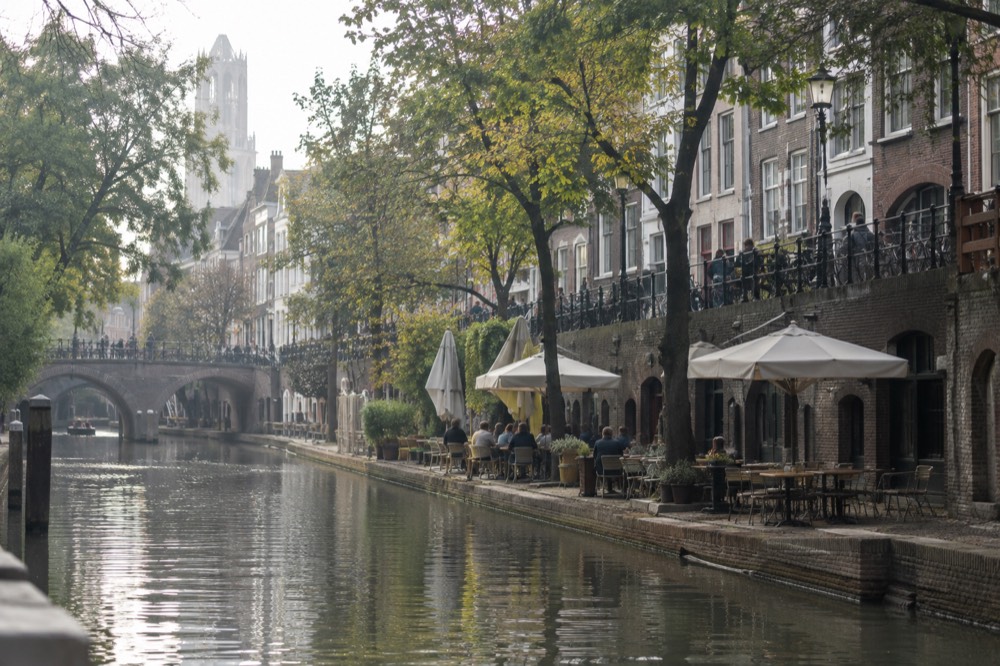
Utrecht earns a day of your Amsterdam trip because it delivers the classic Dutch canal-city experience without the crowds, at a walkable scale, and with a genuinely different character: older, quieter and more lived-in than the capital, with a canal layout you will not find anywhere else. The city was founded as a Roman settlement on the Rhine and grew into the Netherlands' most important religious centre in the Middle Ages, which is why its skyline is dominated by a single enormous Gothic church tower rather than by merchant houses. That history still shows in the street pattern. Where Amsterdam's centre was built around trade, Utrecht's was built around the Dom church and its precinct, so the lanes around the Domplein feel ecclesiastical rather than commercial.
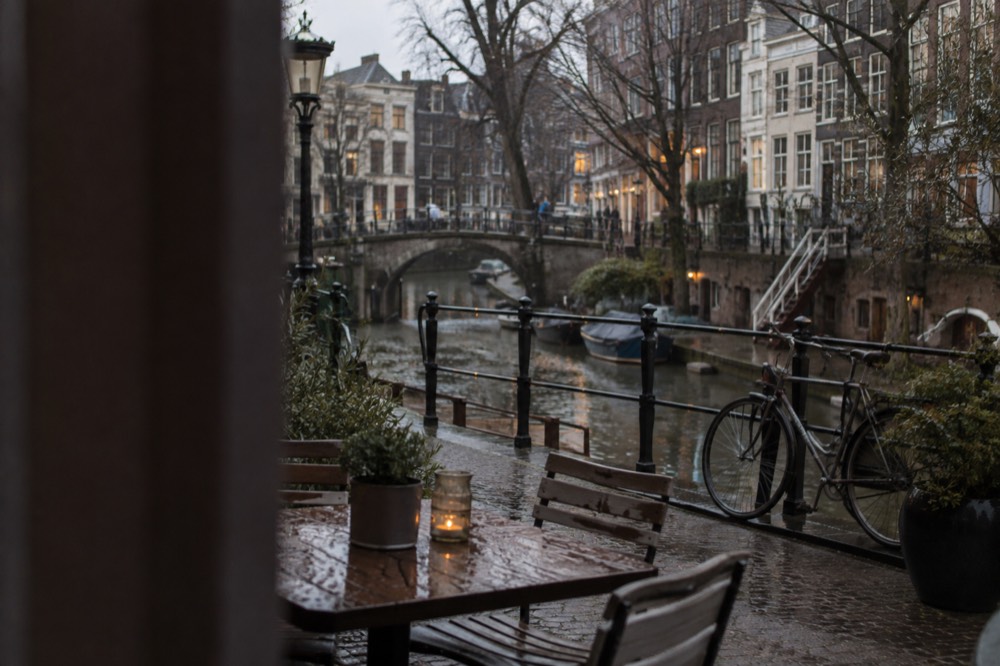
The second reason is the wharf cellars. When the Oudegracht was canalised in the medieval period, the merchants along it built storage vaults at water level with their houses above, connected by steep internal stairs. Those vaults survived, and today they are the most atmospheric restaurant row in the country: you descend from the street, sit at a table a metre above the water, and watch boats pass at eye level. On a warm evening there are few better spots in the Netherlands.
The third reason is simply contrast. Amsterdam recorded 23.7 million tourist overnight stays in 2025, and the centre shows it. Utrecht gets its share of Dutch weekend visitors and students, but the tourist footprint is far lighter, prices in cafés and restaurants run noticeably lower, and you will hear more Dutch than English on the streets. If your trip falls in July or August and you want a breather, this is the obvious one.
There is a practical bonus too. Utrecht Centraal is one of the country's largest rail hubs, so if you are combining the day trip with onward travel, or you simply want to see how a major Dutch station works, the arrival itself is painless. The station sits at the western edge of the centre, and everything described in this guide is within an easy walk of it.
How Do You Get from Amsterdam to Utrecht?
Direct intercity trains link Amsterdam Centraal and Utrecht Centraal throughout the day, the journey is one of the shortest intercity hops in the country, and you do not need to book a seat in advance: buy a ticket or tap a contactless bank card and go. NS, the national rail operator, sells e-tickets online and through its app, and contactless payment with OVpay works on trains the same way it does on Amsterdam's trams and metro. You tap in at the platform gate or pole before boarding and tap out at the far end; the fare is calculated from the distance travelled. There is no reservation system on Dutch domestic trains, so a day trip needs no planning beyond checking the departure boards.
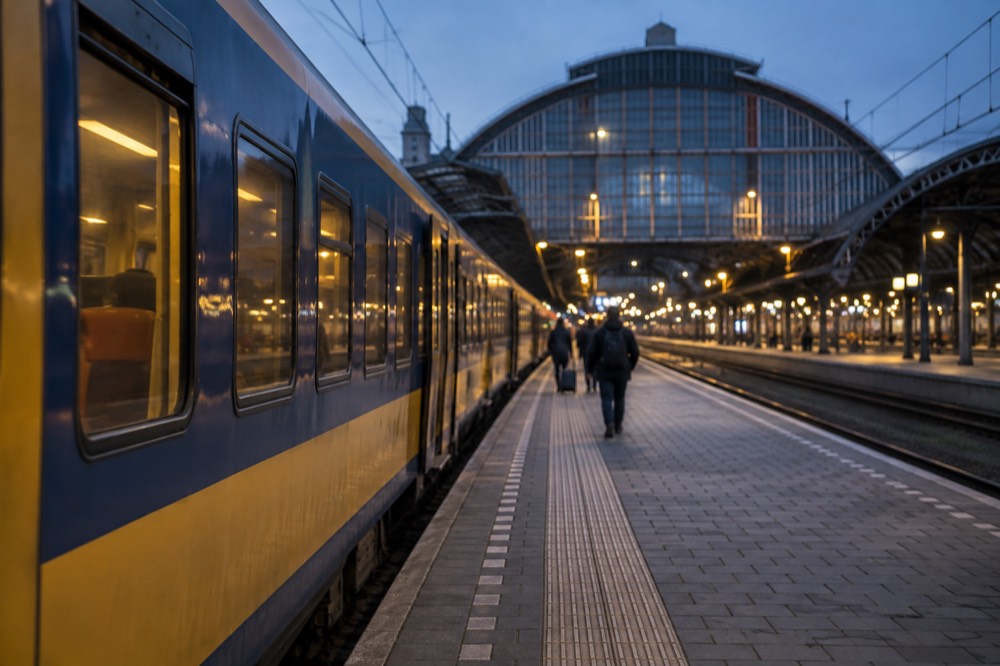 intercity train standing at a platform at Amsterdam Centraal station" width="1000" height="667" loading="lazy">
One point that catches visitors out: the I amsterdam City Card's transport component does not help you here. The card includes unlimited travel on GVB services, but the official terms state that this "applies to GVB services within Amsterdam only and does not include airport transfers or regional public transport" (iamsterdam.com's own card guide). Utrecht is an NS intercity ride, so it is outside the card entirely. GVB day tickets, likewise, stop at the city boundary (the GVB fare page lists them as GVB-network products). Budget a separate train fare each way.
| Option | What it involves | Best for |
|---|---|---|
| NS intercity train | Direct services between Amsterdam Centraal and Utrecht Centraal, no seat reservations, contactless payment accepted | Almost everyone; fastest and simplest |
| OVpay contactless | Tap a bank card or phone at the platform and tap out on arrival; fare charged per journey | Travellers without a Dutch ticket app |
| NS e-ticket or app | Buy before travel and scan at the gate; useful if you prefer a fixed ticket | Anyone who likes tickets in advance |
| Car | Parking in Utrecht's centre is limited and paid; the historic streets are not built for cars | Not recommended |
Timing matters more than transport. Aim for a mid-morning arrival so you get the full day, and check the last trains home before you settle into a wharf-cellar bar; Dutch intercity services thin out late in the evening. On paper the whole door-to-door journey from most Amsterdam hotels is shorter than crossing Amsterdam itself at rush hour.
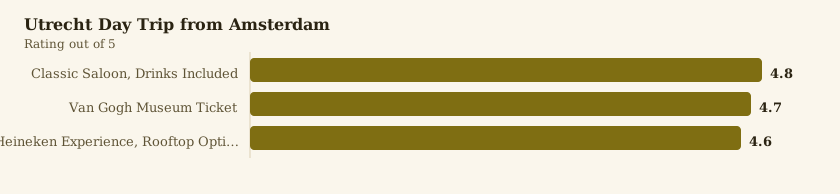
Since a Utrecht day is cheap to arrange and you will likely have budget left over, it is worth thinking about what you will do with your remaining Amsterdam evenings before you leave. These three products cover the classic bases:
What Are the Best Things to Do in Utrecht in One Day?
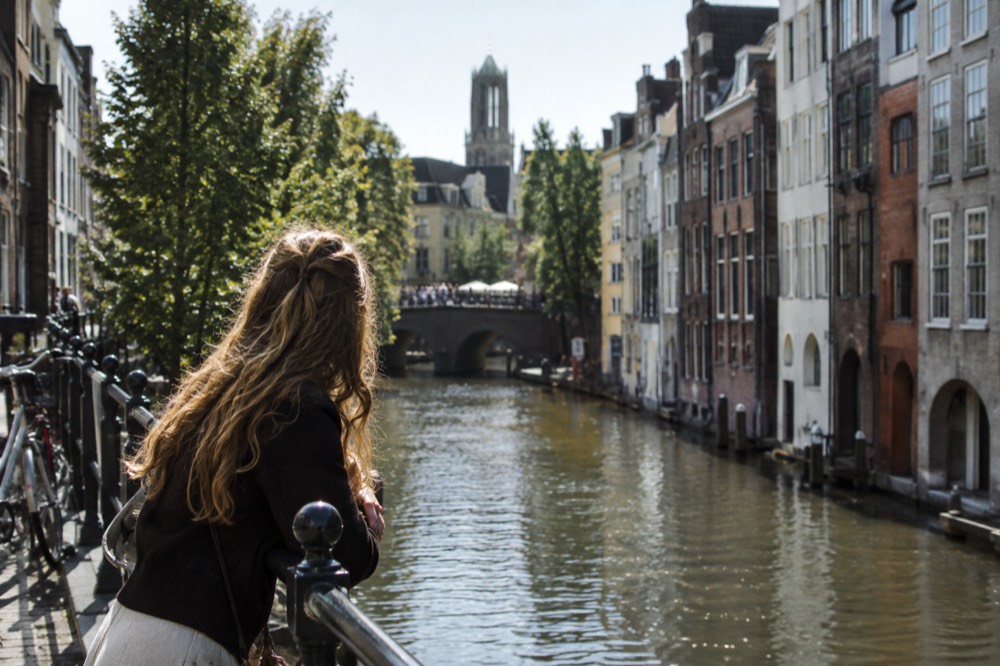
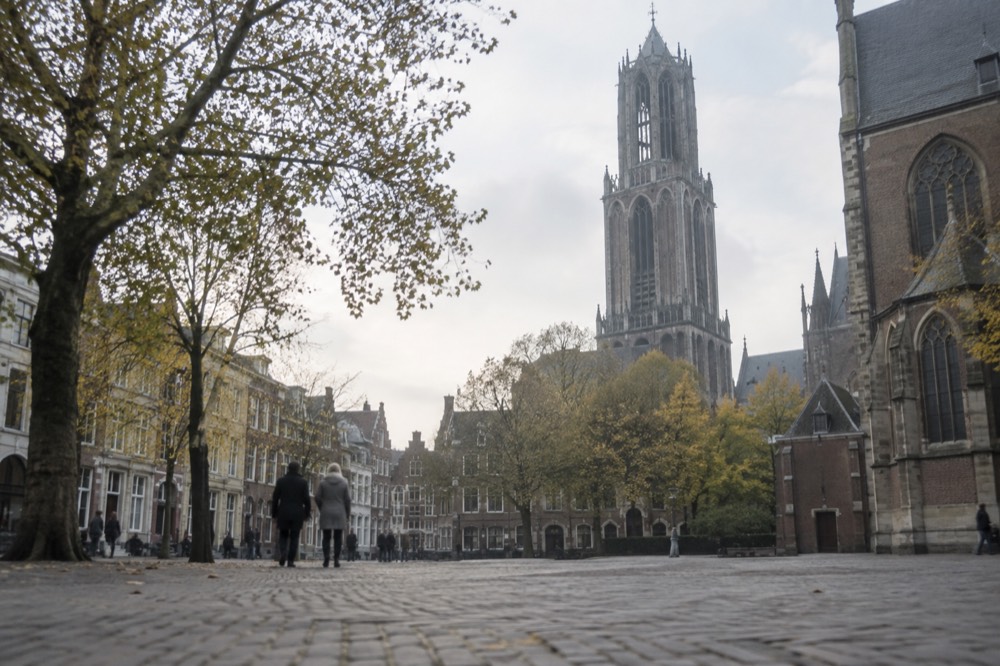
A perfect Utrecht day splits into three parts: the Dom Tower and Domplein in the morning, the Oudegracht and its wharf cellars through the middle of the day, and a museum or a canal-side terrace in the afternoon, with everything reachable on foot from the station. Start at the Domplein, the square where the city began. The tower and the church nave stand as separate structures because the nave collapsed in a storm centuries ago and was never rebuilt, leaving an open square where the church used to be. You can see the outline of the missing nave marked in the paving. Climbing the tower is the classic Utrecht experience, but be aware that it is a guided ascent with limited numbers, so if you want to go up, book the first available slot of the day and build the rest of the itinerary around it.
From the Domplein, walk down toward the Oudegracht. The stretch around the Twijnstraat and the southern loop of the canal is where the wharf cellars are at their best, and the descent to water level is via the historic cellars themselves, many of which are now open as cafés. Even if you do not stop, walk the lower level: the perspective from the waterline, looking up at the street, is the image of Utrecht that stays with you.
For the afternoon, Utrecht's museums punch above the city's size. The two most visitors-friendly are the Railway Museum, housed in the former Maliebaan station building a short walk east of the centre, and Museum Speelklok, the mechanical music museum near the Oudegracht. The Railway Museum is the one to pick with children; Speelklok is the one to pick if you want something genuinely unusual, since its collection of self-playing instruments is unlike anything in Amsterdam. If museums do not appeal, the alternative is simply to keep walking: the canal ring loops tightly enough that you can cover most of the historic centre in an unhurried afternoon.
| Time of day | Where | What to do |
|---|---|---|
| Morning | Domplein | Tower climb if booked, the church, the marked outline of the old nave |
| Midday | Oudegracht, lower level | Walk the wharf cellars and pick one for lunch |
| Early afternoon | Museum Speelklok or the Railway Museum | One museum is enough; both are close to the centre |
| Late afternoon | Nieuwegracht or the Twijnstraat | A quieter canal walk and a terrace drink before the train |
If the day turns wet, Utrecht handles rain better than most Dutch cities because the wharf cellars give you a covered lower level to retreat into, and the museums are both indoors. But if the forecast is genuinely grim, the honest advice is to postpone the day trip: Utrecht's appeal is largely outdoor, and a rainy version of it is a diminished one. A rain day in Amsterdam, with the Rijksmuseum or the Van Gogh Museum instead, is the stronger plan. The Van Gogh Museum in particular requires a pre-booked timed entry ticket for all visitors, so if you are weighing a swap, reserve first and decide after.
For more Amsterdam-side planning, our one day in Amsterdam itinerary shows how a city day fits together if you decide to stay put, and the best day trips from Amsterdam guide compares Utrecht against the other obvious candidates.
Where Should You Eat in Utrecht?
Eat at the wharf cellars on the Oudegracht: that is the whole answer for lunch, and for dinner the same cellars plus the streets just off the Domplein give you the full range from simple Dutch cafés to proper restaurants, all at prices below the Amsterdam equivalents. The lower-level terraces fill up on sunny afternoons, so either arrive early for lunch or accept a short wait. The food itself is the standard Dutch centre-of-country repertoire: thick pea soup in winter, bitterballen with mustard, sandwiches topped with cheese from the surrounding province, and apple pie that the region takes seriously.
For something quick, follow the students. Utrecht is a university city with one of the largest student populations in the country, and the cheap, good food clusters where they cluster: the lanes around the Oudegracht's northern loop and the streets leading away from the Neude square. A broodje (roll) shop or a pancake house here costs meaningfully less than the same meal on Amsterdam's Damrak, and the quality is usually better because the customers are locals with alternatives.
Two practical notes. First, Dutch kitchens close earlier than you might expect, so if you want a proper dinner in Utrecht before the train back, aim to be seated by early evening rather than wandering at eight. Second, service is included in menu prices in the Netherlands as standard, and tipping is a matter of rounding up rather than a fixed percentage, so the bill you see is close to the bill you pay. If you want the deeper Amsterdam version of this advice, our tipping and etiquette guide covers the same norms from the capital's side.
How Much Does a Utrecht Day Trip Cost?
Budget for three things: the return train fare, which is the only fixed cost and is priced per journey by NS or OVpay, food and drink, which runs below Amsterdam prices, and optional entries such as the Dom Tower climb or a museum, each of which has its own ticket. The train fare is distance-based and modest for a short intercity hop; the NS e-ticket system quotes fares when you select the journey, so check the app for the exact figure on your travel date rather than relying on a number printed here. Everything else in Utrecht is cheaper than its Amsterdam equivalent by a noticeable margin, from coffee to dinner to museum cafés.
| Cost item | What to expect | Notes |
|---|---|---|
| Return train fare | Distance-based NS or OVpay fare, quoted at booking | No seat reservation; contactless works |
| Lunch | Wharf-cellar café or sandwich shop, below Amsterdam prices | Student areas are cheapest |
| Dom Tower climb | Separate ticket, timed guided slots | Book early in the day |
| Museum entry | Per-museum ticket, Speelklok or Railway Museum | One is enough for a day trip |
| Dinner before the train | Comparable to mid-range Amsterdam, slightly cheaper | Kitchens close early |
One comparison worth making before you commit: an Amsterdam day built around the big-hitters costs more than a Utrecht day. The Rijksmuseum charges adults €25 and the Van Gogh Museum also charges adults €25, both on their own official pricing pages, while Utrecht's museums are priced as regional attractions rather than international ones. If your trip budget is tight, swapping one Amsterdam museum day for a Utrecht day frees up real money. Our Amsterdam on a budget guide builds a whole two-day plan around that kind of arithmetic.
And if you do stay in Amsterdam for the evening instead, the classic indoor picks are the ones to reserve ahead. The Heineken Experience, housed in the original brewery, runs timed visits and carries a 4.6 rating across 39,581 reviews on the live listing, from $23.
Is Utrecht Better Than Amsterdam for a First Visit?
For a first trip to the Netherlands, no: Amsterdam's concentration of world-class museums, the canal ring's UNESCO-listed scale and its sheer density of things to do make it the right base, and Utrecht is the complement, not the substitute. But the question is not really either/or. The two cities are less than an hour of rail apart, and they answer different moods. Amsterdam is the greatest-hits album; Utrecht is the album track that people who know the band keep recommending.
| Dimension | Amsterdam | Utrecht |
|---|---|---|
| Scale | Large, spread across a full canal ring | Compact, walkable in a day |
| Museums | International tier: Rijksmuseum, Van Gogh, Anne Frank House | Distinctive but regional: Speelklok, Railway Museum |
| Canals | Grachtengordel, wide and grand | Oudegracht, two levels with wharf cellars |
| Crowds | Heavy in the centre year-round | Present but far lighter |
| Prices | Highest in the country | Noticeably below Amsterdam |
| Best for | First visits, museum days, nightlife | A quieter day, canal dining, a breather |
The honest framing for a first-time visitor: spend your nights in Amsterdam, and give Utrecht one of your days if your trip is four days or longer. On a two or three day trip, the calculus is different, because every hour in Amsterdam is scarce and the headline sights justify the squeeze. Our how many days do you need in Amsterdam guide works through that trade-off in detail.
What Should You Know Before You Go?
Three things make the difference between a good Utrecht day and a mediocre one: book the Dom Tower slot in advance, plan the day around walking rather than transport, and treat the wharf cellars as the centrepiece rather than an afterthought. Beyond that, Utrecht behaves like the rest of the Netherlands, so most Amsterdam habits transfer directly: contactless payment works everywhere, bikes have priority on the lanes, and the shops in the centre close earlier than in a capital city.
A few practical notes. The walk from Utrecht Centraal to the Domplein is short and signposted, and the whole historic centre is compact enough that a bike is unnecessary for a one-day visit; save the cycling energy for Amsterdam, where our cycling and bike rental guide covers the local rules. Utrecht's own station area has been rebuilt in recent years into a large modern hall with shops and food, so you can buy the return journey, coffee and lunch supplies in one stop. And if you are travelling in a group, note that Dutch trains have no group discount on the spot: the same tap-in, tap-out fare applies per person.
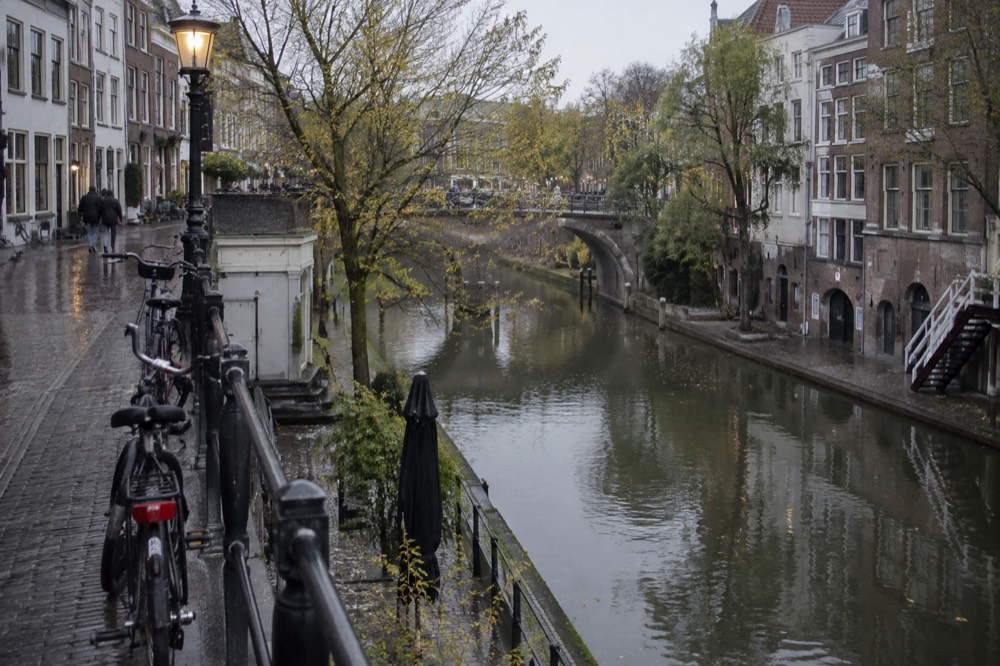
Finally, the evening return. If your Utrecht day ends with dinner in a wharf cellar, the walk back to the station along the Oudegracht at dusk is the best free thing the city offers, and it puts you at the platform in plenty of time for a direct train. Back in Amsterdam, the canal ring at night is its own event, and the classic way to see it is from the water: a one-hour saloon-boat cruise with drinks and cheese runs from $19.56 and carries a 4.8 rating across 33,435 reviews on the operator's listing.
For everything else on the Amsterdam side of the trip, Things to Do in Amsterdam is the full index, from neighbourhood guides to ticket comparisons.
Common Questions About a Utrecht Day Trip
Is Utrecht a good day trip from Amsterdam?
Yes. It is one of the easiest day trips from the capital: direct intercity trains run between the two Centraal stations, the historic centre is compact and walkable, and the city offers something Amsterdam does not, namely the two-level Oudegracht canal with its wharf-cellars and a noticeably calmer atmosphere.
How do I get from Amsterdam to Utrecht?
Take a direct NS intercity train from Amsterdam Centraal to Utrecht Centraal. No seat reservation is needed. You can buy an e-ticket through the NS app or tap a contactless bank card at the platform with OVpay and tap out on arrival.
Does the I amsterdam City Card cover the train to Utrecht?
No. The card's transport benefit covers GVB services within Amsterdam only and excludes regional public transport, so the NS train to Utrecht is paid separately. The card's museum inclusions are Amsterdam-side attractions as well.
What is the best thing to see in Utrecht in one day?
The Dom Tower and the Oudegracht. Book a timed slot for the tower climb in the morning, then spend the middle of the day walking the wharf cellars at water level, where the canal-side restaurants sit a metre above the water.
Is Utrecht cheaper than Amsterdam?
Yes, noticeably. Food, drink and museum entries in Utrecht run below their Amsterdam equivalents, and the only fixed day-trip cost is the return train fare, which is a short-hop intercity price.
Should I book anything in advance for a Utrecht day trip?
Only the Dom Tower climb, which runs as a guided ascent with limited numbers per slot. The train needs no booking, and the museums can usually be handled on arrival, though checking availability the night before is sensible in high summer.