Tipping and Etiquette in Amsterdam: What to Tip, What to Skip and How to Behave
Amsterdam is not a tipping city the way New York or London is, but it is a city with rules, written and unwritten, that catch visitors off guard.
Short answer
Tipping in Amsterdam is voluntary and modest: service is included in menu prices, so rounding up the bill or leaving a euro or two is the norm rather than a percentage. The bigger etiquette questions are about behaviour, not money: no photos of the windows, no street drinking in the centre, and standing right on the bike lane.
Amsterdam runs on a simple social contract: prices are honest, service is included, and the city asks for good behaviour in return. That contract trips up a surprising number of visitors, who arrive with tipping habits from home and leave having broken a local rule they never knew existed. This guide covers both halves of the equation: what you actually pay, and how you are expected to act while paying it.
How Does Tipping Work in Amsterdam?
Tipping in Amsterdam is voluntary, modest and never a fixed percentage: Dutch law requires that service be included in the menu price, so a tip here is a thank-you rather than an obligation. Rounding up the bill, or leaving one or two euros on a café table, covers the local expectation completely, and in taxis, hotels and on canal cruises the same rounding logic applies. Nobody will chase you for more.
The first thing to understand is that the price you see is the price you pay. Unlike the United States, where a menu price is a starting point before tax and a 20 percent tip, a Dutch menu price already contains both VAT and the service charge. If a coffee is listed at three euros, three euros is what the till expects. There is no line on the bill for service, and no waiter's wage depends on your generosity.
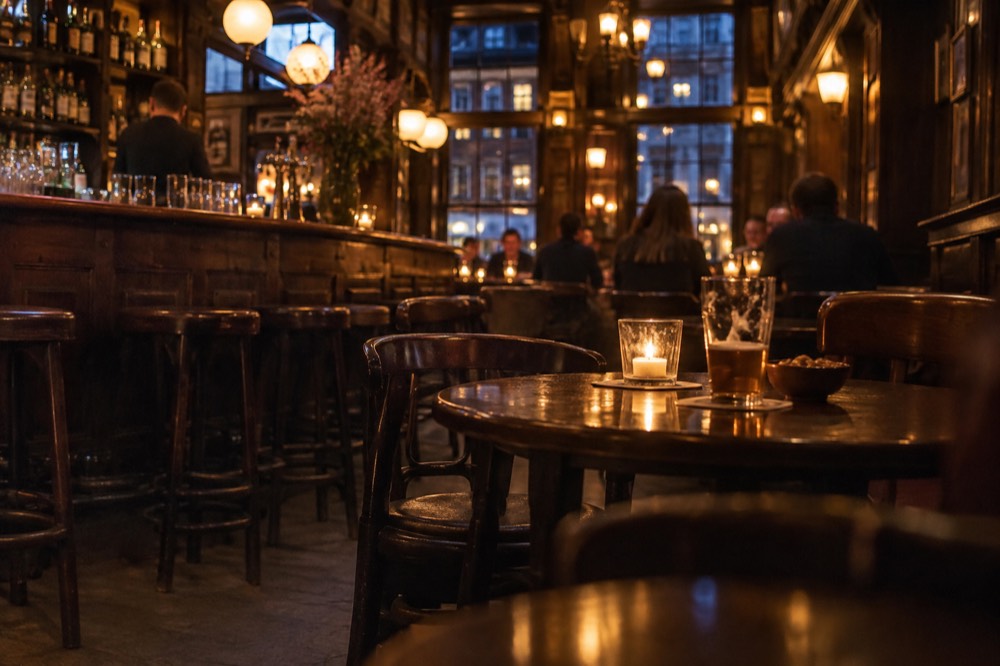
That does not mean tipping never happens. It does, and increasingly so in tourist-heavy areas, but the amounts are small and the gesture is informal. A round-up is the standard form: you simply name a round figure above the total when you pay, or you leave the coins on the table as you stand up. Handing the tip to the server directly is also perfectly normal, and in brown cafés, the small traditional pubs that Amsterdam is famous for, leaving the change on the bar with a nod is the whole ritual.
What you should not do is import a percentage habit. Leaving 15 or 20 percent of the bill in an Amsterdam restaurant will not offend anyone, but it marks you immediately as a visitor, and in some cases it genuinely confuses the staff, who may assume you have miscounted your change. The Dutch word you will sometimes see, "fooi", means exactly this kind of small voluntary extra, and it is the only tipping vocabulary you need.
For context on how this fits into a wider budget, our guide to what a trip to Amsterdam costs breaks down accommodation, food and transport, and the brown cafés of Amsterdam page explains the pub culture where most of your small tips will actually land.
Where Is Service Already Included in the Price?
Service is included by law in every restaurant, café and bar price in the Netherlands, so the menu figure is final: no added service charge, no tax added at the till, no expected top-up. What is not included in your restaurant bill is the city's tourist tax, which is charged on accommodation at 12.5 percent of the overnight price, and cruise passengers pay a separate €15 day-tripper tax.
The legal inclusion of service is worth repeating because it changes the arithmetic of every meal. When a main course is priced at €16, that figure already covers VAT and the staff's wages structure. The city's own guidance to visitors describes Dutch practice plainly: service is included in the price, and rounding up is the custom. That is why a Dutch bill arriving with a card machine will not prompt for a tip the way an American one does, and why the machine's "no tip" button carries no social cost.
Where money does get added is at the hotel, not the restaurant. Amsterdam's tourist tax, the toeristenbelasting, sits at 12.5 percent of the overnight price excluding VAT, and it applies to hotels, holiday rentals, B&Bs and campsites alike. It is normally collected by your accommodation and passed to the city, so you rarely handle it yourself, but it explains why the price you booked and the price you pay at checkout can differ. Cruise passengers see a separate version: €15 per passenger per day, from age two.
The distinction matters most at the moment of payment, and a quick comparison helps:
| Situation | What the Price Includes | What You Add |
|---|---|---|
| Restaurant or café bill | VAT and service, by law | Optional round-up, one or two euros |
| Bar drink in a brown café | VAT and service | Coins on the bar if you like |
| Hotel room rate | VAT | Tourist tax at 12.5 percent, usually collected by the hotel |
| Holiday rental | VAT | Same 12.5 percent tourist tax |
| Canal cruise ticket | VAT | Nothing expected; a euro for the deckhand is a courtesy |
The same honesty principle runs through the city's paid attractions, which is why pre-booked timed tickets are the standard rather than the exception. If you are planning museum visits alongside your meals, the selection below covers the three experiences most visitors book first.
Do You Tip in Restaurants, Bars and on Tours?
In restaurants you round up or leave a euro or two; in bars you leave the coins; on guided tours and canal cruises a small tip is appreciated but never demanded, and free walking tours are the one Amsterdam exception where a tip is the entire payment model. A guide on a free tour works for tips alone, so there the custom is genuinely expected.
Restaurants are where the confusion peaks, because the service in good Amsterdam restaurants is attentive without the table-side performance Americans are used to. The server takes your order, brings your food, and otherwise leaves you alone; that is politeness here, not neglect. When the bill comes, the standard move is to tell the server the amount you want to pay in total, tip included, before they run the card. Naming a round figure just above the total is a completely normal sentence.
Bars work on an even lighter version of the same logic. You pay per order, often in cash at the counter, and the change you leave behind is the tip. Nobody tracks it, nobody expects it, and regulars often do not do it at all. On the rare occasion a bar hands you a card machine with a tip prompt, choosing zero is fine.
Guided tours sit in between. On a paid tour, the price you booked covers the guide's wage, and a tip is a genuine bonus: a couple of euros per person for a good city walk, a bit more for a long day trip, and coins for a canal cruise deckhand who helped with a pram or a wheelchair. On a free walking tour the economics invert, because the tour only exists on tips. If you enjoyed it, tip what it was worth to you; if you did not, a small amount is still the polite floor.
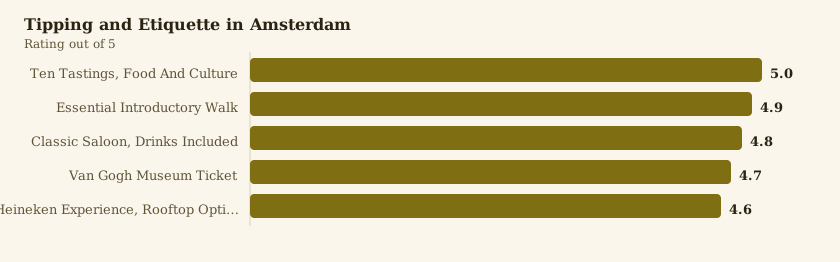
Food tours make the etiquette question easy, since tastings and guide gratuity norms are built into the price. The ten-tastings food and culture walk is the city's most-reviewed option in that category, and it answers the "what and how much to eat" question at the same time as the tipping one.
What Are the Unwritten Rules of Everyday Amsterdam Behaviour?
The unwritten rules that matter most are about space and noise: stand on the right on escalators, walk on the right on sidewalks, never stop in a bike lane, greet with a brief "goedemorgen" or "hallo" when entering small shops, and keep your voice down on residential canal streets after dark. The Dutch read politeness as efficiency, not warmth.
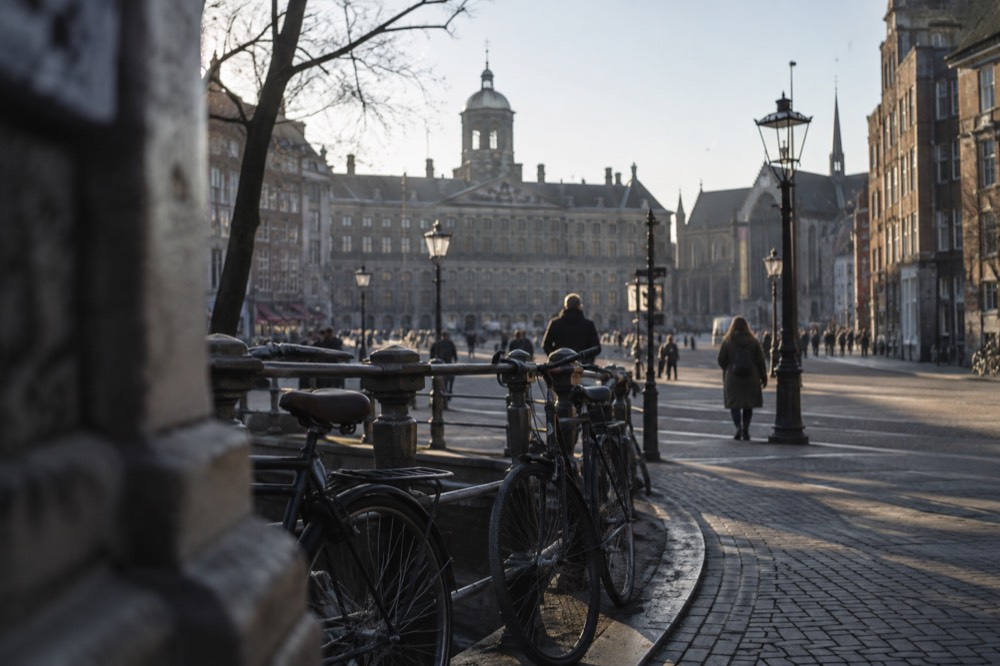
The bike lane rule deserves its own paragraph because it is the one with real consequences. Amsterdam's cycling infrastructure is a parallel road system, marked by red asphalt, and a tourist stepping sideways into it to photograph a canal house is the single most common cause of visitor collisions. Before you cross any strip of red pavement, look both ways twice. When you hear a bell behind you, it means move right, and it means now. Our page on cycling in Amsterdam and renting a bike covers the rules from the rider's side.
Greeting etiquette is lighter than in neighbouring countries but real in small shops. A short greeting on entry, a "dank u wel" or "dankjewel" on the way out, and the local "doei" or "hoi" you will hear everywhere. The Dutch switch to English the moment your accent appears, so there is no need to perform Dutch; the gesture of greeting is the politeness, not the vocabulary.
Queueing is strict, punctuality is strict, and splitting bills is a national institution. In a restaurant, asking to pay separately is completely normal and no server will sigh. Being even ten minutes late to a reservation or a tour departure is noticed. And the directness you will encounter, a Dutch person telling you frankly that your plan will not work, is not rudeness; it is the local register, and answering in kind is respected.
| Situation | The Local Norm | What Visitors Get Wrong |
|---|---|---|
| Bike lanes | Red asphalt is a road; look both ways before crossing | Stepping back for a photo without looking |
| Escalators and sidewalks | Keep right, always | Standing four abreast |
| Small shops | Greet on entry, thank on exit | Silent browsing, silent leaving |
| Restaurant bills | Splitting is normal; ask freely | Assuming one bill is expected |
| Reservations | Be on time, cancel if you cannot come | No-shows without a call |
A paid introductory walk is the most efficient way to absorb these norms in one morning, because a local guide will narrate them at the exact spots where they matter. The essential introductory walking tour of the centre is built exactly for first-day visitors.
What Are the Rules in Coffeeshops and the Red Light District?
Coffeeshop etiquette is simple: buy your cannabis inside, consume it inside, and do not smoke it on the street in the centre, where outdoor cannabis smoking is prohibited. In the red-light district the two hard rules are absolute: never photograph the windows, and never disturb the sex workers, and guided tours there are capped at 15 people and only run between 08:00 and 22:00.
The coffeeshop rules confuse people because of a national policy that was never applied here. Dutch tolerance policy formally includes a residents-only criterion for coffeeshops, but Amsterdam has never enforced it: tourists can and do buy cannabis in the city's coffeeshops, and no visitor ban exists. The rules that are actually enforced in Amsterdam are about where you consume. The city prohibits smoking cannabis outdoors in the centre, including the Wallen area, so the purchase and the consumption both belong inside the coffeeshop. The city's own How to Amsterdam guidance for visitors sets this out alongside the street-drinking ban.
The red-light district, De Wallen, has harder edges. Photography of the windows is the fastest way to have your phone taken or to be ejected by staff; it is a norm enforced by the venues themselves, and the city's respect campaign says "no pictures please" in plain terms. Guided tours are regulated: groups are capped at 15, tours may not pass the sex workers' windows at all, and they are only permitted between 08:00 and 22:00. Guides who break the rules face fines of €190, and companies €950.
Tipping does not really feature in either setting. Coffeeshops operate like cafés: you pay the listed price, and no tip is expected. In the Wallen, the etiquette is not about money at all; it is about behaving as you would outside someone's workplace, because that is exactly what the windows are. Our dedicated page on red-light district rules and etiquette goes deeper, and the coffeeshop rules for tourists guide covers the legal side.
How Much Should You Budget Beyond the Menu Price?
Beyond the menu, the reliable extra costs are tourist tax at 12.5 percent of your accommodation price, public transport at €3.40 per single GVB ticket or €10.00 for a 24-hour pass, and museum entry that clusters between €16.50 and €25 at the headline institutions, with under-18s free at both the Rijksmuseum and the Van Gogh Museum.
Transport is the first place visitors overspend. A single GVB ticket, valid one hour on trams, buses and metro, costs €3.40, and a 24-hour pass costs €10.00, with child day passes at €5.00. If you plan three or more rides in a day, the pass wins, and if you are in the city for several days the multi-day passes step up in a straight line: €16.00 for 48 hours, €21.50 for 72, €27.50 for 96. Tapping a contactless bank card works too, under the OVpay system, with a base fare plus a per-kilometre rate and a daily cap.
Museum pricing is the second cluster, and the verified figures are stable. The Rijksmuseum charges adults €25 with free entry for ages 18 and under, open daily 9am to 5pm with a required timed slot. The Van Gogh Museum also charges €25, free for under-18s, and requires every visitor to pre-book a timed ticket. The Anne Frank House is €16.50 for adults including the booking fee, and it is the one attraction where money cannot solve your problem: tickets are sold only through the museum's own site, in a Tuesday-morning release for slots six weeks ahead, and no reseller or pass can get you in.
| Cost | Figure | Notes |
|---|---|---|
| GVB single ticket | €3.40 | One hour, trams, buses, metro |
| GVB 24-hour pass | €10.00 | Child pass €5.00 |
| Rijksmuseum adult entry | €25 | Under-18s free, timed slot required |
| Van Gogh Museum adult entry | €25 | Under-18s free, timed slot required |
| Anne Frank House adult entry | €16.50 | Official site only, no door sales |
| NEMO Science Museum | €21.50 | Flat rate age 4 and over, roof free |
The tourist tax is the item nobody budgets for. At 12.5 percent of the overnight price it is a real sum on a week's stay, and the city's official tourist tax page sets out the current rates for hotels, rentals and cruise passengers. Build it into your accommodation comparison rather than discovering it at checkout.
For the museum half of the budget, the timed-entry ticket is the product that matters most. The Van Gogh Museum is the city's most in-demand entry, rated 4.7 across 57,096 reviews on the live listing, with tickets from $31, and pre-booking a slot is the only reliable way in.
What Mistakes Do Visitors Make with Money and Manners?
The five mistakes that mark a visitor out are tipping American percentages on Dutch bills, stopping dead in a bike lane, photographing the red-light windows, drinking alcohol on the street in the centre, and expecting card payment everywhere, since plenty of small cafés, markets and even some venues remain cash-first or card-only with no tipping prompt at all.
The card-and-cash point deserves unpacking, because the Dutch system is not simply cashless. Many venues take cards only, some market stalls take cash only, and the pin machine never prompts for a tip, which is by design. Carrying a small amount of euro coins solves three problems at once: the cash-only stall, the round-up tip, and the toilet, where the attendant expects fifty cents and where that coin is the one place in Amsterdam where a small payment is genuinely standard practice rather than optional.
The bike-lane mistake is the one with physical consequences, and the street-drinking mistake is the one with legal ones. Drinking alcohol in public is prohibited in the city centre, and the same municipal guidance that bans it also bans public urination, which the famous plaskrul toilets exist to prevent. Neither rule is heavily policed on a quiet Tuesday, but both are enforced on busy weekend nights in the Wallen, exactly when visitors are most likely to test them.
The last mistake is subtler: treating Amsterdam's directness as hostility. A bartender who answers your complicated question in five flat words, a local who corrects your pronunciation, a museum guard who tells you your bag is too big without softening it, are all behaving normally. Matching the register, being brief, being on time, and rounding up the bill when it is earned, is the whole of the local code.
This page sits inside a wider series on Things to Do in Amsterdam, and the behaviour rules here apply everywhere in it, from the museum quarter to the day-trip villages. If you are planning the rest of the trip, the three most-booked paid experiences below are a good place to start.
Common Questions About Tipping and Etiquette in Amsterdam
Is tipping required in Amsterdam?
No. Service is included in menu prices by Dutch law, so no tip is ever required. Rounding up the bill or leaving a euro or two is the local custom in restaurants and bars, and it is appreciated but not expected.
How much should I tip in an Amsterdam restaurant?
Round up. Name a round figure just above the total when you pay, or leave a euro or two on the table. Percentages are not used in the Netherlands, and a large American-style tip will simply mark you as a visitor.
Do you tip taxi drivers in Amsterdam?
Rounding up to the nearest euro or five euros is the norm. Taxi fares are metered, the price you see is the price you pay, and no percentage is expected.
Should you tip on a free walking tour in Amsterdam?
Yes, and this is the one genuine exception to the no-tipping norm. A free tour's guide works for tips alone, so tip what the walk was worth to you at the end.
Is service included in Amsterdam restaurant prices?
Yes, always. Dutch law requires service and VAT to be included in the listed menu price, which is why no service charge appears on the bill and no card machine prompts for a tip.
What is considered rude in Amsterdam?
Standing in the bike lane, photographing the red-light windows, drinking alcohol on the street in the centre, smoking cannabis outdoors in the centre, and being late without warning. Dutch directness itself is not rude; it is the local register.