Red Light District Rules and Etiquette
De Wallen is a working neighbourhood, a visitor magnet and a legal workplace all at once, and the city has written rules for each of those roles. Here is what the municipality actually prohibits, what is merely frowned upon, and how to walk through without becoming the tourist everyone remembers for the wrong reason.
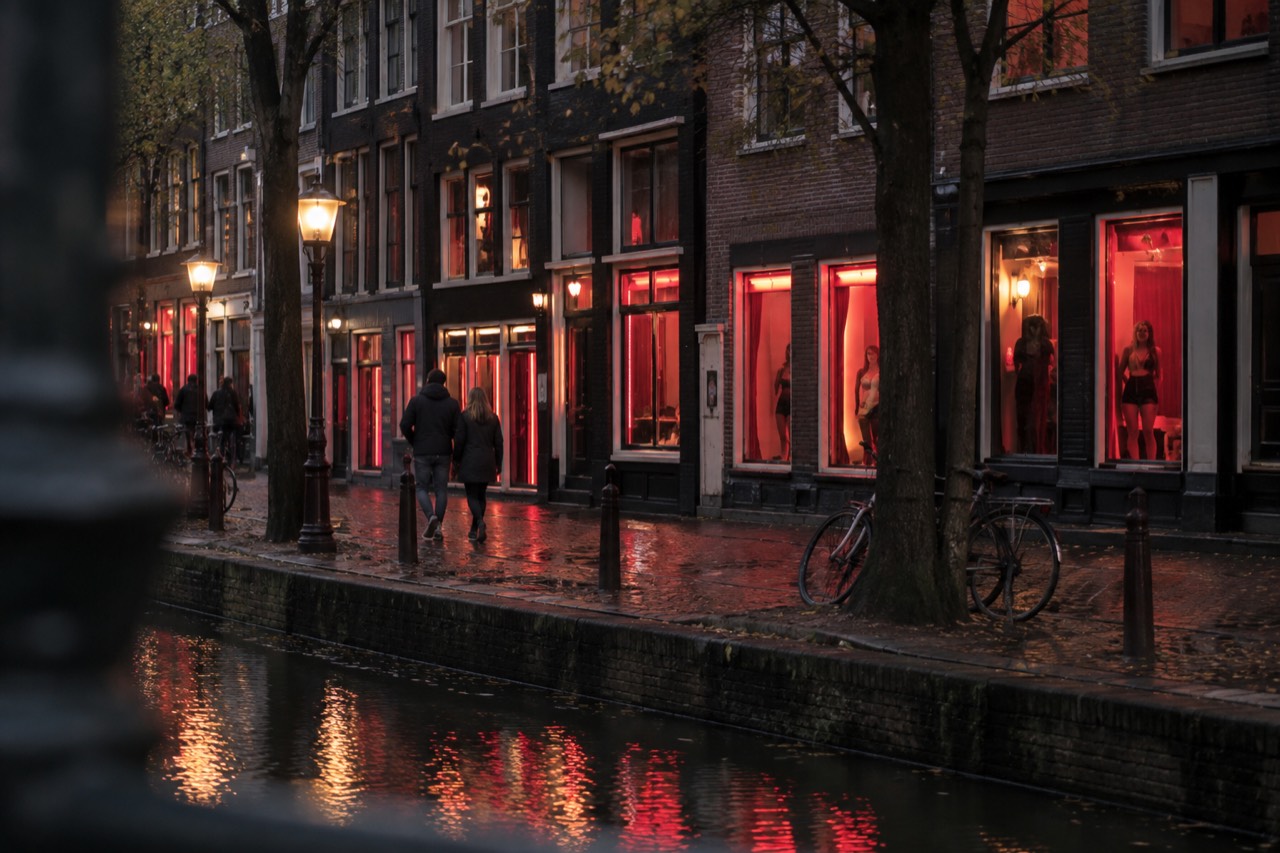
Short answer
Amsterdam permits walking through De Wallen freely, but guided tours may not pass the windows, run with more than 15 people, or operate outside 08:00 to 22:00. Photography of sex workers is banned by etiquette and enforced by staff, street drinking is prohibited in the centre, and smoking cannabis outdoors is banned there too.
Amsterdam's Red Light District, De Wallen, is the oldest part of the city and one of the few places in the world where sex work is legal, regulated and visible from the street. That visibility is exactly why the rules matter. The neighbourhood holds roughly 300 window brothels alongside homes, churches, cafes and shops, and the people who live and work there share the same alleys with millions of visitors a year. The city has responded with a set of formal rules, published by the municipality, that apply to tour operators, group visitors and everyone who walks through at night. Some of those rules carry fines. Others are enforced socially, by security staff and by residents who have no patience left for bad behaviour.
This page sets out both layers: the law as the gemeente Amsterdam writes it, and the etiquette that keeps the evening pleasant for everyone. The distinction matters, because plenty of behaviour that is technically legal will still get you thrown out of an area, and a few things visitors assume are fine, such as stopping a tour group in front of a window, are formally prohibited. For the wider picture on the neighbourhood itself, see our Red Light District De Wallen guide, and for the questions visitors ask before they go, read can tourists go to the red light district.
What Are the Rules for Walking Through De Wallen?
Walking through the Red Light District is free, legal and open to anyone at any hour, but the streets are residential, and the city prohibits street drinking, public urination and smoking cannabis outdoors in the centre. None of those rules is negotiable, and the police enforce them most heavily on weekend nights when the alleys are at their busiest.
The starting point is simple: De Wallen is public space. You do not need a ticket, a guide or a booking to walk through it, day or night. What you cannot do is treat it as an entertainment zone with no residents. The municipality's How to Amsterdam campaign, published on amsterdam.nl, sets out the behaviour the city expects: no street drinking in the centre, no public urination, and no loud or aggressive behaviour. Public toilets, the plaskrul urinals dotted around the centre, exist precisely so the second rule has no excuse.
Cannabis deserves a careful sentence, because the national situation and the local one differ. Nationally, the tolerance policy permits coffeeshops to sell up to 5 grams of cannabis per person per day, and the policy text includes a residents-only criterion. Amsterdam, however, has never applied that criterion: the wietpas was never introduced in the city, and tourists can and do buy cannabis in Amsterdam coffeeshops today. The line the city does draw is spatial: smoking cannabis on the street is prohibited in the city centre, including the Wallen, so consumption belongs inside the coffeeshop, not on the pavement outside it. Our Amsterdam coffeeshop rules for tourists page covers the shop-side rules in full.
Alcohol follows a stricter logic still. Street drinking is banned in the centre, which means the beer or wine you bought for the walk has to wait until you are inside a bar or back at your accommodation. The ban area covers the busiest tourist streets, and enforcement steps up on Friday and Saturday nights. Fines exist for both offences, though the municipality does not publish the current amounts on the pages visitors read, so treat any specific euro figure you see quoted elsewhere with suspicion.
| Behaviour on the street | Legal status in the centre | What enforcement looks like |
|---|---|---|
| Drinking alcohol on the street | Prohibited in the city centre | Police warnings and fines, heaviest on weekend nights |
| Smoking cannabis outdoors | Prohibited in the city centre, including the Wallen | Consumption belongs inside the coffeeshop |
| Public urination | Prohibited | Fines; plaskrul urinals are provided throughout the centre |
| Buying cannabis in a coffeeshop | Tolerated, up to 5 grams per person per day | Normal regulated commerce; tourists are served |
| Photographing the windows | Banned by etiquette, enforced by staff | Immediate demand for deletion, removal from the area |
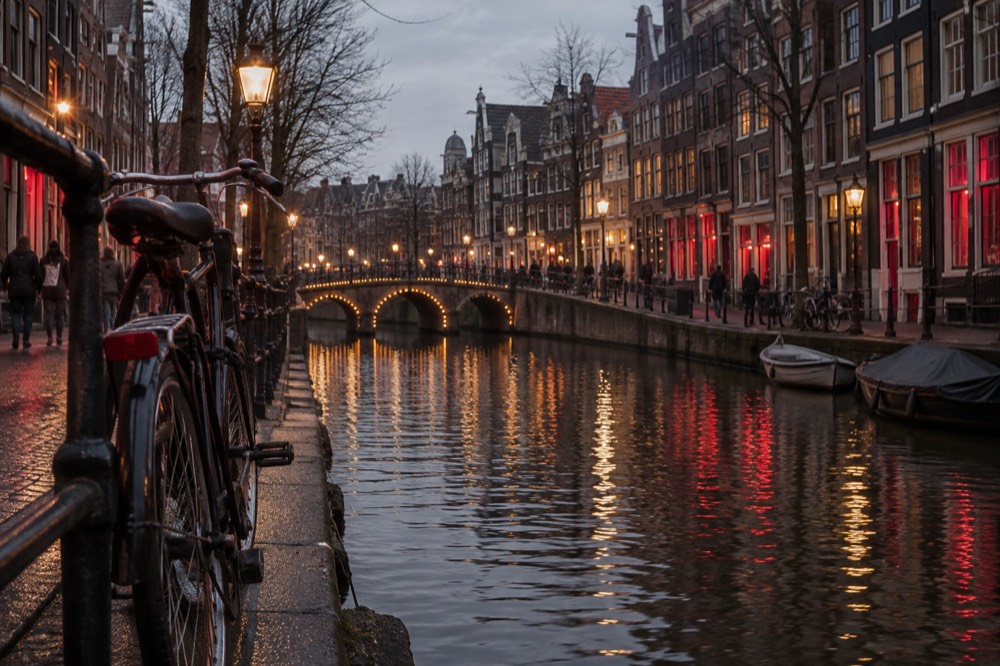
The etiquette layer is softer but just as real. Residents ask for a normal speaking voice after dark, no stopping in the middle of the alley to consult a phone, and no treating the windows as a free show. Sex workers are self-employed businesspeople renting a workspace; the windows are their shopfront. The city's own campaign puts it in three words on the signage you will see throughout the district: no pictures, please.
Is the Red Light District Safe at Night?
De Wallen is heavily policed, camera-covered and busy until the early hours, which makes it one of the most watched parts of Amsterdam. The real risks are pickpocketing in crowds and drink spiking in bars rather than violent crime, and the standard city-centre precautions cover almost all of them.
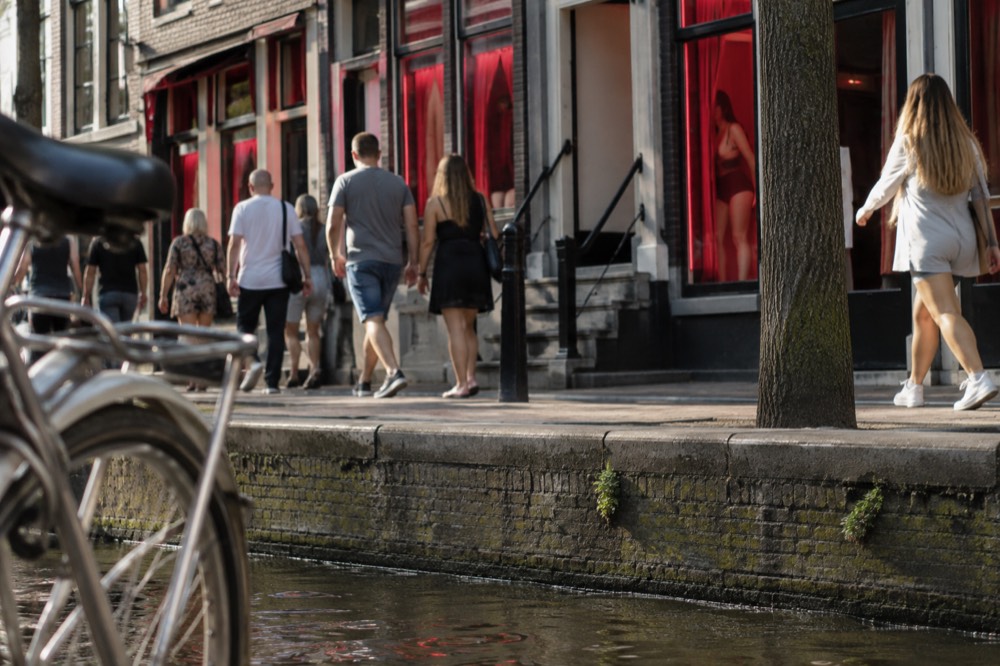
The neighbourhood concentrates more police patrols, private security and CCTV per square metre than almost anywhere else in the city, for the obvious reason that it concentrates the most visitors. Violent crime against tourists is rare, and the incidents that do occur are usually alcohol-fuelled arguments rather than targeted attacks. What does happen, regularly, is pickpocketing: the alleys are narrow, the crowds are dense, and everyone is looking up at the buildings rather than down at their bag.
The practical precautions are the same ones that apply around Dam Square and the Kalverstraat. Keep your phone and wallet in a front pocket or a closed bag, do not accept drinks from strangers, and be wary of anyone who initiates physical contact in a crowd, which is the classic distraction technique. If a street dealer offers you anything, the answer is a flat no: buying drugs on the street is illegal, the products are frequently not what they claim, and the dealers are the least welcome presence in the neighbourhood for locals and police alike.
Solo travellers and couples rarely report problems beyond nuisance. The bigger safety question is the state you are in: the district is at its most disorienting at 1am, in the rain, after six beers. If you are planning a big night, read our Amsterdam nightlife guide for the areas that handle late crowds better than the Wallen's narrow lanes, and our is Amsterdam safe page for the city-wide picture.
A guided walk is the safest way to see the district if you are nervous about going alone, and it comes with a bonus: a good guide will tell you which streets are residential, where the oldest buildings are, and what the rules are before you break one by accident. The paid small-group walks keep their numbers under the municipal cap, which is a comfort in itself.
What Are the Guided-Tour Rules in De Wallen?
The municipality bans guided tours from passing the sex workers' windows, caps every group at 15 participants, requires an exemption for any group larger than four, and permits tours only between 08:00 and 22:00. Guides risk a €190 fine per breach and operators €950, with repeat offences able to cost an operator its exemption entirely.
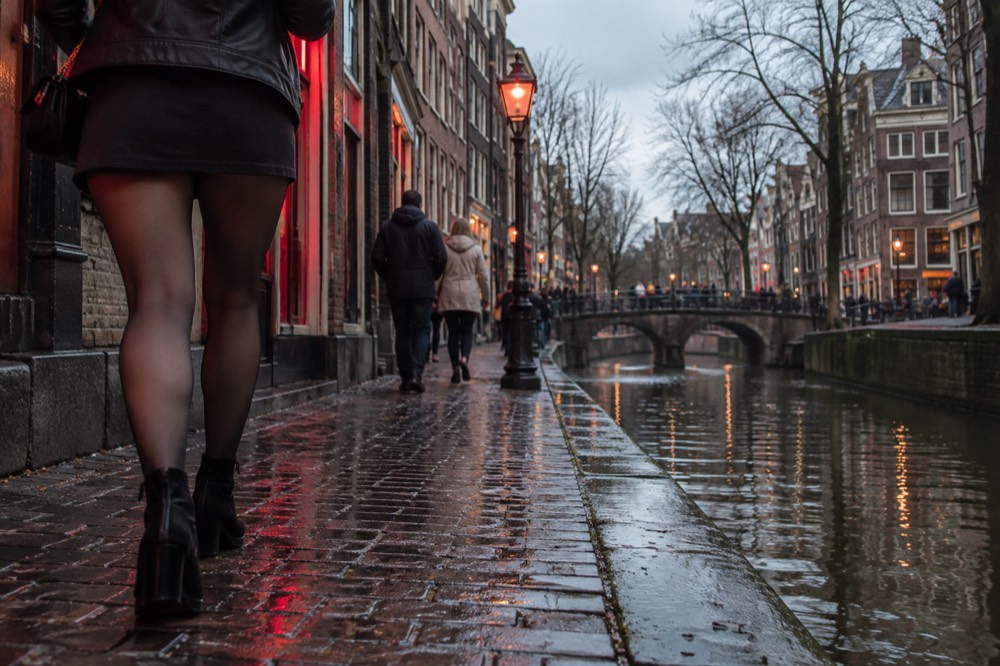
These are formal municipal rules, not signage suggestions, and they reshape what a tour in De Wallen can be. The window ban dates from 2020 and applies to every group, with no exception for small parties: a tour route may run through the district but it may not stop at, or pass along, the window brothel streets while commentary is being given. The group-size cap of 15 exists because the alleys cannot absorb coach parties, and the exemption requirement for groups above four means operators must register with the city before running anything substantial.
The operating window, 08:00 to 22:00, ends two hours before the district reaches its late-evening peak. That is deliberate: the city wants the streets quiet for residents and workers after ten. The same rule set bans megaphones, shouting, alcohol and drugs on tour, and recruiting participants in public, which is why you will no longer see the ticket-sellers who once worked Dam Square.
For a visitor, the rules translate into a simple checklist when you book. Pick a tour that states its group size, because a listing that says small group and then gathers forty people is breaking the cap. Check the start time: anything departing after 20:00 for a two-hour walk cannot legally finish inside the district. And expect the route to cover the history, the architecture and the economics of the district rather than a stroll past the windows, because that stroll is the one thing the operator cannot sell you.
| Municipal rule | What it means for a visitor |
|---|---|
| No tour may pass the windows | Commentary routes avoid window brothel streets entirely |
| Maximum 15 participants | A listing above that number is operating outside the rules |
| Exemption needed above 4 people | Legitimate operators are registered with the city |
| Tours run 08:00 to 22:00 only | No legal tour exists in the district after ten at night |
| No alcohol or drugs on tour | The walk is sober, even in the evening |
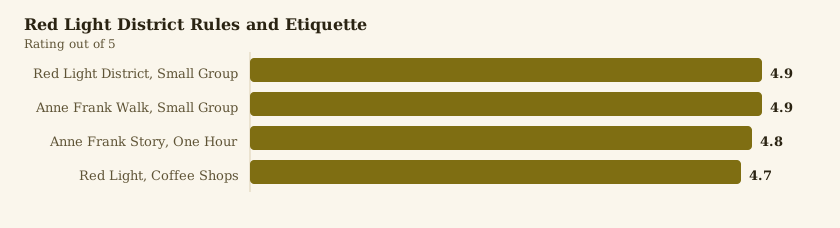
The small-group Red Light District tour in our roster runs 90 minutes with a 4.9 rating across 9,142 reviews, comfortably inside the cap and the hours. A wider comparison of paid and free options is on our Amsterdam walking tours page.
If you would rather explore the district's history than its nightlife, the walks that trace Amsterdam's older, heavier stories are the better fit. The Anne Frank walking tours cover the Jewish Quarter and the occupation years, a completely different layer of the same old city, and they run outside De Wallen entirely.
Can You Take Photos in the Red Light District?
Photography of the sex workers, their windows and their doorways is strictly off limits, enforced by security staff and by the workers themselves, and it is the one rule whose breach can end your evening immediately. Everything else, the canal houses, the Oude Kerk, the bridges, is photographable, though locals ask for restraint with flash and tripods late at night.
The no-pictures rule belongs to the etiquette layer, but it is enforced hard. The women in the windows are at work, and photographing them is treated as harassment. Security staff will demand deletion on the spot, escorts will walk you out of the area, and repeat offenders have been handed over to the police. The city's How to Amsterdam campaign puts it plainly on the signage throughout the district: no pictures, please. It is not a statutory ban with a published fine, and it is much stronger than that in practice, because the enforcement is immediate and personal.
Where the line sits is easy to remember. The windows and doorways of the brothels: never, including when they appear in the background of a shot you are aiming at something else. The canal houses, the bridges, the Oude Kerk in its improbable setting, the cafés: all fine. If a window is in frame, move. If in doubt, put the phone away, because the district is one of the few places where a raised camera is read as a raised hand.
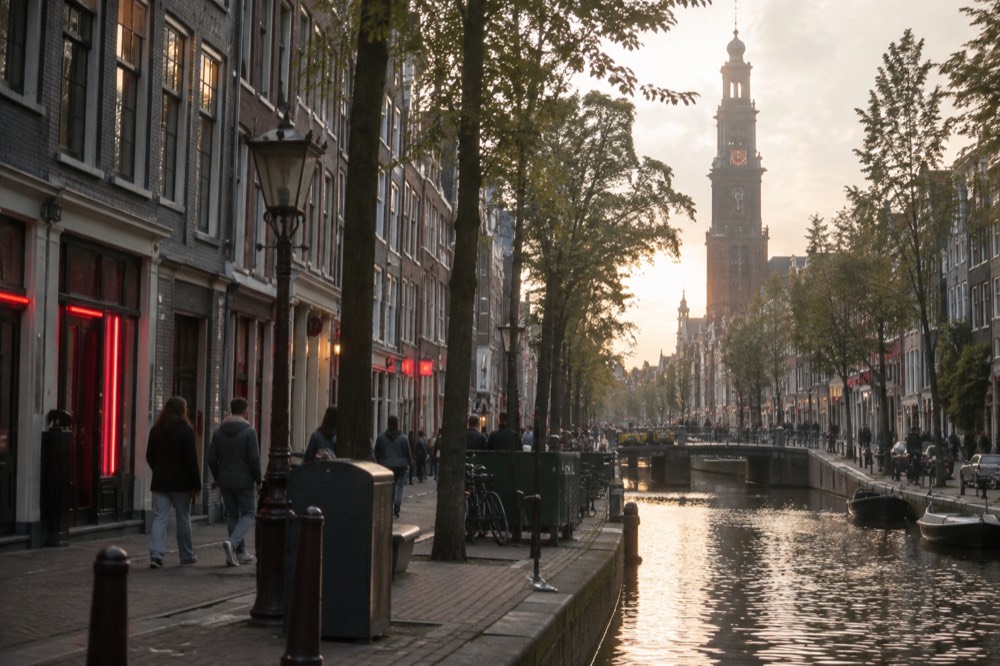
Visitors with a serious interest in photographing the district should come in the morning, when the window curtains are drawn and the light on the gabled facades is at its best. Our Amsterdam photography spots page lists the locations where a camera is welcome and the frames are better anyway.
When Does the Red Light District Close?
The streets themselves never close, but the rules that shape them do: since April 2023, outdoor terraces in the core Wallen area shut at 01:00 and indoor hospitality at 02:00 on weekends, with the alcohol-service window ending from 01:00. The windows keep their own hours, set by the workers, and the district is quietest and most residential in the early morning.
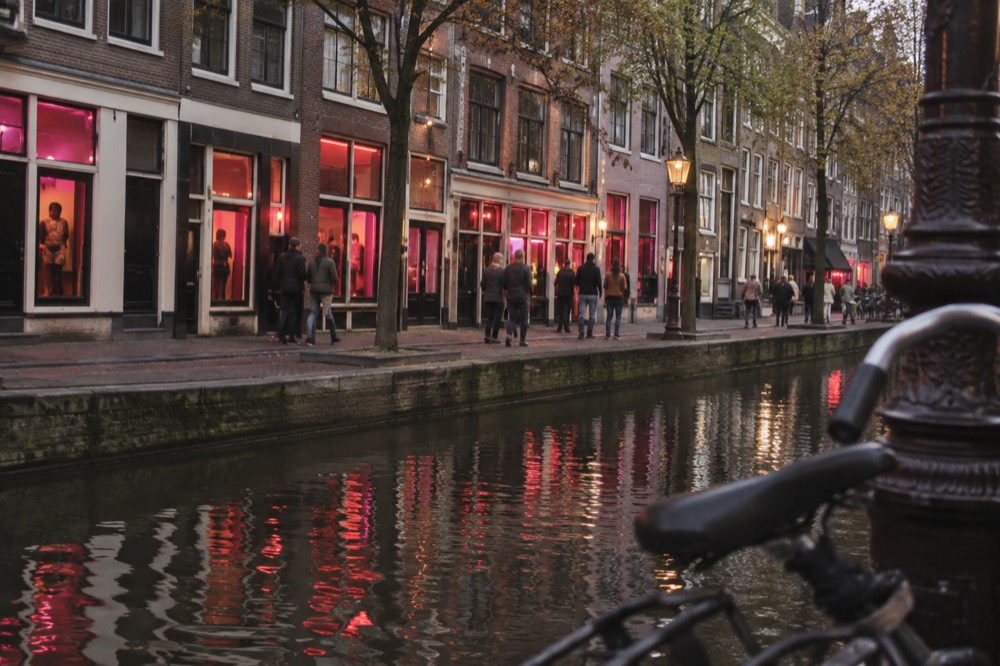
The 2023 closing-time rules were the city's answer to years of resident complaints, and they changed the rhythm of the neighbourhood noticeably. Bars that once poured until four now stop at two, and the terraces empty an hour earlier still. The result is a district that winds down rather than collapses, and by 03:00 the alleys belong mostly to the people who live in them.
The windows are a separate matter. Sex workers are self-employed and set their own schedules, so there is no official opening or closing time for the brothels, only a pattern: the windows begin to light up in the late afternoon and thin out after midnight, and a daytime visit shows a very different district, quiet and almost ordinary. What the city has regulated is the late-night safety debate around closing hours, which remains under discussion rather than settled.
Planning around the hours is straightforward. Evening is the famous version, all neon and crowds, and it is best experienced between 20:00 and midnight. After that you are fighting the closing-time tide. For a full rundown of what stays open late across the city, see our what can I do after 10pm in Amsterdam piece.
| Time of day | What De Wallen is like | Best for |
|---|---|---|
| Morning, 08:00 to 12:00 | Quiet, residential, curtains drawn | Photography, the Oude Kerk, coffee |
| Afternoon, 12:00 to 17:00 | Busy with day visitors, windows opening | Guided tours, the museum side of the area |
| Evening, 17:00 to 22:00 | The classic neon hours, tours end at 22:00 | The atmosphere most visitors come for |
| Late, 00:00 onward | Winding down, terraces long shut | Little; the bars close by 02:00 |
What Is the Etiquette Around the Windows Themselves?
The etiquette is short: look or walk on, never photograph, never knock or tap on glass, never heckle or negotiate through a window, and move along if you are not a customer. The windows are legal workplaces, the women are self-employed professionals, and the security presence exists to make that boundary stick.
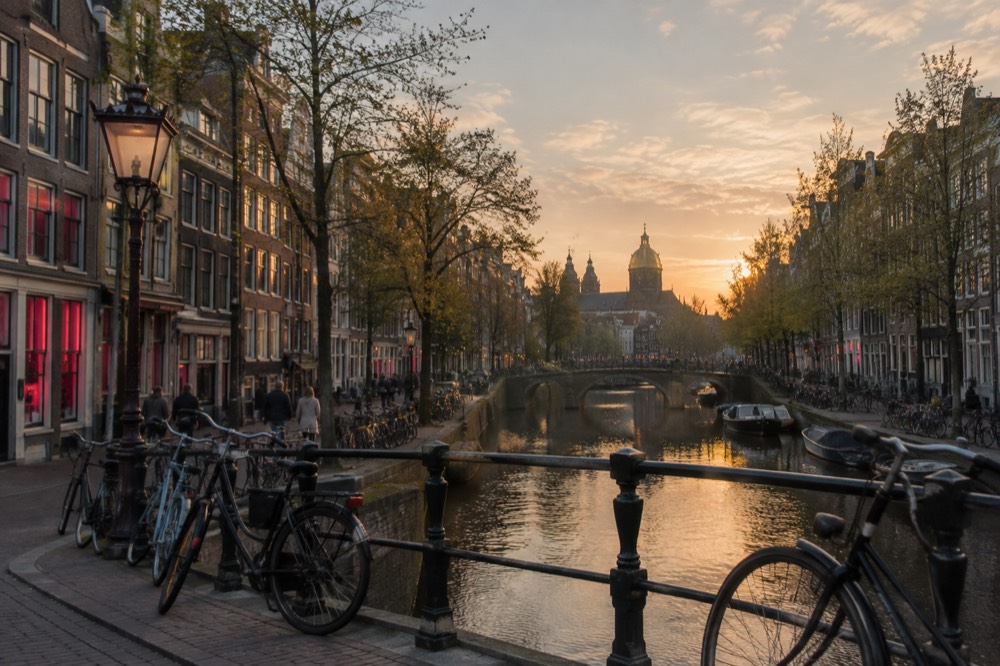
Everything in the district's unwritten code flows from one fact: the windows are shopfronts for a legal service, and the people behind them are running a business. Standing in a group to gawp is the equivalent of blocking a shop doorway, and it is treated that way. A customer knocks and negotiates respectfully at the door; a spectator keeps moving. There is no middle category, and trying to invent one is how most unpleasant incidents start.
Money questions belong to a separate page, but the short version is that prices are negotiated directly with the worker, in private, before anything happens, and that haggling through a window from the street is not how it works. Our piece on how much to pay at the red light district covers the mechanics without romanticising them.
The same respect extends to the neighbourhood's other residents. De Wallen has families, pensioners and students living above and beside the brothels, and the church at its centre, the Oude Kerk, holds regular services in the middle of it all. Noise carries badly in those narrow streets. The etiquette that locals appreciate most is the simplest one: behave as you would in a residential street, because that is what it is.
For a walk that covers the district's history and context with a guide who handles the boundaries professionally, the Red Light District and coffee shop tour runs two hours with a 4.7 rating across 4,541 reviews, and it stays within the municipal tour rules.
How Do the Red Light District Rules Fit Amsterdam's Wider History?
De Wallen sits inside the oldest core of Amsterdam, next to the Jewish Quarter and the canals that made the city rich, and the rules that govern it today are part of a wider civic attempt to balance a legal industry, a residential neighbourhood and 23.7 million overnight stays a year. Understanding that balance is why the etiquette exists at all.
The district did not appear as an entertainment zone; it grew where the harbour grew, in the streets around the Oude Kerk, which dates from the early 14th century. Sex work has been visible in these alleys for centuries, and the 2000 law that formalised it made the Netherlands the first country to legalise brothels outright. The rules visitors meet today are the visible edge of that legal framework: licensing, zoning, health checks and labour rights, all of which presuppose that the workers are professionals and the windows are premises.
The neighbourhood's other history is a short walk east. The Jewish Quarter, the Portuguese Synagogue and the sites connected to Anne Frank's story sit minutes from the neon, and the contrast between the two is the single most affecting thing about a visit to the old centre. The walking tours that trace the occupation years run through that quarter rather than De Wallen, and they are the right choice for visitors whose interest in Amsterdam is historical rather than nocturnal.
One boundary must be stated plainly, because listings blur it. The Anne Frank House itself is not part of any tour product: its tickets are sold only through the museum's own website, annefrank.org, with no legitimate reseller, and every walking tour in the city covers the streets and the story, never the house. The one-hour Anne Frank walk in our roster is a streets-and-story tour, and the Anne Frank House guide covers how to get the museum's own timed tickets, which are released online and sell out fast.
The wider lesson of the district is that Amsterdam regulates rather than prohibits. Cannabis is tolerated under national policy and confined indoors in the centre. Sex work is legal and zoned. Alcohol is legal and banned from the street. Each rule draws a line around where a legal activity may happen, and a visitor who understands that logic will find every other Amsterdam rule, from bike lanes to canal-cruise boarding, makes the same kind of sense. For the full picture on what to do across the city, start with our Things to Do in Amsterdam homepage and plan outwards.
Common Questions About Red Light District Rules and Etiquette
Can tourists visit the Red Light District in Amsterdam?
Yes. The district is public streets and anyone may walk through at any time, free and without a ticket. The rules that bind tourists are behavioural, not access-based: no street drinking, no outdoor cannabis smoking in the centre, no photographing the windows, and no joining a tour that breaks the municipal guide rules.
Can you take photos in the Red Light District?
Not of the windows, the doorways or the sex workers, under any circumstances, and enforcement by security staff is immediate. Photos of the canal houses, bridges, the Oude Kerk and the general streetscape are fine, ideally in the morning when the curtains are drawn and the streets are quiet.
Is it safe to walk through the Red Light District at night?
It is one of the most policed and camera-covered parts of the city, and violent crime against visitors is rare. The realistic risks are pickpocketing in dense crowds and drink spiking in bars, both of which standard city-centre precautions handle: closed bags, front pockets, no drinks from strangers, and a flat no to street dealers.
What are the group-size and time rules for Red Light District tours?
Municipal rules cap guided tours at 15 participants, require an exemption for any group larger than four, ban every tour from passing the sex workers' windows, and allow tours only between 08:00 and 22:00. Guides face a €190 fine per breach, operators €950, and repeat offences can cost an operator its exemption.
Can tourists buy cannabis in Amsterdam coffeeshops?
Yes. The residents-only criterion exists in national policy, but Amsterdam has never applied it, and tourists can buy cannabis in the city's coffeeshops, up to the 5-gram daily limit per person. The local restriction is spatial: smoking cannabis on the street is prohibited in the city centre, so consumption happens inside the coffeeshop.
What time does the Red Light District close?
The streets never close, but since April 2023 the core Wallen area's outdoor terraces shut at 01:00 and indoor hospitality at 02:00 on weekends, with alcohol service ending from 01:00. The windows keep individual hours set by the workers themselves, typically lighting up in the late afternoon and thinning out after midnight.