Amsterdam Coffeeshop Rules for Tourists: What You Can and Cannot Do
Amsterdam's coffeeshops are the most misunderstood institution in the city. The rules are real, they are specific, and most of what you have read elsewhere is either outdated or was never true. This guide sets out what actually applies to tourists.
Short answer
Tourists can buy cannabis in Amsterdam coffeeshops. A national rule restricts coffeeshops to Dutch residents, but Amsterdam does not apply it, and no tourist ban is in force. You must be 18 or over, may buy at most 5 grams per person per day, and cannot smoke cannabis outdoors in the city centre. Buy it, consume it inside the coffeeshop, and carry ID.
Roughly 23.7 million tourist overnight stays were recorded in Amsterdam in 2025, and a large share of those visitors arrive with a question about coffeeshops. Most arrive with the wrong answer already in their heads. Some believe cannabis is fully legal in the Netherlands. Some believe tourists were banned years ago. Both are wrong, and the gap between the myth and the actual rule is where people get into trouble.
This guide sets out the rules as they stand, drawn from national policy and the city's own published guidance. It covers what a coffeeshop is, what tourists may and may not do inside one, where you can and cannot smoke, how the red-light district adds its own layer of rules, and what happens if you ignore all of it. If you are planning a wider trip, start with Things to Do in Amsterdam for the full picture of the city.
What Is a Coffeeshop in Amsterdam, Exactly?
A coffeeshop is a licensed, tolerated establishment that sells small quantities of cannabis for on-site or take-away consumption, operating under the Dutch gedoogbeleid, or tolerance policy. It is not a café, and it is not legalisation: the sale remains technically illegal, but the authorities decline to prosecute premises that follow strict conditions. A koffiehuis, by contrast, sells coffee and cake, and nothing else.
The distinction matters more than visitors expect. The word "coffeeshop" is a legal category in the Netherlands, defined by the tolerance criteria the national government publishes: no advertising, no hard drugs, no sales to anyone under 18, no sales of more than 5 grams of cannabis per person per day, and no nuisance to the neighbourhood. Premises that meet those conditions are issued a municipal permit and are, in the language of the policy, "gedoogd", tolerated rather than legalised.
What this means for you as a visitor is that a coffeeshop is a normal, regulated business with a green-and-white sticker in the window, a menu behind the counter, and house rules enforced by staff. It is not a speakeasy and not a free-for-all. The national policy page states the core limit plainly: a coffeeshop may sell no more than 5 grams of soft drugs per person per day, and possession of up to 5 grams of cannabis is tolerated for personal use. You can read the policy in full on the government's gedoogbeleid page.
The tolerance approach has been national policy for decades and has survived every government since, in amended form. What has changed repeatedly is the local layer: opening hours, where shops may operate, and whether non-residents may enter. That last point is where most of the confusion lives, and it gets its own section below.
Can Tourists Legally Buy Cannabis in Amsterdam?
Yes. Tourists can legally enter and buy cannabis in Amsterdam coffeeshops. National policy contains a residents-only criterion, but Amsterdam has never applied it, and no tourist ban is in force. Writing either "cannabis is legal in Amsterdam" or "tourists are banned" would be wrong. The accurate statement is that the ban exists on paper nationally and is not enforced in this city.
The residents-only criterion, the ingezetenencriterium, is real. It appears in the national tolerance criteria: no access to, or sales to, anyone other than residents of the Netherlands. It was the basis of the "wietpas" experiment in the southern provinces, where coffeeshops were briefly members-only clubs for Dutch residents. The experiment caused problems in the border towns and was never rolled out nationally.
Amsterdam declined to apply it. The city argued that its coffeeshops serve a large resident market and that pushing tourists onto the street would create more nuisance, not less. Every research pass on this question agrees: the wietpas was never applied in Amsterdam, and no tourist ban has been implemented since. Proposals to restrict tourists have been debated repeatedly at council level and have not become city policy.
So the practical answer for a visitor is straightforward. You walk in, you show ID if asked, you buy at most 5 grams, and you follow the house rules. What you cannot do is assume the same applies anywhere else in the country: enforcement of the residents-only criterion is a municipal decision, and some border municipalities do apply it. Amsterdam is not one of them.
For context on how the city manages its visitor economy more broadly, our guide to the Centrum neighbourhood covers where these establishments cluster and why.
The House Rules Inside an Amsterdam Coffeeshop
Every licensed coffeeshop enforces the same core rules: you must be 18 or older with valid ID, you may buy at most 5 grams of cannabis per person per day, you may not bring or buy alcohol or hard drugs on the premises, and you may not cause nuisance outside. Staff can and do refuse service, and the permit holder risks closure if they break the rules.
The age check is the one visitors most often trip over. The limit is 18, and a passport or national ID card is the accepted proof. A driving licence may work, but a photograph of a document will not. Staff are legally obliged to refuse anyone who cannot prove their age, and they do.
The purchase limit is national: 5 grams of soft drugs per person per day. This is not per shop, it is per person, and attempting to buy more by visiting several shops in a row is both against the rules and obvious to the counter staff, who see it constantly. The same 5-gram figure is the tolerated possession limit on the street, so buying more than you can carry within the law is not possible anyway.
| Rule | What it means for you | Who enforces it |
|---|---|---|
| Minimum age 18 with valid ID | Carry a passport or ID card; photographs are refused | Counter staff, by law |
| Maximum 5 grams per person per day | Applies across all shops, not per shop | National tolerance criteria |
| No alcohol or hard drugs on the premises | Coffeeshops sell soft drugs only; no BYO of anything else | Staff and municipal inspectors |
| No nuisance to the neighbourhood | Keep noise down when leaving, especially at night | Municipality, via the permit |
| No advertising | Menus stay inside; do not expect signage or promotion | National tolerance criteria |
Payment is usually cash, though an increasing number of shops take debit cards. Expect to pay per item from a printed menu behind the counter, and expect the staff to answer questions about strength if you ask. The stronger varieties sold in Amsterdam are genuinely strong, and first-timers are routinely advised by the staff themselves to start with a small amount and wait, because the effects of edibles in particular arrive late and last long.
One more rule that is etiquette rather than law but is enforced anyway: buy before you sit. A coffeeshop is a business built on sales, and occupying a table without buying anything is the fastest way to be asked to leave.
Where You Can and Cannot Smoke Cannabis?
Cannabis smoking is banned outdoors in Amsterdam's city centre, including the whole Wallen and red-light district area, and the city's official guidance says to consume inside the coffeeshop. Tobacco smoking inside coffeeshops is also prohibited under the national smoking ban. In practice this means the coffeeshop itself, a private residence, or nowhere.
The outdoor ban is published on the city's own "How to Amsterdam" page, which sets out the behaviour expected of visitors: smoking cannabis outdoors is prohibited in the centre of town, and it belongs inside the coffeeshop. The exact street boundaries of the ban and the fine amount are not published in a way this desk could verify to a primary source, so we will not print a figure. Treat the entire city centre as a no-outdoor-smoking zone and you will not be wrong.
The tobacco rule catches many visitors out. Dutch law prohibits smoking tobacco indoors in hospitality venues, which includes coffeeshops. Many shops therefore allow pure cannabis joints but not tobacco mixed in, or provide a designated smoking room. Some sell pure options precisely for this reason. Ask before you light anything with tobacco in it.
Street drinking is also prohibited in the city centre, and public urination is prohibited everywhere, a rule the city enforces with visible signage and, in the busiest areas, staff on the street. The combination of rules means the classic tourist image of walking the canals with a joint and a beer is, in modern Amsterdam, a set of three separate violations.
| Location | Cannabis | Notes |
|---|---|---|
| Inside a coffeeshop | Allowed | The intended place; tobacco mixing may be restricted |
| Private residence or rental | Allowed, subject to the landlord | Check your accommodation's rules |
| Outdoors in the city centre | Prohibited | Includes the Wallen and the canal ring |
| Parks outside the centre | Grey area | Not explicitly permitted; nuisance rules still apply |
| Hotel rooms and terraces | Usually prohibited | Smoking bans are standard in Amsterdam hotels |
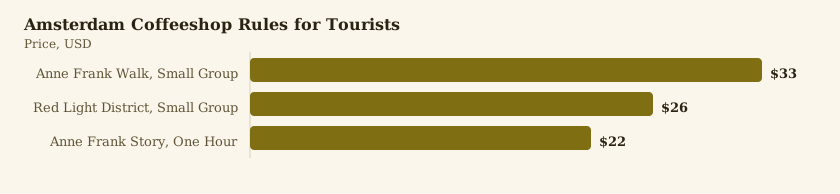
If a relaxed afternoon in a coffeeshop is part of your plan, it is worth remembering that the same streets hold most of the city's history. The one-hour Anne Frank small-group walking tour, rated 4.8 across 15,104 reviews and priced from $22.00, runs through the Jewish Quarter a few minutes' walk from the busiest coffeeshop streets, and gives the centre a context that no menu board will. Check availability if that appeals.
How Much Can You Buy, and What About Taking It Home?
The limit is 5 grams of cannabis per person per day, and possession of up to 5 grams is tolerated on the street. Taking any amount across a national border is drug trafficking under the law of every country surrounding the Netherlands, and taking it home on a plane is no different. There is no legal way to export cannabis from the Netherlands, in luggage, by post or otherwise.
The 5-gram figure appears twice in the national policy, once as the maximum a coffeeshop may sell and once as the maximum tolerated personal possession. It is a hard number, not a guideline, and it is the number to plan around. Seeds and cuttings occupy a separate, more permissive category, but the flowers themselves do not travel.
The border question is where otherwise sensible people do genuinely foolish things. Germany, Belgium and France all treat cannabis possession as a criminal matter, and a joint bought legally in Amsterdam is an illegal drug the moment you cross the border with it. The same applies to Schiphol: cannabis in your hand luggage is cannabis in an airport, and the tolerance policy stops at the terminal door.
Age limits deserve a final restatement because they apply to the buyer and any companion: nobody under 18 may enter a coffeeshop at all, even as a non-smoking friend. This is checked and enforced, and a group with one 17-year-old will be refused as a group.
Do the Rules Change in the Red Light District?
Yes, in three ways. De Wallen adds its own guided-tour rules, groups of no more than 15 with tours permitted only from 08:00 to 22:00 and no route past the windows; it sits inside the outdoor cannabis-smoking ban; and its weekend closing rules are tighter than the rest of the centre. The same gram limits apply, but the street behaviour rules are stricter.
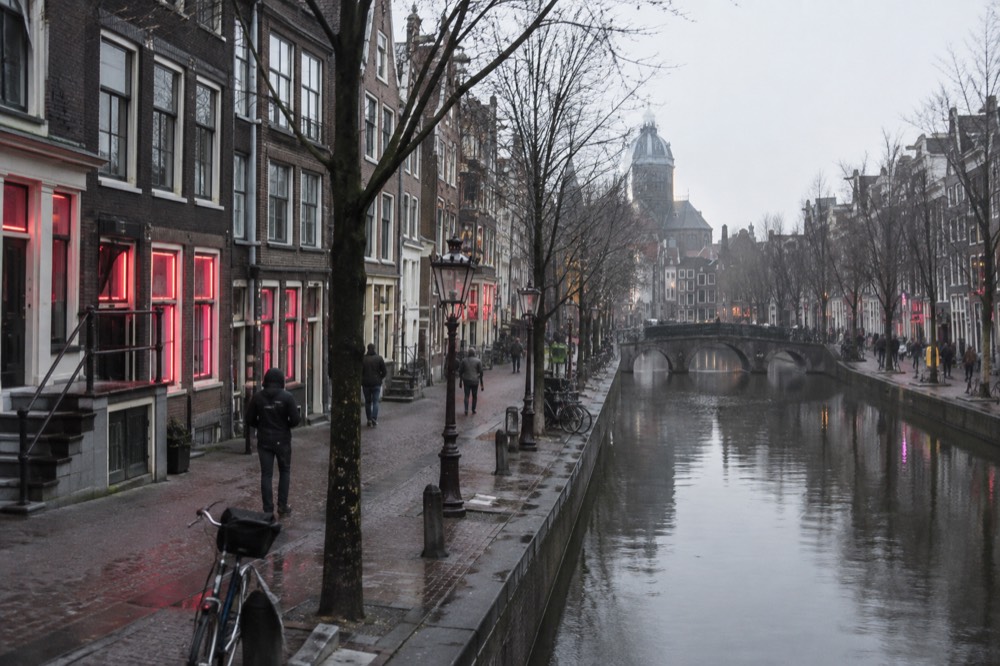
The guided-tour rules are the most specific set of regulations on this page. The municipality's own rules for tour operators state that tours may not pass the sex workers' windows, that groups are capped at 15 participants with an exemption required for groups larger than four, and that tours may run only between 08:00 and 22:00. Additional conditions ban megaphones, shouting, alcohol and drugs on tour, and stopping on busy bridges. The fines are real: €190 for an individual guide and €950 for a company, with an exemption revocable after three fines.
| De Wallen tour rule | Detail |
|---|---|
| Maximum group size | 15 participants; exemption required above 4 |
| Permitted hours | 08:00 to 22:00 only |
| Windows | No tour route may pass the sex workers' windows |
| On-tour conduct | No megaphones, shouting, alcohol or drugs |
| Fines | €190 individual guide, €950 company; exemption revocable after 3 fines |
Photography deserves its own sentence because it is the rule visitors break most. "No pictures please" is part of the official How to Amsterdam respect campaign. It is not described on the city's page as a statutory offence with a fine, but it is enforced by the people whose windows you are photographing, and the consequences of being caught are immediate and unpleasant. Do not photograph the windows. Our guide to the red light district, De Wallen covers the neighbourhood in full.
If you want the area explained rather than merely walked through, the small-group Red Light District tour runs 90 minutes, is rated 4.9 across 9,142 reviews and costs from $26.00, and the licensed operators keep to the routes the municipality permits.
What Happens If You Break the Rules?
Coffeeshop rule-breaking gets you refused service and removed; that is the usual end of it. Outdoor smoking in the banned centre zone can draw a fine, though the city does not publish the amount in the guidance this desk could verify. Trafficking quantities above 5 grams, selling to others or carrying across a border are criminal offences prosecuted in the normal way, tolerance policy or not.
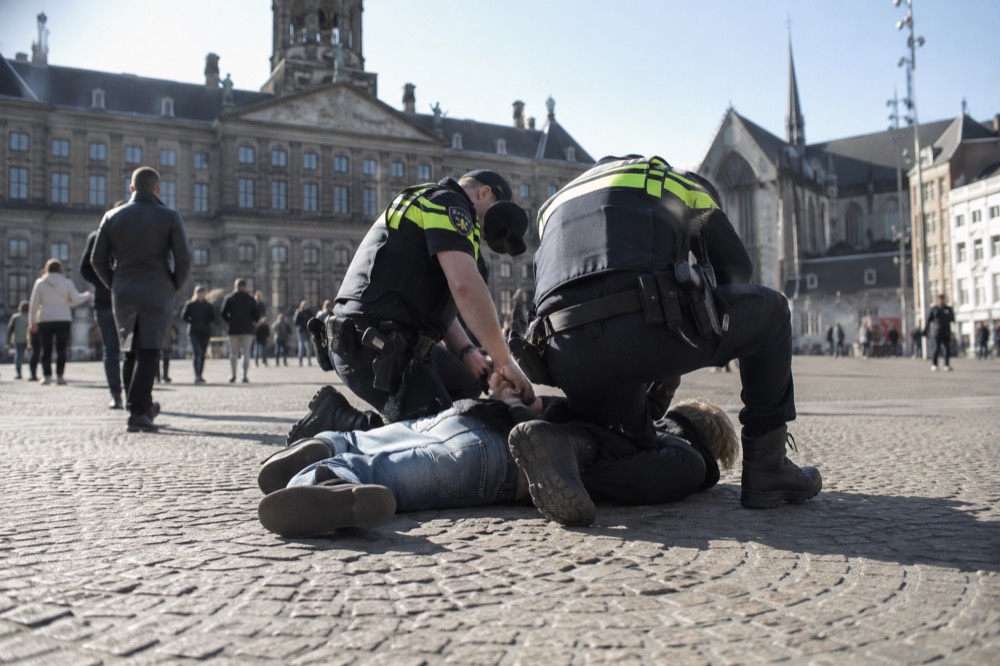
Inside a shop, the response to a broken rule is commercial: no sale, no service, no discussion. Staff refuse dozens of people a day for missing ID or obvious over-buying, and they are supported by the permit system, which makes the shop itself liable for violations. This is why the rules are enforced consistently. A shop that sells to a 17-year-old risks its licence, so it will not sell to a 17-year-old.
On the street, the picture is graduated. Possession within the 5-gram limit is tolerated. Outdoor smoking in the centre is prohibited and can be fined, and while this desk will not print a fine amount it could not verify to a primary source, the prohibition itself is on the city's official page and is enforced. Above the limits, or in any context involving sale, the tolerance stops entirely and the ordinary criminal law applies, exactly as it would anywhere else in Europe.
The practical summary for a visitor who wants no trouble at all: be over 18, carry ID, buy 5 grams or less, consume it inside the coffeeshop or in private accommodation, keep it off the street, keep it off planes, and leave the windows unphotographed. Every rule on this page is satisfied by that one paragraph.
What Else Is There Around the Coffeeshop Streets?
The coffeeshop streets of the centre are also the historic core: the Jewish Quarter, the canal ring and the oldest churches sit within a ten-minute walk of each other. Visitors who spend an afternoon in the neighbourhood often finish it with a guided walk, and the small-group history tours are the most reviewed way to do that. The centre rewards a guide more than almost any district in the city.
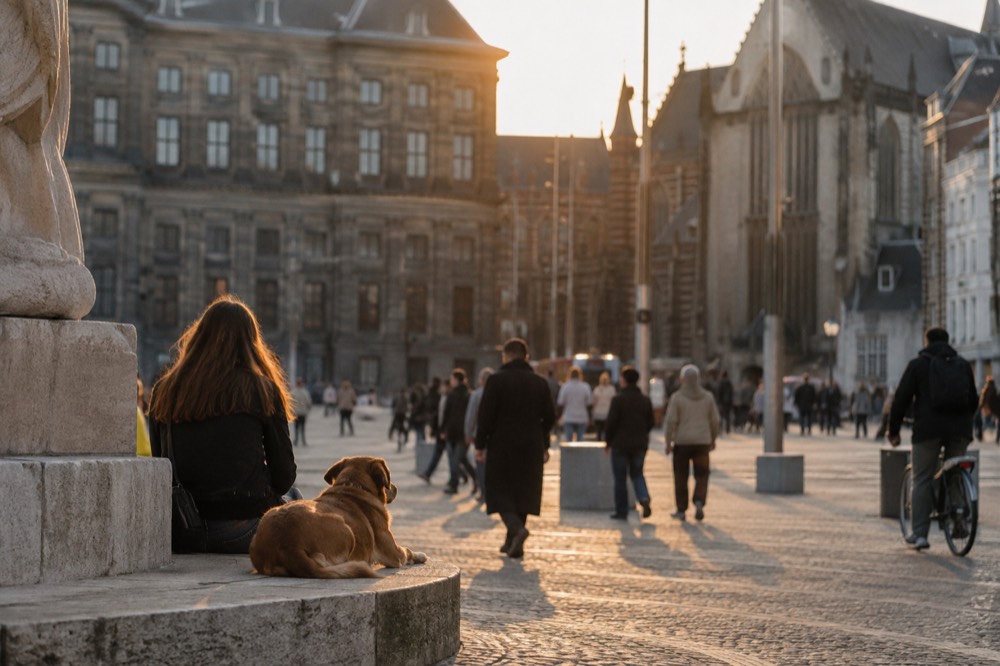
The overlap is not a coincidence. Coffeeshop permits cluster in the oldest, densest streets, which are the same streets where Amsterdam's merchant past, its wartime history and its canal architecture are concentrated. The one-hour Anne Frank walk described above covers the Jewish Quarter; the longer two-hour version, rated 4.9 across 4,680 reviews and from $33.00, goes deeper into the wartime story in five languages. Both are street walks: the Anne Frank House itself is a separate matter, its tickets are sold only through the museum's own site at annefrank.org, and no reseller or pass can sell you entry.
For a first visit that takes in the whole centre rather than one theme, the two-hour Anne Frank small-group walking tour and the De Wallen walk described above can be booked for the same day, morning and evening, and between them they cover the two halves of the historic core. Our blog piece answering can tourists still visit coffeeshops in Amsterdam is the short version of this guide if you want something to send a travelling companion.
One planning note that belongs here rather than anywhere else: the centre's hospitality closes earlier than visitors expect, and in the core Wallen area at weekends the outdoor terraces shut at 01:00 and the indoor venues at 02:00. An evening that starts with a coffeeshop and ends with a bar has a hard structural endpoint, and building the night around it is more pleasant than discovering it.
Common Questions About Coffeeshops in Amsterdam
Can tourists still visit coffeeshops in Amsterdam?
Yes. The national residents-only criterion exists on paper, but Amsterdam has never applied it and no tourist ban is in force. Tourists who are 18 or over with valid ID may enter, buy and consume within the normal limits.
How much cannabis can I buy in an Amsterdam coffeeshop?
The national tolerance policy caps sales at 5 grams of soft drugs per person per day. The limit applies to you as a person, not per shop, and the same 5 grams is the tolerated possession limit on the street.
Can I smoke cannabis outside in Amsterdam?
Not in the city centre. The city's official guidance prohibits outdoor cannabis smoking in the centre of town, including the Wallen, and directs consumption inside the coffeeshop. Outside the centre the position is grey, but the nuisance rules still apply.
What is the minimum age for a coffeeshop in Amsterdam?
18, with valid photographic ID such as a passport or national ID card. Under-18s may not enter at all, including non-smoking companions, and staff are legally required to check.
Can I take cannabis home from Amsterdam?
No. There is no legal way to export cannabis from the Netherlands. Carrying it across any border, including through Schiphol airport, is a criminal offence in the destination country regardless of where it was bought.
Are coffeeshops legal in the Netherlands?
They are tolerated, not legalised. The sale remains technically illegal, but premises that follow the tolerance criteria, including the age limit, the 5-gram cap and the no-nonsense rules, are not prosecuted.