Red Light District in Amsterdam: A Visitor's Guide to De Wallen
De Wallen is the oldest part of Amsterdam and its most misunderstood. Here is what the rules actually say, which tours are allowed to run, and how to visit the area without being the problem.
Short answer
The red light district in Amsterdam, De Wallen, is legal, policed and open to visitors, with guided tours capped at 15 people, permitted only 08:00 to 22:00, and banned from passing the windows. A small-group walking tour costs from $26, coffeeshops may sell tourists up to 5 grams per day, and window brothels operate until 03:00 under current rules.
Amsterdam counted 23.7 million tourist overnight stays in 2025, and a large share of those visitors walk through De Wallen at least once. The red light district in Amsterdam is not a theme park and not a no-go zone: it is the oldest built-up part of the city, a few streets of 14th-century fabric where legal sex work, medieval churches, ordinary homes and a lot of bars share the same blocks. The city has spent years writing rules for exactly how tourists may experience it, and those rules are specific enough that knowing them changes what you can book and when.
This guide covers what the regulations actually say, which tours operate inside the letter of the law, what coffeeshop rules mean for visitors, and what the area offers beyond the windows. For the wider neighbourhood picture, see our Amsterdam Centrum city centre guide, and for the behavioural side, the red light district rules and etiquette page goes deeper on day-to-day conduct.
What Is the Red Light District in Amsterdam?
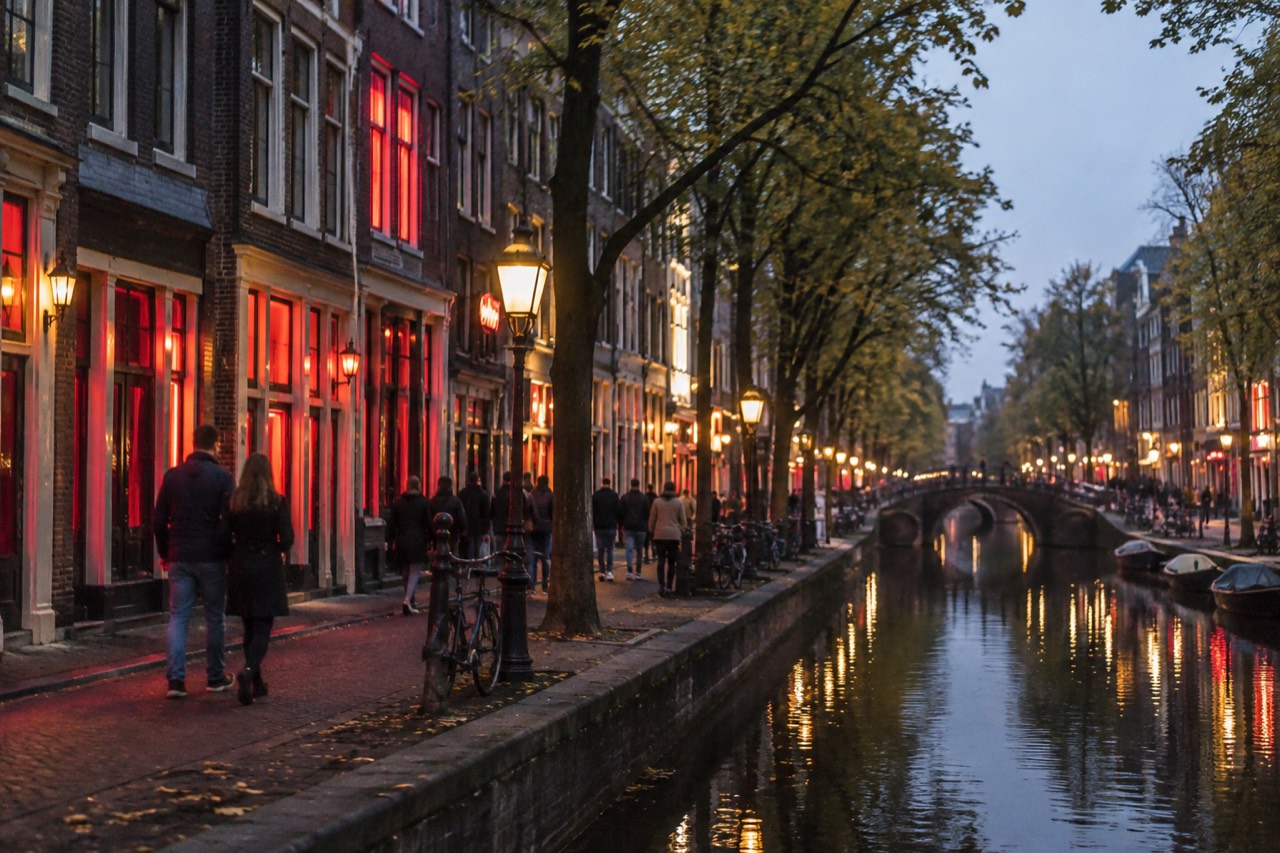
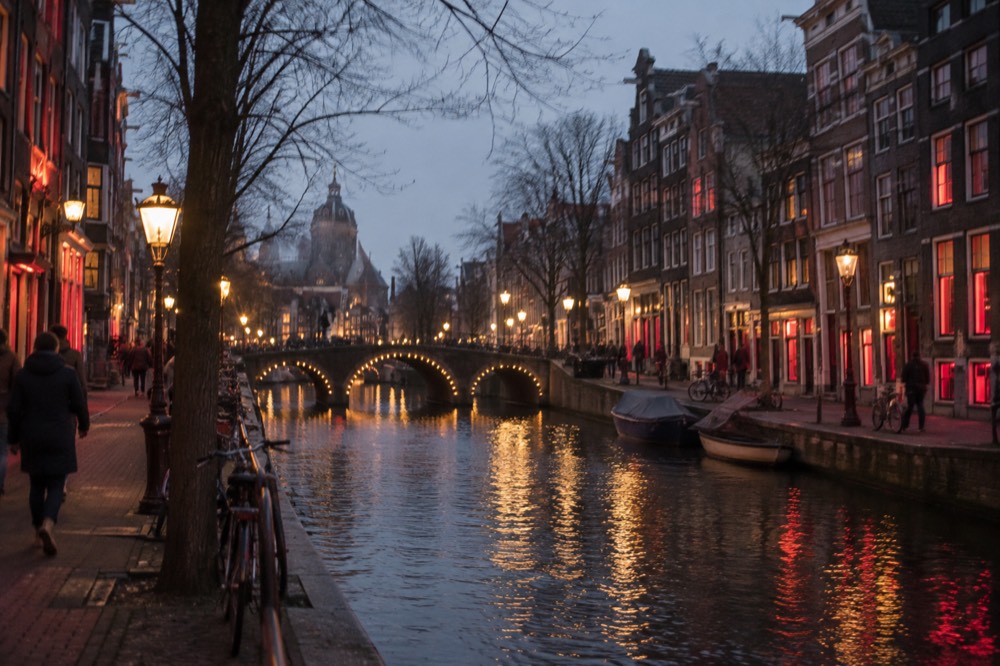
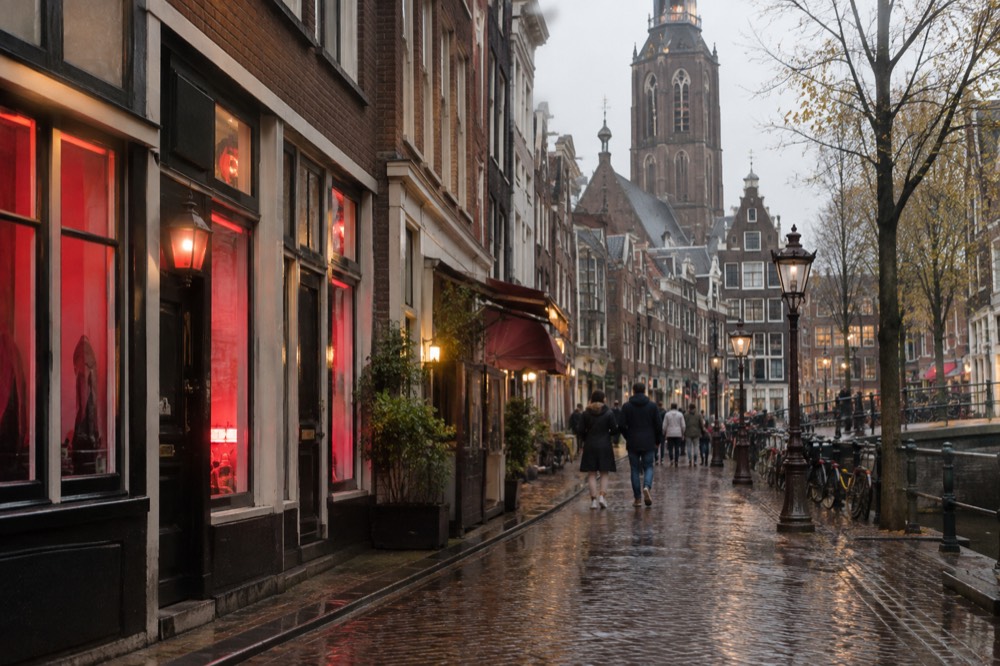
De Wallen is the official name of Amsterdam's red light district: a compact area of canals and alleys east of Dam Square, around the Oude Kerk, where window brothels, cannabis-selling coffeeshops, bars and medieval buildings sit side by side. Sex work here is legal and licensed, regulated by the city rather than tolerated in the shadows, and the district doubles as one of the oldest surviving stretches of the city, with streets laid out in the 14th century.
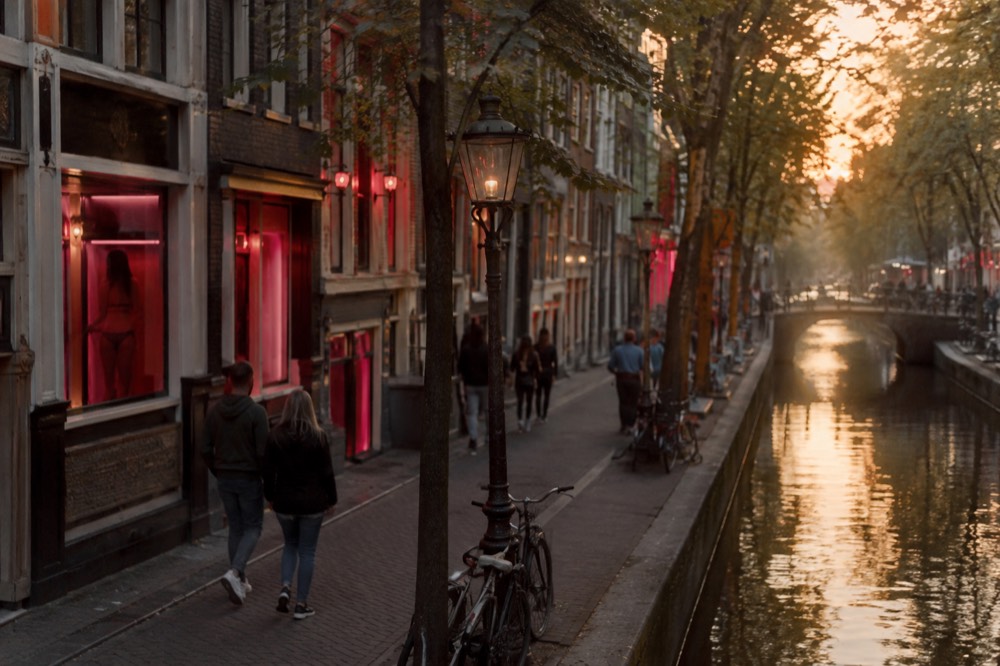
Most of what people picture when they say "red light district" fits inside a walk of roughly ten minutes. The core streets include the Oudezijds Achterburgwal, the Oudezijds Voorburgwal, the Zeedijk and the alleyways between them, with the Oude Kerk, Amsterdam's oldest building, standing in the middle of it. The name De Wallen refers to the medieval sea defences, the "walls", that once ran along this edge of the Amstel, even though little of them survives above ground.
The area is also a normal neighbourhood. Thousands of people live in and around these streets, and the city's policy documents treat livability for those residents as a first-order concern, not an afterthought. That tension, between a working entertainment district and a residential one, explains almost every rule described below.
It is worth being clear about scale. De Wallen is small: a handful of blocks, not a quarter of the city, and it is walkable end to end in under fifteen minutes at a normal pace. Visitors who expect a sprawling district are often surprised at how compressed it is, and how quickly you cross from a quiet residential canal into the busiest stretch and back out again.
Is the Red Light District Safe to Visit?
Yes, for the overwhelming majority of visitors. De Wallen is one of the most heavily policed and most camera-monitored parts of Amsterdam, and violent crime against tourists is rare. The realistic risks are petty: pickpocketing in dense crowds, drink spiking in busy bars, and overpriced or misleading offers in the late-night economy. Standard city-centre precautions, keeping valuables closed and staying with your group, cover most of it.
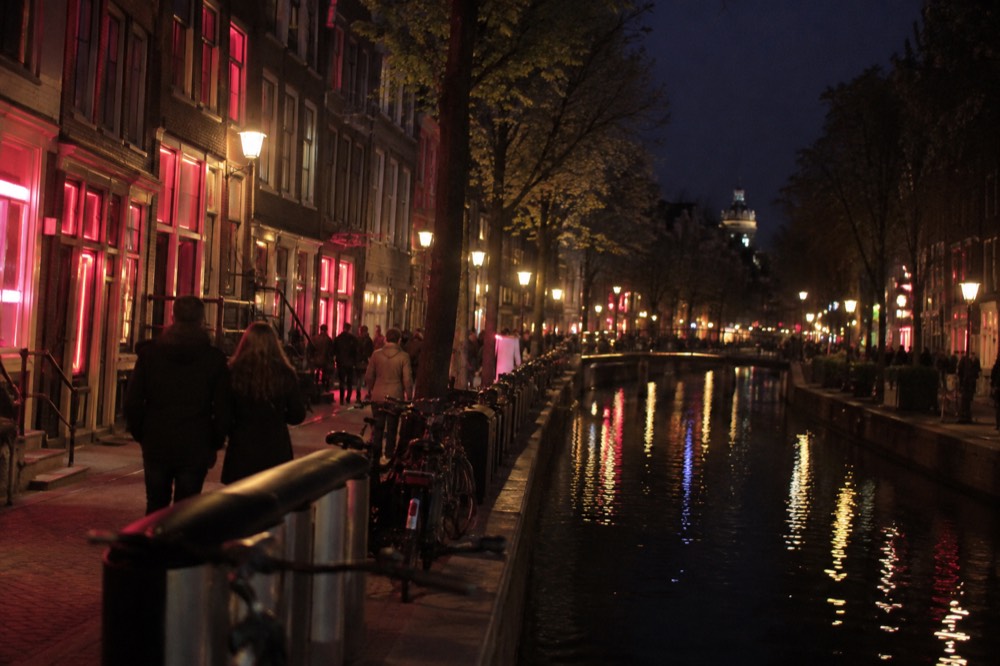
The city publishes its behavioural expectations on its official How to Amsterdam page, and the tone is worth reading before you go: it asks visitors to behave like guests, not to shout, not to urinate in the street and not to photograph the sex workers. Street drinking is prohibited in the city centre, as is public urination, and both are enforced.
The crowd itself is the main safety variable. Weekend nights bring dense foot traffic, alcohol and narrow streets together, which is when most incidents occur and when the atmosphere is at its most chaotic. Daytime and early evening are calmer, better lit by daylight, and easier to navigate with children or in a group that wants to look at the architecture rather than the nightlife. For a broader treatment of the question across the whole city, see our guide to whether Amsterdam is safe.
One honest note: the sex workers are the people most at risk in De Wallen, not the tourists. The debate over closing times in recent years has centred on their safety, with the city reconsidering the 03:00 window-brothel closing time on exactly those grounds. A visitor who behaves respectfully is statistically far safer than the people working in the windows.
Which Tours Work Best in De Wallen?
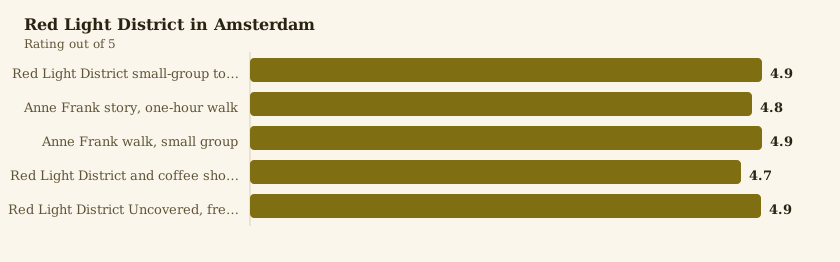
Only tours that follow the city's rules may operate in De Wallen: groups of no more than 15, running between 08:00 and 22:00, with no route past the sex workers' windows. Within those limits, the strongest options are a 4.9-rated small-group red light district walk from $26, a 90-minute Anne Frank walking tour from $22, and a two-hour small-group Anne Frank tour from $33, all bookable with free cancellation.
The Red Light District small-group tour is the most direct fit: 90 minutes, a 4.9 rating across 9,142 reviews, from $26, with a guide who can explain the district's history and the reasons the rules exist. Small groups matter here for a legal reason as well as a comfort one, since the city requires an exemption for groups larger than four and caps all groups at fifteen.
The two Anne Frank walks are not red-light tours, but they cover the neighbouring streets of the old centre and the Jewish Quarter, and they pair naturally with an evening in De Wallen. The one-hour version carries a 4.8 rating across 15,104 reviews from $22; the two-hour small-group version rates 4.9 across 4,680 reviews from $33. Both are street walking tours: neither includes entry to the Anne Frank House, whose tickets are sold only through the museum's own website, as the Anne Frank House ticket page states plainly.
The one-hour Anne Frank walk is the easiest of the three to slot into a De Wallen evening, because it costs the least and finishes quickly enough that you can still explore the district on your own afterward. It is also the tour this page recommends most often, which is why it appears again below as our featured pick.
There is also a free option. GuruWalk lists a pay-what-you-want "Red Light District Uncovered" walk, free to book, 90 minutes, rated 4.89 across 635 reviews, on which you tip the guide what the walk turned out to be worth. Free tours are not this site's products; we name the platform because the free-to-book model is exactly what you should know before you reserve. Our Amsterdam walking tours: free vs paid guide compares the two approaches in detail.
| Tour | Price | Rating | Duration |
|---|---|---|---|
| Red Light District small-group tour | from $26 | 4.9 (9,142 reviews) | 1 hour 30 minutes |
| Anne Frank story, one-hour walk | from $22 | 4.8 (15,104 reviews) | 1 hour |
| Anne Frank walk, small group | from $33 | 4.9 (4,680 reviews) | 2 hours |
| Red Light District and coffee shop tour | from $27 | 4.7 (4,541 reviews) | 2 hours |
| Red Light District Uncovered, free walk | free, tip the guide | 4.89 (635 reviews) | 1 hour 30 minutes |
What Are the Rules for Guided Tours in De Wallen?
The city's rules, published on amsterdam.nl, cap tour groups at 15 participants, allow guided tours only between 08:00 and 22:00, and prohibit any route passing the sex workers' windows, a ban that applies to all groups including those of four or fewer. Guides face fines of €190 for individuals and €950 for companies, and an operator's exemption can be revoked after three fines.
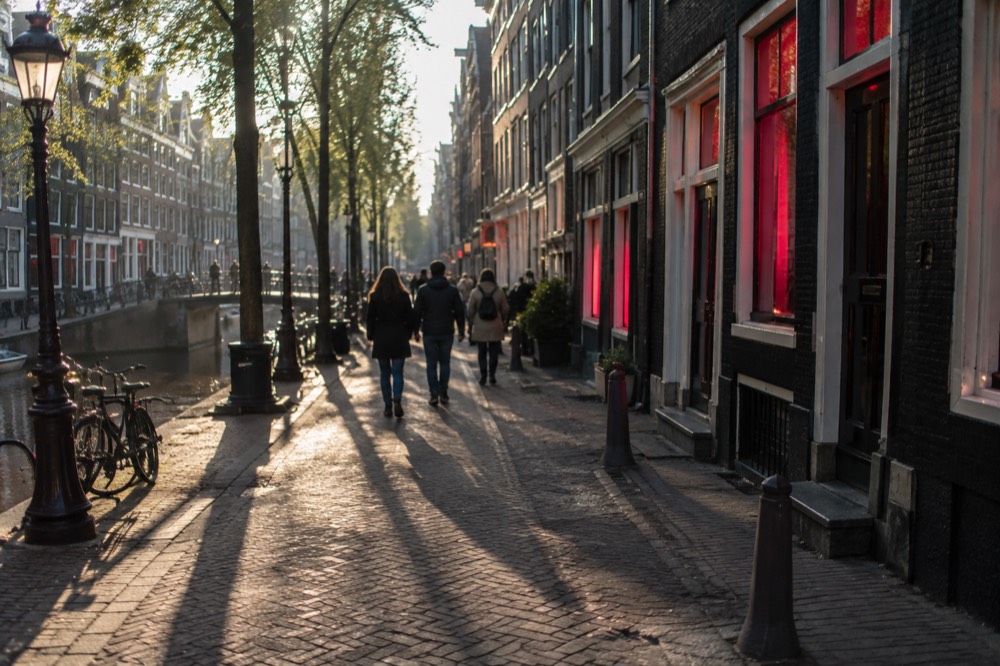
These are formal regulations, not signage suggestions. The 2020 rule banning tours from the windows remains in force, and the current version adds operational conditions: no recruiting participants in public space, no stopping on busy bridges or in shop entrances during restricted hours, no megaphones or shouting, and no alcohol or drugs on tour. Groups larger than four need an exemption even to run at all. The full text sits on the gemeente Amsterdam tour-rules page.
For a visitor, the practical reading is simple: a legitimate tour of De Wallen is a daytime-to-evening history walk that keeps its distance from the windows, and anything that promises to parade you past them is either breaking the law or describing something else. The rules also explain why good tours here lean on context, the district's medieval layout, the history of sex work regulation and the current policy fight, rather than on sightseeing of the windows themselves.
| Rule | What It Means for You |
|---|---|
| Maximum group size 15 | Book small-group tours; large coach-style groups cannot legally enter |
| Tours permitted 08:00 to 22:00 | No legitimate guided tour runs at midnight; explore late on your own |
| No route past the windows | Tours cover history and streets, not the sex-work windows |
| Exemption needed above 4 people | Operators are licensed; casual large groups are not allowed |
| Fines €190 / €950 | Operators have a real financial reason to stay compliant |
Can Tourists Visit Amsterdam Coffeeshops?
Yes. Tourists can legally buy cannabis in Amsterdam coffeeshops: the residents-only criterion exists in national policy, but Amsterdam has never applied it, and no tourist ban is in force. A coffeeshop may sell no more than 5 grams per person per day, and smoking cannabis outdoors is prohibited in the city centre, including De Wallen, so consumption stays inside the coffeeshops.
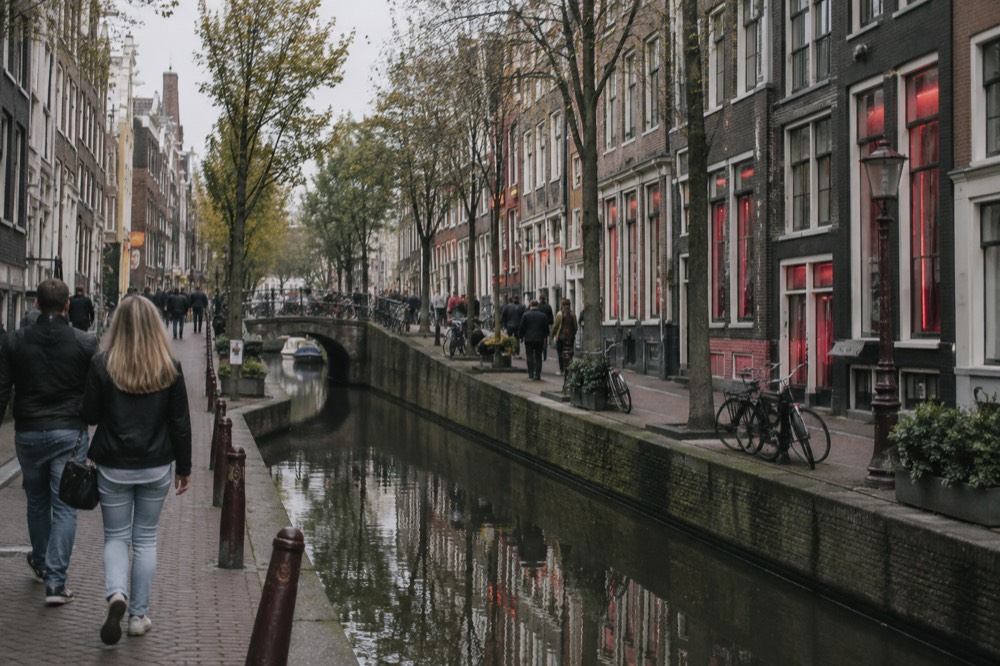
The legal basis is the national tolerance policy, set out on rijksoverheid.nl: coffeeshops may sell soft drugs within limits, personal possession of up to 5 grams of cannabis is tolerated, and the policy text includes a residents-only access criterion. The nuance that most guides get wrong is that Amsterdam does not enforce that criterion. The "wietpas" was never applied in the city, and repeated debate has not produced a ban. Neither "it is fully legal" nor "tourists are banned" is the accurate sentence; the accurate sentence is that it is tolerated, regulated and open to visitors.
The outdoor smoking ban is the rule most visitors actually trip over. The city's How to Amsterdam page prohibits smoking cannabis outdoors in the centre, so the joint stays inside the coffeeshop, full stop. Alcohol is not served in coffeeshops, and the same page prohibits street drinking in the centre.
If you want the coffeeshop side explained rather than just pointed at, the Red Light District and coffee shop tour is a two-hour guided walk rated 4.7 across 4,541 reviews, from $27, that covers the district's history and the coffeeshop culture with a guide who can separate law from folklore. Our Amsterdam coffeeshop rules for tourists page carries the full legal picture.
| Coffeeshop Rule | Detail |
|---|---|
| Who may buy | Tourists included; the residents-only criterion is not applied in Amsterdam |
| Sale limit | Maximum 5 grams of soft drugs per person per day |
| Where you may smoke | Inside coffeeshops; outdoor cannabis smoking is banned in the city centre |
| Alcohol | Not sold in coffeeshops; street drinking banned in the centre |
What Are the Opening and Closing Times?
De Wallen is a public neighbourhood with no gate or entry time: you can walk through at any hour. The regulated hours sit on top of that: guided tours run 08:00 to 22:00, weekend hospitality in the core area closes terraces at 01:00 and indoor venues at 02:00, and window brothels operate until 03:00 under the rules in force since April 2023.
The closing-time rules apply to the core Wallen area at weekends and have been in place since 1 April 2023, recorded in the city's own council information letter. The 03:00 window-brothel closing was a later adjustment, and the city has openly discussed reverting it because of safety concerns raised by sex workers, so treat that hour as the current rule rather than a permanent fixture.
For planning purposes, the rhythm of the district matters more than any single closing time. Late afternoon and early evening are the sweet spot for a first visit: busy enough to feel like the place is awake, calm enough to actually see the buildings. After about 22:00 the tours have all ended, the crowd skews heavily toward drinking, and the character of the streets changes. Visitors who want the history and the architecture should be finished before that shift; visitors who want the nightlife are only just starting.
What Should You Actually See in De Wallen?
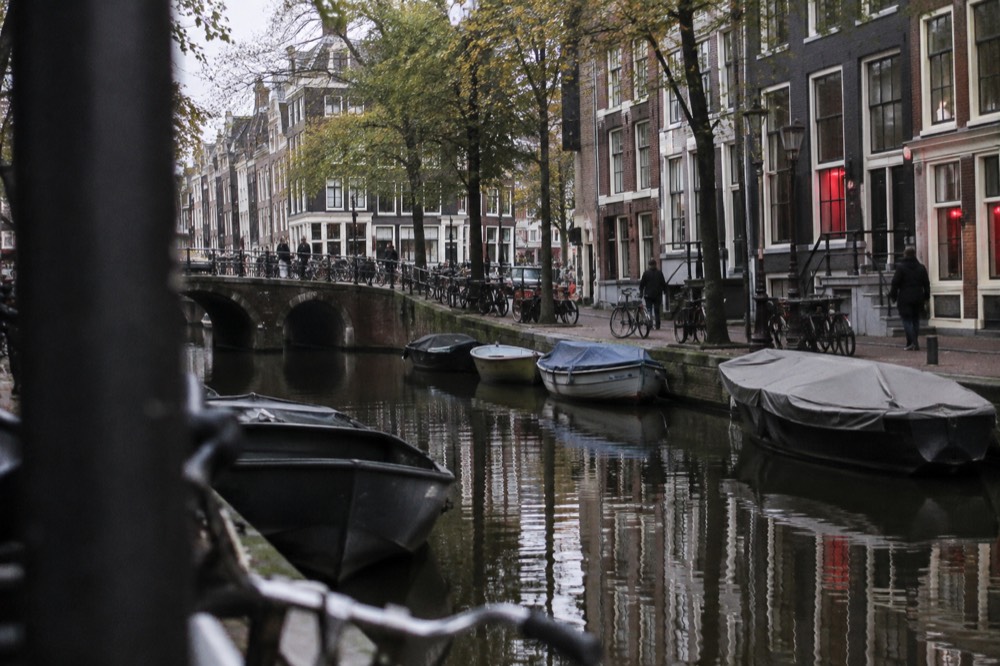
Beyond the windows, De Wallen holds the Oude Kerk, Amsterdam's oldest building, the medieval street plan around the Oudezijds Voorburgwal and Achterburgwal, the Museum of the Canals' neighbourhood context, and some of the oldest café fronts in the city. The architecture is the reason the area survived: these are 14th-century streets that predate the canal ring by centuries.
The Oude Kerk is the anchor. It stands in the middle of the district, the oldest surviving building in the city, and its tower and churchyard make the single clearest statement that this was a neighbourhood long before it was a nightlife zone. Our Oude Kerk guide covers it in full. Around it, the burgwal canals and their alleys reward slow walking: look at the gables, the neck facades and the surviving houseblock widths, which are narrower than anything built after the 17th century.
Two nearby stops round out a visit. The Begijnhof, a quiet enclosed courtyard a few minutes west, is the closest thing the centre has to a silence chamber, and the contrast with De Wallen's busiest street is the whole point of the walk. East of the district, the Jewish Cultural Quarter and the Portuguese Synagogue connect this part of the centre to the deeper history that the Anne Frank walks also cover.
How Do You Behave Respectfully in De Wallen?
Three norms carry nearly all the weight: never photograph the sex workers or the windows, do not tap on the glass or interact with the workers while they are working, and keep noise, alcohol and cannabis within the rules, no street drinking and no outdoor smoking in the centre. The city frames these as respect expectations in its official campaign, and venue staff enforce them actively.
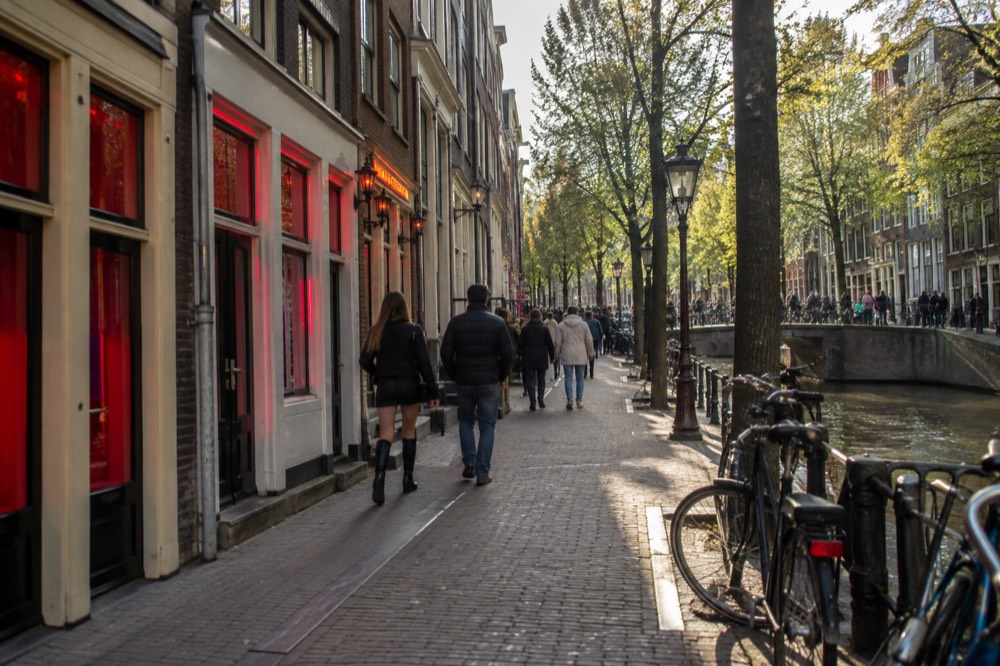
The photography norm deserves emphasis because it is the one most visibly enforced. "No pictures please" is part of the official How to Amsterdam campaign, and while the city page does not frame it as a statutory offence with a fine, staff and security treat it as a hard rule. Cameras pointed at windows are the fastest way to be removed from a street, a bar or a tour. If you want photographs of the district, photograph the architecture, the canals and the Oude Kerk, and keep the windows out of frame entirely.
The rest is ordinary courtesy amplified by density. The streets are narrow, the crowds are thick, and thousands of residents live above the businesses. Shouting, singing groups and bridge-blocking clusters are what generated the tour rules in the first place. Visitors who walk, look and listen have a better evening and a better story than visitors who perform.
Where Should You Stay Near the Red Light District?
Staying inside De Wallen itself is possible but rarely the best choice: the core streets are loud until the early hours at weekends, and the accommodation stock is limited and priced accordingly. Better fits sit one neighbourhood over: the quieter canal belt to the west, the Jordaan to the northwest, or Plantage and Amsterdam Oost to the east, all within a 15 to 20 minute walk.
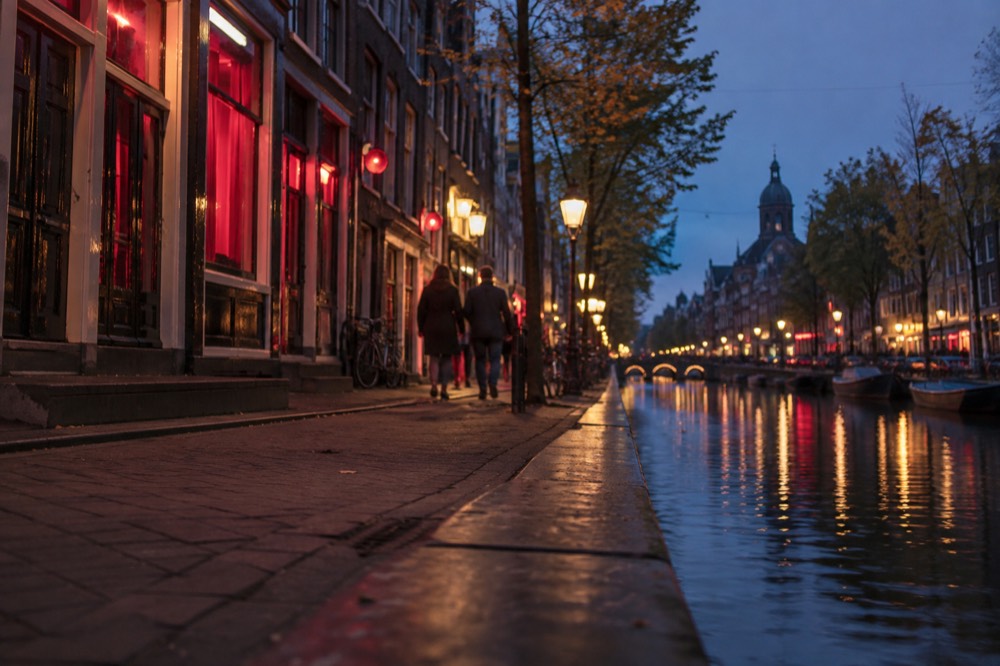
The trade-off is direct. A hotel in the core puts you at the centre of the nightlife, which means the noise comes with it, and the weekend closing rules mean that noise runs until 02:00 at the latest indoors, with street noise beyond that. Families and light sleepers should look at the Jordaan or the canal belt, both close enough to walk in for an evening and far enough to sleep. Our where to stay in Amsterdam page compares the full range of neighbourhoods.
Travellers who specifically want to be near the nightlife but not inside it often land on the edges of the city centre east of Dam Square, or on the Nieuwmarkt side streets. Wherever you book, check the walking distance on a map rather than the "city centre" label, since that label covers a large area of which De Wallen is only a few blocks.
If your interests run wider than one district, the rest of Things to Do in Amsterdam covers the museums, cruises and day trips that fill the other days of a first visit.
Common Questions About the Red Light District in Amsterdam
Is the red light district in Amsterdam safe?
Yes, for visitors who take normal city-centre precautions. De Wallen is heavily policed, the main risks are pickpocketing and drink spiking, and violent crime against tourists is rare. The sex workers, not the tourists, are the group the safety debate actually concerns.
Can tourists visit the red light district?
Yes, it is a public neighbourhood with no entry restriction. Guided tours are capped at 15 people, run only 08:00 to 22:00, and may not pass the windows, but you can walk the streets yourself at any hour.
Can tourists still visit coffeeshops in Amsterdam?
Yes. The residents-only criterion exists in national policy but Amsterdam does not apply it, and no tourist ban is in force. Coffeeshops may sell up to 5 grams per person per day, and cannabis must be smoked inside the coffeeshop, not on the street in the centre.
How much does a red light district tour cost?
Paid small-group tours start at $26 for the 90-minute red light district walk, with Anne Frank-themed walks from $22 and a two-hour red light and coffee shop tour from $27. Free pay-what-you-want walks on GuruWalk cost nothing to book; you tip the guide at the end.
Can you take photos in the red light district?
Not of the windows or the sex workers. "No pictures please" is part of the city's official respect campaign, and staff enforce it firmly. Photographing the canals, the Oude Kerk and the architecture is fine.
What time does the red light district close?
The streets never close, but the regulated venues do: weekend terraces in the core area close at 01:00, indoor hospitality at 02:00, and window brothels operate until 03:00 under the rules in force since April 2023.