Can Tourists Still Visit Coffeeshops In Amsterdam?
Yes, tourists can still visit Amsterdam coffeeshops. Here is how the tolerance policy works, what the rules are, and what has actually changed.
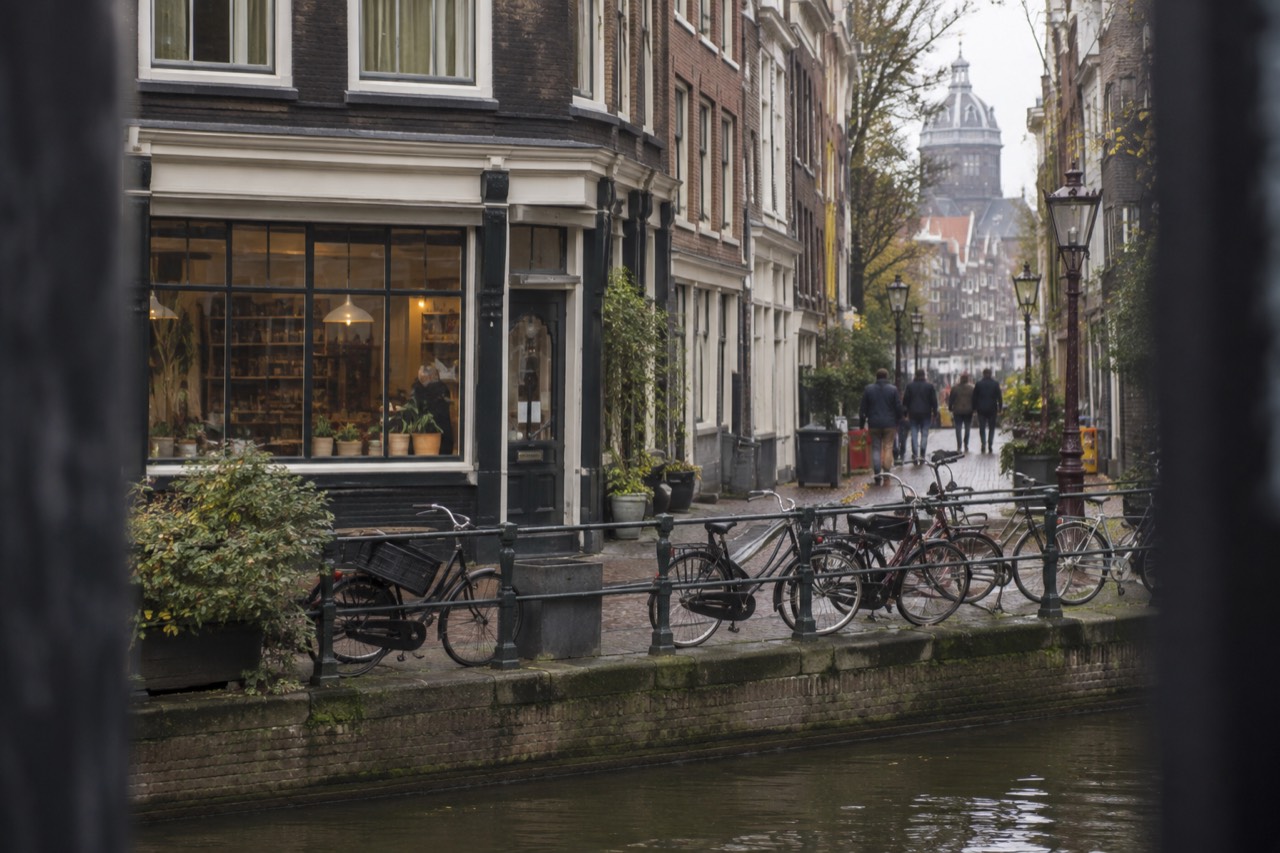
Roughly 160 to 170 licensed coffeeshops operate in Amsterdam, down steeply from the 1990s, and every one of them can legally sell cannabis to adult customers under the Netherlands' tolerance policy. Tourists walk through those doors every day of the year. The question is not whether you can, it is what the rules are, which of them are actually enforced, and where the boundaries sit. This page walks through the law as it stands, the residents-only clause that exists on paper but has never been applied in this city, where you may and may not smoke, and the practical etiquette of a coffeeshop visit.
Can Tourists Still Visit Coffeeshops In Amsterdam?
Yes, tourists can still visit coffeeshops in Amsterdam and buy cannabis there. The national tolerance policy permits coffeeshops to sell small quantities, and Amsterdam has never applied the residents-only criterion that exists in national guidelines. A tourist with ID proving they are 18 or over can walk in, buy up to 5 grams per person per day, and consume it inside the premises.
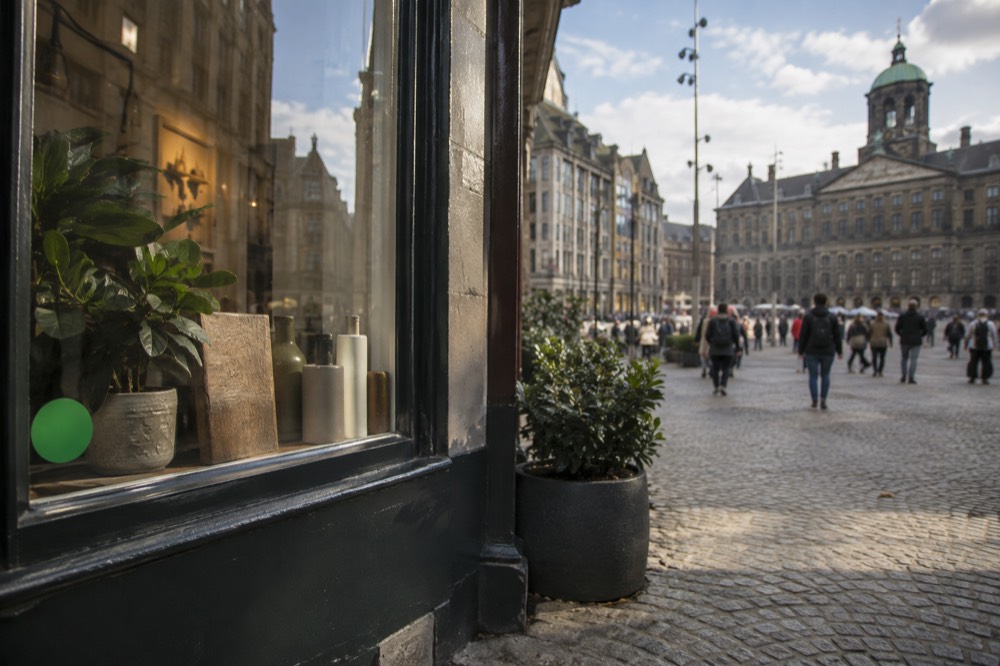
That is the whole answer in one paragraph, but the details matter more than most visitors expect. The word "coffeeshop" in Amsterdam does not mean a café. It is a specific licensed establishment, marked by a green-and-white sticker in the window, where cannabis is sold and tolerated under strict conditions. A "coffee house" or café is a different thing entirely, and confusing the two is a classic first-timer mistake.
What confuses people is the stream of headlines. Over the years there have been proposals to restrict tourists, a national "wietpas" experiment in the south of the country, and repeated council debates about shrinking the number of licences. None of those proposals has turned into a tourist ban in Amsterdam. The number of shops has fallen, largely through licence non-renewal and distance rules around schools, but the policy towards visitors themselves has not changed: adults are welcome, regardless of where they live.
If you are planning the wider day around a coffeeshop visit, the city's walking tours are a good pairing, because the coffeeshop question usually sits inside a bigger first visit to the centre. The three tours above are the ones this site's desk would shortlist for a first-timer who wants context, history and a guide who knows the neighbourhoods, rather than a list of photo stops.
What the Law Actually Says About Cannabis in the Netherlands?
Cannabis is technically illegal in the Netherlands, but the national gedoogbeleid, or tolerance policy, means coffeeshops may sell it under strict conditions without being prosecuted. A coffeeshop may sell no more than 5 grams of soft drugs per person per day, may not advertise, may not sell to anyone under 18, and may not sell alcohol alongside cannabis. Possession of small amounts for personal use is not prosecuted.
The distinction between "tolerated" and "legal" is not pedantry, it is the entire framework. Parliament never legalised cannabis. Instead, the government issued written prosecution guidelines that deprioritise enforcement against coffeeshops that stick to the rules, and against individuals holding small quantities for personal use. The national policy page states plainly that no more than 5 grams may be sold per person per day, and that possession of up to 5 grams of cannabis is tolerated.
That number, 5 grams, is the figure worth remembering. It is the daily purchase ceiling per person at any coffeeshop, and it is also the personal possession threshold below which police will generally confiscate rather than prosecute. Hard drugs are a different category entirely and are not tolerated anywhere, in any form.
The conditions attached to a coffeeshop licence are the reason the shops look the way they do. No alcohol is sold inside, because mixing the two licences is prohibited. Menus are displayed but advertising is restricted, which is why you will not see billboards. And the shops must refuse anyone who cannot show they are 18 or over, which is why a passport or ID card is worth carrying, because staff do check, especially for visitors who look young.
| Rule | What it means for a visitor |
|---|---|
| 5 grams per person per day | The maximum any coffeeshop may sell you in one day, across the counter |
| 18+ with valid ID | Passport or ID card required, staff check routinely |
| No alcohol on the premises | Coffeeshops sell soft drinks, coffee and tea, never beer or spirits |
| No hard drugs | Tolerated products are cannabis and hash only |
| No advertising | Menus exist inside, but shops cannot promote themselves publicly |
One point that surprises many visitors: buying is tolerated, but growing and wholesale supply are not, which is a deliberate contradiction at the heart of the Dutch system. The coffeeshop may sell, but the law does not recognise a legal supply chain behind it. You do not need to worry about that as a customer, but it explains why the policy is periodically debated in parliament and why headlines about "change" appear every few years without the customer-facing rules moving.
Is the Residents-Only Rule Enforced in Amsterdam?
No. The national tolerance criteria include an "ingezetenen" clause, meaning coffeeshops should admit only Dutch residents, but Amsterdam has never applied it. The wietpas was trialled in the southern provinces and was never rolled out to Amsterdam, and no tourist ban has been implemented since. Tourists are served today exactly as they were a decade ago.
This is the single most misunderstood part of the whole topic, and it is worth being precise about why. The national guidelines list the residents-only criterion as one of the conditions of tolerance. Several southern provinces, pressed by cross-border drug tourism from Belgium and France, introduced a "wietpas" system that required Dutch residents to register to enter coffeeshops. Amsterdam's council declined to participate, arguing that a registered-membership system in a city with hundreds of thousands of international visitors would push the trade onto the street. The experiment was later softened nationally, and Amsterdam never applied it.
So the honest formulation is this: nationally, the rule exists on paper. Locally, enforcement is a municipal decision, and Amsterdam has chosen not to enforce it, repeatedly, under successive councils. Neither "cannabis is legal in the Netherlands" nor "tourists are banned from coffeeshops" is true. The accurate sentence is that tourists can buy cannabis in Amsterdam coffeeshops because the city does not apply the residents-only criterion, and that this has been challenged, debated and reaffirmed many times without changing.
While you are in the centre, the streets around the coffeeshops are also the streets where Amsterdam's heavier history sits. The Anne Frank small-group walking tour, which starts from $22 and rates 4.8 across 15,104 reviews, walks the Jewish Quarter with a local guide and puts the wartime story in its actual geography. Note that it is a walking tour of the streets, not entry to the Anne Frank House, whose tickets are sold only through the museum's own website.
Where Can You Legally Smoke Cannabis in Amsterdam?
Inside the coffeeshop where you bought it, or in a private space with the owner's permission. Smoking cannabis outdoors is prohibited in the city centre, including the red-light district area, under Amsterdam's published visitor rules. Your hotel room or a rental apartment is a private space only if the owner permits it, and many do not, so check before you assume.
The outdoor ban is the rule most visitors break without knowing it exists. Amsterdam's official "How to Amsterdam" guidance, published on the municipal website, states that smoking cannabis on the street is not allowed in the city centre and that it should be done inside a coffeeshop. The exact street boundaries and the fine amount are not published in the guidance itself, but the direction is unambiguous: the centre is a no-smoking zone for cannabis, and the Wallen area in particular is patrolled for it.
Tobacco is a separate question, and it cuts the other way. Many coffeeshops ban tobacco smoking indoors under the national smoke-free workplace law, which applies to coffeeshop staff, so some premises are tobacco-free but cannabis-friendly inside, a genuinely odd corner of Dutch regulation. If you want to mix tobacco into a joint, ask first, because the house rules vary shop by shop.
Practically, the pattern that works is simple: buy in the coffeeshop, consume in the coffeeshop, and treat the street as off-limits. The terraces, canal edges and busy squares where tourists instinctively light up are precisely the places where it is not allowed. If a coffeeshop has a designated smoking area, that counts as inside for these purposes.
| Location | Cannabis smoking |
|---|---|
| Inside a coffeeshop | Allowed, subject to house rules |
| City centre streets, including De Wallen | Prohibited |
| Parks outside the centre | Grey area, police discretion applies |
| Hotel room | Only if the property permits it, many do not |
| Rental apartment | Only with the owner's permission |
How Does Buying in a Coffeeshop Actually Work?
You show ID at the door or counter, read the printed menu, order at the bar, pay in cash and take a seat. Most shops sell pre-rolled joints and loose flower by the gram, plus hash and space cakes. Staff can advise on strength, but the strongest products are genuinely strong, so a first-timer should start low and expect edibles to take an hour or longer to kick in.
The mechanics are deliberately unremarkable. A menu board lists strains and prices, the counter staff weigh and bag the order, and the transaction feels closer to a bakery than anything illicit. Cash is king, because the banking side of the trade is restricted, so do not count on paying by card. Some shops have a minimum purchase, and none will sell you more than the 5 gram daily ceiling no matter how politely you ask.
Strength is the thing that catches people. Dutch-grown flower has a reputation for high THC content, and the menu names do not always communicate potency clearly to a newcomer. The standard advice from the shops themselves is to start with a small amount, share nothing you would not finish yourself in one session, and treat space cakes with particular respect, because the delayed onset leads people to take a second piece and regret it an hour later.
A few house rules are near-universal. Do not bring your own alcohol. Do not photograph other customers or staff without asking. Do not hang around outside the front door, which draws police attention and annoys the neighbourhood. And take your rubbish with you, because litter around a coffeeshop is one of the complaints that drives licence reviews.
What Are the Rules If a Coffeeshop Visit Is Part of a Night Out?
If your night includes a guided tour of the red-light district, the tour rules are strict and enforced: groups are capped at 15, tours run only between 08:00 and 22:00, and no tour may pass the sex workers' windows. Guides face fines of €190 and companies €950 for breaking these rules, so a legitimate tour keeps to the approved routes and will not stop in front of the windows.
The connection is not obvious until you are standing in De Wallen, where the coffeeshops and the window brothels sit in the same few blocks and the same questions of respect and behaviour apply. Amsterdam's municipal rules for guided tours, published on the city's business pages, set the group limit, the hours window and the window-route ban, and they apply to every operator, including small groups. A tour that promises to walk you past the windows is either breaking the law or describing something else.
For visitors who want the neighbourhood explained rather than just seen, the small-group red-light district tour is the roster's strongest option: it rates 4.9 across 9,142 reviews, runs 90 minutes and starts from $26. The longer Red Light District & Coffee Shop Tour, from $27 with a 4.7 rating across 4,541 reviews, covers both worlds in two hours, and its guides are the ones who will explain the cannabis rules in the exact streets where they apply.
Photography deserves its own sentence, because it is the rule most often broken in De Wallen and the one that draws the sharpest reaction. The official guidance is blunt, "no pictures please", and while it is framed as a respect norm rather than a fined statutory offence, staff and security treat it seriously. Pointing a camera at a window is the fastest way to be removed from the area, and it is the single behaviour that has hardened local opinion against tourism more than any other.
What Happens If You Break the Rules?
For a tourist holding a small personal quantity, the realistic outcome of a street stop is confiscation rather than prosecution, because possession under 5 grams is tolerated. Smoking cannabis in the banned central zone, being publicly intoxicated, buying on the street or carrying more than the tolerated amount are different matters, and each can lead to a fine, a search or a night that ends very differently from the one you planned.
The gradient is worth understanding. The tolerated zone is narrow: small quantities, purchased in a licensed shop, consumed in permitted places. Step outside it in any direction and the protection falls away. Street dealers, who operate around the centre and especially around the train station approaches, are selling illegally and are themselves a police priority, and buying from them is both an offence and a quality risk. Hard drugs carry no tolerance at all.
Public behaviour is where most trouble actually starts. Amsterdam's rules prohibit street drinking in the city centre alongside the cannabis restrictions, and public urination is prohibited outright, with the city's krul urinals installed for exactly this reason. Being visibly and loudly intoxicated in the centre is the profile that draws police attention, and the combination of cannabis, alcohol and a canal edge after dark is the city's most reliable source of injuries, entirely independent of any legal question.
For most visitors the practical takeaway is short. Buy inside a licensed shop, consume inside it, keep your ID on you, keep your purchase under the ceiling, and treat the centre's streets as a place where nothing you bought is for consumption. Do that and the rules, which sound complicated in the abstract, are simple in practice.
What Else Should You Know Before Your First Visit?
Carry your passport, expect cash-only counters, do not mix cannabis with alcohol or the canal edge, and remember that the tolerated status means rules can tighten, so check the current position close to your travel date. Book any guided elements of your night in advance, because the small-group tours that follow the municipal rules sell out first.
The first-timer mistakes are consistent: assuming card payment works, assuming the 5 gram limit is per shop rather than per person per day, eating a second space cake before the first one lands, and lighting up on a bridge because it feels like the Amsterdam thing to do. The last of those is the one that combines a rule breach with the city's most common accident, and it is entirely avoidable.
It is also worth separating the coffeeshop question from the city around it. Amsterdam's centre is small, walkable and dense with history, and a visit that begins with a coffeeshop usually continues with the canals, the museums and the neighbourhoods that make the city worth the trip. The coffeeshop rules for tourists guide on this site covers the practical side in more depth, and the red-light district rules and etiquette page does the same for De Wallen. For the questions visitors ask about the district itself, can tourists go to the red-light district? is the companion piece to this one.
If your trip is a first visit and you want the city's story told properly rather than a self-guided wander, the Anne Frank guided walking tour in a small group is the roster's most-reviewed option of its kind: 4.9 across 4,680 reviews, two hours, from $33, available in five languages. Like the one-hour version, it walks the Jewish Quarter and the wartime streets, and like every walking tour of this story, it does not include entry to the Anne Frank House, whose tickets are sold only by the museum itself on a timed, online-only release.
The desk's overall read, after comparing the live listings and the municipal rules: nothing about the tourist-facing coffeeshop policy has moved towards a ban, the number of licensed shops is falling slowly for reasons unrelated to visitors, and the rules that will actually affect your evening are the local ones, the outdoor smoking ban in the centre, the ID checks and the 5 gram ceiling, not the national headlines. This page sits alongside the rest of the site's coverage of Things to Do in Amsterdam, and the walking tours above are the ones worth booking before you arrive.
Common Questions About Coffeeshops in Amsterdam
Can Tourists Still Visit Coffeeshops In Amsterdam?
Yes. Amsterdam has never applied the residents-only criterion that exists in national tolerance policy, and no tourist ban has been implemented. Any adult visitor aged 18 or over with valid ID can enter a licensed coffeeshop and buy up to 5 grams per person per day.
Do you need ID to enter a coffeeshop?
Yes. Staff must refuse anyone under 18, and they check ID routinely, especially for visitors who look young. A passport or national ID card works, and a driving licence is usually accepted, but carrying your passport is the safest option.
Can you smoke cannabis on the street in Amsterdam?
Not in the city centre. Amsterdam's official visitor rules prohibit outdoor cannabis smoking in the centre, including the red-light district area. Consumption belongs inside the coffeeshop where you bought it or in a private space where the owner permits it.
How much can you buy in one day?
The tolerance policy caps sales at 5 grams of soft drugs per person per day, and personal possession of up to 5 grams is tolerated. The ceiling is per person, per day, across the board, not per shop.
Are space cakes and edibles legal too?
Yes, they are sold under the same tolerance policy in many coffeeshops. They are treated the same way as flower for purchase purposes, and because the onset is delayed by an hour or more, they are the product most often over-consumed by first-timers.
Is cannabis actually legal in the Netherlands?
No, it is tolerated rather than legal. The national gedoogbeleid deprioritises prosecution of coffeeshops that follow the rules and of individuals holding small quantities, which is why licensed shops operate openly while the letter of the law is unchanged.