What Is The Most Beautiful Town Near Amsterdam?
Giethoorn, the village with no roads in its centre, is the strongest answer to which town near Amsterdam is the most beautiful. Here is how it compares with Edam, Zaanse Schans and Haarlem, and how to visit each from the city.
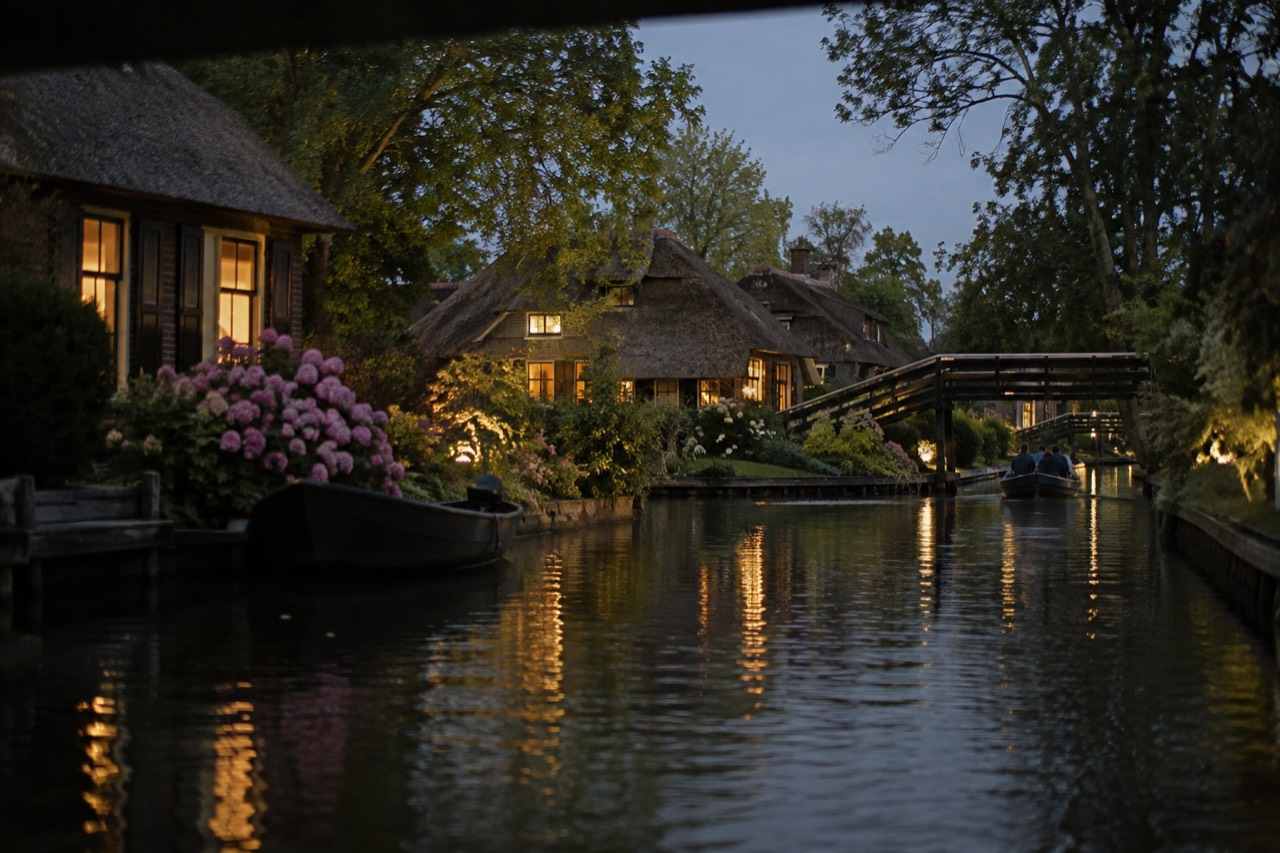
Ask around and one name keeps coming back: Giethoorn, the village in Overijssel where the centre has no roads at all, just canals, footbridges and thatched cottages leaning over the water. It is roughly the strangest, quietest, most photographed answer to the question of the most beautiful town near Amsterdam, and it earns the title honestly. But the field is strong. Edam, Zaanse Schans, Haarlem and even Utrecht all have a claim, and the right choice depends on whether you want water, windmills, cheese or a proper historic Dutch city.
This article works through the contenders the way a planning desk would: what each place actually looks like, what it costs to get there, when to go, and whether a guided day trip beats travelling independently. The short version is that Giethoorn is the beauty champion, Zaanse Schans is the easiest windmill fix, Edam is the quiet charmer most visitors skip, and Haarlem is the one that feels like a real, lived-in city. Every figure below comes from a verified source or the site's own tour roster, and where a number is not verified it says so plainly rather than guessing.
What Is The Most Beautiful Town Near Amsterdam?
Giethoorn, in the province of Overijssel, is the most defensible answer. It is a village of thatched-roof farmhouses built on peat islands, connected by wooden footbridges and canals, with no roads through the old centre at all. Cars park at the edge and everything inside moves by boat, on foot or by bicycle. The Dutch call it the Venice of the North, though the vibe is closer to a picture book than a grand canal city.
The reason Giethoorn wins on beauty is structural, not just scenic. Most pretty Dutch towns are pretty in the same way Amsterdam is pretty: brick gables, water, bridges. Giethoorn is a different kind of place entirely. The village grew out of peat digging in the 18th and 19th centuries, when workers cut canals to transport peat and the canals became the village itself. The result is a settlement where the water is the street network, where the gardens run down to private jetties, and where the loudest sound on a weekday morning is a duck.
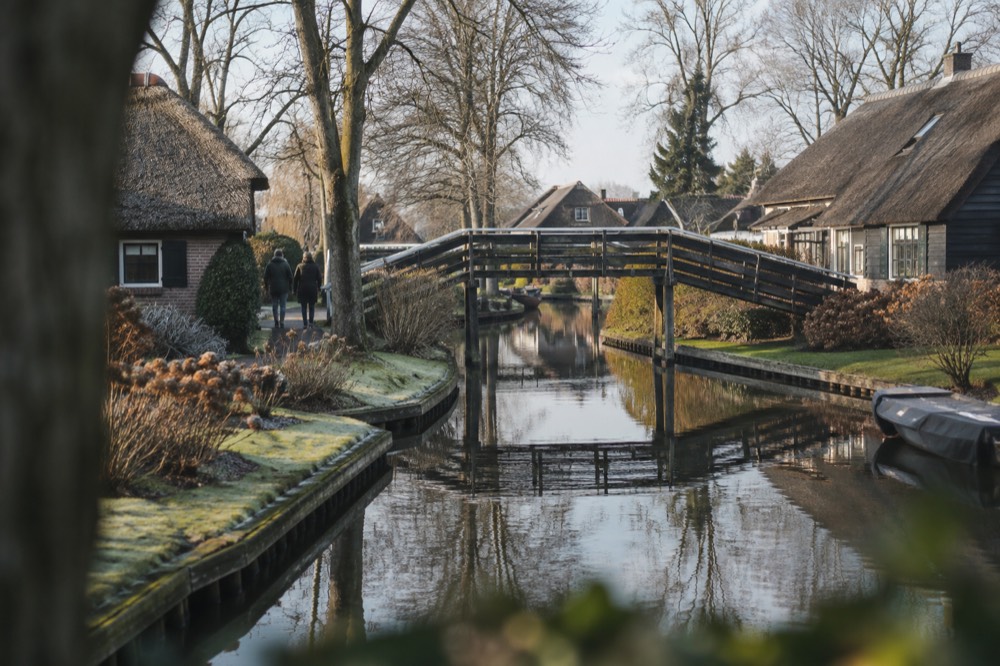
The honest caveat is popularity. Giethoorn's beauty is famous across Europe and Asia, and on summer weekends the main canals fill with rental whistles, the small electric boats visitors drive themselves. Go early, go off-peak, or go in the shoulder season and you get the village the photographs promise. Go at midday in August and you get a queue at the boat rental. The trade-off is worth understanding before you commit a full day, because Giethoorn is also the farthest of the main contenders from Amsterdam, out in the north-east of the country rather than a short hop from the city.
For travellers who want the beauty without the logistics, a guided day trip bundles the transport, the boat ride and the commentary into one booking. The Giethoorn guided day trip runs 7 to 8 hours door to door, is rated 4.8 across 575 reviews on the live listing, and costs from $100.80 per person. It includes a one-hour canal cruise through the village and a drive past the polders and dikes on the way, which is a landscape you will otherwise only see from a train window.
Which Other Towns Come Close to Giethoorn?
Edam, Zaanse Schans, Haarlem and Utrecht are the four strongest challengers. Edam wins on historic streetscape and near-total absence of crowds, Zaanse Schans on windmills and ease of access, Haarlem on being a genuinely beautiful working city, and Utrecht on a one-of-a-kind canal with wharf-cellars at water level. Giethoorn still takes the overall title on sheer, stop-you-in-the-street prettiness, but each of these beats it on something practical.
Edam is the insider's pick. The town that gave the world its most famous cheese is a 17th-century time capsule of bridges, bell gables and tiny canals, and it sits barely an hour from Amsterdam. Because most day-trippers head to Volendam next door, Edam's centre stays remarkably quiet even in summer. If you want a beautiful Dutch town you can have almost to yourself, this is it.
Zaanse Schans is the answer to a different question: where do you see working windmills without renting a car? The answer is a short trip from Amsterdam Centraal, in a string of green wooden houses and industrial windmills along the Zaan river. It is part museum, part neighbourhood, and it is the single most popular countryside stop from the city. The windmills still turn, the cheese and clog demonstrations run daily, and the whole thing is compact enough for a half day.
Haarlem is the grown-up option. It has the gabled canals, the hofjes (hidden courtyards behind unmarked doors), a great market square and a church that dominates the skyline the way the big museums dominate Amsterdam, yet it feels like a place where people live rather than a place staged for visitors. Twenty minutes by train from Amsterdam, it is the easiest beautiful town on this list to reach, and the best day trips guide ranks it near the top for a half-day escape.
Here is how the main contenders stack up against each other:
| Town | What makes it beautiful | Travel from Amsterdam | Best for |
|---|---|---|---|
| Giethoorn | Car-free canal village, thatched cottages, wooden bridges | Farthest of the group, a full-day outing | Photographers, couples, slow travel |
| Edam | 17th-century centre, quiet canals, cheese heritage | Barely an hour, often via Volendam | Escaping crowds, classic streetscape |
| Zaanse Schans | Working windmills and green wooden houses | Short hop from Amsterdam Centraal | First-time visitors, families, short visits |
| Haarlem | Real working city with canals and hofjes | About twenty minutes by train | Half-day trips, repeat visitors |
| Utrecht | Two-level canals with wharf-cellars at water level | Under half an hour by direct train | City lovers, cafes, architecture |
The pattern in that table is deliberate: the closer a town is to Amsterdam, the less it feels like a discovery. Giethoorn is the farthest and the most otherworldly, and that distance is part of why it keeps the crown. Before committing to any of them, it helps to see which city experiences are worth protecting time for, because the strongest trips pair one town with one anchor sight.
How Do You Get to Giethoorn from Amsterdam?
Two realistic routes exist: a guided day trip that handles everything, or an independent journey by train to Steenwijk followed by a short bus ride, which most people pair with a rental boat or a canal cruise on arrival. The guided option runs 7 to 8 hours total and costs from $100.80; the independent route is cheaper but takes most of a day and leaves no room for error on return times.
The independent route in detail: trains run from Amsterdam to Steenwijk, the station nearest Giethoorn, and from Steenwijk a local bus covers the last stretch to the village. Fares and journey times change with the timetable, so check the NS journey planner and the GVB fare pages rather than trusting a figure copied from a blog; the official fare list at gvb.nl/en/prices is the source for anything within Amsterdam itself, where a 24-hour day ticket is €10.00. Once in Giethoorn, the standard move is to rent a small electric boat, called a whisper boat, and drive the canals yourself, or to join a guided canal cruise if you would rather listen than steer.
The guided route in detail: the Giethoorn, Volendam and Zaanse Schans tour is the maximal version, a 10-hour day combining the canal village with the windmills and a fishing village, rated 4.8 across 812 reviews, from $161. It suits travellers who want the Netherlands' greatest hits in one long day and do not mind the pace. The pure Giethoorn guided day trip is the calmer choice, with a one-hour boat cruise included and polders and dikes on the drive.
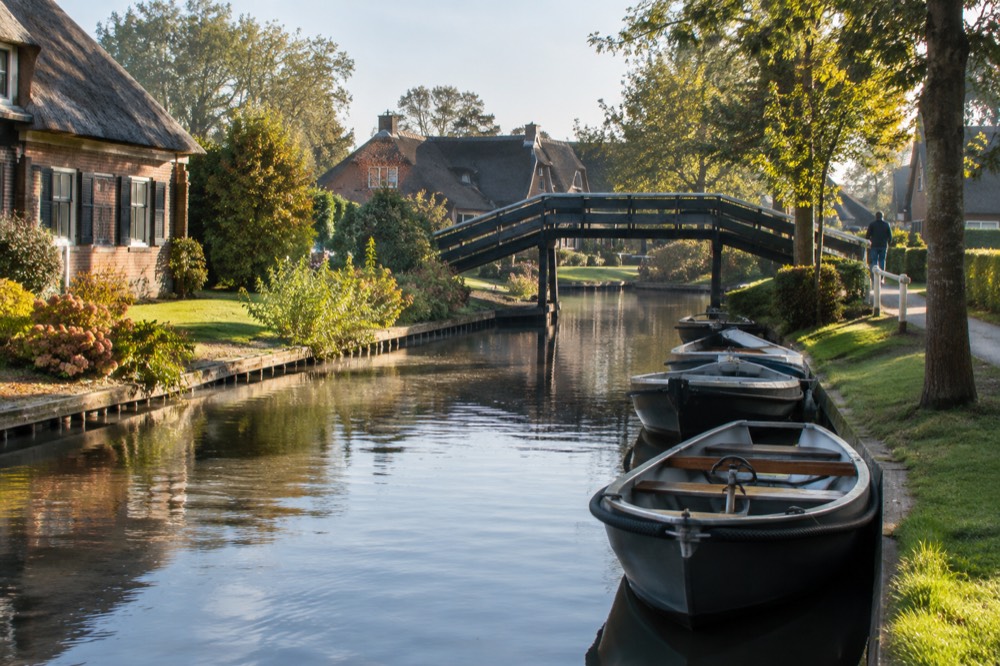
The decision usually comes down to time and confidence. If you are comfortable reading a Dutch bus timetable and want to spend less, go independent and keep your own schedule. If your days in the city are limited and you would rather someone else own the connections, the guided trip is worth the premium, and the operator's live listing shows current departure points and times. Whichever you choose, book the earliest start you can: Giethoorn at 9am and Giethoorn at 2pm are two different villages.
| Option | Duration | Cost per person | Rating on the live listing |
|---|---|---|---|
| Giethoorn guided day trip | 7 to 8 hours | From $100.80 | 4.8 from 575 reviews |
| Giethoorn, Volendam and Zaanse Schans tour | 10 hours | From $161 | 4.8 from 812 reviews |
| Independent by train and bus | Most of a day | Check NS and local bus fares | Not applicable |
One thing worth deciding before you book either route: what happens in the city on the other days. The strongest plans give the countryside one clear day and keep a museum anchor for the hours when the weather turns, which is exactly the pairing the next sections build toward.
When Is the Best Time to Visit These Towns?
Mid-April to early May is the peak window, when the tulip fields around Lisse hit full bloom and Keukenhof is open from 18 March to 9 May 2027, daily 08:00 to 19:00. For Giethoorn itself, late spring and early autumn give the calm water and thin crowds that the photographs promise, while winter brings a stark, misty quiet that some travellers prefer.
The tulip season deserves its own sentence because it changes the whole calculus. Keukenhof, the great garden at Lisse roughly 30 to 40 minutes from Amsterdam, opens only for that spring window; the official dates and hours are published at keukenhof.nl, and the 2027 season runs Thursday 18 March to Sunday 9 May 2027. If your trip falls inside that window, the honest advice is to split your countryside day: tulips in the morning, a town like Edam or Zaanse Schans in the afternoon.
Outside tulip season, the ranking holds but the mood shifts. Giethoorn in October, with the reeds turning gold and the boat rentals nearly empty, is arguably more beautiful than Giethoorn in July, and certainly easier to photograph. King's Day deserves a mention as the one date that reverses everything: on Tuesday 27 April 2027 the whole country turns orange, and while the national celebration is in Lelystad that year, Amsterdam's street party spills into every nearby town. If you want quiet beauty, avoid that week entirely; if you want a party in a beautiful setting, it is hard to beat.
Is a Guided Day Trip Better Than Going Independently?
A guided trip is better if you have two or three days in Amsterdam total, because it converts a full logistics day into a single booking and guarantees the return connection. Independent travel is better if you have four or more days or are on a budget, since the same villages are reachable by train and bus for the cost of fares alone. The real mistake is choosing guided and then wishing you had stayed longer.
The economics are straightforward. The cheapest countryside combination from the roster is the Zaanse Schans, Edam, Volendam and Marken tour at from $45, which is competitive with four separate bus fares once you count the guide. At the other end, the combined Giethoorn day at from $161 buys a lot of ground in one push. The middle option, and the one most first-time visitors actually enjoy, is a windmills-and-cheese half day: the Zaanse Schans windmills, clogs and cheese small-group tour runs 3 hours 30 minutes, rated 4.7 across 2,868 reviews, from $50, and leaves the afternoon free.
One planning note that saves more trips than any other: check the season before you book anything tulip-related. The Keukenhof and Zaanse Schans live guided day tour only operates while the gardens are open, 19 March to 10 May, and no legitimate operator sells Keukenhof outside that window. A listing that promises tulips in June is a listing to close.
What Should You Pair with a Town Day?
Pair a countryside day with one anchor sight inside the city, booked for a different day, and let the weather decide which happens first. The classic split is windmills or Giethoorn on the clear day, and the Van Gogh Museum or the Rijksmuseum on the rainy one, with a canal cruise as the evening filler that works in any weather.
The reasoning is simple: the towns are weather-dependent in a way the museums are not. Giethoorn in rain is still atmospheric, but Zaanse Schans in a gale is miserable, and the tulip fields in grey light photograph flat. Amsterdam's big museums, by contrast, are exactly what a rainy Dutch afternoon is for, and they need pre-booked timed entry, so the practical move is to book the museum for a fixed slot and keep the town day flexible. The Van Gogh Museum ticket is the strongest anchor: rated 4.7 across 57,096 reviews on the live listing, from $31, covering over 200 paintings, 500 drawings and more than 750 letters. Every visitor needs a pre-booked timed ticket, and slots sell out, which is exactly why it belongs on the fixed half of your plan.
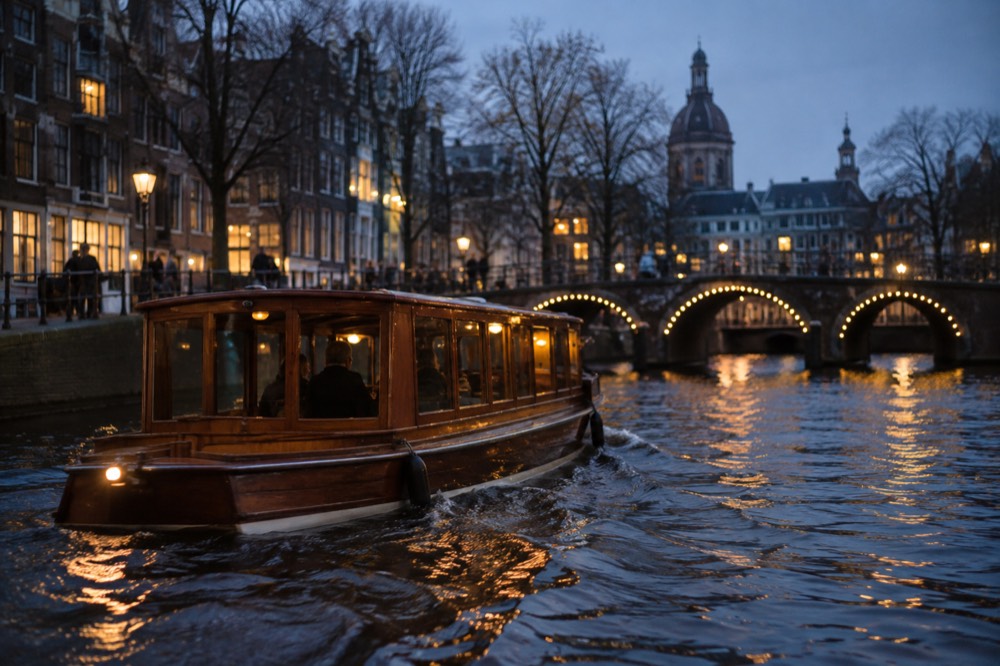
For the evening, the canal cruise is the one Amsterdam product that pairs with any day trip, because it starts and ends in the centre and takes an hour. The classic saloon boat cruise runs 1 hour on a restored wooden boat with drinks and cheese, rated 4.8 across 33,435 reviews, from $19.56. The Heineken Experience, rated 4.6 across 39,581 reviews and from $23, is the other reliable evening anchor if your group prefers beer to art. Neither needs a whole half day, which is the point: after a 7 or 10-hour countryside outing, an hour on the water or 90 minutes in a former brewery is the right size.
Do You Even Need to Leave Amsterdam?
Strictly, no: Amsterdam's own canal ring is a UNESCO World Heritage Site and the Jordaan and the Nine Streets deliver the beautiful-town experience inside the city. But the towns around it offer something the capital cannot, namely quiet, and the strongest short trip is the one that gives you both: a town in the morning and your own neighbourhood in the evening.
The comparison is worth making honestly. If your trip is two days, spend both in Amsterdam and walk the Jordaan and the Nine Streets; you will not run out of beautiful corners. If your trip is three days or more, the third day belongs outside the city, and Giethoorn, Edam or Haarlem will give you the version of the Netherlands that the postcards are actually drawn from. The site's own one-day and two-day itineraries build exactly this way, with the countryside bolted on only when the day count allows it, and the Giethoorn guide covers the village in depth for anyone planning the full outing.
The one mistake worth naming, because it is the most common one: trying to see Giethoorn and Zaanse Schans and Edam in a single day without a guide and a van. The distances look small on a map of a small country, but the Netherlands is small the way a pocket watch is small, dense with connections that each cost twenty minutes. Pick one beautiful town, arrive before the coaches do, and let the rest of the day be slow. That is the whole secret, and it is the same one behind Things to Do in Amsterdam planning every itinerary on this site.
Common Questions About Beautiful Towns Near Amsterdam
What Is The Most Beautiful Town Near Amsterdam?
Giethoorn, the car-free canal village in Overijssel, is the strongest answer. Its centre has no roads, only canals, wooden footbridges and thatched cottages, and it looks unlike anywhere else within day-trip range of Amsterdam. Edam, Zaanse Schans and Haarlem are the closest challengers, each winning on a different quality.
How far is Giethoorn from Amsterdam?
Giethoorn is the farthest of the main day-trip towns, in Overijssel in the north-east of the Netherlands. A guided day trip runs 7 to 8 hours total including travel and a one-hour canal cruise. Independent travel involves a train to Steenwijk and a short bus ride; check the NS journey planner for current times.
Can you visit Giethoorn without a tour?
Yes. Trains connect Amsterdam to Steenwijk, and a local bus covers the last stretch to the village. Once there, most visitors rent a small electric whisper boat or join a canal cruise. The trade-off is time and timetable risk: the independent route takes most of a day and leaves little slack for a missed connection.
Which is prettier, Zaanse Schans or Edam?
Zaanse Schans is more dramatic, with working windmills and green wooden houses along the Zaan river, but it is busy and partly staged as a museum village. Edam is quieter and more authentic-feeling, a 17th-century cheese town with canals and gables that most day-trippers skip because they stop in nearby Volendam instead.
What is the best month to visit the towns near Amsterdam?
Mid-April to early May, when the tulip fields are at peak bloom and Keukenhof is open from 18 March to 9 May 2027. For Giethoorn specifically, late spring and early autumn combine calm water with thin crowds, and winter brings a misty quiet that suits photographers. Avoid King's Day week, Tuesday 27 April 2027, unless you want a party.
Is Haarlem worth a day trip from Amsterdam?
Yes, especially for repeat visitors who have already done the canal ring. Haarlem is about twenty minutes by train and offers gabled canals, hidden courtyards called hofjes, a great market square and a working-city atmosphere, all without the day-trip logistics of the farther villages.