What Is The Rainiest Month In Amsterdam?
Amsterdam's rain is spread across the year, but late autumn is the wettest stretch. Here is what the pattern means for your trip, with wet-day plans and indoor options.
What Is The Rainiest Month In Amsterdam?
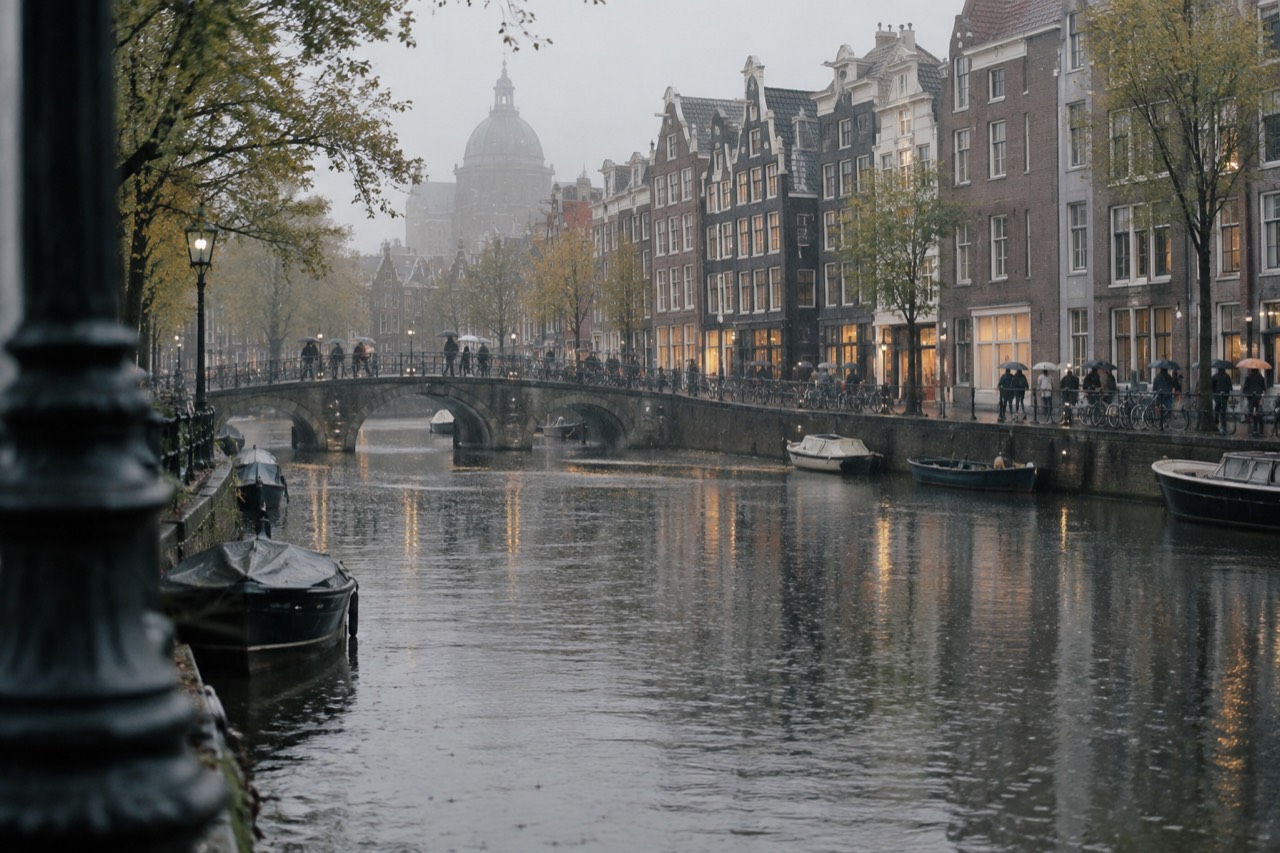
The honest answer is that no single month owns Amsterdam's rain. The city's climate spreads light rain fairly evenly across the year, but the wettest stretch generally runs through late autumn, with October and November the months most often named as the dampest, and drizzle returning constantly from September through January. There is no month you can reliably cross off, and no month that promises dry streets.
That answer frustrates people who want a number, and the number is exactly where most guides go wrong. Monthly rainfall figures for Amsterdam circulate widely online, but they vary depending on the reference period used and the measuring station, and the Royal Netherlands Meteorological Institute, KNMI, publishes the official climate normals rather than a single tidy ranking. Anyone quoting a precise monthly total without saying which decades that average covers is repeating a figure someone else copied.
What the pattern actually looks like, and what matters for a visitor, is this: Amsterdam gets frequent, light rain rather than dramatic downpours. A day can swing between sunshine, a ten-minute shower and grey drizzle before lunch. The practical consequence is not that some months are write-offs, it is that any trip needs a waterproof layer and a wet-day plan regardless of the calendar.
The city's own tourism numbers show people plan around this anyway. Amsterdam recorded 23.7 million tourist overnight stays in 2025, plus 21.9 million day visits, spread across every month of the year, and the municipal forecast expects between 23.7 and 25.1 million overnight stays in 2026. Rain has never emptied the place.
If you are booking a trip and want indoor anchors locked in before you fly, three reliable picks cover a wet afternoon well: a museum with timed entry, a covered brewery experience, and a canal cruise where the boat has a roof.
All three of those are built for the same weather reality. The Van Gogh Museum is indoors and needs a timed ticket booked in advance, the Heineken Experience sits inside the original brewery building, and a classic saloon boat cruise runs in covered vessels that keep sailing through showers. Lock one or two of these in and the forecast stops being the boss of your itinerary.
How Should You Read Amsterdam's Rainy Season?
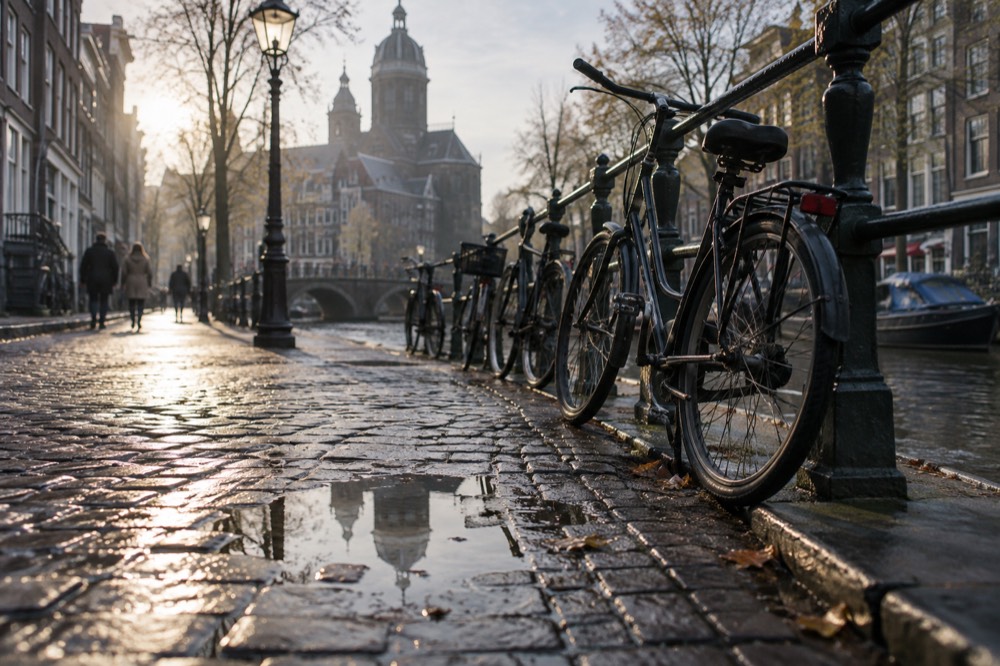
Treat September through January as the wet half of the year and February through May as the drier half, with the caveat that "drier" in the Netherlands is a relative term. Spring, especially April and May, tends to bring the best balance of sunshine and manageable showers, which is one reason the tulip season is so popular. Summer rain usually arrives in short, heavy bursts rather than all-day drizzle.
The reason the seasons tilt this way is the North Sea. Amsterdam sits on the Dutch coast, where maritime air keeps temperatures mild and moisture constant. Autumn and early winter deliver long stretches of Atlantic low-pressure systems, which show up as grey skies and repeated light rain. Late spring benefits from longer daylight and more showery, changeable weather rather than settled gloom.
KNMI is the primary source for the official numbers, and its climate data platform publishes the reference-period normals that any serious comparison should be built on. The useful takeaway from the data, more than any single month's total, is how flat the distribution is: Amsterdam's rainiest month is not dramatically wetter than its driest, unlike cities with monsoon or Mediterranean patterns where one or two months carry most of the year's precipitation.
That flatness is why locals shrug at the forecast. The Dutch do not schedule their lives around rain, they dress for it and carry on, and visitors who adopt the same attitude get far more out of the city than visitors who wait for a dry window that may not open. The rest of this article is the practical version of that attitude: what to book, what to wear and what to do when the sky opens.
What Can You Do in Amsterdam on a Wet Day?
Amsterdam is one of Europe's best rainy-day cities because its headline attractions are indoors. The Rijksmuseum charges adults €25 and is open every day of the year from 9am to 5pm, the Van Gogh Museum charges adults €25 with timed entry, and the Anne Frank House costs €16.50 including the booking fee. Between museums, covered markets, brown cafés and the Heineken Experience, a wet day can be a highlight rather than a write-off.
The single most important rule: book the big museums before you travel. The Van Gogh Museum states that all visitors must pre-book a timed entry ticket, and slots sell out, which means a rainy day with no plan can leave you outside looking at a full sign. The same logic applies to the Anne Frank House, which sells tickets only through its own official website for a specific date and time, with no door sales at all, so nothing sold anywhere else, by any operator or pass, includes entry.
The Van Gogh Museum is the strongest wet-day anchor of the lot. The collection holds over 200 paintings, 500 drawings and more than 750 letters, the building is a ten-minute walk from the Rijksmuseum across the Museumplein, and the whole visit happens under one roof. The listing for the entry ticket currently shows a 4.7 rating across 57,096 reviews, and the roster price is $31, so check the live listing for the exact figure on your dates.
After the museum, the Heineken Experience makes a natural second stop on the same wet afternoon. It sits in the original brewery in the centre, runs about an hour and a half, and the listing shows a 4.6 rating across 39,581 reviews at a roster price of $23. Because it is an indoor, timed-slot attraction, it behaves exactly like a museum in the rain: you walk in, you stay dry, you walk out.
Here is how the main indoor options compare on the things that actually decide a wet day:
| Indoor option | Verified price | Booking rule | Wet-day strength |
|---|---|---|---|
| Van Gogh Museum entry ticket | €25 adult at the museum | Timed entry, pre-booked | World-class collection, entirely indoors |
| Rijksmuseum | €25 adult, free under 18 | Timed start time required | Open daily 9am to 5pm, all year |
| Anne Frank House | €16.50 adult including booking fee | Official site only, timed slot, no door sales | Profound, but book weeks ahead |
| Heineken Experience | From $23 on the live listing | Timed slots | Interactive, social, good group option |
| NEMO Science Museum | €21.50 for everyone aged 4 and over | Timed ticket | Roof terrace is free even without a ticket |
One detail worth knowing: NEMO's roof terrace is reachable free of charge via the steps from the street, so even on a showery day you can pop up for the view between museums without buying anything. And if the rain turns genuinely heavy, the covered passageways around the centre, the shopping streets and the Foodhallen keep long stretches of a day under a roof.

Does Rain Ruin a Canal Cruise?
No. Canal cruises run year-round in Amsterdam and the standard vessels are covered, with glass roofs or enclosed saloons that keep passengers dry while the sightseeing continues. A cruise in the rain is arguably better than one in a crowd: the canals are quieter, the water is atmospheric, and the deckhouse windows frame the gabled facades whether the sky is blue or grey.
The classic saloon boat is the format built for this weather. These are restored late-19th-century wooden vessels, some sailing the canals since 1902, powered by quiet electric engines, and the covered saloon is the whole point of the design. The classic saloon boat cruise listing shows a 4.8 rating across 33,435 reviews at a roster price of $19.56, with drinks and Dutch cheese available as an option on board. More of these guides are collected on Things to Do in Amsterdam.
The other cruise formats hold up in rain too. The one-hour cruises departing from three docks, near the Anne Frank House area, the Rijksmuseum or Central Station, run in covered boats with audio guides in 19 languages, and the listing shows a 4.3 rating across 21,335 reviews from $15. Evening cruises, sunset cruises and the dinner cruises all use covered vessels, so a wet evening does not cancel the plans, it just moves them behind glass.
The one genuine rain risk on the water is the open-boat format. Some small-group cruises run on open sloops, which are wonderful in sunshine and exposed in a shower. If you are booking in the wet half of the year, check whether your chosen cruise is open or covered before you commit, and lean covered between September and January.
Round the same afternoon off with the Heineken Experience and you have a fully weatherproof block: a covered cruise on the canals, then an indoor brewery visit, all within a short walk of each other in the centre. Both use timed slots, so book both in the same morning and the rain cannot touch the schedule.
How Do You Get Around Amsterdam When It Rains?
You switch from walking and cycling to the trams, the metro and the buses, and Amsterdam makes that cheap. A GVB 24-hour day ticket costs €10.00 for adults and €5.00 for children, a single one-hour ticket is €3.40, and tapping a contactless bank card with OVpay charges a base fare of €1.16 plus €0.217 per kilometre with a daily cap.
The GVB network covers the whole city, so no wet walk needs to be longer than the walk to the nearest stop, and the trams run frequently enough that waiting under a shelter is a matter of minutes rather than a soggy half hour. The GVB publishes the full fare table on its official prices page, and the multi-day tickets scale up gently: €16.00 for 48 hours, €21.50 for 72 hours, €27.50 for 96 hours, €34.00 for 120 hours, €39.00 for 144 hours and €43.00 for a full week. If you are visiting in the wet season and expect to hop between museums, a multi-day ticket usually beats single fares by the second or third ride.
| Ticket | Price | Best for |
|---|---|---|
| GVB single, 1 hour | €3.40 | One-off trips |
| GVB 24-hour day ticket | €10.00 adult, €5.00 child | A packed museum day |
| GVB 72-hour ticket | €21.50 | A long weekend in mixed weather |
| GVB 168-hour ticket | €43.00 | A full wet week |
| OVpay contactless | €1.16 base plus €0.217 per km | Occasional riders with a bank card |
Cycling deserves a word of caution in the rain, because it is the one Amsterdam activity the weather genuinely degrades. The cobbles and tram rails become slippery, painted road markings turn slick, and rental bikes come without the fenders most local bikes have, which means a wet stripe up your back within a block. If the forecast shows steady rain, save the bike for a drier day and use the tram network instead; the city's cycling guide covers the details if you want to weigh it up.
Walking is still viable with the right kit. The centre is compact, the distances between the major sights are short, and a waterproof jacket with a hood does more for a Amsterdam trip than an umbrella, which the wind along the canals regularly shreds. Locals overwhelmingly choose the jacket.
When Is the Best Time to Visit Amsterdam to Avoid Rain?
Late April and May offer the best combination of drier, brighter weather and the tulip season, and that window is anchored by hard dates: Keukenhof opens 18 March 2027 and closes 9 May 2027, daily from 08:00 to 19:00. Spring still brings showers, but they tend to be short and interspersed with sunshine, unlike the settled grey of November and December.
September is the other sweet spot, with the crowds thinner than summer and the worst of the autumn rain usually not yet settled in. The tulip connection matters because it is the one thing in Amsterdam's calendar that makes a specific few weeks worth targeting regardless of weather. The fields around Lisse peak roughly mid-April to early May, and Keukenhof's own season, 18 March to 9 May, is the official anchor for the whole region. A shower in tulip season costs you twenty minutes; a shower in November can cost you the afternoon.
Winter has its own compensation, and it is a good one. The Amsterdam Light Festival runs from 26 November 2026 to 17 January 2027, and its light installations are designed to be seen after dark, when rain matters least and reflections on wet canals actually improve the view. If you do travel in the wettest stretch, plan your days around the evening light route and the indoor museums, and let the daytime drizzle fill the café hours.
For the full seasonal breakdown, including what each month means for crowds and prices, the site's guide to the best time to visit Amsterdam works through the calendar month by month, and the month-by-month weather guide covers what to pack for each stretch of the year. If you are already committed to a wet-season trip, the rainy day itinerary is a complete one-day plan built for exactly this problem.
What Should You Pack for Amsterdam's Rain?
Pack a waterproof jacket with a hood rather than an umbrella, plus closed waterproof shoes, and build the rest around layers. The rain is light and repeated rather than torrential, so the goal is a jacket you can take on and off a dozen times a day without fuss. Quick-dry trousers beat jeans, and a small day bag keeps a spare layer dry while you are inside museums.
The shoe question is bigger than visitors expect. Amsterdam's centre is cobbled, its surfaces drain imperfectly, and a day of walking on wet stone in canvas trainers ends badly. Something with a proper sole and a water-resistant upper is the difference between a full day out and limping back to the hotel by mid-afternoon.
The umbrella question has a Dutch answer: the wind. The canals act as wind corridors, and gusts strong enough to fold an umbrella inside out are routine rather than rare. A hooded jacket is the local solution, and it also frees your hands, which matters when you are climbing on and off trams all day.
One packing note that saves money: the tourist tax on accommodation in Amsterdam is 12.5 percent of the overnight price excluding VAT, per the city's official municipal taxes page, so your hotel bill already carries a noticeable levy before you add anything. Packing well and using the €10 GVB day ticket keeps the rest of the budget for museums and dinners rather than taxis.
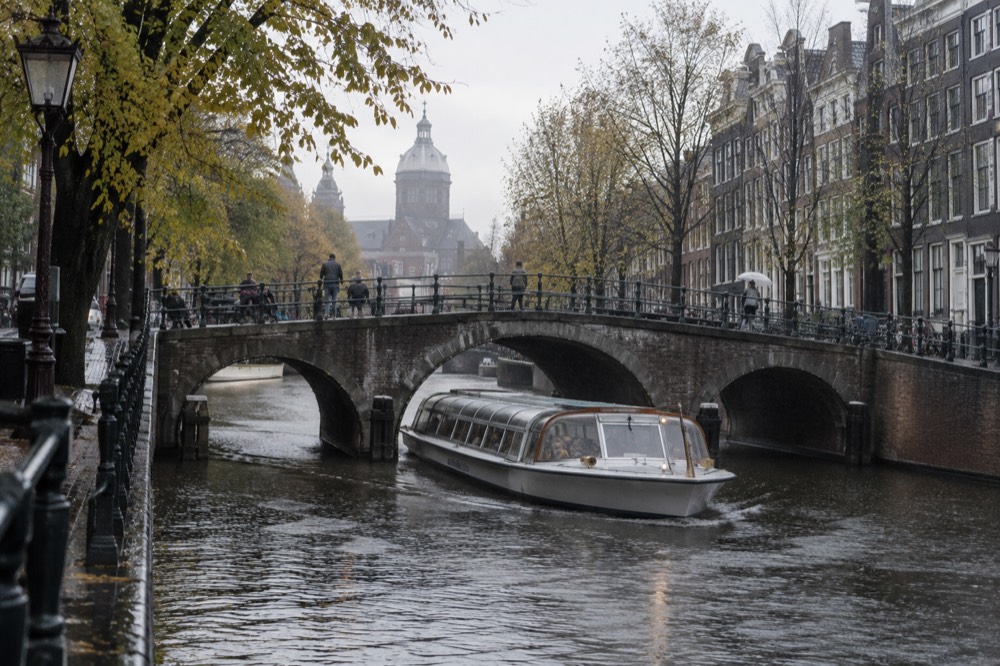
Whatever the month on your booking confirmation, the plan is the same: anchor the trip with two or three pre-booked indoor slots, keep a covered cruise in the mix because the boats sail in anything, and give the trams the job the bicycle would have done on a dry day. Rain in Amsterdam is a wardrobe problem, not an itinerary problem, and the city is built, roofed and sailed to prove it.
Common Questions About Rain in Amsterdam
What Is The Rainiest Month In Amsterdam?
No single month owns the title, but the wettest stretch generally runs through late autumn, with October and November most often named as the dampest. Amsterdam's rain is spread fairly evenly across the year, arriving as frequent light showers rather than seasonal downpours, so plan for the possibility of rain in any month.
Does Amsterdam rain all day?
Usually not. The typical pattern is changeable weather: short showers, dry spells and occasional longer stretches of drizzle, especially in autumn and winter. A full day of non-stop rain happens, but it is the exception, and the covered canal boats and museums keep going regardless.
Is Amsterdam worth visiting in winter?
Yes. The museums are at their quietest, the brown cafés are at their cosiest, and the Amsterdam Light Festival runs from 26 November 2026 to 17 January 2027, turning the darkest weeks into the most photogenic ones. Pack for rain and the season works in your favour.
Do canal cruises still run in the rain?
Yes, year-round. The standard vessels are covered saloon boats with glass roofs or enclosed cabins, and the cruise lines do not stop for ordinary rain. Only the open-boat formats leave you exposed, so check whether your cruise is open or covered before booking in the wet season.
What is the driest month in Amsterdam?
Spring, roughly April and May, tends to offer the best balance of lower rainfall, longer daylight and the tulip season, with Keukenhof open 18 March to 9 May. No month is reliably dry, but late spring comes closest to the combination most visitors want.
Should I bring an umbrella to Amsterdam?
A hooded waterproof jacket serves you better. The wind along the canals folds umbrellas regularly, and a jacket keeps your hands free for trams, tickets and museum bags. Locals overwhelmingly wear hoods rather than carry umbrellas.