Where Do Locals Go To Eat In Amsterdam?
Where Amsterdammers actually eat: the neighbourhoods, the dishes, the markets and the timings that locals really use, plus what a food tour is genuinely worth.
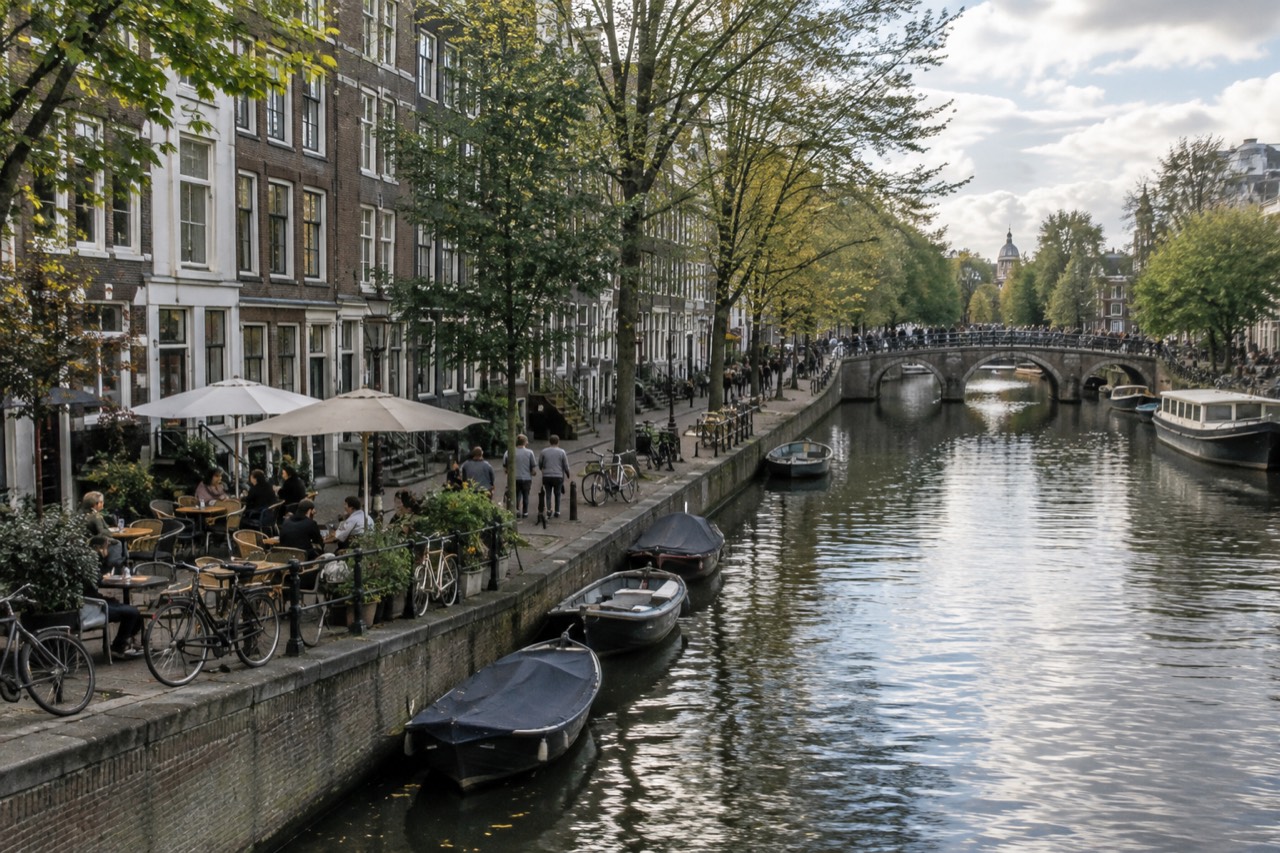
Amsterdam recorded 23.7 million tourist overnight stays in 2025, and a large share of those visitors ate every meal within five minutes of Dam Square. Amsterdammers mostly do not. The city's own eating habits cluster in a handful of neighbourhoods, around a short list of dishes, and around a daily rhythm that starts earlier than most visitors expect. This page lays out that pattern: where locals actually go, what they order, when they eat it, and how to join in without standing out.
Where Do Locals Go To Eat In Amsterdam?
Locals eat in their own neighbourhoods, not around the Dam: De Pijp for market stalls and terraces, the Jordaan for brown cafés and eetcafés, Oud-West around the Foodhallen food hall, and Amsterdam Noord for whatever has just opened. The food itself is simple Dutch fare, herring, bitterballen, stamppot, soup and sandwiches, eaten early, eaten cheaply, and often eaten standing up at a market counter rather than sitting down at all.
The first thing to understand is that the centre and the rest of the city run on different economies. The streets immediately around Dam Square and the Red Light District price for a captive audience: one visit, no repeat business. Neighbourhood restaurants two tram stops out price for regulars, because a regular who has a bad meal simply never comes back. That single difference explains most of where locals eat. An Amsterdammer will happily travel fifteen minutes for a good eetcafé and will not walk five minutes to a tourist-menu restaurant on the Damrak.
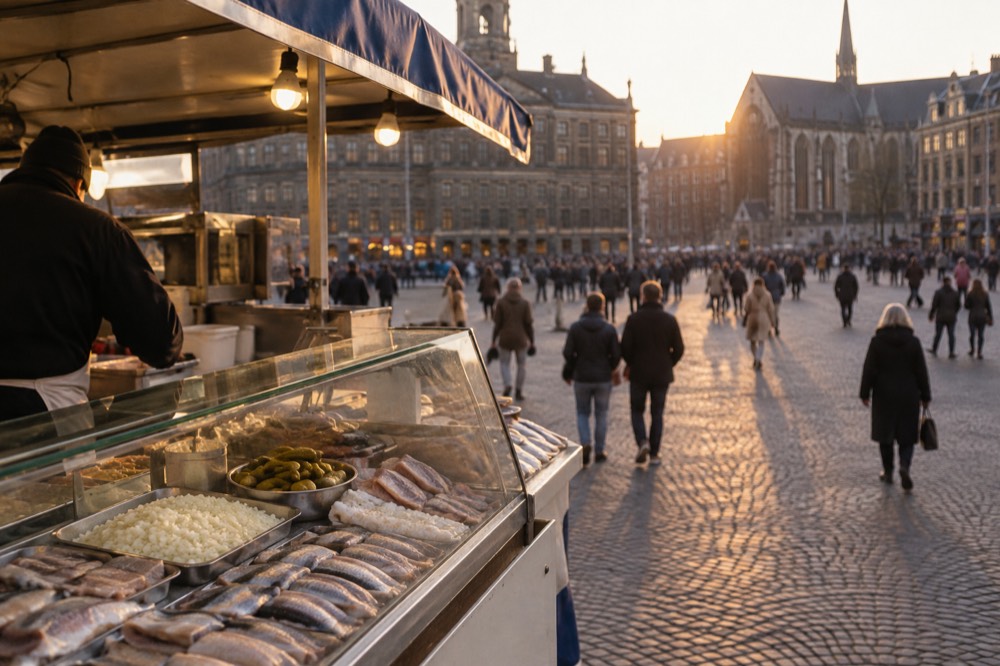
The second thing is the market habit. Amsterdam eats standing up to a degree that surprises visitors. Raw herring with onion and pickles, bought from a market stall and eaten on the spot, is a normal lunch. A plate of kibbeling, fried battered fish, from the same stall is another. The Albert Cuyp Market in De Pijp is the classic version of this, and the Albert Cuyp Market guide covers it stall by stall, but the same instinct plays out at smaller neighbourhood markets across the city all week.
The third thing is timing, which gets its own section below, because it shapes everything. Dutch dinner happens early by southern European standards, and kitchens close early with it.
If you want the pattern compressed into a single evening, a guided food walk is the shortcut. The ten-tastings food and culture walking tour runs three and a half hours with a local guide and currently rates 5.0 across 1,157 reviews, from $92. It is not cheap, but it is the fastest way to taste the shortlist of Dutch staples in one organised pass instead of hunting them one by one.
Whether you take that walk or build your own route, the same three formats keep coming up in every local answer: a museum-and-beer afternoon, a guided tasting walk, or a classic gallery visit with a long lunch either side. The three options below cover that spread, and the rest of this page explains the eating that goes around them.
Which Neighbourhoods Do Amsterdammers Actually Eat In?
Four areas carry most of the local weight: De Pijp, with the Albert Cuyp Market and a dense strip of terraces; the Jordaan, where brown cafés serve simple food late into the evening; Oud-West, whose Foodhallen collects two dozen independent kitchens under one roof; and Amsterdam Noord, the former dockland across the IJ that now turns over new openings faster than any other district. Each has its own character and its own price level.
De Pijp is the easiest one for a visitor to reach and the easiest to enjoy. A tram from the centre takes minutes, and a GVB day card at €10.00 covers the round trip, per the current fare table at GVB's official prices page. The neighbourhood's eating runs from market herring at lunch through to long terrace dinners, and the De Pijp neighbourhood guide maps the streets worth walking.
The Jordaan works differently. It is the heartland of the brown café, the small, dark, wood-panelled bar-café hybrid that serves beer and simple food to the same faces for decades. Some of them do a plate of the day, and the Amsterdam brown cafés guide explains the difference between a brown café, an eetcafé and a bar, which is not obvious from the street.
Oud-West clusters around the Foodhallen, a converted tram depot holding a hall of independent food stalls, which locals use the way other cities use a food court, except with better cooking. The Foodhallen guide covers what to expect at peak times, which is a lot of people.
Amsterdam Noord, across the water behind Centraal Station, is where the newest things open. It takes the longest to reach and rewards the trip least predictably, which is exactly why locals like it.
| Neighbourhood | What locals go there for | Best time to go | Reachable by |
|---|---|---|---|
| De Pijp | Market herring, kibbeling, terrace dinners | Daytime for the market, evenings for terraces | Tram from the centre, minutes |
| Jordaan | Brown cafés, eetcafés, simple plates of the day | Early evening onward | Walk from the centre or a short tram ride |
| Oud-West | Foodhallen food hall, cafés along the Kinkerstraat | Lunch and early dinner, avoid peak Saturday | Tram or a 25-minute walk |
| Amsterdam Noord | New openings, waterfront restaurants, festival food | Weekends, and evenings in summer | Free ferry behind Centraal Station |
One honest note on drinking culture: the city centre bans street drinking, per the official How to Amsterdam rules page, so a takeaway beer on a centre street is not the local move it might look like. Terraces and café interiors are where that belongs.
Beer is, of course, the other half of eating out here, and the country's most famous brand runs its own visitor attraction inside its original brewery. The Heineken Experience rates 4.6 across 39,581 reviews and tickets start at $23 for a visit of about an hour and a half. Locals will tell you they do not go, which is half true: they do not go twice, but plenty took visiting family once.
If beer history sounds like the right way to anchor an afternoon between meals, the box below is the direct route. Otherwise, read on: the dish list is where the real local eating starts.
What Do Locals Actually Order?
The shortlist is shorter than visitors expect: herring and kibbeling from market stalls, bitterballen with mustard in bars, thick pea soup and stamppot in winter, cheese in sandwiches rather than on boards, appeltaart with whipped cream in cafés, and Indonesian rijsttafel when the occasion calls for a proper sit-down meal. None of it is fancy, and that is precisely the point.
Bitterballen are the default bar snack, a crisp fried shell around a soft, savoury ragout, served with sharp mustard. If a café brings them to your table unasked, they go on the bill; this is normal, not a scam. Pea soup, snert, and stamppot, potato mashed with vegetable and served with a sausage, are the cold-weather staples, and their appearance on chalkboards is a reliable signal that the kitchen cooks for the neighbourhood.
The appeltaart habit deserves its own mention, because Dutch apple pie is a different object from the American one: deep, dense, tall, spiced, and served with a cloud of unsweetened whipped cream. Locals eat it mid-afternoon with coffee, not as dessert.
Rijsttafel, the Dutch-Indonesian rice table, is the one local tradition that is a full restaurant occasion, a spread of many small hot and cold dishes. It is a direct legacy of the colonial era, and it remains the standard answer to "where should we go for a proper dinner?" for a lot of Amsterdammers.
| Dish | What it is | Where locals eat it |
|---|---|---|
| Haring | Raw herring with onion and pickles | Standing at a market stall, at lunch |
| Kibbeling | Fried battered fish chunks with sauce | Market stalls and fish carts |
| Bitterballen | Fried ragout balls with mustard | Any brown café, with beer |
| Stamppot | Mashed potato with vegetable and sausage | Eetcafés, autumn through spring |
| Appeltaart | Dense spiced apple pie with whipped cream | Cafés, mid-afternoon |
| Rijsttafel | Indonesian rice table, many small dishes | Sit-down restaurants, group dinners |
The Dutch foods guide works through each of these in detail, including the stroopwafel, which locals do buy fresh from market stalls but do not, as a rule, eat by the dozen.
Do Locals Eat On The Water?
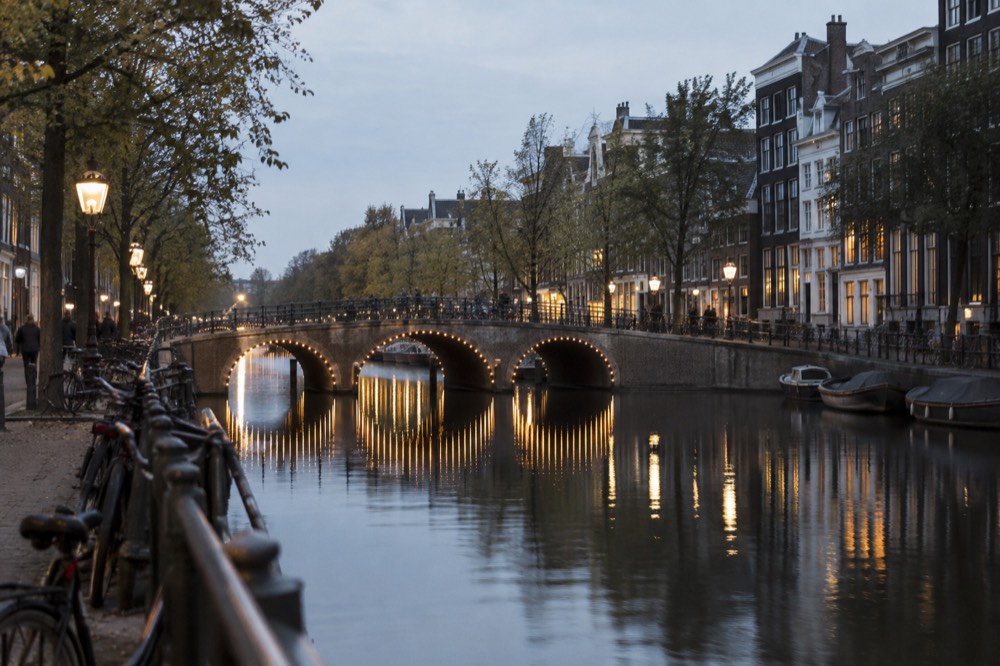
Mostly no: eating on the canals is a visitor pleasure, and locals treat a dinner cruise the way they treat the Heineken Experience, something for occasions and visiting friends rather than a Tuesday. That said, the dinner cruise is one of the few tourist formats that genuinely works in this city, because the canal ring is the reason Amsterdam looks like Amsterdam, and seeing it at table height after dark is a different experience from the walk.
The honest framing is this: a canal cruise is worth doing, and a canal cruise with dinner is worth doing once. The pizza dinner cruise runs an hour and a half with unlimited drinks, rates 4.5 across 3,046 reviews, and starts at $40. It is a visitor product, and it is a good one, but it answers a different question from the one this page asks.
The local version of eating near water is simpler: a takeaway lunch eaten on a canal-side bench, or a picnic in the Vondelpark in summer. The park is the city's back garden, and on a warm evening the lawns fill with groups sharing supermarket bags of food, which is about as local as Amsterdam eating gets. Other pages covering the same trip are gathered on Things to Do in Amsterdam.
When Do Locals Eat?
Early, by most standards: lunch around noon and often quick, dinner commonly between 18:00 and 19:30, with kitchens in many neighbourhood restaurants closing their hot food around 21:00 or 22:00. Bars stay open later, but late-night hot food is thin on the ground outside a few well-known spots, so the local habit is to eat dinner early or accept fries.
Lunch in the Netherlands is a modest meal, typically bread-based, cheese, cold meat, a fried egg, and locals often eat it at their desk or standing. The elaborate lunch is a visitor thing. Dinner is the main meal and it happens early, which is why a restaurant that looks empty at 18:00 can be full and turning tables by 20:00, and why arriving at 21:00 in a neighbourhood restaurant can mean a limited menu or a closed kitchen.
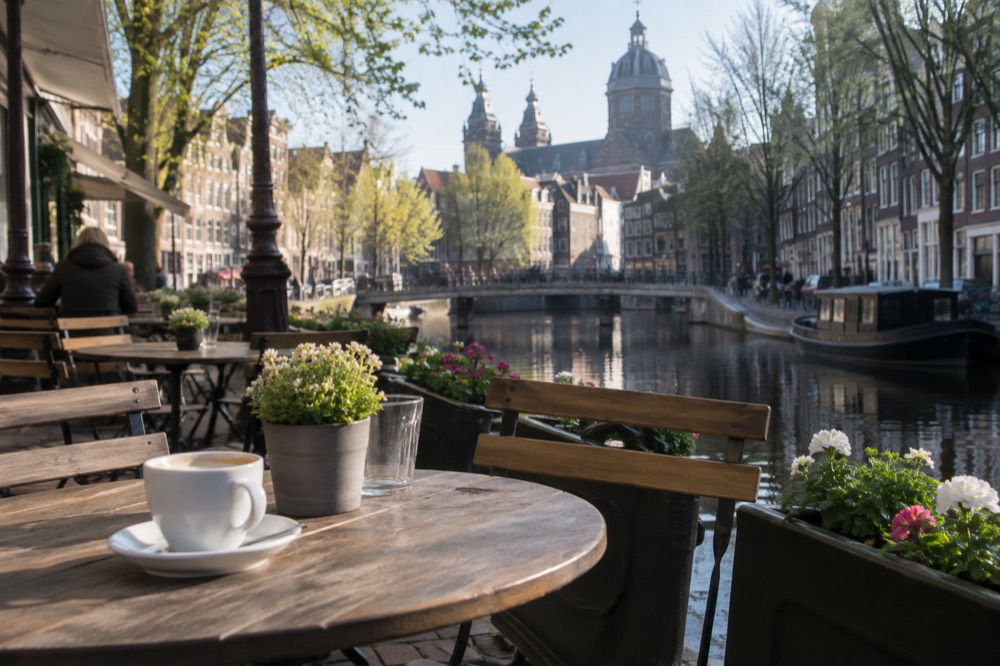
Coffee breaks are the other fixed point. The Dutch coffee culture is a sitting-down culture: a pause with one cup and often a slice of appeltaart, mid-morning or mid-afternoon. Cafés that understand this, with newspapers, unhurried service and no laptop pressure, are the ones with regulars.
For planning around these rhythms, the best restaurants guide and the where locals eat companion guide both organise the city by meal and moment rather than by cuisine, which is how an Amsterdammer would mentally sort it.
| Time | What locals are doing | Where it happens |
|---|---|---|
| 08:00 to 10:00 | Coffee and a pastry, quick and standing | Neighbourhood bakeries and cafés |
| 12:00 to 13:00 | Fast bread-based lunch or a market snack | Desks, market stalls, lunchrooms |
| 15:00 to 16:00 | Coffee break, often with appeltaart | Traditional cafés |
| 18:00 to 19:30 | Main hot meal of the day | Eetcafés and neighbourhood restaurants |
| 20:00 onward | Drinks, bitterballen, conversation | Brown cafés and bars |
How Do You Eat Like A Local Without Overspending?
Eat your main meal at lunch, eat it from a market stall, and drink your beer on a terrace rather than at a table-service restaurant: those three moves cut a food budget more than any single cheap venue will. Locals keep restaurant dinners for occasions and treat herring, kibbeling, cheese sandwiches and fries as everyday food, which is exactly why those things stay cheap.
The economics are simple. A visitor who eats every meal in the centre at dinner prices, in a city adding a 12.5 percent tourist tax to accommodation and pricing menus for one-time customers, spends several times what a local spends on the same week of food. The local pattern sidesteps all three: market lunch, neighbourhood dinner, café coffee.
One useful hybrid is the food tour as a meal. The ten-tastings walk mentioned earlier is priced as an activity, from $92, but it covers lunch, a walk and a guided introduction to the whole dish list above in one three-and-a-half-hour pass. For a first visit of two or three days, that trade can make sense, and it replaces the need to hunt down each dish separately. The Amsterdam on a budget guide breaks the wider arithmetic down day by day.
Can A Visitor Pass As A Local At Dinner?
Yes, with three habits: book for 18:30 rather than 20:30, order the plate of the day rather than building a meal from the à la carte list, and treat the café as a place to sit rather than a place to photograph. Amsterdammers are tolerant of visitors and impatient with performance, so the goal is not to fake anything, just to fit the rhythm.
The booking time matters more than anything else on the list. A table at 18:30 in a neighbourhood eetcafé puts you among the regulars; the same table at 21:00 puts you among the stragglers ordering from whatever the kitchen has left. The plate of the day, daghap or dagschotel, is the local order because it is what the cook shopped for that morning, and it is usually the cheapest hot thing on offer.
Tipping follows the same understated logic. Service is included in menu prices, and rounding up the bill is the normal gesture, a few euros on a dinner, small change on a coffee. There is no expected percentage, and nobody will chase you for more. The tipping and etiquette guide covers the specifics without inventing rules.
Finally, remember that the whole local pattern on this page exists because Amsterdam's centre is full, and that is not a metaphor: this is a city that welcomed 9.5 million accommodation guests in 2025 per Statistics Netherlands, on a resident population a fraction of that. Eating two tram stops out is not a compromise. It is how the city itself copes, and joining in is both cheaper and better.
If you are still shaping the wider trip around these meals, the same three anchors from the top of the page are worth one last look before you book anything, since they pair naturally with the eating rhythm described here.
Common Questions About Where Locals Eat in Amsterdam
Where Do Locals Go To Eat In Amsterdam?
Locals eat in their own neighbourhoods: De Pijp for markets and terraces, the Jordaan for brown cafés and eetcafés, Oud-West around the Foodhallen, and Amsterdam Noord for new openings. The food is simple Dutch fare, herring, bitterballen, stamppot and appeltaart, eaten early and often standing at a market stall.
What is the most local dish to try?
Raw herring from a market stall, eaten standing with onion and pickles, is the most local single bite in the city. Bitterballen with mustard in a brown café run it a close second, and both cost a fraction of a restaurant dinner.
Do locals eat dinner late in Amsterdam?
No. Dinner typically falls between 18:00 and 19:30, and many neighbourhood kitchens stop hot food around 21:00 or 22:00. Arriving at 18:30 puts you among the regulars; arriving at 21:00 can mean a limited menu.
Is it rude not to tip in Amsterdam restaurants?
Service is included in menu prices, so there is no obligatory tip. Rounding up the bill, a few euros on a dinner, small change on coffee, is the normal gesture, and nothing more is expected.
Are the food halls and markets touristy?
The Albert Cuyp Market and the Foodhallen draw visitors, but they are working local institutions first, especially on weekdays. Go at off-peak times and they are exactly where Amsterdammers shop and eat.
Is a food tour worth it for eating like a local?
As a one-off, yes. The ten-tastings food and culture walking tour compresses the whole Dutch dish list into a three-and-a-half-hour guided walk, from $92, and rates 5.0 across 1,157 reviews. It replaces several days of hunting each dish individually.