Where Is The Prettiest Place In The Netherlands?
Giethoorn, Keukenhof, Kinderdijk and the Amsterdam canal ring are the four strongest answers to the prettiest place in the Netherlands, and each wins in a different season.
Where Is The Prettiest Place In The Netherlands?
The honest answer is that four places share the crown, and the winner depends on when you go. Giethoorn is the prettiest village, a car-free waterland of thatched cottages and footbridges. Keukenhof is the prettiest sight, but only from late March to early May. Kinderdijk has the prettiest windmills, and Amsterdam's canal ring is the prettiest city scene in the country.
Ask ten Dutch people this question and you will get a small argument, which is part of the fun. The country is compact enough that you can see two or three of the leading candidates on a single trip, and the train network makes the rest reachable as day trips. What follows is the desk's ranking of the places that consistently win the debate, with the practical details that decide which one belongs on your itinerary.
The first thing to understand is that the Netherlands does not do dramatic. There are no mountains, no fjords and no sweeping coastlines in the tourist heartland. What it does instead is a kind of engineered beauty: polders drained by windmills, canals dug by hand in the seventeenth century, flower fields planted in stripes like a patchwork quilt. The prettiness is human-made, and that is precisely why it photographs so well.
If you are basing yourself in Amsterdam, every candidate below is a day trip or less, and the city itself belongs on the list. Before you commit, a word on timing: spring changes the answer completely, because for about seven weeks the flower fields around Lisse turn the countryside into the single most photogenic stretch of land in the country.
Why Giethoorn Tops Most Shortlists
Giethoorn, in the province of Overijssel about 90 minutes from Amsterdam, is the answer most guidebooks give first. The village has no roads through its centre: houses sit on private islands connected by more than 170 wooden footbridges, and everything moves by boat along the ditches that serve as streets. Thatched roofs, flower-lined banks and near-total silence make it the closest the Netherlands gets to a fairy tale.
The village is called the Venice of the Netherlands, though the comparison undersells how quiet it is. The boat traffic is mostly small electric sloops rented by visitors and punts pushed along by locals, and the speed is low enough that the water stays mirror-flat. The classic move is to rent a whisper boat for an afternoon and navigate the main canal, the Cornelis Soeteweg and the surrounding ditches at whatever pace the scenery demands.
The practical detail that matters most is the season. Giethoorn in July and August is busy, and the village's charm depends partly on stillness. Late spring and early autumn give you the same views with a fraction of the crowds, and winter can be magical when the canals freeze, though boat rental then is off the table. There is no entrance fee to the village itself; you pay for the boat, the parking outside the centre and whatever you spend in the waterside cafés.
Getting there under your own steam takes some planning, because the last leg involves a bus connection from Steenwijk station. That friction is exactly why guided day trips sell well. A guided option such as the Giethoorn guided day trip runs 7 to 8 hours from Amsterdam, is rated 4.8 across 575 reviews, and includes an hour-long boat cruise through the village canals plus the drive through the polders and dikes; the current price is on the operator's live listing. A fuller alternative combines Giethoorn with Volendam and Zaanse Schans in one 10-hour day, rated 4.8 across 812 reviews, from $161.
When the Answer Is Seasonal: Keukenhof and the Tulip Fields
For roughly seven weeks each spring, the prettiest place in the Netherlands is not a village or a city but a garden. Keukenhof, in the town of Lisse about 30 to 40 minutes from Amsterdam, plants around seven million bulbs across 32 hectares, and the surrounding Bollenstreek fields stripe the land with colour. The 2027 season runs from Thursday 18 March to Sunday 9 May, daily from 08:00 to 19:00.
That season is the whole story. Keukenhof is closed for the other ten and a half months of the year, and any guide that presents it as a year-round destination is wrong. The garden is an annual exhibition rather than a permanent park: it is replanted every autumn, and the blooming sequence moves from crocuses and daffodils in late March through tulips at their peak in mid-April to the last hyacinths in early May. If you want the postcard tulip fields, aim for mid-April to early May, and accept that the exact peak week depends on the weather.
The desk's advice is to book the timed ticket online before you travel, because the gate queues on a sunny Saturday in April can swallow an hour. The official Keukenhof site publishes the season dates and starts sales in mid-October, so there is no reason to gamble on availability. Combine the garden with a bike loop through the surrounding fields at Lisse, which is free and, on a still morning, arguably prettier than the garden itself.
The wider region deserves the same attention. The Bollenstreek strip between Haarlem and Leiden is where the growers actually work, and the field edges are open to walkers on signed paths. For a full route through the area, the tulip fields at Lisse and the Bollenstreek guide covers the bike loops, the bus connections and the etiquette of photographing working farmland without trampling it.
Kinderdijk or Zaanse Schans: Which Windmill Scene Wins?
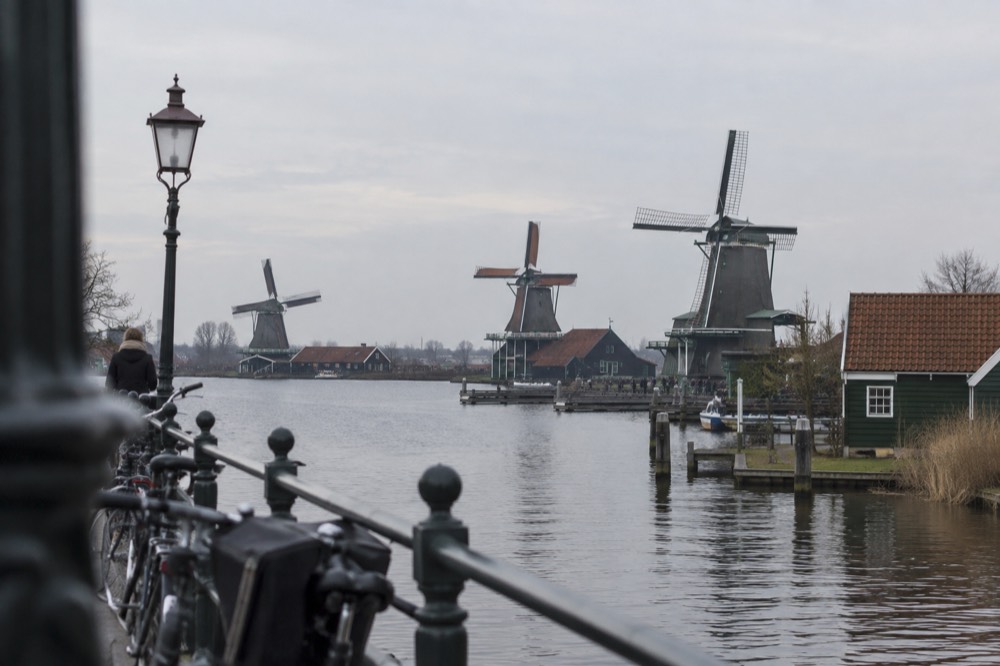
Kinderdijk, east of Rotterdam, has 19 authentic eighteenth-century windmills standing in two neat rows along the drainage canals, and it is a UNESCO World Heritage Site. Zaanse Schans, 15 minutes north of Amsterdam, has a cluster of working mills, clog workshops and cheese farms rebuilt into a walkable open-air district. Kinderdijk is the purer historic site; Zaanse Schans is the easier and more varied half-day.
The honest comparison is that they serve different travellers. Kinderdijk is a managed landscape, not a theme park: the mills are real drainage mills that kept the surrounding polder dry for centuries, and the site's visitor infrastructure is deliberately light. You walk or cycle the embankment paths, go inside one mill, and the rest is sky, water and sails. Zaanse Schans gives you the mills plus demonstrations, tastings and shops, all 15 minutes from Amsterdam Centraal by a short train and walk, which makes it the default choice for anyone short on time.
| Factor | Kinderdijk | Zaanse Schans |
|---|---|---|
| Windmills | 19 historic drainage mills, UNESCO listed | Working mills plus craft workshops |
| Travel from Amsterdam | About 90 minutes each way | About 15 minutes by train |
| Best for | Photography, quiet, engineering history | Families, short visits, tastings |
| Atmosphere | Open polder landscape, few buildings | Village street with mills above it |
The desk's verdict, for what it is worth: if you have a full day and care about the photograph, go to Kinderdijk. If you have a morning and want windmills plus cheese plus clogs without a second connection, Zaanse Schans wins on logistics alone. The Kinderdijk versus Zaanse Schans comparison goes deeper on travel times and ticketing, and the Zaanse Schans guide covers the individual mills, several of which still grind pigment, oil and mustard.
Amsterdam Itself: The Prettiest City Scene in the Country
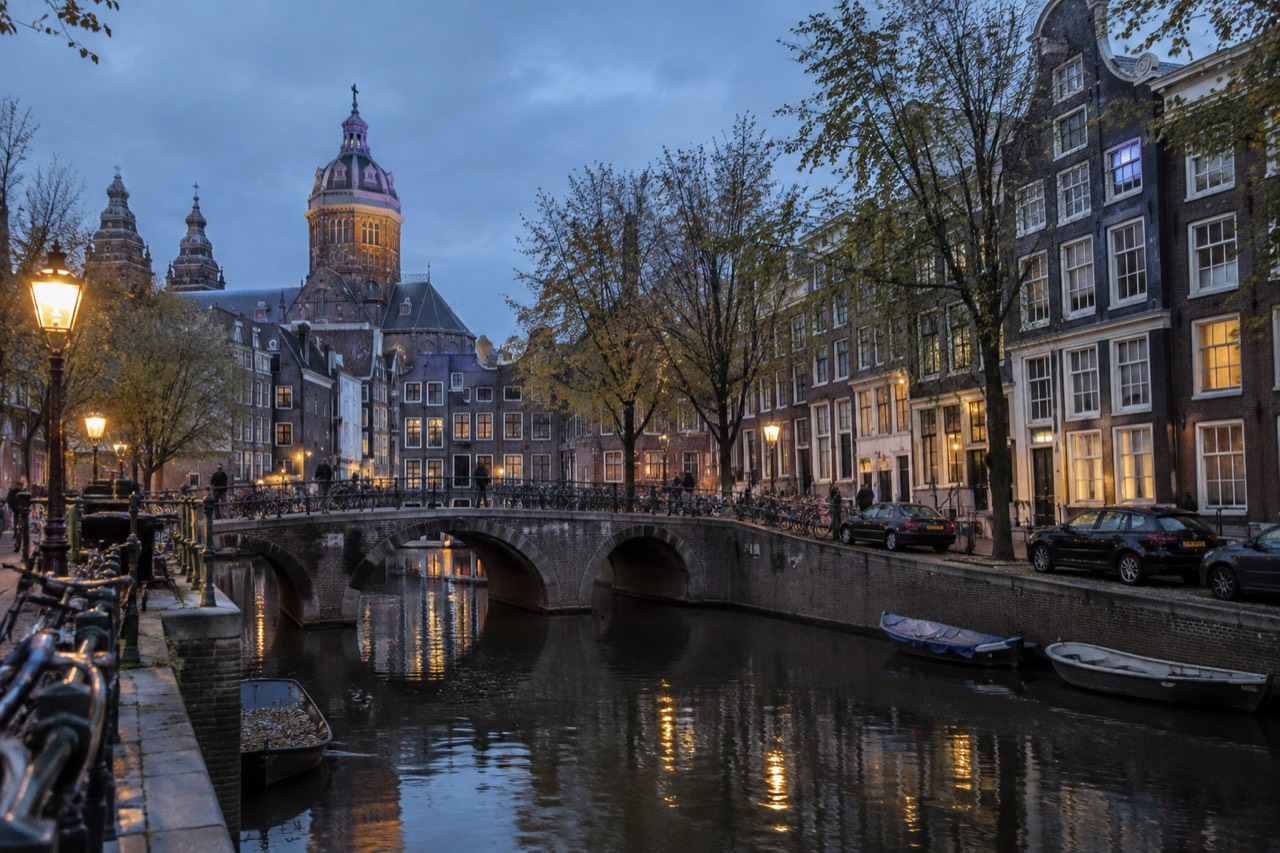
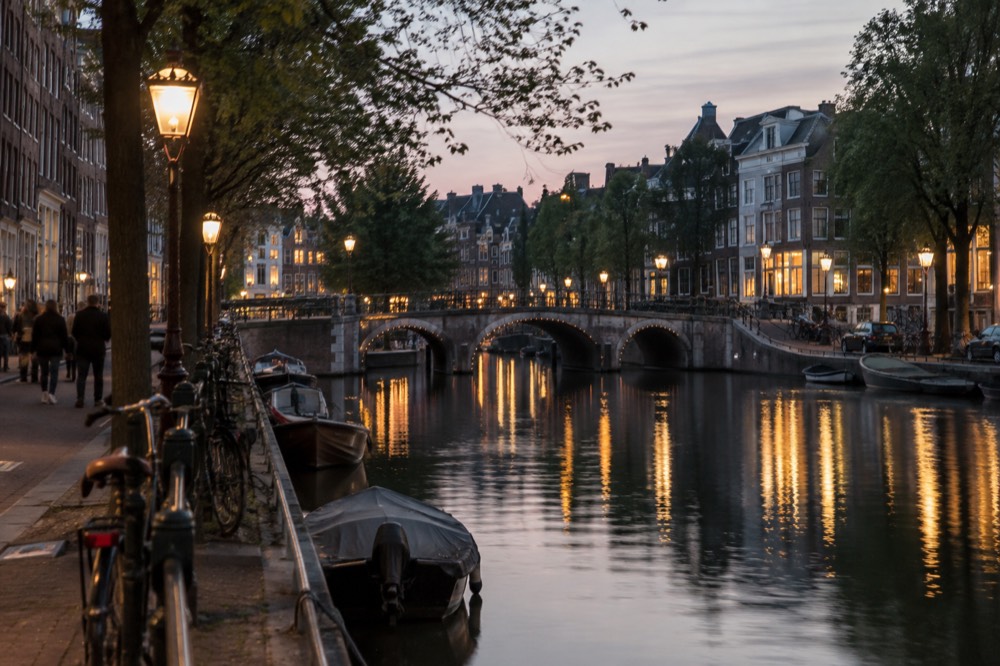
The Amsterdam canal ring, the Grachtengordel, is the strongest in-city answer to the question. The three great canals, Herengracht, Keizersgracht and Prinsengracht, were dug in the seventeenth century and lined with merchant houses whose gables, bell towers and neck fronts reflect in the water. UNESCO listed the whole ring, and no other Dutch city has a prettier core.
The trick to seeing it well is to see it from the water at least once and from the bridges at golden hour. A classic saloon boat cruise costs from $19.56 and is rated 4.8 across 33,435 reviews, and an hour on a restored wooden boat with a live guide explains what you are looking at, which gable belonged to which trade and why the houses lean. The smaller open sloops, some running small-group trips rated 5.0 across 6,546 reviews from $23.06, get you under the lowest bridges and into quieter stretches.
The prettiest single stretch, if the desk had to pick, is the bend where the Amstel meets the rows of narrow houses near the Magere Brug, the Skinny Bridge, especially in early evening when the lamps come on. The Amsterdam canal ring guide maps the best walks bridge by bridge, and the Skinny Bridge guide covers the classic viewpoint from the east bank.
The city's beauty is not only outdoors. The Van Gogh Museum holds the world's largest collection of his work, more than 200 paintings, 500 drawings and 750 letters, and the gallery spaces are among the calmest rooms in the city. Adult entry is €25 and under-18s go free, but every visitor needs a pre-booked timed ticket, and slots sell out, so check availability well before your travel dates. The museum's own ticket page is the place to confirm current hours, which run to 18:00 daily and 21:00 on Fridays outside a few listed exceptions.
The Prettiest Small Towns Within Reach of Amsterdam
If the question means a town rather than a village or a garden, the strongest candidates are Edam, Delft and Haarlem. Edam is a small cheese-market town of canals and drawbridges, Delft is a complete historic centre of gabled houses and a cathedral tower, and Haarlem gives you a big-city main square, a monumental church and a canal-lined core, all 15 minutes from Amsterdam by train.
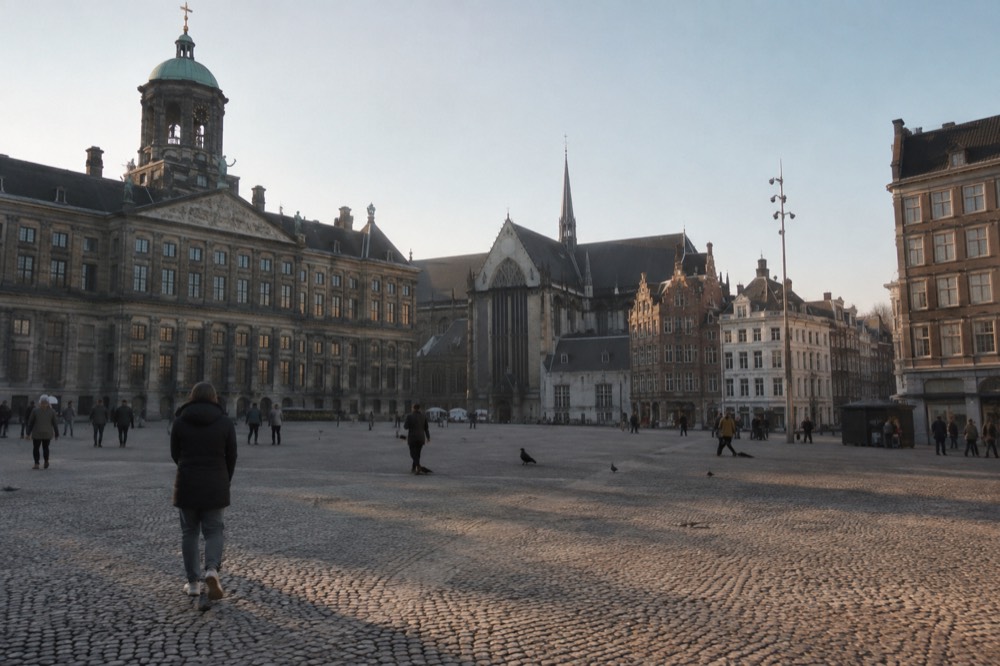
Each has a different character. Edam is the quietest and the smallest, famous worldwide for its cheese but barely a village in scale, with a Wednesday morning cheese market in summer and a centre you can walk end to end in twenty minutes. Delft is the most complete: the Markt square, the Nieuwe Kerk and the Oude Delft canal give it the feel of a small Amsterdam without the crowds, and the Delftware workshops are the reason most visitors come. Haarlem is the easiest, and its Grote Markt on a Saturday morning, with the church organ that a young Mozart played, is one of the finest squares in the country.
| Town | Travel from Amsterdam | Prettiest feature | Best half-day plan |
|---|---|---|---|
| Edam | Bus, about 40 minutes | Cheese warehouses on the dam | Canal walk plus cheese tasting |
| Delft | Train, about an hour | Oude Delft canal and the Markt | Markt square and a Delftware workshop |
| Haarlem | Train, about 15 minutes | Grote Markt and Sint-Bavo church | Saturday market and hofjes courtyards |
| Utrecht | Train, about 27 minutes | Two-level canals with wharf cellars | Walk the Oudegracht and climb the tower |
Utrecht deserves a place in the argument even though it is a city, because its canals are unique: the Oudegracht runs two levels deep, with the old wharf cellars now serving as waterside cafés you descend to by wide stone steps. It is the one Dutch canal city that does not feel like a smaller Amsterdam, and it is closer to Centraal than most Amsterdam neighbourhoods are to each other. The Utrecht guide covers the tower climb, the museum quarter and the walkable centre.
How to Choose Based on Your Trip
Match the prettiest place to your dates and your time budget. In April, go to Keukenhof and the Bollenstreek first. With one free day from Amsterdam, choose between Giethoorn for the village fantasy and Kinderdijk for the windmill photograph. With half a day, Zaanse Schans or Haarlem. In winter, when the gardens close and the villages grey over, the canal ring and the small museums carry the answer.
The season really does decide it. Mid-March to mid-May is the country's beauty peak, and everything else on the list is the second-best answer during those weeks. From June to September, the standing ranking applies: Giethoorn for the day trip, the canal ring for the city, Edam or Delft for a shorter outing. From November to early January, the Amsterdam Light Festival, running 26 November 2026 to 17 January 2027 in its 15th edition, gives the canals a second season, and the smaller towns go quiet in a way that suits travellers who like their beauty undisturbed.
Budget barely changes the ranking, because the Dutch highlights are cheap to see. The canal views are free, a GVB day ticket for the trams is €10.00, and even the train to Haarlem costs less than a lunch. The expensive items are the guided day trips, and even those top out around the price of a dinner for two. What you are really allocating is hours: Giethoorn eats a full day, Kinderdijk most of one, and everything else fits a morning.
Whatever you pick, the desk's one firm recommendation is to book the two things that genuinely sell out, the Keukenhof timed slot in season and the Van Gogh Museum's timed entry, before you leave home. Everything else on this list can be decided on the day, and half the pleasure of the Netherlands is turning up somewhere small, like the Things to Do in Amsterdam collection of day trips and neighbourhoods, and finding it prettier than the photographs suggested.
Common Questions About the Prettiest Place in the Netherlands
Where Is The Prettiest Place In The Netherlands?
There is no single winner, but the four strongest answers are Giethoorn for a village, Keukenhof for a spring garden, Kinderdijk for windmills and the Amsterdam canal ring for a city scene. Each is at its best in a different season, and all four are reachable from Amsterdam in a day or less.
Is Giethoorn worth the trip from Amsterdam?
Yes, if you have a full day to spend. The village is about 90 minutes away and its car-free, bridge-linked centre is unlike anywhere else in the country. Guided day trips from Amsterdam run 7 to 8 hours and include a boat cruise through the village canals, which saves you the bus connections.
When can you see the tulip fields at their prettiest?
The field peak is roughly mid-April to early May, inside the Keukenhof season of 18 March to 9 May. The exact peak week depends on the weather each year, so if tulips are the whole point of your trip, plan for late April and book refundable accommodation.
Which is prettier, Kinderdijk or Zaanse Schans?
Kinderdijk has the more spectacular and more authentic windmill landscape, 19 historic drainage mills in a UNESCO-listed polder. Zaanse Schans is far easier from Amsterdam, about 15 minutes by train, and adds clog and cheese demonstrations, so it suits families and short visits better.
What is the prettiest city in the Netherlands?
Amsterdam's canal ring is the usual answer and the desk agrees, especially the Herengracht and the Amstel bend near the Skinny Bridge at dusk. Utrecht is the strongest alternative, with its unique two-level canals and wharf-cellars, and Delft is the prettiest small city.
Can you see the prettiest places without a car?
Yes, all of them. Haarlem, Delft and Utrecht are direct train rides, Zaanse Schans is a short train hop, and Giethoorn and Kinderdijk are covered by guided day trips with transport included. A GVB day ticket at €10.00 handles everything inside Amsterdam itself.