Which Dutch Town Is Famous For Windmills?
Zaanse Schans is the Dutch town famous for windmills, and this guide covers what to see there, how to get there from Amsterdam, and how it compares with Kinderdijk.
Which Dutch Town Is Famous For Windmills?
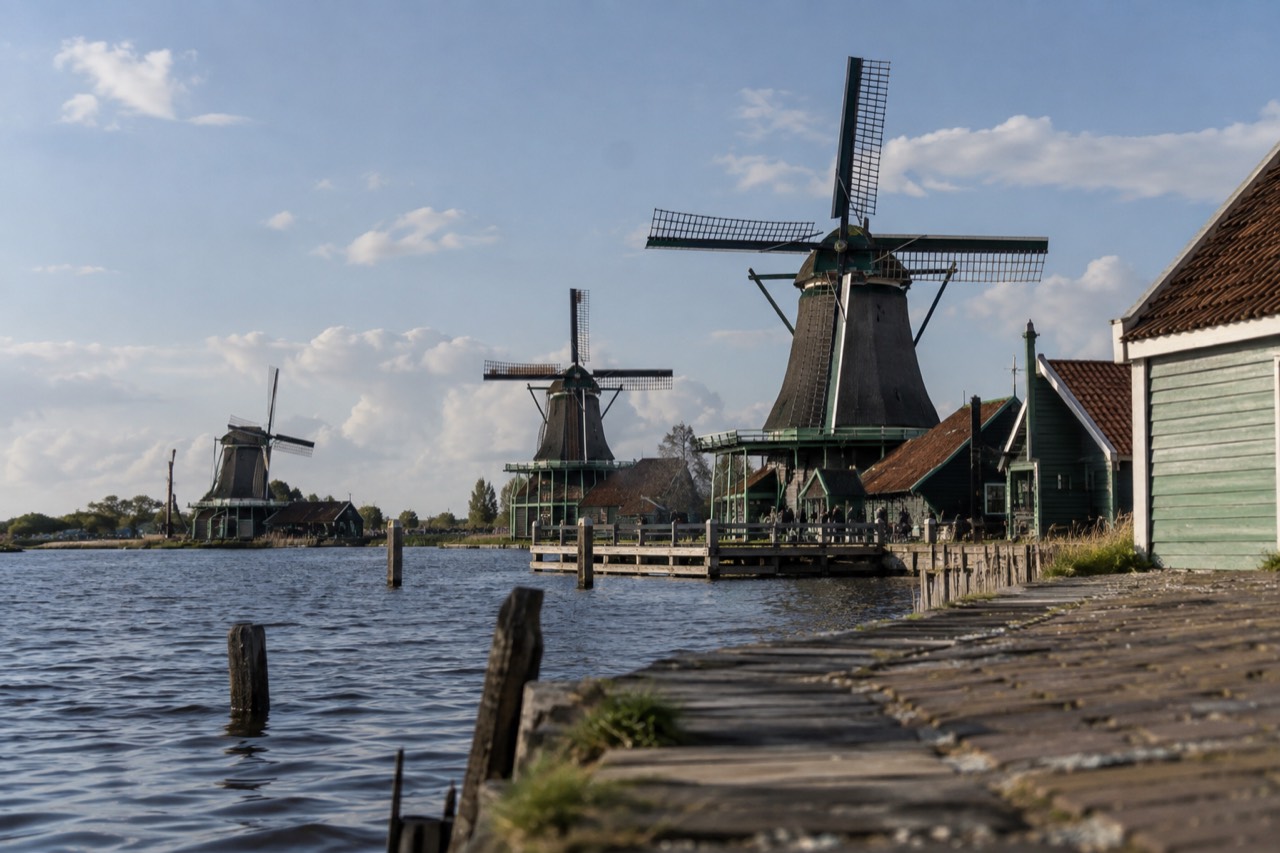
The Dutch town famous for windmills is Zaanse Schans, a preserved historic quarter in Zaandam about 20 minutes north of Amsterdam, where a cluster of working windmills stands along the Zaan river beside green wooden houses from the eighteenth and nineteenth centuries. Kinderdijk, near Rotterdam, is the other famous windmill site, with 19 mills in one Unesco-listed landscape, but the town most visitors mean when they ask this question is Zaanse Schans.
The name trips people up, so it helps to be precise. Zaanse Schans is not a town in the administrative sense: it is a museum quarter assembled from genuine historic buildings that were moved, piece by piece, from across the Zaan region in the mid twentieth century and rebuilt on the riverbank. The wider town is Zaandam, a place with its own industrial history and a railway station you can reach from Amsterdam Centraal in roughly 20 minutes. When guidebooks and tour listings say "windmill village," they mean this riverside strip of mills, cheese farms, clog workshops and timber houses painted in the deep green that has become the visual shorthand for the old Netherlands.
What makes Zaanse Schans the answer rather than a postcard version of one is that the windmills there still work. The Zaan region was arguably the first industrial landscape of the world, with more than a thousand mills along the river at its peak in the eighteenth century, grinding pigment, sawing timber for shipbuilding, hulling barley, pressing oil and making paper. A handful of that tradition survives on the Schans: a pigment mill, a sawmill, an oil mill and a paper mill among them, several of which you can enter and watch turning. This is not a windmill-shaped gift shop. It is a functioning piece of pre-steam industry, and the interiors smell of wood shavings, linseed and chalk in a way no reconstruction manages.
The practical draw is obvious: it is close. You can leave Amsterdam in the morning, spend two or three hours among the mills, and be back in the city for lunch, which is precisely why coach tours bundle it with Volendam, Marken and Edam. If you are planning a wider trip built around Things to Do in Amsterdam, Zaanse Schans is the easiest possible day trip, and the one most first-time visitors actually take.
If you would rather have someone else handle the buses and the timing, a guided day tour is the straightforward option, and the most-booked windmill trips sell out in peak season. These three are among the most popular experiences visitors book from Amsterdam:
Why Is Zaanse Schans the Windmill Place Everyone Photographs?
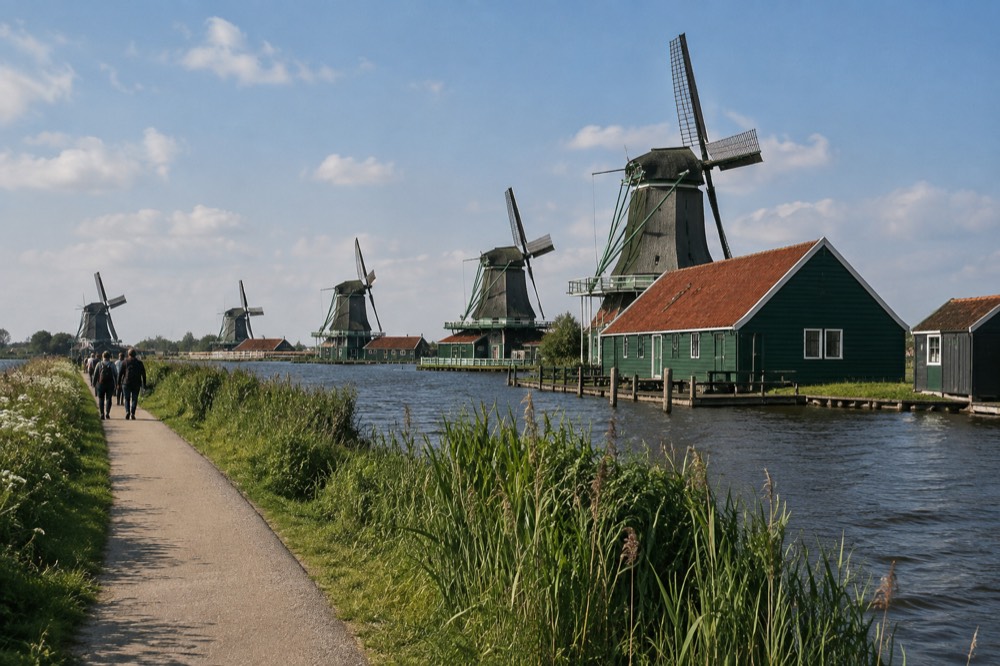
Zaanse Schans is the most photographed windmill site in the Netherlands because its mills stand in a compact, walkable row directly beside the water, with historic houses, a clog workshop and a cheese farm between them, so one short walk delivers the complete Dutch tableau. Roughly 20 minutes from Amsterdam by train, it absorbs a large share of the region's day-visit traffic, and the morning light on the Zaan river is the shot everyone is there for.
The photography logic is worth understanding, because it explains the crowds. The mills face the river in a line, and the far bank is open meadow, so from the eastern path you get water, mills, green timber houses and sky in one frame with nothing modern in the background. Arrive before 10:00 and you share that frame with a handful of people; arrive at 13:00 in July and you queue for the same spot. The site is free to walk around, and only the mill interiors and small museums carry an entrance fee, which is why it works for every budget from a free morning stroll to a full guided excursion.
The mills themselves each have a trade, and it is worth knowing which is which before you go, because the interiors differ sharply. De Kat, the pigment mill, is the last remaining wind-driven paint mill in the world and still grinds raw pigments for artists' paints. Het Jonge Schaap is a working sawmill, where you can watch logs cut by wind power. De Zoeker is an oil mill pressing linseed, and De Bonte Hen grinds the ingredients for the mustard sold on site. Small entrance fees apply at each mill, paid at the door, and the mills stop turning when the wind is wrong, so a still day is a quieter day inside.
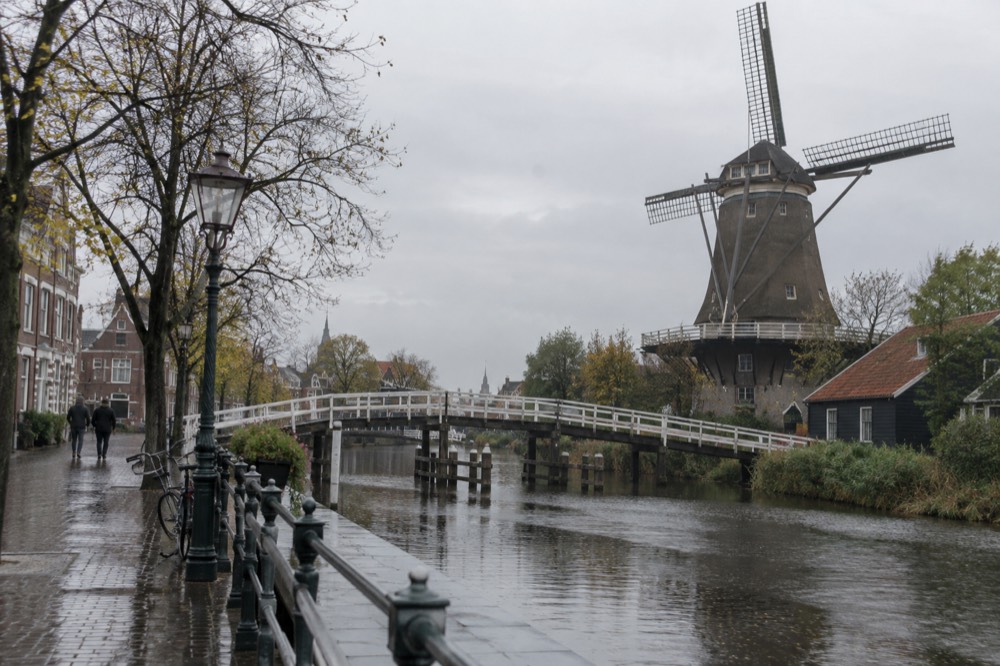
Around the mills sits the rest of the hamlet: the clog workshop where a machine carves a wooden shoe in front of you, the cheese farm offering tastings, the bakery museum, and a cluster of shops in buildings that were genuine dwellings and workshops elsewhere in the Zaan district before being relocated. The honest way to think about it is open-air museum rather than village, and the honest criticism is that the commercial layer is thick in summer. Even so, the mills are real, the craft demonstrations are real, and the wind that turns them is the same wind that powered the region's economy three centuries ago. For a deeper look at the site itself, our Zaanse Schans visitor guide covers the mills, museums and timing in detail.
How Do You Get to Zaanse Schans from Amsterdam?
Zaanse Schans sits about 20 minutes from Amsterdam by direct train to Koog-Zaandijk, followed by a flat 10 to 15 minute walk, or by a regional bus from Amsterdam Centraal station, so it is a realistic half-day trip on public transport. A GVB day pass does not cover the journey, because Zaanse Schans is outside the city's transport zone; an NS train ticket or the regional bus fare applies instead.
The train is the simplest option for most travellers. Trains run from Amsterdam Centraal toward Zaandam and Alkmaar and stop at Koog-Zaandijk, from which a signposted path leads along the water to the mills. The walk is flat, paved and stroller-friendly, and passes modern Zaandam housing before the historic strip appears, which is a useful reminder that people live and work in this town, it is not a theme park. Buses are slower but drop you closer, and several operators run the route, check the current timetable before you travel.
Driving is possible, with car parking at the site for a fee, but in high season the approach roads clog by late morning, and the train spares you the queue. Cycling is the option most Dutch visitors would choose, and the route from Amsterdam is flat, well signed and takes about an hour each way, though the prevailing wind on the return leg is not always your friend.
For visitors who prefer not to manage any of this, the guided coach tours solve the problem completely, and the most-booked option bundles the mills with the fishing villages. The Zaanse Schans, Volendam and Marken guided tour, rated 4.5 across 20,839 reviews and priced from $34, covers three stops in five and a half hours, while the longer Zaanse Schans, Edam, Volendam and Marken version, rated 4.8 across 5,559 reviews from $45, adds the cheese town of Edam over six and a half hours. The small-group Zaanse Schans windmills, clogs and cheese tour, rated 4.7 across 2,868 reviews from $50, is the choice if you want the mills without the village-hopping.
What About Kinderdijk, the Other Famous Windmill Site?
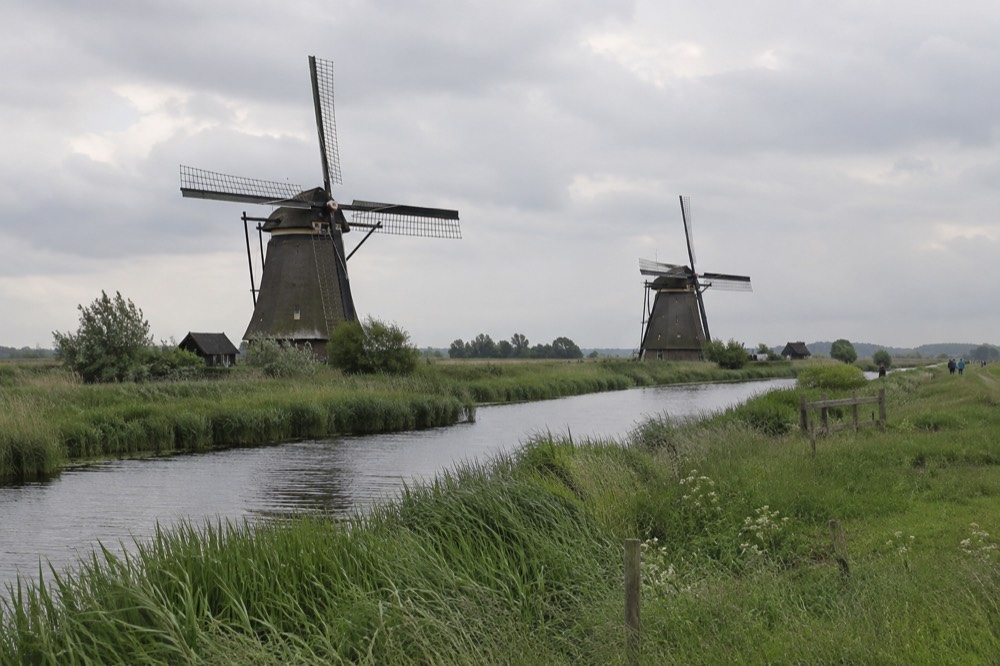
Kinderdijk, about an hour south of Amsterdam near Rotterdam, is the other Dutch windmill site with a global reputation: 19 mills built in the eighteenth century to drain the Alblasserwaard polder, now a Unesco World Heritage site. Zaanse Schans has working industrial mills clustered beside a river; Kinderdijk has drainage mills spread across open polder at a monumental scale, and the two experiences are different enough that windmill fans often do both.
Kinderdijk's mills are drainage mills, and that is the whole story of the place. The Netherlands exists below sea level in large parts because land like the Alblasserwaard was drained and kept dry, and before steam and electric pumps, that work was done by windmills lifting water in steps from polder to canal to river. The 19 mills at Kinderdijk, three of which are open to visitors, are the largest surviving group of their kind, and the Unesco listing recognises the engineering system rather than a pretty view, though the view is genuinely spectacular at sunrise and in the late afternoon.
The comparison is a genuine planning question for visitors with limited days, and the honest answer is that they suit different travellers. Zaanse Schans wins on accessibility, craft demonstrations and the classic compact photograph, at the cost of crowds and a commercialised strip. Kinderdijk wins on scale, silence and landscape, at the cost of distance: you are looking at a full day from Amsterdam, and the mills there drain water rather than make products, so there is less to go inside and see. Our head-to-head piece on Kinderdijk versus Zaanse Schans breaks the decision down by travel time, cost and what you actually want from a windmill day.
| Site | What the mills did | Distance from Amsterdam | Best for |
|---|---|---|---|
| Zaanse Schans | Industrial: sawing timber, grinding pigment, pressing oil and paper | 20 minutes by train | Half-day trips, working mill interiors, families |
| Kinderdijk | Drainage: lifting water out of the polder, 19 mills in one system | About an hour, near Rotterdam | Full-day trips, landscape photography, Unesco heritage |
| Both in one trip | Industrial and drainage traditions side by side | Two separate days is realistic | Dedicated windmill and engineering enthusiasts |
Can You See Windmills and Tulips on the Same Day?
Yes, but only in spring: combined Keukenhof and Zaanse Schans tours exist, and Keukenhof itself opens only from 19 March to 10 May each year, so the tulips-and-windmills day is a seasonal product, not a year-round option. The combined guided tour runs about nine hours, pairing the gardens with the mills, and the same window covers the tulip field peak, which generally falls between mid-April and early May.
The season constraint is the thing to get right, and it is the single most common planning mistake. Keukenhof, the famous garden park in Lisse, roughly 30 to 40 minutes from Amsterdam, opens for about eight weeks each spring and closes completely outside them. A tour that promises tulips in October is promising you a greenhouse. The official Keukenhof site publishes the season dates, and the 2027 season runs from Thursday 18 March to Sunday 9 May, daily from 08:00 to 19:00.
The combined Keukenhof and Zaanse Schans guided day tour, rated 4.6 across 1,337 reviews and priced from $107, is the straightforward way to do both in one day: gardens in the morning, mills in the afternoon, with transport and a guide handled. Doing it independently is also possible, but it means two long bus or train legs and a tight timetable, and in the peak tulip weeks the gardens alone can consume half a day. If tulips are the priority, our Keukenhof guide covers tickets, timing and how to beat the coach crowds, and the tulip fields of Lisse and the Bollenstreek piece explains where the field photography actually happens.
| Windmill day trip from Amsterdam | Duration | Rating | From |
|---|---|---|---|
| Zaanse Schans, Volendam and Marken guided tour | 5 hours 30 minutes | 4.5 across 20,839 reviews | $34 |
| Zaanse Schans, Edam, Volendam and Marken | 6 hours 30 minutes | 4.8 across 5,559 reviews | $45 |
| Zaanse Schans windmills, clogs and cheese, small group | 3 hours 30 minutes | 4.7 across 2,868 reviews | $50 |
| Keukenhof and Zaanse Schans guided day tour, spring only | 9 hours | 4.6 across 1,337 reviews | $107 |
Which Windmill Day Trip Should You Actually Book?
Book the small-group Zaanse Schans tour if the mills are your main interest, the Zaanse Schans, Volendam and Marken trip if you want the classic Dutch postcard day, and the Keukenhof combination only if you are travelling between mid-March and early May. Price differences are modest at the short end, from $34 to $50, so the real decision is duration and how many stops you want, not cost.
Duration is the honest deciding factor. Five and a half hours with three stops means roughly an hour at each, which is enough for photographs and a tasting but not for going inside more than one mill. The three-and-a-half-hour small-group option spends its whole budget at Zaanse Schans, which suits travellers who care about the mills as machines rather than as scenery. The spring combination is a long day at nine hours, and it is worth it only when the tulips are actually in the ground.
One pairing worth planning in advance is a windmill morning with an afternoon back in the city. The mills are at their best before the coaches arrive, and the same is true in reverse for Amsterdam's big museums, which empty out in the late afternoon. If that plan appeals, a Van Gogh Museum entry ticket, rated 4.7 across 57,096 reviews and priced from $31, is the natural afternoon half of it: the museum requires a pre-booked timed entry slot for every visitor, so the slot you choose is the schedule you keep, and an evening slot after a morning among the mills is a genuinely good day.
Whatever you book, check the cancellation terms on the live listing before you pay: most day trips from Amsterdam can be cancelled free up to a day or so before departure, which matters in a country where the weather forecast can change the whole shape of a plan. The windmills turn in the rain, but the photographs do not, and a free-cancellation booking lets you move the day without losing the fare.
Common Questions About Dutch Windmill Towns
Which Dutch Town Is Famous For Windmills?
Zaanse Schans, the preserved windmill quarter in Zaandam about 20 minutes north of Amsterdam, is the Dutch town famous for windmills. Kinderdijk, near Rotterdam, is the other famous site, with 19 Unesco-listed drainage mills, but Zaanse Schans is the one most visitors mean and the easiest to reach from Amsterdam.
Is Zaanse Schans worth visiting, or is it a tourist trap?
The commercial layer is thick in summer, but the windmills are genuine working industrial mills, several of which you can enter for a small fee, and the craft demonstrations, clog carving, cheese making and pigment grinding, are real. Go early, before 10:00, and the experience is far closer to the historic site than the gift shop.
Can you visit Zaanse Schans without a tour?
Yes. A direct train from Amsterdam Centraal to Koog-Zaandijk takes about 20 minutes, followed by a flat 10 to 15 minute walk to the mills, and walking around the site itself is free. Only the mill interiors and small museums charge entrance fees, paid at the door.
Which is better, Zaanse Schans or Kinderdijk?
Zaanse Schans suits a half-day trip and offers working industrial mills with interiors to explore. Kinderdijk suits a full day and offers monumental scale, 19 drainage mills in one Unesco polder landscape, with more walking and fewer crowds. Windmill enthusiasts often do both on separate days.
When can you see windmills and tulips on the same day?
Only in spring. Keukenhof opens from 19 March to 10 May, and the 2027 season runs 18 March to 9 May, daily 08:00 to 19:00. Combined Keukenhof and Zaanse Schans tours only operate in that window, with the tulip field peak generally falling between mid-April and early May.
Do the windmills at Zaanse Schans still work?
Yes. The mills on the site still perform their original trades by wind power, including sawing timber, grinding pigment for artists' paints, pressing linseed oil and making paper, though they stop turning when the wind is too weak or too strong, so a still day means a quieter visit inside.