Why Is Utrecht So Famous?
Utrecht is famous for its Dom Tower, two-level canals with wharf cellars, its historic peace treaty and its café-lined Oudegracht. Here is why it rivals Amsterdam.
Why Is Utrecht So Famous?
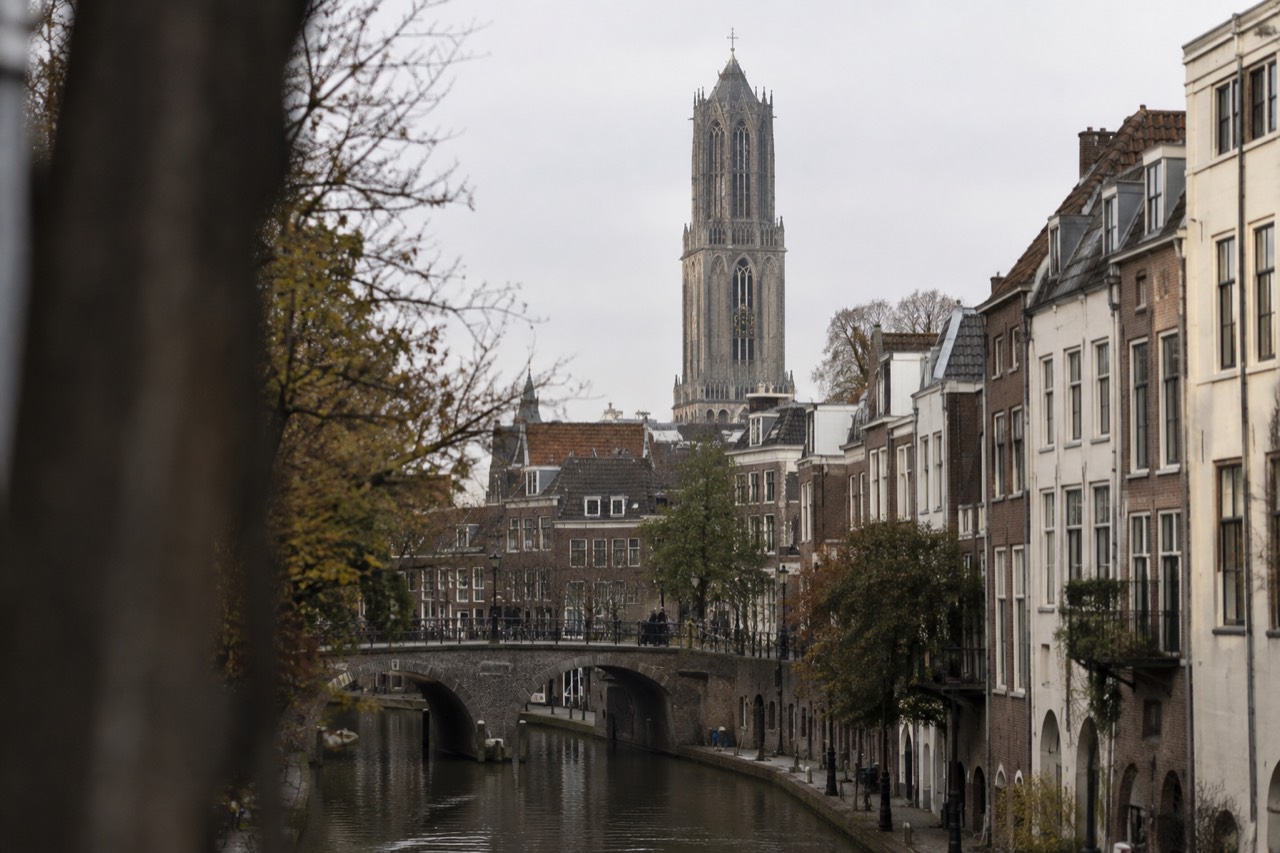
Utrecht is famous for four things: the Dom Tower, the tallest church tower in the Netherlands and the defining landmark of the city's skyline; the Oudegracht, a canal with a unique second water level whose medieval wharf cellars now house cafés and bars; the great peace treaty signed in the city, which ended the War of the Spanish Succession; and a lively university culture packed into a walkable medieval centre. Together they make Utrecht the city Amsterdammers quietly name when asked where they would rather spend a Sunday.
The fame starts with geography. Utrecht sits at the crossroads of the Dutch rail network, so nearly every intercity journey in the country passes through it, and it is a short direct train ride from Amsterdam. That position is not an accident: the Romans founded the settlement as a frontier post on the Rhine, and the city grew around its churches long before Amsterdam drained its first canal. Utrecht was the most important ecclesiastical centre of the medieval Netherlands, and the Dom Tower, begun in the early 14th century, was the physical expression of that power. When you stand in the Domplein and see the tower standing apart from the truncated nave of the cathedral, you are looking at the aftermath of a tornado in 1674 that destroyed the nave and left the tower permanently divorced from its church. Few European cities have a more dramatic piece of accidental urban design.
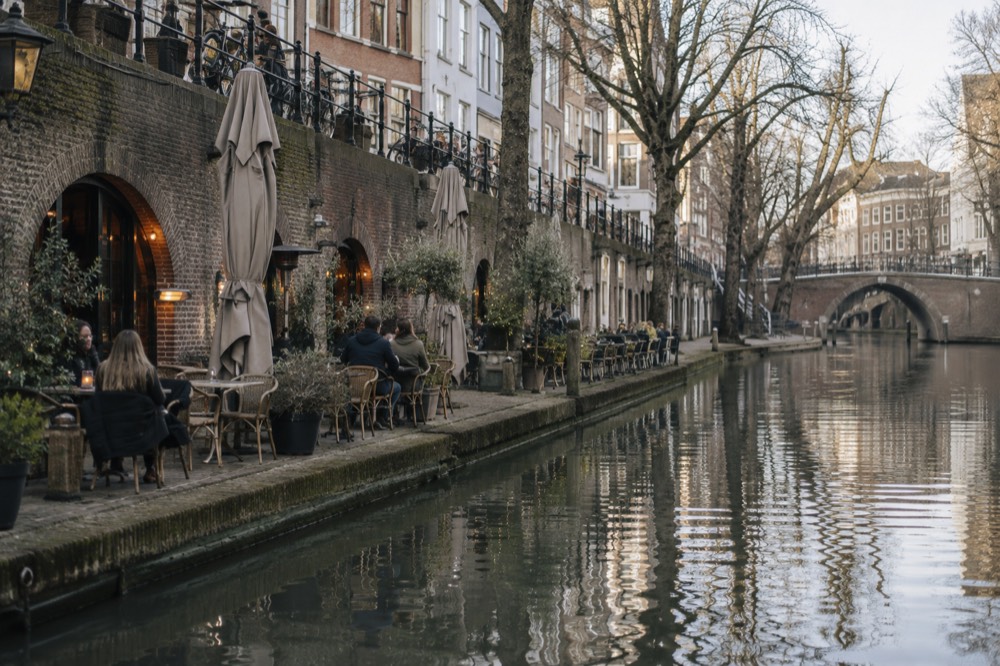
The second pillar of Utrecht's reputation is the Oudegracht itself. Most Dutch canals run at a single level with streets alongside; Utrecht's run two storeys deep. The medieval warehouses and cellars that once stored goods at the waterline have been converted into restaurants, bars and craft shops, so the lively part of the street sits below street level, at the water's edge. On a summer evening the lower quay is one of the best dining terraces in the Netherlands, and it exists nowhere else at this scale. Amsterdam's canal ring is grander and UNESCO-listed, and our guide to the Amsterdam canal ring, the Grachtengordel covers why, but Utrecht's version is more intimate and, in the view of many Dutch visitors, more fun.
Third, history. The peace treaty signed in Utrecht in the early 18th century is one of the foundational diplomatic agreements of modern Europe, and it gave the city a permanent place in every European history book. Fourth, culture: Utrecht is a university city, home to one of the largest universities in the country, founded in the 17th century, and its student population keeps the café and music scene running year-round. It is also the birthplace of Miffy, the rabbit drawn by Utrecht author and illustrator Dick Bruna, and the character is so beloved that the city museum devotes serious space to her.
For travellers staying in Amsterdam, all of this sits close enough for a comfortable day out. The comparison with the capital is unavoidable, and it is worth doing honestly: Amsterdam recorded 23.7 million tourist overnight stays in 2025, according to the city's own research service, alongside 21.9 million day visits, per Onderzoek en Statistiek Amsterdam. Utrecht shares the same country and the same canal DNA but a fraction of the visitor crush, which is exactly why so many people who have done Amsterdam twice are now told to try Utrecht instead. If your trip is anchored in Amsterdam and you are building a day-trip shortlist, our best day trips from Amsterdam guide places Utrecht in context alongside the windmills and harbour towns.
What Makes Utrecht Different From Amsterdam?
The differences are structure and scale. Utrecht's canals have a two-level design with functioning wharf cellars, Amsterdam's are single-level with gabled merchant houses; Utrecht's centre is smaller and almost entirely medieval, Amsterdam's is a 17th-century ring around a port town; Utrecht feels like a lived-in student city, Amsterdam feels like a capital that happens to be beautiful. Same country, same water, very different rhythm.
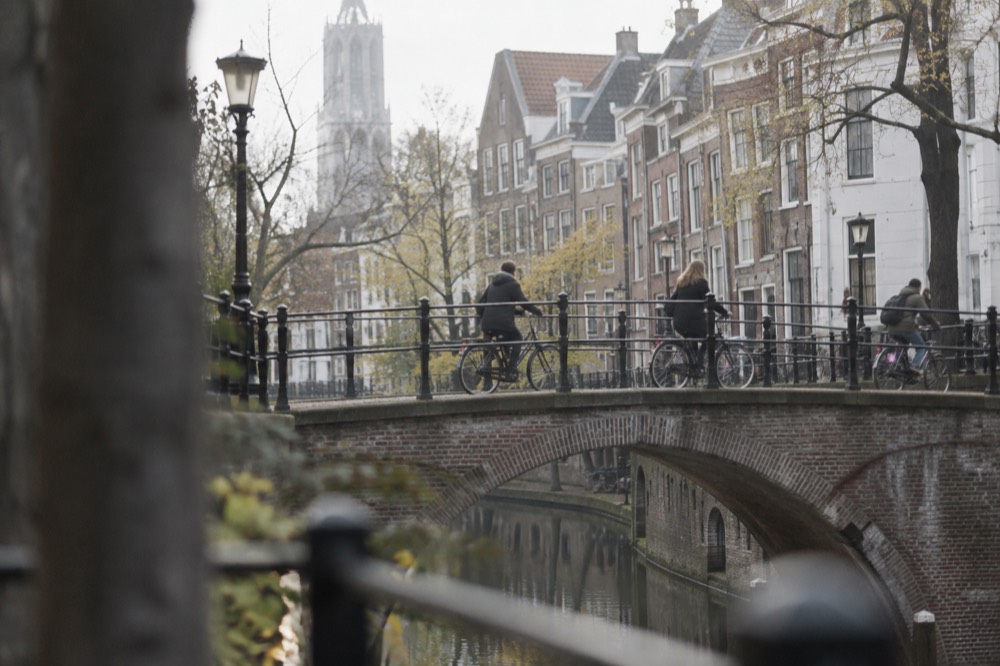
Start with the water. In Amsterdam, the canal ring was engineered for global trade in the Golden Age: wide water, deep enough for cargo, lined with the warehouses and homes of merchants who grew rich on it. In Utrecht, the canals were engineered for the medieval city's needs, and the wharf level below the street is the surviving proof. That single structural difference changes how you experience each city. In Amsterdam you look at canals from bridges and boat decks; in Utrecht you descend into them, and the water becomes a place you occupy rather than a view you consume. The distinction sounds small until you have had dinner at a table a metre above the waterline while cyclists pass overhead on the street above you.
Then there is the fabric of the streets. Amsterdam's centre burned and was rebuilt, expanded and re-planned around its ring of three great canals. Utrecht's core survived with its medieval street pattern more or less intact, so the lanes around the Dom are narrow, crooked and dense in a way Amsterdam's centre mostly is not. The Dom Tower dominates everything: it is visible from streets across the city, and locals use it as a compass. Amsterdam has no single equivalent; the closest experience is climbing the Westerkerk tower near the Anne Frank House, which offers a panorama over the Jordaan but nothing like the medieval gravity of the Domplein.
Scale is the third difference, and it matters for how tired you get. Utrecht's sights cluster within a ten-minute walk of the Dom, so a visitor can see the tower, the Oudegracht, the museum quarter and the railway station museum hall in one unhurried day. Amsterdam rewards three or four days and punishes anyone who tries to compress it into one. Utrecht is the city you do in a day and feel you have genuinely seen; Amsterdam is the city you do in a week and leave with a list.
| Feature | Utrecht | Amsterdam |
|---|---|---|
| Canal design | Two-level, with wharf cellars at the waterline now used as cafés and shops | Single-level ring of canals lined with 17th-century merchant houses |
| Defining landmark | Dom Tower, standing separate from its truncated cathedral nave | No single tower; the canal ring as a whole is the icon |
| Centre character | Compact, medieval street plan, student-city energy | Larger, Golden Age expansion, capital-city pace |
| Visitor pressure | Busy but walkable, quieter in the evenings | 23.7 million overnight stays recorded in 2025 |
| Best pace | One full day | Three to four days |
A note on the practical side for anyone planning to do both: the I amsterdam City Card, which covers over 70 museums and GVB transport within Amsterdam, has no validity in Utrecht, and its transport inclusion explicitly stops at the city boundary, per the card's own usage page on iamsterdam.com. Treat the two cities as separate tickets. The Van Gogh Museum and the Anne Frank House are both excluded from that card as well, so if Utrecht's day trip leaves you back in Amsterdam with museum ambitions, pre-booked timed entry is the way in.
What Are the Must-See Sights in Utrecht?
The must-sees are the Dom Tower and Domplein, the Oudegracht wharf cellars, the Museum Catharijneconvent for Dutch religious art, the Railway Museum housed in the former main station, and the Sonnenborgh observatory bastion. Add a walk through the Pandhof cloister behind the cathedral and a full lap of the inner canal ring, and you have the essential Utrecht inside a single unhurried day of walking. Every one of them sits within a short stroll of the Dom, which is exactly why the city rewards a day-tripper so well.
The Dom Tower comes first, and not just alphabetically. It is the tallest church tower in the Netherlands, and climbing it is the one unmissable paid experience in the city: the guided ascent passes the old belfry and the carillon, and the platform delivers a view over the whole medieval street plan and, on clear days, well beyond the city limits. Book the climb ahead in peak season, because tour group sizes are limited. At the base, the Domplein sits on the exposed foundations where the cathedral nave stood before the 1674 storm, and the square's pavement markings trace the lost church at full scale. It is the best piece of public archaeology in the country. The rest of the planning pages sit on Things to Do in Amsterdam.
The Oudegracht is second and needs no ticket at all. Walk its length from the east to where it bends south, descend at any of the stairways to the wharf level, and pick a terrace. The cellars were working warehouses for centuries, and their conversion into hospitality is what makes Utrecht's canal culture feel distinct from Amsterdam's: in the capital you sit beside the water, in Utrecht you sit inside the water's architecture. The best hours are late afternoon into evening, when the lower quays fill and the tower catches the last light.
| Sight | What It Is | Time Needed | Ticket Needed? |
|---|---|---|---|
| Dom Tower | Medieval cathedral tower, tallest in the country, guided climbs only | About an hour plus queue | Yes, book ahead |
| Oudegracht wharf cellars | Two-level canal with café-lined medieval cellars at the waterline | A leisurely evening | No |
| Domplein and Pandhof | Cathedral square tracing the lost nave, plus a quiet Gothic cloister | Thirty minutes | No |
| Museum Catharijneconvent | National museum of Christian art and culture in a former convent | Ninety minutes to two hours | Yes |
| Railway Museum | National rail collection inside Utrecht's former main station building | Half a day with children | Yes |
| Sonnenborgh | 16th-century bastion with an observatory and city views | An hour | Yes |
The museums deserve more credit than the day-trip literature gives them. Museum Catharijneconvent holds the national collection of religious art in a setting that survived the Reformation more or less intact, and it is the place to understand why Utrecht was the church capital of the northern Netherlands before Amsterdam was anything at all. The Railway Museum, built into the grand 19th-century station that Utrecht outgrew, is one of the best family museums in the country and a fitting tribute to the rail hub that made the city rich. And for art of a more recent vintage, the Centraal Museum, in a medieval convent complex, holds the world's largest Miffy collection alongside design and old masters.
Utrecht's cultural weight also comes from its literary and artistic residents. Dick Bruna created Miffy here in the 1950s, and the rabbit's clean graphic lines were drawn in a studio a short walk from the Oudegracht for over half a century. The city leans into this heritage with a dedicated museum space, and it is a genuinely charming stop for families, more so than most Amsterdam souvenir experiences.
For travellers whose interest in Dutch art runs deeper than a day trip can satisfy, the heaviest collections sit back in Amsterdam. The Van Gogh Museum holds over 200 paintings, 500 drawings and more than 750 letters, and it rates 4.7 across 57,096 reviews, with entry from $31 per person on the live listing. You can Check availability before you leave for Utrecht in the morning, since timed entry is required for every visitor.
Is Utrecht Worth a Day Trip From Amsterdam?
Yes, for most travellers Utrecht is one of the easiest and most rewarding day trips from Amsterdam: the cities are connected by frequent direct trains, the journey is under half an hour, the whole centre is walkable from the station, and the day costs far less than a second museum day in the capital. It suits first-timers who have seen Amsterdam's big three museums and anyone who wants the Dutch canal experience without the crowds.
The logistics are the easy part. Utrecht Centraal is the largest and best-connected station in the country, and direct trains run between it and Amsterdam throughout the day, with journey times well under half an hour on the fastest services. You do not need a car, and you should not take one: parking in Utrecht's centre is deliberately difficult, and the station's bicycle parking garage, one of the largest in the world, tells you how the city expects you to arrive. Tap in and out with a contactless bank card on the train exactly as you would elsewhere in the Netherlands, and check the operator's live schedule for engineering works on weekends.
What a day looks like: arrive mid-morning, climb or photograph the Dom Tower, walk the Oudegracht's wharf level to a terrace for lunch, spend the afternoon in one museum (Catharijneconvent for art, the Railway Museum for children), and finish with drinks in a wharf cellar before a direct train back. It is a full day, but nothing in it requires booking more than the tower climb and one museum slot. That simplicity is a real part of Utrecht's appeal: unlike Amsterdam, where the Anne Frank House releases tickets online only, six weeks ahead, from the museum's own site, and no reseller can sell you one, a Utrecht day can be decided the night before.
Budget-wise the day is modest. There is no Utrecht equivalent of Amsterdam's 12.5 percent tourist tax on hotel nights, because you are not staying overnight, and the main costs are the return train fare, the tower climb and one museum ticket. Eating in a wharf cellar costs about what a mid-range Amsterdam dinner costs, and the portions are student-city generous. If you are stretching a longer Netherlands itinerary, Utrecht also makes a calmer base than Amsterdam, though for most first-time visitors the capital's transport links and evening options still win, a trade-off we cover in where to stay in Amsterdam.
The honest verdict: if you have three days in Amsterdam and have not yet seen the Rijksmuseum, the Van Gogh Museum or the Anne Frank House, do those first. If you have done them, or you have a spare day and a rail pass, Utrecht is the best single day out the region offers, and it will leave you understanding why Amsterdammers keep the recommendation to themselves.
When Is the Best Time to Visit Utrecht?
Late spring through early autumn is the best window: the wharf-cellared terraces open properly from around May, summer brings the festival season, and September and October deliver the student city at full energy without peak-season crowds. Winter is atmospheric around the Dom but cold on the water, and the terrace culture that makes the Oudegracht so special largely hibernates until the warm weather returns. Plan around the terraces, because they are the experience that defines the city.
The terrace test decides it. Utrecht's signature experience, sitting at water level in a medieval cellar while the canal slides past, needs warm weather and long evenings, so May to September is when the city performs. Summer weekends are the busiest, especially around the festivals that fill the city's squares, but Utrecht's crowds are nothing like Amsterdam's, and even July feels manageable after a few days in the capital. If tulips are on your agenda, note that the season is anchored by Keukenhof, which opens only from 19 March to 10 May each year and is in the opposite direction from Utrecht, so a spring itinerary can pair one day in the bulb fields with a separate Utrecht day rather than trying to force both into one.
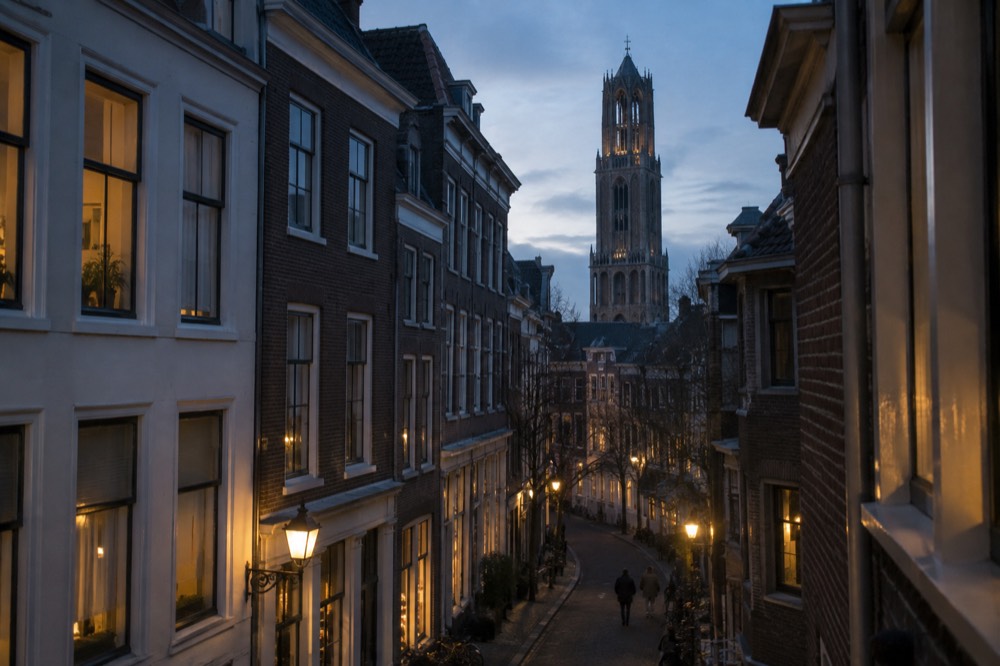
Autumn is the connoisseur's pick. The university term is running, the cultural calendar is at its densest, and the wharf terraces stay open into October on mild days. The light is softer for photographing the Dom Tower from the canals, and hotel rates across the region dip after the summer peak. Winter has one genuine draw: the Dom Tower and the Oudegracht under early darkness, with the cellars glowing, is a beautiful scene, and the Christmas period adds markets to the squares. But the city's outdoor magic is water-level and water needs company, so unless you are combining it with a winter Amsterdam trip, aim for the warmer months.
Common Questions About Utrecht
Why Is Utrecht So Famous?
Utrecht is famous for the Dom Tower, the tallest church tower in the Netherlands, its unique two-level canals with wharf cellars turned into cafés, the great peace treaty signed in the city, and a big university scene in a compact medieval centre. It is the city Amsterdammers recommend when they want somewhere beautiful but calmer than the capital.
Is Utrecht Better Than Amsterdam?
Neither is better outright. Amsterdam has the bigger museums, the UNESCO canal ring and the international energy; Utrecht has the wharf-level canal experience, a more medieval street plan and far fewer tourists. Many visitors who have already done Amsterdam's highlights prefer a day in Utrecht.
How Far Is Utrecht From Amsterdam?
The two cities are connected by frequent direct trains, and the fastest services take well under half an hour. Utrecht Centraal is the largest station in the Netherlands, so connections are excellent throughout the day, and no car is needed.
Can You Do Utrecht in One Day?
Yes. The Dom Tower, the Oudegracht wharf cellars, the Domplein and one museum fit comfortably into a single day, since almost everything sits within a ten-minute walk of the centre. Book only the tower climb and a museum slot in advance.
What Food Is Utrecht Known For?
Utrecht's food identity is its setting more than a single dish: the wharf-cellared restaurants along the Oudegracht serve classic Dutch café food, from bitterballen to stews, at water level. The student population keeps the cheap-eats scene strong, and the city has a well-regarded craft beer culture.