Eastern Docklands Amsterdam: A Guide to Oostelijk Havengebied
Amsterdam's Eastern Docklands turn a former harbour into the city's most modern residential architecture, all a short tram ride from the centre.
Short answer
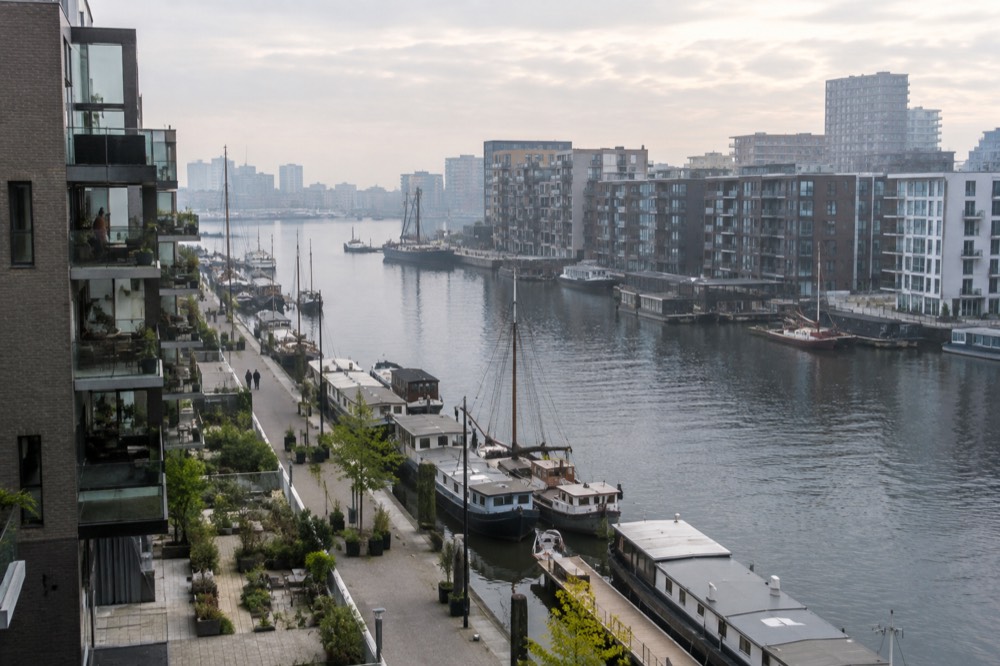
The Eastern Docklands (Oostelijk Havengebied) are the former harbour islands east of Amsterdam's centre, rebuilt since the 1990s as residential neighbourhoods of striking modern architecture. Java-eiland, KNSM-eiland and Borneo-Sporenburg are the three to see. A GVB 24-hour ticket costs €10.00, and NEMO Science Museum sits at the area's western edge.
Amsterdam's eastern harbour islands were built for cargo, not for visitors. When container shipping outgrew the city's docks in the 1970s and 1980s, the port moved to the North Sea coast and left a chain of artificial islands stranded a short walk from the centre. Instead of demolishing them, the city spent the following decades turning them into housing, and the result is the most concentrated display of contemporary architecture in Amsterdam. The Eastern Docklands, in Dutch Oostelijk Havengebied, now hold some of the city's most photographed residential streets.
This is not a museum quarter or a nightlife district, and that is exactly its appeal. Visitors who want the classic canal-side Amsterdam should start with the UNESCO canal belt around the Grachtengordel, then come here for the contrast: wide water, low-rise experimentation, and a part of the city that most itineraries skip. For orientation on the wider city, the Amsterdam Centrum city centre guide covers the districts these islands sit behind.
What Is the Eastern Docklands in Amsterdam?
The Eastern Docklands are the string of former harbour islands immediately east of Amsterdam's centre, running from the Oosterdok around NEMO Science Museum out to the IJ river mouth. The three residential islands are Java-eiland, KNSM-eiland and the paired Borneo-Sporenburg, all built on reclaimed harbour basins from the late 19th century onward and redeveloped for housing from the 1990s.
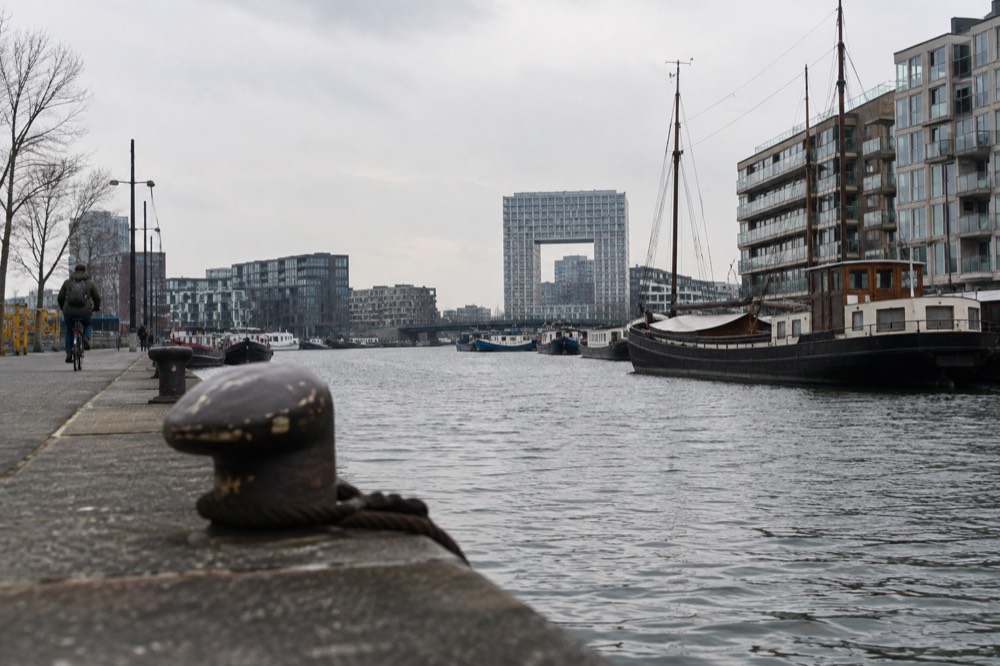
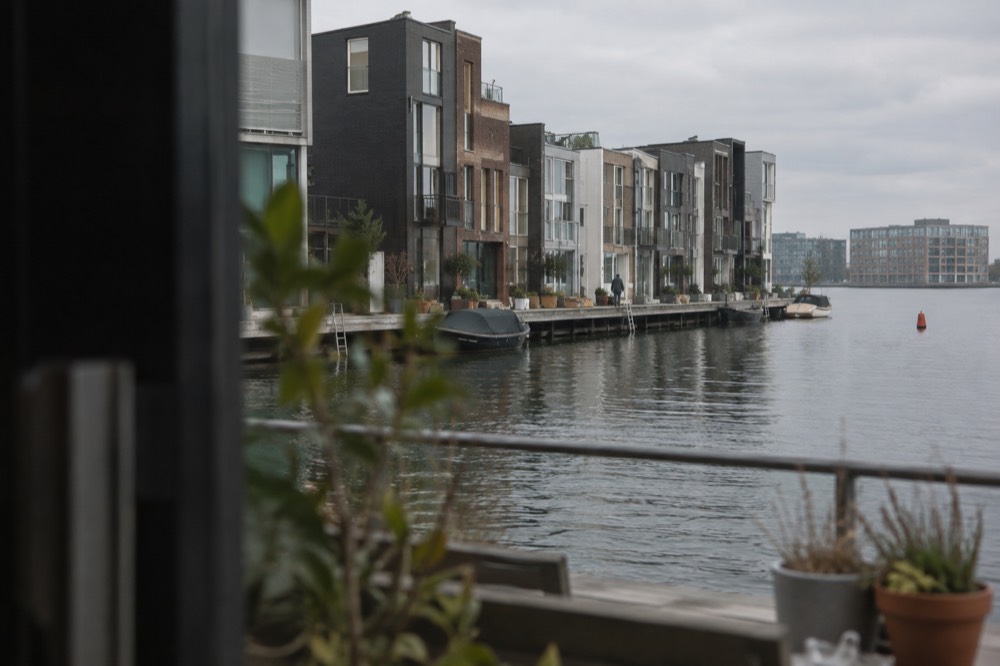
The name Oostelijk Havengebied translates literally as "eastern harbour area", and the harbour past is still visible everywhere. Crane tracks, warehouse shells and quay walls were retained deliberately as the skeleton of the new neighbourhoods. KNSM-eiland takes its name from the Koninklijke Nederlandsche Stoomvaart-Maatschappij, the steam shipping company whose dock stood here. The architecture is the draw: on Borneo-Sporenburg, rows of narrow three-storey homes on peninsulas were designed by different architects to individual briefs, producing a streetscape of wildly varied facades that has become a favourite of architecture tours.
The area sits within easy reach of the centre but feels like a separate, quieter city. Distances are walkable between islands, and the water between them carries houseboats, ferries and small boats rather than cargo ships. Visitors short on time often pair a docklands walk with Amsterdam Noord and the NDSM Wharf, which lies directly across the IJ and shares the same post-industrial story on a larger, rougher scale.
Best Things to Do in the Eastern Docklands
The core activity here is an unhurried architecture walk: the peninsular houses of Borneo-Sporenburg, the KNSM-eiland boulevard, and the bridges of Java-eiland take two to three hours on foot. Add NEMO Science Museum at the western end, the A'DAM Lookout across the water, and a canal cruise back toward the centre, and the docklands fill a full day without a single queue.
Start on Java-eiland, the island closest to the centre, where two striking pedestrian bridges designed in the 1990s span the open water and the housing blocks face onto a canal cut through the middle of the island. Walk east along the quay to KNSM-eiland, which has the most harbour character of the three: a long central boulevard, old harbour buildings converted to cafes, and views across the IJ. The far end brings you to Borneo-Sporenburg, where the low-rise peninsulas begin. The streets here reward slow looking, because the point of the design is the variation between neighbouring houses.
For visitors who prefer a guide to a map, the area's scale makes it an easy extension of a standard city walk. The Absolutely Amsterdam introductory walking tour covers the central highlights and runs 2 hours 30 minutes, leaving the afternoon free to continue east under your own steam. The docklands are flat, paved and stroller-friendly, which is not true everywhere in a city of cobbles; families planning more of the city should read the three days in Amsterdam with kids itinerary for how the area slots into a wider plan.
Museums and Attractions on the Docklands' Doorstep
The anchor attraction is NEMO Science Museum, which stands at the Oosterdok on the docklands' western edge: entry is a flat €21.50 for everyone aged 4 and over, under-4s go free, and its roof terrace is reachable free of charge from the street. Across the IJ, the A'DAM Lookout charges €16.50 online or €18.50 at the counter. The big Museumplein names are a tram ride west.
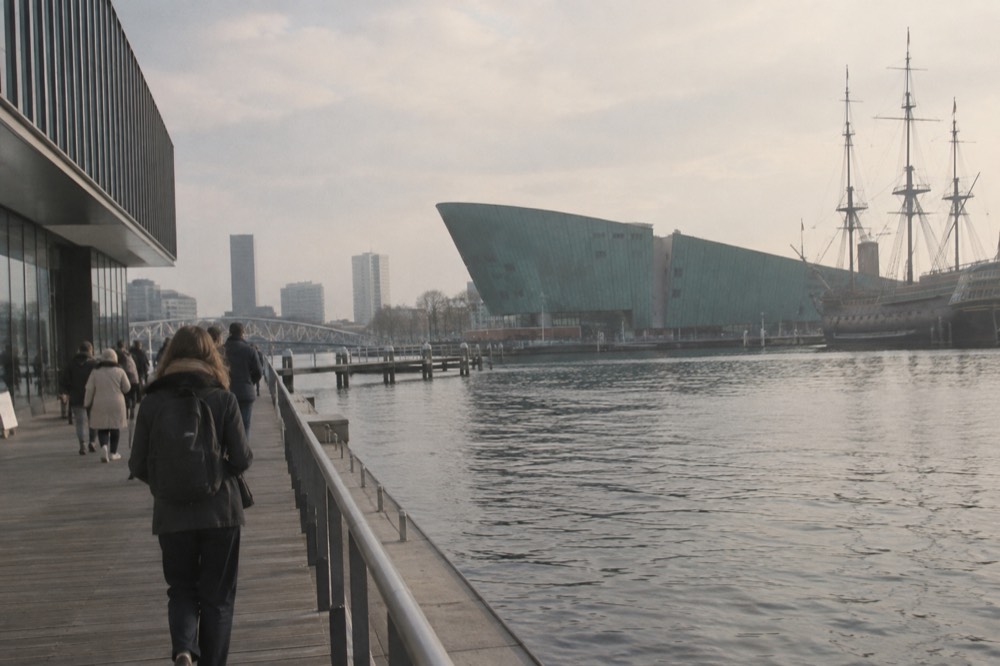
NEMO is the Netherlands' largest science museum, and its green copper hull is the first thing most visitors see of the eastern waterfront. The museum's own visitor page states the flat €21.50 admission for ages 4 and up and free entry for ages 0 to 3, with tickets carrying a start time. Its roof terrace is a genuinely underused viewpoint: the museum's own press page confirms the roof is free to reach via the steps from the street or the lift in the entrance hall, with no museum ticket needed.
The A'DAM Lookout sits across the IJ at the base of the A'DAM Tower, reached by the ferry behind Centraal Station. The tower's ticket page lists adult entry at €18.50 at the counter or €16.50 online, with the "Over the Edge" swing at €8.50 on site or €7.50 online for anyone at least 1.20 m tall. A ticket that includes one drink is also sold on the live listing from $24. Looking back at the docklands from this height is the best way to read the islands' layout, so it works well either before or after the walk below.
Visitors who want the heavyweight museums usually combine the docklands morning with a Museumplein afternoon. The Van Gogh Museum charges €25 for adults with under-18s free, and its own visit page states that every visitor must pre-book a timed entry ticket; a skip-the-line ticket from $31 (4.7 across 57,096 reviews on the live listing) covers a reserved slot. The Van Gogh Museum guide and the Rijksmuseum guide cover both in depth, including how timed entry works in practice.
How to Get to the Eastern Docklands
Trams and metro link the docklands to the centre in under 15 minutes, and a GVB single-hour ticket costs €3.40 while the 24-hour ticket is €10.00. Contactless bank card payment works on all GVB services with a base fare of €1.16 plus €0.217 per kilometre. The islands are also a flat, direct walk of roughly half an hour from Centraal Station.
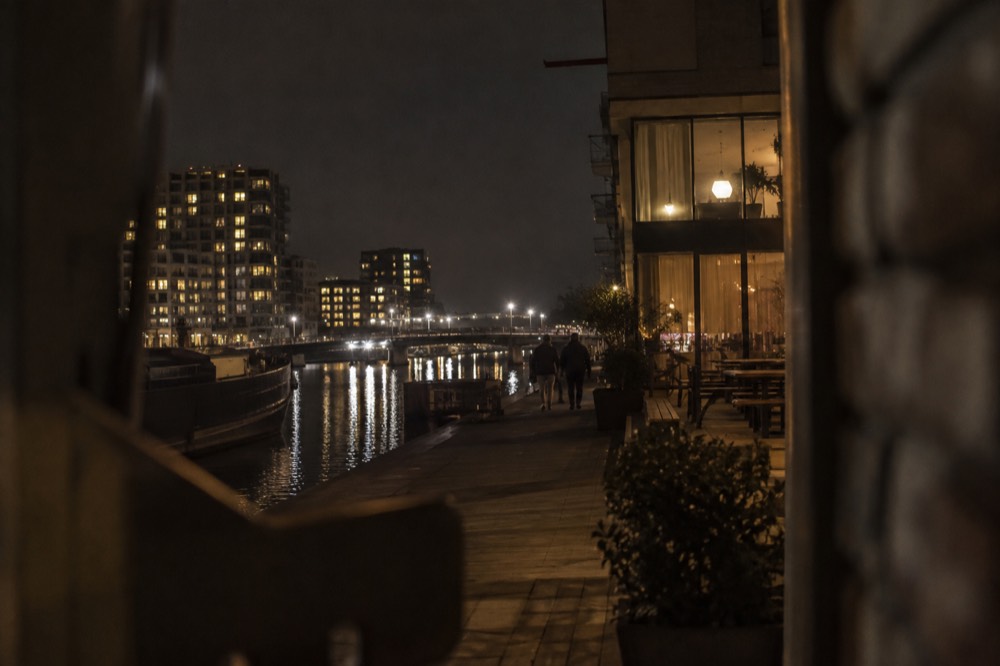
The GVB network covers the whole area. Trams run along the southern edge of the islands, and the metro stops serve Java-eiland and the route out toward IJburg. The fare table below is drawn from GVB's own price page, which remains the authority for anything that changes.
| Ticket | Price | What it covers |
|---|---|---|
| GVB 1-hour single | €3.40 | One hour of GVB travel from first check-in |
| GVB 24-hour day ticket | €10.00 | All GVB trams, buses, metro and ferries for 24 hours |
| GVB 48-hour ticket | €16.00 | Two days of unlimited GVB travel |
| GVB 72-hour ticket | €21.50 | Three days of unlimited GVB travel |
| OVpay contactless | €1.16 base + €0.217/km | Tap in and out with a bank card or phone |
The official GVB price list at gvb.nl/en/prices carries the current fares and any changes. Cycling is the other natural option: the islands are flat, the bike lanes are wide, and the route from the centre runs along the waterfront almost the entire way. The cycling in Amsterdam guide covers rental and road rules. Walking is realistic too, and the route from NEMO east along the water is one of the more pleasant half-hour walks in the city.
Food and Drink in Oostelijk Havengebied
The docklands are a residential area first, so eating here means neighbourhood cafes, waterside terraces and a handful of destination restaurants rather than a dense strip of tourist venues. KNSM-eiland and the Piet Heinkade hold most of the options, and the contrast with the centre is price and calm: tables with a view, without the queue.
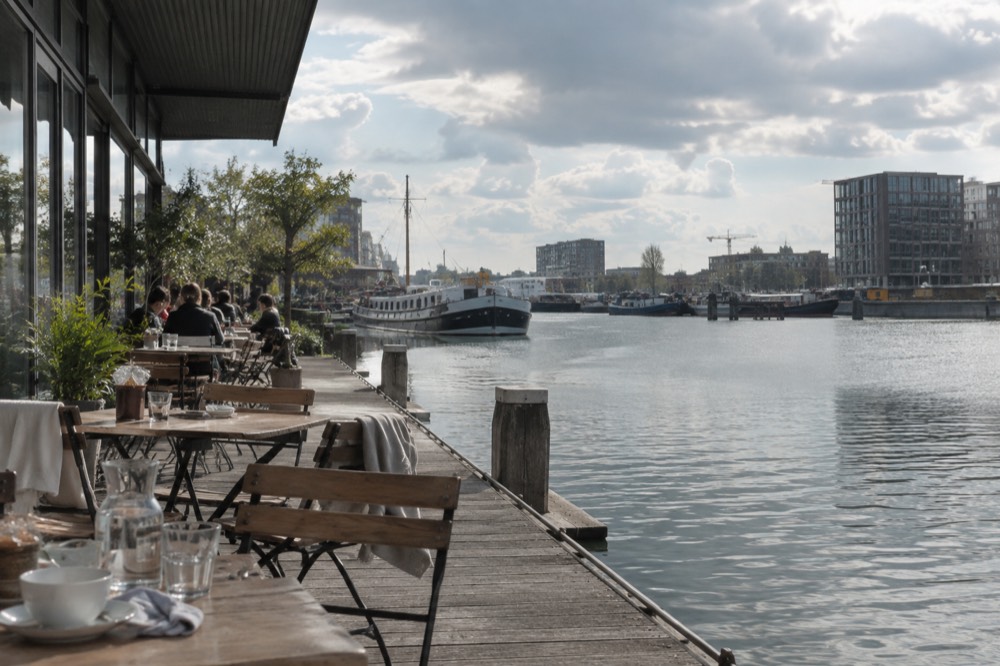
KNSM-eiland's long boulevard is the natural coffee stop halfway through the walk, with old harbour buildings given over to cafes and bakeries. The Piet Heinkade, the main road along the southern shore, carries the larger hotels and their terrace restaurants, plus the Muziekgebouw concert hall at the western end, whose foyer bar looks straight down the IJ. For evening plans, the area is a short tram ride from the centre's brown cafes and breweries, so a docklands dinner does not strand you far from the nightlife.
One classic Amsterdam stop sits conveniently between the docklands and the centre: the Heineken Experience, in the former brewery a short tram ride west. The live listing has tickets from $23, rated 4.6 across 39,581 reviews, and the visit runs about an hour and a half. The Heineken Experience guide covers what the ticket includes and how the tasting works. Anyone building a full eating plan around the city should start with the what to eat in Amsterdam guide, then use the docklands as the relaxed end of the food day rather than its centre.
Seeing the Docklands from the Water
A canal cruise is the most efficient way to see the docklands' edges, because the harbour basins are the architecture's whole context. One-hour cruises run from about €15.50 with a major operator to $19.56 on the classic saloon boat listing, and boats departing near Centraal Station and the Rijksmuseum pass the eastern waterfront before turning back.
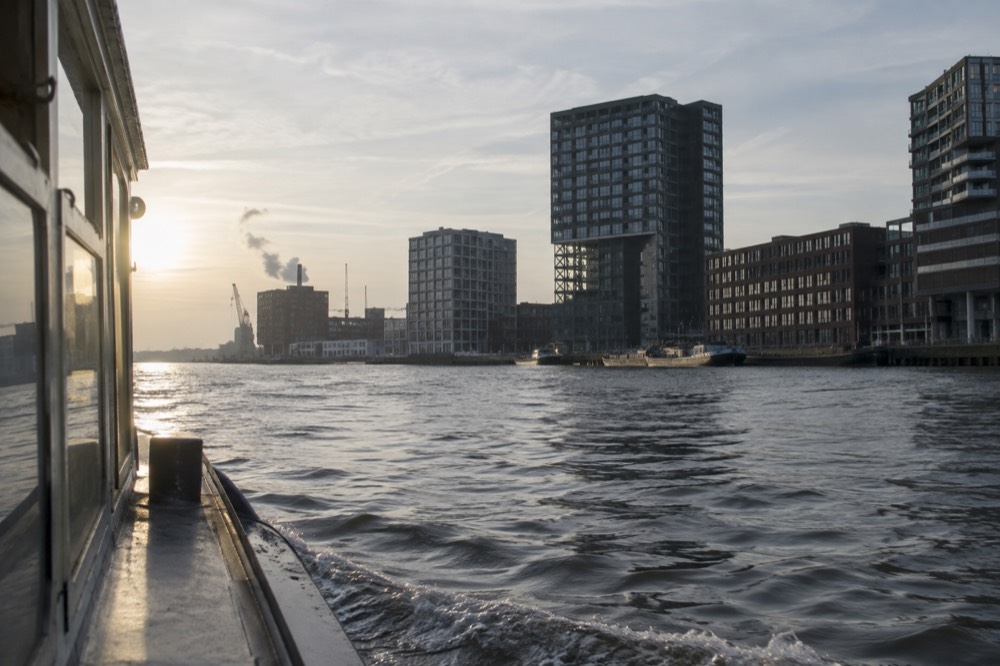
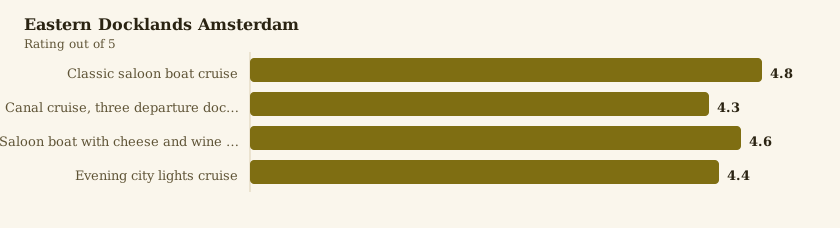
The water is not decoration here; it is the reason the islands exist. The classic saloon boat cruise, rated 4.8 across 33,435 reviews on the live listing and priced from $19.56, runs one hour on restored historic vessels, some sailing since 1902, with an optional cheese and drinks upgrade. It is the strongest match for the docklands, because the low saloon boats sit close to the water and the harbour-scale views read best from that height.
| Cruise | From | Rating | Duration |
|---|---|---|---|
| Classic saloon boat cruise | $19.56 | 4.8 (33,435 reviews) | 1 hour |
| Canal cruise, three departure docks | $15 | 4.3 (21,335 reviews) | 1 hour |
| Saloon boat with cheese and wine option | $16 | 4.6 (31,369 reviews) | 1 hour |
| Evening city lights cruise | $21 | 4.4 (23,214 reviews) | 1 hour 30 minutes |
The only operator price verified on its own site is Rederij Kooij's original one-hour cruise at €15.50 per adult, so treat any lower figure advertised elsewhere with caution. For visitors weighing whether a cruise earns its place at all, the is a canal cruise worth it piece works through the question honestly. Private boat rental is covered separately in the boat rental and private canal boats guide, which matters here because the open water east of the islands is one of the easier places in the city to handle a small boat.
Is the Eastern Docklands Worth Visiting?
For most travellers the docklands are a superb half-day addition rather than a first-day priority: two to three hours of architecture and waterfront walking, a free rooftop view at NEMO, and some of the quietest wide-open water views inside the city. Skip it only if your stay is under two days and the major museums are still unticked.
The honest case against is that the area has no single headline attraction. The case for is everything else: it is free to wander, it is uncrowded even in peak season, and it shows a version of Amsterdam that the postcard city hides. The how many days do you need in Amsterdam guide places it correctly, as a third-day flavour rather than a first-day essential. Photographers get particular value here; the Amsterdam photography spots guide notes the docklands' light and reflections among the city's most reliable subjects.
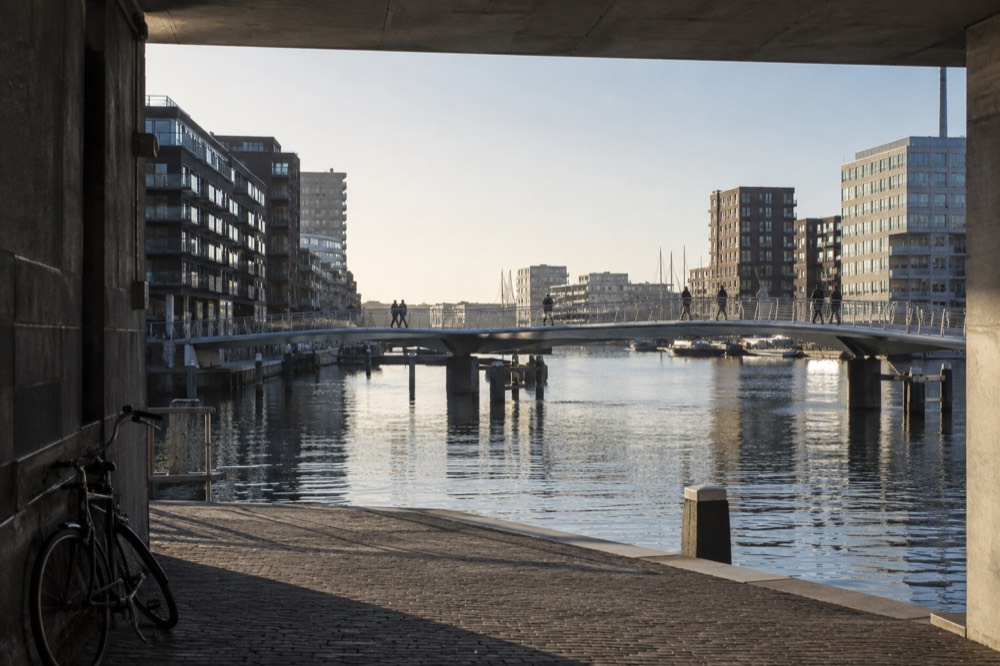
Accessibility is better than the centre's: the quays are flat and wide, though the wind off the IJ can be sharp, so layer up outside summer and check the what to wear in Amsterdam guide before packing. Rainy days shift the balance toward NEMO and the museums, and the rainy day in Amsterdam itinerary already accounts for that. Whatever the weather, this stretch of the city rewards the visitor who walks slowly and looks up, which is the whole point of Things to Do in Amsterdam choosing to cover it at all.
Common Questions About the Eastern Docklands
What is the Eastern Docklands in Amsterdam?
The Eastern Docklands, or Oostelijk Havengebied, are the former harbour islands east of the centre, redeveloped since the 1990s as residential neighbourhoods of modern architecture. The main islands are Java-eiland, KNSM-eiland and Borneo-Sporenburg.
How do I get to the Eastern Docklands from the centre?
Trams and the metro reach the islands in under 15 minutes, and a GVB 1-hour ticket costs €3.40 while the 24-hour ticket costs €10.00. Contactless bank card payment also works on all GVB services. It is also a flat walk of roughly half an hour from Centraal Station.
What are the best things to do in the Eastern Docklands?
Walk the peninsular houses of Borneo-Sporenburg, the KNSM-eiland boulevard and the Java-eiland bridges, then visit NEMO Science Museum, whose roof terrace is free to enter without a ticket. A canal cruise or the A'DAM Lookout across the IJ rounds out a full day.
Is the Eastern Docklands worth visiting on a short trip?
On a stay of two days or less, the major museums and canal belt come first. From three days onward the docklands are one of the best half-day additions in the city: free to explore, uncrowded, and full of architecture you will not see in the historic centre.
Are there museums in the Eastern Docklands?
NEMO Science Museum stands at the area's western edge on the Oosterdok, with flat admission of €21.50 for ages 4 and over and free entry for under-4s. The Museumplein museums, including the Van Gogh Museum and Rijksmuseum, are a short tram ride west.
Where do I eat in the Eastern Docklands?
KNSM-eiland's boulevard holds the main cafes and waterside terraces, and the Piet Heinkade carries the larger hotel restaurants and the Muziekgebieuw's foyer bar overlooking the IJ. It is a calm, residential food scene rather than a tourist strip.