Museum Quarter Amsterdam: A Complete Guide to Museumplein and the Streets Around It
Amsterdam's Museum Quarter packs the Rijksmuseum, the Van Gogh Museum, the Stedelijk and a dozen smaller institutions into a walkable district south of the canal ring, and almost every mistake visitors make here is a booking mistake rather than a routing one.
Short answer
The Museum Quarter is the district around Museumplein, ten minutes south of the centre, holding the Rijksmuseum, the Van Gogh Museum and the Stedelijk. Both big museums cost €25 for adults, require a pre-booked timed entry slot, and free under-18 entry applies at each. Plan one museum per half-day and book both slots weeks ahead.
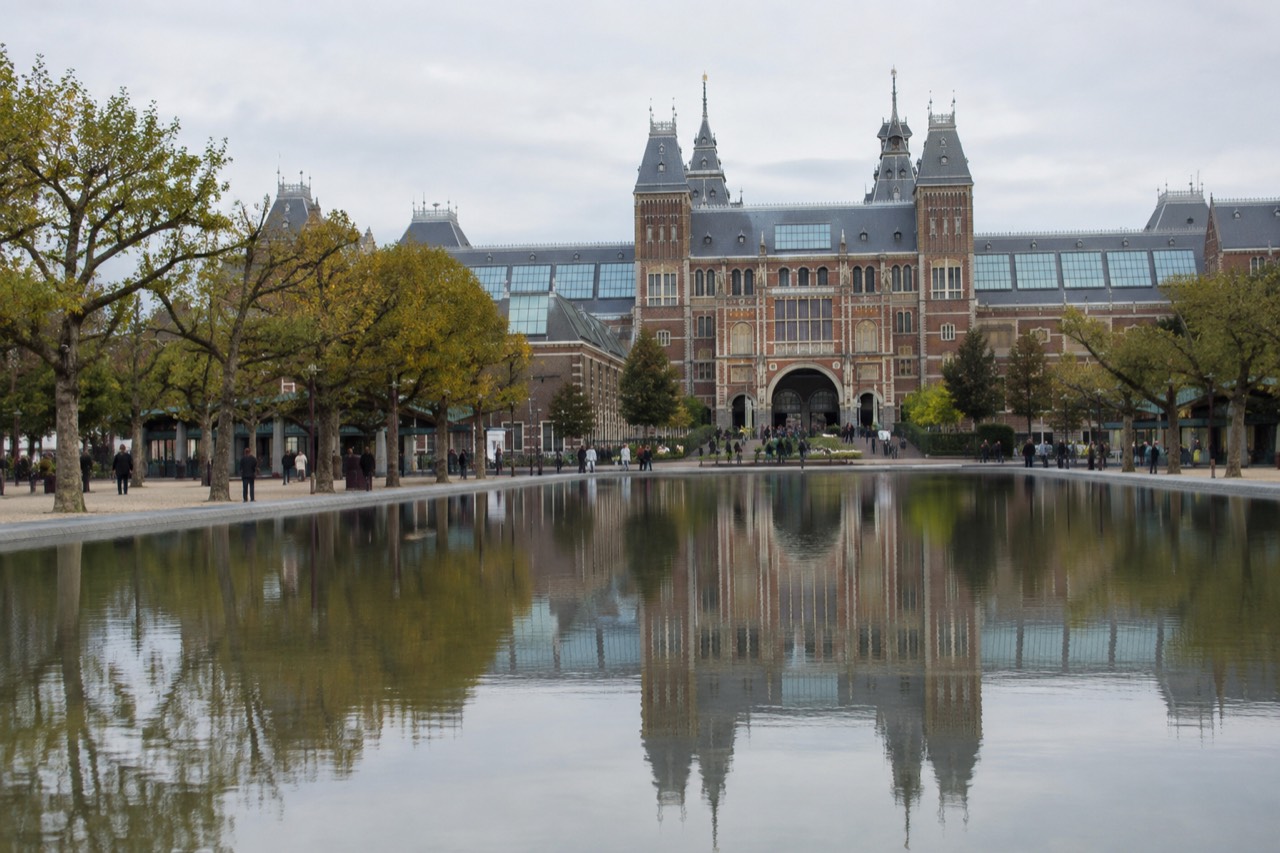
Amsterdam's Museum Quarter is the rare big-city museum district that actually works on foot. The Rijksmuseum, the Van Gogh Museum and the Stedelijk Museum stand on, or within two minutes of, the same square, Museumplein, and the square itself is free: a lawn, a shallow reflecting pool, and the giant I amsterdam letters that have served as the neighbourhood's unofficial meeting point for years. Ten minutes' walk north you are in the canal ring; five minutes south you are in the green of the Oud-Zuid residential streets that lead down to the Vondelpark.
The district is called Museumkwartier locally, and it sits in the borough of Zuid. Most visitors treat it as a day trip inside the city: two museums, a long lunch, an afternoon in the park, and an early evening drink somewhere on the way back toward the centre. That is roughly the right shape for the area, and this guide walks through how to build that day without the two mistakes that catch nearly everyone here, booking too late and underestimating how long each museum actually takes.
What and Where Is the Museum Quarter?
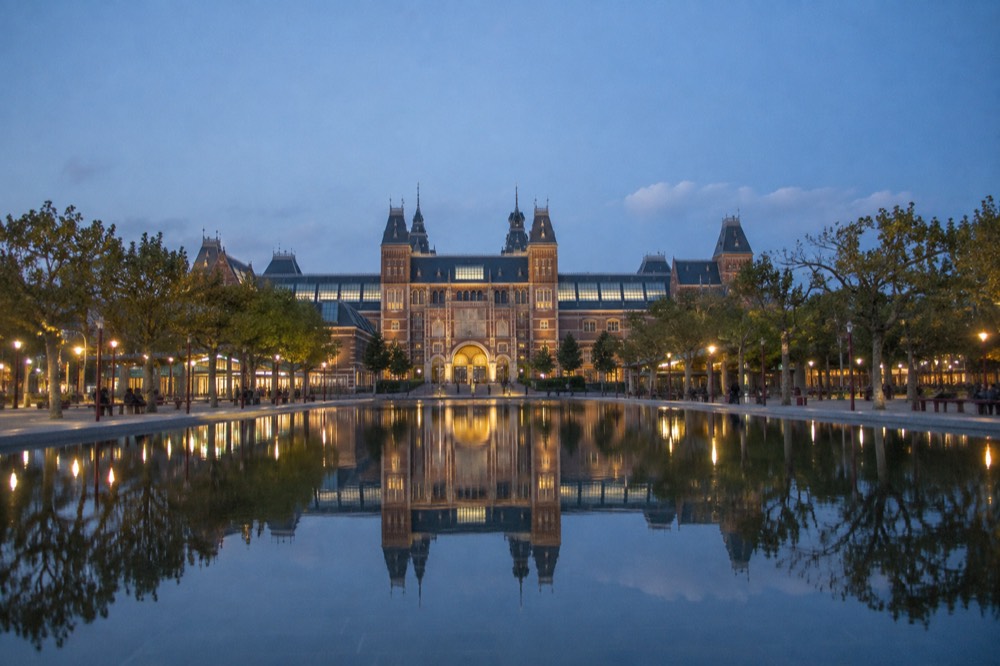
The Museum Quarter, or Museumkwartier, is the neighbourhood immediately around Museumplein in Amsterdam's Oud-Zuid borough, roughly ten minutes' walk south of the canal ring and fifteen minutes from Dam Square. It holds the Rijksmuseum, the Van Gogh Museum, the Stedelijk Museum, the Concertgebouw concert hall, the Coster Diamonds complex and a cluster of smaller museums, all within about six blocks of one another.
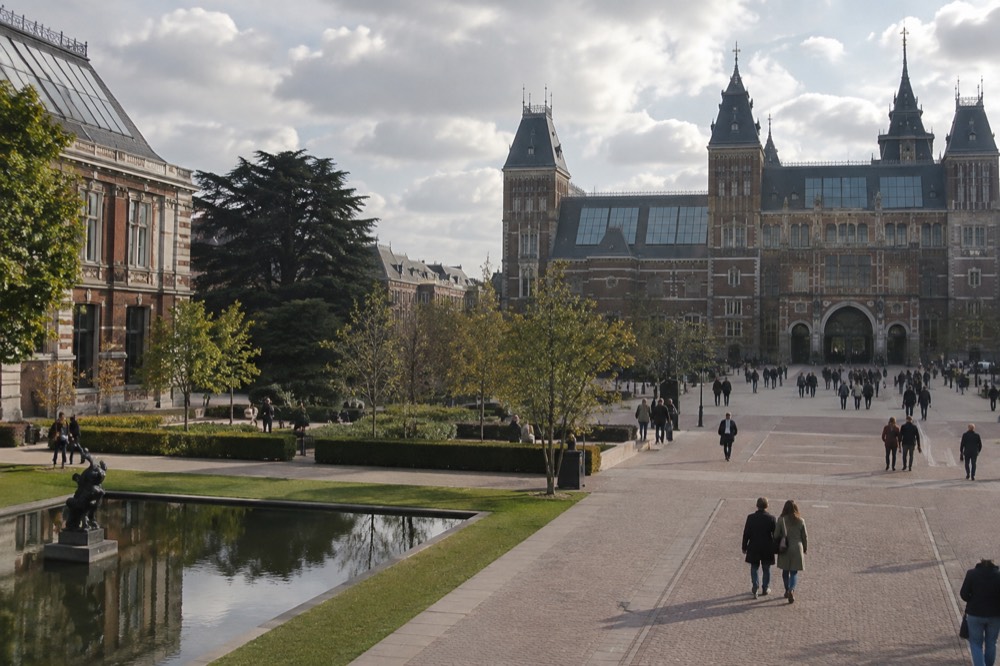
The square at its heart is unusual among European museum districts in being genuinely pleasant to linger on. The lawn on the western side slopes down from the Van Gogh Museum, and in summer the shallow pool in front of the Rijksmuseum fills with children and dogs within minutes of the sun appearing. The I amsterdam letter installation sits at the southern end of the lawn, and it is one of the most photographed objects in the city, which means the queue for a clean shot is a real thing at midday and a non-thing at nine in the morning.
The streets around the square carry the district's other layers. The Van Baerlestraat and the Pieter Cornelisz Hooftstraat, which locals shorten to PCH, run along the east side, the latter being Amsterdam's small answer to a luxury shopping street. The Cornelis Schuytstraat, one block further west, is where the neighbourhood actually eats: a butcher, a cheesemonger, several very good cafés and a cluster of restaurants that fill with museum staff rather than museum visitors. The Museumplein guide covers the square itself in more detail, including the underground parking and the bicycle parking beneath the lawn.
Getting here is simple. Trams 2, 5 and 12 stop at Museumplein or at Van Baerlestraat, and the Rijksmuseum stop on tram 2 and 12 puts you at the museum's front door. A GVB single costs €3.40 for an hour of travel, and a 24-hour day pass is €10.00, which is worth it once you plan more than three rides in a day. From Amsterdam Centraal the tram ride is about fifteen minutes; walking it takes closer to thirty-five but runs straight through the canal ring, which is not a bad way to arrive.
Which Museums Sit on Museumplein, and Which Should You Book?
Three museums anchor Museumplein: the Rijksmuseum for Dutch Golden Age painting, the Van Gogh Museum for the world's largest Van Gogh collection, and the Stedelijk for modern and contemporary art. All three require a pre-booked timed entry slot at busy periods, all three cost roughly the same for an adult, and the practical ceiling is two museums in one day, not three.
The Rijksmuseum is the largest of the three and the one that rewards the longest visit. The Gallery of Honour, the central axis on the second floor, holds Rembrandt's The Night Watch, Vermeer's The Milkmaid and Frans Hals' portraits, and the surrounding wings run from medieval religious art through to Mondrian. The museum's own price page lists adult admission at €25, free entry for ages 18 and under, and opening hours of 9am to 5pm every day of the year, including public holidays. A start time must be booked in advance, and that applies to holders of the I amsterdam City Card and the Museumkaart as well, both of which otherwise cover entry.
The Van Gogh Museum, a five-minute walk across the lawn, holds over 200 paintings, 500 drawings and more than 750 letters, arranged roughly chronologically from the dark early Dutch years through the Paris period and into the late Provence work. Adult admission is €25, visitors under 18 are free, and the museum states plainly that all visitors must pre-book a timed entry ticket. Hours run daily from 9am to 6pm, with late Friday opening until 9pm outside a few exception dates. The collection is compact enough that two hours is a realistic visit, three if you read everything.
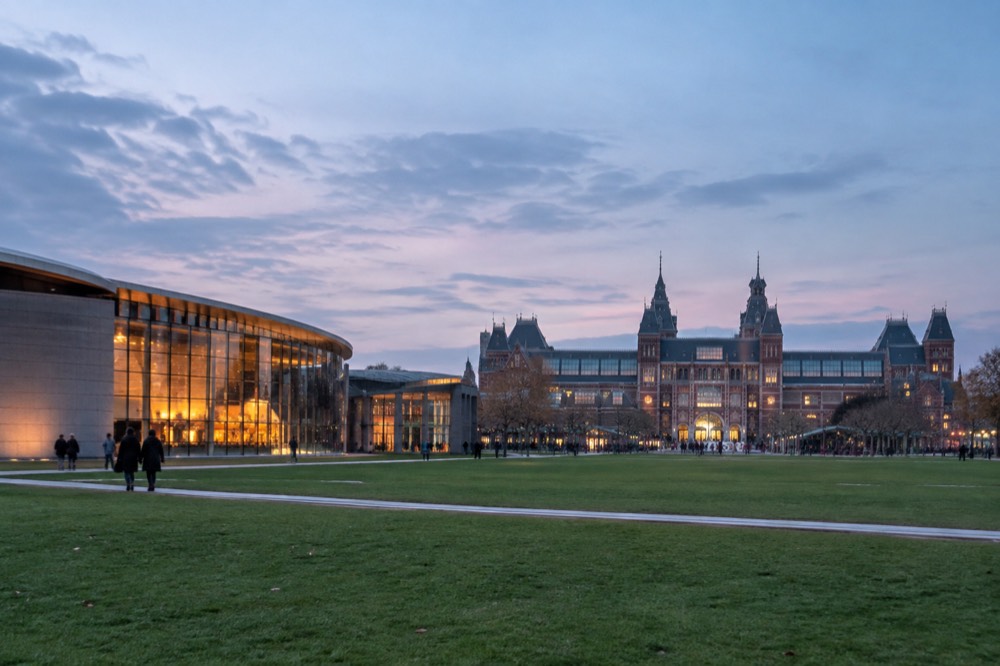
The Stedelijk Museum, on the north side of the square, is the third headliner, covering modern and contemporary art and design from Kandinsky and Malevich through to Rietveld furniture and current installations. It is the least booked of the three, which makes it the natural fallback when Van Gogh slots on your chosen date are gone. Around the edges of the square sit smaller institutions: the Moco Museum with its Banksy and Warhol holdings, the Diamond Museum at Coster Diamonds, and the Concertgebouw, whose lunchtime concerts are often cheaper than a museum ticket.
If you are choosing between the big two rather than doing both, the honest division is this: the Rijksmuseum for breadth and the sense of a national collection, the Van Gogh Museum for intensity and a single artist's arc. The Van Gogh Museum guide and the Rijksmuseum guide each go deeper on the collections; for booking, the mechanics are the same at both, and the section below covers them.
How Do You Book Van Gogh Museum Tickets Without Getting Shut Out?
Van Gogh Museum tickets are sold with a mandatory timed entry slot, cost €25 for adults and nothing for under-18s, and the practical rule is to book two to six weeks ahead for spring and summer dates and at least a week ahead even in the quieter months. Same-day tickets exist but vanish by mid-morning in peak season, and the museum's own booking page is the only place slots are released.
The timed-entry system is the part visitors underestimate. Your slot is a window, not a hard minute: arriving within the stated window gets you in, arriving after it can mean joining the walk-up line and hoping. Once inside you stay as long as you like, so the strategic play is the last slot of the afternoon on a Friday, when the museum runs until 9pm and the crowd thins visibly after 6pm. The quietest regular windows are the first hour after opening and the last two hours before close.
There are two ways to hold a ticket. The museum's own site sells directly, and that is the default for anyone who wants the plain entry ticket with no extras. A pre-booked entry ticket through an operator's live listing does the same job, costs from $31 at the listing we track, and suits travellers who prefer to hold all their trip bookings in one place. The listing currently carries a 4.7 rating across 57,096 reviews, which makes it one of the most-reviewed museum products in the city. Whichever route you take, the ticket is for the museum only; there is no bundle that includes anything else on Museumplein.
Two things the museum's own pages state and most summaries skip: first, the under-18 free ticket still must be booked as a ticket, it is not a walk-in exemption; second, the I amsterdam City Card does not cover the Van Gogh Museum at all, so anyone holding the card still needs to buy a separate timed ticket here. The card's transport component still gets you to the door, but the door itself costs extra.
Is the Rijksmuseum Worth a Full Morning, and How Do Its Tickets Work?
The Rijksmuseum rewards a half-day rather than a quick circuit, adult tickets are €25 with free entry for 18 and under, and every visitor including City Card and Museumkaart holders must book a start time online in advance. The museum opens 9am to 5pm daily, including public holidays, and the first hour is the calmest the Gallery of Honour will be all day.
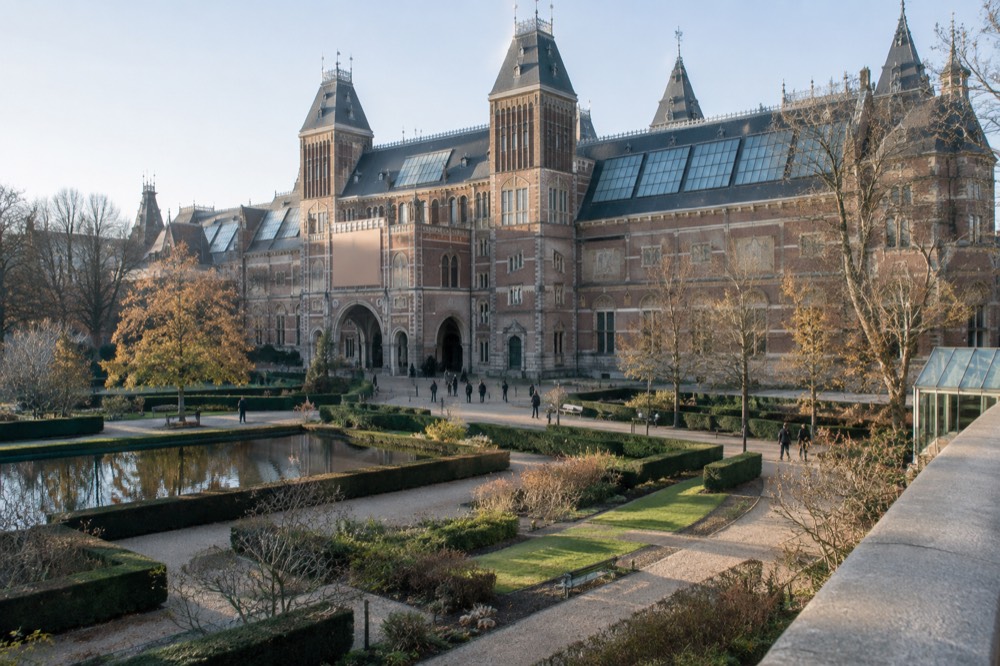
The building itself is worth the detour. Pierre Cuypers designed it as a gateway straddling the Museumstraat, and the passageway under the building is a public street, so you can walk through the museum without a ticket, which is a genuinely useful shortcut between the Museumplein side and the eastern streets. The interior restoration finished in 2013 returned the building's original wall colours and murals, and the Gallery of Honour reads now the way it was designed to: a processional corridor with the Night Watch at its head.
Booking mechanics mirror the Van Gogh's. A start time is required for all visitors, with limited tickets held back at the entrance while stocks last, so the advance slot is the safe route. The museum's own practical-info page states the prices and hours directly, and it also confirms that I amsterdam City Card holders enter free, one of the few places the card pays off at full ticket price. A pre-booked entry ticket through an operator's listing costs from $31 and carries a 4.7 rating across 33,205 reviews; it is the same museum, same slot system, same door.
A pre-booked Rijksmuseum entry ticket can be held on the Things to Do in Amsterdam site alongside the rest of your bookings.
For families, the Rijksmuseum is the friendlier of the two headliners: the free-under-18 policy means children cost nothing, and the museum's own galleries include a dedicated section aimed at younger visitors. The building is large enough that a stroller and a toddler can orbit the ground floor without disturbing anyone, and the garden on the south side is free to enter and has fragments of historic Dutch architecture arranged as an open-air walk, which makes a good pressure valve halfway through a visit.
What Smaller Museums Fill the Gaps Around Museumplein?
Beyond the big three, the Museum Quarter holds the Moco Museum, the Diamond Museum at Coster Diamonds, the Concertgebouw and, a short tram ride east, the smaller institutions of the Plantage district. The Moco is the most popular of the smaller ones, a two-townhouse museum of modern and contemporary work with a permanent Banksy collection, and it is the one that most often saves a day when a big-museum slot is sold out.
The Moco Museum sits on the Museumplein itself, in the Villa Alsberg at the corner of Hobbemastraat. Its pitch is accessible contemporary art: Banksy, Warhol, Keith Haring, Jean-Michel Basquiat, plus rotating immersive digital installations. It is a compact museum, an hour covers it comfortably, and it stays open later than the big institutions on many evenings, which makes it the natural evening slot after a Rijksmuseum morning. An entry ticket through an operator's listing costs from $20 and holds a 4.3 rating across 11,775 reviews. The Moco Museum guide covers the collection in detail.
The Diamond Museum, inside the Coster Diamonds complex on the Paulus Potterstraat, covers the city's centuries-old diamond trade, including the story of how Amsterdam cut some of the world's famous stones. It is modest in scale and works best paired with a free diamond-polishing demonstration that Coster runs on site. The Concertgebouw, on the square's north side, is one of the world's most acoustically praised concert halls, and its lunchtime concerts are a long-standing tradition: ticket availability varies by season, and the hall's own site lists the current schedule.
| Museum | Focus | Realistic visit | Booking |
|---|---|---|---|
| Rijksmuseum | Dutch Golden Age and national collection | Half day | Timed slot required, all visitors |
| Van Gogh Museum | Single-artist collection, 200+ paintings | 2 to 3 hours | Timed slot required, all visitors |
| Stedelijk Museum | Modern and contemporary art and design | 2 hours | Timed slot at busy periods |
| Moco Museum | Banksy, Warhol, contemporary work | 1 hour | Timed entry ticket |
| Diamond Museum | Diamond trade history at Coster Diamonds | 45 minutes | Walk-up usually fine |
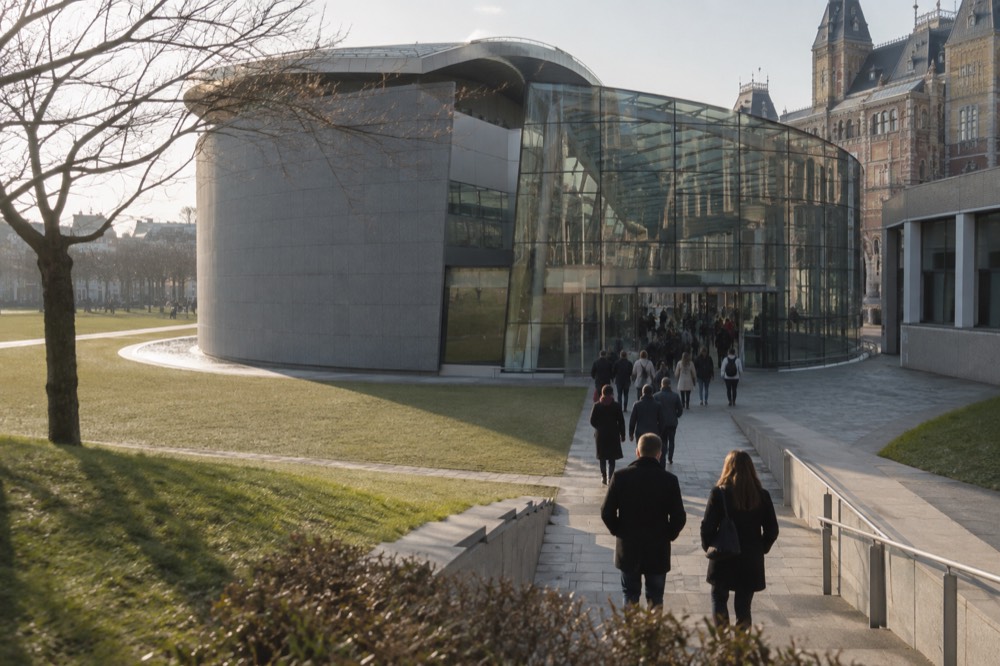
The Stedelijk deserves its own word here because it is the most under-booked of the three majors. Its collection of De Stijl work, Rietveld furniture and postwar painting is genuinely strong, and the building's bathtub-shaped extension is the square's boldest piece of architecture. If your Van Gogh date is sold out, the Stedelijk plus the Moco makes a full and cheaper museum day, and the Stedelijk Museum guide lays out the collection floor by floor.
Where Do You Eat and Drink in the Museum Quarter?
The Museum Quarter's food runs along two streets: the Cornelis Schuytstraat for neighbourhood cafés and sit-down dinners, and the Museumplein edge for quick lunch options between museum slots, with the Heineken Experience on the eastern side of the district as the area's one big-name drink stop. Expect fewer late kitchens here than in the centre, since Oud-Zuid is residential and much of it winds down by 11pm.
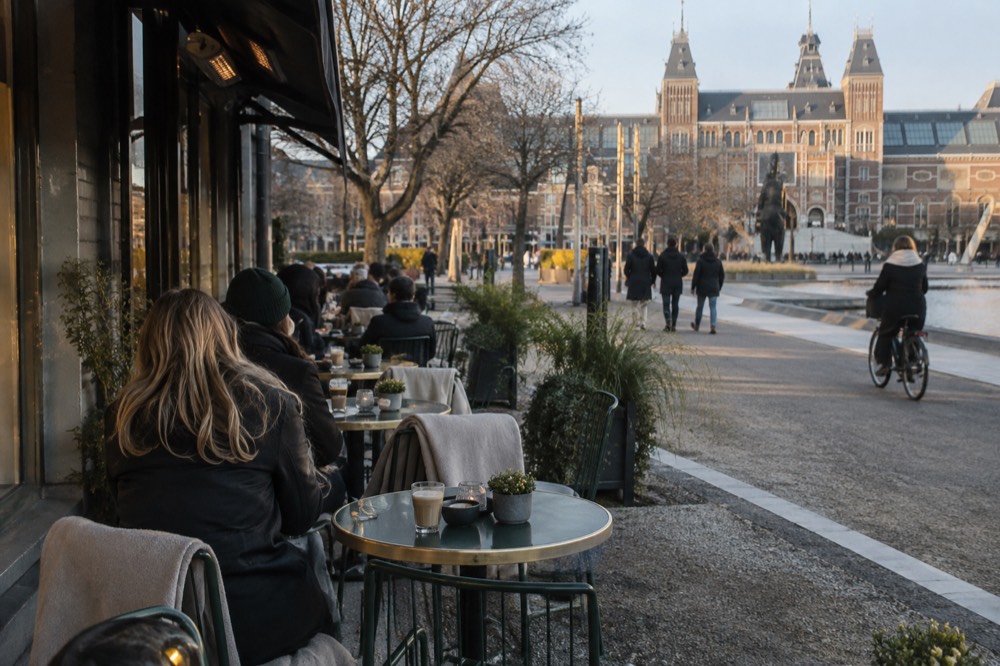
The Cornelis Schuytstraat, five minutes west of the square, is the street locals actually use. A bakery, a cheese shop, a fishmonger and a run of small restaurants make it the right place for a proper lunch between museums, and it is quiet enough at midday that you can sit down without a reservation. The Pieter Cornelisz Hooftstraat parallel to it skews luxury retail rather than food, but its café terraces are pleasant and pricey in equal measure. For a faster option, the museum quarter's own cafés on Museumplein's north side handle the lunch rush, and the Rijksmuseum's café, inside the ticketed area, is better than most museum cafés and open until 6pm.
The Heineken Experience occupies the brewer's original 1867 brewery on the Stadhouderskade, a ten-minute walk from Museumplein along the canal ring's edge. It is an interactive, self-guided attraction rather than a working brewery, about ninety minutes end to end, ending with a tasting. A ticket through an operator's listing costs from $23 and carries a 4.6 rating across 39,581 reviews, which puts it among the most-reviewed paid attractions in the city. It books out in the late afternoon slots first, so if it is on your list, put it after a morning museum rather than hoping for a walk-up slot at 5pm.
For the walk back toward the centre, the route along the Stadhouderskade passes some of the canal ring's best bridge views, and the Vondelpark guide covers the park that sits ten minutes west of the square, the natural end-of-day destination when the museums close. In the other direction, the De Pijp neighbourhood guide points you to the Albert Cuyp Market area, fifteen minutes east, where the evening restaurant scene is livelier and cheaper than anything inside Oud-Zuid.
| Meal | Where | Notes |
|---|---|---|
| Coffee and pastry | Cornelis Schuytstraat bakeries | Open early, before the museums |
| Quick museum lunch | Museumplein north side cafés | Fastest option between slots |
| Long lunch | Cornelis Schuytstraat restaurants | No reservation usually needed midweek |
| Afternoon break | Heineken Experience tasting room | Ticket includes tastings, book ahead |
| Dinner | PCH or De Pijp, east | De Pijp kitchens run later and cheaper |
Is the I Amsterdam City Card Worth It in the Museum Quarter?
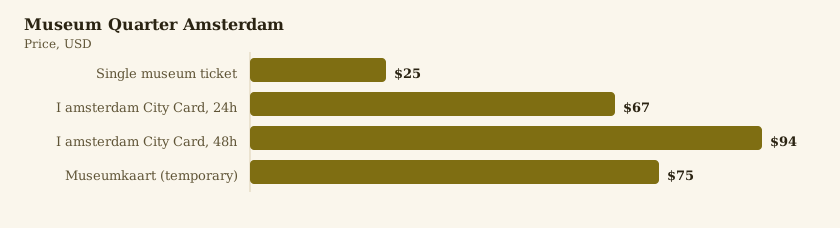
The I amsterdam City Card covers the Rijksmuseum, the Stedelijk and the Moco with free entry, includes unlimited GVB transport and a canal cruise, and costs €67 for 24 hours or €94 for 48 hours. It does not cover the Van Gogh Museum or the Anne Frank House under any circumstance, so the card only pays for itself in this district if the Rijksmuseum or Stedelijk is on your list alongside the transport and cruise components.
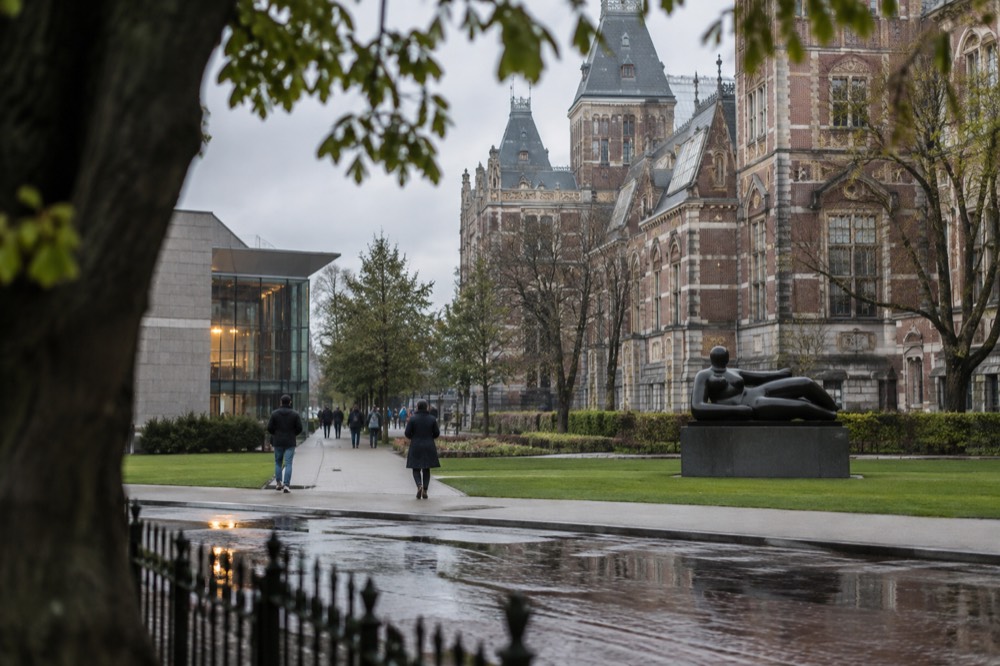
The exclusion is confirmed from both sides: the card's own FAQ states that Van Gogh and Anne Frank are not included, and the Anne Frank House's own price table states it gives no discount. Within the Museum Quarter, that makes the card a Rijksmuseum-and-Stedelijk proposition. A 24-hour card at €67 against a €25 Rijksmuseum ticket, a €10 GVB day pass and a canal cruise from about €15.50 with Rederij Kooij leaves roughly €16 of value to recover from the bike rental inclusion or a second museum before the card breaks even. Two museums in a day plus transport and the cruise clears the bar comfortably; one museum does not.
The Museumkaart is a different instrument and mostly a local one. At €75 for adults it covers more than 500 museums across the country including the Rijksmuseum and the Van Gogh Museum, but visitors without a Dutch address can only buy a temporary version valid 31 days for a maximum of 5 visits, and it does not cover the Anne Frank House beyond its €1 booking fee. For a two- or three-day city trip the City Card arithmetic is simpler; for a week or more in the Netherlands the Museumkaart starts to win.
| Option | Cost | Covers on Museumplein | Does Not Cover |
|---|---|---|---|
| Single museum ticket | €25 adult | One museum, one visit | Everything else |
| I amsterdam City Card, 24h | €67 | Rijksmuseum, Stedelijk, transport, cruise | Van Gogh Museum, Anne Frank House |
| I amsterdam City Card, 48h | €94 | Same, over two days | Van Gogh Museum, Anne Frank House |
| Museumkaart (temporary) | €75, 5 visits max | Rijksmuseum, Van Gogh, Stedelijk | Anne Frank House beyond €1 fee |
How Should You Structure a Full Day in the Museum Quarter?
The structure that works is one major museum per half-day: the Rijksmuseum from opening at 9am until about 1pm, lunch on the Cornelis Schuytstraat, the Van Gogh Museum or the Stedelijk from about 2pm, then the Vondelpark or a canal-side walk before dinner in De Pijp. Trying to fit all three majors into one day is the single most common mistake in the district, and it ends with two rushed collections and one closed museum.
The timing logic is straightforward. The Rijksmuseum is the biggest and benefits most from the quiet first hour, so it takes the morning. The Van Gogh Museum's crowd peaks between 11am and 3pm, so a 4pm or later slot, or the Friday evening slot running to 9pm, gives you the thinnest rooms. The Stedelijk is flexible because it is the least booked. If you only have one day and both big museums matter to you, book the Rijksmuseum at 9am and Van Gogh at the last available slot, and put lunch and the square's lawn in between rather than a third museum.
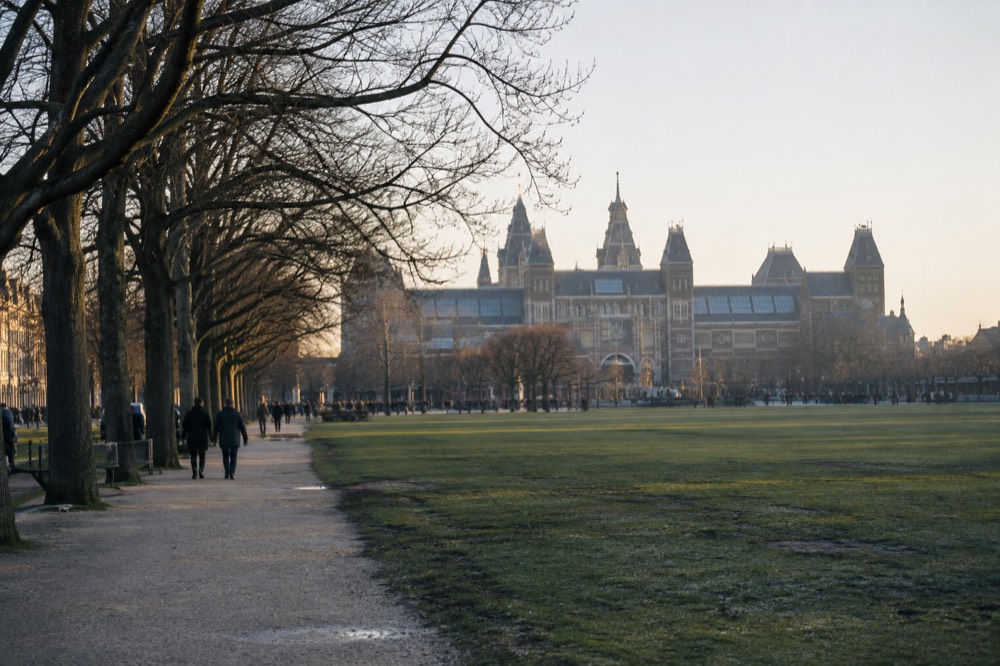
Weather changes the plan less than you would expect. The square's lawn, the museums and the covered arcades make the district one of the city's better rainy-day zones, which is why the rainy day itinerary leans on it heavily. On a good-weather day, the same day plan simply ends in the Vondelpark instead of a café. In tulip season, roughly mid-March to mid-May with the field peak around mid-April to early May, the district also becomes the natural staging point for a Keukenhof day, since the coach departures and the regional buses leave from near the Rijksmuseum side of the square.
For a first visit of three days or fewer, the honest allocation is one full day here, not two. The district rewards depth, one museum done slowly beats three done at a jog, and the rest of the city, the canal ring, the Jordaan, the centre, is a short tram ride away. The three days in Amsterdam itinerary places the Museum Quarter on day two for exactly that reason.
Common Questions About the Museum Quarter in Amsterdam
How many museums can you realistically see in one day in the Museum Quarter?
Two is the practical maximum. The Rijksmuseum alone justifies a half-day, the Van Gogh Museum takes two to three hours, and both use timed entry slots that must be booked in advance. Fitting the Stedelijk in as well is possible in principle but leaves every collection rushed; the better third stop is the compact Moco Museum, which takes about an hour.
How much do Museum Quarter museum tickets cost?
The Rijksmuseum and the Van Gogh Museum both charge €25 for adults, with free entry for visitors aged 18 and under at each. The Stedelijk and Moco are cheaper, and the I amsterdam City Card covers the Rijksmuseum and Stedelijk but not the Van Gogh Museum. Every visitor at the two big museums needs a pre-booked timed slot regardless of how the ticket is paid for.
Do you need to book Van Gogh Museum tickets in advance?
Yes. The museum requires every visitor to hold a pre-booked timed entry ticket, including under-18s whose tickets are free. In spring and summer, slots sell two to six weeks ahead; in the quieter months a week is usually enough. The last afternoon slots and the late Friday openings are the calmest times inside.
Is the Museum Quarter walkable from the city centre?
Yes. Museumplein is roughly a thirty-five minute walk from Dam Square, or about fifteen minutes by tram 2 or 12 from outside Centraal Station. The walk runs straight through the canal ring and is itself one of the better sightseeing routes in the city, so many visitors walk one way and tram back.
Does the I amsterdam City Card work in the Museum Quarter?
Partly. It gives free entry to the Rijksmuseum and the Stedelijk, plus unlimited GVB transport and a canal cruise, but it gives nothing at the Van Gogh Museum and no discount at the Anne Frank House. A 24-hour card costs €67, so it only pays off here if the covered museums, the transport and the cruise are all on your plan.
Where should you eat near Museumplein?
The Cornelis Schuytstraat, five minutes west of the square, is the neighbourhood's food street, with bakeries, a cheese shop and sit-down restaurants that serve lunch without a reservation midweek. For dinner, De Pijp, fifteen minutes east, has more kitchens open later and at lower prices than Oud-Zuid, which winds down early because it is residential.