Dam Square in Amsterdam: What to See, Do and Skip at the City's Heart
Dam Square is the physical and historical centre of Amsterdam, where the dam on the Amstel river once stood. Today it holds the Royal Palace, the National Monument, the wax museum and the flagship department store, all within a five minute walk of each other.
Short answer
Dam Square is Amsterdam's central plaza, anchored by the Royal Palace (entry from $15, rated 4.7 across 9,124 reviews) and Madame Tussauds (from $19, rated 4.5 across 13,141 reviews). It is walkable from Centraal Station in about ten minutes and needs one to two hours unless you enter an attraction.
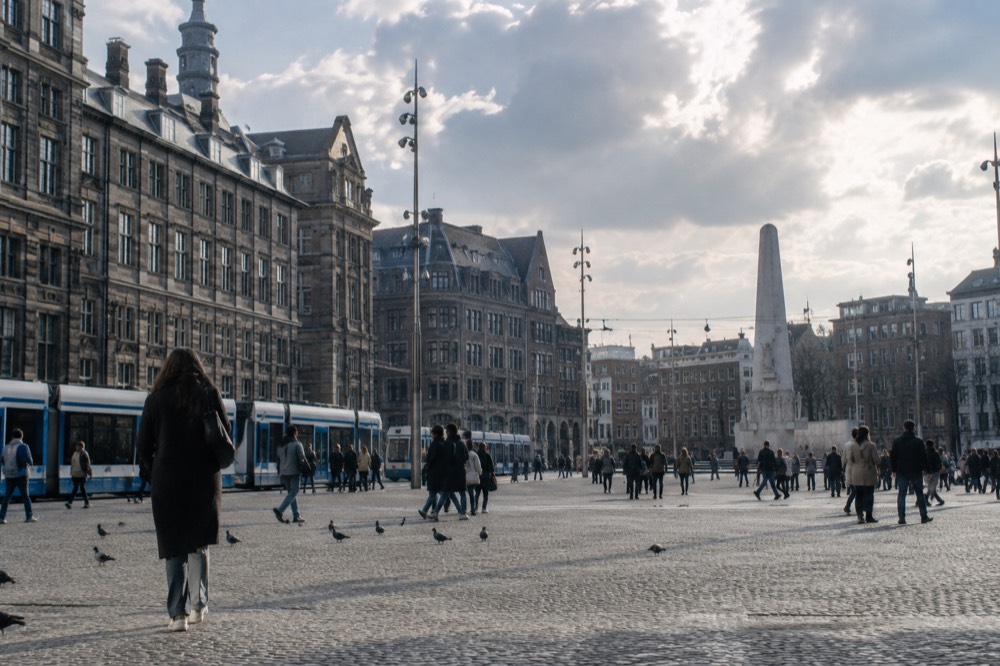
Dam Square is the spot where Amsterdam stopped being a fishing village on the Amstel and started being a city. The square is the dam itself: the place where medieval settlers built a barrier across the river, and the settlement that grew around that barrier took its name from it. Amstel, dam. Every tram that rattles past the National Monument is driving over, or around, the reason the city exists at all.
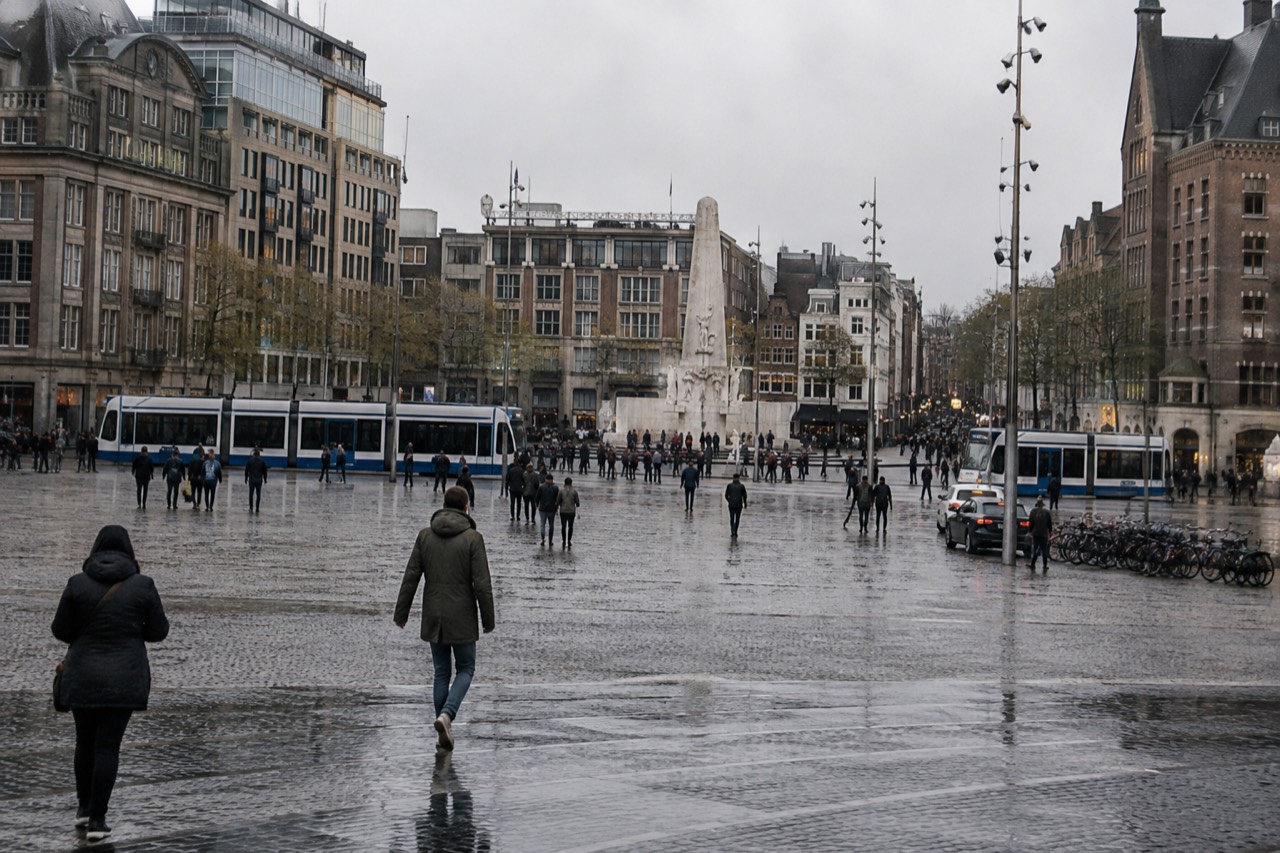
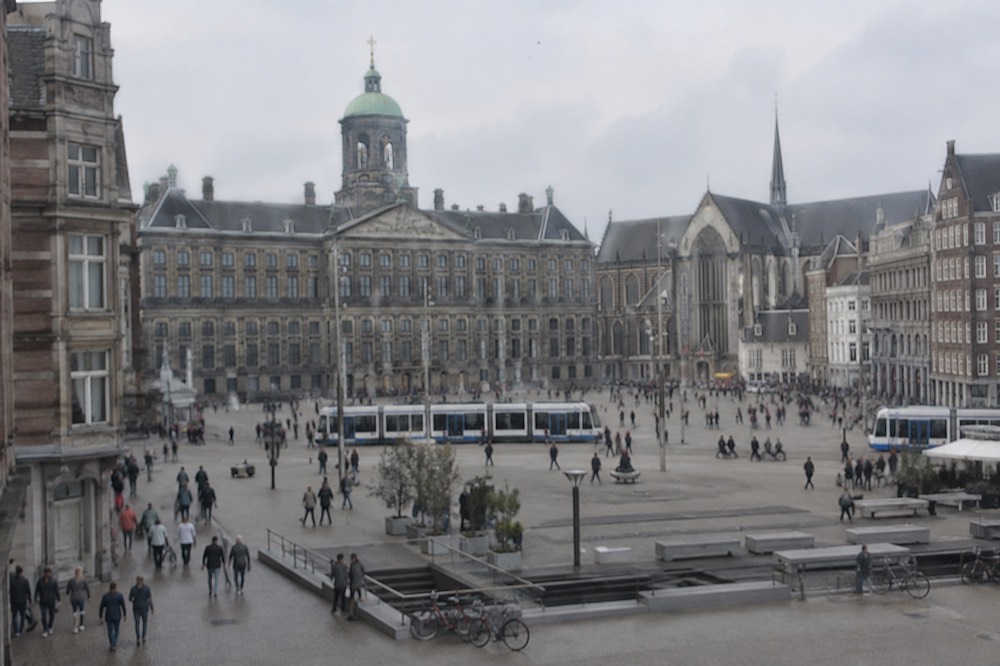
Today the square is a broad open plaza rather than a postcard. It holds the Royal Palace on the west side, the neoclassical facade of Madame Tussauds in the former KAS bank building, the De Bijenkorf department store, the Hotel Krasnapolsky, and the National Monument, a white stone pillar dedicated to the victims of the Second World War. Pigeons, buskers, tourists and locals cutting through on bikes share the space. It is the city's crossroads, and it rewards an hour of your attention even if you never buy a single ticket.
What Is Dam Square and Why Is It the Centre of Amsterdam?
Dam Square is the original site of the dam across the Amstel river, built around the thirteenth century, and the square that formed on it became the city's main marketplace and civic centre. It sits about 750 metres directly south of Centraal Station, linked by the Damrak, and every major street grid in the centre ultimately connects back to it. The Royal Palace, the National Monument and the main department store all face onto it.
The dam was the city's founding infrastructure. Settlers living along the Amstel needed to hold back the sea and the river, so they raised an earth and timber barrier and created a protected harbour on its seaward side. Fish and goods were traded on the dam itself, and that trade grew into the market that made Amsterdam rich. The square was the weigh house, the town hall and the exchange district all at once for centuries.
That history explains why the square feels like a hinge. Walk north and you reach the Damrak and the station. Walk south and you are on Rokin, heading into the canal belt. East takes you into the Red Light District, west into the shopping streets around the Kalverstraat. There is no other point in Amsterdam where this many districts meet in a single open space.
The square's civic role has not faded. It is where the city gathers for national celebrations, where the King's Day crowds concentrate, and where remembrance ceremonies are held at the National Monument each May. The rest of the year it is simply the place every visitor passes through at least once, usually without meaning to.
What Can You See on Dam Square Itself?
The four anchors of Dam Square are the Royal Palace, the National Monument, Madame Tussauds in the former bank building, and the De Bijenkorf department store. The palace is the only one that charges for entry, from $15 with an audio guide, rated 4.7 across 9,124 reviews. The monument costs nothing and the square itself is free to wander at any hour.
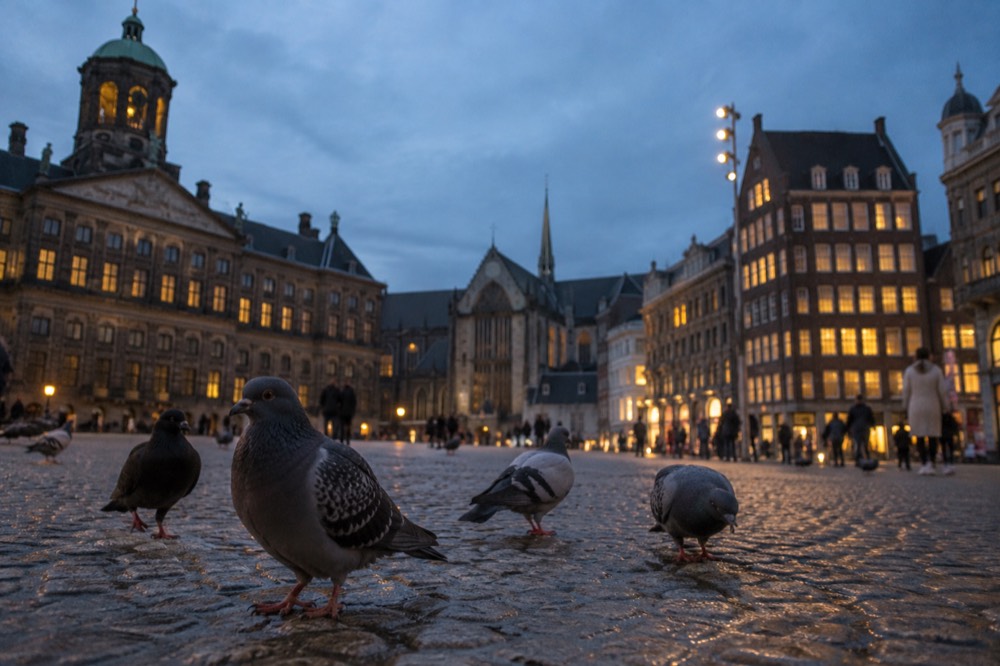
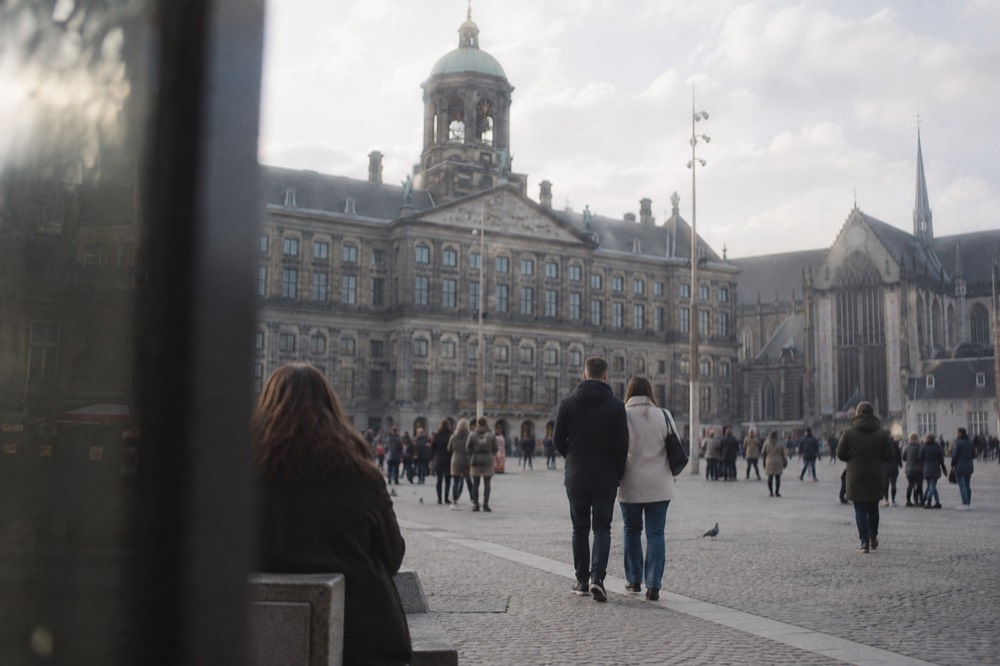
The Royal Palace dominates the west side. It was built in the seventeenth century as Amsterdam's town hall, when the city was the richest in Europe and wanted architecture to prove it. When Napoleon installed his brother as king of Holland, the town hall became a palace, and it has stayed a working royal building ever since. The state rooms are open to visitors whenever no royal event is using them, and the interior is the point: marble floors, maps of the world inlaid in stone, and ceiling paintings that put Amsterdam at the centre of the universe. A pre-booked entry ticket with audio guide starts from $15 on the live listing.
The National Monument stands opposite the palace, a white travertine pillar unveiled in 1956. Two lions guard it and a small inscription marks it as a memorial to Dutch victims of war. It is the focal point of the national Remembrance ceremony each 4 May, when the square falls silent. There is nothing to buy and nothing to queue for; it is a five minute stop that gives the square its gravity.
Madame Tussauds occupies the corner building that was once the headquarters of a shipping bank, and its neoclassical facade is one of the most photographed in the city. Inside, the wax figures range from Dutch royalty to global celebrities. It is the most tourist-facing of the square's attractions, with an entry ticket from $19 and a 4.5 rating across 13,141 reviews. Families with children give it the strongest reviews; adult-only groups tend to prefer the palace.
De Bijenkorf, the department store behind the monument, is the Netherlands' answer to a flagship luxury retailer. Even without buying anything, the building is worth walking through, and the rooftop has hosted summer pop-ups and art installations. Around the square's edges you will also find the Hotel Krasnapolsky, occupying the square since 1866, and the Madam Tussauds-adjacent ripley-style novelty shops that come and go.
The square is also a working events venue. In winter a ferris wheel and holiday stalls sometimes appear; in spring the tulip sellers set up; in summer the terraces spill out. Check the city's events calendar before you plan a quiet visit, because a festival weekend transforms the square entirely.
Which Attractions Around Dam Square Are Worth Booking?
Within a ten minute walk of Dam Square you can reach the Royal Palace, Madame Tussauds, the Anne Frank House, the canal cruise docks, the Begijnhof and the Kalverstraat shopping street. The two attractions that genuinely benefit from advance booking are the Van Gogh Museum, fifteen minutes away, and the Anne Frank House, which sells online-only tickets released on a fixed schedule from its own site.
The Van Gogh Museum is the booking most visitors regret leaving late. It holds the world's largest Van Gogh collection, over 200 paintings plus drawings and letters, and every visitor needs a pre-booked timed entry slot, a rule the museum states plainly on its own pages. A ticket starts from $31 on the live listing, rated 4.7 across 57,096 reviews. The museum is on the Museumplein, a straightforward fifteen minute walk down the Rokin and past the canal belt, or a few stops on the tram.
The Anne Frank House is twenty minutes' walk west of the square, and it is the one Amsterdam attraction no reseller can sell you. Tickets go on sale only through the museum's own website, for a specific date and time, and the museum states that a ticket must always be booked online in advance, with no door sales. An adult ticket is €16.50 including the booking fee. If your dates are already fixed when you read this, check the release schedule on the official site now rather than later; slots for popular weeks disappear within hours.
The Heineken Experience sits south-east of the square in the brewery's original 19th century building. It is an interactive, self-guided walkthrough of brewing history rather than a working brewery tour, roughly 90 minutes, with a tasting included. A ticket starts from $23, rated 4.6 across 39,581 reviews, making it one of the most-reviewed paid attractions in the city. It pairs naturally with a Dam Square visit because the walk between them passes through the canal belt's prettiest stretch.
For something cheaper and closer, the canal cruise docks are a short walk away, and the classic saloon boat cruise departs near the square's side streets. A one hour cruise on a restored wooden saloon boat starts from $19.56 and carries a 4.8 rating across 33,435 reviews. It is the most efficient way to see the UNESCO canal ring after you have seen the square, and the boats run all day.
Is Dam Square Good for Shopping and Food?
Yes, for mainstream shopping: the Kalverstraat and the Nieuwendijk, two of the busiest shopping streets in the Netherlands, run away from the square in opposite directions, and De Bijenkorf anchors the premium end. Food around the square is mostly tourist-tier, so eat one street further out, where the brown cafés and the canal-side spots are better and cheaper.
The Kalverstraat leaves the square heading south. It is a pedestrian shopping street with the high street chains, a media market and, halfway down, the Amsterdam Museum and the Begijnhof courtyard, both of which are worth the detour. The Nieuwendijk runs north-west towards the Haarlemmerbuurt with a similar mix and fewer crowds. If you want Dutch design, concept stores or vintage rather than chains, turn west instead and walk into the Nine Streets, ten minutes away.
Food on the square itself is what you would expect from the most touristed corner of a touristed city. The hotel terraces are for sitting and watching the world, not for eating well. Two streets in any direction the quality jumps: the brown cafés around the Spuistraat serve honest Dutch bar food, and the canal belt has everything from herring stands to serious restaurants. Our what to eat in Amsterdam guide covers the dishes worth ordering, and the Amsterdam markets guide points you to the Albert Cuyp Market if you want the local version of a food hall.
For a sit-down break with a view, the department store's upper floors have café seating overlooking the square, which is the calmest vantage point in the area. The pigeons and the buskers stay outside.
| Spot | Type | Distance from the Square | Notes |
|---|---|---|---|
| Kalverstraat | Pedestrian shopping street | Starts on the square | High street chains, media market, leads to Begijnhof |
| Nieuwendijk | Shopping street | Starts on the square | Quieter than the Kalverstraat, heads to Haarlemmerbuurt |
| De Bijenkorf | Department store | On the square | Premium retail, café with a square view |
| The Nine Streets | Boutique district | 10 minute walk west | Design, vintage and concept stores in the canal belt |
| Spuistraat brown cafés | Traditional Dutch bars | 5 minute walk | Bar food, local crowd, far better value than the square |
What Is the Best Time to Visit Dam Square?
Early morning, before 09:30, is the quiet window: the square is nearly empty, the light is good for photographs and the palace steps are calm. Late afternoon and evening are the liveliest periods, with buskers and terraces in full swing. Avoid midday in high summer, when the square offers almost no shade and the crowds peak.
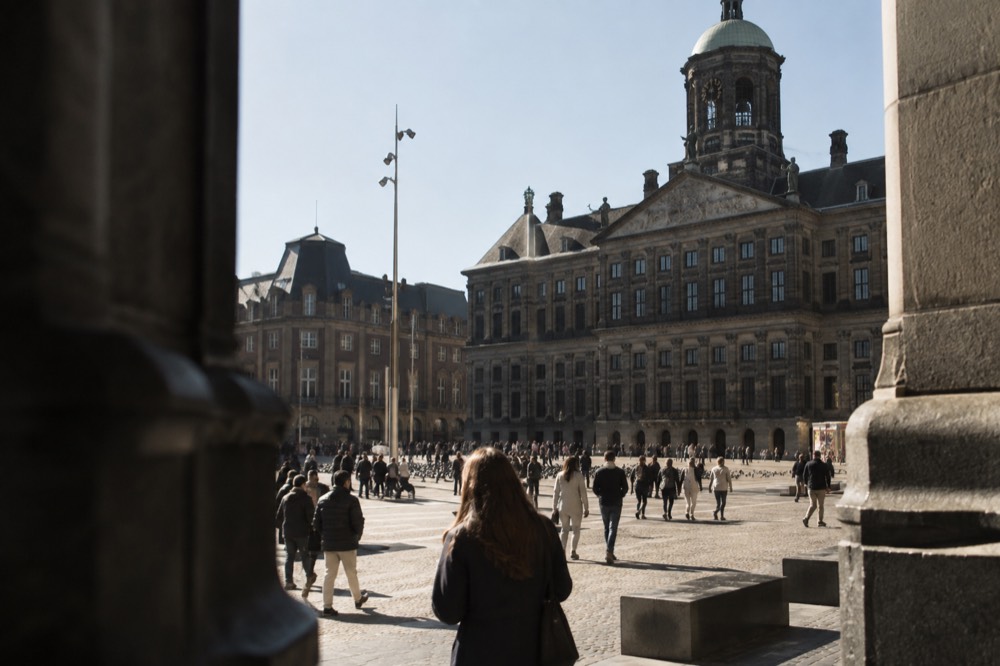
The square is public and open at all hours, so the question is purely about crowd comfort. Morning belongs to delivery vans and a handful of photographers. By late morning the tour groups arrive, walking from the Damrak towards the canal cruise docks, and the square holds that level of foot traffic until early evening. Photographers should also know that the palace facade faces east, so it is backlit in the afternoon and best shot in the morning.
Remembrance Day on 4 May and Liberation Day on 5 May transform the square completely, and King's Day turns it into one of the largest street parties in the country, orange from edge to edge. If you are visiting for those dates, the square is the event. If you want the square to yourself, those are the two days to avoid it.
Rain matters less here than elsewhere in Amsterdam because the square is a transport hub rather than a destination you linger in. The department store, the wax museum and the palace are all indoor, and the tram connections mean you can be inside a museum within fifteen minutes of the first drops.
| Time of Day | Crowd Level | Best For |
|---|---|---|
| Before 09:30 | Quiet | Photographs, a calm palace visit, seeing the square empty |
| 09:30 to 12:00 | Building | Shopping before lunch queues, museum walks |
| 12:00 to 17:00 | Peak | People-watching, buskers, terraces |
| 17:00 to 21:00 | Lively | Evening light, dinner nearby, a canal cruise departure |
How Do You Get to Dam Square?
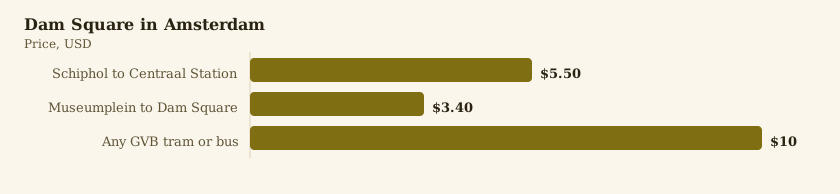
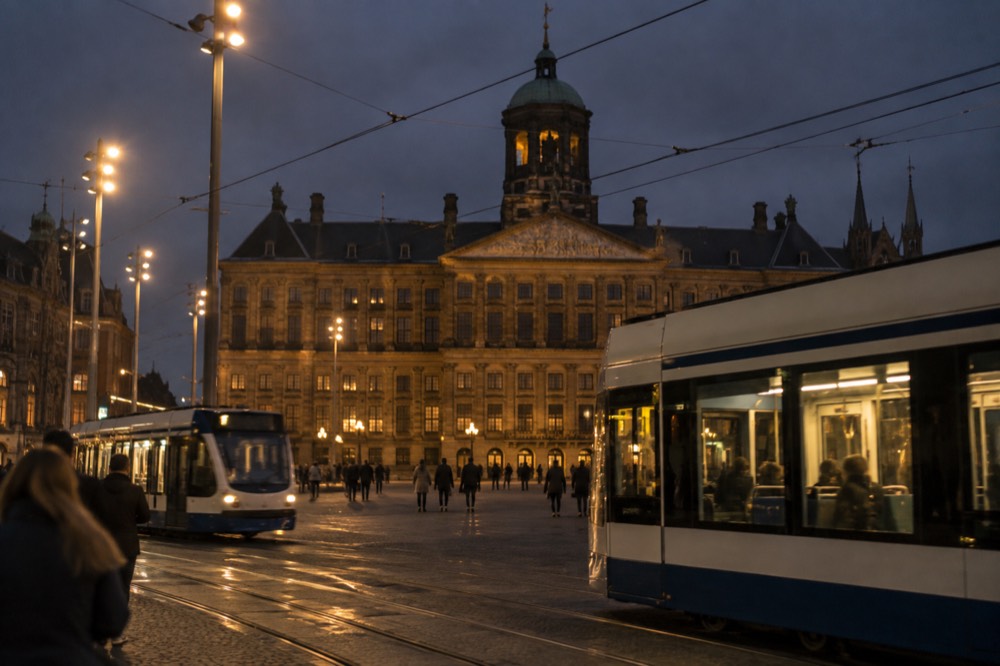
Dam Square is a ten minute walk straight down the Damrak from Amsterdam Centraal Station, and it is also the city's best-connected tram hub, with lines stopping at or near the Dam for the Museumplein, the canal belt and the eastern centre. A single GVB ticket costs €3.40 for one hour of travel, and a 24 hour pass is €10.00.
From Schiphol, take the NS train to Centraal Station, from €5.50 for the roughly 17 minute ride, then walk or catch a tram down the Damrak. The square is signposted and the walk is flat and direct, past the canal cruise departure points on the Damrak itself.
Within the city, the tram stops named Dam and Dam Square serve the lines running north-south through the centre. Contactless payment works on every GVB tram and bus, with a base fare plus a per-kilometre charge and a daily cap, so you can tap a bank card without buying a paper ticket. The square is also a comfortable walk from the Museumplein, about twenty-five minutes down the Rokin and across the canal belt, which passes enough scenery to count as sightseeing in itself.
Cyclists should note that the square itself is not a pleasant place to ride: it is pedestrian-heavy, tram tracks cross it, and bike parking is better found on the side streets. If you are doing a cycling tour of Amsterdam, most operators route around the square rather than through it.
The full transport picture, including the airport connections and the ticket types, is in our getting around Amsterdam guide, which explains which ticket suits a two day stay and which is a waste of money.
| Route | Method | Time | Cost |
|---|---|---|---|
| Centraal Station to Dam Square | Walk down the Damrak | About 10 minutes | Free |
| Schiphol to Centraal Station | NS train | About 17 minutes | From €5.50 |
| Museumplein to Dam Square | Tram or walk via Rokin | 10 by tram, 25 on foot | €3.40 single |
| Any GVB tram or bus | 24 hour pass | Unlimited rides | €10.00 |
How Much Time Should You Spend on Dam Square?
Plan on one to two hours for the square itself: fifteen minutes to see the monument and the facades, an hour for the Royal Palace if you go inside, and another hour if Madame Tussauds appeals. Add half a day only if you are pairing the square with the Van Gogh Museum or a canal cruise, both of which are short walks or tram rides away.
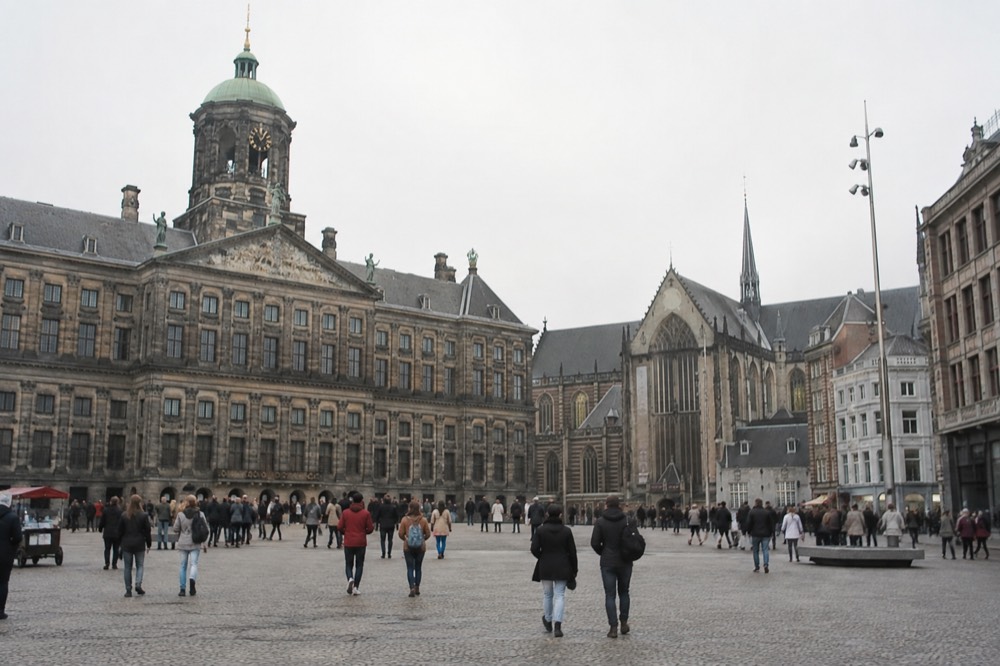
The square rewards a deliberate pass rather than a lingering one. There is no grass, little seating and no shade, so it functions as a waypoint with three attractions attached. The efficient pattern most visitors settle on is: arrive from the station, spend fifteen minutes on the square, enter the palace or the wax museum, then continue south into the canal belt or west to the Anne Frank House. The city's official visitor guidance, published on amsterdam.nl's How to Amsterdam page, asks visitors to respect the monument and the memorial function of the square, which is worth knowing before you climb anything for a photo.
If you have booked the Anne Frank House, check the museum's own ticketing page at annefrank.org for your slot time and plan the square around it, since the walk from Dam Square takes about twenty minutes and the museum admits nobody without an online ticket.
For a fuller framing of how the square fits into a whole visit, our Amsterdam for first-time visitors guide places it in a three day route, and the site's own Things to Do in Amsterdam homepage lists the attractions within walking distance of it.
Common Questions About Dam Square
Is Dam Square worth visiting?
Yes, as a waypoint with real substance. The Royal Palace interior is one of the grandest rooms in the Netherlands, the National Monument gives the square historical weight, and the location at the centre of every walking route in the old city means you will see it anyway. Give it an hour, or two if you enter the palace.
How far is Dam Square from Central Station?
About 750 metres, a ten minute walk straight down the Damrak. The route is flat, signposted and lined with canal cruise departure points, so you can book a cruise on the way. Trams also run the length of the Damrak if you prefer not to walk.
Can you go inside the Royal Palace in Amsterdam?
Yes, whenever the palace is not in use for a royal event or state function. Tickets with an audio guide start from $15 on the live listing, and the palace carries a 4.7 rating across 9,124 reviews. Check the palace's own site for closure days before you go, because state visits close it at short notice.
Is there anything free to do at Dam Square?
The square itself, the National Monument and the people-watching cost nothing. The Begijnhof courtyard and the Kalverstraat window shopping are a two minute walk away, and the walk down the Damrak from the station is free sightseeing in its own right.
Is Dam Square safe at night?
The square is one of the most policed and lit public spaces in the city and sits between two busy hotel fronts, so it stays active late. Normal city caution applies around the quieter side streets leading east towards the Red Light District. Our guide to whether Amsterdam is safe covers the neighbourhood-level detail.
How long does a visit to Dam Square take?
One to two hours covers the square, the monument and one attraction. The Royal Palace takes about an hour inside, Madame Tussauds a similar amount, and pairing the square with the Van Gogh Museum or a canal cruise turns it into a half day.