Micropia Amsterdam: Tickets, Prices and What You Actually See
Micropia, tucked inside the ARTIS complex in Amsterdam's Plantage district, is the world's only museum dedicated to microbes. Here is what a ticket costs, what you will see through the microscopes, and how to fit it into an Amsterdam day.
Short answer
Micropia is the world's first museum of microbes, inside the ARTIS park in Amsterdam. Tickets cost from €17 online or €18 at the counter, with children 12 and under free. Allow roughly 90 minutes to two hours, and consider the Late Afternoon ticket at €9 for entry from 16:00.
Amsterdam has a museum for practically everything: canals, tattoos, bags, even houseboats. The strangest of the lot is also one of the most quietly brilliant. Micropia, wedged into the corner of the ARTIS park in the Plantage district, is the only museum on earth built entirely around microbes, and it manages to make the invisible world of bacteria, fungi and viruses genuinely entertaining without a single dinosaur skeleton in sight.
The building itself carries history. It occupies the old ARTIS predator hall, a brick structure from the 1870s that once held lions and tigers and now holds petri dishes and laser-cut microscopes. The conversion took years and opened to the public as Micropia in 2014. Since then it has become the museum that Amsterdammers recommend to visitors who say they have already done the Rijksmuseum and want something different, and it works especially well for families with curious teenagers who have outgrown the zoo next door.
This guide covers the practical side: verified ticket prices, the Micropia versus ARTIS Zoo ticket decision, what the exhibits actually involve, how long a visit takes, and how the museum fits into a wider day in the east of the city.
What Is Micropia and Why Is It Worth Visiting?
Micropia is a museum about microbes, the bacteria, fungi, viruses and other microscopic life that make up the vast majority of living material on the planet. It sits inside the ARTIS park at Plantage Kerklaan 38-40, it is the only museum of its kind in the world, and it turns an invisible subject into something you can watch, smell and even kiss, thanks to its famous kiss counter that measures how many microbes two people exchange.
That kiss counter is the exhibit most visitors mention afterwards. Two people kiss against a plate, the plate is imaged, and a screen reveals the microbial swap in glorious detail. It is silly, memorable and scientifically real, which is a fair summary of the whole museum.
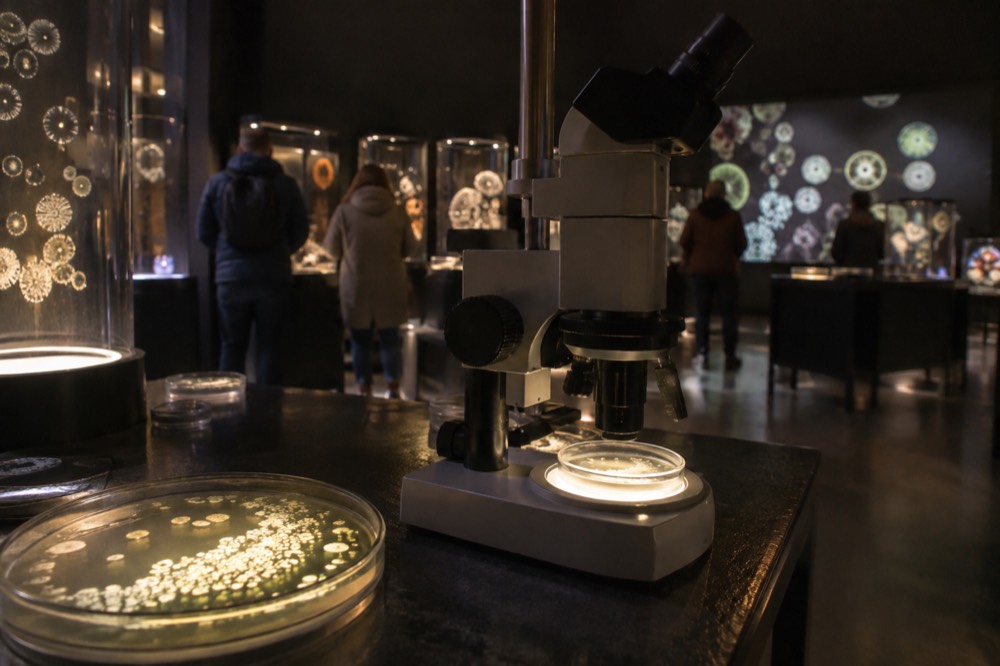
The deeper idea is what the museum calls the invisible world. Your own body carries more microbial cells than you might expect, the soil under Amsterdam is teeming with life, and the food in a Dutch market stall depends on bacteria for its cheese, its herring and its beer. Micropia makes that argument with live cultures you can watch under microscopes, a wall of backlit agar plates, and displays where the "specimens" grow, move and change between visits.
It is worth being clear about what Micropia is not. It is not large: the exhibition space is a single flowing route over two levels, and it is not a half-day attraction in the way the Rijksmuseum is. It is a tight, well-made 90 minutes to two hours that pairs naturally with the rest of the ARTIS complex, which is exactly how most visitors should plan it.
How Much Do Micropia Tickets Cost?
Micropia tickets cost from €17 online and €18 at the counter for visitors aged 13 and over, with children aged 12 and under free, according to ARTIS's own ticket-price page. Students pay €10.50, and a Late Afternoon ticket from September gives entry from 16:00 for €9. There is no separate child rate because under-13s simply walk in free.
ARTIS prices dynamically, so the online price is always the cheaper route and varies by day. The counter price is fixed. The practical advice is simple: buy online, pick a date, and check whether your hotel or itinerary makes the Late Afternoon slot viable, because €9 is the best value ticket on the whole ARTIS site.
Here is the full price picture from the official ARTIS ticket page:
| Ticket | Online | At the counter |
|---|---|---|
| Micropia, age 13 and over | from €17 | €18 |
| Micropia, age 12 and under | free | free |
| Micropia, student | €10.50 | €10.50 |
| Late Afternoon Micropia (entry from 16:00, from September) | €9 | €9 |
| ARTIS combination ticket (Zoo, Groote Museum and Micropia), 13+ | from €35.50 | €38.50 |
Two pass rules matter here and they are confirmed on the museum's own pricing page. The Museumkaart gets you into Micropia free, and so does an ICOM card. The same is true at the ARTIS Groote Museum next door. But the Museumkaart does not cover ARTIS Zoo itself, which catches a lot of Dutch visitors and long-stay travellers out, so if your plan is the full park, the combination ticket is the honest comparison rather than the Micropia-only price.
If you are building a museum-heavy itinerary, Micropia's €17 sits comfortably below the big-name museums. The Rijksmuseum charges adults €25 with timed entry, and the Van Gogh Museum also charges €25 with a mandatory pre-booked slot. Those three plus a canal cruise make a classic Amsterdam short-break core, and the trio below is the version of that plan most first-time visitors end up booking.
Micropia or ARTIS Zoo: Which Ticket Should You Buy?
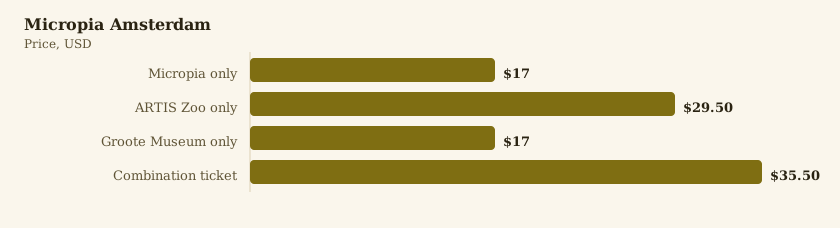
Buy the Micropia-only ticket if you have two hours and a specific interest in the science; buy the ARTIS combination ticket, from €35.50 online, if you have most of a day, because it adds the full zoo and the Groote Museum for roughly double the Micropia price. Families with under-13s should lean toward the zoo, since children are free in Micropia but pay zoo admission from age 3.
The two experiences sit in the same park but serve different moods. ARTIS Zoo is one of the five oldest zoos in the world, a leafy, low-rise park with elephants, giraffes, an aquarium and a planetarium all included with the zoo ticket. Micropia is indoors, darker, quieter and more cerebral. On a rainy Amsterdam afternoon the zoo loses some of its charm while Micropia is unaffected, which is worth remembering given how often this city rains.
The Groote Museum is the third piece of the complex and the one international visitors know least. It is the restored 19th-century natural history museum at the heart of the park, now rebuilt as an interactive exhibition about life on earth, and children up to 12 enter free there too. The combination ticket is the only way to see all three without paying twice.
| ARTIS option | Best for | Time needed | Adult price online |
|---|---|---|---|
| Micropia only | Science-minded visitors, rainy days, short visits | 90 minutes to 2 hours | from €17 |
| ARTIS Zoo only | Families, good weather, a half-day outdoors | 3 to 5 hours | from €29.50 |
| Groote Museum only | Natural history and interactive displays | 1 to 2 hours | from €17 |
| Combination ticket | Full-day visitors who want all three | Most of a day | from €35.50 |
One planning note that saves money: the Late Afternoon ticket. From September, entry from 16:00 costs €9 at Micropia, €9 at the Groote Museum and €15 at the zoo. If your flight lands at midday or you have spent the morning at the Van Gogh Museum, the late slot turns a rushed visit into a cheap one. Check the current closing time on the ARTIS site before committing, because a 16:00 start needs a museum that stays open into the evening.
If museums are the spine of your trip rather than a side dish, the big question is how to spread your time and money across them, and the answer usually starts with booking the Van Gogh Museum slot first, since it sells out and the rest of the plan hangs on it.
What Will You Actually See Inside Micropia?
The permanent collection is a series of live microbe displays: working microscopes you operate yourself, backlit agar plates growing real bacterial colonies, a window into the museum's working lab where staff cultivate the strains on display, and the kiss counter that measures the microbes exchanged between two people. Everything on show is alive, growing or both.
The route works downward. You enter at the top, past a wall of light and text that sets up the scale of the invisible world, and descend through themed zones. Early sections cover the microbes on and in the human body, which is where the kiss counter lives, alongside displays about the bacteria in your gut and on your skin. Later zones widen out to water, soil and food, with the cheese, herring and beer of the Netherlands getting their scientific due.
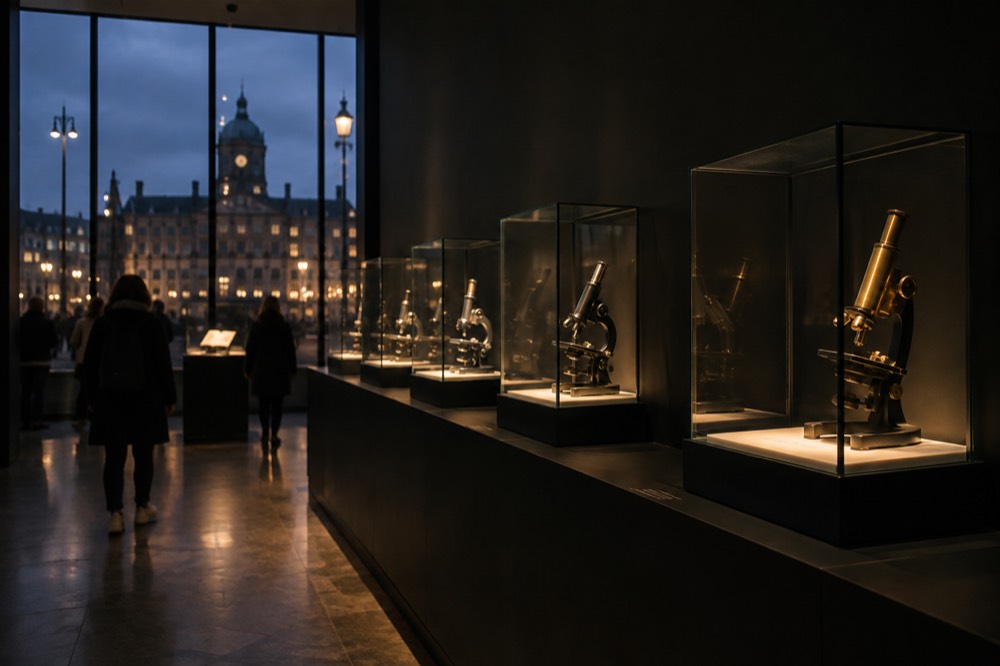
The microscope wall is the technical centrepiece. Rather than static slides, the stations show live samples, so the organisms on screen are moving in real time. Water fleas, algae, yeasts and bacteria appear at magnifications most people have never seen outside a school lesson, and the screens are good enough that a ten-year-old and a biologist will both stand there for a while.
The lab window deserves a mention because it is easy to walk past. Micropia keeps real technicians cultivating the display strains in a visible working lab, and the museum's exhibits genuinely depend on that daily work: the cultures in the cases are alive and have to be maintained. It is a small touch that separates the place from a conventional science centre with printed panels.
How Long Does a Visit Take and When Should You Go?
Most visitors spend between 90 minutes and two hours inside Micropia, which makes it a half-morning or late-afternoon attraction rather than a full-day one. The quietest slots are weekday mornings right at opening and the Late Afternoon window after 16:00; weekends and school holidays fill up, and the museum's own capacity is small enough that crowding is felt quickly.
Because the space is compact, timing matters more here than at a big museum. A crowded Micropia means waiting at microscope stations, and the exhibits are hands-on enough that a queue genuinely degrades the visit. If you are combining with ARTIS Zoo, do the zoo in the morning when the animals are active, then duck into Micropia when your legs give out, which is the natural rhythm most families fall into anyway.
Seasonally, the museum is a reliable bad-weather option, which in Amsterdam is a real category. It is fully indoors, heated, and reachable by tram in about ten minutes from the centre. In the tulip season rush of late March through early May, and again in the summer school holidays, the whole Plantage area gets busy, so a pre-booked online slot is the sensible move.
For context on how the city's rhythm affects your planning, Amsterdam logged 23.7 million tourist overnight stays in 2025 and the municipal forecast puts 2026 between 23.7 and 25.1 million, so shoulder-hour planning is not paranoia, it is just how the city works now. The official ARTIS ticket-price page is the place to check the live online price for your exact date, because the dynamic pricing means the "from" figure moves.
Is Micropia Good for Kids and Teenagers?
Children aged 12 and under enter Micropia free, and the museum is genuinely built for curious kids rather than merely tolerating them, with hands-on microscopes, the kiss counter and a lab window. Teenagers are arguably the ideal audience: the gross-out factor of the human-microbe zone lands perfectly at that age, and the science is real rather than dumbed down.
For younger children, the honest answer is that Micropia works best from around age seven or eight upward. Below that, the abstract idea of invisible organisms can bounce off a four-year-old, and the ARTIS Zoo next door, with its aquarium and planetarium included in the zoo ticket, is the better spend of a small child's attention. The free entry for under-13s means there is no financial penalty for trying it, which is a sensible design.
For teenagers, the museum is close to a guaranteed win. The displays about the microbes exchanged by kissing, the bacteria in the gut, and the life in a drop of canal water hit the exact intersection of disgusting and fascinating that age group operates in. Parents travelling with teens who have declared themselves bored of museums should treat Micropia as the reset button, and our Amsterdam with teenagers two-day plan slots it into a wider itinerary.
Families planning a broader trip will find more ideas in the Amsterdam with kids guide, and the Plantage district itself, covered in our Amsterdam Oost and the Plantage area guide, is one of the most family-friendly corners of the city, with the Hortus Botanicus and the Jewish Cultural Quarter within a short walk.
Getting to Micropia and Combining It With Your Day
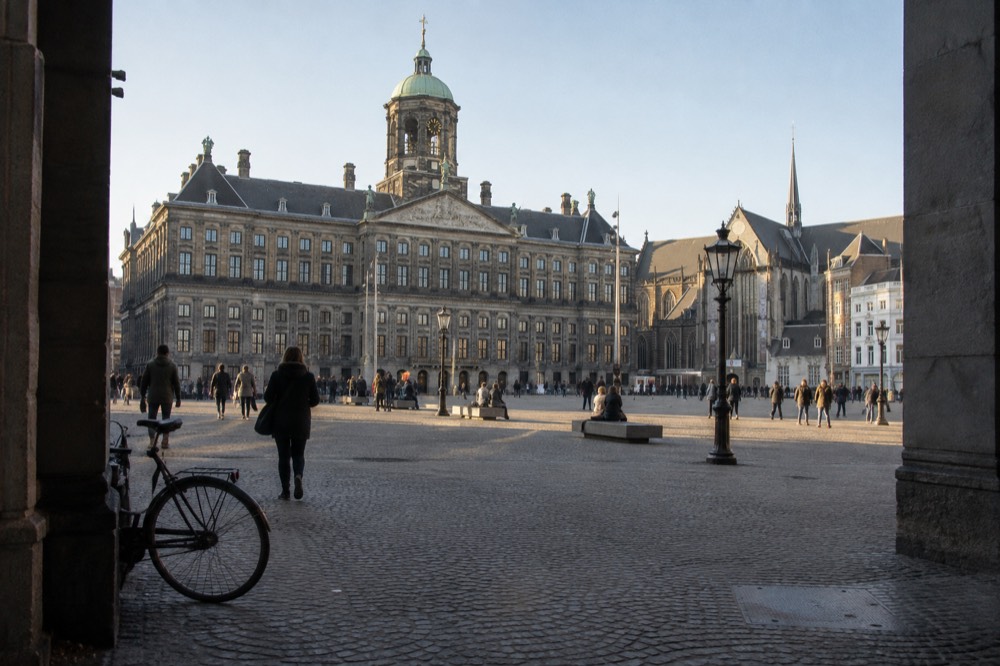
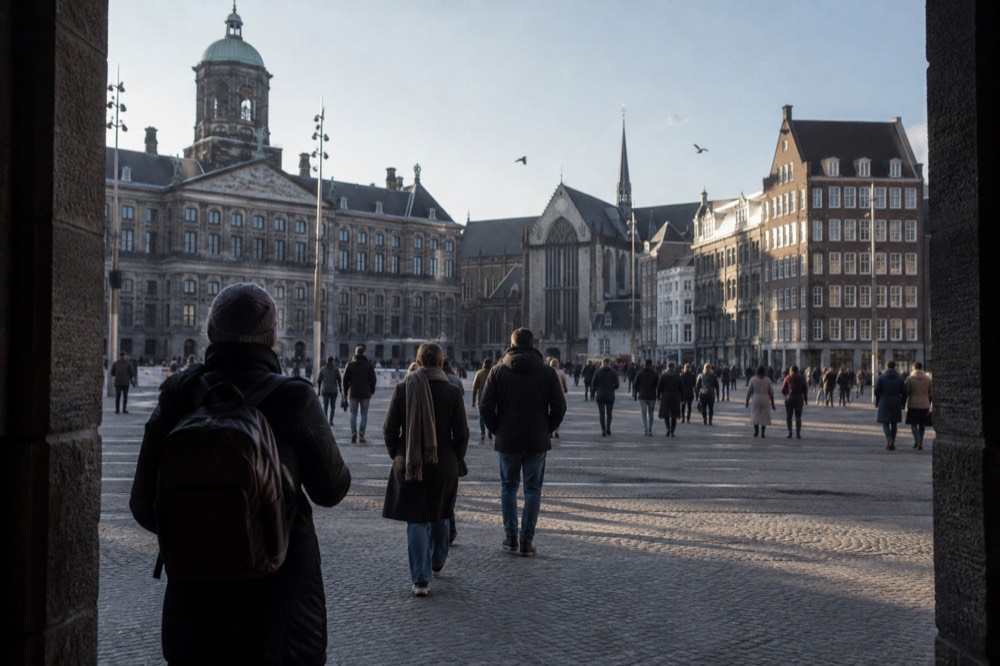
Micropia sits at the ARTIS main entrance area, Plantage Kerklaan 38-40, a ten to fifteen minute tram ride east of Dam Square, with tram stops Alexanderplein and ARTIS both within a short walk. From Amsterdam Centraal it is about 20 minutes by tram or a 30 minute walk through the Plantage, and the district rewards the walk with the Hortus Botanicus and the Jewish Cultural Quarter along the way.
A single GVB tram ticket costs €3.40 for one hour, or you can tap a contactless bank card with OVpay, which charges a base fare of €1.16 plus €0.217 per kilometre with a daily cap on the GVB network. For a day of hopping between the Plantage and the centre, the 24-hour GVB day ticket at €10.00 usually wins once you make more than three or four rides. The full fare detail is in our getting around Amsterdam guide.
The natural pairing is the rest of the Plantage. The Dutch National Maritime Museum is ten minutes north, the Hortus Botanicus, one of the oldest botanical gardens in the world, is five minutes west, and the Jewish Cultural Quarter with the Portuguese Synagogue is on the same side of the district. A full Plantage day of Micropia plus two of those neighbours is one of the better non-obvious Amsterdam itineraries, and it barely touches the canal belt crowds.
If you would rather anchor the day with a headline attraction and treat Micropia as the late-afternoon add-on, the €9 Late Afternoon ticket exists for exactly that plan. A morning at the Van Gogh Museum, a canal cruise at midday, and microbes at 16:00 is a genuinely excellent Amsterdam day, and the selection below covers the bookable half of it.
After dark, the Plantage empties out and the centre fills up. A one-hour evening cruise is the standard way to close a day here, and the classic saloon-boat version with drinks and Dutch cheese included is the one most repeat visitors recommend, with a 4.8 rating across more than 33,000 reviews on the live listing.
Where Micropia Fits Among Amsterdam's Big Attractions
Micropia is a second-tier attraction by visitor volume but a first-tier one by originality, and it earns its place in most itineraries as the change of pace between the heavyweight museums. If your trip includes the Rijksmuseum, the Van Gogh Museum and Anne Frank House, Micropia is the palate cleanser that keeps day three from feeling like a queue.
The honest ranking logic goes like this. The Van Gogh Museum, at €25 with mandatory timed entry, and the Rijksmuseum, also €25 with a booked start time, are the two must-book items for almost every visitor. Anne Frank House is its own category: tickets go on sale only through the museum's official site, with no legitimate reseller, and adult tickets cost €16.50. Those three absorb the prime daytime hours of most short trips.
Micropia then competes with the Heineken Experience, NEMO and the A'DAM Lookout for the remaining slots. Against NEMO it is the quieter, more focused sibling: NEMO is the largest science museum in the country, built for a broad family audience, while Micropia goes deep on one subject. A flat €21.50 gets you into NEMO, and its roof terrace is free to reach without a ticket, a detail worth knowing for a cheap skyline view, and one covered in our NEMO Science Museum guide.
| Attraction | Adult price | Time needed | Best fit |
|---|---|---|---|
| Micropia | from €17 online | 90 min to 2 hours | Science fans, rainy afternoons, teens |
| NEMO Science Museum | €21.50 flat | 2 to 3 hours | Families with school-age kids |
| Heineken Experience | from $23 on the live listing | about 90 minutes | Groups, beer lovers, evening-adjacent fun |
| Rijksmuseum | €25, timed entry | 2 to 4 hours | Every first visit |
| Van Gogh Museum | €25, timed entry | 2 hours | Every first visit, book first |
The Heineken Experience deserves its spot in that comparison because it solves the same late-afternoon problem Micropia does, just with beer instead of bacteria. It sits in the original Heineken brewery building, runs about 90 minutes, and holds a 4.6 rating across nearly 40,000 reviews on the live listing, which makes it the most-reviewed attraction of this tier in the city.
Whichever way you build the day, the pattern that works is one heavyweight museum in the morning, one mid-weight attraction in the afternoon, and the canals in the evening. Micropia plays the middle role as well as anything in Amsterdam, and it is the one people tell stories about afterwards. For the wider picture of how the city's pieces fit together, Things to Do in Amsterdam keeps a running comparison of every major attraction and tour.
Common Questions About Micropia
How much do Micropia tickets cost?
Tickets cost from €17 online and €18 at the counter for ages 13 and over. Children aged 12 and under enter free, students pay €10.50, and the Late Afternoon ticket from September gives entry from 16:00 for €9. Prices come from the official ARTIS ticket-price page, and online prices vary by day.
Is Micropia included with the ARTIS Zoo ticket?
No. Micropia, ARTIS Zoo and the Groote Museum each have their own tickets, and the combination ticket covering all three costs from €35.50 online or €38.50 at the counter. The zoo ticket alone does not include Micropia.
Does the Museumkaart cover Micropia?
Yes. The Museumkaart gets you free entry to Micropia and to the ARTIS Groote Museum, but it does not cover ARTIS Zoo itself. That distinction is stated on the official ARTIS pricing page and catches many visitors out.
How long should I spend at Micropia?
Plan for 90 minutes to two hours. The exhibition is a single flowing route over two levels with hands-on microscopes, so a crowded visit takes longer and a quiet one can be done faster. Weekday mornings and the Late Afternoon window are the calmest times.
Is Micropia good for children?
It works best from around age seven or eight upward, and teenagers are arguably the ideal audience. Under-13s enter free, so there is no cost in trying it, but very young children usually get more from the zoo, aquarium and planetarium next door.
How do I get to Micropia from central Amsterdam?
Take a tram east toward Alexanderplein or the ARTIS stop, roughly ten to fifteen minutes from Dam Square and about 20 minutes from Amsterdam Centraal. A single one-hour GVB ticket costs €3.40, or tap a contactless card with OVpay. Walking from the centre takes about 30 minutes through the Plantage district.