Portuguese Synagogue Amsterdam: A Visitor's Guide to the Jewish Cultural Quarter
The Portuguese Synagogue is one of the most remarkable buildings in Amsterdam, a candlelit seventeenth-century sanctuary that still serves the city's Sephardic Jewish community and anchors a compact quarter of museums and memorials within walking distance of Waterlooplein.
Short answer
The Portuguese Synagogue stands in the heart of Amsterdam's Jewish Cultural Quarter, a cluster of museums and memorial sites around Waterlooplein. The synagogue dates from the seventeenth century and is still in religious use. Combine it with the Jewish Museum and the Holocaust memorial sites, and reach it by tram or metro to Waterlooplein.
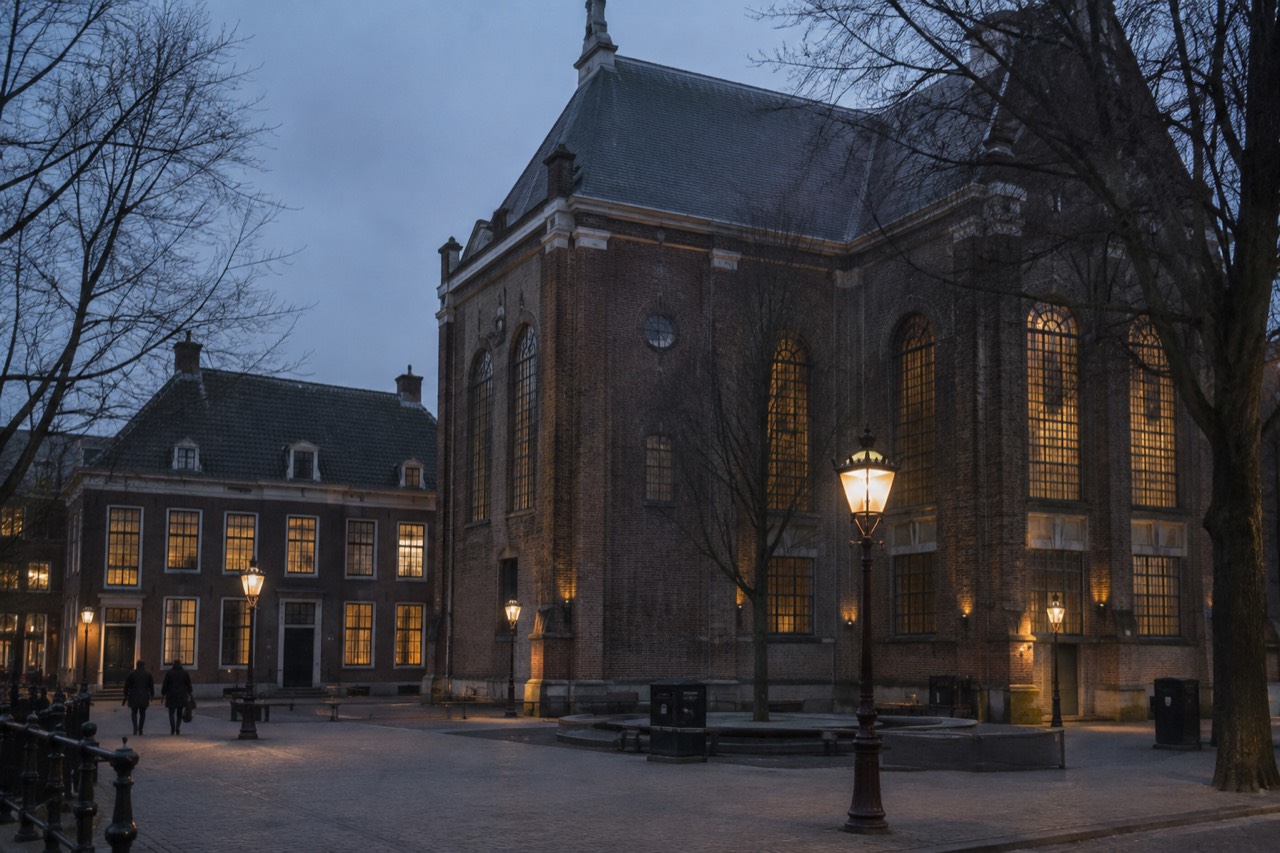
Amsterdam hides its most moving building behind a plain brick wall on the Mr. Visserplein. The Portuguese Synagogue, completed in the seventeenth century for the Sephardic Jewish community that had fled persecution on the Iberian peninsula, remains a working house of prayer, and it is lit the way it was when it was built: by candlelight, with hundreds of candles reflected in brass chandeliers and a floor of fine sand. There is no electric lighting in the main hall. On a grey Amsterdam afternoon the effect is unlike anything else in the city, and unlike anything else in Europe.
The synagogue sits inside the Jewish Cultural Quarter, a small walkable district east of the centre that also holds the Jewish Museum, the Hollandsche Schouwburg memorial and the National Holocaust Museum. This guide covers what each site offers, how ticketing works, what a visit costs alongside Amsterdam's better-known museums, and how to fit the quarter into a day that might also include the Anne Frank House or the canal ring. One planning note up front: the Anne Frank House is a separate attraction on the Prinsengracht, its tickets are sold only through the museum's own website, and no tour or city pass can buy you entry there.
What Is the Portuguese Synagogue in Amsterdam?
The Portuguese Synagogue, known locally as the Esnoga, is a Sephardic synagogue completed in the seventeenth century and still used by Amsterdam's Portuguese Jewish community for services. It is one of the largest functioning synagogues in Europe, built in the classical style, and its interior is illuminated entirely by candles over a sand-covered floor.
The story begins with migration. From the late sixteenth century, Jews fleeing the Inquisition in Spain and Portugal began arriving in the Dutch Republic, which was unusual in Europe for tolerating open Jewish worship. Amsterdam's Sephardic community grew wealthy through trade and printing, and by the later seventeenth century it had outgrown its earlier synagogues. The community commissioned a new building on an island plot off the Jodenbreestraat, and the design, attributed to the architect Elias Bouman, produced a rectangular brick hall in the manner of the Temple of Solomon as then imagined: a raised reader's platform, galleries for the congregation, and a deliberate absence of gilding or figurative decoration.
The building has survived remarkably intact. It escaped the fires and demolitions that reshaped much of Amsterdam, and although the quarter around it was devastated during the Second World War, when the great majority of Amsterdam's Jewish population was deported and murdered, the synagogue itself came through. Services resumed after the war and continue today. That continuity is the reason a visit here feels different from a visit to a museum: the Esnoga is not a reconstruction or a monument to something lost, it is a building still doing the job it was built for more than three centuries ago.
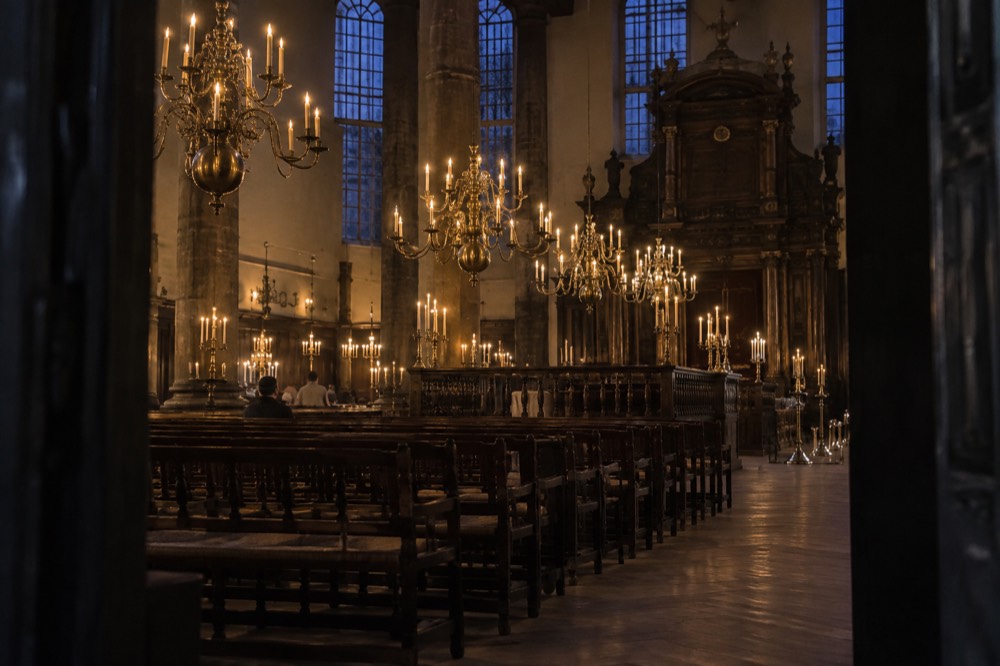
The candlelight deserves its own paragraph, because it is the detail every visitor remembers. The congregation decided, when the building was new, to keep the interior as it was, which means no electric fixtures in the main hall. Daylight comes through tall round-arched windows, and on darker days and evenings the room glows from the candles alone. The floor of pale sand, a traditional feature in Sephardic synagogues, muffles footsteps and keeps the acoustics soft. Photography is permitted in the building, but services and worshippers should never be photographed, and visitors should dress modestly out of respect for a working religious site.
What Can You See at the Portuguese Synagogue?
A visit covers the monumental main hall with its candlelit chandeliers and sand floor, the surrounding courtyard buildings, and a treasure room holding the community's historic silver, ceremonial textiles and manuscripts. Most visitors spend around an hour inside the synagogue itself before moving on to the surrounding quarter.
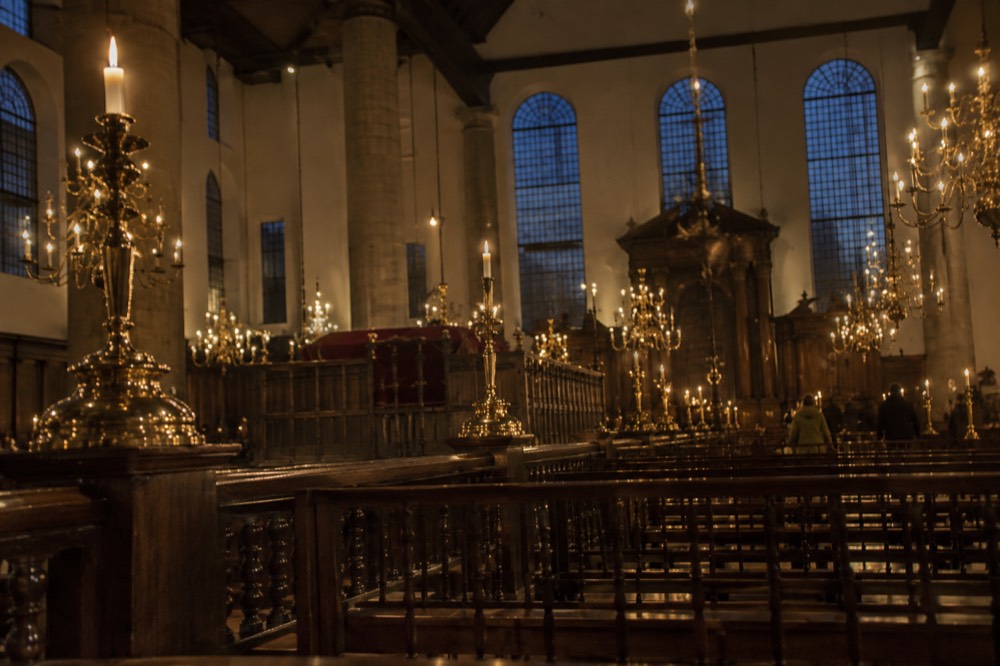
The main hall is the centrepiece, and you enter it as the congregation's members would have, through the courtyard rather than through a grand facade. Inside, the scale is the first surprise: the hall is longer than a tennis court, with two rows of columns supporting the women's galleries and the hechal, the ark holding the Torah scrolls, standing at the far end. The reader's platform, the tebah, sits in the centre of the room under the tallest chandeliers. On a bright day the windows throw shafts of light across the sand floor, and in the evening the candles do all the work.
Around the courtyard, the complex includes the Ets Haim library, the oldest functioning Jewish library in the world, and a treasure chamber displaying the community's ceremonial silver, Torah ornaments and manuscripts. The library's collection was assembled from the seventeenth century onward and is still consulted by scholars. The courtyard itself, with its trees and low buildings, is one of the quietest corners of central Amsterdam, and on a weekday you may have it almost to yourself.
The synagogue is best understood as one stop inside the wider Jewish Cultural Quarter, and the other sites are all within a few minutes' walk. The quarter's institutions are separate buildings with their own characters, and a combined ticket has traditionally covered them, though you should check the current arrangement on the official listing before you go. The table below shows what each site offers.
| Site | What It Covers | Best For |
|---|---|---|
| Portuguese Synagogue | The Esnoga, its candlelit hall, treasure chamber and Ets Haim library | Architecture, religious history, atmosphere |
| Jewish Museum | Jewish life, religion and culture in the Netherlands, in former synagogues opposite the Esnoga | Context for everything else in the quarter |
| Hollandsche Schouwburg | The former theatre used as a deportation centre, now a memorial to the Jewish victims from the Netherlands | Remembrance and WWII history |
| National Holocaust Museum | The Netherlands' national museum on the Holocaust, in a former teacher training college and creche | The persecution and deportation story in depth |
The Jewish Museum, directly across the street in a row of former Ashkenazi synagogues, is the natural first stop if you want the full narrative: it explains who Amsterdam's Jews were, how the two communities, Sephardic and Ashkenazi, lived alongside each other, and what happened to them under occupation. The Hollandsche Schouwburg is the hardest visit and the shortest. It was a theatre until the German occupiers turned it into a holding point for deportations to Westerbork and onward to the camps. Today its interior is a memorial hall, and the wall of names records the Jewish men, women and children deported from the Netherlands, most of whom did not return.
If you are building a full Amsterdam itinerary around this quarter, the city's biggest bookable experiences are worth lining up at the same time, because the Jewish Cultural Quarter takes half a day and pairs naturally with a museum afternoon or a canal cruise.
How Do You Visit the Jewish Cultural Quarter and What Does It Cost?
The quarter's sites sit within five minutes of each other around Waterlooplein. Ticketing arrangements for the quarter's own sites change, so check the official listing for current prices and combination tickets. Amsterdam's major museums, by contrast, have verified entry prices: the Rijksmuseum and Van Gogh Museum both charge €25 for adults, with free entry under 18.
Start with the practical split. The Jewish Cultural Quarter's own ticketing is handled by its institutions, and a combined ticket has historically covered the synagogue, the Jewish Museum and the memorial sites, but arrangements and prices move, so treat the official site as the source of truth rather than a figure copied from a blog. What can be stated firmly is how the quarter's cost compares with the rest of Amsterdam, because the city's headline museums publish their prices openly. The Rijksmuseum charges adults €25 and admits visitors aged 18 and under free, every day of the year from 9am to 5pm, with a timed entry slot you book in advance. The Van Gogh Museum also charges €25, free under 18, and requires every visitor to pre-book a timed ticket. The Anne Frank House charges €16.50 for adults, €7 for ages 10 to 17, and sells tickets only through its own website, annefrank.org, for a specific date and time, with no door sales.
| Museum | Adult Entry | Children and Teens | Booking Rule |
|---|---|---|---|
| Rijksmuseum | €25 | Free for ages 18 and under | Timed start time required, book online |
| Van Gogh Museum | €25 | Free for visitors under 18 | All visitors must pre-book a timed ticket |
| Anne Frank House | €16.50 | €7 for ages 10 to 17, €1 for ages 0 to 9 | Online only via the official site, no door sales |
| NEMO Science Museum | €21.50 | €21.50 for ages 4 and over, free under 4 | Tickets carry a start time |
Passes behave differently at each of these, and this is where a little planning saves real money. The I amsterdam City Card, verified at €67 for 24 hours and €94 for 48 hours, includes free entry to more than 70 museums and locations, unlimited GVB transport and a canal cruise, but the Anne Frank House is explicitly excluded, a fact confirmed from both sides, since the museum's own price table states plainly that the card gives no discount there. The Museumkaart, €75 for adults and €39 for those 18 and under with a one-off registration fee of €4.95, covers more than 500 museums across the Netherlands, but a temporary card bought at a museum by a visitor without a Dutch address is valid 31 days for a maximum of 5 visits, and it does not cover the Anne Frank House either, where it reduces your cost to a €1 booking fee. Details are on the Museumkaart FAQ page. For the Jewish Cultural Quarter's own sites, check the card's current museum list before assuming inclusion.
If your day pairs the quarter with the Museumplein museums, the Van Gogh Museum is the one to book first, because its timed tickets are the most competitive in the city. You can check dates and current pricing on the live listing before you commit to the rest of the day.
Is the Portuguese Synagogue Worth Visiting?
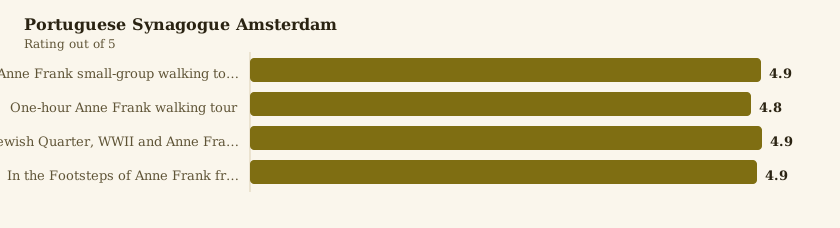
Yes, for most travellers it is one of the most atmospheric stops in Amsterdam, and it pairs naturally with a guided walking tour of the Jewish Quarter. The small-group Anne Frank walking tour costs from $33 for two hours, and a one-hour version costs from $22, both rated 4.8 or higher across thousands of reviews on their live listings.
The honest answer depends on what you want from Amsterdam. If your list is canals, the Rijksmuseum and a brewery, the synagogue may feel like a detour. But if you have any interest in history, architecture or religious buildings, the Esnoga is one of the few Amsterdam sights with no modern equivalent anywhere else. The candlelit hall, the working library and the unbroken continuity of the community give it a weight that the city's more photographed attractions cannot match. Visitors who arrive expecting a small heritage site tend to leave having stayed twice as long as planned.
Guided walks deepen the visit considerably, because the quarter's street plan tells a story that the buildings alone do not. The Anne Frank walking tour in a small group runs two hours through the Jewish Quarter and the wartime story, from $33 per person, rated 4.9 across 4,680 reviews on the live listing. It covers the streets, not the house: no walking tour includes entry to the Anne Frank House, whose tickets exist only on the museum's own site.
A shorter option is the one-hour Anne Frank small-group walking tour, from $22, rated 4.8 across 15,104 reviews, which squeezes the quarter's essential story into a lunch-hour format for travellers on a tight schedule. Both paid tours are led by local guides and both stop in the streets around the quarter rather than inside the paid sites, so budget separately for synagogue and museum entry.
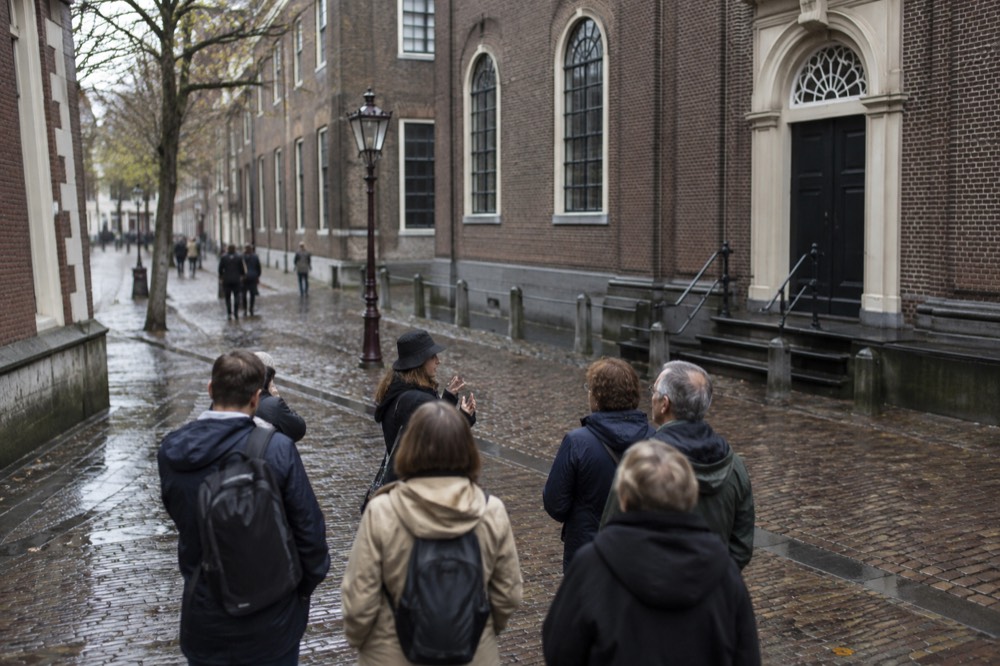
There is also a genuinely free option, and it is a good one. The Jewish Quarter, WWII and Anne Frank Story walk is free to book on GuruWalk and runs about two hours, rated 4.91 across 1,364 reviews. Free here means pay what you want: you book without paying, walk with the guide, and tip at the end what the walk turned out to be worth to you. For travellers unsure whether the quarter merits a paid tour, it is the lowest-risk way to find out.
The table below compares the quarter's walking tours side by side so you can match one to your budget and schedule.
| Tour | Duration | Price | Rating and Reviews |
|---|---|---|---|
| Anne Frank small-group walking tour | 2 hours | From $33 | 4.9 across 4,680 reviews |
| One-hour Anne Frank walking tour | 1 hour | From $22 | 4.8 across 15,104 reviews |
| Jewish Quarter, WWII and Anne Frank Story walk | 2 hours | Free on GuruWalk, tip your guide | 4.91 across 1,364 reviews |
| In the Footsteps of Anne Frank free walk | 2 hours 30 minutes | Free on GuruWalk, tip your guide | 4.86 across 133 reviews |
How Do You Get to the Portuguese Synagogue?
The synagogue sits on Mr. Visserplein, a two-minute walk from Waterlooplein, which is served by metro lines and several trams. A single GVB ticket costs €3.40 for one hour, and a 24-hour day pass costs €10.00, per the official GVB fare table.
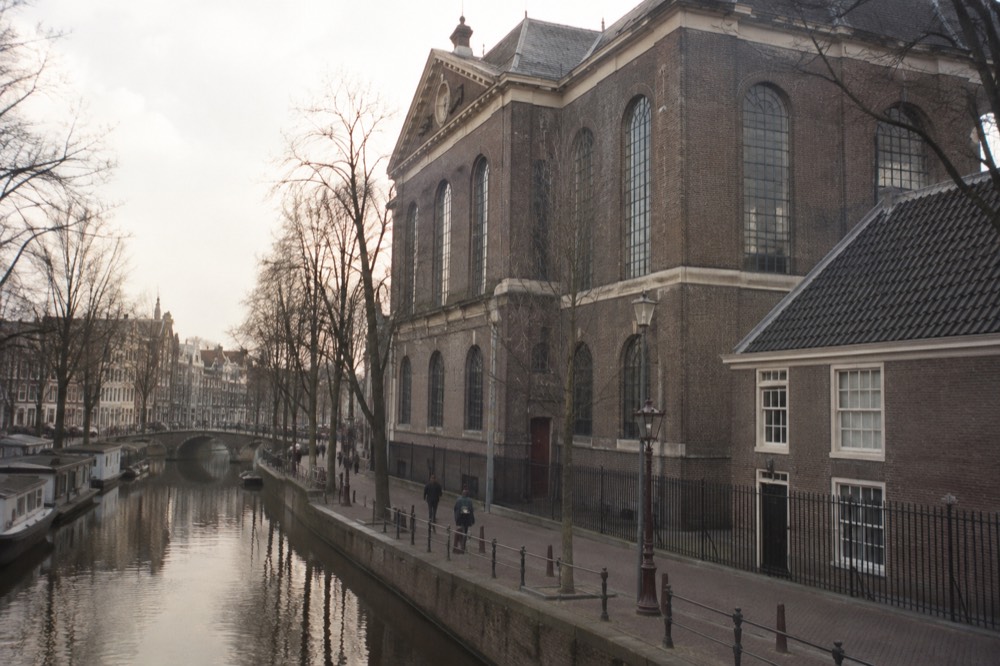
Waterlooplein is one of the best-connected squares in the city for a destination this far east of the Dam. The metro stops underneath the market square, and trams run along the surrounding streets, so almost anywhere in the centre reaches the quarter in ten to fifteen minutes. If you are staying in the canal belt or around the centre, walking is often faster than waiting for a tram once you account for stops: from Dam Square the synagogue is a straightforward fifteen-minute walk east along the Jodenbreestraat.
Paying for the ride is simpler than it used to be. OVpay lets you tap a contactless bank card or phone on GVB trams, buses, metro and ferries, with a base fare of €1.16 plus €0.217 per kilometre, capped daily on the GVB network. If you prefer a paper ticket, the classic day passes are still sold, and the official fare table at gvb.nl/en/prices is the source to check before you buy.
| GVB Ticket | Price |
|---|---|
| Single, 1 hour | €3.40 |
| Day pass, 24 hours, adult | €10.00 |
| Day pass, 24 hours, child | €5.00 |
| Day pass, 48 hours | €16.00 |
| Day pass, 72 hours | €21.50 |
| Day pass, 96 hours | €27.50 |
| Day pass, 120 hours | €34.00 |
For a one-off visit to the quarter, a single ticket or a contactless tap is all you need. The multi-day passes only pay off once you are riding trams several times a day, which is worth keeping in mind if you were weighing a pass against the I amsterdam City Card, whose transport inclusion covers GVB services within Amsterdam only.
What Else Is Near the Jewish Cultural Quarter?
Within ten minutes' walk of the synagogue you reach the Waterlooplein flea market, the Blauwbrug bridge over the Amstel, the Hortus Botanicus garden and the eastern edge of the old centre. The Red Light District lies about fifteen minutes west, and Museumplein is a short tram ride away.
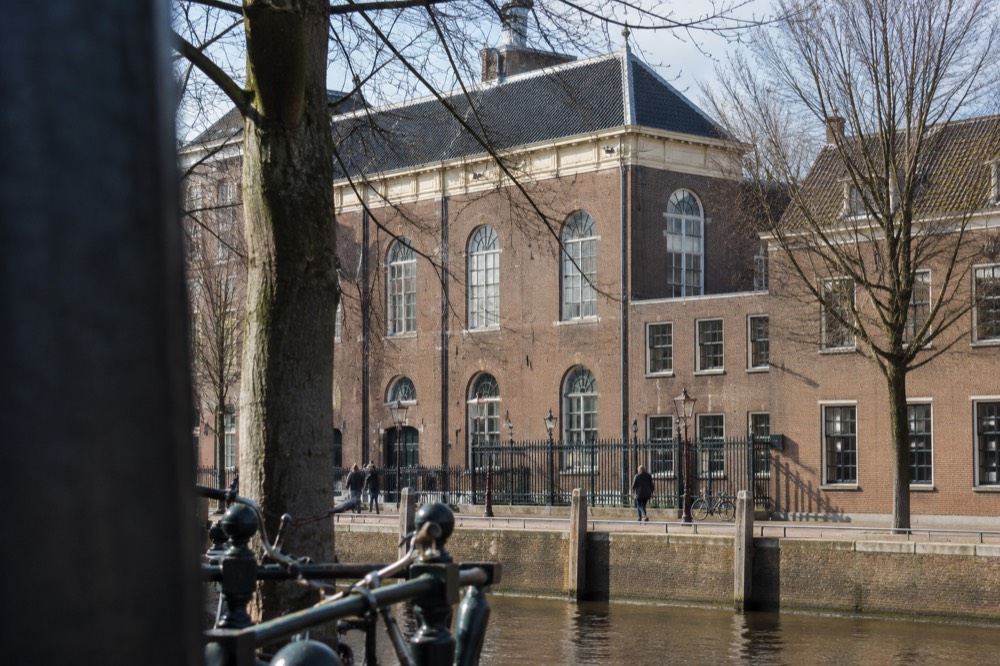
The quarter sits at a seam of the city where several very different Amsterdams touch. South and east lie the Plantage neighbourhood and the Hortus Botanicus, one of the oldest botanical gardens in the world, a calm, green finish to a heavy morning at the memorial sites. West across the Blauwbrug, the blue bridge over the Amstel, you are in the old centre within minutes, with the Red Light District a further walk along the Zeedijk. That route passes through what was historically the Jewish quarter's crowded heart, and a guide will point out the traces: street names, memorial stones in pavements, and the buildings that survived.
If you are continuing towards Museumplein, the pairing works well as a single day. Do the Jewish Cultural Quarter in the morning when the synagogue's light is at its best, take a tram to Museumplein after lunch, and spend the afternoon at the Van Gogh Museum, which holds more than 200 paintings, 500 drawings and 750 letters by the artist. Its entry ticket is the single most-booked museum ticket in the city, rated 4.7 across 57,096 reviews, so booking ahead is not optional advice but basic planning. Check availability for your dates before you build the rest of the day around it.
For the full spread of things to do across the city, from canal cruises to day trips, the Things to Do in Amsterdam homepage organises the options by neighbourhood and by day of your trip.
When Is the Best Time to Visit the Portuguese Synagogue?
Weekday mornings are the quietest time to visit the quarter, and the synagogue's candlelit interior is most atmospheric on darker days and evenings. Amsterdam recorded 23.7 million tourist overnight stays in 2025, a record, and the city forecasts between 23.7 and 25.1 million for 2026, so early starts matter everywhere in the centre.
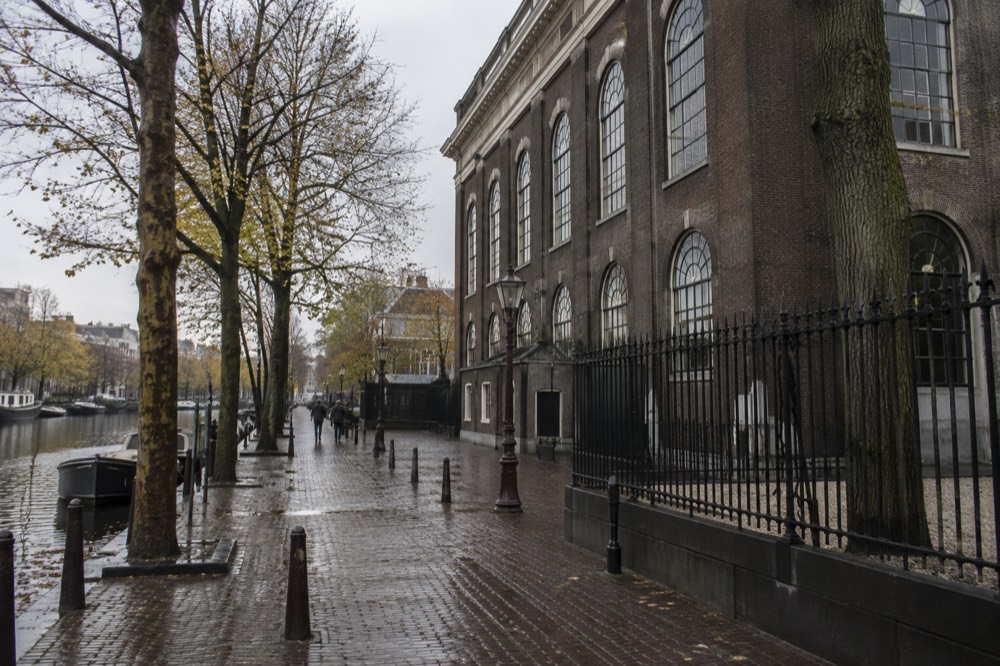
The crowd logic in Amsterdam is consistent: the earlier you arrive at any major site, the more of it you get to yourself. That applies doubly to the Jewish Cultural Quarter, because its sites are small and its memorial rooms lose much of their power when full. A weekday morning gives you the synagogue's hall with a handful of other visitors, and the Waterlooplein market, which trades six days a week, adds street life on your way in.
Season matters less here than at outdoor attractions, which is the quarter's quiet advantage. The synagogue is an indoor stop that loses nothing in November, and the memorial sites are if anything better suited to a reflective grey day than to a bright one. If your trip falls in tulip season, from mid-March to mid-May, do not sacrifice a morning here for the fields: the quarter is a two-hour commitment that slots into any weather, while the Keukenhof gardens near Lisse are open only from 19 March to 10 May and need a full half-day of their own.
One timing rule to respect: the Esnoga is a working synagogue, and it closes to visitors around religious holidays and for services, so check the official listing for the days that matter before you lock in an itinerary. Saturday, the Sabbath, affects opening arrangements, and Jewish holidays can close the whole quarter. Plan the synagogue early in your trip rather than on your only morning, so a closure does not cost you the visit entirely.
Before the final word, here are the three experiences travellers most often pair with a Jewish Cultural Quarter morning, in case one of them fits your remaining days in the city.
Common Questions About the Portuguese Synagogue and the Jewish Cultural Quarter
Is the Portuguese Synagogue still an active synagogue?
Yes. The Esnoga has held services continuously since the seventeenth century, apart from the war years, and Amsterdam's Sephardic community still worships there. That is why the interior has no electric lighting and why visiting hours bend around services and holidays. Check the official listing for the days that affect openings.
How much time should you allow for the Jewish Cultural Quarter?
Most visitors spend about an hour inside the synagogue itself, then two to three hours more across the Jewish Museum and the memorial sites. A half-day is a comfortable budget, and a guided walking tour of one to two hours on top of that adds the street-level history the buildings cannot tell you.
Can you visit the Portuguese Synagogue with the I amsterdam City Card?
The card includes free entry to more than 70 museums and locations, but inclusions change, so check the card's current museum list for the Jewish Cultural Quarter's sites before relying on it. What is certain is that the card does not include the Anne Frank House, which the museum's own price table confirms with a plain no-discount note.
Is the Anne Frank House part of the Jewish Cultural Quarter?
No. The Anne Frank House is on the Prinsengracht in the western canal belt, about twenty minutes from the synagogue by foot or tram. The two are often confused in itineraries. Anne Frank House tickets are sold only through the museum's own website for a specific date and time, and no tour, pass or reseller can buy you entry.
Are the Jewish Quarter walking tours suitable for children?
The paid small-group tours and the free GuruWalk walks welcome families, but the subject matter, especially at the Hollandsche Schouwburg memorial, is heavy. Families with younger children often do the synagogue and the Jewish Museum, which has displays pitched at children, and save the Holocaust-era sites for older kids.
Can you take photographs inside the synagogue?
The building permits photography of the architecture, but never of worshippers, services or rituals. The candlelit hall is one of the most photographed interiors in Amsterdam, and the best shots come from the gallery level looking down the length of the hall. Dress modestly and keep voices low, since the building remains in religious use.