STRAAT Museum Amsterdam: Street Art in a NDSM Warehouse
STRAAT sits in a former shipyard warehouse on the NDSM Wharf, holding what it describes as the world's largest collection of street art on canvas. This guide covers the art, the journey north, ticket options and how to fit STRAAT into an Amsterdam museum day.
Short answer
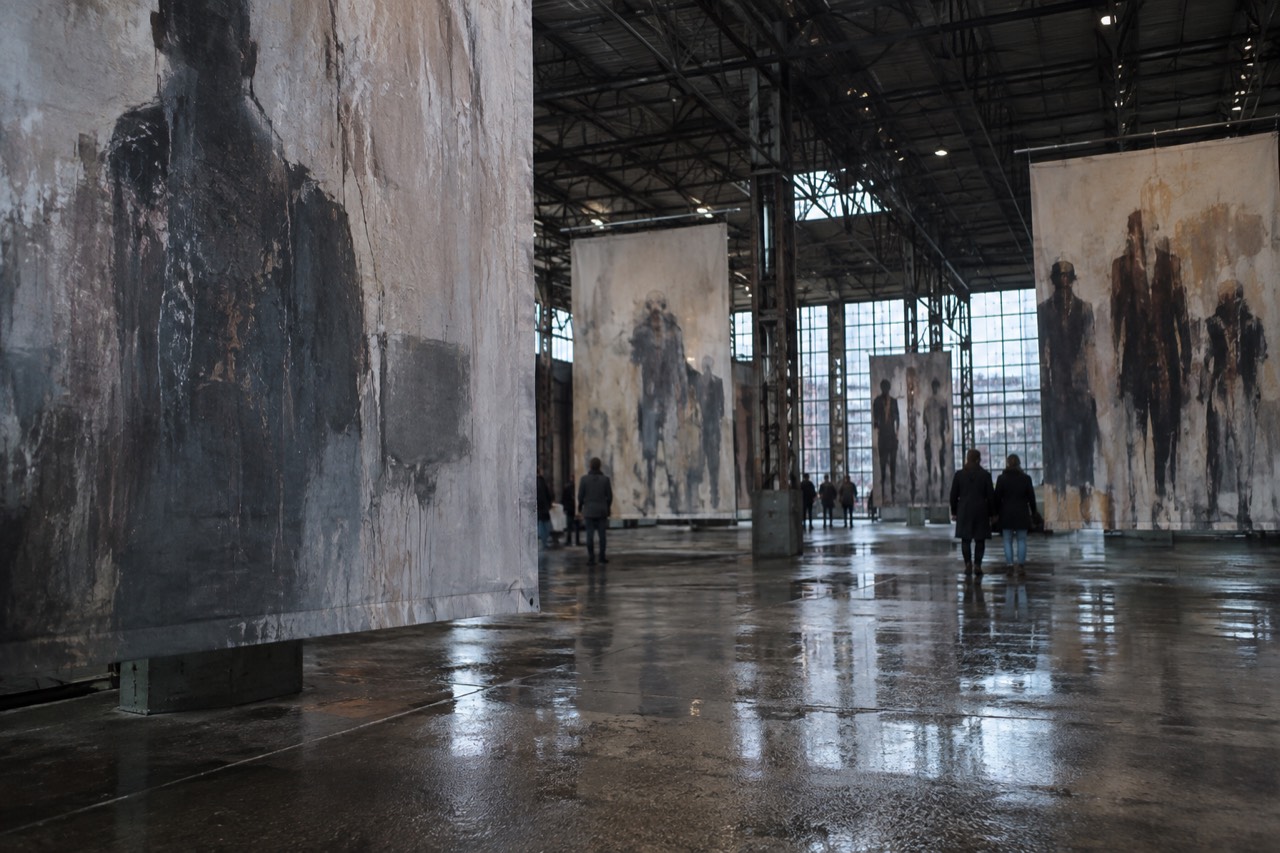
STRAAT is a street art museum in a converted shipyard warehouse on the NDSM Wharf in Amsterdam Noord, showing more than 180 works by over 170 artists. Entry costs from $24 through a pre-booked ticket. The crossing from Centraal Station takes about 15 minutes by GVB ferry, and most visits last one to two hours.
Amsterdam's museum story is usually told in golden age tones: Rembrandt, Vermeer, canal houses, quiet galleries. Then a ferry carries you across the IJ to a former shipyard, and the story changes completely. STRAAT, the museum for street art, lives inside a vast warehouse on the NDSM Wharf where ships were once welded and painted, and today the paint is the point. More than 180 works by over 170 artists hang from the steel structure at a scale no gallery wall in the centre could hold.
The museum is the single biggest reason art-minded visitors make the crossing to Amsterdam Noord, and it rewards the trip in ways that surprise people expecting graffiti in a shed. The works are commissioned canvases, not tags on brick, made by artists who built their names on walls in New York, São Paulo, Berlin and Amsterdam itself. The industrial shell is part of the experience: raw concrete, cranes, daylight through clerestory windows, and murals the size of house facades.
This guide walks through what STRAAT is, how to reach it, what a ticket costs, and how to weigh it against the classic museums on a limited schedule. If you are mapping the whole city, the Things to Do in Amsterdam homepage groups every major sight and tour by neighbourhood and budget.
What Is the STRAAT Museum in Amsterdam?
STRAAT is Amsterdam's museum for street art, opened in a converted shipyard warehouse on the NDSM Wharf in Amsterdam Noord, and it presents itself as the world's largest street art museum. Its collection holds more than 180 artworks by over 170 artists, most painted on canvas at monumental scale rather than sprayed on the building itself. A typical visit runs one to two hours.
The distinction matters more than it first sounds. Plenty of cities have legal walls and mural trails; STRAAT instead invited artists into the warehouse and let them produce work specifically for the space. The result reads like a museum collection with the visual language of the street: bold colour, letterforms, portraits and political imagery, but conserved, lit and hung with the care of a painting gallery. The roster description on the ticket listing calls it a fair reflection of the variety of styles, techniques, motifs and content found in street art worldwide.
The building does half the work. The NDSM Wharf was once one of the largest shipbuilding yards in Europe, and the shell still carries that history: riveted steel, overhead cranes, and a floor plan that lets you stand far enough back to take in a mural several storeys tall. Photography is a genuine pleasure here, and the warehouse light changes the art from hour to hour. Visitors who like the idea of street art but dislike the scrum of a crowded museum tend to love STRAAT for exactly this reason: space.
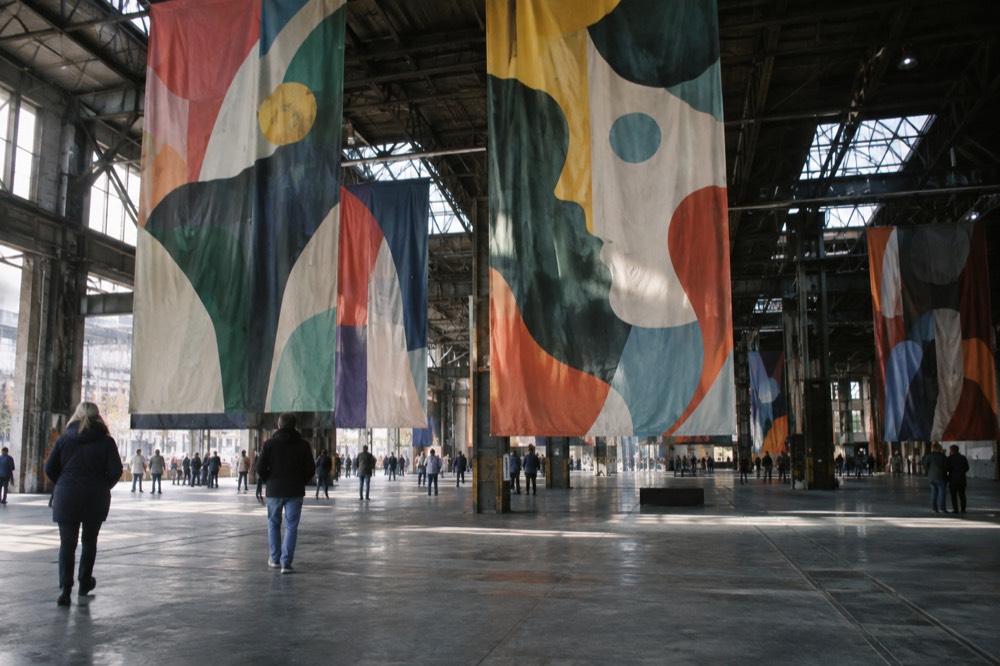
It is also a museum that travels well with teenagers, a group notoriously hard to please on a museum day. The work is figurative, loud and fast to read, and the setting feels closer to a festival site than to a hushed gallery. Families pairing it with other Noord stops should read the Amsterdam Noord and NDSM Wharf guide, which covers the ferries, the crane hotel and the food halls on the same peninsula.
Where Is STRAAT and How Do You Get There?
STRAAT sits on the NDSM Wharf in Amsterdam Noord, directly across the IJ from Centraal Station. The GVB ferry from the station's north side covers the crossing in roughly 15 minutes, and the museum is a short walk from the NDSM pier. Allow about 30 minutes door to door from the station, more at ferry rush hours.
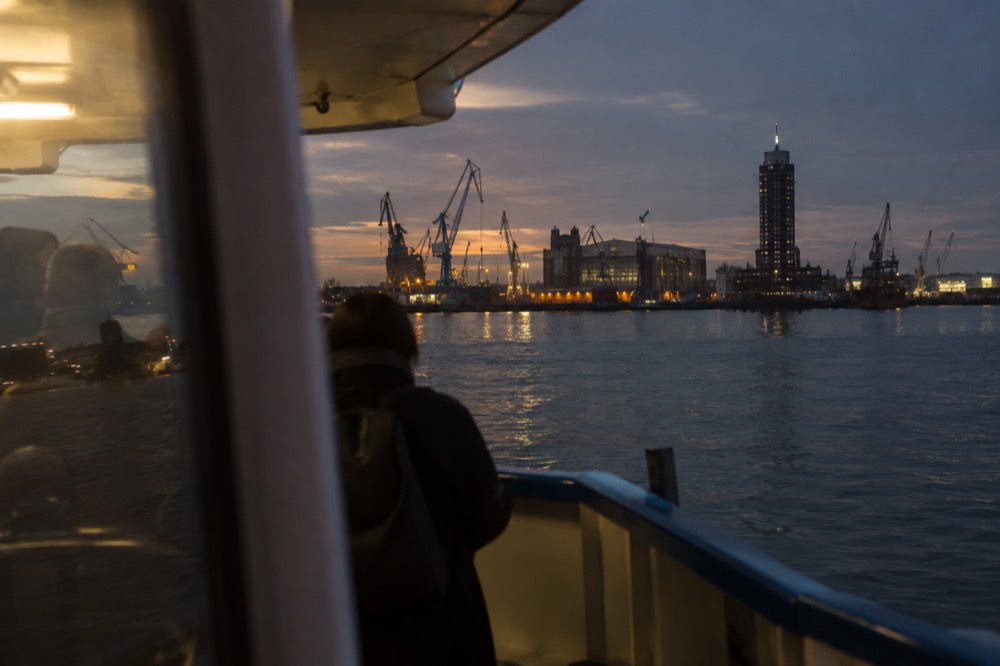
The ferry is the standard route and the one locals use. Ferries run frequently through the day, they carry pedestrians and cyclists, and the crossing itself is one of the best free sightseeing moments in the city: the station recedes, the A'DAM tower slides past, and the wharf's cranes come into view. If you are using GVB tickets for trams and buses, the same fare structure applies; a single GVB ticket costs €3.40 for one hour of travel, and a 24-hour day card costs €10.00, with a child day card at €5.00. Tap a contactless bank card with OVpay and you pay a base fare of €1.16 plus €0.217 per kilometre instead.
Arriving by bike is the other classic option. Noord is flat, the ferry decks take bikes, and the district is one of the easiest places in the city to ride. The cycling in Amsterdam guide covers rental and road rules if you want to make a loop of it. Coming from Museumplein, allow 45 minutes to an hour by tram plus ferry.
| Route | How It Works | Rough Time | Good For |
|---|---|---|---|
| GVB ferry from Centraal Station | Frequent crossing to the NDSM pier, walk to the museum | About 15 min crossing, 30 min door to door | Almost everyone |
| Tram or metro plus ferry | Tram to Centraal, then the NDSM ferry | 45 to 60 min from Museumplein | Visitors staying in the centre or south |
| Bike plus ferry | Cycle to the ferry, ride on, continue on the wharf | Varies with your starting point | Confident riders |
| Canal cruise with NDSM stop | Some sightseeing boats call at the wharf | Check the operator's schedule | Combining the ride with the visit |
Because the ferry is the bottleneck, plan the return too: at peak departure times queues form on the NDSM side, so if you have a timed ticket elsewhere in the centre, leave a buffer. That is doubly true if you have booked the Van Gogh Museum for later the same day, since it requires a pre-booked time slot and can sell out, as its own ticketing page makes clear.
If you are building the whole day around art rather than just this one stop, the Amsterdam museum tickets guide explains which museums need timed entry and which can be walked into.
What Will You See Inside the Warehouse?
Inside you will find mural-scale paintings on canvas by street artists from around the world, organised so that styles, eras and themes sit side by side: letter-based work, portraits, abstraction and political pieces. The listing describes more than 180 artworks by over 170 artists, hung and lit like a permanent collection rather than a temporary show. Expect one to two hours.
The hang rewards slow looking. A piece that reads from twenty metres as pure pattern often turns out, up close, to carry a portrait or a message, and the museum's captions give enough context to place each artist without turning the visit into homework. Because the works were made for the space rather than rescued from walls, several respond directly to the building: shipyard motifs, industrial colour, and compositions sized to the steel bays they hang in.
The collection also does something the centre's museums cannot: it shows Amsterdam's own graffiti lineage alongside international names. The city's street art history is deep, and STRAAT treats it as a tradition with elders and inheritors rather than a novelty. Visitors who want more of that thread in the centre can pair the visit with the Moco Museum, which holds Banksy, Warhol and Keith Haring in a canal house on Museumplein.
Practical notes: the floor is flat and the aisles wide, so the warehouse is comfortable for wheelchairs and strollers, and the scale of the work means even a busy day rarely feels crushed, because crowds spread out under a very high roof. There is a café area and a shop, and the wharf outside adds more food options in warmer months. For accessibility details across the city's sights, the Amsterdam accessibility guide is the deeper resource.
The straightforward way to book is a pre-purchased entry ticket: the STRAAT Museum entry ticket is rated 4.8 across 2,441 reviews and costs from $24, with the visit self-guided at your own pace.
How Much Do STRAAT Tickets Cost and When Should You Go?
The main pre-booked entry ticket costs from $24 and carries a 4.8 rating across 2,441 reviews; a second seller lists the same admission at $25.45 with a 4.8 rating from 222 reviews. Tickets cover a self-guided visit of one to two hours. Mornings and weekday afternoons are the quietest windows, and the ferry crossing is part of the timing.
Both listings sell the same thing, admission, so the choice between them comes down to price and cancellation terms on the day you book. Check both before you pay. Neither listing publishes a fixed opening schedule in the data this site holds, so confirm the day's hours on the operator's own listing before you set out, especially around public holidays when the wharf can run different hours.
| Ticket | Price From | Rating | Reviews | Notes |
|---|---|---|---|---|
| STRAAT entry ticket, main listing | $24 | 4.8 | 2,441 | Self-guided visit, 180+ works |
| STRAAT admission, second seller | $25.45 | 4.8 | 222 | Same admission, different seller |
Timing the whole day matters more than timing the museum. If STRAAT shares an itinerary with the Van Gogh Museum, book the Van Gogh slot first: it requires timed entry for every visitor, its own site states, and its adult ticket is €25 with under-18s free. The Van Gogh Museum entry ticket is rated 4.7 across 57,096 reviews and costs from $31, and the free-cancellation terms on the listing make it a safe early lock. Then fit the ferry north into the gap, leaving buffer for the crossing.
A common mistake is booking the two too close together. The ferry, the walk to the warehouse and a comfortable hour inside STRAAT add up, so give yourself at least three hours between a Van Gogh slot and anything on the wharf. If the timing does not work, drop the second museum rather than rushing the first; both STRAAT and the wharf itself are forgiving about a later visit, while a missed timed slot is simply lost.
One pass worth knowing about is the Museumkaart, the national museum card. It covers more than 500 museums across the Netherlands, according to the card's own body, and many Amsterdam museums accept it, though a timed booking may still be required. Check STRAAT's own listing for current card acceptance before assuming entry is included.
STRAAT or the Classic Museums: Which Should Come First?
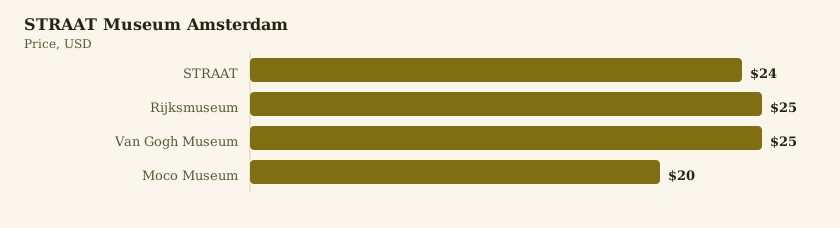
If your trip is three days or fewer, see the Rijksmuseum or Van Gogh Museum first and STRAAT second: the classic museums need timed slots and sell out, while STRAAT is a 15-minute ferry away and rarely full. On a fourth day or a return trip, STRAAT becomes the headline. Its from-$24 ticket is also cheaper than the big three, and the setting is unlike anything in the centre.
The honest trade-off is density versus space. The Rijksmuseum holds the golden age at overwhelming depth; the Van Gogh Museum holds a single tormented genius at overwhelming depth; STRAAT holds a living, global movement at overwhelming scale. None substitutes for the others. What STRAAT offers is the only museum visit in Amsterdam where the building and the art were made for each other, and where you will never queue behind a tour group to see a painting.
| Museum | What It Does Best | Ticket From | Setting |
|---|---|---|---|
| STRAAT | Monumental street art, 180+ works | $24 | Shipyard warehouse, NDSM Wharf |
| Rijksmuseum | Dutch golden age, Rembrandt, Vermeer | €25 | Grand 19th-century building, Museumplein |
| Van Gogh Museum | The world's largest Van Gogh collection | €25 | Modern gallery, Museumplein |
| Moco Museum | Banksy, Warhol, contemporary icons | From $20 | Canal villa, Museumplein |
A pattern that works well for mixed groups: send the modern-art fans north to STRAAT while the golden-age fans take their Rijksmuseum slot, then meet for a canal cruise in the afternoon. A classic saloon boat cruise costs from $19.56, is rated 4.8 across 33,435 reviews, and the historic boats, some sailing since 1902, are the calmest way to end a museum-heavy day. The Amsterdam canal ring guide explains what you will actually see from the water.
For a different flavour of Dutch icon, the Heineken Experience sits in the original brewery in the centre and is rated 4.6 across 39,581 reviews, with tickets from $23. It is the standard counterweight to a heavy art day, and it pairs with STRAAT better than it first appears: both are brand-driven, both are self-paced, and both reward an early start.
How to Build a Full Day Around the NDSM Wharf
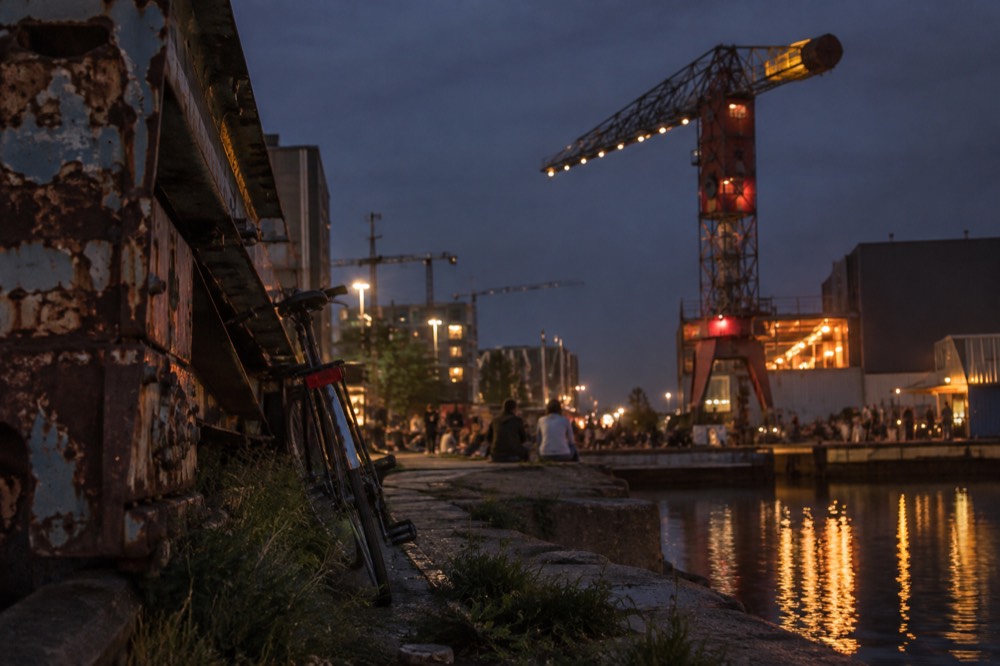
A good NDSM day runs three moves: ferry over mid-morning, two hours at STRAAT, then lunch and a wander along the wharf before ferrying back. The peninsula holds a crane-hotel, waterside bars, a floating cat shelter and regular festivals, so the wharf itself justifies half a day. In good weather, add the A'DAM Lookout across the water for the rooftop view.
The A'DAM Lookout is the natural companion stop, a short ferry hop from the wharf on the Noord side of the IJ. Its own ticket page lists adult entry at €16.50 online against €18.50 at the counter, with the rooftop swing as an add-on from €7.50 online, and the observation deck is open daily from 10:00 to 22:00 with last admission at 21:00. The A'DAM Lookout guide covers the deck, the swing and the madly steep stairs of the tower.
Food on the wharf ranges from festival-style kiosks in summer to the indoor halls that open year round, and the Amsterdam Noord and NDSM Wharf guide maps the best of them. If rain closes in, the warehouse is fully covered, which makes STRAAT one of the better wet-day choices in a city whose indoor options otherwise concentrate in the centre; the rainy day in Amsterdam guide ranks the alternatives.
Budget the day roughly: ferry fare within the GVB structure at €3.40 for a one-hour ticket or €10.00 for a 24-hour card, STRAAT entry from $24, lunch on the wharf, and an optional viewpoint ticket. Two people can do the whole NDSM loop for less than one dinner in the centre, which is exactly why locals defend the wharf so fiercely against the crowds the record tourism years keep sending north.
Common Questions About the STRAAT Museum
What is the STRAAT Museum in Amsterdam?
A museum for street art in a converted shipyard warehouse on the NDSM Wharf in Amsterdam Noord, holding more than 180 artworks by over 170 artists, most painted at mural scale on canvas. A typical visit lasts one to two hours.
How much do STRAAT Museum tickets cost?
The main pre-booked entry ticket costs from $24 and carries a 4.8 rating across 2,441 reviews. A second seller lists the same admission at $25.45. Confirm current hours on the operator's own listing before you travel.
How do I get to the STRAAT Museum from the centre?
Take the GVB ferry from the north side of Centraal Station to the NDSM pier, a crossing of roughly 15 minutes, then walk to the warehouse. A single GVB ticket costs €3.40 for one hour of travel, or use a 24-hour day card at €10.00.
Is the STRAAT Museum worth it compared with the Rijksmuseum?
They serve different moods. The Rijksmuseum is the golden age at depth; STRAAT is a living global movement at monumental scale in an industrial shell. On a short trip see the classic museums first, but on a longer stay STRAAT is a genuine highlight, and its from-$24 ticket undercuts the big three.
How long should I spend at the STRAAT Museum?
Plan for one to two hours inside, plus the ferry crossing each way. Add another hour if you want to explore the NDSM Wharf itself, and more in summer when the outdoor food and festival spaces are running.
Is the STRAAT Museum good for teenagers and kids?
Yes. The work is bold, figurative and fast to read, the floor is flat and spacious, and the warehouse setting feels closer to a festival site than a hushed gallery. It is one of the easiest museum sells in the city for reluctant visitors.