Amsterdam in Winter: Canals, Museums and Cold-Weather Things to Do
Amsterdam in winter is a city of short days, quiet canals and well-lit museums: here is what to do, what it costs and how to plan around the cold.
Short answer
Amsterdam in winter runs on short days and indoor attractions. The Rijksmuseum and Van Gogh Museum stay open daily, a 24-hour GVB transport pass costs €10.00, and a one-hour canal cruise starts at about €15.50. Expect rain more than snow, book the Anne Frank House online well ahead, and use the dark afternoons for lit-up canal cruises.
Amsterdam records 23.7 million tourist overnight stays a year, and almost none of them are evenly spread. Winter is the closest thing the city has to a quiet season: the queues outside the Rijksmuseum shrink, the canal cruise boats half-empty at 4pm in January, and hotel rates drop from their summer highs. The trade is real, though. Daylight is short, the wind off the water cuts hard, and rain is far more common than the snow you see on postcards. This guide covers what Amsterdam in winter actually looks like, which attractions earn their place on a cold day, what things cost, and how to plan a trip around early darkness rather than fighting it.
What Is Amsterdam in Winter Actually Like?
Amsterdam in winter means short days, frequent rain and temperatures that feel colder than the thermometer says, because the wind blows straight off the water. Snow happens but rarely settles for long, and the city compensates with early Christmas lights, cosy brown cafés and museums that stay open every day. Crowds thin noticeably compared with summer, and hotel prices soften with them.
The honest answer about weather is that Amsterdam winters are grey and damp more than they are white. Reliable month-by-month temperature and rainfall figures are not published by an official Dutch meteorological source in a form this site can quote, so the advice here is qualitative: expect temperatures that hover around freezing at night and sit a few degrees above it by day, with wind from the west making the canals feel colder than the numbers suggest. Rain gear matters more than a heavy ski jacket. Layers, a windproof outer shell and waterproof shoes will carry you through a weekend; a suitcase full of wool will just slow you down.
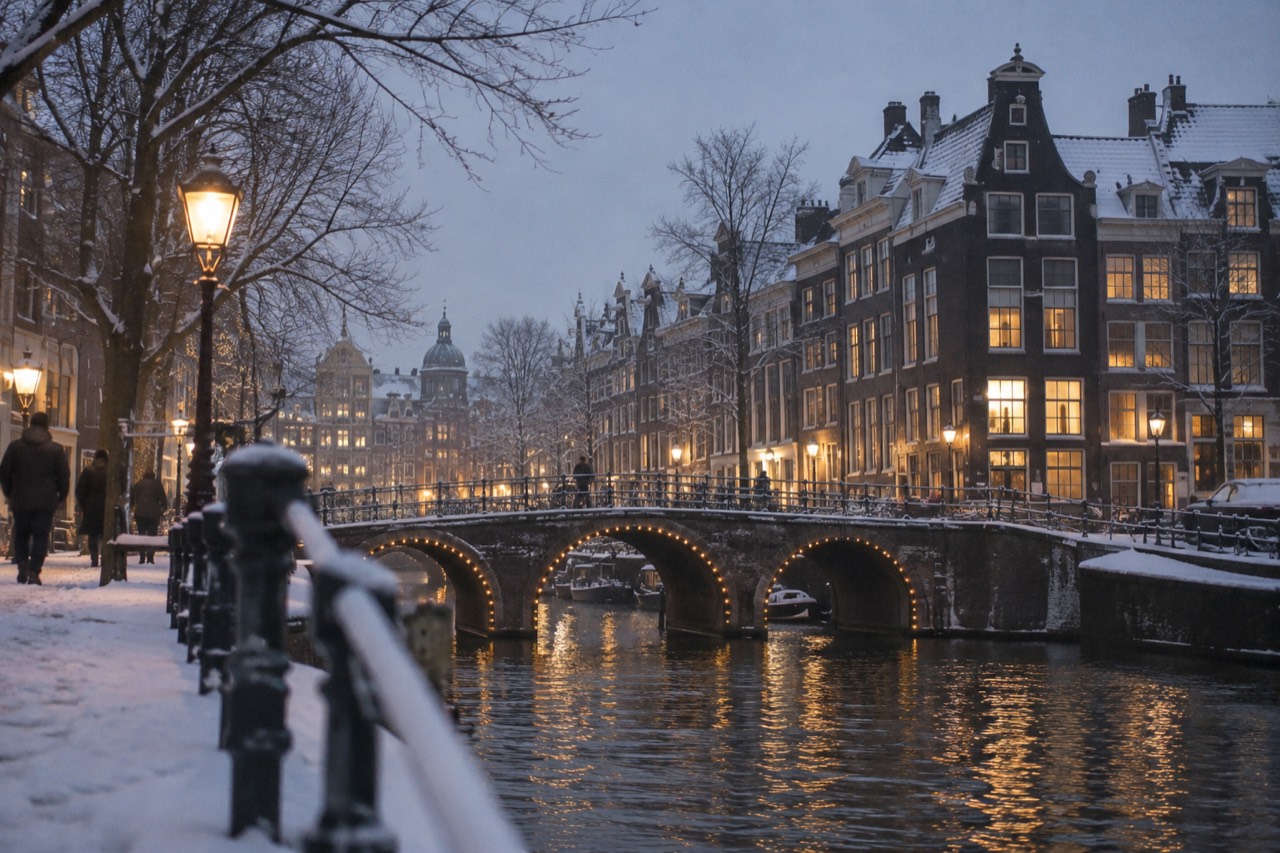
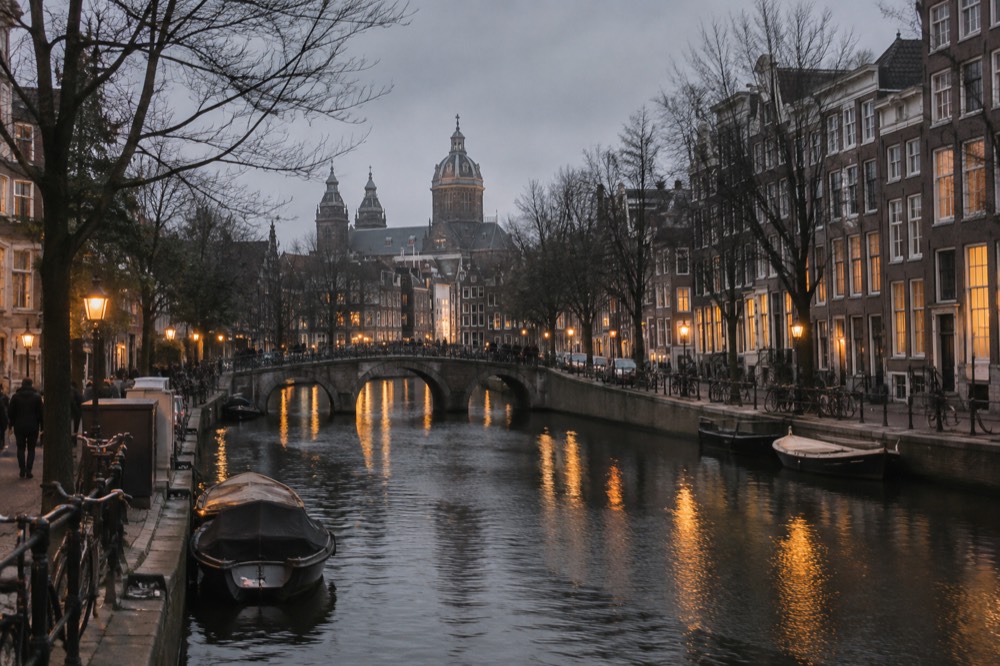
Daylight is the bigger planning constraint. The sun sets in the late afternoon in December and January, and the city leans into it: shopfronts, bridges and the canalside trees get lit early, and the whole centre takes on a lamp-lit character that summer visitors never see. Rather than scheduling outdoor sightseeing for late in the day, flip your plan. Museums and indoor attractions belong to the dark hours, and the canals are at their most photogenic right at the blue hour when the lights come on.
The crowd picture is the reason winter regulars keep coming back. The city's own statistics office counted 21.9 million day visits in 2025, and those visits bunch hard around spring, summer and the Christmas run. Visit in late January or February and you will notice the difference at every ticket queue, on every bike lane and in every café, where a table by the window is suddenly achievable without arriving at opening time.
The Best Things to Do in Amsterdam on a Cold Day
The best cold-day activities in Amsterdam are the ones with a roof and a view: the Rijksmuseum, the Van Gogh Museum, the Heineken Experience and the A'DAM Lookout all stay open through winter, while a covered canal cruise works in any weather. Outdoor classics like the Nine Streets and the Jordaan still reward a walk, just scheduled for midday rather than dusk.
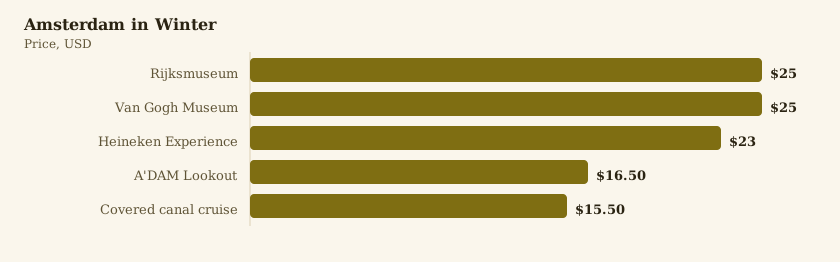
A winter itinerary should alternate indoor anchors with short outdoor bursts. The Museumplein cluster is the obvious anchor: the Rijksmuseum, the Van Gogh Museum and the Stedelijk sit within two minutes of each other, so a bad-weather afternoon can absorb two of them without anyone getting cold. The Rijksmuseum opens every day of the year from 9am to 5pm, including public holidays, and adults pay €25, with free entry for ages 18 and under. The Van Gogh Museum charges adults €25, admits under-18s free, and is open daily from 9am to 6pm, with late Fridays until 9pm outside a few exception dates. Both require a pre-booked timed entry slot, and the Van Gogh's website warns that tickets can sell out, so winter is the season to book a few days ahead rather than a few weeks.
For something louder, the Heineken Experience occupies the brewer's original 19th-century premises in the centre and runs about an hour and a half of interactive exhibits, with a ticket price from $23 on the live listing. The A'DAM Lookout, across the IJ behind Centraal Station, is the winter viewpoint pick: it is open daily from 10:00 to 22:00 with last admission at 21:00, which means you can see the city lights after dark rather than being pushed out at sunset as most observation decks do. Adult entry is €16.50 booked online against €18.50 at the counter, and every ticket includes a free audio tour.
The table below is a working cold-day shortlist, with what each one costs and why it suits winter specifically.
| Activity | Winter strength | Price | Time needed |
|---|---|---|---|
| Rijksmuseum | Open daily, huge indoor range | €25 adult, under-18s free | 2 to 3 hours |
| Van Gogh Museum | Timed tickets keep it calm; late Fridays | €25 adult, under-18s free | 1.5 to 2 hours |
| Heineken Experience | Indoors, central, social | from $23 on the live listing | 1.5 hours |
| A'DAM Lookout | Open until 22:00, night views | €16.50 online, €18.50 at counter | 1 to 2 hours |
| Covered canal cruise | Heated boats, lit canals | from about €15.50 | 1 hour |
| Brown café afternoon | Zero weather risk | drinks at café prices | as long as you like |
If the day dawns dry, spend the light hours outside and save the roofs for later. The Jordaan and the Nine Streets are compact enough to enjoy in a two-hour loop, and our Amsterdam walking tours free versus paid guide explains which guided formats are worth it in the cold. For a deeper look at the whole neighbourhood, the Jordaan area guide covers the courtyards and cafés that make a grey afternoon feel deliberate rather than damp.
Are Canal Cruises Worth It in Winter?
Canal cruises are arguably better in winter than in summer: the boats are heated and mostly covered, the canals are quieter, and the early sunset means a 4pm or 5pm departure glides through the city after the lights come on. A one-hour cruise starts at about €15.50, and the classic operators run all year.
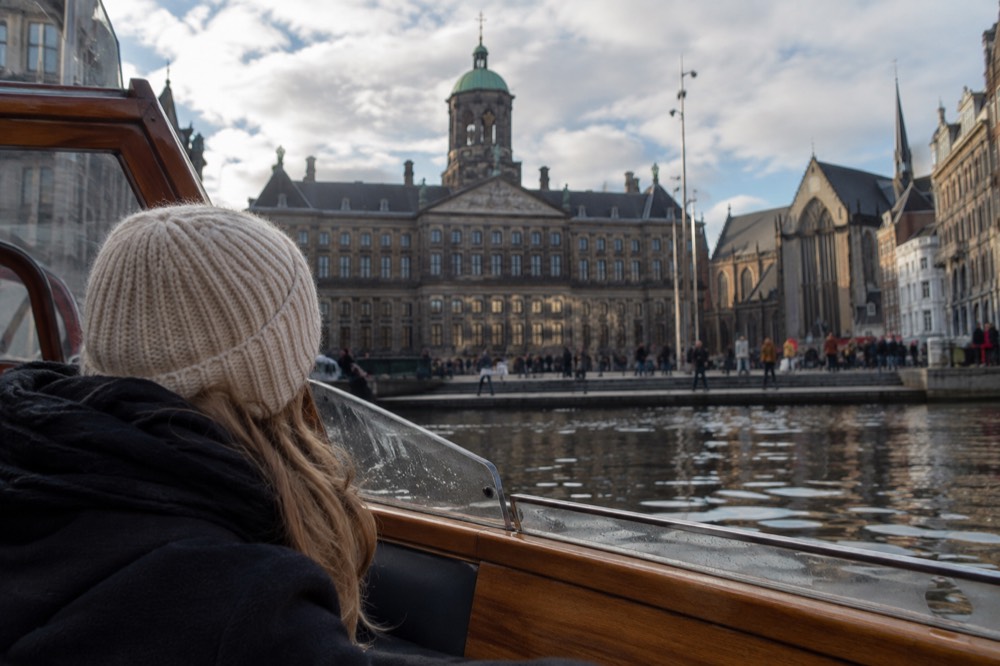
The one operator price this site has verified to its own page is Rederij Kooij's original one-hour cruise at €15.50 for adults, departing every 30 minutes without time slots. Other established operators price in the same band, but their published figures could not be verified to a primary source, so treat €15.50 as the floor and expect most standard cruises to land somewhat above it. What you get for that in winter is a heated cabin, an audio guide in many languages, and an hour off your feet while the city scrolls past the windows.
The evening product is where winter genuinely beats summer. The Evening Canal Cruise with City Lights runs 90 minutes from $21 on the live listing, rated 4.4 across 23,214 reviews, with wine, drinks or snacks available to add on board. Because Amsterdam lights up in the late afternoon for half the year, an evening departure in January delivers the same lit-bridge spectacle that July delivers at 10pm, except you are inside with a drink instead of standing at a rail in a T-shirt. There is also a sunset cruise option from $23, rated 4.8 across 4,737 reviews, for the blue-hour photographers.
For a more traditional hull, the classic saloon boat cruise runs one hour from $19.56 with a 4.8 rating across 33,435 reviews, on restored wooden boats, some sailing the canals since 1902, with an optional cheese and drinks upgrade. Small-group sloops and all-inclusive variants push the price up toward $71.09 for a two-hour open-bar version, which is a different product for a different evening. Whichever you pick, check the live listing for covered-versus-open boat configuration in winter, because operators swap vessels seasonally. You can also Check availability alongside the details in our classic saloon boat cruise write-up.
Which Museums Save a Freezing Day in Amsterdam?
The Rijksmuseum, the Van Gogh Museum, NEMO and the Stedelijk are the four reliable winter saves, and all four run timed entry, so book online rather than walking up. Adults pay €25 at the Rijksmuseum and the Van Gogh, €21.50 at NEMO and from $26 on the live listing at the Stedelijk. Under-18s enter the two big museums free.
Museum days are the backbone of an Amsterdam winter trip, and the city makes it easy to chain them. The Rijksmuseum's own practical-info page confirms it opens every day of the year, 9am to 5pm, with a start time that must be booked in advance even by card holders. The Van Gogh Museum next door requires every visitor, without exception, to pre-book a timed ticket, and it runs late on Fridays until 9pm apart from a few listed exception dates, which makes it the natural anchor for a winter Friday. NEMO Science Museum charges a flat €21.50 for everyone aged four and over, with under-fours free, and its roof terrace is free to reach without a museum ticket, a genuinely useful fact on a bright cold day when you want a view without a queue.
The Van Gogh ticket is the single most time-sensitive booking of the four, because timed slots for the most popular afternoon windows go first and the museum itself warns that tickets sell out. The entry ticket sold through the live listing is rated 4.7 across 57,096 reviews and costs from $31, which bundles the timed reservation you would otherwise have to arrange yourself.
Beyond the big four, winter is the season for the smaller houses. The Rembrandt House Museum, from $23 on the live listing, is a compact hour in the painter's actual home and studio. STRAAT, the street art museum in a giant NDSM wharf warehouse, costs from $24 and pairs well with the free IJ ferry, which itself is the cheapest possible cold-day boat ride. The full field is covered in our Amsterdam museum tickets and skipping the queue guide.
One warning that applies all year but bites hardest in winter: the Anne Frank House is online-only, with no door sales whatsoever. Adult tickets cost €16.50 including the booking fee, and they are released for a specific date and time on the museum's own site only, with no legitimate reseller. A winter trip does not make this easier; if anything, fewer total visitors make the released slots look plentiful until they are gone. Book the moment your dates are fixed.
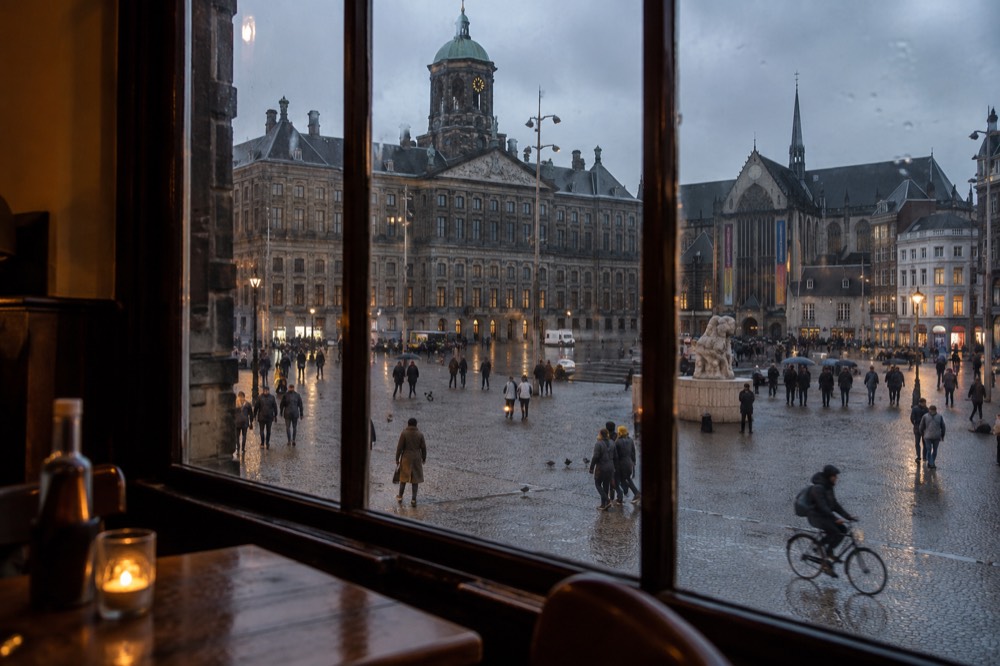
Where Do You Eat and Drink When It Is Cold?
Winter eating in Amsterdam means brown cafés, thick Dutch winter dishes and the indoor food halls, with Foodhallen as the all-weather fallback in Oud-West. Hearty staples like stamppot, split pea soup and bitterballen are seasonal at exactly this time of year, and a table by a café stove is the cheapest warmth in the city.
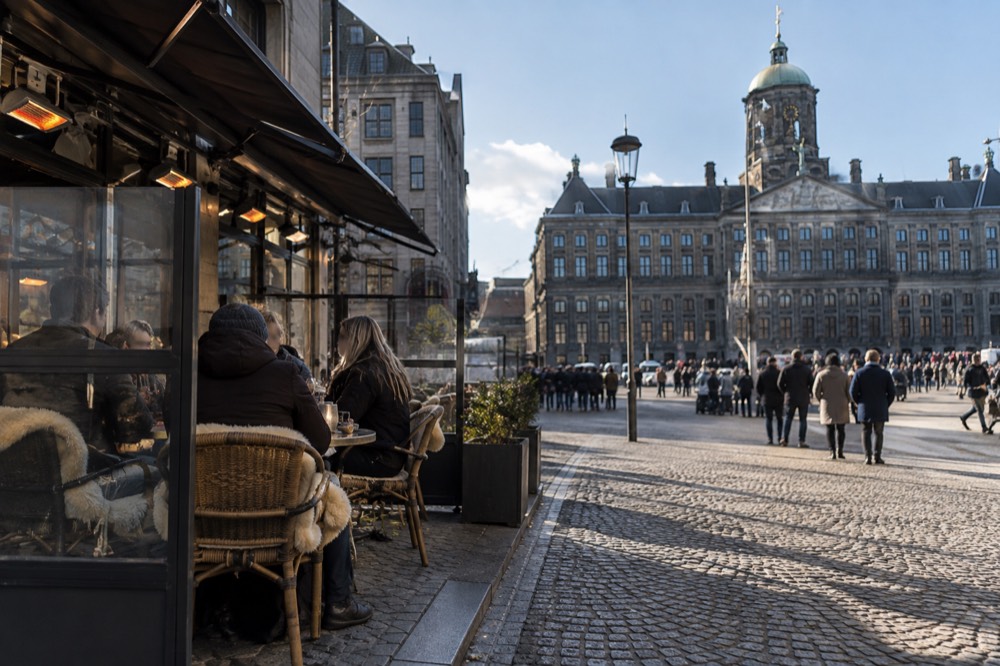
The brown café is Amsterdam's native answer to cold weather: a dim, wood-panelled bar with candles, a stove and beer served without ceremony. They are scattered across the centre and the Jordaan, and they ask nothing of you but the price of a drink. Our Amsterdam brown cafés guide covers which ones hold their character and which have drifted toward the tourist trail, and the Dutch foods to try guide explains what to order once you are inside.
The food itself turns wintry on cue. Erwtensoep, a thick split pea soup with sausage, appears on menus as soon as the cold arrives and is a full meal in a bowl. Stamppot, mashed potato folded through with greens and served with a sausage and a well of gravy, is the definitive Dutch winter plate. Bitterballen, the deep-fried ragout balls, are the standard companion to a beer and appear on almost every café bar top. None of this is expensive by Amsterdam standards; a bowl of pea soup and a beer in a neighbourhood café is one of the better value meals you will find in the centre. The full index of guides sits on Things to Do in Amsterdam.
For a structured indoor food experience, the Foodhallen in Oud-West gathers dozens of independent food stalls under one industrial roof, which makes it the single best answer to a day when the forecast has turned. If you would rather have the food walked to you, the number-one food and culture walking tour runs three and a half hours with ten tastings, from $92, rated 5.0 across 1,157 reviews, and keeps you moving between warm stops. The what to eat in Amsterdam guide has the full food map.
What About Christmas, Lights and the Light Festival?
Amsterdam's winter light season centres on the Amsterdam Light Festival, which typically runs from late November into January, with illuminated installations along the canals and dedicated cruise routes, plus Christmas lights across the centre in December. Exact edition dates and any Christmas market details should be confirmed on official sources before you plan around them.
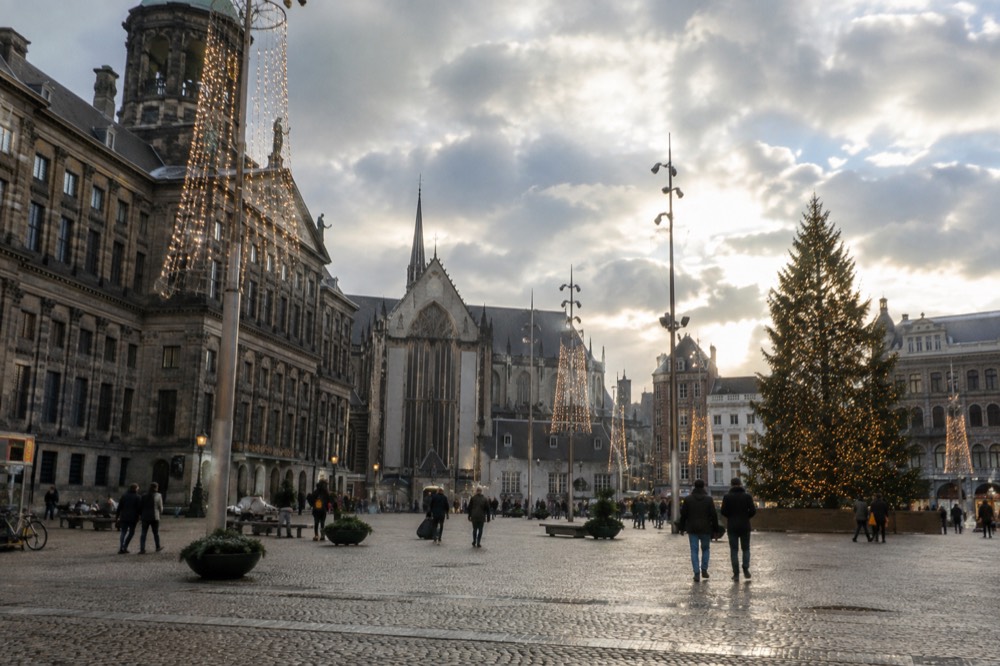
The Amsterdam Light Festival is the city's signature winter event, and its format suits the season perfectly: light installations are placed on and around the water, and the standard way to see them is from a canal boat, in the dark, indoors. This site has not verified the current edition's dates to the festival's own official page, so check the festival site before booking anything around it, and treat any specific date you read elsewhere with suspicion until you have. What can be said firmly is that the concept is built for the early darkness that defines Amsterdam winters, and that cruise operators run dedicated festival routes during the edition.
December adds the Christmas layer: the centre strings lights across the shopping streets, and the season brings the usual Dutch traditions, including the arrival of Sinterklaas in mid-November and the festive run-up that follows. Our Amsterdam in December guide goes deep on the Christmas period specifically, including what is open between Christmas and New Year, which is a planning question with real consequences in the Netherlands, where 27 December is a working day but the days around it run reduced hours.
Beyond the organised events, there is the simple fact that Amsterdam's own lighting does half the work. The bridges over the Amstel and the grachtengordel are lit from late afternoon, shopfronts glow, and the reflection off wet cobbles doubles every bulb. A walk from Rembrandtplein along the river to the Magere Brug, our skinny bridge guide explains the spot, takes twenty minutes and costs nothing, and it is the equal of any paid light display.
How Do You Get Around Amsterdam in Winter?
Amsterdam's trams, buses and metro run normal winter service, a 24-hour GVB day pass costs €10.00 for adults and €5.00 for children, and a single one-hour ticket is €3.40. Contactless bank card payment works on all GVB vehicles with a base fare of €1.16 plus €0.217 per kilometre, and the free IJ ferries run behind Centraal Station all year.
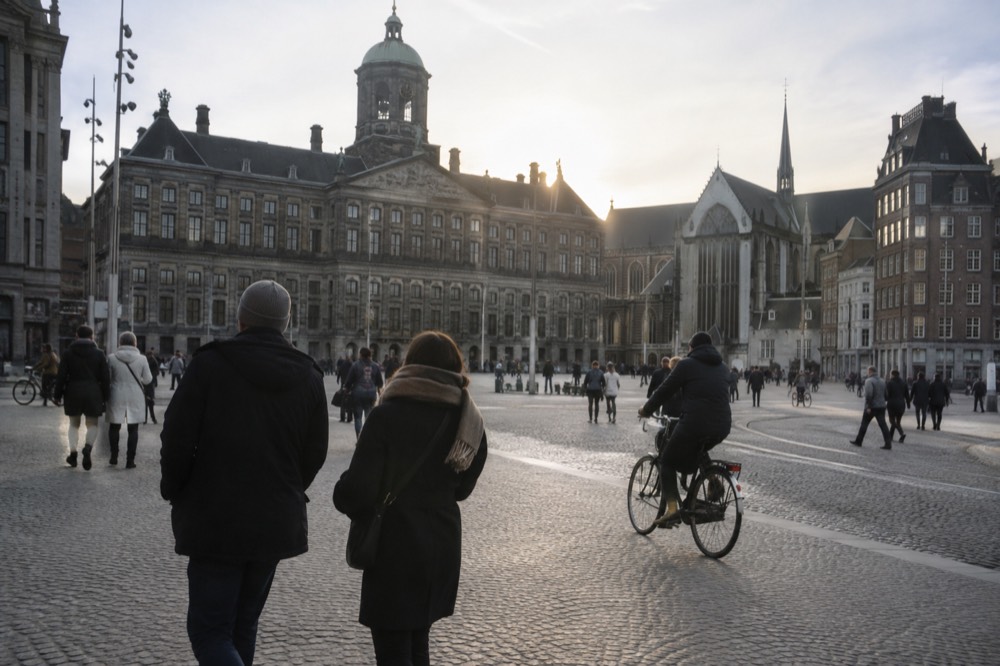
Winter barely dents the transport network. Trams run their regular schedules, the metro is unaffected, and the only real seasonal difference is that standing at a windy tram stop feels worse in January than in July, so plan shorter hops with less waiting between them. The GVB fare table below is verified to the operator's own price page.
| GVB ticket | Price |
|---|---|
| Single, 1 hour | €3.40 |
| Day pass, 24 hours, adult | €10.00 |
| Day pass, 24 hours, child | €5.00 |
| 2 days | €16.00 |
| 3 days | €21.50 |
| 4 days | €27.50 |
| 5 days | €34.00 |
Cycling is the obvious question mark. Amsterdam's bike lanes stay busy in winter, and locals ride in everything short of ice, but a visitor on an unfamiliar bike in rain and dark is a different risk calculation. If you do ride, use lights, which are legally required after dark, and prefer the protected lanes. Our cycling in Amsterdam and renting a bike guide covers the practicalities honestly, including why the first-timer mistake is renting a bike for a wet December day out of a sense of obligation. The full transport picture, including the contactless payment details, is in our getting around Amsterdam guide.
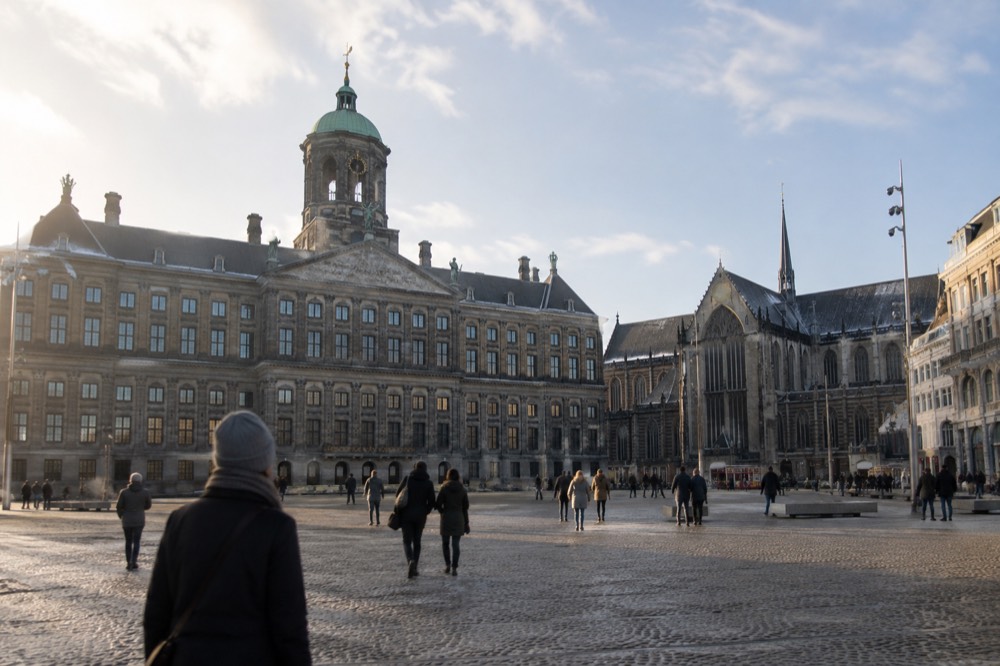
Walking remains the winter default in the centre, where most of the sights sit within a 30-minute walk of Dam Square. The one caveat is cobbles and canal-side brick, which get slick in rain; waterproof shoes with grip matter more than anything else in your suitcase. Our Amsterdam accessibility guide covers the surface conditions in detail.
What Does an Amsterdam Winter Trip Cost?
A winter Amsterdam trip costs less than the same trip in summer, mainly on accommodation: the city levies a 12.5% tourist tax on hotel stays, and winter rates absorb it better. The I amsterdam City Card runs €67 for 24 hours and €94 for 48 hours, and it covers the Rijksmuseum and transport but not the Van Gogh Museum or the Anne Frank House.
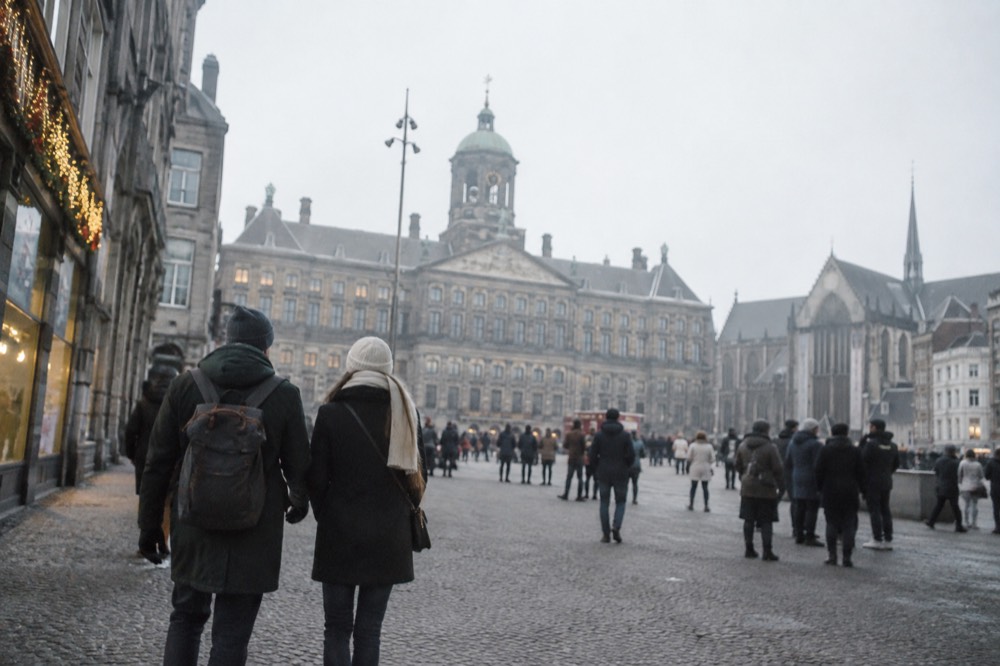
The tax picture is worth understanding before you book anything. Amsterdam charges tourist tax at 12.5% of the overnight price, excluding VAT, on hotels and holiday rentals alike, and day-tripping cruise passengers pay €15 per passenger. That tax is usually inside your hotel's quoted room rate rather than added at checkout, but it is part of why headline prices look high. What winter changes is the base rate the percentage applies to: with demand lower, the same rooms cost less before tax, so the total lands noticeably down.
The pass question is the other big cost decision. The I amsterdam City Card is verified at €67 for 24 hours and €94 for 48 hours, sold on the live listing from $78, and it includes entry to more than 70 museums and locations, unlimited GVB transport for the card's duration, one canal cruise and a 24-hour bike rental. The critical exclusions are confirmed from both sides: the Van Gogh Museum and the Anne Frank House are not included, and the Anne Frank House's own price table states plainly that the card gets no discount. The Rijksmuseum, by contrast, lists the card as free entry on its own ticketing page. Our is the I amsterdam City Card worth it guide runs the full maths for different itineraries.
| Winter cost item | Typical figure | Winter note |
|---|---|---|
| Hotel tourist tax | 12.5% of room price | Usually inside the quoted rate |
| GVB 24-hour pass | €10.00 | Unlimited trams, buses, metro |
| Rijksmuseum adult | €25 | Free with City Card |
| Van Gogh Museum adult | €25 | Not in the City Card |
| Anne Frank House adult | €16.50 | Online only, no resellers |
| One-hour canal cruise | from about €15.50 | Heated boats in winter |
| City Card, 24 / 48 hours | €67 / €94 | Includes transport and one cruise |
Day-to-day spending in winter skews indoor and therefore slightly higher per hour than a summer day built around free parks and picnics, but the differences even out: fewer beers on terraces, more coffees by stoves. For a full budget build, the how much does a trip to Amsterdam cost guide has the line-by-line version, and the Amsterdam on a budget guide covers the cheap end of the winter spectrum.
What Should You Pack for Amsterdam in Winter?
Pack for wind, rain and wet cobbles rather than for snow: a windproof and waterproof outer layer, shoes with real grip, a hat that survives canal wind, and enough layers to move between overheated museums and cold streets without sweating or freezing. An umbrella is a compromise, because canal wind eats cheap ones.
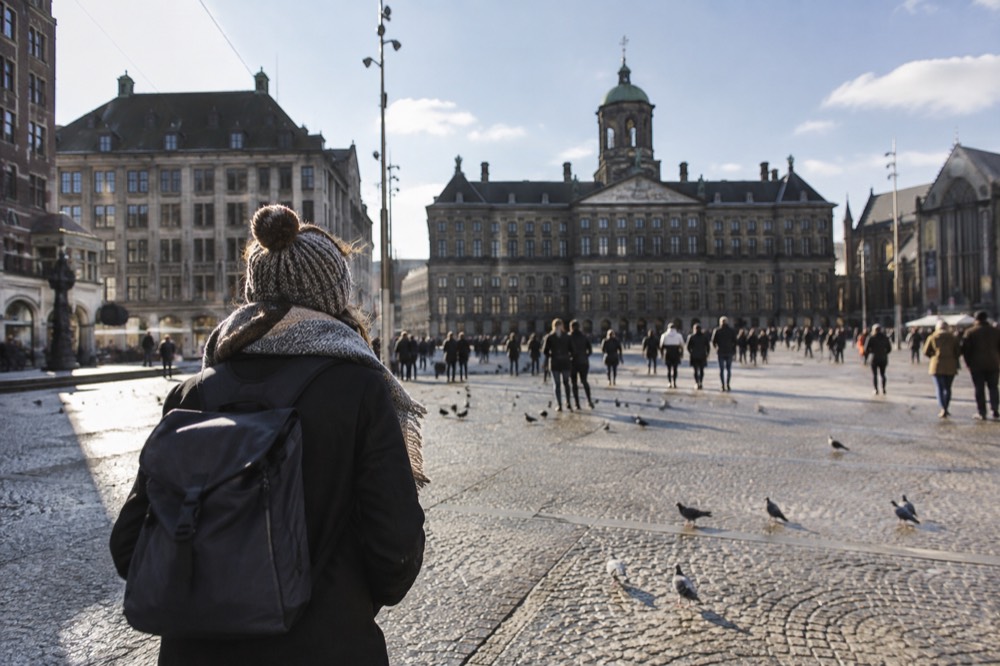
The packing mistakes are predictable. Visitors arrive prepared for Alpine cold and discover the actual enemy is horizontal rain, or they arrive in smooth-soled fashion sneakers and spend the week skating on wet brick. The single highest-value items are waterproof shoes with grip and a windproof layer over insulating ones, because Amsterdam's cold is a wind chill problem more than a temperature problem. A hat and gloves earn their space from December through February, and a scarf does double duty on the open decks of canal boats if you venture outside the cabin.
The museum layering problem is the less obvious one. Dutch interiors run warm, and a day built around the Rijksmuseum, a brown café and a cruise means moving between heated spaces and raw streets every couple of hours. The practical answer is a system you can shed and carry: a mid-layer that fits in a day bag, and an outer shell that handles both the wind and the showers. Our what to wear in Amsterdam guide covers the full wardrobe logic, and the first-timer mistakes guide lists the errors that winter amplifies, from underdressing for the wind to booking nothing ahead on the assumption that winter means empty.
One final practical note: the days are short enough that you will be out after dark most days, and Amsterdam's centre is well lit and busy in the evenings, so darkness is not a safety constraint in the tourist core. The is Amsterdam safe guide covers the honest picture, neighbourhood by neighbourhood.
Putting Together a Winter Day in Amsterdam
A strong winter day in Amsterdam runs roughly in reverse of a summer one: outdoors in the late morning light, a long indoor anchor through the grey afternoon, and a lit canal cruise or a brown café after the early sunset. Two museum anchors, one cruise and one neighbourhood walk is a full day at winter pace, and winter pace is the right pace.
Here is a template that has the structure right. Start with the outdoor stretch while the light lasts: a mid-morning walk through the Jordaan or along the canal ring, ending at a bakery or a coffee stop before the cold gets into everyone's bones. Move to the indoor anchor around noon, which is when the Rijksmuseum or the Van Gogh Museum absorbs the worst of the afternoon. Come out at three or four, take the short walk or tram ride to a cruise departure point, and let the boat carry you through the hour when the lights come on. Finish within walking distance of a brown café or a restaurant, and the evening takes care of itself.
For a second day, swap the anchor: NEMO in the morning, the free IJ ferry across to the A'DAM Lookout or the STRAAT museum in the NDSM wharf, and the ferry back at dusk with the centre lit in front of you, which is one of the best free views in the city. A third day can go to the dungeon, from $22 on the live listing and rated 4.7 across 3,202 reviews, or to a food tour, or to a longer day trip, though winter daylight compresses the day-trip window and makes the closer options, such as Zaanse Schans, more sensible than the far ones. Our one day in Amsterdam itinerary and two days in Amsterdam itinerary give the full hour-by-hour versions if you want more structure, and the Amsterdam for first-time visitors guide covers the ground-level basics.
Whatever you build, keep the winter test in mind for every item: does this still work if it rains all day, and does it still work if the sun sets before four? Anything that passes both is a winter plan. Anything that fails one of them needs an indoor twin, and in Amsterdam, the indoor twin is almost always a museum, a café or a heated boat, which is precisely why the city gets through its winters so well.
Common Questions About Amsterdam in Winter
Is Amsterdam worth visiting in winter?
Yes, for most travellers. Crowds are thinner, hotel rates are lower, the big museums run full hours, and the early sunset turns the canal cruises and the light displays into the season's best experiences. The trade-offs are short daylight, frequent rain and wind chill, all manageable with the right clothing and an indoor-first plan.
Does it snow in Amsterdam in winter?
Snow falls occasionally but rarely settles for long, and rain is far more common than snow. This site does not publish month-by-month weather statistics because no official Dutch meteorological source provides them in a quotable form, so plan for cold rain and wind rather than a white cityscape.
Are the museums open in Amsterdam in winter?
The major ones are. The Rijksmuseum opens every day of the year from 9am to 5pm, the Van Gogh Museum is open daily from 9am to 6pm with late Fridays until 9pm outside a few exception dates, and the Stedelijk and NEMO run normal winter schedules. All of the big museums use timed entry, so book online ahead.
What time does it get dark in Amsterdam in winter?
The sun sets in the late afternoon through the core winter months, and the city lights up accordingly. Treat roughly 4pm to 5pm as the practical end of daylight sightseeing and plan your outdoor walking for the late morning, with museums, cafés and lit canal cruises carrying the evening.
Is the Anne Frank House open in winter?
It is open daily, but tickets are sold only through the museum's own website for a specific date and time, with no door sales and no legitimate reseller. Adult tickets cost €16.50 including the booking fee. Slots release on a fixed schedule and sell out, so book as soon as your dates are set, winter included.
What should I wear in Amsterdam in winter?
Waterproof shoes with grip, a windproof outer layer over insulating mid-layers, a hat and gloves. The cold is mostly a wind problem off the canals, and rain is more likely than snow, so a waterproof shell earns more space in your suitcase than a heavy parka. See the what to wear in Amsterdam guide for the full breakdown.