Amsterdam or Bruges: Which City Should You Choose?
One is a capital of 900,000 people built on 17th-century trade money, the other a preserved medieval town of about 120,000 an hour from the sea. They share canals and beer, and almost nothing else.
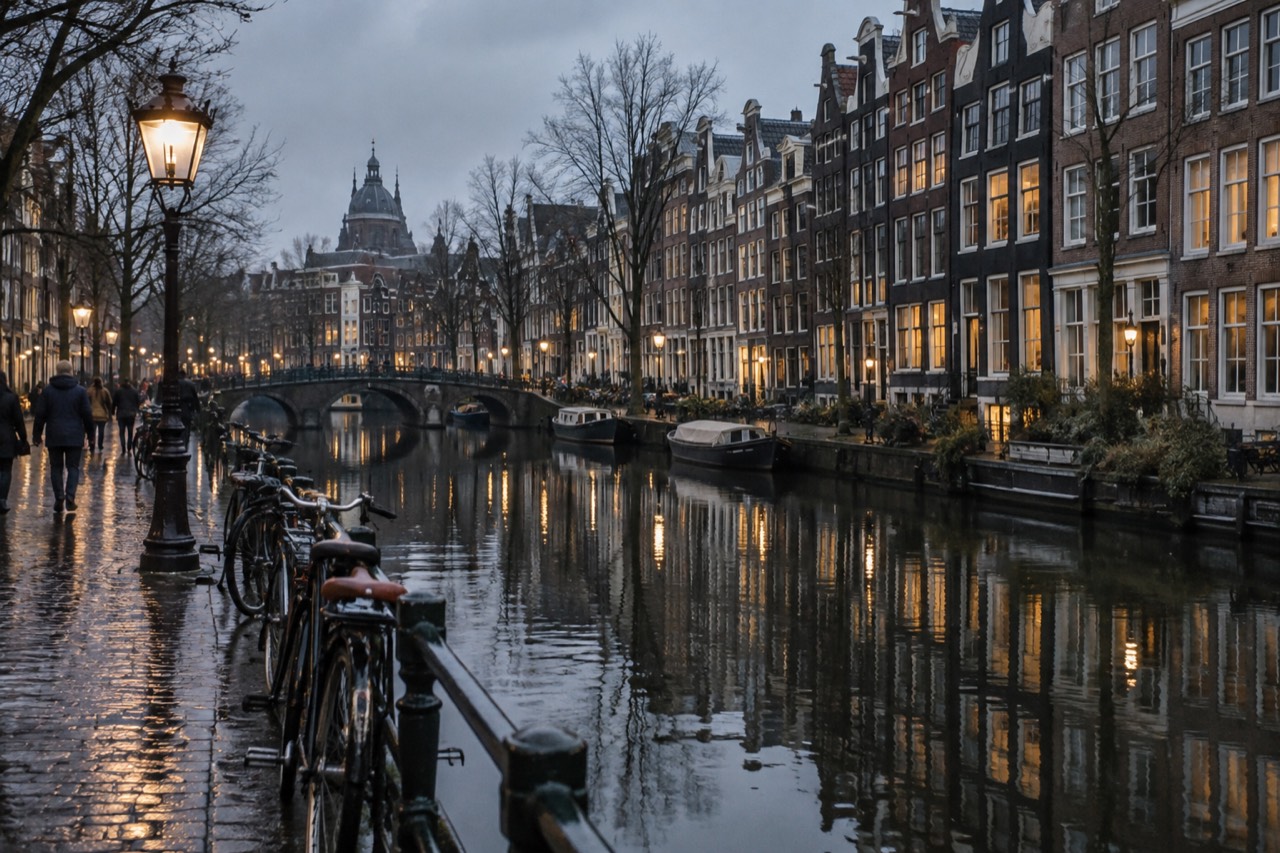
Short answer
Choose Amsterdam for world-class museums, nightlife and three or four full days of variety; choose Bruges for a compact, quiet, fairy-tale old centre you can walk across in an afternoon. Amsterdam's headline museums cost €25 each, Bruges rewards slow wandering. With 12-hour guided day trips from $47, you can also see Bruges from an Amsterdam base.
Amsterdam recorded 23.7 million tourist overnight stays in 2025, a figure the city's own research bureau published and one that exceeded its self-imposed 20 million ceiling for another year running. Bruges, by contrast, markets itself on being small: its historic centre is a UNESCO World Heritage Site you can cross on foot in twenty minutes. Anyone deciding between the two is really deciding between a big, busy, museum-dense capital and a preserved medieval town that empties of day visitors by early evening.
That is not a verdict against either city. It is a statement about what each one is for. This guide compares them on the things that actually swing the decision: cost, travel logistics, art, atmosphere and how the two combine. Where a figure matters, it comes from the operators' own pages or the city's own published data, and where something is genuinely unknowable in advance, we say so rather than guess.
Which City Should You Choose, Amsterdam or Bruges?
Pick Amsterdam if you want three or more days of museums, nightlife and neighbourhood variety, and pick Bruges if you want one or two days of quiet medieval streets and canal-side beer. Amsterdam is a capital with 23.7 million overnight stays a year behind it; Bruges is a walkable town whose centre closes down early. Travellers with four days or more can do both, using Amsterdam as the base and Bruges as a day trip or an overnight.
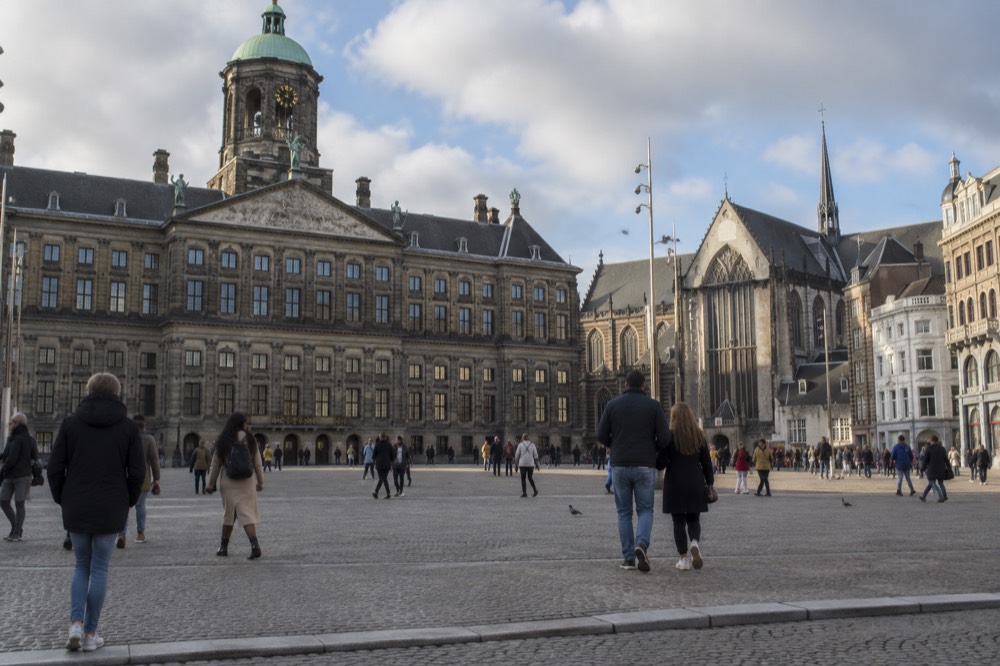
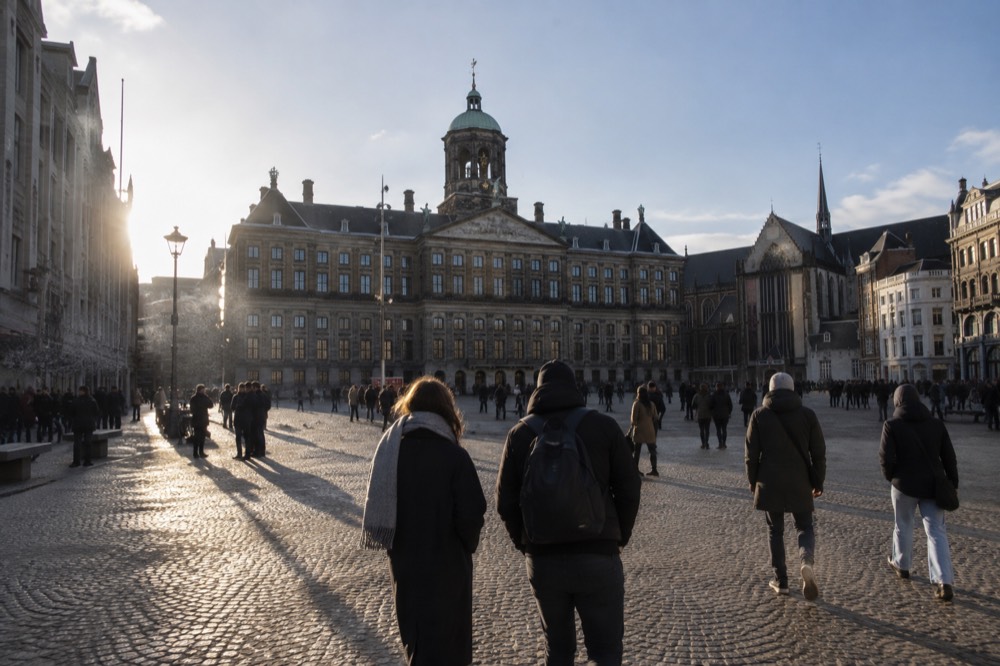
The honest starting point is scale. Amsterdam's centre alone holds the Rijksmuseum, the Van Gogh Museum, the Anne Frank House, the Royal Palace and a canal ring that is itself UNESCO-listed, spread across districts as different from one another as De Pijp and the Jordaan. You cannot see it in a day, and the city does not pretend you can; our Amsterdam for first-time visitors guide plans out a realistic first visit.
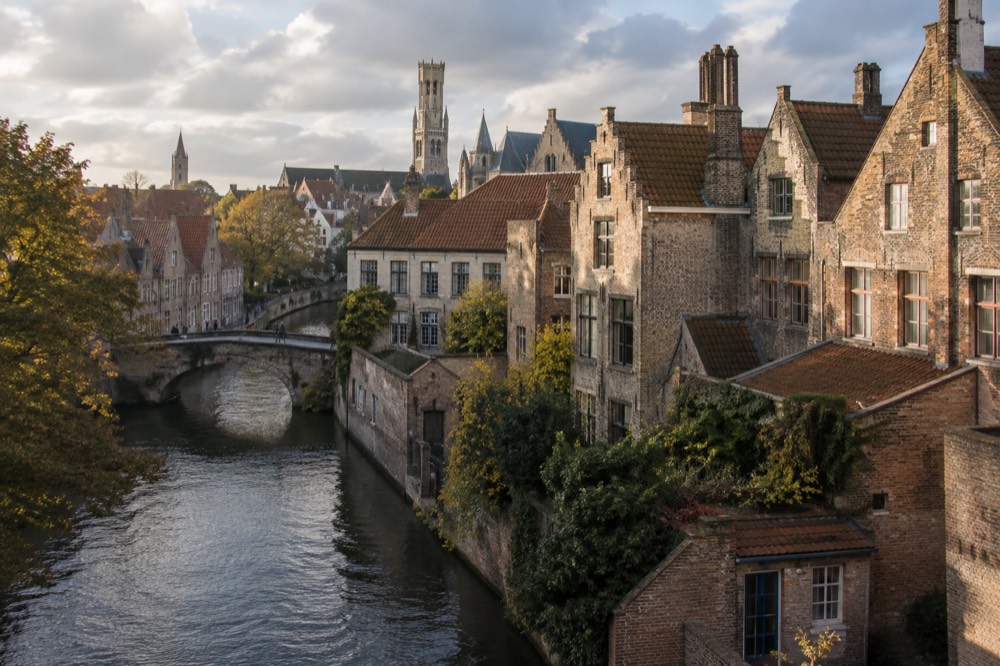
Bruges inverts every one of those properties. Its draw is precisely that there is not that much of it: the Markt, the Belfry, the Rozenhoedkaai view, a handful of churches, and a lace-and-chocolate retail core that has barely changed shape in centuries. Visitors who love Bruges love it for the evenings, when the coach parties have gone and the canals go quiet. Visitors who are bored by Bruges by mid-afternoon usually came expecting a second Amsterdam and found a town instead.
There is no wrong answer between those two propositions, only a mismatch risk. The single most common planning error is treating them as substitutes. They are not the same product at two price points; they are different products that happen to share a canal aesthetic.
How Do the Two Cities Compare at a Glance?
Amsterdam is roughly eight times Bruges' size, sits in the Netherlands and runs on trams and metros, while Bruges sits in Belgium's Flanders region and is entirely walkable. Amsterdam's headline museums charge €25 at the door, its public transport day pass is €10, and its canal cruises start around €15.50; Bruges' costs cluster lower but its attraction list is far shorter. The table below puts the contrasts side by side.
The comparison that surprises people most is atmosphere by the hour. Amsterdam's centre is busy from mid-morning to late at night, every day, because its 23.7 million annual overnight stays are supplemented by 21.9 million day visits, both figures from the city's own statistics bureau. Bruges runs on a different rhythm entirely: heaving at lunchtime when the coaches arrive from Brussels and the coast, then progressively calmer until, after about seven in the evening, it becomes one of the quietest historic centres in Western Europe.
| Factor | Amsterdam | Bruges |
|---|---|---|
| Country and region | Netherlands, North Holland | Belgium, Flanders |
| Character of the centre | 17th-century canal ring, major-city energy | Medieval centre, UNESCO-listed, museum-quiet at night |
| Headline museums | Rijksmuseum, Van Gogh Museum, Anne Frank House | Historic centre itself, Belfry, churches |
| Getting around | Trams, metro, buses, bikes, canal boats | On foot entirely |
| Best trip length | Three to four days | One day, two with an overnight |
| Evening scene | Bars, brown cafés, music venues, late dining | Quiet streets, a handful of bars, early closes |
Neither city is a budget version of the other, which is worth saying plainly because the question is often framed that way. Belgium is marginally cheaper than the Netherlands on everyday spending, but a Bruges hotel in the historic core prices itself for scarcity, and Amsterdam's enormous hotel stock, roughly 41,000 to 42,000 rooms across 544 hotels by the city's own count, keeps mid-range supply surprisingly deep. The cost question is really about how many paid attractions each city pushes you into, and there Amsterdam loses, because its headline museums are individually expensive and collectively tempting.
If the Amsterdam side of that equation appeals, the three products below cover the classic first-visit spread: the city's most booked museum, its most popular paid attraction, and the canal cruise that ties the whole centre together.
What Does Each City Cost per Day?
Amsterdam's verified headline prices are €25 for the Rijksmuseum, €25 for the Van Gogh Museum and €16.50 for the Anne Frank House, plus a €10 GVB day pass for transport; a realistic museum-heavy day runs well over €60 per person before food. Bruges has fewer paid attractions, so a day there costs less on tickets and more on chocolate and beer. Costs are similar overall, but Amsterdam's spending is compulsory where Bruges' is optional.
The Amsterdam figures above come from the museums' own ticket pages, and they carry conditions worth knowing before you budget. The Rijksmuseum's own site lists adults at €25, free for ages 18 and under, open every day of the year from 9am to 5pm, with a timed entry slot that must be booked in advance. The Van Gogh Museum's ticket page states the same €25 adult price, free entry under 18, and requires every visitor to pre-book a timed ticket. The Anne Frank House is €16.50 for adults including a €1 booking fee, sold only through the museum's own website for a specific date and time, with no door sales at all; the release schedule is fixed and slots vanish fast, which is why our Amsterdam museum tickets and skipping the queue guide exists.
Bruges does not present the same compulsion. Its Belfry climb, its churches and its boat trips are individually modest, and a traveller who is happy just to walk the centre and sit by the Rozenhoedkaai can spend almost nothing on tickets in a full day. That asymmetry, Amsterdam charging €25 three times over for its big three while Bruges charges small amounts for small things, is the real cost difference between the cities, and it favours Bruges for tight budgets and Amsterdam for anyone who wants the museum content.
| Typical spend | Amsterdam | Bruges |
|---|---|---|
| Headline museum entry | €25 (Rijksmuseum, official site) / €25 (Van Gogh Museum, official site) | Smaller per-attraction fees, check each site |
| Canal experience | From about €15.50 for a 1-hour cruise (Rederij Kooij's own listing) | Short boat trips, prices on the operators' listings |
| City transport | €10 GVB 24-hour day pass, or €3.40 single | Not needed, the centre is on foot |
| Biggest hidden cost | Museum tickets stacking up, three majors in one day | Chocolate, lace and beer, all optional |
One Amsterdam cost that genuinely surprises first-time visitors is the tourist tax, which the city's own page sets at 12.5% of the overnight price for hotels and holiday rentals. It is charged on top of the room rate, it is legal, and it is one more line on a bill that Bruges' hotels do not match. Factor it in when comparing accommodation prices rather than discovering it at checkout.
If you are leaning Amsterdam and the museum spend is the deciding factor, this box deals with the one ticket that sells out furthest ahead.
How Easy Is It to Reach Bruges from Amsterdam?
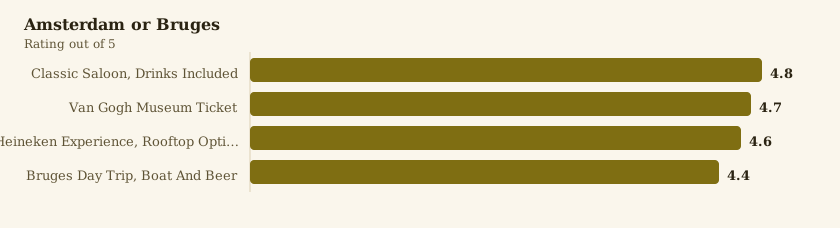
Bruges is a long way from Amsterdam for a day trip, roughly three hours' travel each direction by road or rail, so a guided coach day tour runs about 12 hours door to door. It is entirely doable, and the roster's Bruges day trip from Amsterdam is rated 4.4 across 2,375 reviews at from $47, but an overnight in Bruges, or a base in Brussels or Ghent, suits the journey better if you dislike long coach days.
The arithmetic is the whole story. A same-day return means six hours of travelling against perhaps five or six hours actually in Bruges, and the city rewards the hours after the day crowd leaves, which a day trip structurally cannot give you. The guided option removes every friction, coach, guide and timing handled, and the roster listing for the Bruges day trip from Amsterdam prices it from $47 for the 12-hour format, with boat and beer options on the listing. Travellers who prefer independence can book their own rail path, but the total door-to-door time is similar and the planning burden is not.
The smarter combinations are the ones the geography suggests. Brussels sits on the main Amsterdam-to-Bruges rail corridor, and Ghent lies between Brussels and Bruges, so a two-base trip, Amsterdam first, then Brussels or Ghent with a Bruges hop, converts a punishing day trip into two easy half-days. Our Bruges guide covers the town itself in detail, and the Brussels pairing is handled in its own comparison elsewhere on this site.
For travellers committed to the day-trip format, the decision moment is simple: book the seat, because the coach price is fixed and the alternative is six hours of self-managed connections.
Which City Wins for Museums and Art?
Amsterdam wins on museums by any measure that matters: the Rijksmuseum and the Van Gogh Museum are each worth the trip on their own, at €25 apiece on their official pages, and the Anne Frank House is the most in-demand ticket in the country. Bruges has the Groeningemuseum's Flemish Primitives and the historic centre itself, which is genuine but on a different scale. For an art-led trip, Amsterdam is the destination and Bruges is a pleasant footnote.
The Rijksmuseum's case barely needs arguing: Rembrandt's The Night Watch in a purpose-lit hall, Vermeer, Frans Hals, and a building whose own practical-info page confirms daily 9am to 5pm opening, every day of the year, with timed slots and free entry for under-18s. The Van Gogh Museum holds the world's largest Van Gogh collection, over 200 paintings, 500 drawings and 750 letters, and its ticket page requires every visitor to pre-book a timed slot. The roster's Van Gogh Museum ticket prices from $31 and carries a 4.7 rating across 57,096 reviews, which is the scale of demand we mean.
Bruges' answer is the Groeningemuseum, whose Flemish Primitives, Van Eyck above all, are world-significant paintings in a small package. It is a fine half-day for anyone who cares about early Netherlandish art. But it is one museum against a city where you can spend two full days on Museumplein and the Plantage alone and still leave things unseen, from the Rembrandt House to the Stedelijk to NEMO with its free roof terrace. The depth gap is not a matter of taste; it is a count.
There is one planning nuance that first pages of search results routinely miss. Amsterdam's big museums are not walk-up attractions in any season anymore: the Rijksmuseum states that all visitors, pass holders included, must book a start time, and the Anne Frank House sells exclusively through its own site, by time slot, with no reseller access of any kind. Booking windows, not opening hours, are the real constraint on an Amsterdam art trip, and the museums' own pages are the only reliable source for both.
Which City Wins for Canals, Beer and Atmosphere?
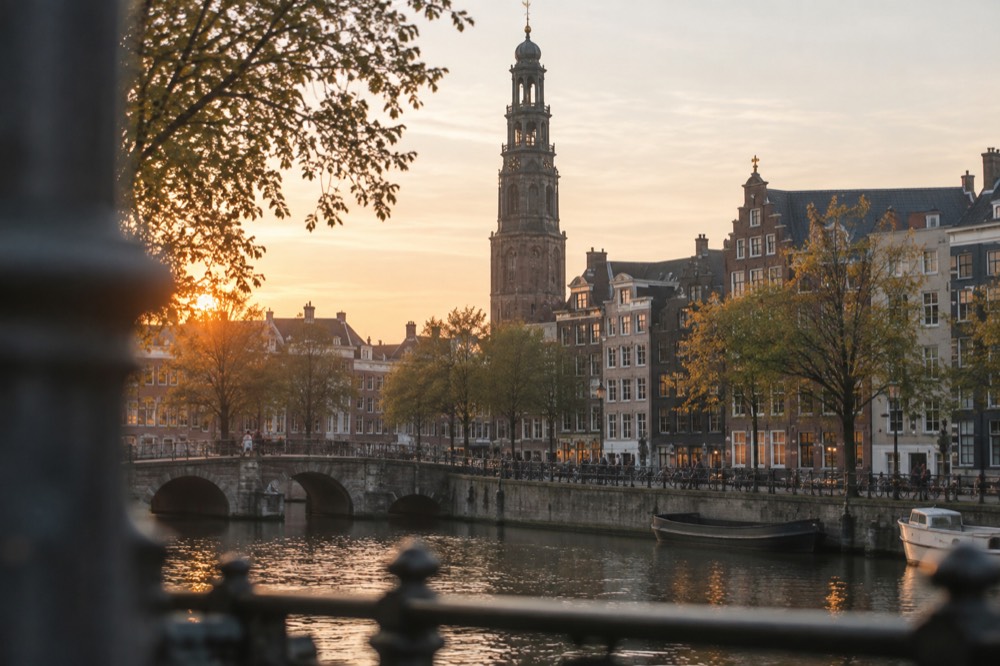
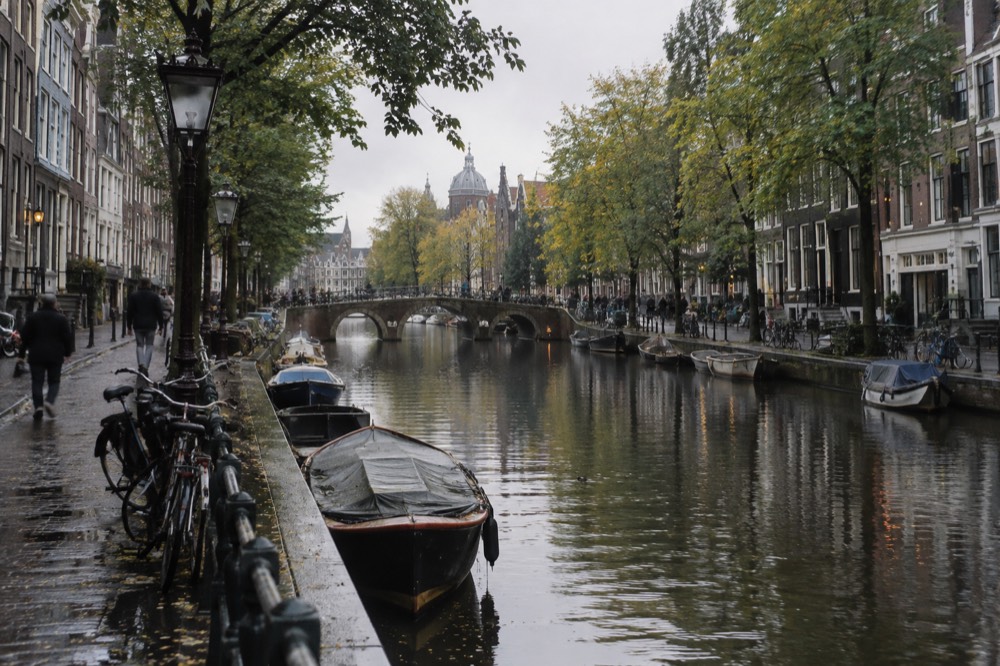
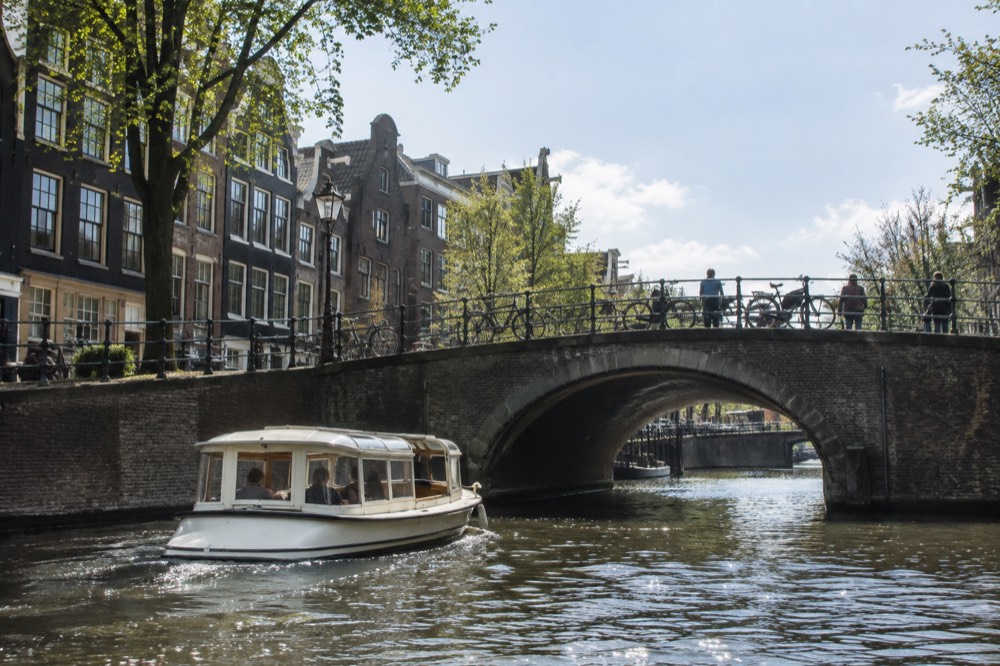
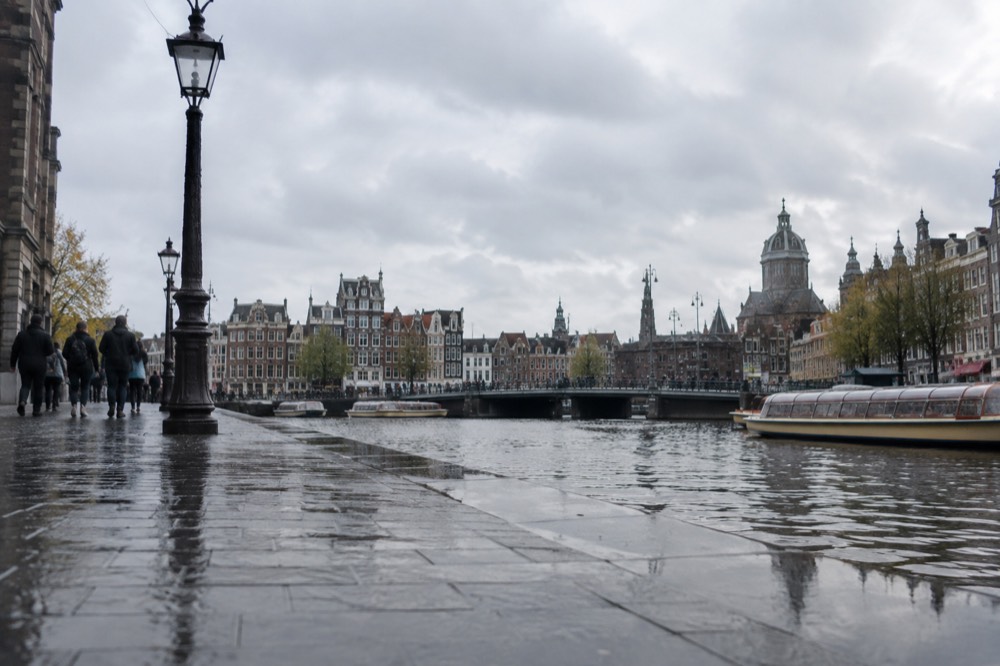
Bruges wins on quiet, compact, fairy-tale canal scenery and on beer culture, being Belgian, while Amsterdam wins on canal variety, on the water being a working transport system, and on nightlife that runs past midnight. Amsterdam's canal ring is a UNESCO-listed 17th-century whole best understood by boat; Bruges' canals are a small, serene medieval network best understood on foot. Atmosphere depends entirely on whether you want calm or energy.
The canals are where the two cities look most alike in photographs and least alike in person. Amsterdam's ring is big, busy and functional: cruise boats, houseboats, delivery barges and private sloops share the water, and the classic way to read it is a one-hour cruise, with the roster's saloon-boat options, the classic saloon boat cruise at from $19.56 with a 4.8 rating across 33,435 reviews, among the most reviewed products in the city. Bruges' canals, by contrast, are narrow, tree-lined and slow, with short boat trips that exist mostly to give you the postcard view rather than to move anyone anywhere.
Beer is not a contest in Belgium's favour by accident. Bruges sits in the country of Trappist brewing and has a serious beer culture in a small radius, including a famous brewery museum in the centre. Amsterdam's answer is a different shape: brown cafés with candle wax on the tables, the Heineken Experience in the original brewery, and a modern craft scene. The roster's Heineken Experience ticket prices from $23, rated 4.6 across 39,581 reviews, and it is the single most-booked paid attraction of its kind in the city, a fair barometer of where Amsterdam's drinking culture puts its weight.
Nightlife settles it. Amsterdam has venues, bars and cafés that fill the hours from dinner to the last metro, and the city's own rules push the Wallen area's outdoor terraces to close at 01:00 and indoor hospitality at 02:00 on weekends. Bruges after about nine in the evening is a town going to bed. Choose Bruges for the evening walk and the early night; choose Amsterdam for everything after it.
Can You Combine Both Cities in One Trip?
Yes, and it is the best answer for anyone with five or more days: base in Amsterdam for three or four days, then either take the 12-hour guided Bruges day trip from $47 or add one overnight in Bruges via Brussels or Ghent on the train. The combination works because the cities are complementary rather than similar, one giving the capital-museum energy, the other the medieval calm, and the travel between them is a known, fixed cost.
The five-day version is the sweet spot. Days one to three in Amsterdam cover the big museums, a canal cruise and one or two neighbourhoods; our three days in Amsterdam itinerary sequences exactly that. Day four is the Bruges day trip, long but self-contained, and day five is a soft Amsterdam morning before departure. Anyone who finds the 12-hour format unappealing should flip the structure: two nights in Brussels or Ghent with a Bruges afternoon splits the travel and adds a third city almost for free.
The trade-off to be honest about is what the day-trip format costs you in Bruges itself. You arrive with the coaches and leave with the coaches, which means you see peak-crowd Bruges and never see the quiet version that is half the reason people rate the town so highly. The overnight fix is cheap in money and expensive only in luggage logistics, and if your trip already includes a night near Brussels Central, it is close to automatic.
| Trip shape | Days needed | Best for | Main trade-off |
|---|---|---|---|
| Amsterdam only | 3-4 | Museums, nightlife, neighbourhoods | You miss Bruges entirely |
| Amsterdam base + Bruges day trip | 4-5 | One-hotel simplicity | 12-hour day, crowded-hours Bruges |
| Amsterdam + overnight in Bruges | 5-6 | Seeing Bruges calm in the evening | One hotel change |
| Bruges only | 1-2 | Quiet, walking, beer and chocolate | No major museums, early nights |
Which Should You Pick for Your Next Trip?
Pick Amsterdam for a first visit to the region if art, energy and variety matter to you, and pick Bruges if you have already done a capital city this year and want stillness instead. For most travellers the honest answer is both, Amsterdam first for three or four days, then Bruges as a day trip or overnight, because the two cities answer different needs and the journey between them is a solved problem.
The decision framework we would actually use: if your trip is three days or fewer, do one city properly, and let the tie-breaker be whether you would rather stand in front of The Night Watch or sit beside a medieval canal with a Belgian beer. If your trip is four to five days, base in Amsterdam and add Bruges. If you are combining the region with Brussels or Ghent anyway, Bruges slots in naturally and Amsterdam keeps its own block.
Two practical footnotes from the Amsterdam side. Spring travellers should know the tulip season is narrow and fixed: Keukenhof runs 18 March to 9 May in 2027, daily 08:00 to 19:00, and no tulip itinerary works outside that window. And anyone weighing the Things to Do in Amsterdam full roster against a Bruges-only plan should remember that Amsterdam's timed-entry museums reward early booking while Bruges' attractions mostly do not, which means an Amsterdam trip wants planning a few weeks out and a Bruges trip can be decided almost on arrival.
If this comparison has settled you on the Amsterdam side, these are the three bookings that anchor the classic visit.
Common Questions About Amsterdam or Bruges
Is Bruges cheaper than Amsterdam?
On everyday spending, slightly, because Belgium's prices run a touch lower. But Amsterdam's real cost is its museum stack, €25 each for the Rijksmuseum and the Van Gogh Museum on their official pages, while Bruges pushes you toward optional spending on chocolate and beer. Accommodation in Bruges' historic core is scarce and prices accordingly; Amsterdam has roughly 41,000 to 42,000 hotel rooms and deep mid-range supply, plus a 12.5% tourist tax on the room price.
Can you do Bruges as a day trip from Amsterdam?
Yes. Guided coach day tours run about 12 hours door to door, with the roster's Bruges day trip rated 4.4 across 2,375 reviews and priced from $47. The trade-off is that you see Bruges during its most crowded hours and leave before it goes quiet in the evening, which is why an overnight via Brussels or Ghent suits some travellers better.
Which city is better for a first visit, Amsterdam or Bruges?
Amsterdam, for most people. It has the Rijksmuseum, the Van Gogh Museum, the Anne Frank House, the canal ring and enough neighbourhood variety to fill three or four days. Bruges is magical but small and quiet, and it suits a second or third visit to the region, or a traveller who specifically wants calm rather than content.
How many days do you need for Amsterdam and Bruges together?
Five is the comfortable answer: three or four in Amsterdam plus either the 12-hour Bruges day trip or a one-night hop. With six or more days, add an overnight in Bruges via Brussels or Ghent so you experience the town in the evening, when the day crowds have gone and the canals are quiet.
Which city has better canals?
They are different products. Amsterdam's canal ring is a UNESCO-listed 17th-century network you experience best by boat, with cruises from about €15.50; Bruges' canals are narrow, tree-lined and medieval, best experienced on foot. If you want the water to be a working system, choose Amsterdam; if you want a postcard that holds still, choose Bruges.