Amsterdam for First-Time Visitors: A Three-Day Itinerary
Three days is the sweet spot for a first Amsterdam visit: one day for the canal ring, one for the museums, one for the neighbourhoods most visitors never reach. This itinerary sequences them so you are not backtracking, and tells you exactly what to book before you fly.
Short answer
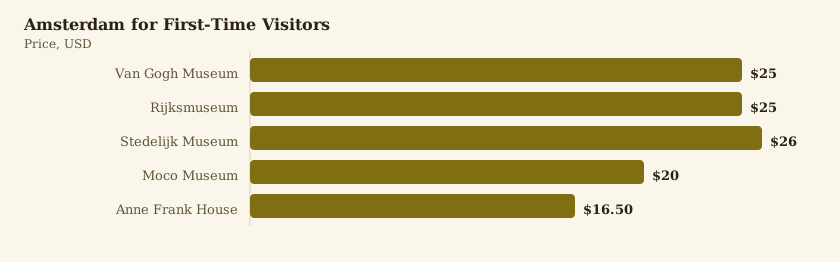
First-time visitors need three full days in Amsterdam: Day 1 covers the canal ring and a canal cruise from $15, Day 2 the Rijksmuseum at €25 and the Van Gogh Museum at €25, Day 3 the Jordaan, Anne Frank House at €16.50 and De Pijp. Book the Van Gogh Museum and Anne Frank House online before you travel; both use timed entry and sell out.
Amsterdam recorded 23.7 million tourist overnight stays in 2025, and most of those visitors squeezed themselves into the same half square kilometre around Dam Square. The city rewards a first-timer who sequences things properly: the canal ring first, the Museumplein museums second, and the quieter neighbourhoods third, once the centre has stopped feeling overwhelming. This Things to Do in Amsterdam itinerary does exactly that, with the ticket prices, transport fares and booking deadlines that decide whether your three days feel smooth or stressful.
How Many Days Do You Need for a First Trip to Amsterdam?
Three full days is the right answer for almost every first-time visitor: one for the canal ring and the historic centre, one for the Museumplein museums, and one for the Jordaan, De Pijp and whatever you missed. Two days works if you are disciplined about booking timed tickets, and four starts buying you day trips to Zaanse Schans or Haarlem rather than more of the city itself.
The reason three days fits Amsterdam so well is structural, not sentimental. The two headline museums, the Rijksmuseum and the Van Gogh Museum, sit on the same square and both use timed entry, so they pair naturally into a single afternoon-and-morning block. The Anne Frank House sits at the western edge of the canal ring, close to the Jordaan, which pairs a heavy historical visit with the city's most walkable neighbourhood. A canal cruise fits anywhere, but it fits best on your first evening, when you have no bearings yet and the water gives you a map you can actually remember.
First-timers consistently overestimate how much ground they can cover on foot. The centre is compact, but the canal ring is a crescent, not a grid, and the cobbles slow everyone down. Plan two anchor activities per day plus one flexible block, and leave the evenings loose. Amsterdam's centre is at its best after the day-trippers leave, and the canal cruise fleet runs into the night for exactly that reason.
If you only have a weekend, read our 48-hour Amsterdam plan and cut this itinerary to its Days 1 and 2. If you have a week, our one-week Amsterdam and the Netherlands plan adds the day trips this three-day version skips.
Day One: The Canal Ring, Dam Square and Your First Cruise
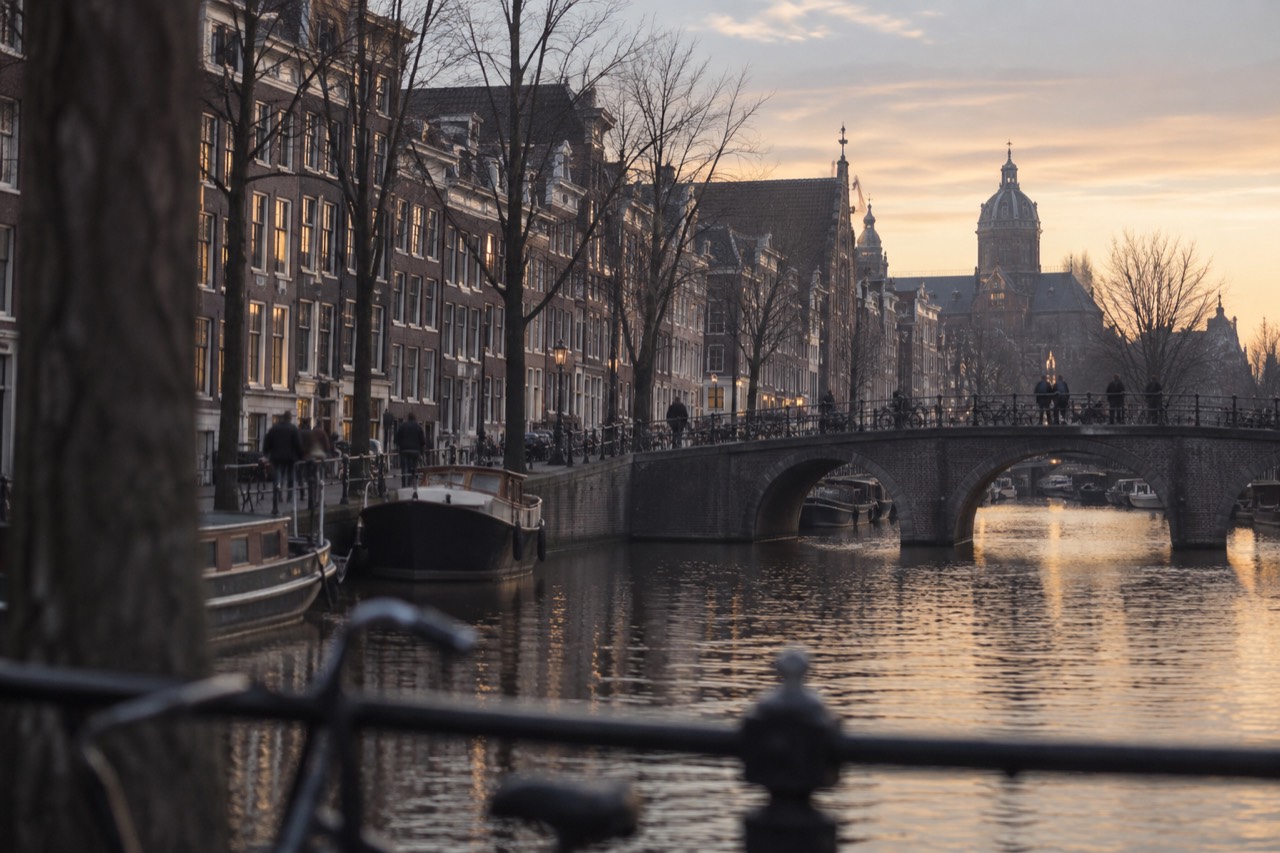
Spend Day 1 entirely inside the canal ring: Dam Square and the Royal Palace in the morning, the Begijnhof and the Nine Streets after lunch, and a one-hour canal cruise at sunset with a from price of $15. The cruise is the single best orientation move a first-timer can make, because you see the whole ring in an hour and learn the city's geography from the water.
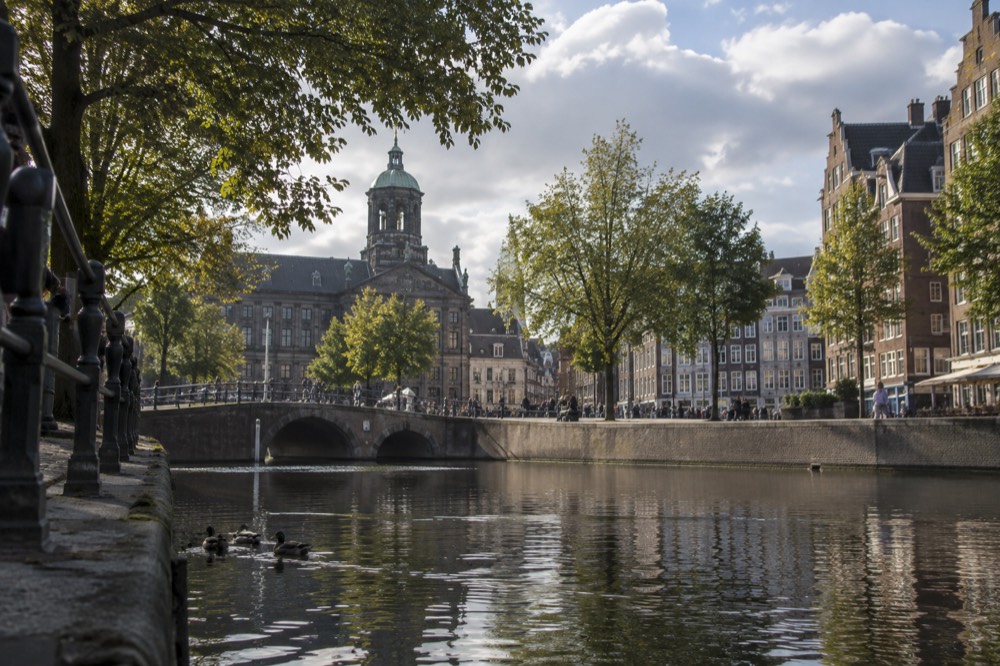
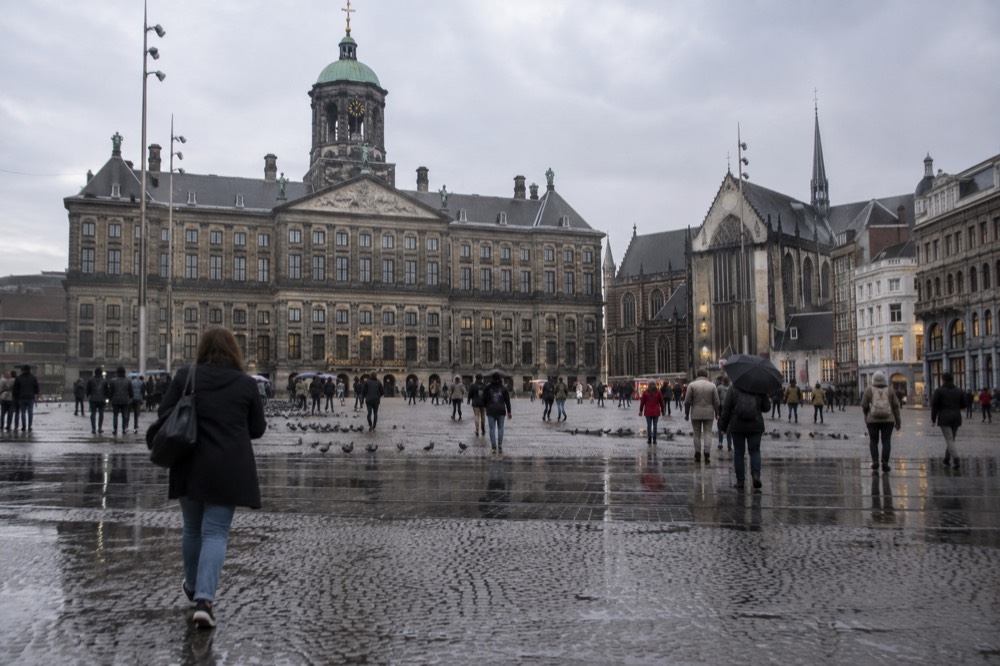
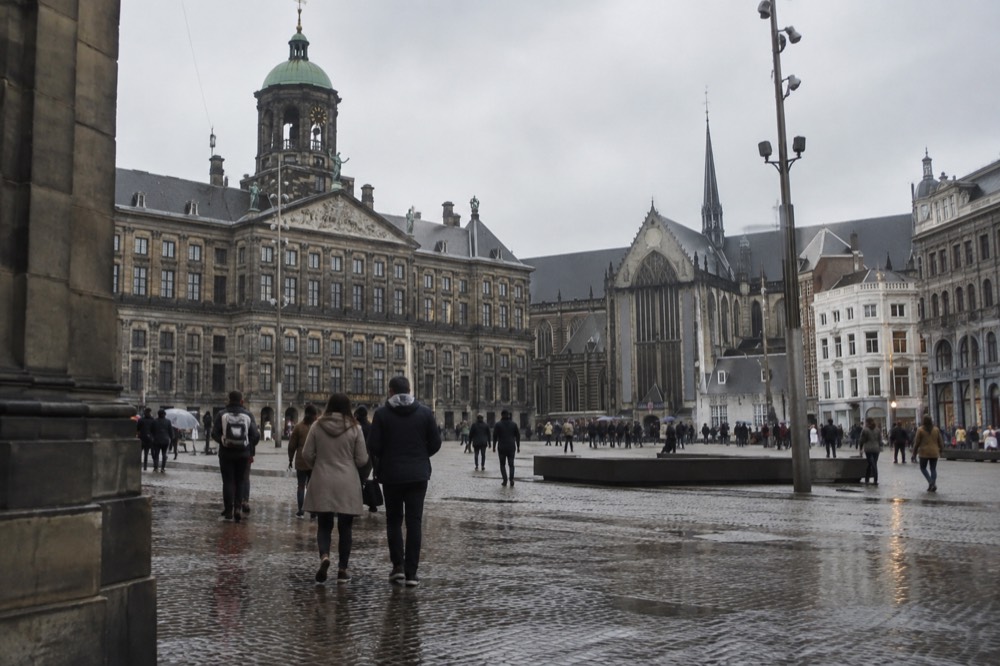
Start at Dam Square, the historical centre point, and the Royal Palace, which is open to visitors whenever it is not hosting state functions. An entry ticket with audio guide starts at $15 and the roster rating is 4.7 across 9,124 reviews, which is unusually strong for a building people visit mainly because it is there. The palace is a 17th-century building still used for royal receptions, and the audio guide does honest work explaining why a "palace" looks like a town hall, because it was one.
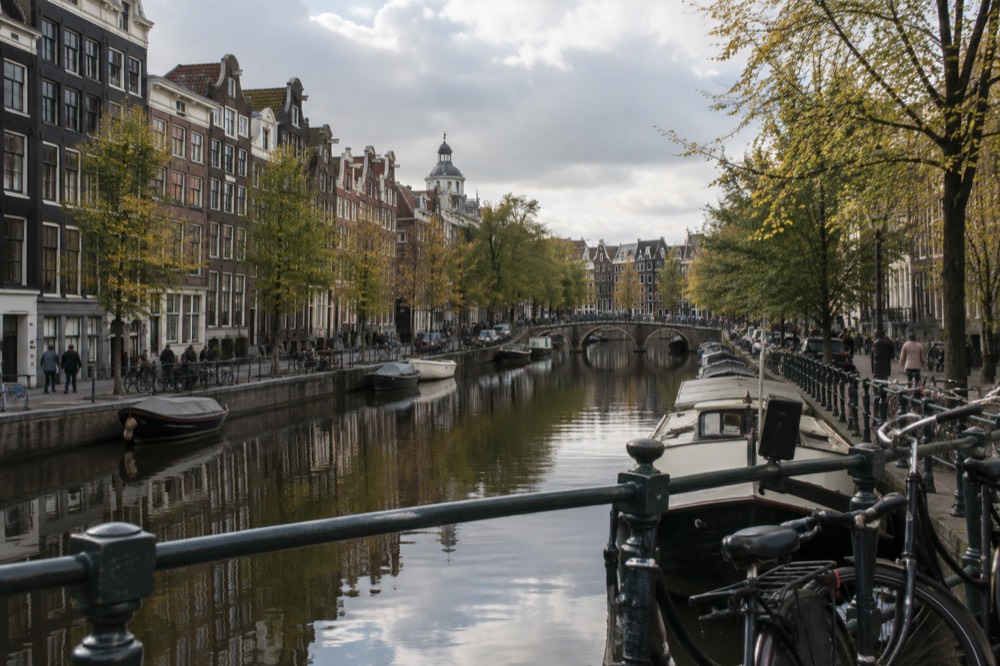
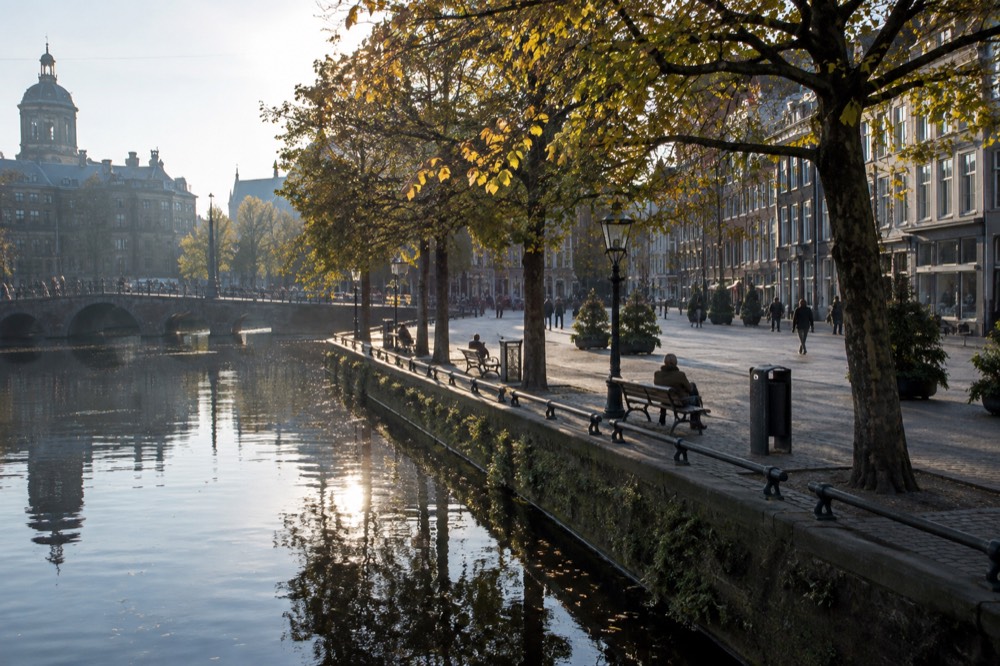
From Dam Square, walk south into the canal ring. The route that makes sense is Herengracht east to the Golden Bend, where the widest and most ornate canal houses cluster, then the Begijnhof, a hidden courtyard that survives from the medieval period and costs nothing to enter. The Nine Streets, the shopping lanes crossing the main canals, sit between the two and make a natural coffee stop. This whole loop is under three kilometres and fills a morning comfortably.
The afternoon belongs to a canal cruise, and the practical question is which departure point suits your day. The standard one-hour cruise with an audio guide in 19 languages runs from three docks, one near the Anne Frank House, one at the Rijksmuseum and one at Central Station, from $15 with a 4.3 rating across 21,335 reviews. Book the departure point nearest where you will be, not the one the hotel recommends, and take a late-afternoon slot so you finish in the golden light.
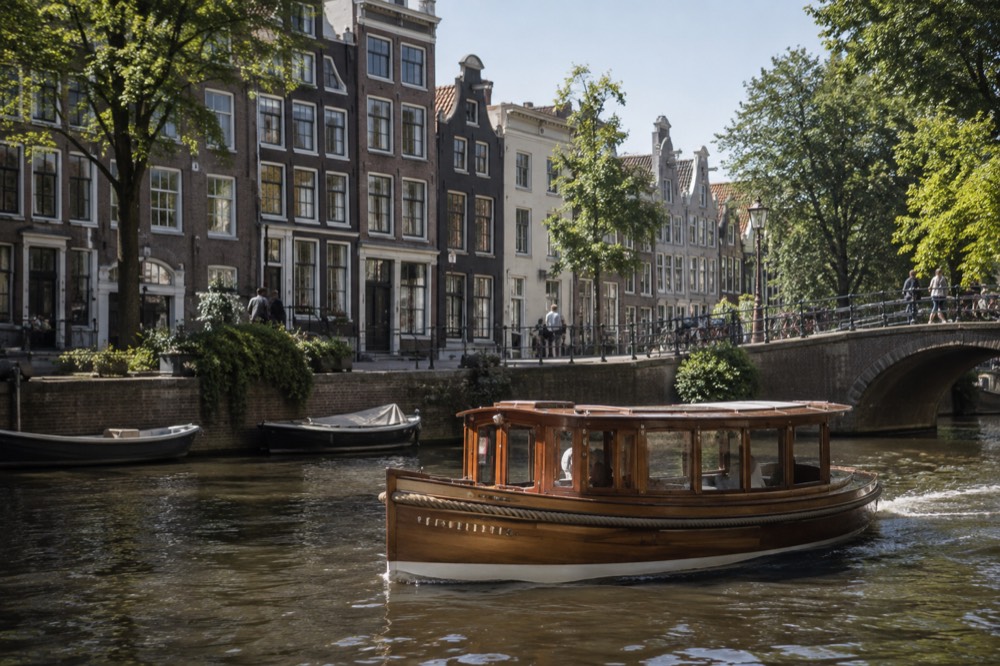
For the evening, the classic first-timer move is a saloon boat: the classic wooden boats have been sailing these canals since the turn of the last century, and the drinks-and-cheese version starts at $19.56 with a 4.8 rating across 33,435 reviews. If you would rather eat on the water, the pizza dinner cruise runs 90 minutes with unlimited drinks from $40. Either way, finish Day 1 on the water, because the second evening you will want to be in a brown café instead, and the third you will be packing.
Day Two: The Rijksmuseum, Van Gogh and Museumplein
Give Day 2 to Museumplein: the Rijksmuseum in the morning at €25 for adults, free for 18 and under, the Van Gogh Museum in a pre-booked afternoon slot, also €25, and the Vondelpark to decompress between them. Both museums require a timed entry ticket booked online, and the Van Gogh Museum in particular sells out, so this is the day you must organise before you leave home.
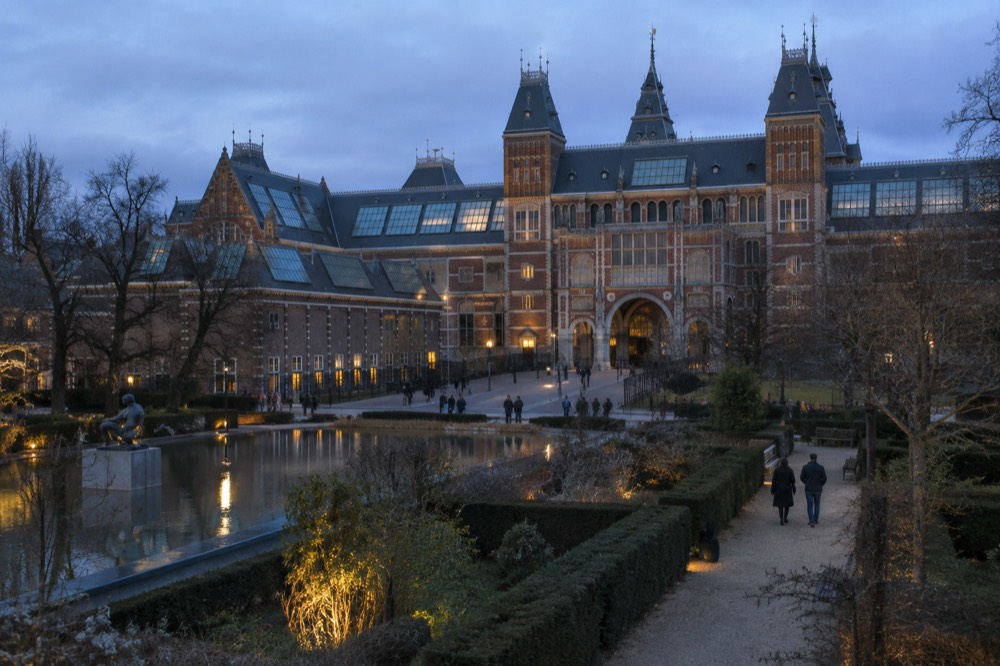
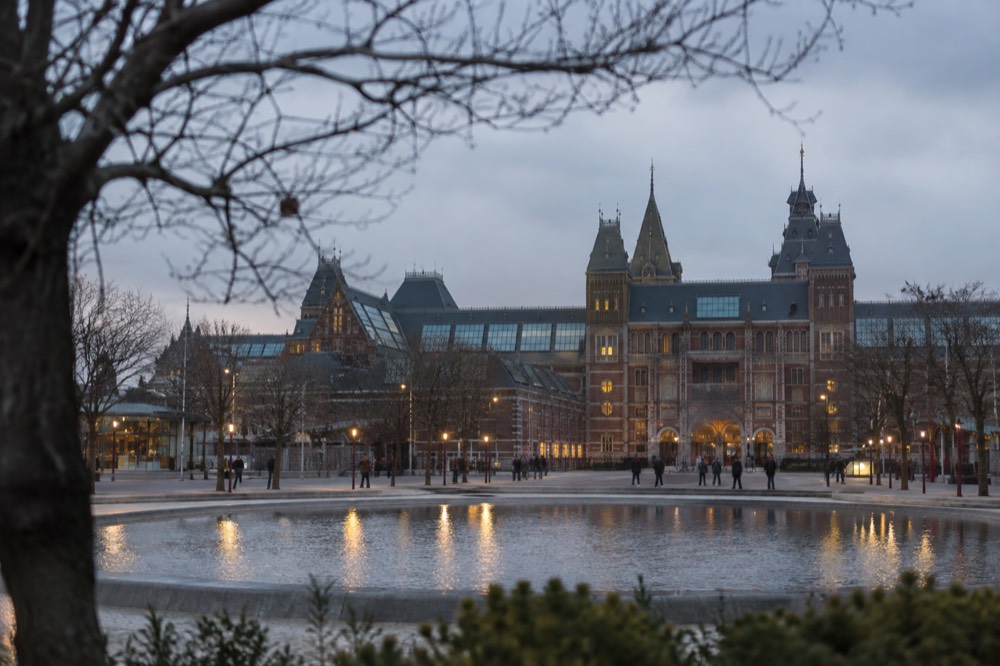
The Rijksmuseum opens at 9am every day of the year, including public holidays, and closes at 5pm, with the shop and café open an hour longer. Adult admission is €25, under-18s enter free, and every visitor including card holders must book a start time online. Take the first slot of the morning: the Gallery of Honour, where The Night Watch hangs, is quiet for its first hour and unbearable by noon. Two hours is enough for a first visit that covers Rembrandt, Vermeer, Frans Hals and the dollhouses without museum fatigue setting in.
The Van Gogh Museum is a five-minute walk across the square. Adult admission is €25, visitors under 18 enter free, and the museum's own ticket page states that all visitors are required to pre-book a timed entry ticket. The collection holds over 200 paintings, 500 drawings and more than 750 letters, and the roster listing, at 4.7 across 57,096 reviews, is the most-reviewed product in the city. The pre-booked entry ticket from $31 covers a timed slot, and the free cancellation window on the live listing means a spring booking is low-risk.
Between the two museums, walk into the Vondelpark, the city's largest park and a ten-minute stroll from either entrance. Locals treat it as their front garden; a first-timer should treat it as the recovery hour that makes the second museum possible. If you would rather stay indoors, the Moco Museum, with Banksy and Warhol on show, is on the square with entry from $20, and the Stedelijk, the modern art museum next door, is from $26.
The Heineken Experience makes a strong Day 2 closer: it is a 90-minute interactive attraction in the original brewery, from $23, rated 4.6 across 39,581 reviews, and its location on the eastern edge of the centre puts you within walking distance of dinner in De Pijp. Book a late slot and you exit into the neighbourhood rather than back onto Museumplein.
| Museum | Adult price | Under 18 | Booking rule | Pre-booked ticket from |
|---|---|---|---|---|
| Van Gogh Museum | €25 | Free | Timed entry, all visitors | $31 |
| Rijksmuseum | €25 | Free | Start time required, all visitors | $31 |
| Stedelijk Museum | from $26 via listing | Check listing | Timed entry | $26 |
| Moco Museum | from $20 via listing | Check listing | Timed entry | $20 |
| Anne Frank House | €16.50 | €7 ages 10 to 17 | Online only, no door sales | Official site only |
Day Three: The Jordaan, Anne Frank House and De Pijp
Day 3 is the neighbourhood day: the Anne Frank House in the morning at €16.50, the Jordaan's cafés and the Noordermarkt around it, and De Pijp with the Albert Cuyp Market in the afternoon. The Anne Frank House is the one Amsterdam attraction with no legitimate reseller, tickets go on sale on the museum's own site on Tuesdays at 10am for visits six weeks later, and they go fast.
The Anne Frank House is the most consequential stop of a first visit, and the one that punishes improvisation. Adult tickets are €16.50 including the €1 booking fee, ages 10 to 17 pay €7, and there are no door sales at all. The museum is open daily from 9:00 to 22:00, but the opening hours matter far less than the release schedule: set a calendar reminder for the Tuesday six weeks before your trip, and buy the moment sales open. Nothing sold by any tour operator includes entry, and a walking tour of the Jewish Quarter is the honest alternative if you miss tickets.
Book the earliest slot you can. The house is small, the stairs are steep and the experience is dense; an hour is the right amount, and it lands better before the day fills up with lighter things. Exit onto the Prinsengracht and you are already in the Jordaan, the former working-class district that is now the city's most pleasant maze of narrow streets, brown cafés and independent shops.
The Jordaan rewards aimlessness. The Noordermarkt and its Saturday farmers' market, the Bloemgracht's crooked canal houses and the Westerkerk, whose tower Anne Frank wrote about hearing, fill a morning without any of them demanding a ticket. Our Jordaan neighbourhood guide maps the whole district if you want a route rather than a wander.
Cross to De Pijp after lunch. The Albert Cuyp Market, the largest street market in the Netherlands, runs daytime Monday to Saturday and costs nothing but what you eat, and the neighbourhood around it is where the city's restaurant density is at its highest. Our De Pijp guide covers the eating in detail.
Finish the trip on the water again, this time after dark. The evening city lights cruise, from $21 with a 4.4 rating across 23,214 reviews, runs 90 minutes with an optional wine add-on, and the illuminated canal ring is a different city from the daytime one. If your flight leaves late on Day 4, this is also the evening to book the A'DAM Lookout across the water in Noord, from $24 with a drink included, reachable by the free ferry behind Central Station.
How Do You Get Around Amsterdam as a First-Timer?
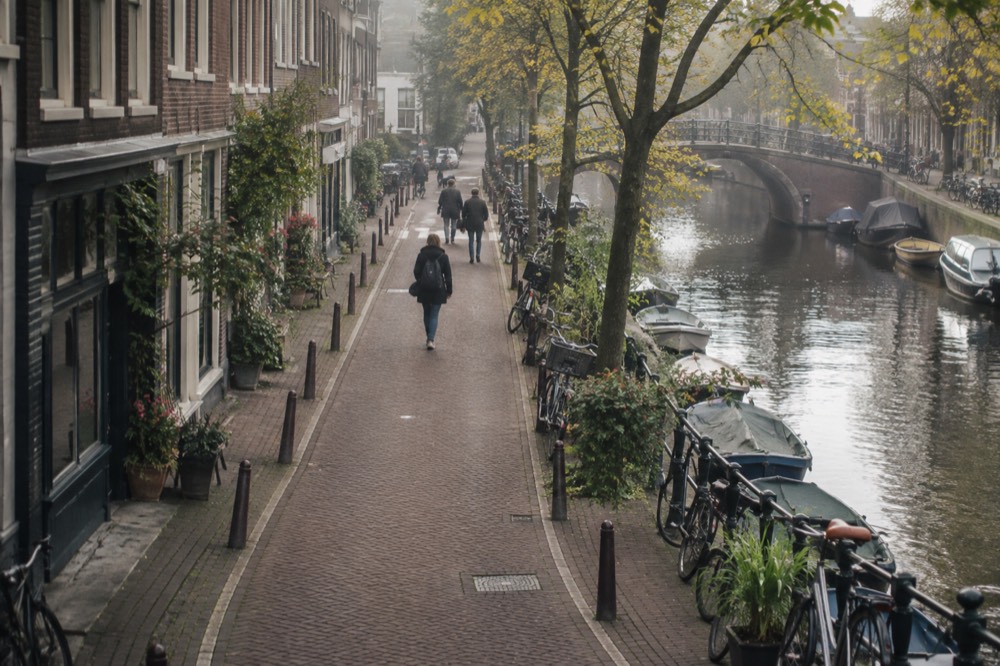
Walk and use the tram: the centre is compact enough that most of this itinerary is on foot, and a GVB single costs €3.40 while a 24-hour transport day card costs €10.00. Tap a contactless bank card with OVpay, or buy a day card if you will make three or more rides, and take the free ferries behind Central Station to reach Noord.
The transport decision is simpler than the brochures make it look. A single GVB ticket, valid one hour on tram, bus and metro, is €3.40, so the €10.00 day card pays for itself on the fourth ride. For a three-day first visit centred on the canal ring, most people ride two or three times a day, which makes a 72-hour card at €21.50 the comfortable option, though the honest arithmetic for this specific itinerary is day cards on Days 2 and 3 only, since Day 1 is entirely walkable. Our getting around Amsterdam guide has the full fare table.
Cycling is the other question first-timers ask, and the honest answer is that the centre is not the place to learn. The bike traffic is dense, the tram rails are slippery when wet and the right of way rules are unwritten. If you want to ride, do it on Day 3 in the Jordaan and the park edges, or take a guided three-hour city bike tour from $42 where the guide rides ahead, rather than renting cold at Central Station. Our cycling in Amsterdam guide covers the etiquette.
| Journey | Best option | Cost | Time |
|---|---|---|---|
| Schiphol to Centraal | NS train | from €5.50 | about 17 minutes |
| Centraal to Museumplein | Tram 2 or 12 | €3.40 single or day card | about 15 minutes |
| Centraal to Noord | GVB ferry | Free | about 5 minutes |
| Anywhere in the canal ring | On foot | Free | 15 to 30 minutes |
| Canal cruise departure points | Walk to nearest dock | Free | Under 15 minutes from centre |
What Should You Book Before You Fly?
Book four things from home: the Van Gogh Museum timed slot, the Anne Frank House ticket on release day, a canal cruise time, and your transport. The Rijksmuseum needs a start time but rarely sells out days ahead, and everything else in this itinerary can be decided on the ground. The Anne Frank House is the only one with a hard release schedule, so it is the booking that should drive your calendar.
The order of operations matters. Six weeks out, on a Tuesday at 10am, the Anne Frank House releases tickets for your dates: buy then, and shape Day 3 around the slot you get. The Van Gogh Museum sells out in high season but rarely more than a week or two ahead, so a month out is fine, and the free cancellation on the live listing means you can rebook if your itinerary shifts. The Rijksmuseum wants a start time but keeps availability; book it a few days ahead or on arrival.
One thing not to book from home is a museum pass you have not done the arithmetic on. The I amsterdam City Card costs €67 for 24 hours and €94 for 48 hours, includes free entry to over 70 museums and locations, unlimited GVB transport, one canal cruise and a 24-hour bike rental, and excludes both the Van Gogh Museum and the Anne Frank House. For this itinerary, where those two exclusions are the two anchor bookings, the card's value depends entirely on how much of Day 2's secondary list you will actually do. Our is the I amsterdam City Card worth it guide runs the numbers properly.
What Mistakes Do First-Time Visitors Make in Amsterdam?
The five that cost the most: skipping the Anne Frank House ticket release, walking in the bike lane, buying cannabis outdoors in the centre where smoking it is prohibited, booking a hotel in the wrong district for a first visit, and treating the red-light district like a free show. Every one of these is avoidable with a calendar reminder and one honest paragraph of local rules.
The bike lane mistake is the one that causes the most near-misses. Bike lanes are the red-tinged asphalt beside the pavement, they are not pedestrian space, and locals ring their bells without slowing down. Look right before you step off any kerb, and when in doubt, walk on the inside edge of the pavement. Our first-timer mistakes to avoid guide expands the full list.
The cannabis question deserves precision, because most guides get it wrong in one direction or the other. National tolerance policy limits coffeeshop sales to 5 grams per person per day, and the national rules include a residents-only criterion, but Amsterdam does not apply it: tourists can and do buy in the city's coffeeshops. What is enforced is the outdoor smoking ban in the city centre, which includes the red-light district area: buy inside, consume inside. Our Amsterdam coffeeshop rules guide covers the practicalities without either of the two common falsehoods.
The red-light district etiquette is short and strict. Photography of the windows is prohibited by the venues and enforced by staff, guided tours may not pass the windows at all, groups are capped at 15, and tours run only between 08:00 and 22:00 under city rules. Visit in the evening if you want the atmosphere, on a guided small-group tour from $26 if you want the history, and read our red-light district rules and etiquette guide before you go. The city's own visitor rules page sets all of this out: How to Amsterdam, on the official city site.
| Mistake | Consequence | Fix |
|---|---|---|
| Missing the Anne Frank House Tuesday release | No tickets at any price | Calendar reminder six weeks out, 10am |
| Walking in the bike lane | Bells, near-misses, occasional collisions | Stay on the pavement, look right at kerbs |
| Smoking cannabis outdoors in the centre | Prohibited in the city centre area | Consume inside the coffeeshop |
| Booking a hotel far from a tram line | Long walks or extra transport cost | Check the tram map before booking |
| Photographing the windows in De Wallen | Staff enforcement, removal from venues | Camera away in the district entirely |
Where Should a First-Time Visitor Stay?
Stay inside or on the edge of the canal ring for a first visit: the Centrum district for maximum walkability, the Jordaan for atmosphere, De Pijp for food and value, or Oud-West for a quieter base that is still two tram stops from everything. Avoid anything marketed as "near the airport" for a three-day city trip, and expect a 12.5 percent tourist tax on top of the room rate.
The district choice matters more in Amsterdam than in most cities because the centre is where the evenings happen, and the trams thin out after midnight. Centrum puts everything of Day 1 at your feet but puts you inside the crowds; the Jordaan trades a little convenience for the city's best streets; De Pijp is where the restaurants are and rides into the centre in ten minutes. Our where to stay in Amsterdam guide compares all the districts for first-timers, and our Amsterdam neighbourhood guide goes deeper on each one.
Budget honestly. Amsterdam levies a tourist tax of 12.5 percent of the overnight price excluding VAT on hotels and holiday rentals, and the city's hotel stock has been frozen by policy, which keeps central rates high. Our how much does a trip to Amsterdam cost guide gives realistic daily figures, and our Amsterdam on a budget guide shows where the money is best saved.
The city's own tourism tax page states the current rate and how it is applied: the official municipal tax page. Read it before you book a short-stay rental, because the rules for those tightened in April 2026 and the central neighbourhoods now allow far fewer rental nights per year, which is one reason legal central apartments are scarce and expensive.
Packing It All Into Three Days
A first Amsterdam visit comes down to a handful of bookings made early, a transport card you barely think about, and a walking pace that accepts the city is a crescent, not a grid. Book the Anne Frank House and the Van Gogh Museum from home, take a cruise on the first evening, spend one full day at Museumplein, and give the last day to the Jordaan and De Pijp. Everything else is a bonus.
The trio below covers the three anchor bookings of this itinerary: the Van Gogh Museum timed entry, the Heineken Experience for the Day 2 evening, and the classic saloon boat cruise for Day 1's orientation hour. All three carry free cancellation windows on their live listings, which is the practical answer to the first-timer's real worry, that plans made six weeks out will change.
Common Questions About a First Amsterdam Itinerary
How many days do you need in Amsterdam for a first visit?
Three full days covers the canal ring, the two headline museums, the Anne Frank House and one or two neighbourhoods without rushing. Two days works if you book timed tickets early and accept skipping De Pijp or Noord. Four or more days starts buying you day trips to Zaanse Schans, Haarlem or Keukenhof in spring rather than more city.
What should I book before travelling to Amsterdam?
Anne Frank House tickets, released on the museum's own site on Tuesdays at 10am for visits six weeks later, a Van Gogh Museum timed slot, and ideally a canal cruise time. The Rijksmuseum needs a start time but rarely sells out far ahead. Nothing else in a first itinerary demands advance booking.
Is the Anne Frank House included in any pass or tour?
No. The Anne Frank House sells tickets only through its own official website, with no door sales and no legitimate resellers, and the I amsterdam City Card explicitly gives no discount there. Walking tours of the Jewish Quarter cover the story in the streets but never include entry to the house.
Do I need a transport pass in Amsterdam?
Only if you will ride more than three times a day. A single GVB ticket is €3.40 and a 24-hour day card is €10.00, so the day card pays off on the fourth ride. Day 1 of this itinerary is fully walkable; Days 2 and 3 each justify a day card if your hotel sits outside the canal ring. Contactless OVpay also works per ride.
Can you see the Rijksmuseum and Van Gogh Museum in one day?
Yes, and it is the efficient way to do it. They sit on the same square, both cost €25 for adults with under-18s free, and both use timed entry. Book the Rijksmuseum for a 9am slot, take two hours there, eat, then take an afternoon Van Gogh slot, and finish with a walk through the Vondelpark.
Is Amsterdam walkable for first-time visitors?
The canal ring, the Jordaan, De Pijp and Museumplein are all walkable and mostly flat, and Days 1 and 3 of this itinerary involve no transport at all if you stay centrally. The things to watch are bike lanes, tram rails on wet cobbles and the fact that the canal ring curves, so distances on a map are longer than they look.