What Is a Dutch Staircase? Amsterdam's Steep Steps Explained
A plain answer to what a Dutch staircase is, why Amsterdam's canal-house stairs are so steep and narrow, and how to climb them safely without hurting yourself.
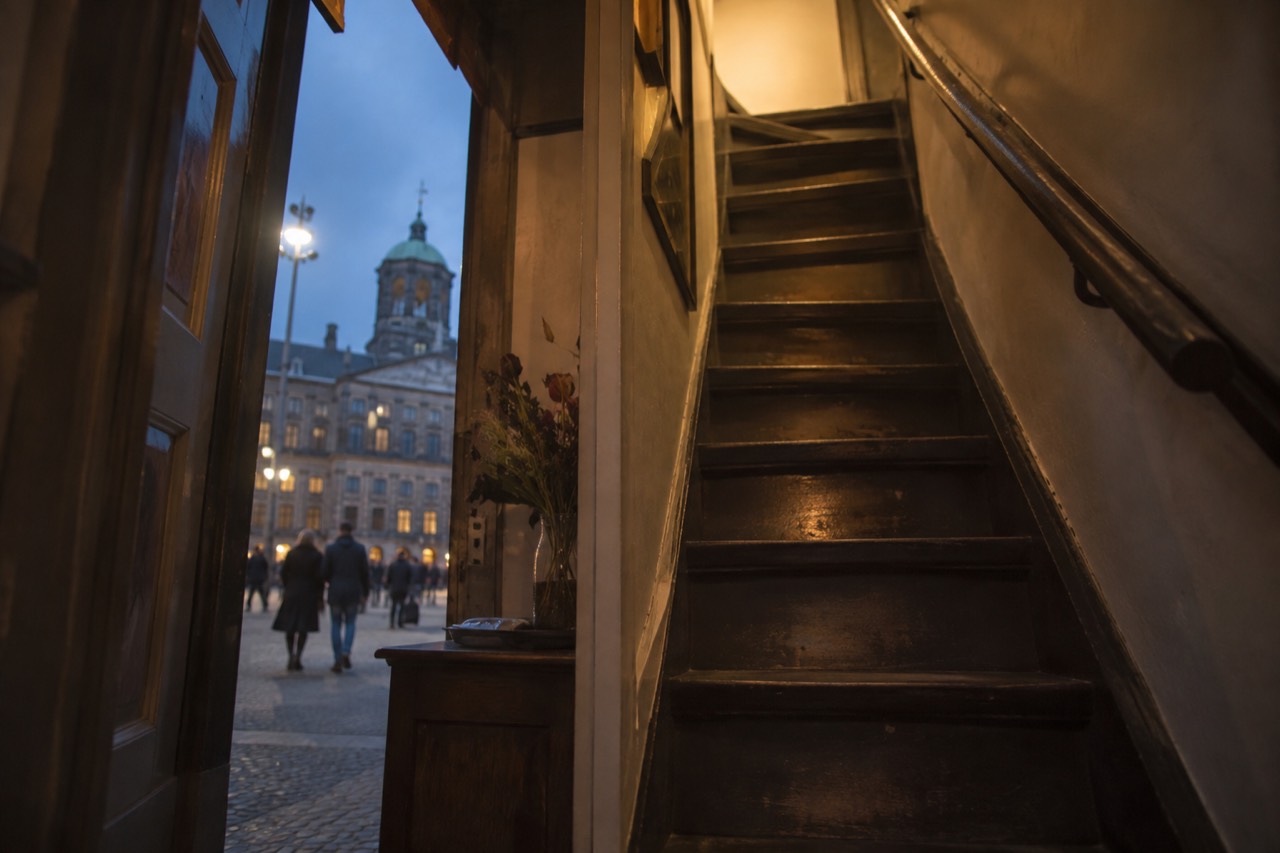
The first thing most visitors notice inside an Amsterdam canal house is not the ceiling painting or the antique clock. It is the staircase, a structure so steep and so narrow that it stops conversation mid-sentence. Locals call these steps by their own name and treat them as a fact of life. Travellers photograph them, joke about them and occasionally bruise themselves on them. This page answers the question plainly: what a Dutch staircase actually is, why the city built so many of them, and how to get up and down one without an unwelcome visit to a hospital.
What Is a Dutch Staircase?
A Dutch staircase is the extremely steep, narrow, often near-vertical flight of steps built inside traditional Dutch houses, especially Amsterdam canal houses. It typically combines a sharp pitch of roughly 45 degrees or more, tight turns on small landings, and treads so shallow that only part of a foot fits on each step. The design saved precious floor space in narrow buildings, and it became a defining feature of Dutch architecture rather than an accident of it.
That definition sounds dry until you stand at the bottom of one. A typical canal-house stair rises in short, tight flights with a sharp turn at each landing, because the footprint of the house leaves no room for a straight run. The handrail, where there is one, sits close to the wall. The treads are shallow and the risers are high, the opposite of the generous, shallow public stairs most people grow up with. In older buildings the whole structure is often wooden, which means it announces every footstep to the entire house.
The name is used loosely. Some people mean the classic Amsterdam canal-house stair specifically, a steep boxed flight squeezed against a side wall. Others mean any of the tight spiral and switchback stairs found across the Netherlands in older buildings, from Delft townhouses to Groningen attics. The shared features are the same everywhere: minimal floor space, maximum height gained, and an unspoken expectation that you will carry your own luggage up.
Visitors meet these stairs in exactly the places they spend the most time. Canal-house hotels keep them because the buildings are protected and the interiors cannot simply be rebuilt. Small museums occupy former homes and retain the original steps. Holiday apartments in the canal ring, the Jordaan and De Pijp frequently list steep stairs in their descriptions, and the city's own visitor guidance asks tourists to be aware of how the historic housing stock works. If you are curious how the canal ring came to be built this way, our guide to the Amsterdam canal ring UNESCO district covers the history in detail.
Why Are the Stairs in Amsterdam So Steep?
Amsterdam's stairs are steep because the houses themselves are narrow, deep and tall. Canal plots were laid out long and thin, with the short, expensive side facing the water, so every square metre of ground floor counted. A compact, near-vertical stair freed the lower floors for trading goods, storage and living space. Steepness was the price of the narrow frontage, and once the plot pattern was fixed, the stair pattern followed it for centuries.
The canal ring's plot geometry is the heart of it. When the grachtengordel was laid out in the seventeenth century, the city sold building plots that were narrow at the canal and stretched far back. Merchants wanted the front of the house for show and trade, and they wanted hoisting space at the top, which is why so many canal houses still carry the beam jutting from the gable. Every centimetre given to a comfortable, code-friendly staircase was a centimetre taken from the space that earned money. The classic solution was a stair pressed against a side wall, rising at a pitch that trades comfort for floor area.
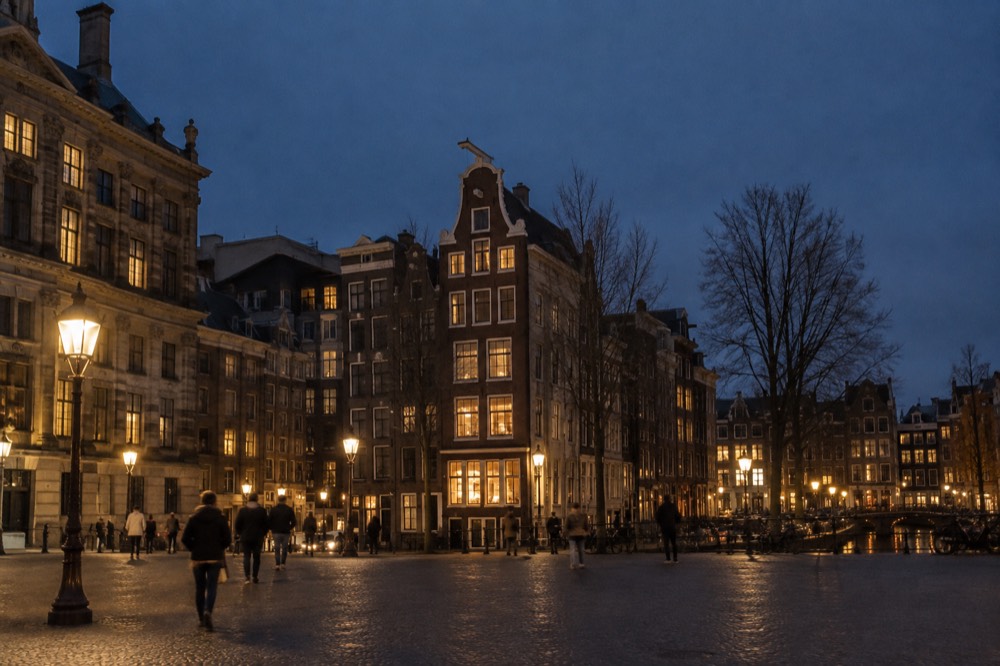
The hoisting beam explains the rest. Goods were hauled up the outside of the building and lifted through the upper floors, so the interior stair never had to be wide enough for barrels, bales or furniture. It only had to move people, and Dutch bodies in the seventeenth century were not consulted on the matter. The result is a stair built for a house that loads itself through the roof, which is also why moving house in Amsterdam still sometimes involves a crane and an open window.
There is a persistent story that a historic tax on the width of a house front, or even on the number of steps, drove the design. The plot-width explanation is the well-documented one; the tax version is a popular simplification that gets repeated without a primary source. Treat it as folklore rather than fact. What is certain is that the pattern persisted because it worked, and because the buildings that contain these stairs are now protected heritage that cannot be gutted for a modern staircase even if an owner wanted to.
Modern building rules are a different world, and new construction in the Netherlands follows contemporary standards. But the canal ring is essentially frozen, and the stairs inside it come with the building. The city's official visitor page on local rules and etiquette, which covers everything from cycling to respecting the red-light district, is worth a read before a first visit: the gemeente Amsterdam visitor guide sets out what the city expects from guests. If steep stairs are a dealbreaker for you, our where to stay in Amsterdam guide flags the areas where modern hotels and lifts are the norm.
Which Amsterdam Buildings Have the Steepest Stairs?
The steepest stairs cluster in the oldest and narrowest buildings: seventeenth and eighteenth century canal houses, small canal-house hotels, attic apartments and the upper floors of shops and cafes. Museums housed in former homes often keep the original flights, sometimes with a modern lift added for the main route. Purpose-built modern hotels, the larger museums and post-war buildings generally have conventional stairs or lifts. Location, more than building type, predicts what you will face.
The pattern is predictable once you know the city. The canal ring, the Jordaan, Haarlemmerbuurt and the oldest parts of the centre hold the most extreme examples, because that is where the narrowest historic plots sit. De Pijp and Oud-West mix steep older stairs with more forgiving late-nineteenth-century buildings. Amsterdam Noord, the Eastern Docklands and Zuid have far more modern stock where a staircase is just a staircase. The further the building is from the seventeenth-century core, the gentler the average stair.
| Where you are staying or visiting | What the stairs are usually like | What to plan for |
|---|---|---|
| Canal-house hotel or B&B in the centre | Original steep boxed flights, often with a turn at each landing | Ask for a lower floor, travel light, request help with bags in advance |
| Attic or upper-floor apartment in the canal ring | The steepest flights in the city, sometimes ladder-like to the top floor | Check the listing photos carefully before booking |
| Houseboat or hotel with lift | A few steps on board, or a lift in the building | Confirm lift access in writing when you book |
| Modern hotel in Noord, Zuid or the Docklands | Conventional stairs and lifts | No special planning needed |
| Small museum in a historic house | Original stairs, often with a lift on the main visitor route | Check the accessibility page before you go |
Museums deserve a special note, because several of Amsterdam's most popular ones live in historic buildings and several have added lifts or alternate routes. The Van Gogh Museum is a purpose-built modern building, which makes it one of the easiest major museums in the city for anyone worried about stairs, and its collection spans more than 200 paintings, 500 drawings and 750 letters. Adult admission is €25, everyone needs a pre-booked timed entry ticket, and the museum's own ticket page is where the start times are released: the official Van Gogh Museum ticket page sells them directly. A pre-booked ticket from $31, rated 4.7 across 57,096 reviews on the live listing, spares you the ticket line entirely.
The Rijksmuseum is similar in spirit, a grand building with a modernised visitor route, open daily from 9am to 5pm with timed entry for all visitors including pass holders, and adult tickets at €25 with free entry for ages 18 and under. The full current hours and prices are on the Rijksmuseum's own visit page. By contrast, the smaller house museums, such as the Rembrandt House, keep the authentic steep stairs precisely because the stair is part of the exhibit. The Anne Frank House is the most serious case: the historic rooms are reached by the original steep stairs and narrow passages, and tickets are sold only through the museum's own website for a specific date and time slot, at €16.50 for adults, with no door sales and no reseller. The official ticket information is at annefrank.org, and anyone with mobility concerns should read the museum's own guidance before booking.
How Do You Climb a Dutch Staircase Safely?
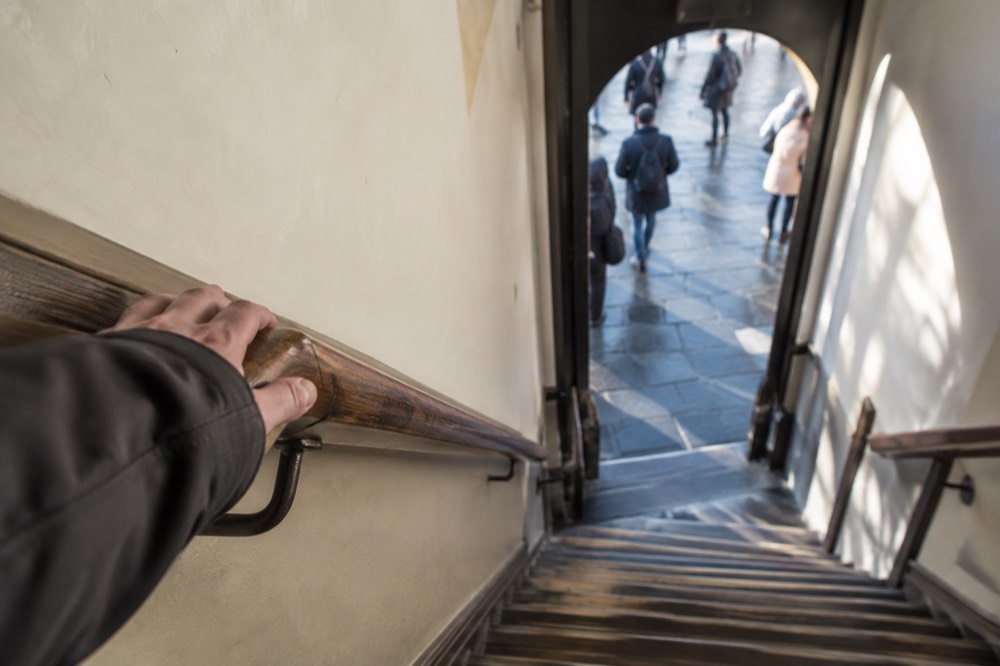
Climb a Dutch staircase the way locals do: slowly, facing the steps, holding the rail or the wall, and keeping your weight over your feet rather than leaning back. Take one step at a time on the turns, keep a hand free rather than carrying two bags, and never rush on the way down, which is when most accidents happen. Turn on the light before you start, and never use a canal-house stair in the dark.
The mechanics matter more than bravado. These stairs punish the two habits most people bring to ordinary steps: looking at their phone, and descending with a casual backward lean. On a pitch this steep, a backward lean puts your centre of gravity behind your heels, and the shallow treads give your heels almost nothing. Face the stair on the way down if it feels exposed, which is not elegance but it is sense. Use the rail or run your hand along the wall the whole way. On the tight turns, treat each landing as its own little staircase and reposition your feet deliberately before the next flight. The full index of guides sits on Things to Do in Amsterdam.
Luggage is the real hazard. A heavy suitcase changes your balance exactly where the stair gives you the least margin, and the turns are where bags swing into the rail or the wall. The local method is a rope or strap looped over the shoulders so the case rides on your back, leaving both hands free. Ask the hotel whether staff will carry bags up; in many canal-house properties this is a normal, expected service, and it is worth asking before you book rather than after you arrive. If a listing mentions a "Dutch staircase" in its amenities or warnings, believe it, because hosts add that note after experience.
A few habits cover the rest. Keep one hand for the stair and one for your coffee, never both hands full. Wear shoes with grip rather than slick soles on rainy days, since the ground floors of Amsterdam buildings track in water. Tell children the stair is a hands-on-the-rail zone, the same rule as a boat. And if you have any condition that affects balance or knees, say so when booking accommodation, because "steep stairs" covers a range from challenging to genuinely risky, and only the host knows which their building is. Our guide to first-timer mistakes to avoid in Amsterdam collects more of these small preparation wins in one place.
Can You Avoid Stairs in Amsterdam?
You can largely avoid steep stairs with planning, though you cannot avoid the fact that the historic centre is built around them. Choose a modern hotel or one with a lift, ask for a ground or first-floor room, pick a houseboat or a post-war building, and prefer the large purpose-built museums over historic house museums. What you cannot do is reserve a canal-house attic and expect a gentle staircase, because the building decides, not the booking.
The accommodation choice is the biggest lever. Modern hotels in Zuid, Noord, the Docklands and around Schiphol have lifts as standard, and even many canal-house hotels have added lifts to at least part of the building. The questions to ask before booking are simple: does the building have a lift, does it reach every floor, and is the room on a floor the lift reaches? Get the answers in writing. A "lift in building" can mean a lift that stops one floor below your room, with a boxed flight connecting the two, which is precisely the arrangement you were trying to escape.
| Strategy | How it works | Trade-off |
|---|---|---|
| Modern hotel with a lift | Conventional stairs and elevator access throughout | Often outside the canal ring, so a tram ride to the centre |
| Canal-house hotel, low floor | One short flight instead of four | Still a steep flight, and ground floors can be darker |
| Houseboat stay | A few steps down to the deck, no internal flights | Low doorways and a gangway instead of stairs |
| Apartment with lift, historic shell | Lift to your floor, character kept in the common areas | Rarer and usually pricier in the centre |
| Day-time pacing | Split the day so stair-heavy buildings get fresh legs | Requires a slower itinerary |
The attraction choice is the second lever, and it is easier, because Amsterdam's biggest draws are not stair problems. The Van Gogh Museum, the Rijksmuseum, the Stedelijk, NEMO and the Johan Cruijff ArenA are modern or fully modernised, with lifts on the main routes. The Heineken Experience sits in the firm's original historic brewery, and its visitor route moves between floors, so it is worth checking the operator's accessibility information before booking if stairs are a concern; the tour runs about an hour and a half, from $23, rated 4.6 across 39,581 reviews.
The honest summary is that avoidance is a spectrum, not a switch. You can spend a week in Amsterdam on level floors and lifts, and many visitors with mobility limits do exactly that. What you cannot do is experience the seventeenth-century city, its attics, its house museums and its rooftop views, without meeting at least a few of the stairs that built the place. Decide in advance which side of that trade you want, and the city will meet you there.
Do Locals Struggle With These Stairs Too?
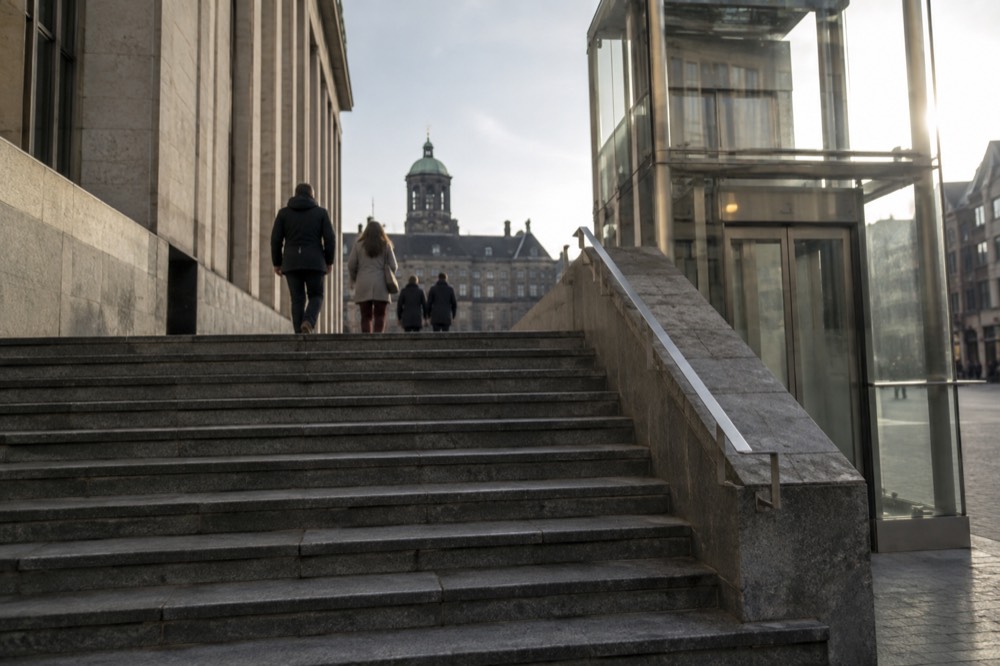
Yes, in the sense that the stairs are genuinely demanding for everyone, and no, in the sense that locals have absorbed them into ordinary life. Dutch residents grow up with these flights, learn the rail-and-wall technique without being taught, and treat a heavy carry up three storeys as a chore rather than an ordeal. Age catches up with everyone, and older Amsterdamers are as careful on these stairs as any visitor, sometimes more so.
There is a useful honesty in this. The stairs are not a prank played on tourists; they are a daily fact for the people who live in these houses, and the city's housing stock is old enough that the flights are simply what a home looks like in the centre. Amsterdam residents joke about their own stairs with the same tired affection visitors bring. The difference is muscle memory: a local's feet know where the shallow treads end, and a local's hand finds the rail without looking.
The practical lesson for a visitor is to copy the local technique rather than the local confidence. Face the stair, use the rail, take the turns slowly, and never carry more than you can hold with one hand. Confidence on a Dutch staircase comes from the method, not from repetition, and the method is available to anyone on their first climb. What you should not copy is the sight of an Amsterdammer sprinting down three flights with a bicycle wheel under one arm, because that is a trained skill and it looks easier than it is.
Common Questions About Dutch Staircases
What Is A Dutch Staircase?
It is the steep, narrow, near-vertical flight of steps built into traditional Dutch houses, above all Amsterdam canal houses. Shallow treads, high risers, tight turns on small landings and a pitch that often feels closer to a ladder than a stair. It exists because narrow plots demanded a stair that used almost no floor space, and it became a defining feature of the Dutch old-city house.
Why are Amsterdam stairs so steep compared with stairs at home?
Because the houses are narrow, deep and tall. Canal plots were laid out with a thin, expensive frontage facing the water, so interior floor area was too valuable to spend on a generous staircase. Goods were hoisted up the outside of the building through the gable, so the internal stair only ever needed to carry people, and it was built as compactly as the plot allowed.
Are Dutch staircases dangerous?
They demand more attention than ordinary stairs, especially going down and especially with luggage, but millions of people use them every day without incident. The safe method is simple: hold the rail or the wall, face the steps on the way down if it feels exposed, keep a hand free, and never rush. Most accidents come from treating a 45-degree flight like a normal staircase.
How do I get my suitcase up a Dutch staircase?
Use a shoulder strap or rope so the case rides on your back and both hands stay free, take one flight at a time, and rest at each landing. Better still, ask the hotel in advance whether staff carry bags, which is a normal service in many canal-house properties, or book a ground-floor room so the question never arises.
Can I book Amsterdam accommodation without steep stairs?
Yes, easily. Modern hotels in Zuid, Noord, the Docklands and near Schiphol have lifts as standard, many canal-house hotels have added lifts to part of the building, and houseboats involve a few steps rather than a flight. Ask before booking whether the lift reaches your floor, and get the answer in writing.
Which Amsterdam attractions have the fewest stairs?
The purpose-built and fully modernised ones: the Van Gogh Museum, the Rijksmuseum, the Stedelijk, NEMO and the Johan Cruijff ArenA all have lifts on their main visitor routes. Historic house museums, including the Anne Frank House and the Rembrandt House, keep their original steep stairs as part of the experience, so check each museum's own accessibility page before you book.