What Not To Do In Amsterdam As A Tourist?
The mistakes that mark you out, cost you money or get you fined in Amsterdam: red light district rules, coffeeshop law, tram etiquette, ticket traps and how to avoid all of them.
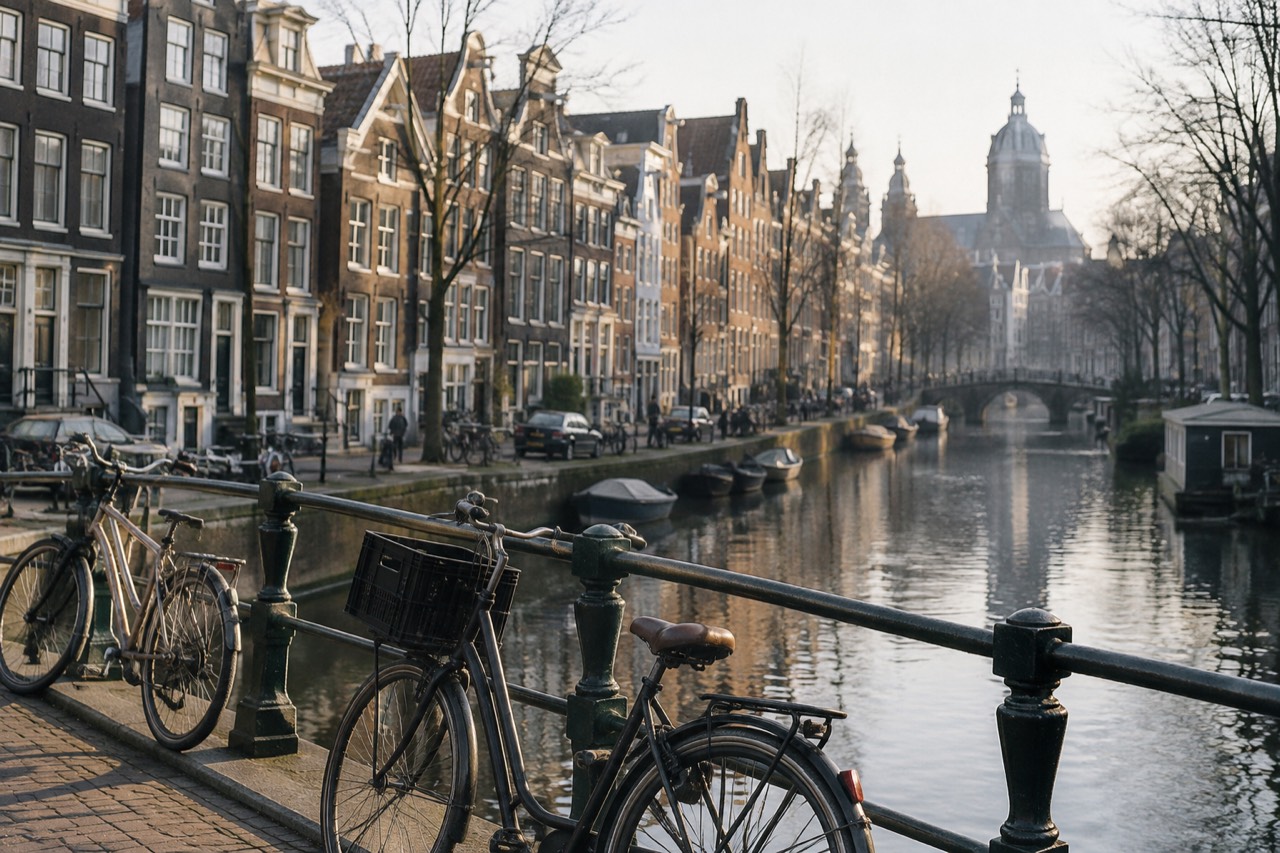
Amsterdam receives visitors at a scale few cities of its size ever see: 23.7 million tourist overnight stays in 2025, on top of 21.9 million day visits, according to the city's own statistics office. That volume explains almost everything about how the city now regulates behaviour. Rules that once were unwritten are now published, enforced and fined, and the residents who share their streets with twenty-something million annual guests have little patience left for the visitor who ignores them.
The good news is that the list of genuine prohibitions is short and easy to follow. The bad news is that most of the advice floating around online is either outdated, invented or wildly exaggerated. This page separates the two, using the city's own published rules and the official ticketing pages of the institutions involved, so you know exactly what not to do in Amsterdam as a tourist, and what merely carries a social cost.
What Not To Do In Amsterdam As A Tourist?
The short list of real prohibitions: do not photograph sex workers or their windows in De Wallen, do not smoke cannabis on the street in the city centre, do not drink alcohol in public in the centre, do not walk in the cycle lane, and do not assume you can buy Anne Frank House or Van Gogh Museum tickets on the door. Each of these is either enforced by the city or guaranteed to end in disappointment.
Everything on that list comes from an official source. The city's own How to Amsterdam page sets out the visitor rules the municipality actually wants you to know, and it is refreshingly blunt: no pictures of the windows, no street drinking in the centre, no public urination, and no outdoor cannabis smoking in the centre. Those are the four that trip people up most often, because they are all legal in many other European cities or at least tolerated, and visitors arrive assuming Amsterdam is the permissive one.
It is, in some ways, but only indoors and only in the right places. The city centre is where enforcement is tightest, precisely because that is where the crowding is worst. What the page does not publish is the fine amount for each offence, and no reliable official figure exists for them, so treat any specific euro amount you read on a blog with suspicion. What is certain is that enforcement is real: the red light district now has dedicated neighbourhood officers whose job includes exactly this kind of behaviour.
The social list is longer and softer. Locals wince at visitors who walk three abreast on a narrow pavement, who stop dead at the top of an escalator or a bridge, who shout across canals at night, or who treat the Jordaan and De Wallen like an open-air bar crawl. None of that will get you fined. All of it will get you noticed, and none of it is necessary, because the city is small enough that a little spatial awareness covers everyone.
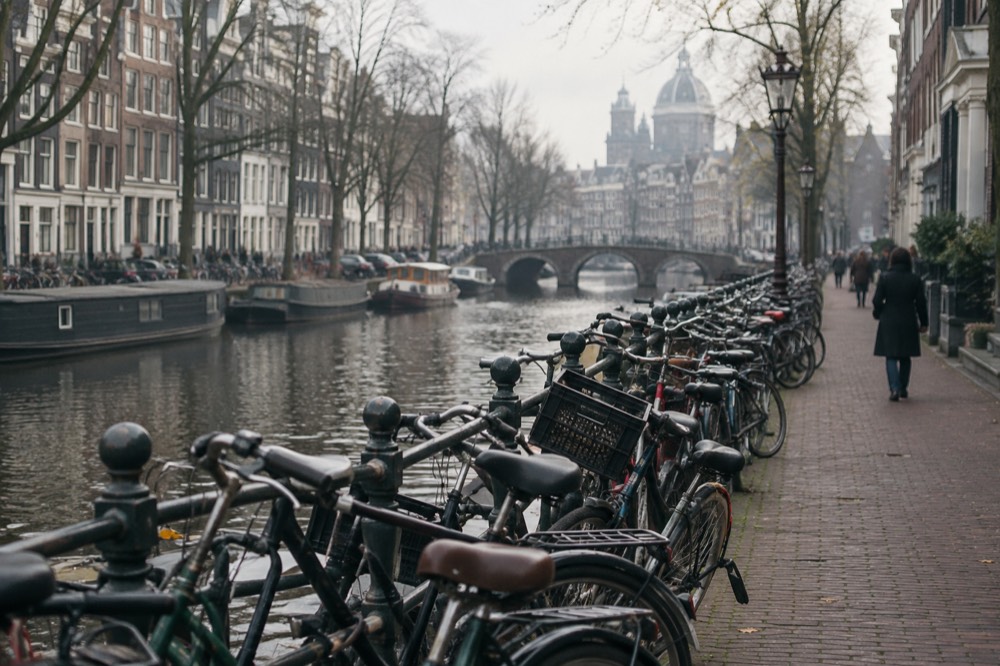
If you want a structured introduction to the city rather than working it out alone, a guided walk solves several of these problems at once: someone local sets the pace, tells you where the boundaries are, and steers you past the mistakes. The two Anne Frank walks and the small-group red light district tour below are the formats that fit this article best, because they cover the two neighbourhoods where the rules bite hardest.
What Are the Rules in the Red Light District?
Do not photograph the windows, do not join an oversized or late-night tour group, and do not expect a guided walk to pass in front of the windows at all, because the city forbids it. Tours in De Wallen are capped at 15 people, must run between 08:00 and 22:00, and must use routes that avoid the windows entirely, with fines of €190 for a guide and €950 for a company that breaks the rules.
Those tour rules are the ones most guides online still get wrong, because they date from 2020 and were tightened again since. The municipal page on tour permits spells them out: no route that passes the sex workers' windows, a maximum group size of 15, an exemption required for groups larger than four, permitted hours of 08:00 to 22:00, and no alcohol, drugs, megaphones or shouting on tour. A company's exemption can be revoked after three fines, so operators have a real commercial reason to comply.
For you as a visitor, the practical consequences are simple. Any tour you book in De Wallen will be small, daytime-to-evening, and routed through the wider streets rather than the window-lined alleys. If a listing promises something else, it is either breaking the rules or describing the neighbourhood loosely, and you should not book it. Our red light district rules and etiquette guide covers the same ground for independent visitors, including what the "no pictures" norm actually means in practice.
Photography deserves its own sentence, because it is the single most common way visitors cause genuine harm here. The city frames it as a respect norm rather than a fined statutory offence, but venue staff, neighbours and the sex workers themselves enforce it socially and firmly, and having your phone out near the windows is treated as intent. If you want a photograph of the district's architecture, shoot the Oude Kerk side or the canal side, never the windows, and never the people.
| Behaviour in De Wallen | Status | What Actually Happens |
|---|---|---|
| Photographing windows or sex workers | Prohibited by city respect rules | Staff and residents intervene; you may be removed or confronted |
| Guided tour passing the windows | Forbidden by municipal tour rules | Guide risks a €190 fine, the company €950 |
| Tour group larger than 15 | Not permitted | Exemption required above four people; oversize groups are turned away |
| Tours after 22:00 | Not permitted | No licensed operator runs one; do not trust a listing that claims to |
| Street drinking in the centre | Prohibited | Enforced in the Wallen area especially on weekend nights |
| Walking through calmly, quietly | Entirely allowed | The district is a normal neighbourhood and welcomes respectful visitors |
The district is not a theme park and it is not closed to visitors, which is a rumour that circulates periodically and is false. What the city has done is regulate the tours, the hours and the behaviour, not access. Go, walk through, spend money in the cafés and bars if you like, and simply behave as you would in any street where people live and work.
A guided small-group walk is the easiest way to see De Wallen with the context that makes it comprehensible rather than gawping. The small-group red light district tour runs 90 minutes, costs from $26, and carries a 4.9 rating across 9,142 reviews, which is about as strong as Amsterdam walking tours get.
Can Tourists Still Buy Cannabis in Amsterdam?
Yes, tourists can still buy cannabis in Amsterdam coffeeshops, because the residents-only rule that exists in national policy has never been applied in the city. What you must not do is smoke it outdoors in the city centre, buy more than five grams per person per day, or take it across a border, and you should not believe anyone who tells you it is legal rather than tolerated.
The nuance matters and most articles flatten it. National tolerance policy, published by the Dutch government on its gedoogbeleid page, formally includes a residents-only criterion for coffeeshop access, and formally caps sales at five grams of soft drugs per person per day. Amsterdam has never enforced the residents-only part: the wietpas scheme that inspired it was never applied in the city, and no tourist ban has been implemented since. So the accurate sentence is the one above, not "cannabis is legal in the Netherlands" and not "tourists are banned".
The outdoor smoking ban is the newer and less known half. The city's How to Amsterdam page states plainly that smoking cannabis outdoors is prohibited in the city centre, including the Wallen area, and that it must be done inside a coffeeshop. Visitors who bought a pre-rolled joint and lit it on a canal bridge have been the single most visible enforcement target in the centre for the past few years, and the fine amounts are not published, so do not rely on any figure a blog quotes.
| Cannabis Question | The Actual Rule |
|---|---|
| Can tourists enter coffeeshops? | Yes. The residents-only criterion exists in national policy but Amsterdam does not apply it |
| How much can one person buy? | Maximum five grams of soft drugs per person per day |
| Can you smoke on the street? | No, not in the city centre. Consumption belongs inside the coffeeshop |
| Is cannabis legal in the Netherlands? | No. It is tolerated under national policy; sale in coffeeshops is permitted, possession of small amounts is not prosecuted |
| Can you take it home? | No. Taking cannabis across any border is a criminal matter, not a tolerated one |
Alcohol sits in the same enforcement zone. Street drinking is prohibited in the city centre, which is why the convenience stores in De Wallen and around Dam Square will happily sell you a beer and then expect you to drink it indoors or at a terrace. Public urination is likewise prohibited, and the city's response has been more public toilets rather than fewer, so use them: the plaskrul urinals that locals joke about exist precisely so this rule can be enforced with a straight face.
Our coffeeshop rules for tourists guide goes deeper on where the tolerated market ends and the criminal one begins, and it is worth reading before a first visit rather than after an unwelcome conversation with a neighbourhood officer.
What Should You Not Do on the Roads and Canals?
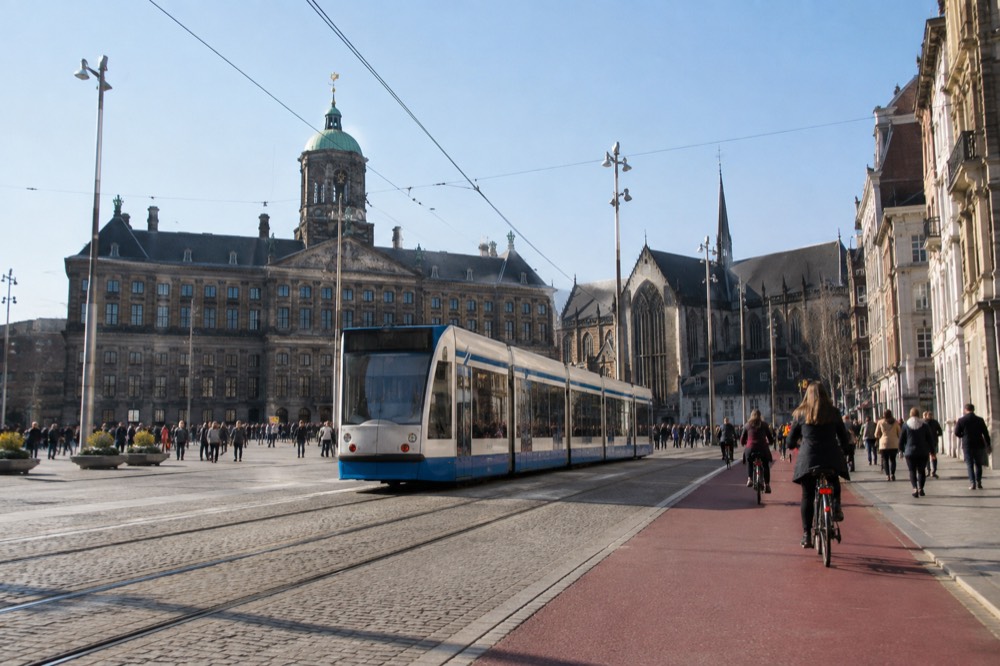
Do not walk in the cycle lane, do not stop in the middle of the road to photograph, and do not board a tram without a valid ticket or a tapped bank card, because all three are daily occurrences that locals are genuinely tired of. The cycle lane is the one that causes collisions: Amsterdam's bike traffic is dense, fast and expects you to know where the red asphalt is.
The cycle lane rule is the most important traffic habit in the city. Cycle paths are paved in red asphalt almost everywhere, and standing in one while you check your phone is the equivalent of parking on a motorway hard shoulder. Locals ring their bells early and often, which is a warning rather than a rebuke, but the warning comes fast because the bike does. When you hear a bell, step sideways out of the lane, not forward along it. Other pages covering the same trip are gathered on Things to Do in Amsterdam.
Trams are the other place visitors go wrong. A single GVB ticket costs €3.40 for an hour of travel, and the simplest way to pay is OVpay: tap a contactless bank card or phone on boarding and tap again on leaving, with the fare calculated automatically. What you must not do is board without paying, or tap only once, because inspectors do ride the network and the on-the-spot penalty is many times the fare. Do not buy tickets from anyone near Centraal Station offering them at a discount, and do not hand your card to a stranger who offers to tap you through.
On the water, the mistakes are quieter but real. Do not stand on the low canal walls to pose for photographs, particularly after dark and particularly on the Wallen side streets, because people fall in every year and the canals are deeper and colder than they look. Do not feed the swans and herons, which the city discourages, and if you rent a boat or take a cruise, do not treat the skipper's instructions as optional: canal traffic has right-of-way rules and the professional skippers know them.
Cycling yourself is worth a paragraph of honesty. Amsterdam is not the place to learn to ride a bike, and the two-wheel traffic is far less forgiving of wobble than the postcards suggest. If you have never cycled in a busy city, take a guided bike tour first, where the guide rides at the front and absorbs the traffic decisions, rather than renting a bike on day one and improvising. Our cycling in Amsterdam guide covers the hand signals and the habits that make independent riding realistic by day two or three.
Which Tourist Mistakes Cost You Money in Amsterdam?
The expensive mistakes are all ticketing mistakes: arriving without a pre-booked time slot at the Rijksmuseum or Van Gogh Museum, expecting to buy Anne Frank House tickets anywhere except the museum's own site, and paying full price at a ticket window when the online price is lower. Every major Amsterdam museum now requires a timed entry booked in advance, and the door-price premium at attractions like A'DAM Lookout is two euros per ticket.
Anne Frank House is the one that ruins the most trips, so take it seriously. Tickets are sold only through the museum's own website, for a specific date and time, with no door sales and no legitimate reseller anywhere in the city or online. Adult tickets cost €16.50 including the booking fee, and they sell out because supply is fixed and demand is enormous. The museum publishes its release schedule on that page, so check it rather than trusting a third party's summary, and never buy from anyone claiming access, because no such access exists to sell.
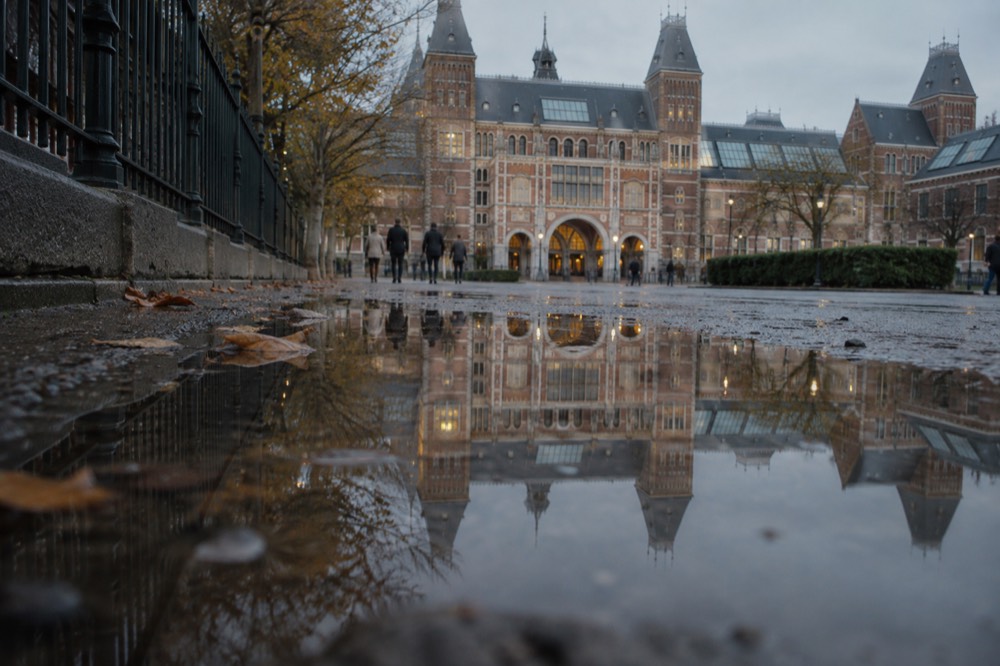
The Van Gogh Museum and the Rijksmuseum both require a pre-booked start time for every visitor, including pass holders, and both cost €25 for adults at the door-equivalent rate, with under-18s free at both. The city card does not include the Van Gogh Museum or the Anne Frank House at all, a fact the card's own FAQ confirms, so anyone planning around the card needs to book those two separately regardless. Our Amsterdam museum tickets guide lays out the booking sequence museum by museum.
| Money Mistake | The Cost | The Fix |
|---|---|---|
| Arriving at a major museum without a timed ticket | Turned away or queued with no guarantee | Book a start time online before you travel |
| Buying "Anne Frank tickets" from a reseller | Invalid tickets, no refund, no entry | Only the museum's own site sells them |
| Paying at the A'DAM Lookout counter | €18.50 instead of €16.50 online | Book online and save €2 per ticket |
| Assuming the city card covers the Van Gogh Museum | A €25 ticket you had not budgeted | Book the Van Gogh separately, always |
| Boarding a tram without tapping or validating | A penalty many times the €3.40 fare | Use OVpay with a contactless card |
The city card question deserves honesty rather than enthusiasm, because the card is genuinely good for some itineraries and useless for others. It includes free entry to more than seventy museums and locations, unlimited GVB transport, one canal cruise and a 24-hour bike rental, and it excludes exactly the two things most first-time visitors came for. Whether it pays off is arithmetic, not opinion, and our city card worth-it guide does the arithmetic for three typical trip lengths.
One money fact that surprises many visitors on checkout: Amsterdam charges a tourist tax of 12.5 per cent of the overnight price, excluding VAT, at hotels and holiday rentals alike. It is not a scam by your hotel, it is the municipal rate, and it is one reason the advertised room rate and the final bill differ by more than you expect.
For the Anne Frank story specifically, a guided walk is the honest alternative when house tickets are gone, and it is a genuinely good one rather than a consolation prize. The Anne Frank Story, One Hour walk covers the Jewish Quarter with a local guide in a small group, costs from $22, and holds a 4.8 rating across 15,104 reviews. It is a street walk, not house entry, and it never claims otherwise, which is exactly the honesty standard you should demand of anything you book in this city. Check availability
What Should You Avoid Booking or Buying?
Do not book a Keukenhof tour outside the spring season, because the gardens only open from mid-March to early May, and do not buy any tour that promises Anne Frank House entry, because no tour can. Also avoid anything marketed around breaking the De Wallen tour rules: no legitimate operator runs a late-night window tour or an oversized group, so a listing offering either is a red flag on its face.
Keukenhof is the clearest seasonal trap because it is so absolute. The gardens open for one window each spring, and the confirmed 2027 dates run from Thursday 18 March to Sunday 9 May, daily, with tickets sold through the official site once the season's sales open. A surprising number of listings imply year-round availability by describing the tulips without stating the season, so check the dates yourself before you book anything with the word tulip in it. Our Keukenhof guide covers transport and timing in detail.
Souvenirs have their own honest and dishonest versions. Skip the "Amsterdam" branded tat around Dam Square and buy things that are actually made here: cheese from a proper cheesemonger rather than an airport-style vacuum pack, design from the museum shops, or beer from a brewery taproom. Our souvenirs worth-it guide separates the purchases people regret from the ones that survive the flight home.
The booking red flags worth memorising are short. A tour that promises entry to the Anne Frank House is lying, because the museum sells no tickets through any operator. A De Wallen tour that runs past 22:00 or takes more than fifteen people is either unlicensed or about to be fined out of existence. A canal cruise with no departure point listed is usually a broker rather than an operator, and the operator's own listing will name the dock. None of this is hard to check, and every one of these checks takes under a minute.
Finally, do not plan your whole trip around the busiest weekends without knowing it. King's Day in 2027 falls on Tuesday 27 April, with the King's Night street party the evening before, and the city transforms into the largest single-day crowd it hosts all year. It is a fantastic thing to experience on purpose and an exhausting thing to walk into by accident, so check the calendar before you book accommodation, because prices and availability behave accordingly.
Common Questions About What Not to Do in Amsterdam as a Tourist
What Not To Do In Amsterdam As A Tourist?
Do not photograph the windows in De Wallen, do not smoke cannabis or drink alcohol on the street in the city centre, do not walk in the cycle lane, and do not arrive at a major museum without a pre-booked timed ticket. Do not buy Anne Frank House tickets from anyone except the museum's own website, and do not book a tour that promises entry or breaks the De Wallen tour rules.
Can tourists be fined in the red light district?
Yes. The city enforces its tour rules with fines of €190 for an individual guide and €950 for a company, and it prohibits street drinking and outdoor cannabis smoking in the city centre, which includes De Wallen. The fine amounts for the individual visitor offences are not published by the city, so treat any specific figure you read online as unreliable.
Is it illegal to smoke weed outside in Amsterdam?
In the city centre, yes, it is prohibited, and the ban is stated on the city's own visitor rules page. Cannabis bought in a coffeeshop is meant to be consumed there. Outside the centre the rules are less strictly enforced, but the safe and correct assumption for a tourist is that outdoor smoking is off-limits wherever you are standing.
Can you buy Anne Frank House tickets at the door?
No. The museum sells tickets only online, for a specific date and time, through its own website, and there is no legitimate reseller of any kind. Adult tickets cost €16.50 including the booking fee. The release schedule is published on the museum's ticket page, and tickets sell out quickly, so book as far ahead as the schedule allows.
Do you have to pre-book the Rijksmuseum and Van Gogh Museum?
Yes, both require a pre-booked start time for every visitor, including pass holders. Both charge €25 for adults with free entry for under-18s. Neither is included in the I amsterdam City Card, so card holders still need to book the Van Gogh Museum separately, and everyone needs a timed slot for the Rijksmuseum regardless of how they paid.
Is it rude to ride a bike in Amsterdam as a tourist?
Not at all, provided you can ride confidently and follow the flow. What locals find rude is hesitation: stopping without signalling, wobbling across the cycle lane, or riding two abreast on a narrow path. If you are not a confident city cyclist, take a guided bike tour first or spend a day watching the traffic before joining it, and never ride on the pavement.