What's Better, Rijksmuseum Or Van Gogh Museum?
A straight comparison of Amsterdam's two flagship museums: collections, ticket prices, time slots, queues and which one suits your trip.
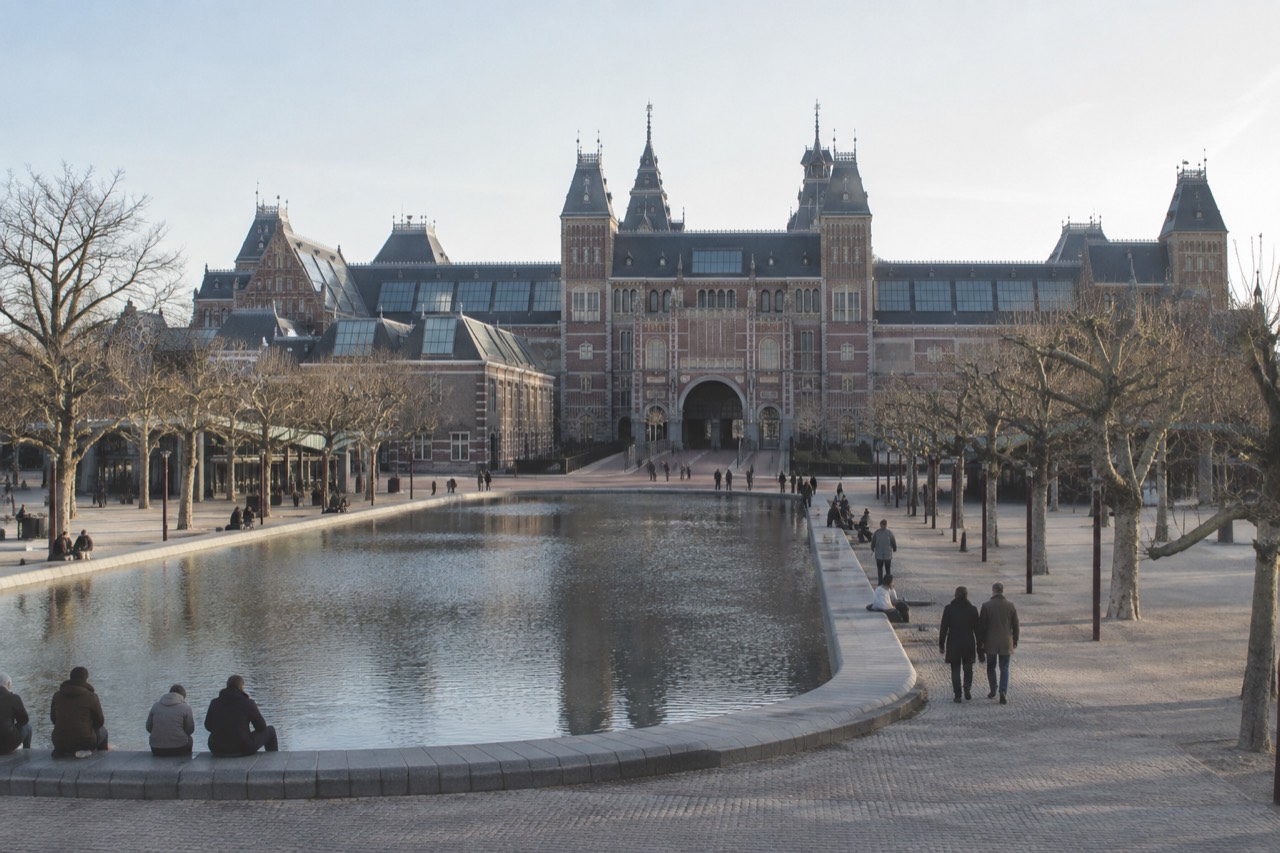
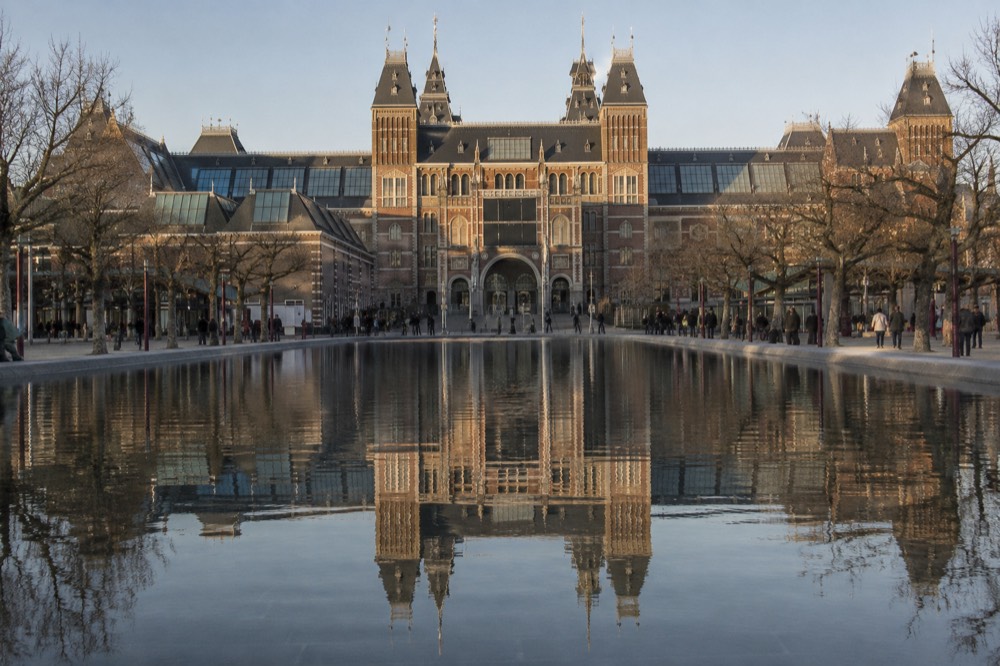
What's Better, Rijksmuseum Or Van Gogh Museum?
Neither museum is objectively better: the Rijksmuseum covers 800 years of Dutch art and history, including Rembrandt's The Night Watch, while the Van Gogh Museum holds the world's largest collection of works by a single artist. Both cost €25, both admit under-18s free, and both require a pre-booked time slot. Choose by interest, not by ranking.
The honest answer is that most travellers are asking the wrong question. These two museums are not rivals so much as two completely different kinds of visit that happen to face each other across the Museumplein. The Rijksmuseum is a national gallery the size of a city block: painting, sculpture, ship models, Delftware, dollhouses, Asian art and a library, spread over galleries that reward a whole morning. The Van Gogh Museum is a single-artist retrospective, tightly edited, built around the chronology of one man's decade of working life, and most visitors are finished in ninety minutes to two hours.
That difference in shape matters more than any ranking. If you love the Golden Age, Vermeer's quiet interiors, Frans Hals brushwork or the material culture of the Dutch Republic, the Rijksmuseum is the clear pick, and you could spend two days inside without repeating yourself. If you arrived in Amsterdam because of Sunflowers, the self-portraits or the letters to Theo, the Van Gogh Museum will be the emotional centre of your trip and the Rijksmuseum will feel like homework. The desk has read both museums' own visiting pages closely, and the practical details, prices, hours and booking rules, are closer than most guides admit.
The comparison also depends on who is travelling with you. Art students, painters and people who have waited years to see The Night Watch in person lean Rijksmuseum. Families with teenagers, visitors on a tight schedule and anyone who finds enormous museums exhausting lean Van Gogh, because it is smaller, faster and easier to digest in a single sitting. There is also a queue problem at both, and it is not the one most blogs describe. Neither museum sells a walk-up ticket in the way a visitor imagines it: both require a time slot booked in advance, so the old advice about arriving early to beat the line is mostly obsolete. What you are really choosing between is a slot in a big building and a slot in a small one.
How Do the Two Collections Actually Compare?
The Rijksmuseum holds roughly 8,000 objects on display spanning the 13th to the 21st century, anchored by Rembrandt, Vermeer and Frans Hals. The Van Gogh Museum holds over 200 paintings, 500 drawings and more than 750 letters by Vincent van Gogh and his circle, covering roughly a decade of his working life. One is breadth, the other is depth.
The Rijksmuseum's Gallery of Honour is the single most concentrated stretch of Dutch painting anywhere. The Night Watch holds its own lit hall at the end, and the surrounding rooms carry Vermeer's The Milkmaid, Hals' portraits and the civic guard pieces that made this city rich enough to commission them all. But the building is far more than its postcards. The model ships, the porcelain, the medieval religious carving and the 20th-century design floor give the museum a second act that most first-time visitors never reach, because they run out of energy after the Golden Age.
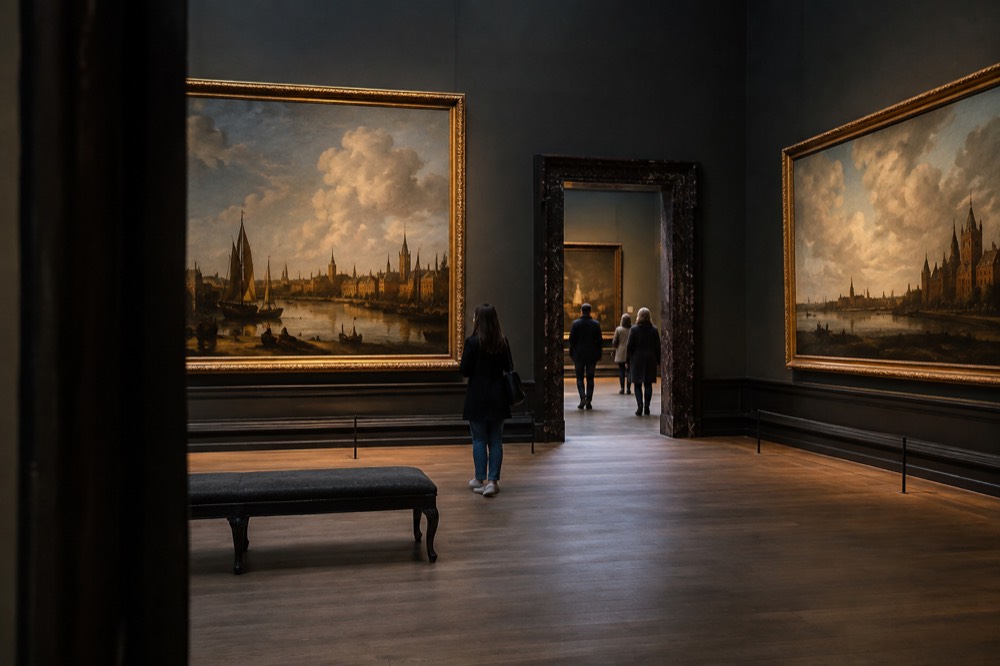
The Van Gogh Museum works in the opposite direction. Instead of a thousand artists, you get one, followed from his dark early peasant paintings in Nuenen through the explosive colour of Paris and Arles, to the swirling late work from Saint-Rémy and Auvers. Reading the paintings in sequence is closer to reading a biography than walking a gallery. The museum also stages temporary exhibitions that draw serious crowds of their own, so what is on beyond the permanent floor can change the value of a visit from month to month. Check the museum's own site for the current show before you commit a morning.
| Factor | Rijksmuseum | Van Gogh Museum |
|---|---|---|
| Focus | Dutch art and history, 13th century onward | Van Gogh and his contemporaries |
| Headline works | The Night Watch, The Milkmaid, Frans Hals portraits | Sunflowers, self-portraits, The Bedroom |
| Adult ticket | €25 | €25 |
| Under 18 | Free | Free |
| Timed entry | Required, book a start time | Required, book a start time |
| Opening hours | Daily 9:00 to 17:00 | Daily 9:00 to 18:00, Fridays until 21:00 with exceptions |
| I amsterdam City Card | Free entry included | Not included, separate ticket needed |
| Typical visit length | 3 hours to a full day | 90 minutes to 2 hours |
| Pre-booked ticket rating | 4.7 across 33,205 reviews | 4.7 across 57,096 reviews |
A note on that last row: the ratings are nearly identical, and both are excellent, so reviews will not settle this argument for you. What the review counts do tell you is scale of demand. The Van Gogh Museum's pre-booked ticket has accumulated more reviews than the Rijksmuseum's despite the Rijks being the bigger institution, which reflects how many Amsterdam visitors treat Van Gogh as the non-negotiable stop. If you only have time or budget for one ticket and you are genuinely torn, the demand pattern says the Van Gogh Museum is the one people regret missing slightly more often.
The City Card row deserves its own sentence, because it inverts the usual assumption. The Rijksmuseum's own prices page states plainly that holders of the Amsterdam City Card get in free, while the Van Gogh Museum is explicitly excluded from the card and requires a separately booked timed ticket. If you are building your trip around the I amsterdam City Card, the Rijksmuseum is already paid for and the Van Gogh Museum is not, which can make the decision for you.
Which Museum Suits a First-Time Visitor Better?
First-timers with one museum slot should pick the Van Gogh Museum for a short trip and the Rijksmuseum for a trip of three days or more. The Van Gogh delivers a complete, moving experience in under two hours; the Rijksmuseum rewards a half-day and punishes a rushed hour. If you can only visit one and your day is crowded, the smaller museum wins.
The logic is about attention, not quality. A first trip to Amsterdam is dense: canals, the Jordaan, a market, a brown café, probably a cruise. Squeezing the Rijksmuseum into that itinerary means racing past rooms that deserve slow looking, and leaving with a memory of sore feet and one painting. The Van Gogh Museum fits the geometry of a busy first day. Two hours, one artist, a clear beginning and end, and you walk out with something coherent to hold onto. Our first-timer mistakes guide makes the same point about the city's biggest sights generally: the error is not choosing wrong, it is trying to absorb too much per hour.
For travellers with more time, the calculus flips. The Rijksmuseum is the museum that explains the city you are walking through. Once you have seen the civic guard portraits and the maritime galleries, the canal houses and the harbour stops making sense as scenery and starts making sense as an economy. Two visits of two to three hours each, with a coffee in between, is a genuinely better Rijksmuseum plan than one heroic five-hour push.
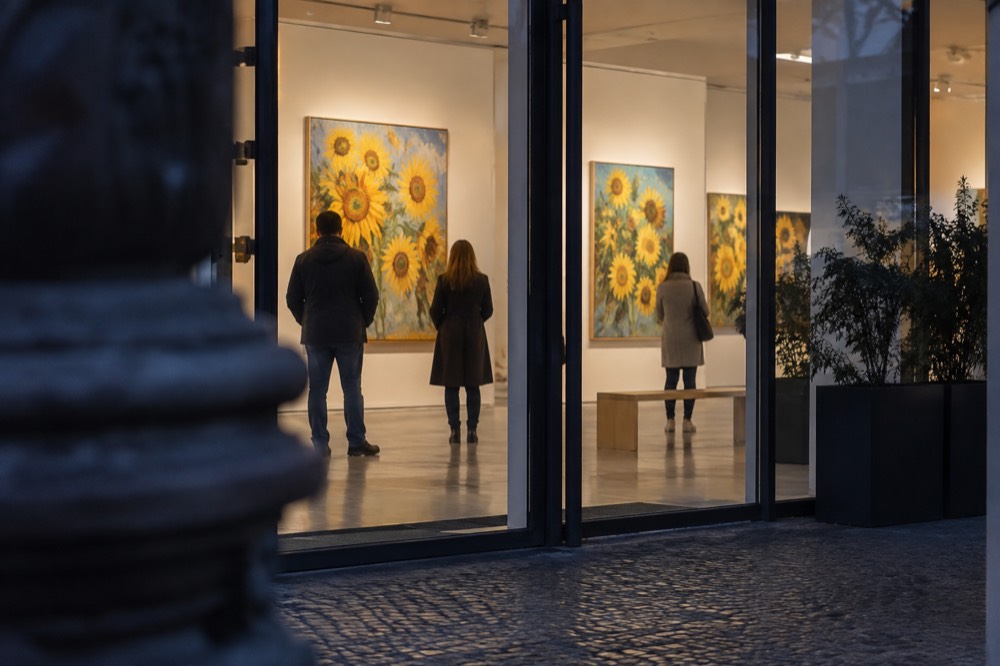
Booking is the practical hurdle for the Van Gogh side. The museum's own visiting page states that all visitors are required to pre-book a timed entry ticket and that tickets can sell out, especially in the peak spring and summer weeks. The pre-booked ticket product, rated 4.7 across 57,096 reviews and priced from $31, exists precisely for that gap between museum supply and traveller demand: it guarantees a slot and removes the single most common first-timer disappointment, which is arriving to find the day sold out.
The Rijksmuseum has the same timed-entry rule, but its supply pressure behaves differently. The museum's practical-info page notes that a limited number of tickets is held at the entrance while stocks last, with timed booking required for everyone, including pass holders. In practice that means a same-day Rijksmuseum visit is more often possible than a same-day Van Gogh visit, which is worth knowing if you are the kind of traveller who refuses to plan museum slots in advance. You should still book ahead, but the Rijks forgives improvisation slightly more often than its neighbour across the square.
Which Is the Better Choice on a Budget or With Children?
On price the two are identical: €25 for adults and free for everyone aged 18 and under at both museums, per each museum's own ticket page. The budget difference comes from passes and time. The Rijksmuseum is included in the I amsterdam City Card; the Van Gogh Museum is not. With children, the Van Gogh's shorter visit usually wins; serious young artists often prefer the Rijks.
The free-under-18 policy is one of the most underused facts in Amsterdam trip planning, and both museums state it on their own pages. A family of four with two teenagers pays €50 total at either museum, not €100, and the teenagers walk in for nothing. That removes most of the financial argument from this comparison for families, which is why the decision should rest on attention spans and interest. Children who draw, paint or have a favourite artist tend to connect with the Van Gogh story, partly because the museum tells it so directly. Children with broader curiosity, or younger ones who will only manage one hour anywhere, do better with a short Rijksmuseum hit list: The Night Watch, the dollhouses and the ship models, then out to the Museumplein lawn.
| Traveller type | Better pick | Why |
|---|---|---|
| Short trip, one museum slot | Van Gogh Museum | Complete visit in under two hours |
| Trip of three days or more | Rijksmuseum | Rewards a half-day and repeat visits |
| Holding the I amsterdam City Card | Rijksmuseum | Entry included; Van Gogh is excluded |
| Family with under-18s | Either, Van Gogh slightly ahead | Both free for children; shorter visit easier |
| Golden Age and history lovers | Rijksmuseum | Vermeer, Hals, The Night Watch, 800 years of context |
| Van Gogh devotees | Van Gogh Museum | Largest single-artist collection in the world |
Budget travellers should also look at the Things to Do in Amsterdam homepage's free and cheap picks before assuming a museum ticket is mandatory at all. But if the choice is strictly between these two and money is the deciding factor, the City Card inclusion is the one asymmetry that matters. A card holder who books the Rijksmuseum time slot pays nothing at the door, while the same holder still needs a full-price Van Gogh ticket. That is a €25 swing on a decision that is otherwise a coin toss, and it is the most commonly missed fact in articles on this question, many of which still claim both museums are card included.
There is a scheduling trick worth knowing, too. The Van Gogh Museum stays open until 21:00 on Fridays, with a few dated exceptions listed on its own hours page, while the Rijksmuseum closes at 17:00 every day. A budget traveller trying to maximise a single day can therefore put the Rijksmuseum in the morning, when energy is high, and save the Van Gogh for a Friday evening slot, when the museum is quieter and the rest of the day was free for things that cost nothing.
Can You Visit Both Museums in One Day?
Yes, comfortably, because they stand roughly five minutes' walk apart on the same square, and their opening hours overlap from 9:00 to 17:00. Book the Rijksmuseum for a morning slot, take a long lunch, then book the Van Gogh Museum for mid-afternoon, or use its Friday evening hours and rest in between. The mistake is booking both slots too close together.
The Museumplein is the one place in Amsterdam where this comparison stops being a dilemma and becomes an itinerary. Serious art travellers do both, and the square makes it easy: the Museumplein guide covers the layout, and the walk between the two entrances is shorter than the walk from most tram stops to either door. The practical constraint is not distance but stamina and ticket timing. Both museums enforce timed entry, so your day is really two fixed appointments with a gap in the middle, and the gap is where the day succeeds or fails. Fill it with lunch in the Museum Quarter rather than a third attraction.
A sensible both-museums day looks like this: Rijksmuseum at 9:00 when the doors open and the Gallery of Honour is at its calmest, two and a half hours inside, lunch, then a Van Gogh slot around 14:00 or 15:00 and ninety minutes there. Total museum time is about four hours, which is a full day but not a brutal one. Doing it in reverse also works and is quieter at the Van Gogh in the morning, but you lose the Rijksmuseum's early calm, which is the more valuable of the two.
If the second museum of the day feels like one too many, there is a third option that several travellers on a first visit end up preferring: swap it for something completely different. The Heineken Experience, rated 4.6 across 39,581 reviews and from $23, sits a short walk away and makes a lively counterweight to a morning of Golden Age painting. And a classic saloon boat cruise, 4.8 across 33,435 reviews and from $19.56, turns the museum afternoon into an hour on the water instead. Neither replaces the art, but both rescue a day that was at risk of becoming a forced march.
The final honest word: if you truly cannot decide, book the Rijksmuseum, because it is the museum that contains the other one's context. The Van Gogh Museum's own story, the Dutch art world Vincent reacted against and the contemporaries he worked beside, is painted all over the Rijksmuseum's walls. Visitors who do the Rijksmuseum first often report that the Van Gogh hits harder afterwards. Visitors who do it the other way around rarely say the same.
Common Questions About Choosing Between the Rijksmuseum and the Van Gogh Museum
What's Better, Rijksmuseum Or Van Gogh Museum?
Neither is objectively better. The Rijksmuseum offers 800 years of Dutch art and history and rewards a half-day; the Van Gogh Museum offers the world's largest Van Gogh collection in a tighter two-hour visit. Both cost €25, both are free for under-18s, and both require a booked time slot. Pick by interest and by how much time you have.
Can you see both museums on the same day?
Yes. They face each other across the Museumplein, about five minutes apart on foot. Book the Rijksmuseum for the morning, take a long lunch, and give the Van Gogh Museum a mid-afternoon slot, or use its Friday evening opening until 21:00.
Which museum is included in the I amsterdam City Card?
The Rijksmuseum is included, per its own prices page. The Van Gogh Museum is not included and requires a separately booked timed ticket, which makes the card a real factor in choosing between the two.
Do both museums require timed entry tickets?
Yes. The Rijksmuseum requires a booked start time for all visitors, and the Van Gogh Museum requires every visitor to pre-book a timed ticket. Neither works well as a spontaneous walk-up visit in high season, though the Rijksmuseum holds a limited number of tickets at the entrance while stocks last.
Which museum is better for children?
Both admit anyone aged 18 and under free. The Van Gogh Museum's shorter, story-driven visit suits most children better, while kids who love drawing or history often get more from the Rijksmuseum's Night Watch, dollhouses and ship models.
Which museum is less crowded?
Both are busiest from late morning to mid-afternoon. The Rijksmuseum is calmest at its 9:00 opening, and the Van Gogh Museum is quieter in early morning slots and on Friday evenings, when it stays open until 21:00.