Where To Avoid Staying In Amsterdam?
An honest neighbourhood-by-neighbourhood look at where not to book a bed in Amsterdam, why the loudest postcodes are loud, and which quieter districts give you the same city for less hassle.
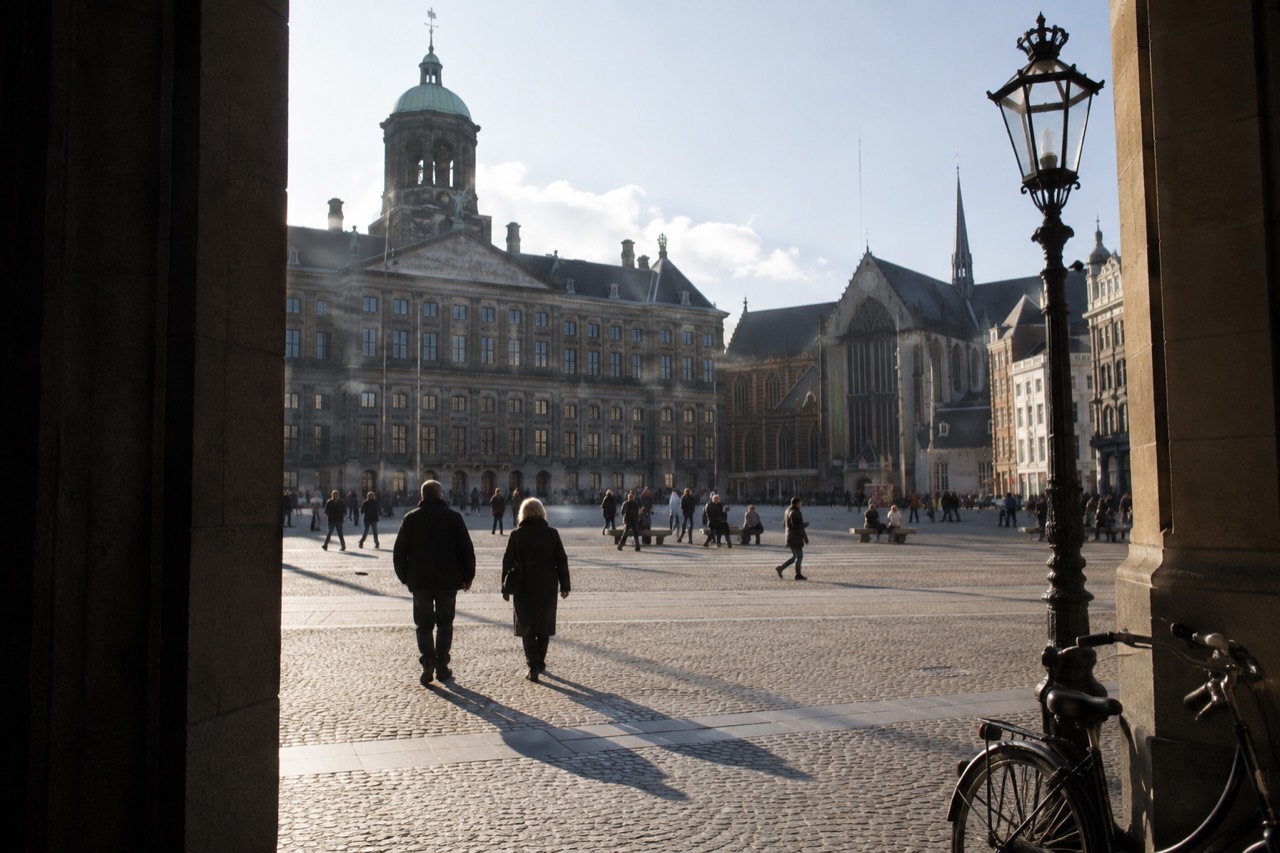
Amsterdam packs roughly 41,000 hotel rooms across 544 hotels into a city you can cycle across in half an hour, and 23.7 million tourist overnight stays were recorded in 2025 alone. That density means a bad location does not cost you distance, it costs you sleep. The city's own statistics office counts 21.9 million day visits on top of the overnight stays, and most of that footfall funnels through the same handful of postcodes around Dam Square and the red-light district every single evening. Choosing the wrong one puts you inside that funnel.
This is the desk's honest read of where not to book a bed, why those places are the way they are, and what to pick instead. It is not a list of dangerous areas, because Amsterdam is a safe city by almost any measure. It is a list of places where the experience of staying there rarely matches the price of the room.
Where To Avoid Staying In Amsterdam?
The areas most worth avoiding as a place to sleep are the red-light district core of De Wallen, the strip of Damrak and the streets immediately around Dam Square, and the noisiest blocks of the Rembrandtplein nightlife quarter. None of them is unsafe, but all three concentrate late-night crowds, street noise and peak pricing into the smallest possible space, and the quieter neighbourhoods around them reach the same sights in ten minutes on a tram.
Start with De Wallen, because it is the one almost every first-time visitor gets wrong. The district is genuinely fascinating to walk through, and the desk recommends doing exactly that, ideally with a guide who knows the rules. But sleeping inside it is a different matter. Since 1 April 2023, weekend rules in the core Wallen area keep outdoor terraces open until 01:00 and indoor hospitality until 02:00, so the noise floor stays high deep into the night. The streets are at their most crowded between 21:00 and 02:00, precisely the hours a hotel guest wants a closed window to mean something.
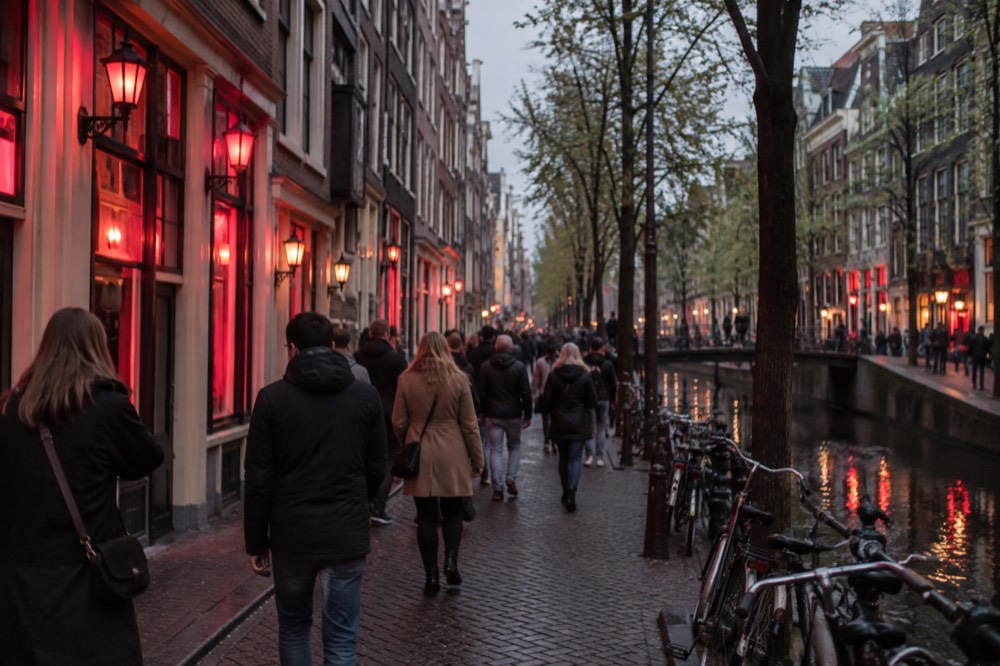
The second cluster to think twice about runs from Centraal Station down Damrak to Dam Square. This is the arrival corridor of the city, the first street every visitor walks, and the loudest in the country. The station itself handles a constant flow of regional and international trains, the square hosts fairs, protests and street performers through most of the year, and the hotels on and around that strip charge a premium precisely because of their address. You pay the most for the least sleep. The third is Rembrandtplein, a square whose nightlife spills onto the surrounding streets every Thursday, Friday and Saturday night; the terraces fill by early evening and empty in the small hours.
It is worth saying plainly what these areas are not. They are not dangerous, and this guide is not telling you to avoid walking through them. The question is where to sleep, and sleep is the one thing these three postcodes are structurally bad at delivering. If your heart is set on a hotel in the centre, the quieter edges of the canal belt, one street back from a main square, give you the same walkability without the 02:00 soundtrack. Our red-light district walking guide covers what the area is actually like street by street, which is worth reading before you book anything inside it.
A quick note on why this matters more in Amsterdam than in most cities. The housing stock in the centre is 17th-century canal houses converted into hotels, and converted badly in places: steep stairs, thin floors, and windows that face directly onto a street where thousands of people pass per hour in summer. Soundproofing that would be adequate on a side street in the Jordaan is inadequate on Damrak. The same room, moved two canals west, is a different product entirely.
Is the Red Light District a Bad Place To Stay?
De Wallen is a bad place to stay for one reason: it is the only neighbourhood where the city has had to write special closing-time rules because the night-time economy overwhelmed residents, and those rules, terraces to 01:00 and bars to 02:00 on weekends, tell you exactly how late the noise runs. It is safe, it is central, and it is the worst night's sleep in the city.
The numbers behind that are worth understanding. The gemeente's own rules for guided tours in the area cap groups at 15 people, restrict tours to between 08:00 and 22:00, and prohibit routes passing the windows, because the district was being treated as a tourist attraction rather than a workplace and a neighbourhood. That is the level of visitor pressure we are describing. A hotel inside that pressure zone puts you inside it at 01:00 on a Saturday, when the walking tours are long gone but the bars are not.
There is also a booking trap specific to this area that has nothing to do with noise. A large share of "red light district view" rooms are in buildings that operate as unlicensed or semi-licensed tourist apartments, and the city's holiday-rental rules tightened sharply: from 1 April 2026, holiday rentals in Burgwallen-Nieuwe Zijde, the neighbourhood covering much of the Wallen, are capped at 15 nights per calendar year instead of the 30 allowed elsewhere. A listing running over its cap is a listing that can be shut down with your booking inside it. The city requires a registration number on every legal listing, a €76 permit, and a maximum of four guests at a time, and the official permit page sets all of this out: the municipal holiday-rental rules. If a central apartment looks too cheap, that is usually why.
| Area | Why it is loud | How late | Better swap nearby |
|---|---|---|---|
| De Wallen core | Bars, terraces, night crowds | 02:00 weekends | Plantage or Oost |
| Damrak and Dam Square | Arrival corridor, events, street performers | Most of the night in summer | Haarlemmerbuurt |
| Rembrandtplein | Nightlife square with terraces | 02:00 to 03:00 | De Pijp east side |
| Leidseplein edges | Nightlife and late transport hub | 03:00 weekends | Oud West side streets |
The swaps in that last column are not compromises. Haarlemmerbuurt is a ten-minute walk from Centraal Station and is one of the quietest central postcodes in the city. The Plantage sits between the zoo and the Jewish Quarter and is a neighbourhood where families actually live. Both appear in our full Amsterdam neighbourhood guide, which ranks every district by the kind of trip you are taking.
Which Streets Around Centraal Station Are the Worst?
The worst streets to sleep on are Damrak itself, the eastern side of Centraal Station where the bus terminals sit, and the Nieuwendijk and Kalverstraat shopping strips, because all three combine heavy daytime footfall with early-morning delivery traffic and late-night revellers walking to and from the station. The station is the busiest transport node in the Netherlands, and everything within two blocks of it behaves like an airport concourse rather than a neighbourhood.
Damrak deserves its own paragraph. It is the postcard view of Amsterdam, the canal you photograph on arrival, and it is genuinely worth seeing. But the hotels along it face a street that carries a constant stream of pedestrians, tour boats departing from directly outside, and in the warmer months outdoor terraces that run until the small hours. The photograph is free. The room is not, and the room is the loud half of the postcard.
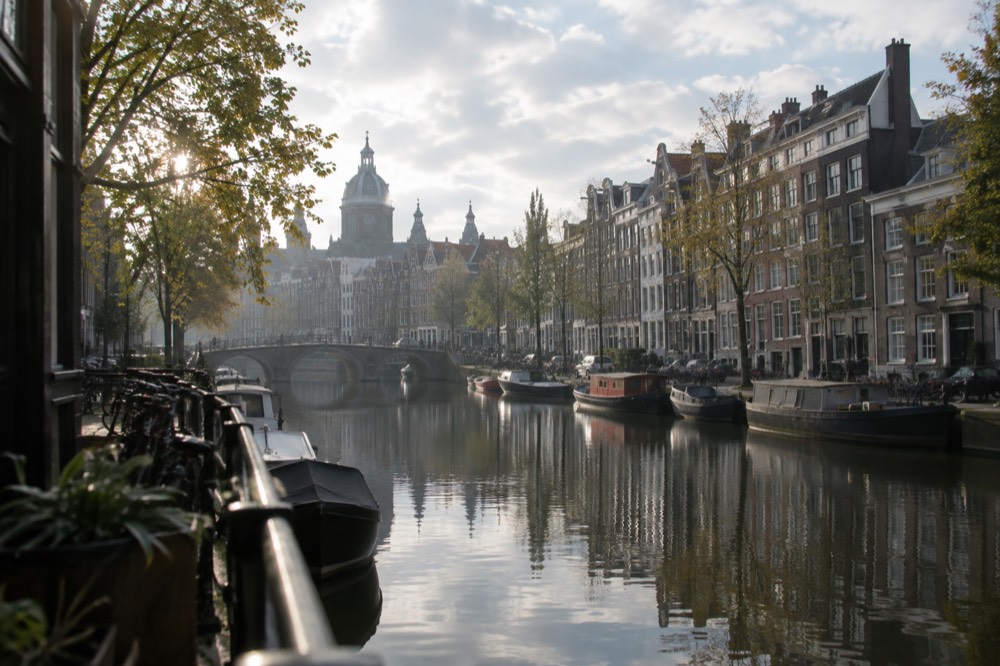
The shopping streets, Nieuwendijk and Kalverstraat, have a different rhythm: quiet by 20:00 when the shops shut, then loud again from about 06:00 with delivery vans and shop staff, and their hotel stock is older and more basic than the canal belt behind them. If a listing shows a shopping street address and a canal-house price, look one street further. The parallel streets behind the shopping strip are usually residential, usually quieter, and usually the same price or less.
The honest counterpoint is that staying near the station is not always wrong. If you have a 06:00 train to Paris or a layover measured in hours, the station quarter's noise is irrelevant because you will not be there to hear it. Our Schiphol layover itinerary covers exactly that case, and for it the station's convenience wins. For everyone else, the ten-minute tram that connects a quieter neighbourhood to the station costs €3,40 for a one-hour GVB ticket, and it is the cheapest sleep upgrade in the city.
Where Should You Stay Instead?
The best alternatives are the side streets of the Jordaan and the western canal belt, De Pijp away from its nightlife edges, the Plantage and Oost around the zoo and the Jewish Quarter, and Amsterdam Noord across the IJ, which offer quiet rooms at lower prices with a free ferry ride to Centraal Station. All four keep you within fifteen minutes of Dam Square by tram, metro, bike or ferry.
The Jordaan is the classic answer and still the best one. It is a former working-class quarter of small streets and small restaurants, a ten-minute walk from Dam Square, and its side streets are residential in a way the main canals never are. The western canal belt, the Grachtengordel, carries the same trade-off: the canal-front rooms face boat traffic and evening strollers, the houses one street back face gardens and silence. The same room, one street in, is both quieter and cheaper.
De Pijp splits in half, and the split matters. The half around the Albert Cuyp Market and the quieter eastern blocks is one of the most pleasant places to stay in the city, full of the brown cafés and small restaurants people come to Amsterdam for. The half nearest the nightlife around the Sarphatistraat edges gets the spillover. The Plantage and neighbouring Oost are the underrated pick: green, quiet, family-scale, and within walking distance of ARTIS, the Jewish Cultural Quarter and the Hermitage. Amsterdam Noord is the value pick, a free ferry from the station, and a genuinely different part of the city rather than a compromise.
| Neighbourhood | Vibe | Time to Dam Square | Best for |
|---|---|---|---|
| Jordaan side streets | Quiet, residential, cafés | 10 min walk | Couples, first-timers |
| De Pijp (east) | Lively but local | 15 min tram | Food-focused trips |
| Plantage and Oost | Green, calm, cultural | 15 min tram | Museums, families |
| Amsterdam Noord | Creative, industrial-chic | 15 min free ferry plus walk | Value, design hotels |
One planning note that belongs here rather than anywhere else: whichever neighbourhood you choose, the big museums will dominate at least one day of your trip, and the Van Gogh Museum in particular requires every visitor to pre-book a timed entry ticket, including children, who pay nothing for admission under 18. The adult price is €25 on the museum's own ticket page, and timed slots sell out on busy days. A pre-booked ticket is the difference between a Museum Quarter afternoon and a queue. The same logic applies to the Heineken Experience in the centre, which is one of the city's most-booked paid attractions, and to the canal cruises that depart from the docks near the Rijksmuseum and Central Station.
The wider lesson from all of this is that Amsterdam rewards booking by neighbourhood rather than by landmark. A room "near the Anne Frank House" is a room in the busiest corner of the centre; a room in the Jordaan is a ten-minute walk from the same house and a world away at midnight. The where to stay in Amsterdam guide breaks every district down by budget and trip type if you want the full comparison rather than the short version here.
How Do Tourist Taxes and Rental Rules Change the Equation?
Amsterdam charges 12.5% tourist tax on the overnight price of hotels and holiday rentals, excluding VAT, and caps holiday rentals at 30 nights per year, cut to 15 nights in the central neighbourhoods from 1 April 2026, with a maximum of four guests and a mandatory registration number on every listing. These rules push over-cap listings out of the centre, so a suspiciously cheap central apartment is more likely than ever to be one that should not exist.
The tax itself is not the trap; it is transparent and appears on your bill. The trap is the rental cap, because a host renting beyond their legal nights has a strong incentive to take bookings and cancel late, or to move guests between units, and the central neighbourhoods on the 15-night list, including Burgwallen-Nieuwe Zijde, the Grachtengordel and the Jordaan, are exactly where demand is highest. The official tax page sets out the current rates: the municipal tourist tax rules. Check that any apartment listing shows a registration number before you pay, and treat its absence as a reason to book elsewhere.
Hotels escape most of that risk, which is one reason the desk leans toward small independent hotels in the quieter neighbourhoods over apartments for short stays. A hotel cannot be shut down mid-booking for exceeding a night cap. The trade is price, and the answer to price is location: the same budget that buys a windowless box on Damrak buys a proper room with a canal view in Oost or Noord.
What About Safety and the Areas People Warn You About?
Amsterdam is a safe city by European standards, and no neighbourhood on this page is being recommended against for safety reasons; the areas to avoid are about noise, crowds and value, not crime. The only safety-adjacent advice that matters is to keep walking in the Wallen rather than stopping in front of the windows, and to remember that cycling traffic, not crime, is the thing most likely to spoil a careless tourist's day.
The persistent online idea that parts of Amsterdam are no-go areas simply does not match the city. The neighbourhoods with the loudest reputations, De Wallen and the station quarter, are heavily policed, heavily filmed and full of people at all hours, which is precisely why they are loud. The districts further out, Oost, Noord, Zuid, are residential, quiet and boring in the best possible way. If safety is your specific concern, our is Amsterdam safe guide answers it question by question.
What does deserve a warning is the bike lane, because it is the one Amsterdam hazard that targets tourists who look up at the canal houses instead of at the red tarmac. Tram tracks, bikes and the canal edges cause more visitor injuries than anything criminal. It is also worth knowing the local etiquette rules that get tourists into social trouble rather than legal trouble: no photography of the windows in the Wallen, no street drinking in the centre, and no cannabis smoking outdoors in the city centre, which is prohibited and must be done inside a coffeeshop.
None of that changes the where-to-sleep answer, but it changes how you read reviews. A one-star review saying an area "felt sketchy" at night is almost always describing a tourist-crowded street at 01:00, not crime. A review mentioning delivery vans at 06:00 is describing the shopping streets. Read the complaints, and you can usually identify the exact street type before you book.
How Do You Pick a Hotel Room That Is Actually Quiet?
Read three things before booking any Amsterdam room: which floor it is on, because ground-floor rooms hear street noise directly; which direction the windows face, because a courtyard-facing room in a loud neighbourhood beats a street-facing room in a quiet one; and what stands between the room and a square, because one intervening block removes most of the noise. The top floor of a bad street is quieter than the ground floor of a good one.
The building type does half the work for you. A 17th-century canal house has thick brick walls between neighbours but thin floors between storeys, so the room's position in the building matters as much as the building's position in the city. Ask for a top-floor room facing the rear, and the same hotel that gets complaints about street noise becomes a different product. Courtyard-facing rooms, called tuinzicht in Dutch listings, are the single best value in the centre.
The other half is timing your booking rather than your room. Amsterdam's hotel prices swing hard with events: the city's own forecast puts 2026 overnight stays between 23.7 and 25.1 million, and the peaks cluster around the biggest weekends. Amsterdam Dance Event, which in 2026 runs 21 to 25 October, fills the centre's hotels and doubles the nightlife noise in the Leidseplein and Rembrandtplein quarters. King's Day, Tuesday 27 April 2027, turns the entire centre into a street party that starts the night before. Neither is a reason to avoid the city, but both are reasons to avoid the nightlife squares on those specific dates, or to book the Plantage and enjoy the party on its own terms.
A final practical point: the desk would rather see you spend the savings from a quieter neighbourhood on the things that are genuinely worth pre-booking. The canal cruise is the classic example, and a classic saloon boat cruise, a one-hour trip on a restored wooden boat from $19.56, rated 4.8 across 33,435 reviews, is the version that feels like Amsterdam rather than like a shuttle. The Heineken Experience, from $23, is the city's most popular paid attraction after the museums and benefits from timed entry in exactly the same way. Pre-book the experiences, take the free ferry to a quiet room in Noord, and the city works.
The short version of everything above: Things to Do in Amsterdam is a city of fifteen-minute tram rides, and no hotel address is worth losing a night's sleep over when the quiet half of the centre is one canal away. Book by street type, not by landmark.
Common Questions About Where to Avoid Staying in Amsterdam
Where To Avoid Staying In Amsterdam?
Avoid sleeping inside the red-light district core of De Wallen, the Damrak and Dam Square strip, and the blocks around Rembrandtplein and Leidseplein nightlife. None is unsafe, but all combine late crowds, high noise and peak prices. The Jordaan's side streets, De Pijp's eastern blocks, the Plantage and Amsterdam Noord give you the same city quietly.
Is the red-light district dangerous at night?
No. De Wallen is heavily policed and crowded, which makes it loud rather than risky. The real costs of staying there are noise until the 02:00 weekend closing time and some of the highest room prices in the city. Visit it in the evening, sleep somewhere else.
Is it cheaper to stay outside the centre?
Usually yes, and the gap is often large. Amsterdam charges 12.5% tourist tax on top of the room price everywhere, so the savings come from the base rate, not the tax. Rooms in Noord, Oost and Zuid routinely cost less than equivalent central rooms and sit within fifteen minutes of Dam Square by tram, metro or free ferry.
Are Amsterdam apartments safe to book?
Legal ones are. Every listing must show a registration number, hold a €76 permit, host a maximum of four guests and stay under the annual night cap, which is 15 nights per year in eight central neighbourhoods from 1 April 2026. A central apartment with no registration number and a price that looks too good is the one to walk away from.
Which neighbourhood is the quietest but still central?
The side streets of the Jordaan and the western canal belt, one street back from the main canals, are the best combination of silence and centrality in Amsterdam. The Plantage and Oost are quieter still and only fifteen minutes from Dam Square by tram. Ask for a courtyard-facing room wherever you book.
Does it matter which floor my hotel room is on?
It matters a lot. Amsterdam's canal houses have thin floors and thick walls, so a top-floor, rear-facing room on a busy street is quieter than a ground-floor, street-facing room on a quiet one. Request a high floor facing the courtyard when you book, and re-confirm it at check-in.