Where To Stay In Amsterdam To Avoid The Red Light District?
A practical answer to where to stay in Amsterdam if you want to sleep, eat and wander well clear of De Wallen, with neighbourhood picks, transport costs and the rules that shape the district.
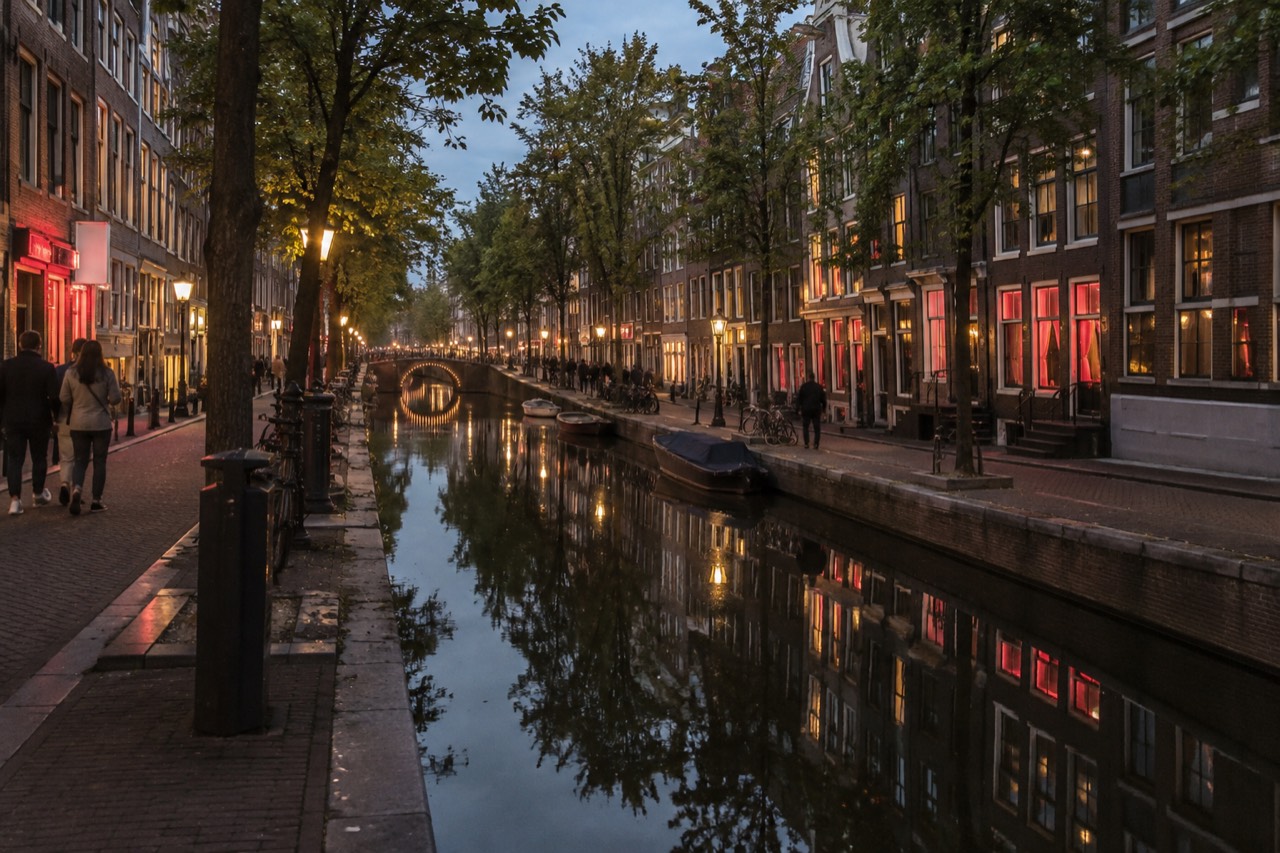
Where To Stay In Amsterdam To Avoid The Red Light District?
Stay in De Pijp, the Museum Quarter, Oud-West, the Plantage or Amsterdam Noord and you will sleep, eat and wander entirely outside De Wallen. The district itself covers only a compact block between Centraal Station and the Nieuwmarkt, so anything west of the Damrak, south of the Amstel or across the IJ already keeps you clear. Distance matters less than which side of the centre you pick.
The first thing worth knowing is how small the red light district actually is. De Wallen sits in the oldest wedge of the centre, bounded roughly by the Dam on one side, the Nieuwmarkt on the other, with the Oude Kerk at its heart. It is a ten minute walk from end to end. Yet the streets around it funnel enormous foot traffic, and on weekend nights the spill reaches well beyond the official boundaries, along the Damstraat, the Zeedijk and the Warmoesstraat, so a hotel that is technically outside the district can still sit in the middle of the noise.
That spill is the real planning problem. The city's own visitor guidance, published on the How to Amsterdam page, asks visitors to respect the neighbourhood, keep noise down after dark and behave as guests in a residential area, which is what the Wallen still is, home to thousands of people. Booking outside the district is not just about your own sleep, it removes you from the densest concentration of stag groups, late-night food stalls and shouting in the city.
The good news is that Amsterdam's geography makes avoidance easy. The centre is a horseshoe of canals wrapped around that small medieval core, and almost every neighbourhood beyond the first two rings of canals is residential, quiet after about eleven at night and still within a tram ride of everything. You do not need to retreat to the suburbs. You just need to book with a map open and check which side of the Dam your address falls on.
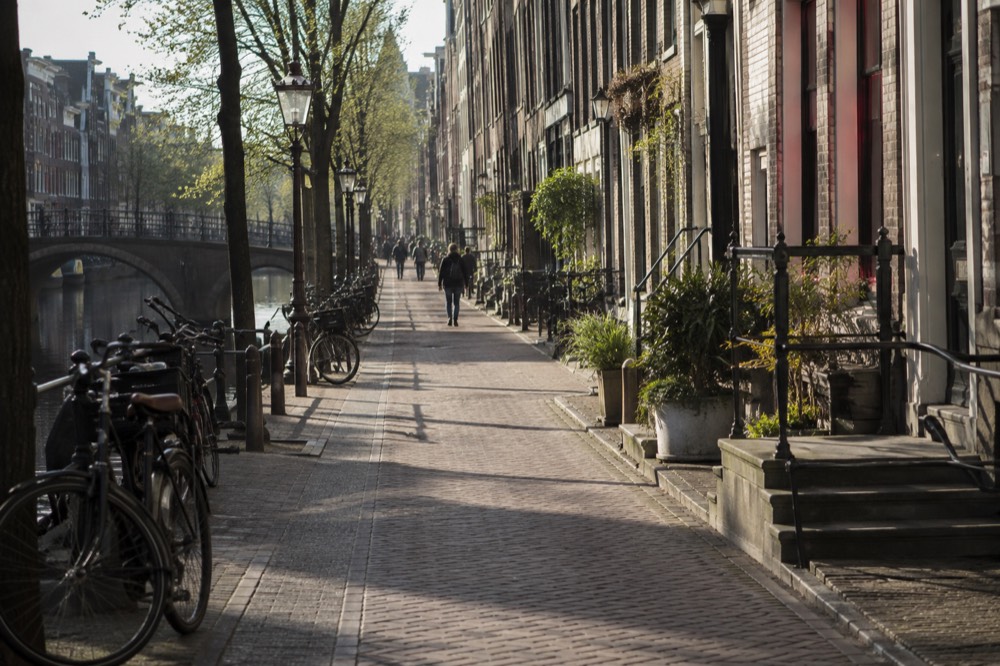
Which Neighbourhoods Sit Safest Outside De Wallen?
De Pijp, the Museum Quarter, Oud-West and the Plantage are the four areas that consistently deliver quiet nights inside the ring, each with its own character and price feel. Amsterdam Noord, one free ferry across the IJ, is the budget wildcard. All five keep you outside the Wallen entirely while staying inside the city, so the choice comes down to food, transport and atmosphere rather than distance.
De Pijp is the default answer for most travellers, and deservedly. It sits south of the centre across the Singelgracht, centred on the Albert Cuyp Market street, and it is packed with brown cafés, small restaurants and the kind of side streets where nothing louder than a bicycle happens after midnight. The Heineken Experience sits at its northern edge, the Sarphatipark gives it a green heart, and the walk to the Rijksmuseum takes about fifteen minutes. Our De Pijp neighbourhood guide covers where within it to aim.
The Museum Quarter, the Museumplein and the streets around it, is the quieter, more formal sibling. It borders De Pijp to the west and the Vondelpark to the south, so your evenings end either on a museum terrace or on a lawn. It is the most polished of the options and generally the most expensive, but it is dead quiet at night in the way hotel sleepers want. The Museum Quarter guide maps the blocks worth targeting.
Oud-West, around the Kinkerstraat and the Foodhallen, gives you a local, shop-and-café neighbourhood with the Vondelpark at your back door, while the Plantage, east of the centre past the Waterlooplein, is the leafiest pick of all, home to ARTIS, the botanical garden and a cluster of small hotels in streets that feel almost suburban. Amsterdam Noord, across the free GVB ferry behind Centraal Station, is where the value has migrated, a former dockland of studios, the NDSM wharf and the A'DAM Lookout, with the river doing the separating work for you.
| Neighbourhood | Character | Position vs De Wallen | Best for |
|---|---|---|---|
| De Pijp | Market street, cafés, lively but local | South, across the Singelgracht | Food, atmosphere, mid-range stays |
| Museum Quarter | Formal, green, polished | Southwest, behind the concert hall | Quiet nights, museum mornings |
| Oud-West | Shopping street, Foodhallen, Vondelpark edge | West of the centre | Local pace, longer stays |
| Plantage | Leafy, cultural, low buildings | East, past the Waterlooplein | Restful base, families |
| Amsterdam Noord | Ferry-side docks, creative, industrial | Across the IJ water | Value, views, design hotels |
One caution applies to all of them: check the exact street, not just the area name. The eastern edge of the centre, the Nieuwmarkt and the streets running down toward the Waterlooplein, borders the Wallen directly, and some booking sites label hotels there as "city centre" without mentioning which side of the line they sit on.
How Far Do You Need to Be for a Quiet Night?
You do not need distance, you need the right side of two boundaries. West and south of the Damrak and the Dam, or anywhere across the Singelgracht canal ring, the night-time character changes completely within a few hundred metres. Anything across the Amstel to the east, or across the IJ to the north, is quieter again. A kilometre in the right direction beats three in the wrong one.
The reason is the flow of the crowds. Night traffic moves between Centraal Station, the Dam and the Wallen along a handful of streets, the Damrak, the Damstraat, the Warmoesstraat and the Zeedijk, and it thins sharply the moment you step off those corridors. A hotel on the Prinsengracht near the Nine Streets is technically the same distance from the Wallen as one on the Zeedijk, but the two experience completely different nights. The canal belt guide explains which canal rings stay residential.
The Jordaan deserves a specific mention because it is the closest genuinely quiet option to the district. It begins just west of the Prinsengracht, and its inner streets, the ones off the Westerstraat and the Lindengracht, are among the calmest in the centre, full of families and small cafés that close early. The eastern fringe of the Jordaan, nearest the Prinsengracht, picks up some tourist traffic in the evenings, so if silence is the priority, aim for the middle blocks. Our Jordaan guide breaks the neighbourhood into its east and west halves.
If you want a hard rule of thumb, use the water. The Singelgracht, the outermost canal of the historic ring, marks the point where the centre gives way to nineteenth-century residential districts, and almost everything beyond it, De Pijp, Oud-West, Zuid, was built as housing rather than as a visitor zone. It is the single most reliable line on the map for a quiet stay, and it is visible on every booking map if you know to look for it.
What Should You Know About Hotels Just Outside the District?
Hotels on the eastern edge of the centre market themselves as central while sitting inside the Wallen's spill zone, so verify the street before booking. Amsterdam also caps new hotel construction, which keeps central supply tight and prices firm, and a 12.5 percent tourist tax applies to every overnight price. Location labels on booking sites are the weakest signal you have.
The city has frozen new hotel construction under its hotelstop policy, one of several measures, alongside the ban on new tourist shops, aimed at reining in visitor pressure. The practical consequence for you is that central rooms stay scarce and expensive, and the trade up in quietness you get by moving one canal ring out is real. The municipal tourist tax of 12.5 percent of the overnight price, excluding VAT, applies across hotels and holiday rentals alike, so factor it into comparisons rather than being surprised by it on checkout.
If you are comparing an apartment against a hotel, know the rules have tightened sharply. Holiday rentals are capped at 30 nights per calendar year city-wide, and in the neighbourhoods closest to the centre, including the canal ring districts around the Wallen, that cap was cut to 15 nights from 1 April 2026. Every legal listing must display a registration number, so an ad without one is a signal to walk away. These rules exist precisely because the centre's residents have borne the brunch-and-bachelor weight of Amsterdam's 23.7 million tourist overnight stays, and the city is enforcing.
The tours that do operate in the Wallen are tightly regulated, which tells you how sensitive the area is. Groups are capped at 15 people, guides may only run between 08:00 and 22:00, and no tour may pass the windows. A licensed small-group walk like the Red Light District small-group tour fits those rules, rated 4.9 across 9,142 reviews, from $26, and it keeps to the history and the streets rather than the spectacle. If you would rather understand the district than sleep beside it, that is the trade most visitors land on.
How Do You Get Around Once You Are Outside the Centre?
You will not need a car, and you will rarely need more than one tram or metro line. A 24-hour GVB day ticket costs €10.00, a single one-hour ticket €3.40, and contactless bank-card tapping works on every tram, bus, metro and ferry with a base fare of €1.16 plus €0.217 per kilometre. The ferries to Noord are free.
The transport point matters for choosing where to stay, because it removes the fear of being stranded in the quiet districts. De Pijp, Oud-West and the Museum Quarter all sit on multiple tram lines that reach the centre in ten to fifteen minutes, and the Noord ferries run behind Centraal Station around the clock at no charge. You are never more than about twenty minutes from the Dam, whatever you book. The getting around Amsterdam guide has the full fare picture.
| Ticket | Price | What it covers |
|---|---|---|
| GVB single, 1 hour | €3.40 | Any GVB tram, bus or metro for one hour |
| GVB day ticket, 24 hours | €10.00 | Unlimited GVB travel for a day, €5.00 for children |
| GVB 72 hours | €21.50 | Three days of unlimited GVB travel |
| OVpay contactless | €1.16 base plus €0.217 per km | Tap in and out with a bank card, capped daily |
| Ferries to Noord | Free | Behind Centraal Station, frequent, day and night |
Cycling changes the equation again, and it is the way most locals experience the distance. From De Pijp to the Wallen is perhaps ten minutes on a bike, which is why residents treat the district as a small corner of their city rather than a zone to avoid. The cycling in Amsterdam guide covers rental and the unwritten rules of the bike lane. If your hotel offers bikes, the quiet neighbourhoods stop feeling remote at all.
Walking is the other honest answer. Amsterdam is compact, and from the Jordaan or the Nine Streets you can reach the edges of the Wallen on foot in fifteen minutes while living on streets that empty out by eleven. Most travellers who stay outside the district end up walking into the centre once or twice and spending the rest of their time discovering that their own neighbourhood was the better half of the trip.
Is It Worth Staying Near the Red Light District Anyway?
Only if your priority is being walking-distance from Centraal Station and the Nieuwmarkt, and you are a heavy sleeper. The district's hotels fill with people who wanted central and did not read the fine print, and weekend noise runs late into the night. For everyone else, the same money buys a calmer, better-connected base one or two canal rings out.
There is a legitimate case for the centre. If you arrive late by train, leave early, or are in Amsterdam for a single night, the streets around the Dam and the station cut every transfer to nothing. The trade is that you live inside the city's loudest square kilometre, share pavements with the peak of the crowds, and pay centre prices for it. The Amsterdam Centrum guide maps which blocks of the centre are residential and which are not, because the centre is not uniformly loud, only the corridor between the station and the Wallen is.
What there is no case for is booking the Wallen by accident. That happens constantly: a listing says "five minutes from Centraal Station," which is true, and omits that the five minutes are along the Oudezijds Voorburgwal. Read the street name, put it on a map, and check it against the district's boundaries before you pay. If a deal looks too good for the centre, the location is usually the reason.
One more thing worth knowing: the district's story is far bigger than its nightlife, and the best way to see it is with a guide who can put it in context. The Anne Frank Story walk, a one-hour small-group tour of the Jewish Quarter rated 4.8 across 15,104 reviews and priced from $22, runs in the streets well east of the Wallen. The Anne Frank House itself is a separate matter: tickets are sold only through the museum's own site, annefrank.org, for a timed slot, with no door sales and no reseller, so nothing you book through any tour or pass includes entry. Adult admission is €16.50 including the booking fee, and under-18s pay less.
The same honesty applies to the district's other famous attraction. Cannabis is sold legally to tourists in Amsterdam's coffeeshops under the national tolerance policy, the residents-only rule that exists on paper nationally has never been applied in Amsterdam, but smoking it outdoors is prohibited in the centre, including the Wallen. The coffeeshop rules guide covers the detail, and the red light district rules and etiquette guide does the same for the district itself, including the photography norms that every visitor should know before they walk in.
Whichever side of the city you sleep on, the same principle holds: Amsterdam rewards travellers who match their bed to their temperament. If you want the quiet canal mornings and a local café at the corner, book across the Singelgracht or the IJ and treat the Wallen as a place you visit for an hour with a good guide, not a place you live beside for a week. More on planning the whole trip sits on Things to Do in Amsterdam, from neighbourhood picks to the questions first-timers always ask.
Common Questions About Staying in Amsterdam Away from the Red Light District
Where To Stay In Amsterdam To Avoid The Red Light District?
Stay in De Pijp, the Museum Quarter, Oud-West, the Plantage or Amsterdam Noord. All five sit outside De Wallen entirely, and the first four are inside the canal ring, so you stay central while sleeping on residential streets. Use the Singelgracht canal as your line: almost everything beyond it is quiet at night.
Is the Jordaan close to the red light district?
The Jordaan begins just west of the Prinsengracht, so its eastern edge is a fifteen minute walk from the Wallen. Its middle and western streets are among the calmest in the centre, and it is the closest genuinely quiet neighbourhood to the district. Aim for blocks off the Westerstraat rather than the Prinsengracht side.
Can you hear the red light district from the Dam area?
Yes, on weekends. The crowds and noise run along the corridors between Centraal Station, the Dam and the Wallen, and hotels on the Damrak, the Damstraat and the Zeedijk sit inside that spill even when they are technically outside the district. West of the Damrak the nights are far calmer.
Is Amsterdam Noord too far out for a first visit?
No. The free ferries behind Centraal Station take a few minutes and run day and night, so Noord is often faster to reach than some southern neighbourhoods by tram. It is a former dockland with design hotels and studio spaces, and it suits travellers who value space and views over doorstep proximity to the centre.
Do any tours include entry to the Anne Frank House?
No. Tickets for the Anne Frank House are sold only through the museum's own website for a timed slot, with no door sales and no resellers of any kind. Walking tours of the Jewish Quarter, including the Anne Frank Story walk, cover the history in the streets and never include entry to the house itself.