Bloemenmarkt Amsterdam: A Practical Guide to the Floating Flower Market
The Bloemenmarkt is the only floating flower market in the Netherlands, a row of flower stalls mounted on houseboats along the Singel canal in the city centre. This guide covers what to buy, how to reach it by tram, which seasons deliver the best flowers, and how to fold it into a day of museums and cruising.
Short answer
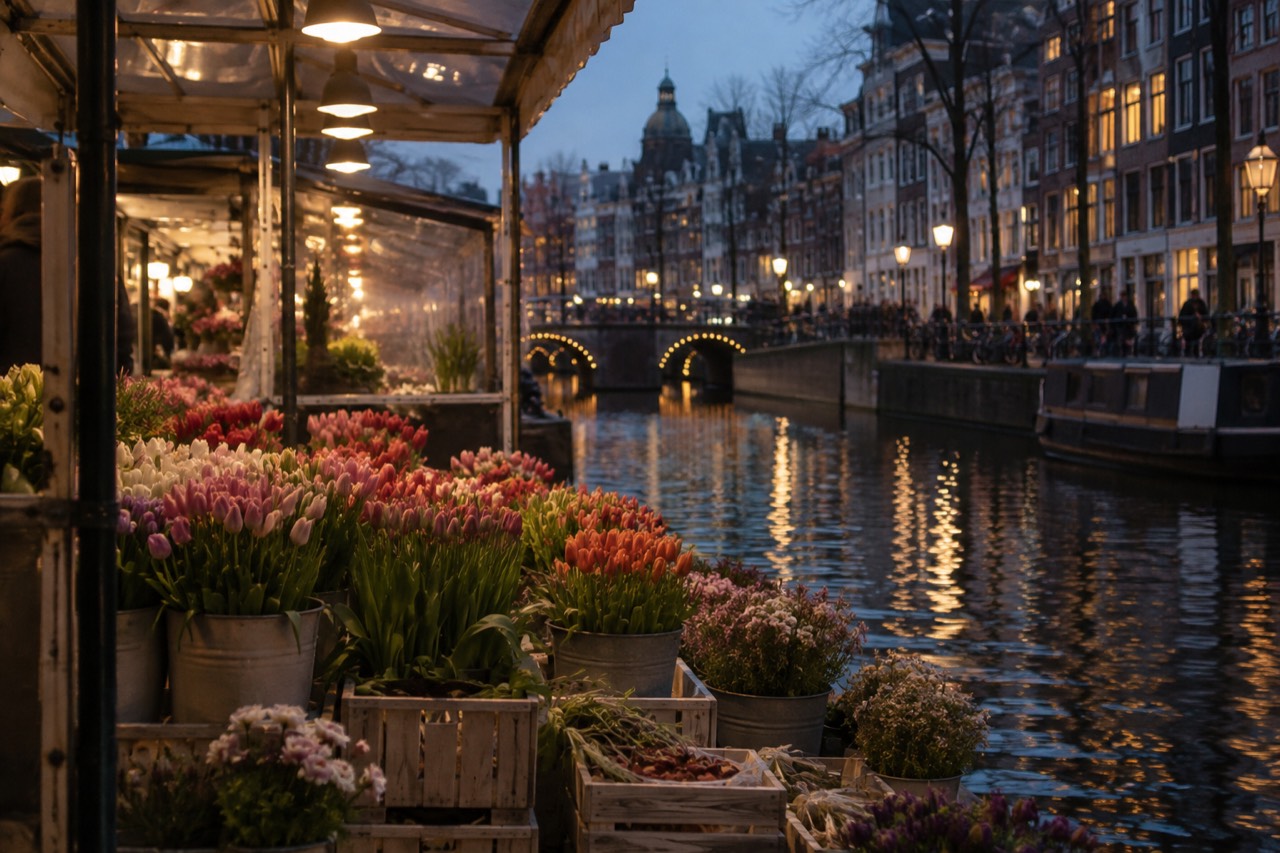
The Bloemenmarkt is Amsterdam's floating flower market, a single row of stalls on houseboats along the Singel canal, a short walk from Dam Square and Muntplein. Entry is free, it is open daily, and it is easiest to reach by tram to Muntplein or Koningsplein. Buy tulip bulbs, fresh bouquets and Dutch souvenirs, then walk on to Museumplein or a canal cruise.
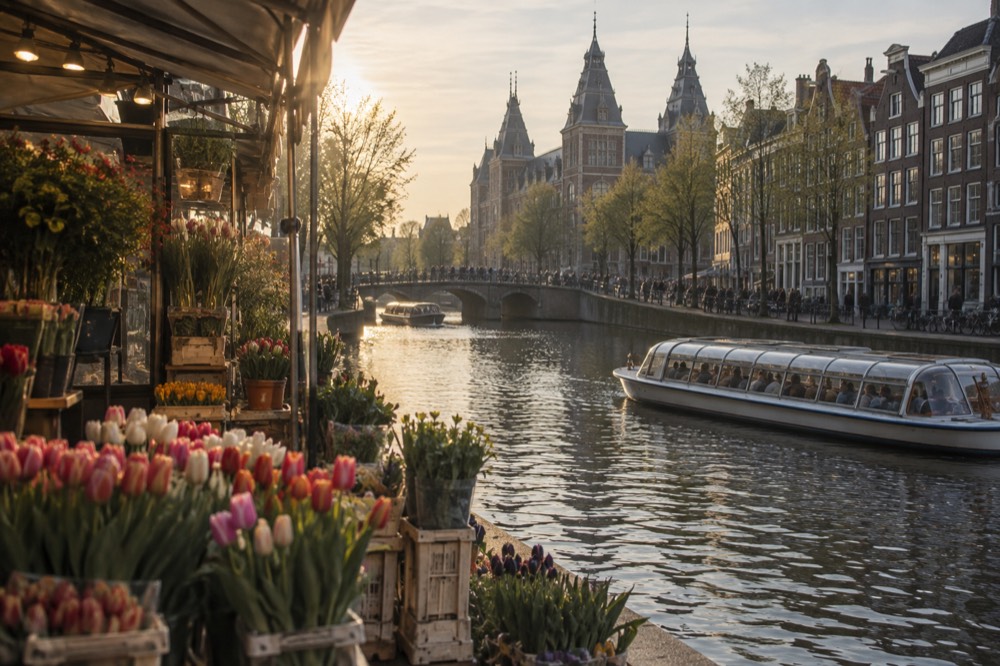
The Bloemenmarkt hangs over the water. Its stalls sit on houseboats moored along the Singel, the canal that marks the western edge of what was once the city's medieval expansion, and it is the only flower market of its kind left in the Netherlands. Traders have sold flowers and plants from boats on this stretch of water for well over a century, a habit that began when nurserymen sailed their cut flowers in from the countryside and sold them straight from the deck.
Today the market is as much a souvenir stop as a greengrocer for locals, and that mix is exactly what a first-time visitor needs to understand before going. Some stalls sell serious bulbs and seasonal plants; others sell tulip-shaped fridge magnets and clog keyrings. Both are fine to buy, but they are different products at different prices, and knowing which stall is which is the difference between a good purchase and a tourist-trap one.
This guide from Things to Do in Amsterdam walks through the market itself, how to reach it with the city's tram network, what is genuinely worth buying, and how to bolt it onto a museum visit or a canal cruise without backtracking across the centre.
What Is the Bloemenmarkt and Why Is It Floating?
The Bloemenmarkt is a row of flower stalls built on houseboats permanently moored along the Singel canal between Muntplein and Koningsplein, making it the only floating flower market in the Netherlands. It began as a working wholesale trade, with growers sailing flowers into the city by boat, and the houseboat stalls are the surviving form of that history. Entry costs nothing and you simply walk along the waterside promenade.
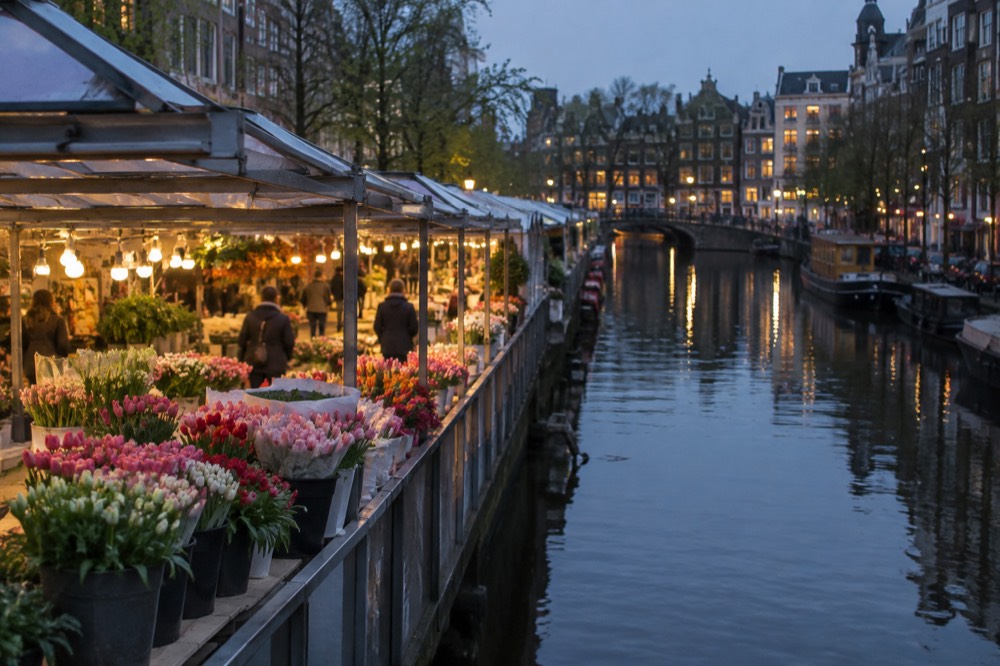
The market's layout is simple once you see it: a covered walkway runs along the canal edge, and each stall occupies a boat hull beneath it. That is why the market "floats." The stalls are fixed structures on the water rather than carts that pack up each night, which is also why the market keeps regular hours year-round rather than appearing on market days like a square market would.
The flower trade here has changed character over the decades. What was once the place where Amsterdam's greengrocers bought their stock is now mostly geared toward visitors, with a handful of stalls still serving locals who want cut flowers, potted plants, and seasonal items such as Christmas trees in December. The permanent-houseboat format survived precisely because it was never a pop-up market; the boats are part of the streetscape of the Singel.
One thing worth setting expectations about: the market is compact. It is a single stretch along one canal, not a sprawling flower hall, and a slow walk with browsing stops takes most people well under an hour. That makes it an ideal anchor for a wider loop of the southern canal ring rather than a destination in itself.
Where Is the Flower Market and How Do You Get There?
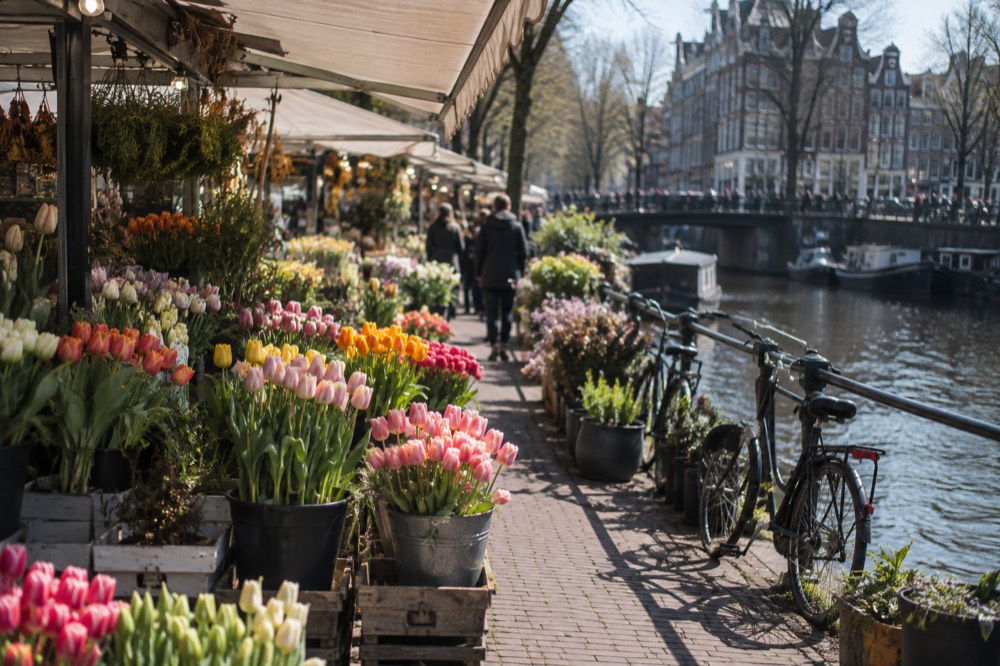
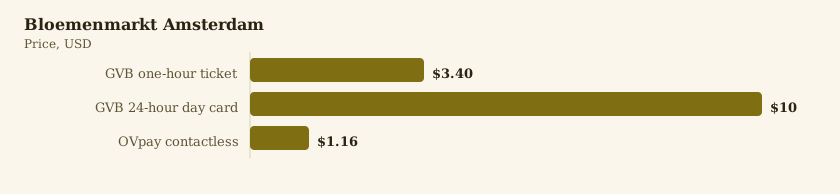
The Bloemenmarkt runs along the Singel between Muntplein and Koningsplein, roughly five minutes' walk south of Dam Square in the city centre. The nearest tram stops are Muntplein and Koningsplein, both served by multiple GVB tram lines. A single GVB ticket costs €3.40 for one hour, a 24-hour day card costs €10.00, and contactless OVpay works on every tram.
Amsterdam's trams are the easiest way in. The stop at Muntplein, beside the Munttoren tower at the market's southern end, is one of the most served stops in the city, and Koningsplein covers the northern end. If you are staying anywhere on a tram line into the centre, you will not need a transfer. The market is also flat, step-free along its length, and directly on the walking route between Dam Square and the Museumplein area, so many visitors simply reach it on foot as part of a longer stroll through the canal belt, which we cover in our Amsterdam canal ring guide.
For fares, the current GVB price list is the authority: the one-hour ticket is €3.40, the 24-hour day card is €10.00 for adults and €5.00 for children, and multi-day cards run €16.00 for 48 hours up to €43.00 for a week. If you tap a contactless bank card with OVpay instead, you pay a €1.16 base fare plus €0.217 per kilometre, capped daily on the GVB network. Check the live figures on the official GVB prices page before you travel.
| Option | Cost | Best for |
|---|---|---|
| GVB one-hour ticket | €3.40 | A single tram ride to the market and back |
| GVB 24-hour day card | €10.00 adult, €5.00 child | A day of tram hopping between market, museums and cruises |
| OVpay contactless | €1.16 base plus €0.217 per km, daily cap | Short visits, no ticket machine needed |
| On foot from Dam Square | Free | Anyone already in the centre; about five minutes |
If you are arriving from Schiphol and heading straight to the market, take the train to Amsterdam Centraal and then any southbound tram along Damrak and Rokin; the stop names above are announced on board. From Museumplein it is a direct tram north, or a fifteen-minute walk down the Spiegelgracht, a street of art dealers that is a pleasant route in itself.
What Should You Buy at the Bloemenmarkt?
The three things genuinely worth buying at the Bloemenmarkt are packaged tulip bulbs certified for export, fresh seasonal flowers, and Dutch-grown houseplants. Packaged bulbs in sealed bags with a phytosanitary label are the ones that can legally travel home; loose bulbs sold by weight may not be. Souvenir stalls sell tulip-themed gifts, and prices vary stall to stall, so compare before buying rather than paying at the first stall you pass.
Start with the bulbs, because that is what most people come for. Look for sealed, labelled packages from a named grower rather than open buckets. The labelling matters twice over: it tells you the variety and whether the bulbs have been treated and inspected for export, and it is what customs officers in your home country will want to see. Travellers heading to the United States face specific rules about which bulbs can be brought back, and we cover those in detail in our piece on bringing tulip bulbs home from Amsterdam.
Fresh flowers are the market's other honest product. Tulips dominate in spring, but the stalls rotate stock with the seasons: daffodils and hyacinths early in the year, peonies in early summer, and heavy heads of Dutch-grown dahlias later. Prices are per stem or per bunch and differ from stall to stall, so if you are buying a bouquet to take back to a hotel or apartment, walk the full length of the market once before committing. The stalls at the quieter middle stretch are often keener on price than the ones at either crowded end.
| Product | What to look for | Notes |
|---|---|---|
| Tulip bulbs | Sealed, labelled packages from a named grower | Export-certified packaging is what makes them travel legally |
| Fresh cut flowers | Firm stems, buds not fully open | Rotate with the seasons; compare stalls before buying |
| Houseplants | Dutch-grown stock, healthy roots | Only practical if you are driving home or staying a while |
| Souvenirs | Anything you would still want at home | Same items appear at several stalls; compare prices first |
The souvenir half of the market deserves honesty. Tulip mugs, clog slippers and floral magnets are fun, and there is nothing wrong with them, but they are the same items you will find in shops across the centre, sometimes cheaper. If souvenirs are the mission, our broader Amsterdam souvenirs guide sorts the worthwhile from the throwaway across the whole city, not just this one row of stalls.
Can You Combine the Bloemenmarkt With Museums and a Canal Cruise?
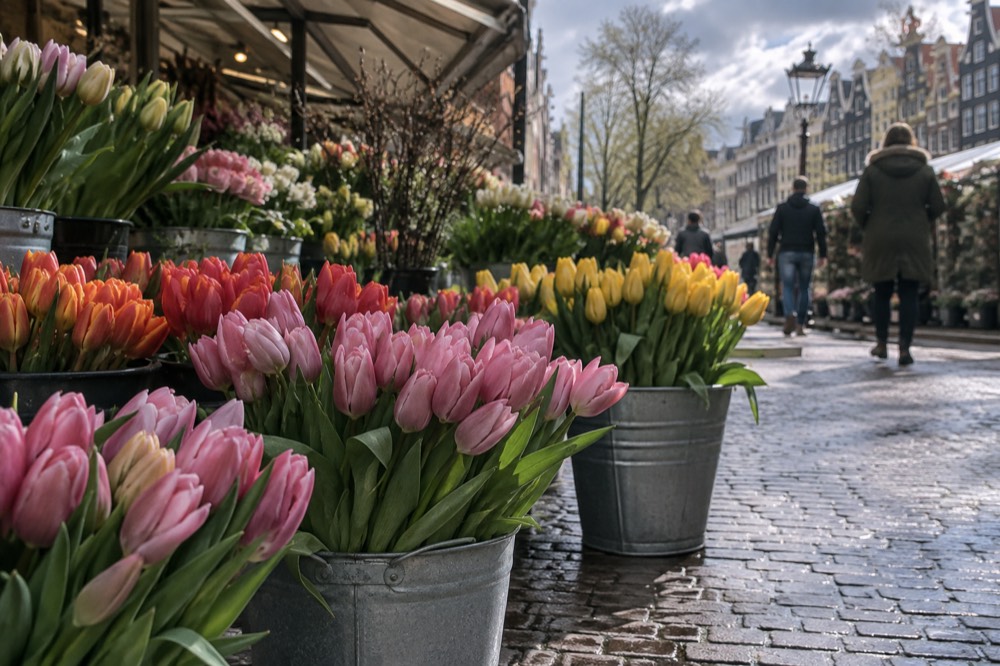
Yes, and it would be a mistake not to. The market sits on the natural walking line between the canal ring and Museumplein, so the classic pairing is flowers in the morning, the Van Gogh Museum or Rijksmuseum after, and a canal cruise in the late afternoon. The Van Gogh Museum costs €25 and requires a pre-booked timed ticket for every visitor, while the Rijksmuseum is €25 and free for ages 18 and under.
The Van Gogh Museum is the pairing most visitors want, and it needs planning. Every visitor, without exception, must pre-book a timed entry ticket, and slots sell out on busy days. The museum's own ticket page at tickets.vangoghmuseum.nl is the primary source, and adult admission is €25 with under-18s free. A pre-booked ticket through the operator's live listing saves the queueing risk; check the current price on the listing itself.
If modern art is not your thing, the Rijksmuseum is the same short tram ride or walk away, open every day of the year from 9am to 5pm, with adult tickets at €25 and free entry for ages 18 and under. Timed entry applies there too, so book a start slot online in advance. Either museum pairs naturally with a flower-market stop because the geography does the work for you: the market is on the way, not a detour.
The other natural pairing is the water. The market is on a canal, and canal cruise departure points cluster within a few minutes' walk of it, so a one-hour cruise slots neatly before or after your browse. A classic saloon boat cruise runs about an hour on a restored wooden boat, from $19.56 per person, rated 4.8 across 33,435 reviews, with a Dutch cheese and drinks upgrade available on the listing. Check availability if you want the historic-boat version rather than a large tour launch.
For a budget baseline, the standard one-hour canal cruise with audio guide departs from three docks around the centre, including one by the Rijksmuseum, from $15 per person and rated 4.3 across 21,335 reviews. That is the cheapest way onto the water from this part of town, and the audio guide covers the canal ring's history in nineteen languages.
When Is the Best Time to Visit the Flower Market?
Mid-March to mid-May is the peak flower window, when tulips, daffodils and hyacinths are in season across the Netherlands and the market is at its most photogenic. The Keukenhof gardens near Lisse run 18 March to 9 May in 2027, daily 08:00 to 19:00, which anchors the same season. Outside spring the market still trades daily, with potted plants and seasonal stock such as Christmas trees in December.
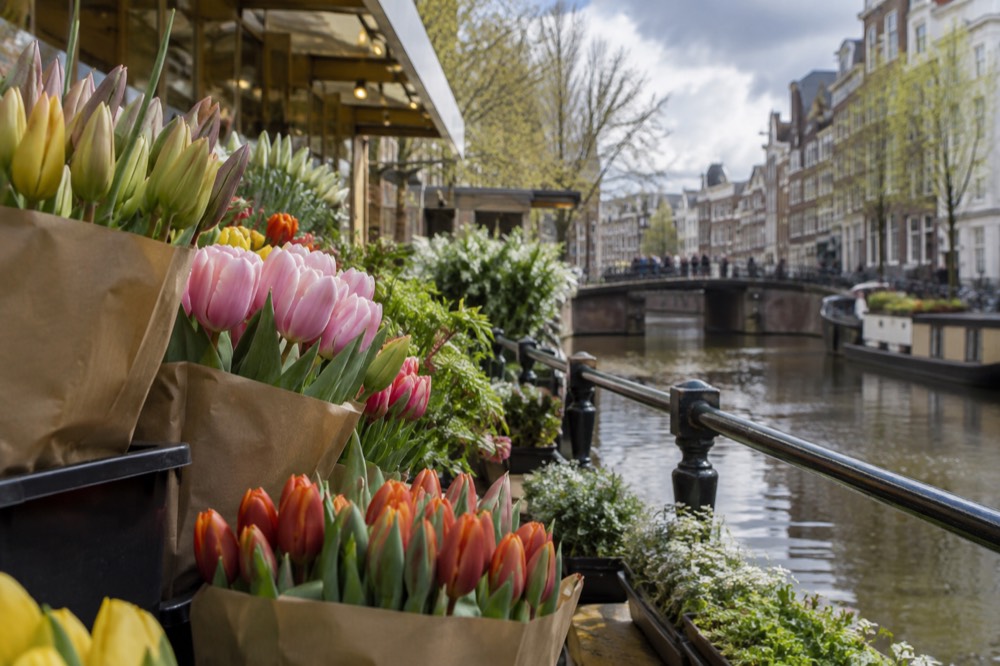
Spring is when the Bloemenmarkt earns its postcard reputation. The stalls fill with cut tulips in every colour, and the market becomes the in-city companion to the bulb fields and Keukenhof trips that fill the same weeks. If your trip falls in that window, the market is genuinely at its best in the morning, when the fresh stock is fullest and the walkway is not yet crowded with the afternoon tour groups that work their way down from Dam Square.
Keukenhof itself is a separate trip to Lisse, roughly thirty to forty minutes from Amsterdam, and it only exists as a spring event: the 2027 season runs from Thursday 18 March to Sunday 9 May, daily from 08:00 to 19:00, with 2027 tickets not yet on sale. Check the dates and sales window on Keukenhof's official FAQ page before planning a combined flowers-and-gardens day.
Outside spring, do not write the market off. Summer brings potted plants and bedding flowers, autumn brings bulbs for planting season, and December turns part of the market into a Christmas tree and greenery operation, which pairs well with the city's winter lights. Early morning on a weekday is the quietest time to browse in any season; late afternoon on a weekend is the busiest.
| Season | What the stalls carry | Visitor notes |
|---|---|---|
| Spring (mid-March to mid-May) | Cut tulips, daffodils, hyacinths, packaged bulbs | Peak season; fullest stock, biggest crowds, best photos |
| Summer | Potted plants, bedding flowers, peonies early on | Quieter walkway; good for houseplants rather than bulbs |
| Autumn | Planting-season bulbs, late dahlias | Practical if you garden at home; fewer tour groups |
| Winter (December) | Christmas trees, greenery, seasonal wreaths | Pairs with the city's winter lights; dress warmly |
What Should You Know Before You Go?
The Bloemenmarkt is free to enter, open daily, and reached in minutes from Dam Square by tram or on foot. Bring a bag for flowers, buy bulbs only in sealed export packaging, and expect crowds on weekend afternoons. The market is a stop on a route, not a half-day outing, so plan it as one leg of a loop through the canal ring, Museumplein or a cruise departure point.
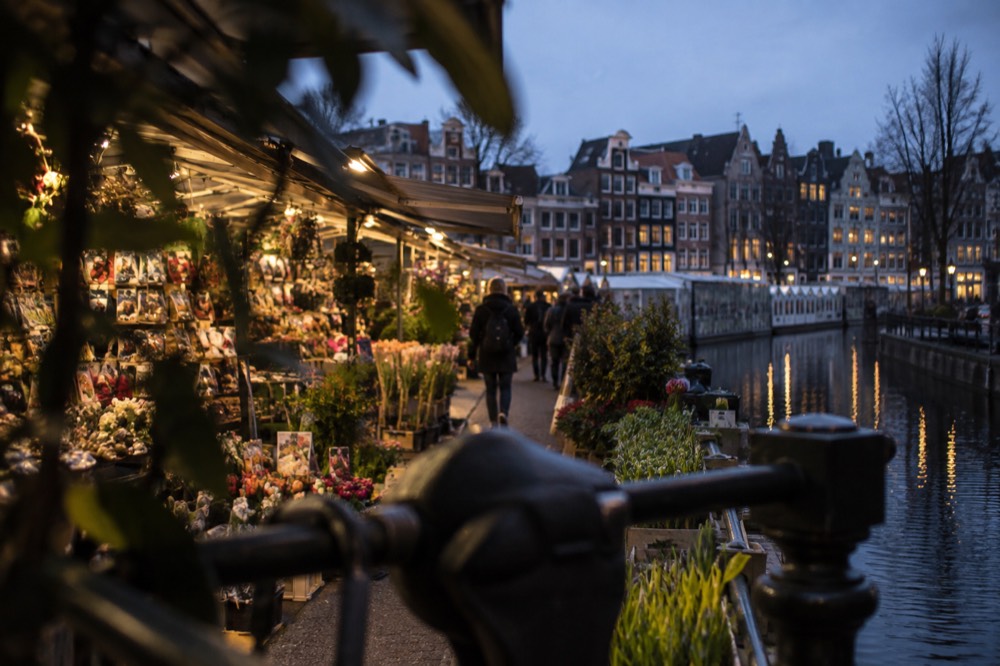
A few practical notes make the visit smoother. Wear shoes you can walk in, because the surrounding streets are the canal ring's brick and stone, and the market walkway can be slick in rain. If you are buying fresh flowers, ask the stallholder to wrap the stems wet, which keeps them presentable for a day or two in a hotel room. If you are buying bulbs, keep the receipt and the sealed packaging together in your hand luggage.
Budget-wise, the market itself costs nothing to browse, and the spend is entirely what you choose to carry home. The surrounding neighbourhood is the expensive part of the centre, so if you are counting euros, our Amsterdam on a budget guide covers where the money actually goes on a city-centre day, from transport to lunch. The city's tourist tax, 12.5% of your nightly room price, is worth knowing about too; details are on the gemeente Amsterdam tourist tax page.
One more honesty note: because the market is compact and popular, it gets labelled a tourist trap by people expecting a wholesale flower hall. It is not that, and it never claims to be. Treat it as a twenty-minute browse with a photograph, a bulb purchase and a walk along the Singel, and it delivers exactly what it promises.
Is the Bloemenmarkt Worth Visiting?
For most first-time visitors, yes, as part of a route rather than as a standalone destination. The floating stalls are unique in the Netherlands, the spring flower stock is genuinely spectacular, and the market sits on the walking line between Dam Square, the canal ring and Museumplein. It costs nothing to enter, so the only real risk is arriving with the wrong expectations about its size.
The verdict depends on timing and framing. In tulip season, with a camera and a bulb purchase in mind, it is an easy recommendation. In the depths of winter, with a tight schedule and no interest in flowers, it is a quick look on the way to somewhere else. The visitors who enjoy it most treat it as one thread in a day that also includes a museum and the water, and the trio below covers the pairing most people end up choosing: the Van Gogh Museum for the timed-ticket classic, the Heineken Experience for an indoor hour nearby, and a classic saloon boat cruise for the canal itself.
However you build the day, the Bloemenmarkt asks very little of you: no ticket, no queue, no fixed duration. Walk the Singel, buy what catches your eye, keep the bulbs sealed, and let the market be the small, floating, slightly eccentric interlude it has always been between the bigger sights of central Amsterdam.
Common Questions About the Bloemenmarkt
What is the Bloemenmarkt in Amsterdam?
The Bloemenmarkt is Amsterdam's floating flower market: a row of flower stalls built on houseboats permanently moored along the Singel canal between Muntplein and Koningsplein. It is the only floating flower market in the Netherlands and sells cut flowers, packaged tulip bulbs, houseplants and souvenirs.
Is the Bloemenmarkt free to visit?
Yes. The market is a public waterside walkway with no entrance fee and no tickets. You pay only for whatever you buy, and browsing costs nothing. It is open daily year-round.
Where is the Bloemenmarkt located?
It runs along the Singel canal in the city centre, between Muntplein and Koningsplein, roughly five minutes' walk south of Dam Square. The nearest tram stops are Muntplein and Koningsplein, served by multiple GVB lines.
Can you buy tulip bulbs at the Bloemenmarkt and take them home?
Yes, if you buy bulbs in sealed, labelled export packaging from a named grower. That packaging is what customs checks require in many destination countries. Rules differ by country; travellers to the United States in particular face specific import restrictions, so check the requirements before you buy.
When is the best time to visit the Bloemenmarkt?
Mid-March to mid-May, when tulips, daffodils and hyacinths are in season and the stalls are at their fullest. The same window matches the Keukenhof season at Lisse, which in 2027 runs 18 March to 9 May. Outside spring the market still trades daily, with seasonal stock such as Christmas trees in December.
How long should you spend at the Bloemenmarkt?
Most visitors spend between twenty minutes and an hour, depending on whether they are buying. The market is a single compact stretch along one canal, so it works best as one stop on a walking route through the canal ring rather than as a destination on its own.