Amsterdam Photography Spots: Where to Shoot the City
Amsterdam is a city built to be photographed: brick gables leaning over water, iron bridges, bicycles in rows, and light that softens everything it touches. This guide maps the spots that consistently deliver, the times of day that matter, and the tours that double as photo opportunities.
Short answer
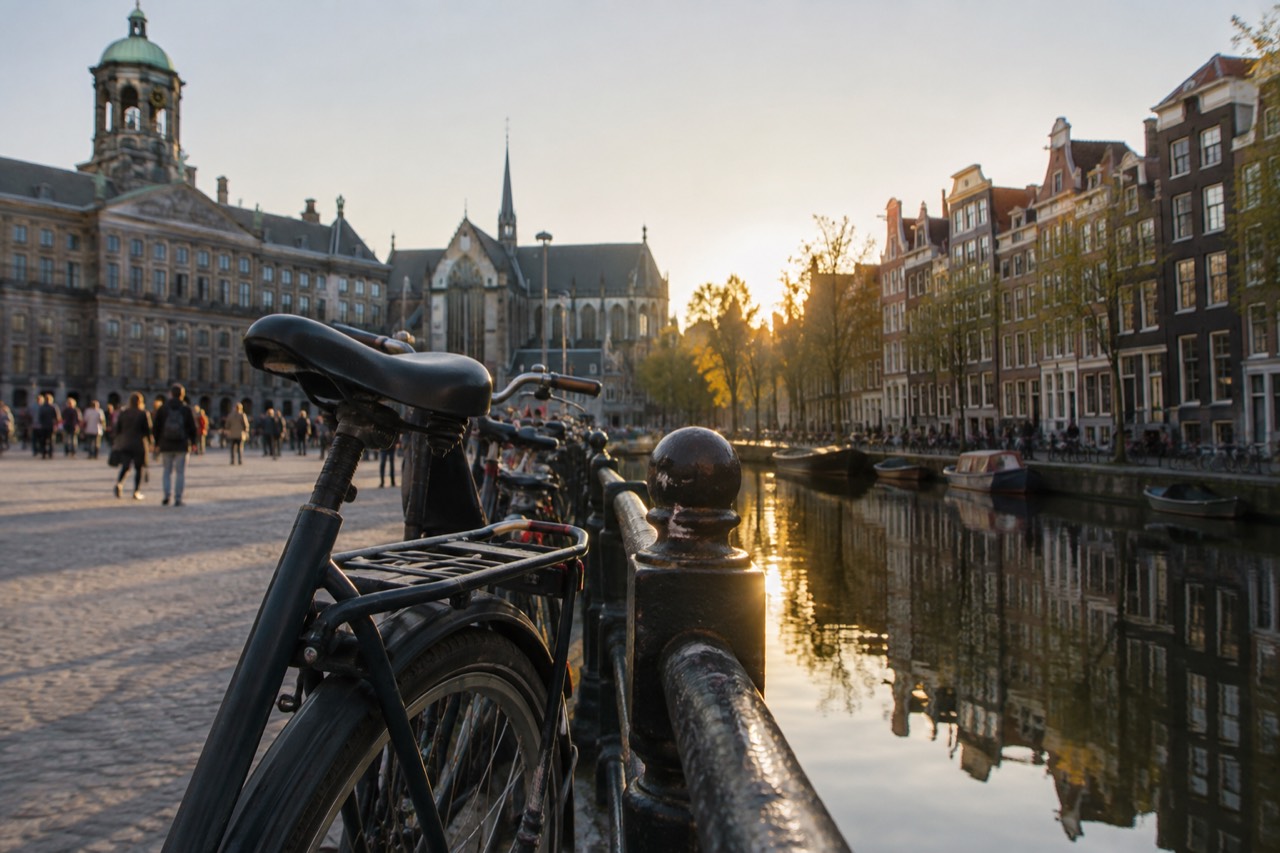
The best photo spots in Amsterdam cluster along the canal ring, especially the Golden Bend on Herengracht, the Magere Brug, and the Nine Streets. Museumplein frames the Rijksmuseum, A'DAM Lookout sells skyline views from €16.50 online, and a one-hour saloon boat cruise from $19.56 puts you on the water with the gables at eye level.
Amsterdam photographs well by accident and brilliantly on purpose. The city's 17th-century canal ring was engineered for trade, but the result is a grid of water corridors where brick gables, arched bridges and leaning facades repeat themselves in reflections for hours on end. The trick is not finding something to shoot, it is being in the right place when the light cooperates.
This guide walks through the locations that consistently produce strong images, the timing that separates a snapshot from a keeper, and a few ways to get onto the water or above the rooftops without organising a private shoot. Every price below is either read from an official source or taken from a live tour listing, and where a figure sits on the operator's page rather than in print, that is what we say.
Where Are the Best Photo Spots in Amsterdam?
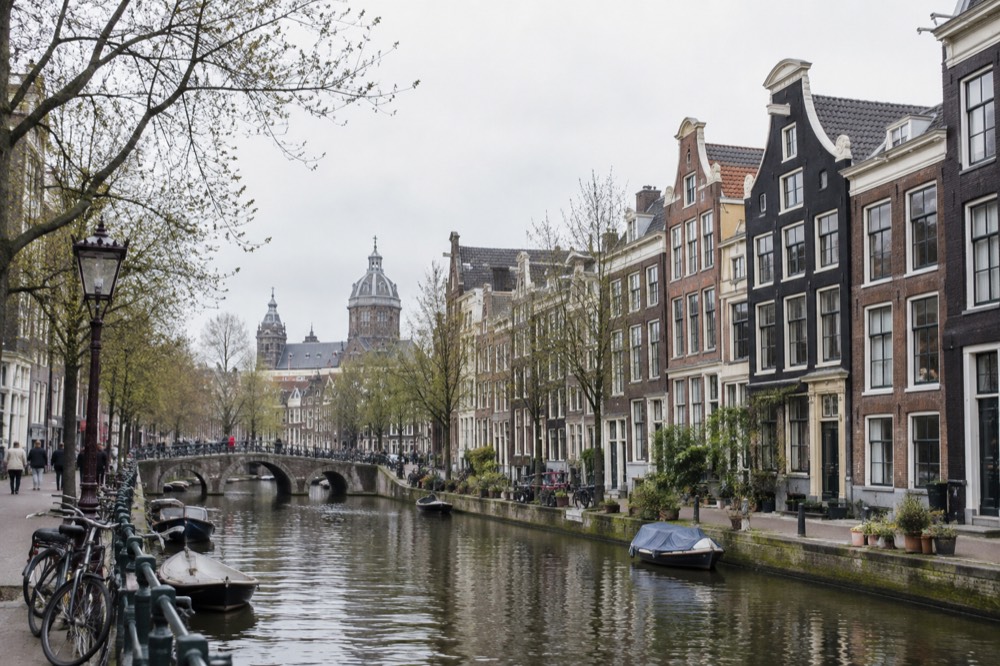
The strongest photo spots in Amsterdam are the Golden Bend of Herengracht, the Magere Brug, the Bloemenmarkt, Dam Square, Museumplein in front of the Rijksmuseum, the Jordaan's side canals, and the NDSM wharf view back across the IJ. Each rewards a specific time of day, and most sit within a 20 minute walk of another, so a single well-planned morning can cover three or four of them.
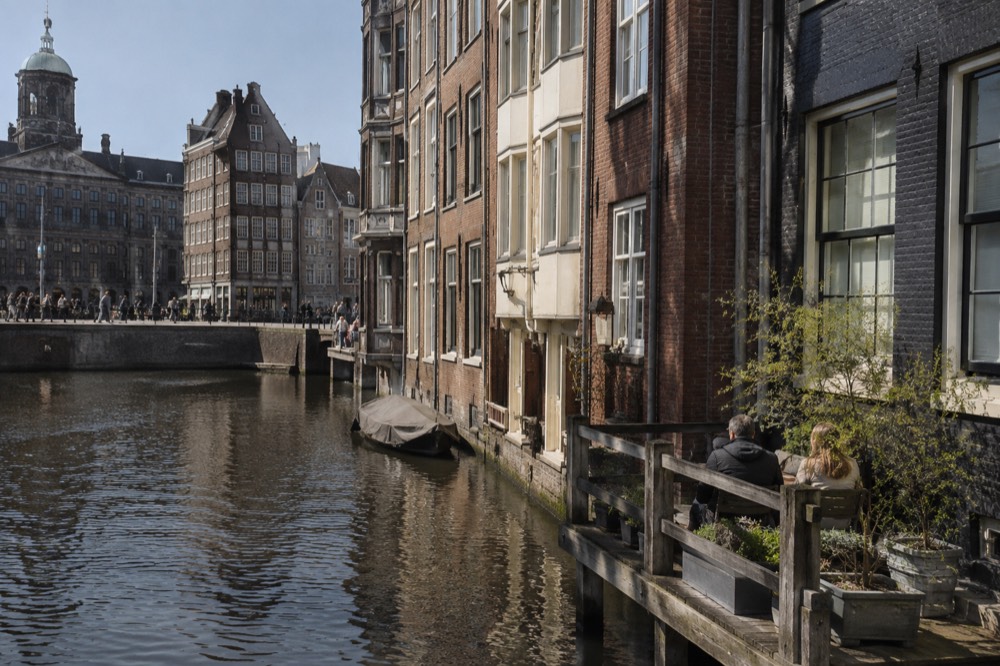
The canal ring is the backbone of any Amsterdam photo walk, and it is worth understanding why before you set out. The Things to Do in Amsterdam desk's short version: the Grachtengordel is a UNESCO World Heritage grid of three concentric canals, and its architecture was designed to be seen from the water, which is why the facades read so well from a boat deck. Our full canal ring and Grachtengordel guide covers the history if you want it.
Start with the Golden Bend, the stretch of Herengracht between Leidsestraat and the Amstel, where the widest and most ornate merchant houses stand shoulder to shoulder. Then move to the Magere Brug, the old wooden drawbridge over the Amstel, which is Amsterdam's most photogenic single structure after the canal houses themselves. The skinny bridge and its surroundings are covered in their own guide.
| Photo spot | Best time | What you get |
|---|---|---|
| Golden Bend, Herengracht | Early morning, before 9am | Widest gables in the city, empty quays, calm water |
| Magere Brug | Blue hour, after sunset | Illuminated wooden bridge with the Amstel behind it |
| Bloemenmarkt | Morning, stalls fully stocked | Colour, tulip buckets, covered arcade |
| Museumplein, Rijksmuseum front | Golden hour, low sun | Red brick facade and pond reflections |
| Jordaan side canals | Any daylight hour | Trees, houseboats, quiet bridges |
| NDSM wharf, Amsterdam Noord | Late afternoon | Skyline across the IJ, crane silhouettes |
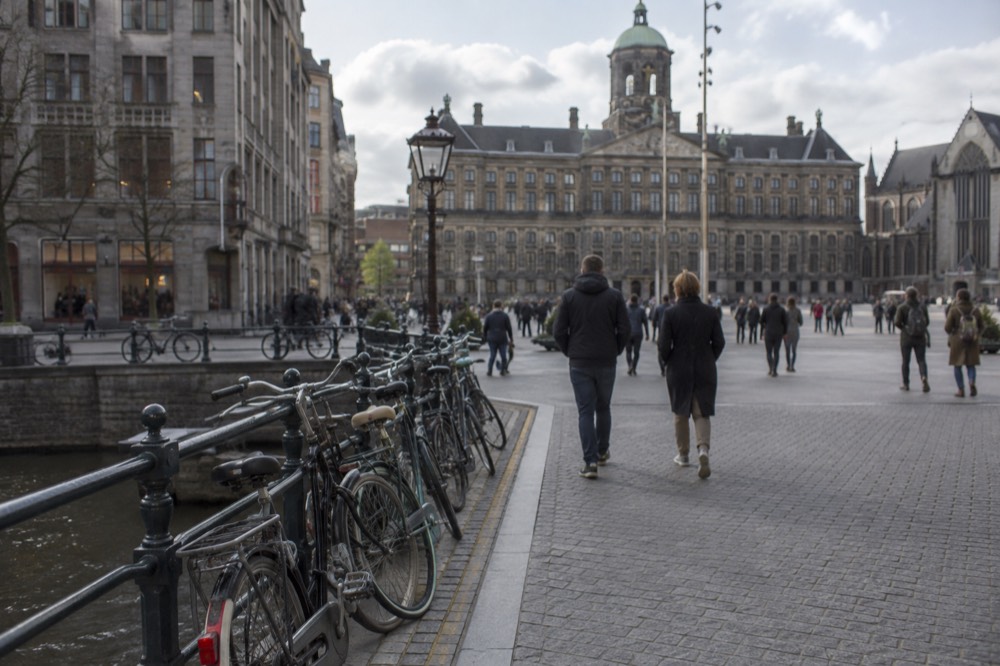
One planning note that most first-time visitors miss: the quays fill with parked bicycles by mid-morning, and the bicycles are part of the picture whether you want them or not. Photographers who want clean architectural shots work between roughly 7am and 9am, when delivery bikes are few and the light is still low and warm. Later in the day, lean into the bikes rather than fighting them; a row of frames against a gable is an Amsterdam cliché because it works.
Which Canal Views Give the Classic Amsterdam Shot?
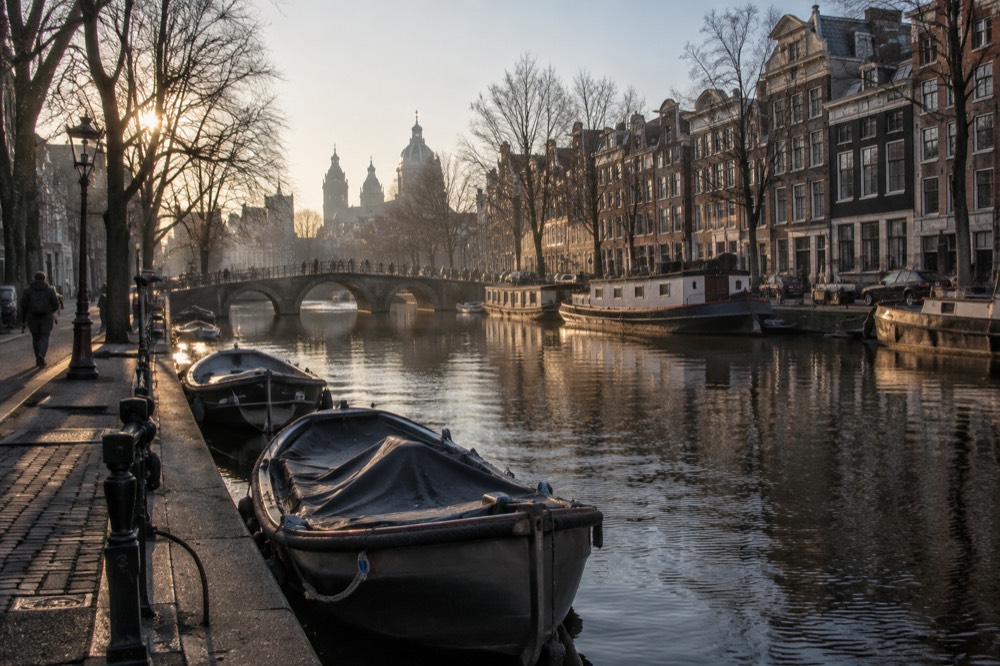
The classic Amsterdam photograph is a symmetrical canal view: gables receding to a vanishing point, water in the foreground, a bridge in the middle distance. The West side canals of the Jordaan, the Nine Streets crossings, and the Reguliersgracht viewpoint deliver this composition most reliably, and a one-hour canal cruise from $15 puts you at water level with the facades directly overhead.
The composition matters more than the location. Stand mid-bridge, centre the canal, and let the parallel gable lines converge; that single move turns an ordinary canal into the image people associate with the city. The Nine Streets crossings are ideal for this because the bridges are low, the trees are close, and the shops give the quays human detail.
Reguliersgracht is the other reliable bet, a narrow canal with seven visible bridges in a row from the right vantage point, though you should expect company: this is one of the most photographed single views in the Netherlands. The Jordaan's side canals, Brouwersgracht and Egelantiersgracht in particular, trade the postcard symmetry for grit, houseboats and west-facing light that glows in the evening.
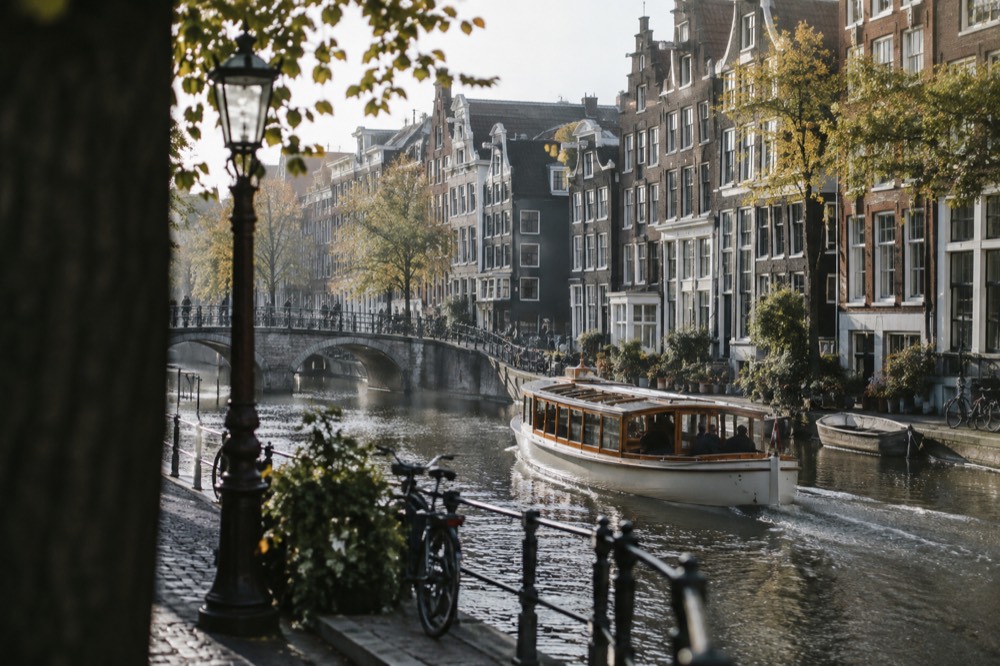
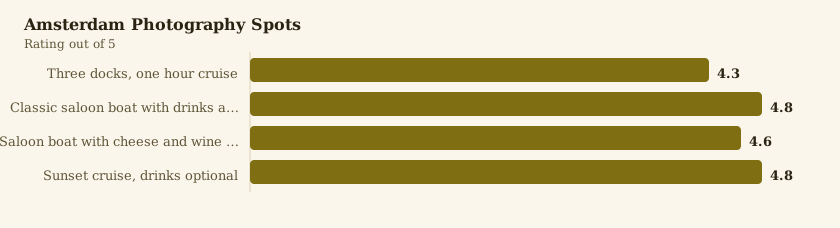
Getting onto the water changes everything about the light. From a boat deck the gables tower above you, and the reflections sit at your feet instead of ten metres away. The classic saloon boat cruise runs $19.56 for one hour, rated 4.8 across 33,435 reviews on its live listing, on restored wooden vessels with a live guide. If you want the cheapest way afloat, the standard one-hour cruise from three departure points starts at $15 with an audio guide in 19 languages.
| Water-level option | From (listing) | Duration | Rating |
|---|---|---|---|
| Three docks, one hour cruise | $15 | 1 hour | 4.3 |
| Classic saloon boat with drinks and cheese | $19.56 | 1 hour | 4.8 |
| Saloon boat with cheese and wine option | $16 | 1 hour | 4.6 |
| Sunset cruise, drinks optional | $23 | 1 hour | 4.8 |
Where Do You Photograph Amsterdam From Above?
The two best elevated photo spots are A'DAM Lookout, which sells adult entry at €16.50 online or €18.50 at the counter, and the free NEMO roof terrace, reachable without a museum ticket via the external steps. The A'DAM side gives you the full skyline across the IJ; the NEMO roof gives you the eastern docklands for the price of a walk up a staircase.
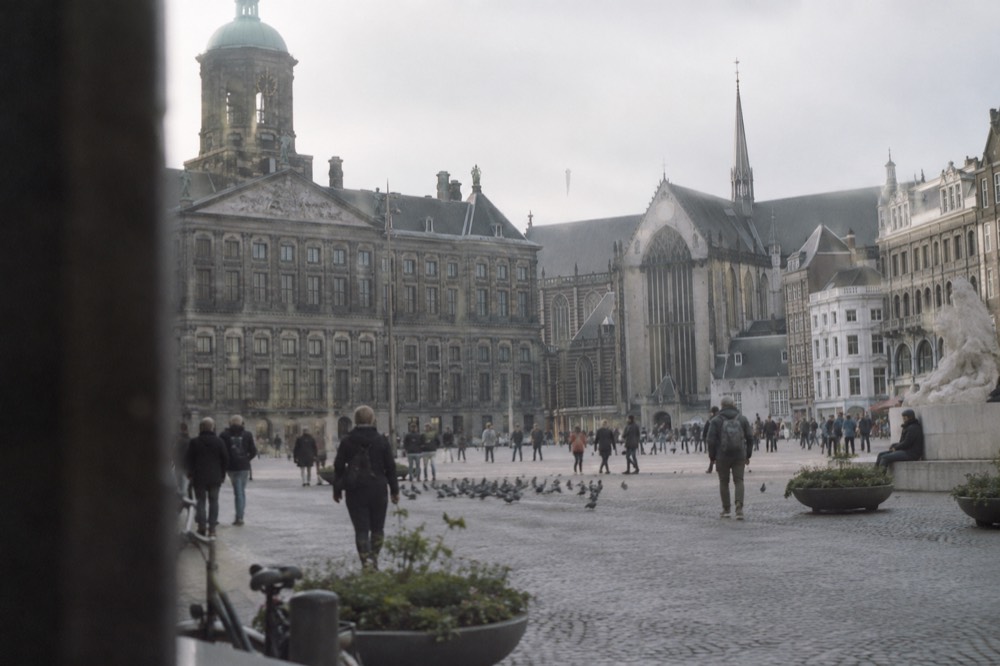
A'DAM Lookout sits directly over the river in Amsterdam Noord, a free ferry ride from Centraal Station, and its observation deck looks back at the entire historic centre. The operator's own ticket page states the online discount plainly: book ahead and save €2 per ticket. The "Over the Edge" swing, the rooftop swing that dangles you over the drop, is an add-on at €7.50 online or €8.50 on site, with a minimum rider height of 1.20 metres. For photographers the swing is a subject as much as a ride; a wide shot of the deck with the city behind it is one of the recognisable modern Amsterdam images.
The NEMO roof is the city's best free viewpoint, and the museum's own press page confirms it: the terrace is free and reachable via the steps from the street or the lift in the entrance hall, no ticket needed. You get the eastern harbour, the Oosterdok and the white building's own terraced curves in the foreground. Our NEMO Science Museum guide covers the interior if you want to combine the two.
Beyond those two, the options thin out. The Rijksmuseum's passageway, the tunnel that runs under the museum and links Museumplein to the neighbourhood behind, is a free framed view that costs nothing and never closes. Some canal cruise boats have open or covered decks depending on season, which is worth checking on the listing if you plan to shoot seriously from the water rather than just sightsee.
When Is the Best Light for Photographing Amsterdam?
Golden hour and the blue hour that follows it are the two windows that matter, and both shift with the season. In summer the evening sun sets late and lights the west-facing canals; in winter it sets mid-afternoon and turns the entire centre gold at hours most visitors spend indoors. The blue hour, roughly 30 to 45 minutes after sunset, is when the bridges and gables are lit and the sky still holds colour.
The practical rule is to shoot the west side of a canal in the morning and the east side in the evening, because the sun crosses the grid and one quay is always in better light than the other. Our piece on what the golden hour in Amsterdam actually involves goes deeper on the timing, and the month by month weather guide helps you plan around the clouds.
Amsterdam's northern latitude does photographers a favour in both directions. In late June the evening light lingers well past most people's patience, and the canals empty of boat traffic after the last scheduled cruises. In December the sun is low all day, which means harsh midday shadows simply do not exist; the whole day behaves like an extended golden hour, at the cost of a very short one.
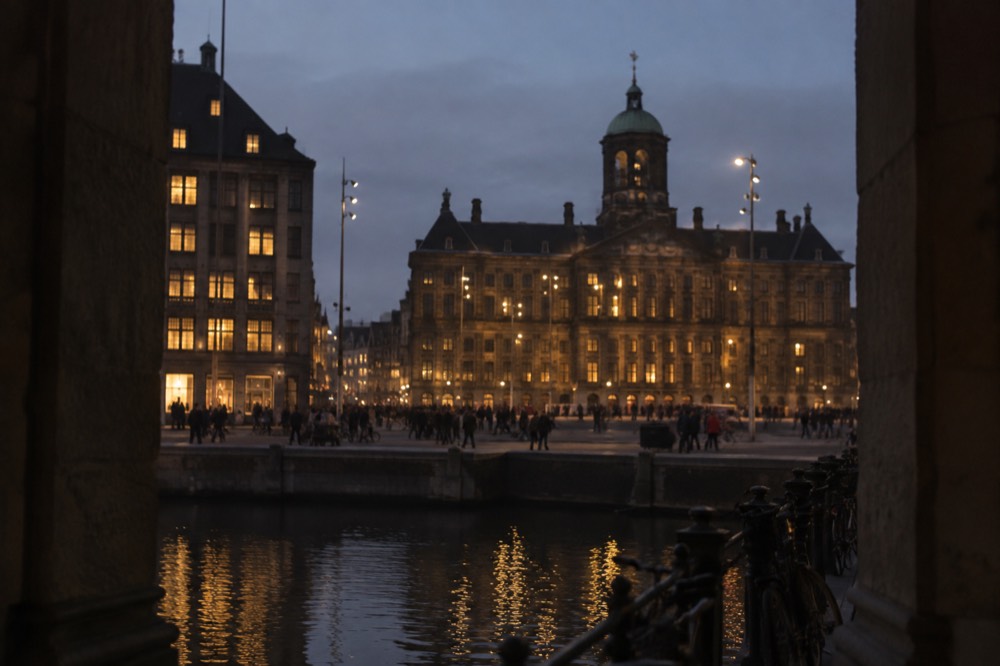
Night shooting deserves its own mention. The Magere Brug, the Blauwbrug and the Amstel riverbank are lit after dark, and the blue hour balance between sky and street lighting lasts long enough to work deliberately rather than frantically. A tripod is legal on the public quays and makes the difference between a crisp frame and a smear; the same cannot be said for every European city, where tripod rules on bridges are stricter.
Which Neighbourhoods Reward a Slower Photo Walk?
The Jordaan, De Pijp and the Oude Kerk area reward walking with a camera rather than hunting single viewpoints. The Jordaan gives narrow canals, houseboats and small-bridge detail; De Pijp gives market colour and café life around Albert Cuyp; the area around the Oude Kerk gives the oldest stonework in the city against the odd modern intrusion, which is a contrast photographers either love or edit out.
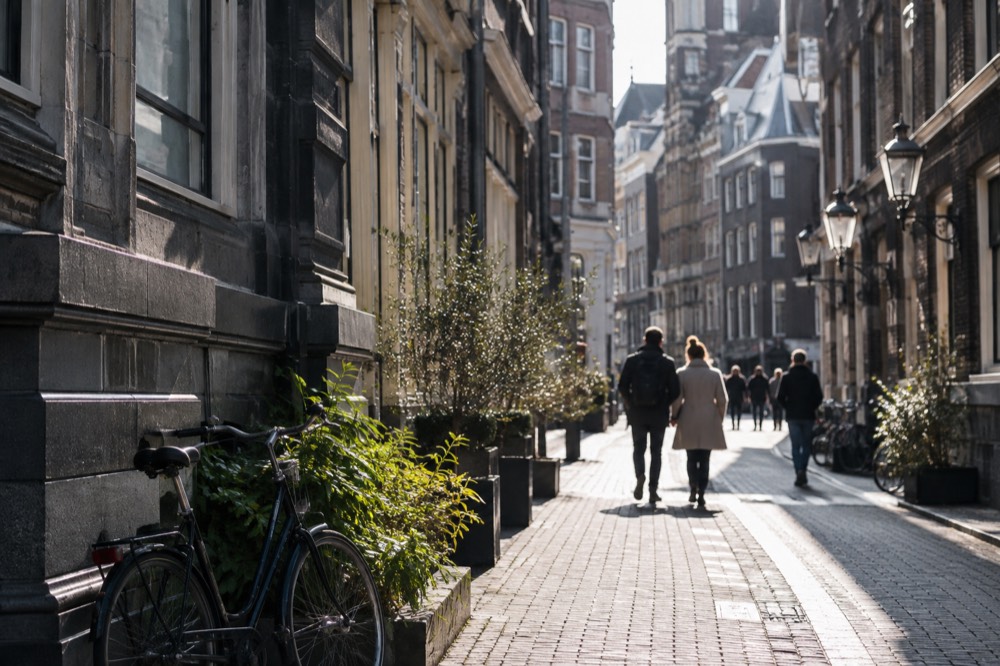
The Jordaan is the strongest of the three for pure image-making. Its canals are narrower than the main ring, so the gables crowd the frame and the trees meet overhead in summer. Brouwersgracht on the western edge is where the 17th-century warehouse architecture is densest, and the side streets off it are quiet enough in the morning that you can wait for a single figure to complete a composition. Our Jordaan neighbourhood guide maps the route.
De Pijp works differently. This is a place for people and colour rather than architecture: the Albert Cuyp Market stalls, the café terraces, the street-level texture here is unmatched in the south of the city. Shoot it in the morning when the market is setting up and the light comes straight down the street.
The Oude Kerk square is the third stop, and it is the most complicated to photograph honestly. Amsterdam's oldest building stands in the middle of the red-light district, and the city's rules of respect apply absolutely: the official How to Amsterdam guidance asks visitors not to photograph sex workers or the windows, and no image is worth violating that. Shoot the church itself, the cobblestones, the medieval street plan, and leave the windows alone entirely. Our De Wallen rules and etiquette guide covers what is and is not acceptable in detail.
Which Museum Interiors Are Worth Photographing?
The Van Gogh Museum and the Rijksmuseum are the two interiors most worth a camera, and both allow photography without flash. The Van Gogh Museum's lit white galleries and the Rijksmuseum's Gallery of Honour, with The Night Watch at its head, are the signature shots, and both museums require pre-booked timed entry: €25 for adults at each, free for under-18s at the Van Gogh.
The Gallery of Honour is the single most satisfying interior in the city to photograph: a long enfilade of high rooms that ends at Rembrandt's The Night Watch, lit so the painting dominates the axis. The Rijksmuseum's own practical page confirms the €25 adult price, free entry for ages 18 and under, and daily opening from 9am to 5pm, with a start time that must be booked in advance. The museum is also free for holders of the I amsterdam City Card, which matters if you are doing a multi-museum photo day.
The Van Gogh Museum is the more constrained shoot: the galleries are busy, the walls are bright, and the paintings are behind a soft crowd barrier of visitors. What photographs well there is the architecture as much as the art, the oval stairwell in particular. The museum states that all visitors require a pre-booked timed entry ticket, and the adult price is €25 with under-18s free. The listing for the Van Gogh Museum ticket starts at $31 and is rated 4.7 across 57,096 reviews.
The Heineken Experience is the third interior worth mentioning, less for the brewing exhibits than for the restored 19th-century brewery architecture and the branded interiors that photograph in strong colour. The listing starts at $23, rated 4.6 across 39,581 reviews, and the building sits close to the canal ring, which makes it an easy add-on to a morning walk rather than a destination in itself.
What Seasonal Moments Should Photographers Plan Around?
Two seasonal moments dominate: tulip season, anchored by Keukenhof's fixed window of 18 March to 9 May, and the winter light, when the low sun turns the centre gold all day. King's Day on 27 April fills the canals with orange and boats, and the Amsterdam Light Festival installations, reported for 26 November to 17 January, give winter nights a reason to be out with a tripod.
Tulip season is the one date-driven decision. Keukenhof in Lisse, roughly 30 to 40 minutes from Amsterdam, opens 18 March 2027 and closes 9 May 2027, daily from 8am to 7pm, and the field peak bloom generally lands mid-April to early May, weather-dependent as always. The garden's own site is the source for both the dates and the fact that 2027 ticket prices are not yet on sale, so do not trust any figure printed elsewhere. Our Keukenhof guide covers the logistics.
King's Day is the other unmissable one if your dates allow. The 2027 national celebration falls on Tuesday 27 April, and while the royal visit itself is in Lelystad, Amsterdam's Koningsdag is the street party: the canals jam with boats, the quays with people in orange, and the city suspends its usual composure for a day. It is chaotic, crowded and photographically unlike any other day of the year.
| Seasonal moment | Dates to plan around | Photographic payoff |
|---|---|---|
| Keukenhof tulip season | 18 March to 9 May, daily 08:00 to 19:00 | Massed tulips, field patterns, one-day trip from the city |
| King's Day | 27 April 2027 | Orange crowds, boat-filled canals, street markets |
| Amsterdam Light Festival | 26 November to 17 January | Installations on and around the water, night work |
| Winter low light | December and January | All-day golden light, early blue hour |
The Amsterdam Light Festival dates above come from event listings rather than the festival's own confirmed page, so check amsterdamlightfestival.com before you build a trip around them. The winter light itself, though, needs no verification: it is simply what a low northern sun does to red brick and still water for a few hours a day.
What Practical Rules Affect Photographing in Amsterdam?
Amsterdam's practical constraints are few but firm: do not photograph sex workers or the windows in De Wallen, tripods are fine on public quays but a nuisance on narrow bridges, drone flying is heavily restricted over the dense city, and museums ban flash but generally permit photography. Beyond those, the main planning issue is crowd timing, because the centre's photo spots are shared with 23.7 million overnight stays a year.
The De Wallen rule is the one with real consequences, and it is a matter of respect and staff enforcement rather than a published fine: the city's How to Amsterdam campaign asks plainly for no pictures of the windows. The guided-tour rules in the district are formal, with groups capped at 15 and tours permitted between 08:00 and 22:00, but those bind operators rather than independent photographers. Still, the spirit is clear: photograph the architecture, not the people working there.
Crowds are the other constraint worth planning for. The city recorded 23.7 million tourist overnight stays in 2025, per the municipal research service, and the forecast for 2026 runs between 23.7 and 25.1 million. Every photo spot in this guide is shared with that flow. The answer is almost always the same: go early, go in winter, or go to the Noord side, where the same visitor pressure has not yet produced the same density.
Equipment-wise, less is more. A single wide lens covers the canal compositions, a short telephoto picks out gable details, and a small tripod earns its weight at blue hour. Skip the drone unless you have researched the restrictions properly; the airspace over the centre is not a permissive environment, and the best aerial perspectives are already available from A'DAM Lookout for the price of a €16.50 ticket.
Common Questions About Photographing Amsterdam
Where is the most photographed spot in Amsterdam?
The Golden Bend on Herengracht and the view along Reguliersgracht are the two most shot locations, followed by the Magere Brug and the Rijksmuseum's Museumplein facade. All four appear in essentially every Amsterdam photo essay, which is exactly why timing matters: at sunrise each one is nearly empty.
Can you photograph inside the Rijksmuseum and the Van Gogh Museum?
Yes, both allow photography without flash. The Rijksmuseum charges €25 for adults and opens daily 9am to 5pm with a pre-booked start time; the Van Gogh Museum charges €25 with under-18s free and also requires a timed ticket booked in advance.
Is the NEMO roof terrace really free?
Yes. The museum's own page states the roof is free and reachable via the external steps or the lift in the entrance hall, without a museum ticket. It is the best free viewpoint over the eastern harbour.
When is golden hour in Amsterdam?
It shifts sharply with the season: summer evenings keep usable light late, while winter sun sets mid-afternoon and lights the centre at hours most visitors spend indoors. The blue hour 30 to 45 minutes after sunset is when the bridges and gables are lit with the sky still holding colour.
Can you take photos in the red-light district?
You can photograph the architecture, the Oude Kerk and the street plan, but never the sex workers or the windows. The city's official respect guidance asks for no pictures of the windows, and staff enforce it. Our De Wallen etiquette guide covers the full rules.
Is a canal cruise good for photography?
Yes, and it is the easiest way to shoot the gables at eye level. A one-hour cruise starts at $15 on the live listings, and the classic saloon boat option at $19.56 runs on restored wooden vessels with a live guide pointing out the best facades.