What to Wear in Amsterdam: A Practical Packing Guide
Amsterdam rewards people who pack for rain, cobblestones and a lot of walking, and punishes anyone who treats it like a beach city. This guide covers the layers, shoes and dress codes that actually matter.
Short answer
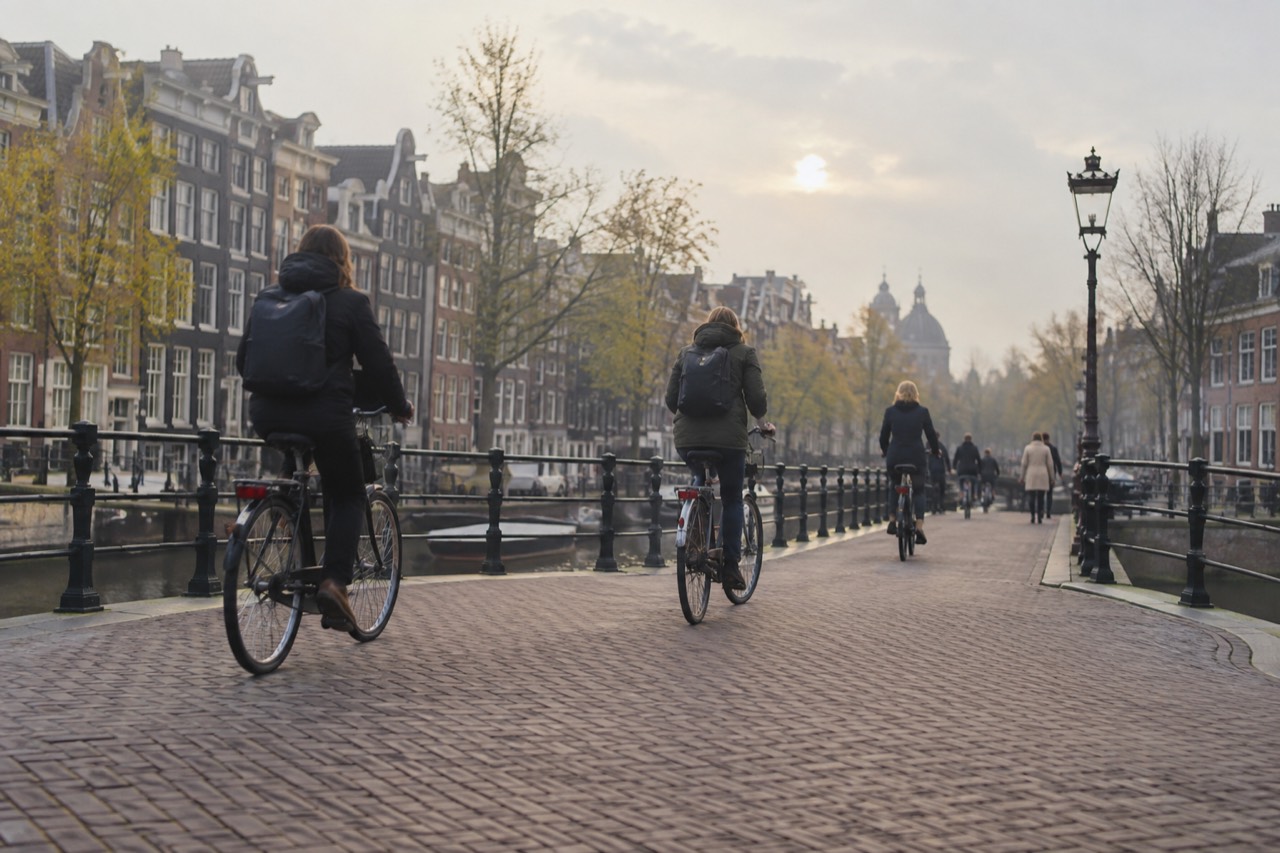
Pack layers, a proper rain jacket and waterproof shoes you can walk in all day. Amsterdam has no strict dress code, but cobblestones, rain and cycling shape what locals wear. Museums and the Red Light District have etiquette rules rather than clothing rules, and the city's official visitor guidance asks for respectful behaviour rather than any particular outfit.
Amsterdam is a city built on water, cobbles and bicycles, and it dresses accordingly. The locals you see gliding past on bikes are not making a fashion statement so much as a practical one: jackets that shrug off showers, shoes that survive wet brick, and layers that come off the moment a café turns warm. Visitors who pack for the weather the city actually has, rather than the weather they hope for, enjoy the place far more.
This guide walks through what to wear in Amsterdam season by season, which shoes earn their place in your suitcase, and where dress codes genuinely exist. It also covers the etiquette rules that matter more than fashion in a city that receives an enormous number of visitors: 23.7 million tourist overnight stays were recorded in 2025, and the municipal government has become noticeably more direct about how it expects guests to behave.
What to Wear in Amsterdam by Season
Amsterdam has four proper seasons and no reliably dry one, so the honest answer is layers in every month of the year: a base you can wear indoors, a warm mid-layer from October to March, and a rain shell you carry at all times regardless of forecast. Spring is changeable, summer is mild rather than hot, autumn is damp and golden, and winter is cold, windy and occasionally wet enough that snow rarely settles for long. None of that demands specialised gear. It demands clothing you can add and remove as the day swings.
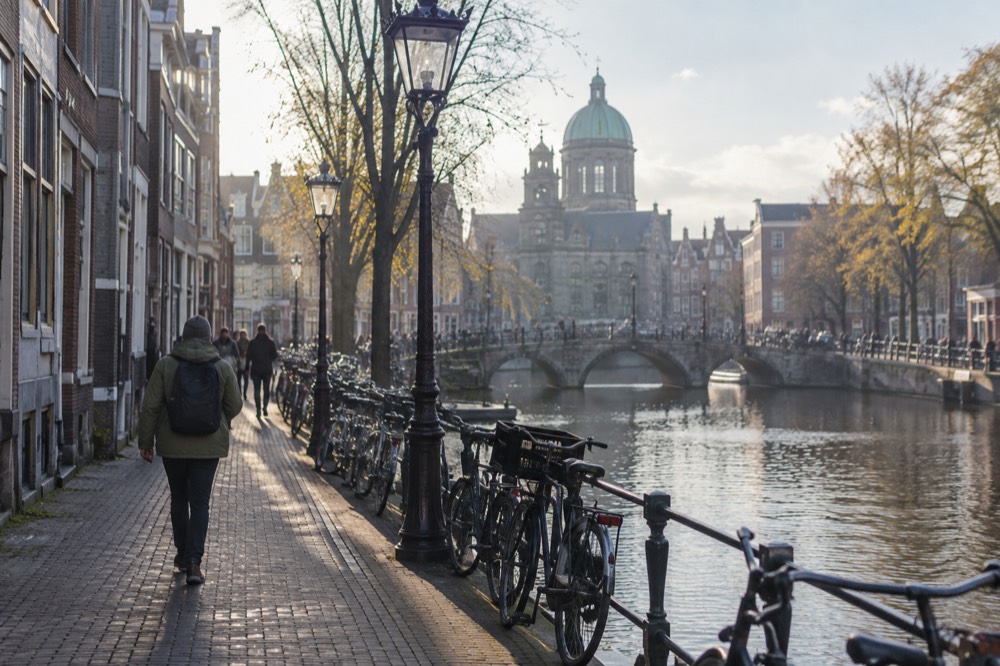
Spring, roughly March through May, is the season of the tulip fields and the Keukenhof gardens, which open only from late March to early May each year. Days can feel mild at midday and wintry by evening, so a light insulated jacket over a long-sleeved base works better than a heavy coat. If tulips are the point of your trip, the Amsterdam in Spring and Tulip Season guide covers the timing, and comfortable shoes matter more there than anywhere: you will stand on farm paths, not pavements.
Summer, June through August, is the easiest season to pack for and the easiest to get wrong. Daytime temperatures are generally pleasant, but evenings near the water stay cool, and a summer dress without a cardigan leaves you shivering on a canal cruise at nine at night. Pack shorts if you like them, but bring trousers too, plus a light jumper or jacket for after dark. This is also peak terrace weather, and terraces mean sitting still outdoors for hours, which chills people dressed for walking.
Autumn and winter flip the priority to warmth and water resistance. From October through February, expect wind off the IJ and rain that arrives sideways. A proper waterproof jacket with a hood, a woollen mid-layer and a scarf do more work than any single thick coat. Gloves and a hat earn their keep from December to February. The Amsterdam in Winter guide goes deeper on what the cold season actually feels like, including the ice canal years and the Christmas lights.
| Season | Base layers | Outer layer | Extras worth packing |
|---|---|---|---|
| Spring (Mar to May) | Long sleeves, light trousers | Waterproof jacket or warm overshirt | Compact umbrella, comfortable trainers |
| Summer (Jun to Aug) | T-shirts, shorts or dresses | Light cardigan or jacket for evenings | Sunglasses, one warmer layer for canal cruises |
| Autumn (Sep to Nov) | Long sleeves, jeans | Rain shell plus woollen mid-layer | Waterproof shoes, scarf |
| Winter (Dec to Feb) | Thermal base on cold days | Insulated waterproof coat with hood | Gloves, hat, thick socks |
How Much Rain Should You Actually Plan For?
Plan for rain on any Amsterdam trip at any time of year, not because it never stops, but because showers are short, frequent and unannounced, and a packed rain shell costs you nothing while a soaked afternoon costs you a day. The city's climate is maritime and changeable rather than wet in the tropical sense. You will get hours of dry weather in almost any week. You will also get caught without warning. Locals do not carry umbrellas as a rule; hoods and waterproof jackets survive the wind that snaps umbrellas.
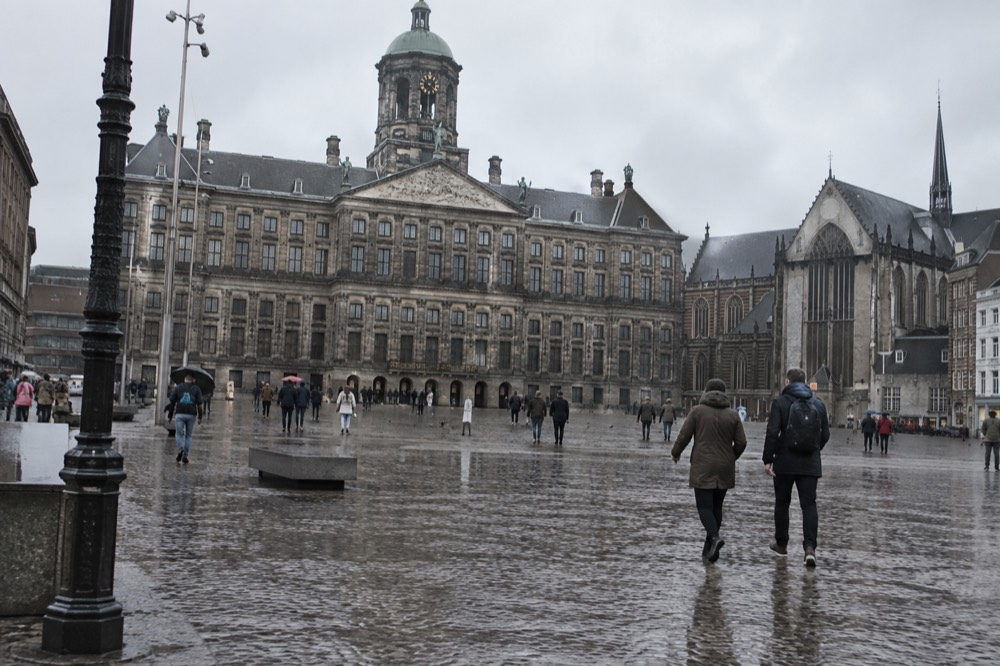
The practical equipment list is short. A rain jacket with a hood, worn or carried, covers most situations. Shoes that can take a soaking matter more than the jacket, because puddles collect on the cobbles and brick stays slick for hours. A compact umbrella helps on calm days but becomes a liability on the bridges, where the wind funnels between the canal houses.
The good news is that Amsterdam is superbly equipped for wet days. Museums, brown cafés, covered markets like the Albert Cuyp and the indoor Foodhallen all swallow an afternoon happily. The A Rainy Day in Amsterdam guide lists the best of them. And if you are on the water when a shower passes, a covered saloon boat is the better choice over an open sloop: the classic saloon boat cruise runs one hour, is rated 4.8 across 33,435 reviews, and starts from $19.56, with an optional upgrade for Dutch cheese and unlimited drinks.
Rain also changes your evening plans less than you might expect. The evening canal cruise with city lights, from $21 and rated 4.4 across 23,214 reviews, runs in weather that would empty a terrace, and the boats are covered. If your wardrobe can handle a damp walk to the dock and a dry seat inside, the weather has no more power over your plans.
If you are deciding when to travel at all, the Best Time to Visit Amsterdam guide weighs crowds, prices and events, since no month is reliably dry and the choice is really about what kind of trip you want.
The Best Footwear for Cobbles, Canals and Bikes
Waterproof, supportive, broken-in shoes are the single most important item you will pack, because Amsterdam is a walking city with uneven historic paving, and the wrong footwear turns a five-kilometre wandering day into an ordeal by mid-afternoon. The centre is largely brick and cobblestone, much of it laid centuries ago and none of it forgiving to thin-soled shoes. Add tram steps, canal-boat gangways and wet surfaces, and the case for proper shoes makes itself.
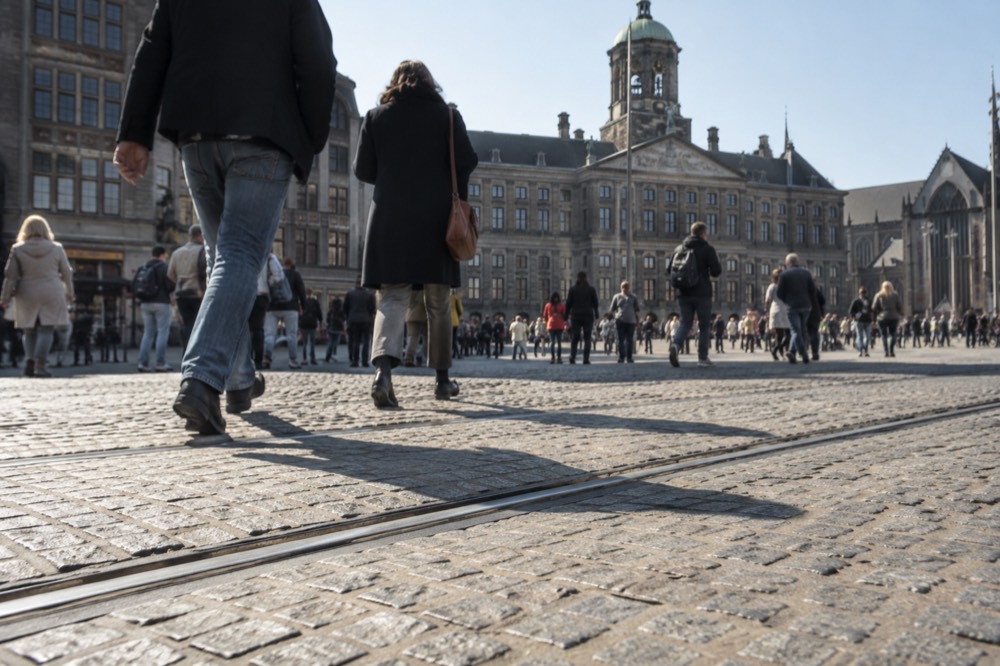
Trainers are fine almost everywhere and are what most locals wear. What fails is brand-new shoes on a long first day, smooth leather soles on wet brick, and anything with a heel. Heels are the one genuinely impractical choice in Amsterdam: the cobbles, the bike mounting and the canal-boat boarding all punish them. If you want one smarter pair for evenings, make it flat or block-soled leather.
If you plan to cycle, and the Cycling in Amsterdam and Renting a Bike guide explains why you should, shoes that grip flat pedals matter. Trainers win again. Avoid loose laces, long flapping hems and anything that restricts a full leg swing, because Amsterdam bikes are upright, heavy and geared for the city's many bridges.
| Activity | Best choice | What fails |
|---|---|---|
| All-day city walking | Broken-in trainers or walking shoes with grip | New shoes, thin soles |
| Cycling | Trainers with firm soles | Slip-ons, loose laces, long loose hems |
| Canal cruise boarding | Any flat shoe with grip on wet gangways | Smooth leather soles in rain |
| Museum days | Comfortable shoes, since queues and galleries mean hours standing | Heels, shoes you cannot stand in |
| Evenings out | Flat or block-soled leather, ankle boots | Stiletto heels on cobbles |
One attraction turns footwear into a hard rule rather than advice: the swing at the A'DAM Lookout, which has a minimum height of 1.20 metres and, like any swing over a rooftop edge, asks for sensible flat shoes. The observation deck itself, open daily until 22:00 with last admission at 21:00, has no dress code, but the swing operators expect you to be securely shod. The A'DAM Lookout guide covers the deck, the swing and the free drink deal.
Dress Codes: Museums, Churches and the Red Light District
Amsterdam has almost no formal dress codes: museums, churches and even most nightlife venues admit you in whatever you are wearing, and the rules that do exist are about behaviour, bags and respect rather than clothing, with the Red Light District the one place where etiquette genuinely matters. No Amsterdam museum turns visitors away for wearing shorts or trainers. The Rijksmuseum, open every day of the year from 9am to 5pm, cares about your pre-booked start time, not your trousers.
The Van Gogh Museum is the same story with a sharper edge: all visitors need a pre-booked timed entry ticket, and slots sell out, so the constraint on your day is the booking, not the outfit. The entry ticket starts from $31 and carries a 4.7 rating across 57,096 reviews. Wear whatever is comfortable for hours of standing and walking; the galleries are large and the queue for the highlights is real.
Practical museum clothing is about bags and layers rather than style. Large backpacks are a nuisance in crowded galleries and many museums ask you to carry them by hand or store them, so a small crossbody bag simplifies your day. Layers matter too: museum interiors are heated to protect the art, and a coat you cannot shed turns a two-hour visit into a sauna.
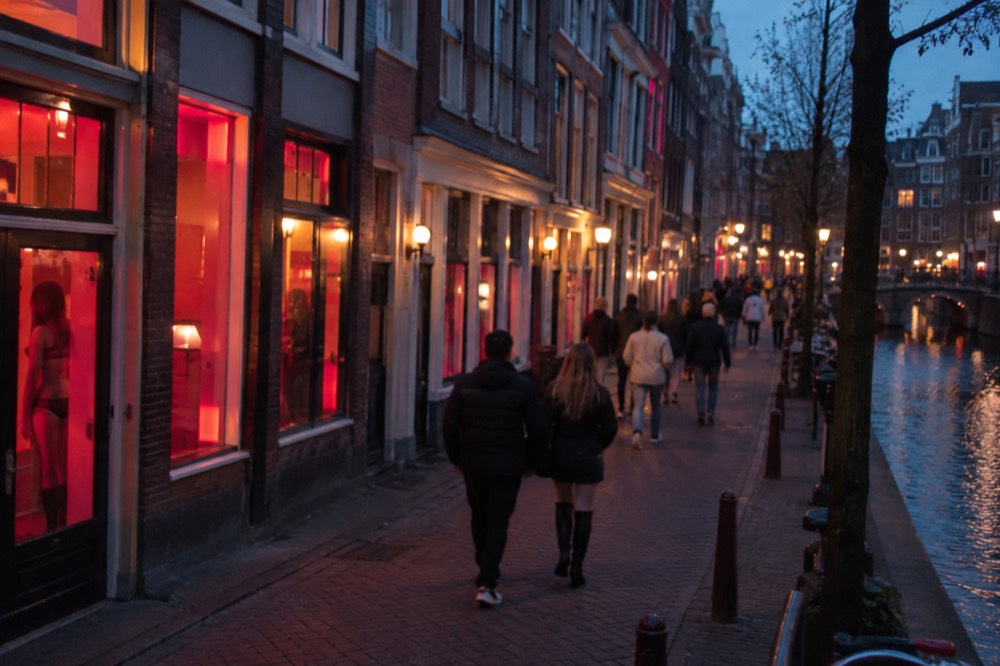
The Red Light District is the one area where what you wear and how you behave intersect. The city's official visitor guidance, published on amsterdam.nl under How to Amsterdam, asks visitors to behave respectfully, to keep noise down at night and, critically, not to photograph the sex workers. That last point is a firm social and enforced-by-staff norm, not a suggestion. Guided tours in De Wallen are tightly regulated: groups are capped at 15 people, tours run only between 08:00 and 22:00, and no tour may pass the windows. The Red Light District Rules and Etiquette guide explains all of it. Clothing-wise, ordinary streetwear is completely fine; what is not fine is treating the district like a theme park.
Churches, including the Oude Kerk sitting in the middle of De Wallen itself, are working heritage sites rather than active parishes for the most part, and modest, comfortable clothing is the only expectation. The same applies to the Jewish Cultural Quarter and the Portuguese Synagogue, where covering your head inside the synagogue is provided for on site rather than expected of visitors in advance.
What to Wear on a Canal Cruise or an Evening Out
For a canal cruise, dress for the outdoors with one warm layer even in summer, because the water is colder than the street, boats move and create their own wind, and evening departures after sunset drop several degrees within the hour. For Amsterdam nightlife, the bar is low: dark jeans and a decent jacket clear nearly every door in the city, and only a small number of upscale hotel bars and club nights expect anything sharper.
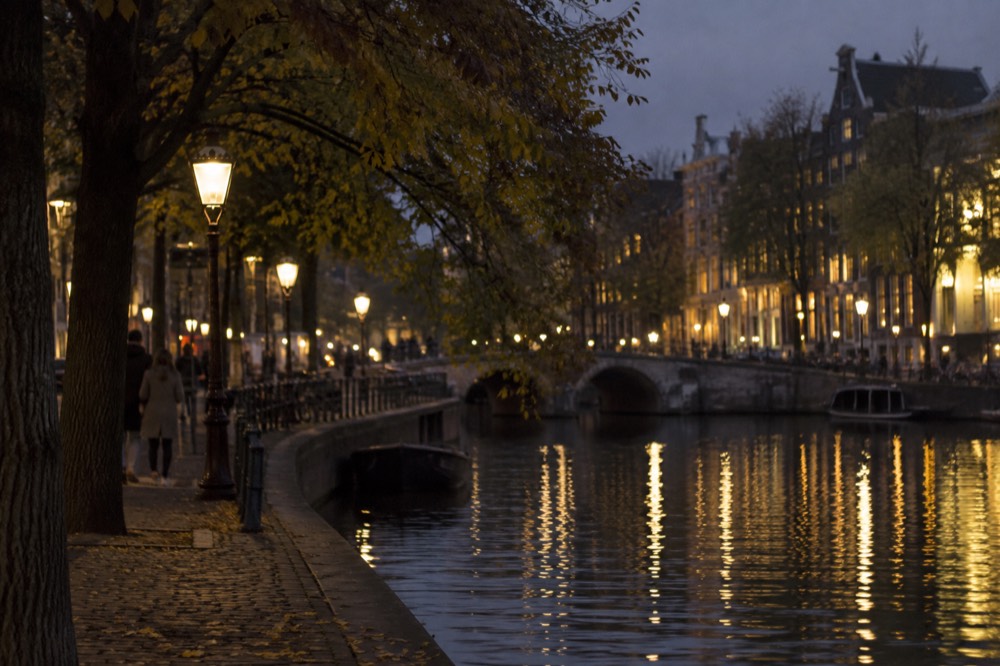
Daytime cruises need sunglasses and, in anything but high summer, a windproof layer. Open boats are the most fun and the most exposed. Covered saloon boats trade fresh air for weatherproofing, which is exactly the trade you want from October to April. If you are taking a dinner cruise, the pizza dinner cruise with unlimited drinks runs 90 minutes, is rated 4.5 across 3,046 reviews and starts from $40, and its dress level is whatever you would wear to a casual dinner.
Evening outfits should be planned around the walk, not the venue. Amsterdam's nightlife is spread across the centre, De Pijp and Rembrandtplein, and you will walk and possibly cycle between venues on cobbles. The Amsterdam Nightlife Guide covers which neighbourhood hosts which kind of night. Flat shoes, a warm layer for the walk and a jacket that handles a canal-side queue are the whole formula.
The Heineken Experience sits neatly between day and evening plans: it is an indoor attraction in the former brewery, so weather-proof clothing is irrelevant, but its rooftop option makes a warm layer worthwhile. Tickets start from $23, the attraction holds a 4.6 rating across 39,581 reviews, and the visit runs about an hour and a half, which makes it a natural late-afternoon stop before dinner.
Packing Light: What to Leave at Home
Leave behind the heels, the bulky umbrella, the single enormous coat and anything you cannot walk five kilometres in, because Amsterdam punishes overpacking through narrow staircases, bike mounts and hotel stairs far more than it punishes underdressing, and a heavy bag costs you comfort every single day of the trip. Dutch staircases are famously steep and narrow, a quirk of a city built on taxed canal frontage, and many hotel rooms are reached by staircases that make a full suitcase a two-person job. Pack a soft bag you can carry up a ladder-like flight.
The city also makes packing light cheap to live with. Public transport is inexpensive: a GVB 24-hour ticket is €10.00 and a single one-hour ticket is €3.40, so you can move around without walking every step. Laundromats exist across the centre. And because the dress culture is casual, nobody notices a repeated jumper.
| Leave at home | Why | Pack instead |
|---|---|---|
| Stiletto heels | Cobbles, bike pedals and boat gangways | Flat or block-soled ankle boots |
| Large golf umbrella | Wind on the bridges snaps them | Hooded rain jacket |
| One heavy coat | Indoors everywhere is heated | Layered mid-weight pieces |
| Huge rigid suitcase | Steep Dutch staircases in most hotels | Soft carry-on sized bag |
| Bulky daypack for museums | Crowded galleries and bag policies | Small crossbody bag |
One more reason to pack light: budget airlines and the train both serve the city well, and the Trains to Amsterdam from London, Paris and Brussels guide makes the case that rail arrivals land you in the centre with no luggage friction at all. Anne Frank House visits deserve a note here too, since tickets are sold only through the museum's own official site, annefrank.org, for a pre-booked time slot, with no door sales, so a small bag you can manage on a timed entry is one less thing to think about.
What Not to Wear: Local Style and Standing Out Less
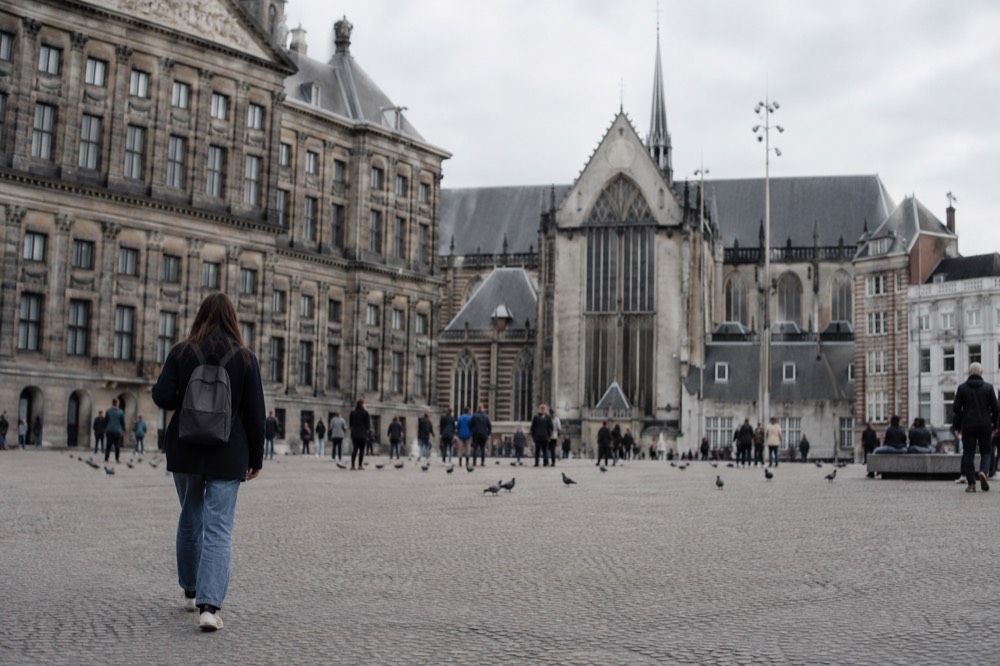
Amsterdam style is dark, practical and deliberately understated, so the fastest way to look like a visitor is not any single garment but the combination of bright holiday clothing, a lanyard and shoes built for beaches rather than bricks, all of which announce you before you have said a word. Locals wear a lot of black, navy and grey, favour quality outerwear over logos, and treat weather-appropriateness as the actual fashion test. Nothing is banned and nobody will say anything. But blending in is mostly a matter of dressing like you expected the weather.
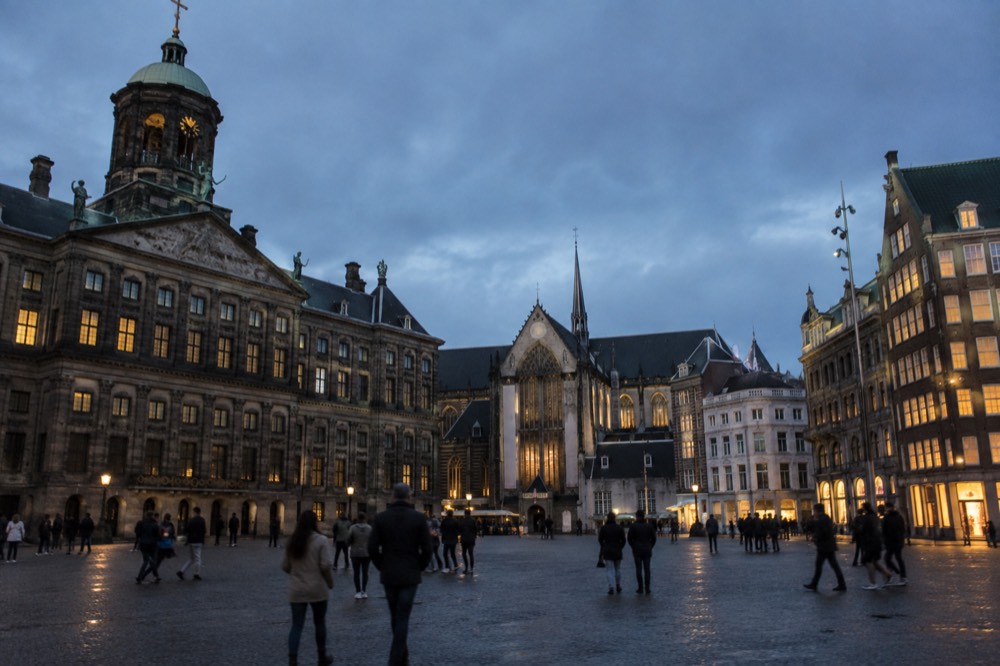
The tourist uniforms are easy to spot and easy to avoid. Brand-new white trainers worn with hesitation on wet cobbles, shorts in October, and the full rain-poncho-with-logo look all mark the wearer instantly. A plain dark jacket, real shoes and a normal bag put you visually on par with half the city, which matters if you dislike being targeted by street scammers, a topic the Tourist Traps and Scams in Amsterdam guide covers in detail.
There is one day a year when all of this inverts: King's Day, when the entire city wears orange, the more saturated the better. The King's Day in Amsterdam guide covers the world's largest street party, and the one packing rule is an orange item you do not mind losing. King's Day 2027 falls on Tuesday 27 April, with the King's Night celebrations the evening before. Wear shoes you can stand in for ten hours; the canals fill with boats and the streets with people, and the day ends long after dark.
For everything this site covers beyond the wardrobe, from museums to day trips to neighbourhood walks, the Things to Do in Amsterdam collection is the full map, and it is worth skimming before you zip the suitcase: the itinerary you build determines the shoes you need more than any season chart does.

Common Questions About What to Wear in Amsterdam
What should I wear in Amsterdam in the rain?
A hooded waterproof jacket and water-resistant shoes are the core. Locals mostly skip umbrellas because the wind on the bridges breaks them, and a rain shell layers over whatever you are wearing. Pack a compact umbrella only as a backup for calm days.
What shoes are best for Amsterdam cobblestones?
Broken-in trainers or walking shoes with real grip. The centre is brick and cobblestone that stays slick after rain, and a typical sightseeing day covers several kilometres. Heels are the one footwear choice that genuinely does not work in the historic centre.
Is there a dress code for Amsterdam museums?
No. Museums admit visitors in any clothing; the constraints are practical, not sartorial. Large bags are awkward in crowded galleries, and interiors are heated, so wear layers you can shed and check a coat rather than carry it through every room.
Do I need dress shoes for Amsterdam nightlife?
Almost never. Dark jeans and a decent jacket clear the vast majority of bars, brown cafés and clubs. A small number of upscale hotel bars and premium club nights expect smarter attire, but flat or block-soled shoes are the practical ceiling given the cobbles outside.
What should I wear on King's Day in Amsterdam?
Orange, head to toe if you can manage it. King's Day 2027 falls on 27 April, with King's Night the evening before. The day is a giant outdoor street party, so the real requirements are shoes you can stand and walk in for many hours and layers you can tie around your waist.
How should I dress for a canal cruise?
One warm layer more than the street requires, especially on evening departures. The water is colder than the pavement, boats create their own breeze, and open sloops expose you fully. Covered saloon boats are the weatherproof choice from autumn through spring.