Is Amsterdam Walkable From The Cruise Port?
Yes, Amsterdam is walkable from the cruise port: the terminal sits on the IJ waterfront beside the centre, and the canal ring starts within minutes on foot. Here is what to expect, with transport backup and cruise-day timing.
Is Amsterdam Walkable From The Cruise Port?
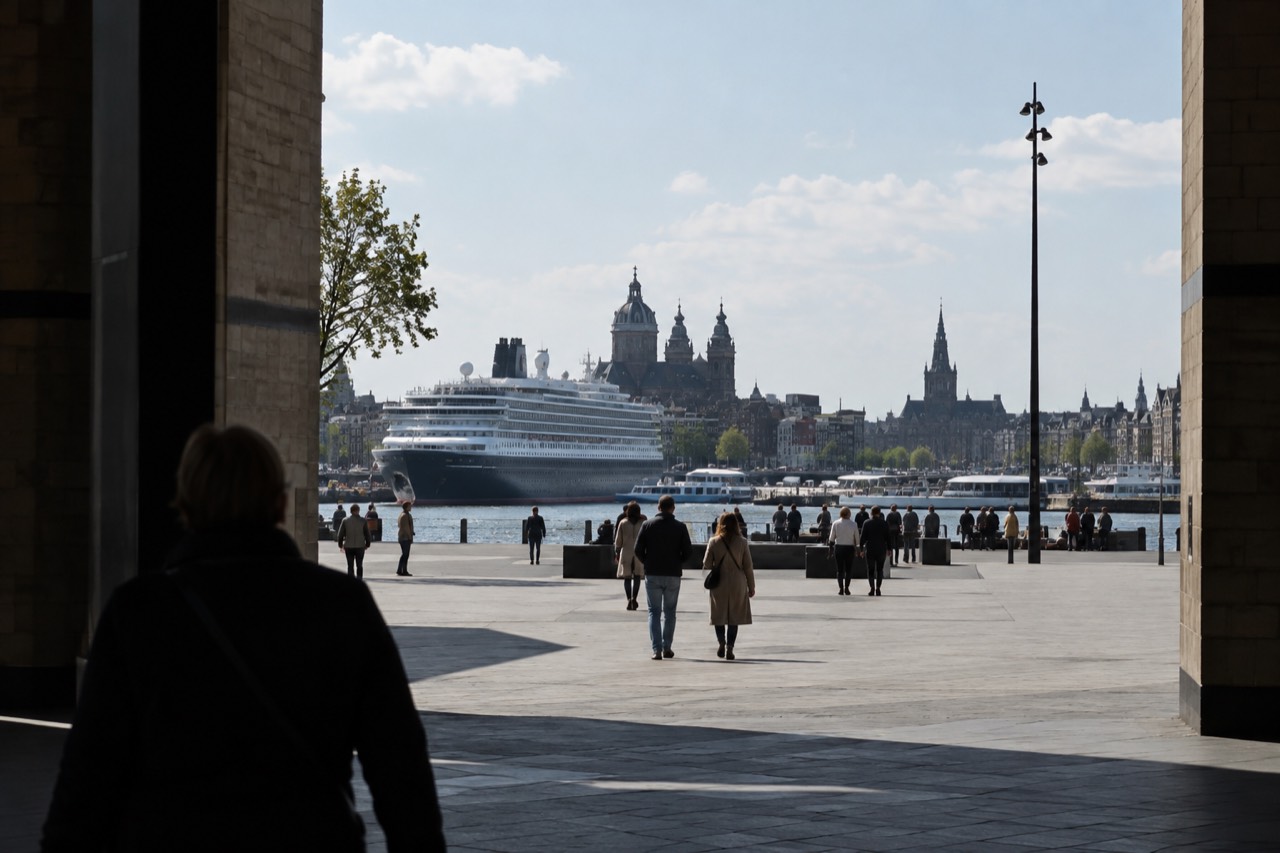
Yes, Amsterdam is walkable from the cruise port for most visitors. Cruise ships berth on the IJ waterfront immediately north of the historic centre, and the edge of the canal ring begins within a short stroll of the gangway. Amsterdam Centraal station sits between the water and the old city, so the walk from berth to canal is measured in minutes rather than kilometres, and the entire centre is compact and flat once you arrive.
The geography is the reason this works so well. Unlike ports that exile ships to industrial docks an hour from town, Amsterdam's cruise berths face the city across a single stretch of water. The passenger terminal area and the river cruise moorings line the IJ, the wide river that flows past Centraal station, and the station itself is the hinge between the waterfront and the centre. Step off the ship, walk toward the station, pass through or around it, and you are in the oldest part of Amsterdam.
That said, "walkable" deserves unpacking. The centre is flat, dense and built for pedestrians, with the canal ring laid out as concentric arcs you cross on foot. The caveats are about the start of the walk, not the middle. Luggage handling, the exact berth your ship occupies on the day, and the sheer volume of people around Centraal station all shape how pleasant those first minutes are. A river cruise moored beside the centre is a different experience from a large sea cruise ship sharing a berth with several others.
One planning fact worth knowing before you step ashore: the city charges a day-tripper tax of €15 per cruise passenger, published on the gemeente Amsterdam tourist tax page. That is usually settled through the cruise line, but it signals the broader policy direction. The city has also decided to halve sea and river cruise calls over time, so the cruise experience in Amsterdam is itself in transition.
For most cruise visitors, the practical plan is simple: walk off the ship, walk through or past Centraal station, and spend the day in the canal ring on foot, with a tram or a canal cruise covering anything beyond comfortable walking range. The rest of this article covers where exactly ships dock, what the walk into the centre involves, what sits within reach of the terminal, and when it makes sense to use transport instead.
If your day in port is short and you want the classic Amsterdam experience without long detours, a canal cruise is the most efficient first move, because the boats leave from docks close to the station and show you the centre from the water within an hour.
Where Do Cruise Ships Dock in Amsterdam?
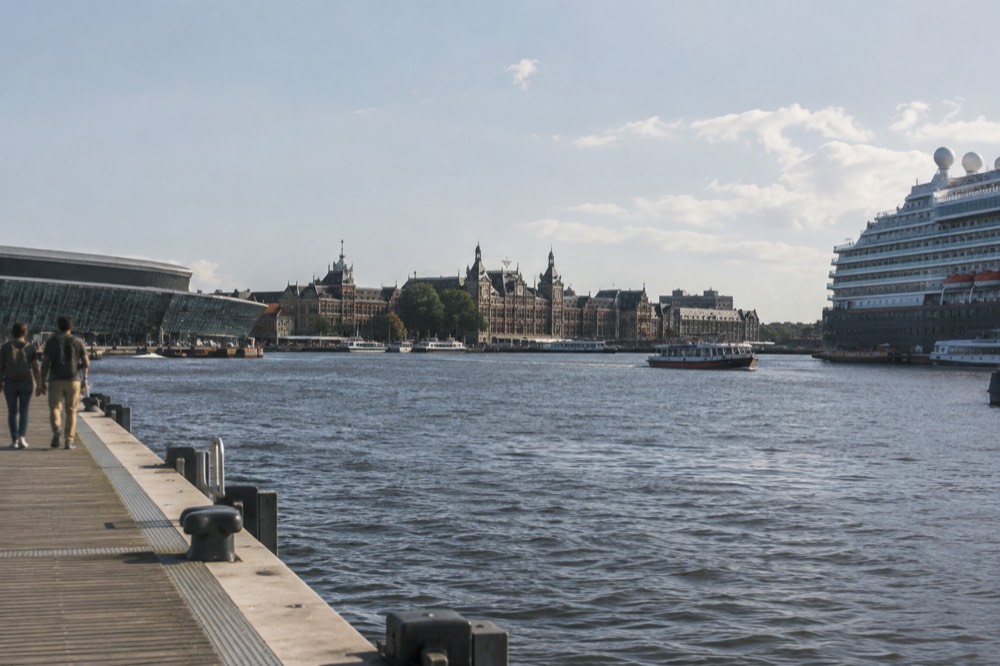
Cruise ships dock on the IJ, the waterfront directly north of the centre, with the main passenger terminal beside Amsterdam Centraal station and river cruise vessels moored along the same stretch. There is no long transfer from an outlying industrial port: the berth and the city face each other across a short stretch of water, and the station building separates the docks from the old centre.
The distinction that matters is between sea cruise ships and river cruise vessels. Large ocean-going ships use the purpose-built passenger terminal on the IJ, which sits essentially at the foot of Centraal station. River cruise ships, the long low vessels that travel the Rhine and the Dutch inland waterways, moor along the same waterfront, often in a row, and their gangways typically put passengers ashore even closer to the station's northern exits. Either way, the first landmark you see ashore is the station itself, a neo-Gothic building from the late nineteenth century that doubles as the city's transport hub.
The station is the key to everything. Its northern facade faces the cruise berths; its southern side spills onto the bridge over the Damrak, the straight waterway that leads like an arrow toward Dam Square and the heart of the old city. That layout is why the walk from cruise berth to centre is short: you are crossing one building's depth, not a suburb. Around the station you will find tram stops, bus stands, the metro entrance, and the departure points for canal cruise operators, all within a couple of minutes of the terminal.
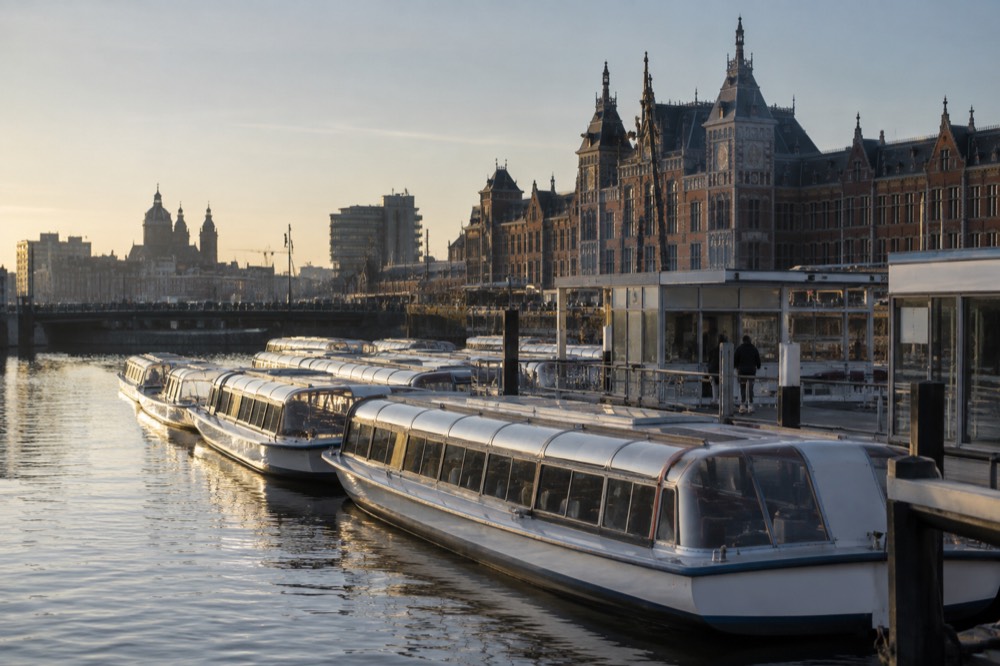
Two practical notes shape the day. First, berth allocation can move: with several ships in port, your vessel may occupy a berth further along the IJ, which lengthens the walk along the waterfront before you reach the station. The waterfront promenade is flat and easy, so this adds minutes, not hardship. Second, the area around the station is the busiest in the city, thick with commuters, travellers and tour groups at peak times; early morning and late afternoon are the densest windows.
For anyone planning the day around the walk, the honest summary is that the docking position does most of the work for you. You do not need a taxi to reach the centre, you rarely need a bus, and the only real decision is whether to walk straight into the canal ring or hop on a tram to a neighbourhood further out.
What Is the Walk From the Terminal Into the Centre Like?
The walk is flat, short and straightforward: from the terminal you pass Centraal station, cross onto the Damrak, and follow the water toward Dam Square, reaching the heart of the old city in a matter of minutes. The route is paved the whole way, busy with pedestrians, and lined with the first of the canal-side facades that define the centre.
Start with the station crossing. The building has passages on its western and eastern flanks that let pedestrians walk through without entering the paid transit areas, and both deliver you onto the south side facing the water. From there the Damrak opens in front of you: a canal-turned-harbour-strip lined with gabled houses, tour boats, souvenir stands and the occasional classic saloon boat waiting for passengers. It is touristy in the way the first street of any great city is touristy, but it is also a genuine piece of Amsterdam, the old harbour route that connected the IJ to the heart of the city.
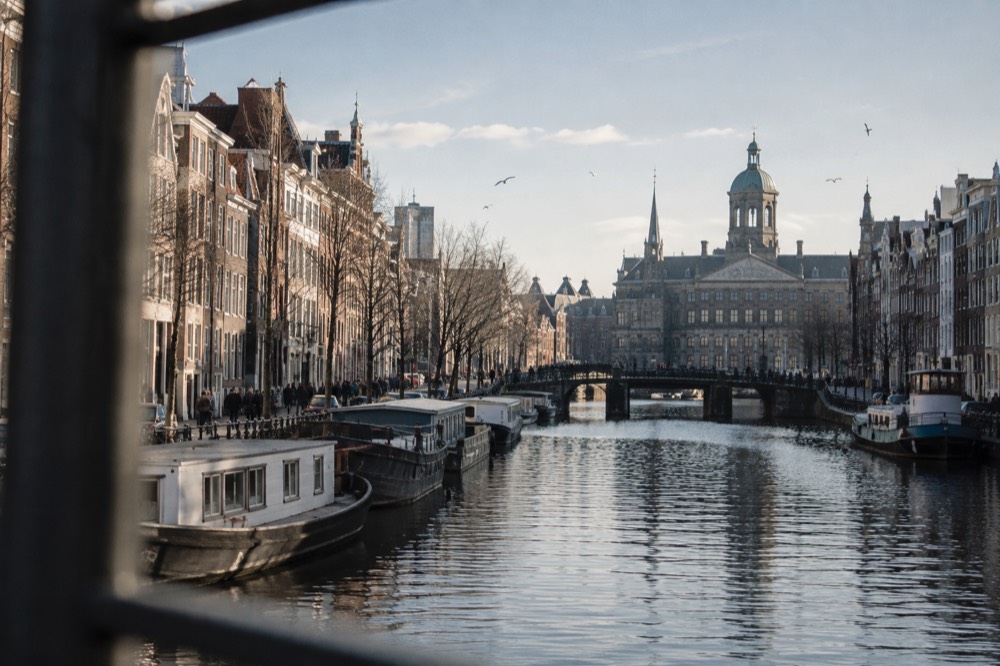
From Dam Square the centre unrolls in every direction. West lies the Jordaan with its narrow streets and courtyards; south runs the canal ring, the UNESCO-listed Grachtengordel; east sits the old centre with the red-light district and the Nieuwmarkt. All of it is walkable, all of it is flat, and none of it requires a map with much precision, because the canals themselves are the map: walk away from the station and you head deeper into the ring, walk toward it and you head home.
The caveats are worth stating plainly. The centre's paving is largely cobblestone and brick, which is charming underfoot and miserable for wheeled luggage; anyone dragging a suitcase should budget for a bumpy few minutes or use the station's luggage facilities. Cyclists are the other hazard: bike traffic in Amsterdam is dense, fast and confident, and the bike lanes that run beside the walking routes are not decorative. The standard advice, to look both ways before stepping off a kerb and to stay out of the red asphalt, applies doubly on the busy streets around the station.
For visitors with mobility constraints, the flat terrain helps but the cobblestones and crowds do not. The station area and the main shopping streets are manageable; the small alleys of the Jordaan and the busiest canal-side lanes are harder work. Our accessibility guide to Amsterdam's cobbles, canals and stairs covers this in detail for anyone who needs to plan around it.
Timing changes the experience more than terrain does. A cruise passenger walking into the centre at eight in the morning shares the Damrak with commuters and delivery bikes, and the canal ring is close to empty. The same walk at midday threads through peak crowds. If your ship permits an early start, take it: the quiet hours are the reward for docking in the middle of a city rather than at the edge of one.
| Walking route stage | What to expect | Watch out for |
|---|---|---|
| Terminal to Centraal station | Flat waterfront promenade, a few minutes on foot | Berth position varies with the number of ships in port |
| Through the station passages | Free pedestrian routes around the flanks of the building | Dense commuter crowds at peak times |
| Damrak to Dam Square | Straight, obvious, lined with boats and gabled houses | Tourist-density souvenir strip; keep to the footpaths |
| Dam Square into the canal ring | The centre proper, compact and flat in every direction | Cycle lanes beside most walking routes; cobblestones |
What Can You Reach on Foot From the Cruise Berths?
Almost the entire historic centre sits within comfortable walking range of the cruise berths: Dam Square, the canal ring, the Jordaan, the red-light district, the Nieuwmarkt and the Museumplein are all reachable on foot, with only the outer neighbourhoods and day-trip destinations needing transport. For a typical cruise day of six to ten hours, walking covers the whole plan.
Work outward from Dam Square. Within a short walk you have the Royal Palace on the square itself, the Begijnhof's quiet courtyard a few streets south, the canal ring's three great arcs, the Jordaan's lanes and the Nine Streets' boutiques, and the eastern old centre including the Oude Kerk and the Nieuwmarkt. The Anne Frank House sits on the Prinsengracht about as deep into the canal ring as a walker from the station would reasonably go, and the walk to reach it passes through the best of the Jordaan.
The Museumplein, with the Rijksmuseum, the Van Gogh Museum and the Stedelijk, is the one headline cluster that tests the "everything is walkable" claim. It sits south of the canal ring, and the walk from Centraal station is a solid half-hour-plus stretch through the centre, which is perfectly doable for anyone with a full day but wasteful for anyone with an afternoon. This is where the trims matter: the GVB network runs frequent trams down the main arteries, a single ticket costs €3.40 for an hour of travel, and a 24-hour pass costs €10.00 per the official GVB fares page. Tap a contactless bank card and the fare is charged per kilometre with a daily cap.
| Destination from the cruise berths | On foot? | Notes for cruise visitors |
|---|---|---|
| Dam Square and the old centre | Yes, a short walk | The default first stop; route runs via the Damrak |
| Canal ring, Grachtengordel | Yes | Compact enough to wander without a fixed plan |
| Jordaan and the Nine Streets | Yes | Cobblestones and narrow lanes; go early for quiet |
| Museumplein museums | Yes, but long | Tram saves roughly half the walking time |
| Outer neighbourhoods, day trips | No | Use GVB trams, metro or an organised day tour |
The information most first-time cruise visitors miss is timing. Amsterdam's headline museums require pre-booked timed entry, and the Anne Frank House sells tickets only through its own official website, released six weeks ahead, with no reseller and no door sales. A cruise visitor who walks up to the Anne Frank House without a ticket will look at the outside; the same visitor at the Rijksmuseum, which requires a booked start time for everyone, may get a slot later in the day but is gambling. The walkable city rewards booking before you disembark.
The other half of a cruise day is the water itself. The canal cruise docks cluster around the station and the Damrak, minutes from the berths, which makes a one-hour cruise the natural spine of a short visit: it orients you, it rests your feet, and it shows you the canal ring's facades and bridges from the angle they were built to be seen from. Our guide to Amsterdam canal cruises and whether they are worth it weighs the options, and the classic saloon boat format, a small restored wooden vessel with a live guide, is the format most cruise visitors enjoy: intimate, quiet and close to the waterline.
The Classic Saloon Boat Cruise, rated 4.8 across 33,435 reviews and priced from $19.56, runs a one-hour loop through the UNESCO-listed canals with live commentary, and its docks sit within walking range of the terminal. For a port day, that combination of proximity and short duration is hard to beat. Check availability if it fits your ship's hours.
When Should You Take Transport Instead of Walking?
Take transport when your port time is short, your destination is beyond the canal ring, or your legs are done: trams and the metro cover the Museumplein and outer districts quickly, a 24-hour GVB pass costs €10.00, and an organised day tour is the only sensible way to reach Zaanse Schans, Volendam or Keukenhof and return before the ship sails.
The arithmetic of a port day decides this. A typical cruise stop gives you somewhere between six and ten usable hours ashore, and every hour spent walking to a far-flung sight is an hour not spent at it. The centre itself absorbs a whole day happily, but the moment your plan includes the Museumplein and the Jordaan and the eastern old centre, a day pass starts paying for itself in saved steps. GVB tickets are sold at the station and at machines across the centre, and contactless bank cards work directly on the trams and metro under the OVpay system.
Day trips are the other category where walking obviously loses. The classic Dutch sights, windmills at Zaanse Schans, the fishing villages of Volendam and Marken, the tulip fields around Lisse in spring, all sit outside the city, and none can be reached on foot from the IJ. Guided coach tours solve the return-time problem that worries every cruise passenger: they are built around fixed departure and return times, and the operators know the port schedule. Our guide to the best day trips from Amsterdam covers the full menu, including which ones fit a short port window.
One seasonal note: Keukenhof, the tulip garden that dominates spring itineraries, opens only from mid-March to early May, roughly a 30 to 40 minute drive away in Lisse, and its 2027 season runs 18 March to 9 May. A spring cruise passenger who wants tulips needs a tour or a very confident public-transport plan, because the return margin matters when the ship will not wait.
For everything in between, the honest answer is that walking wins more often in Amsterdam than in almost any other cruise port in Europe. The city was built at walking scale in the seventeenth century and never rebuilt around the car. The trams are there when you want them, and the metro is there for the long hops, but the default experience of Amsterdam, the one that fills the photo albums, happens on foot along the water.
Common Questions About Walking from Amsterdam's Cruise Port
Is Amsterdam Walkable From The Cruise Port?
Yes. Cruise ships dock on the IJ waterfront directly beside Amsterdam Centraal station, and the historic centre begins within a short walk of the gangway. The route runs through or around the station and down the Damrak to Dam Square, after which the entire canal ring is pedestrian territory.
How long does it take to walk from the cruise terminal to the centre?
The walk from the terminal to Dam Square takes a matter of minutes at a normal pace, passing through Centraal station and along the Damrak. The exact time depends on which berth your ship occupies, since berth allocation shifts when several vessels are in port, but the route is flat and paved the whole way.
Can I walk into Amsterdam with luggage from a river cruise?
You can, but you may not enjoy it. The route is flat, yet the centre's cobblestones and brick paving are punishing on wheeled suitcases, and the streets around the station are crowded. Most river cruise passengers leave luggage on board until departure, or use the station's luggage facilities for the day.
Do I need a tram if I only have a few hours in port?
Not for the centre itself: Dam Square, the canal ring, the Jordaan and the old centre are all within walking range of the berths. A tram earns its fare when you are heading to the Museumplein or an outer neighbourhood on a tight schedule, and a 24-hour GVB pass at €10.00 covers unlimited hops if your plan is ambitious.
Are the canal cruise departure points close to the cruise terminal?
Yes. The main canal cruise docks cluster around Centraal station and the Damrak, minutes from the IJ berths, which makes a one-hour cruise the easiest organised activity to fit into a port day. The classic saloon boat format, a small restored wooden vessel with a live guide, departs from docks in this area.
Is the walk from the cruise port safe?
The route from the berths through the station into the centre is busy, policed and well-lit, running through the most trafficked part of the city. The usual city cautions apply: mind the cycle lanes, keep valuables out of back pockets in crowds, and remember that bikes in Amsterdam are numerous and fast.
Whether your port day is a long one or a tight turnaround, the walkable centre is the reason Amsterdam rewards cruise visitors more than almost any other port on the North Sea: the city begins where the gangway ends. If you are planning the wider trip, our one day in Amsterdam itinerary is built for exactly this kind of compressed visit, and Things to Do in Amsterdam covers every neighbourhood you can reach on foot from the water.