Where Locals Eat in Amsterdam: The Neighbourhoods, Dishes and Spots That Actually Matter
Tourists eat in the centre. Amsterdammers eat everywhere else, and the difference is a fifteen minute tram ride. This guide covers the neighbourhoods where the city actually feeds itself, the dishes worth ordering and what a night out really costs.
Short answer
Locals eat in De Pijp, Oost, the Jordaan and Oud-West, not on Damrak. Expect brown cafes for drinks and bitterballen, broodje haring from fish stalls, Surinamese and Indonesian food, and dinner mains around €18 to €30. A three hour food tour with ten tastings costs from $92 and is the fastest way in.
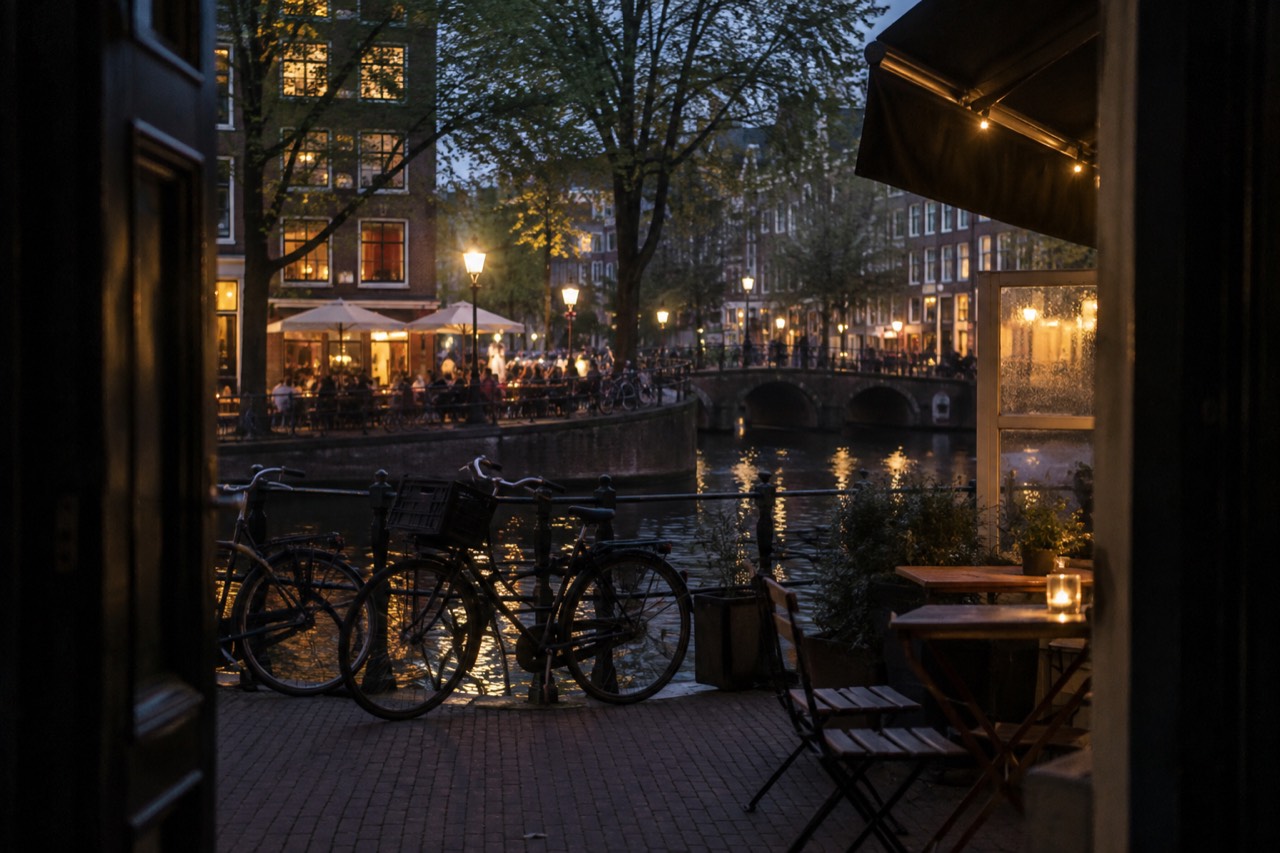
Damrak is where visitors eat. De Pijp, Oud-West, the Jordaan and Amsterdam Oost are where the people who live here eat, and the gap between the two experiences is the single biggest food mistake a traveller in this city can make. A restaurant on Damrak pays some of the highest rents in the Netherlands and cooks for a customer it will never see twice. A cafe on the Ceintuurbaan cooks for neighbours who come back every Friday. The menus reflect that difference in every line.
This guide is the editorial desk's answer to one question: where do people who actually live in Amsterdam eat, and what should you order once you get there. It covers the neighbourhoods worth the tram ride, the classic Dutch dishes that are genuinely part of local life rather than tourist theatre, the brown cafe culture that anchors most Amsterdam evenings, the markets where the city snacks, and the honest costs of a night out. Where a price is verified against an official source it is printed plainly. Where it is not verified, you will be told to check the room rather than given an invented number.
Where Do Locals Actually Eat in Amsterdam?
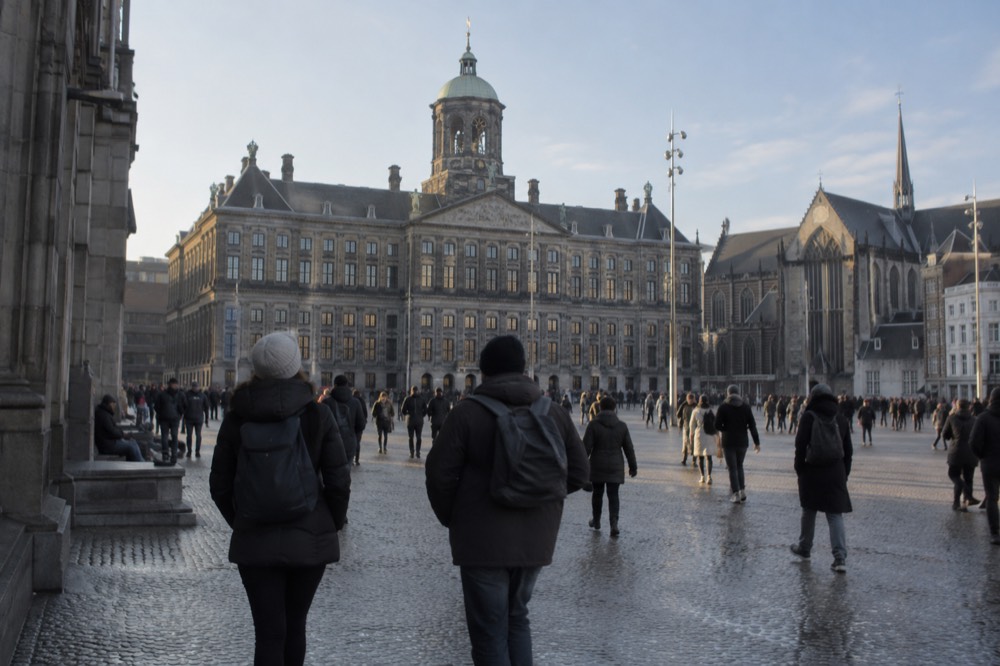
Locals eat outside the canal-ring core: De Pijp for long dinners and the Albert Cuyp Market, the Jordaan for brown cafes and small plates, Oud-West around the Foodhallen and Kinkerbuurt, and Amsterdam Oost along the Javastraat and in the Dapperbuurt. The centre is not a no-go zone, but the restaurants there mostly serve transient customers, and quality per euro drops sharply within about ten minutes' walk of Dam Square.
The pattern is consistent across the city. Rent falls as you move out of the Grachtengordel, menus get shorter, kitchens get more opinionated, and the people at the next table switch from speaking English to speaking Dutch. De Pijp, ten minutes south of the centre by tram, is the classic first stop: a dense, mixed neighbourhood where the Albert Cuyp Market feeds the street by day and small restaurants take over by night. The De Pijp neighbourhood guide covers where to base yourself if you want to eat your way through it properly.
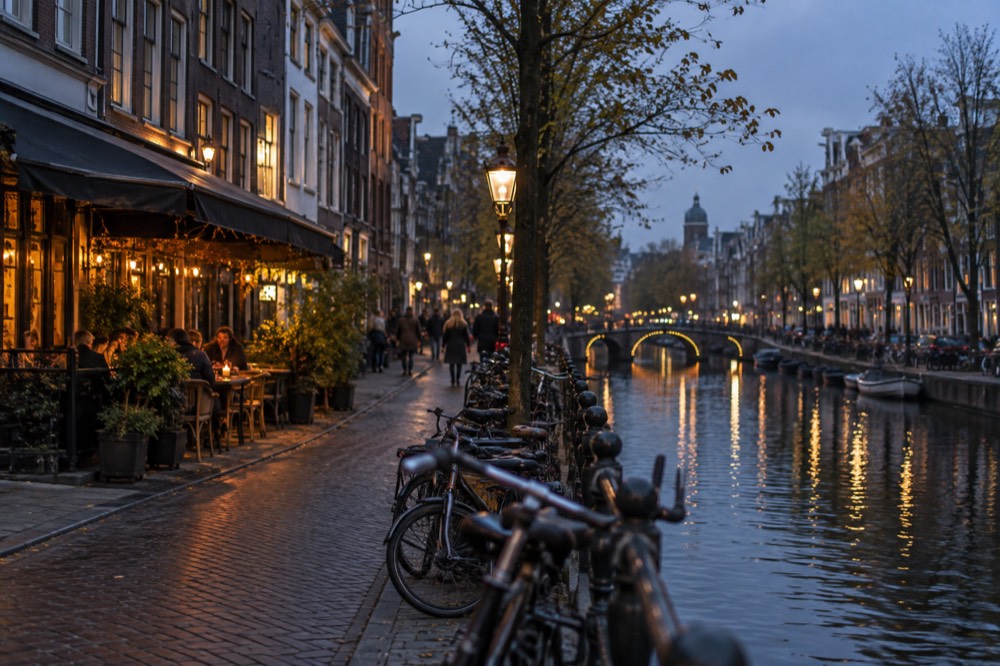
The Jordaan works the other way around. It is central, but its side streets hold some of the oldest brown cafes in the city, places where the menu is cheese, mustard and a good beer, and nobody is in a hurry. Amsterdam Oost is where the city's Indonesian, Surinamese and Turkish communities have built the best cheap-eats strip in town along the Javastraat, and the Plantage and Oost guide explains how to combine it with the zoo and the botanical garden. Oud-West, around the Kinkerstraat and the Foodhallen, is the newest arrival on this list and the most local of the lot.
Which Neighbourhoods Should You Eat Your Way Through?
Four areas repay a food-focused visit: De Pijp for market snacks and dinner restaurants, the Jordaan for brown cafes and traditional Dutch cooking, Oud-West for the Foodhallen and modern casual spots, and Amsterdam Oost for Indonesian and Surinamese food at the prices locals actually pay. Each is a short tram or metro ride from the centre, and a GVB day ticket costs €10.00 for 24 hours of unlimited travel.
Getting between them is simple. A GVB 24-hour ticket is €10.00 for adults and €5.00 for children, and the tram network connects all four areas to the centre in under twenty minutes; current fares are published on the official GVB prices page. Tap in with a contactless bank card also works, charged per kilometre with a daily cap.
| Neighbourhood | What it does best | Signature order | Getting there from the centre |
|---|---|---|---|
| De Pijp | Market street food by day, small dinner restaurants by night | Stroopwafel fresh off the iron at Albert Cuyp Market | Trams south, about 10 minutes |
| Jordaan | Brown cafes, traditional Dutch cooking, canal-side terraces | Bitterballen and a beer in a 19th-century cafe | Walkable, or one tram stop west |
| Oud-West | Foodhallen indoor hall, modern casual dining, natural wine bars | Anything shared at a Foodhallen stand | Trams west, about 10 minutes |
| Amsterdam Oost | Indonesian, Surinamese and Turkish food at local prices | Rijsttafel or a Surinamese roti on the Javastraat | Metro or tram east, about 15 minutes |
The one thing all four share is that booking matters less than timing. Amsterdammers eat dinner early by southern European standards, often from 18:00, and the good small places fill up by 19:30 and empty by 21:30. Arrive at 18:30 and you will get a table almost anywhere without a reservation. Arrive at 20:00 on a Friday and you will be eating at the bar, which is not the worst outcome in a city where the bars are often better than the restaurants.
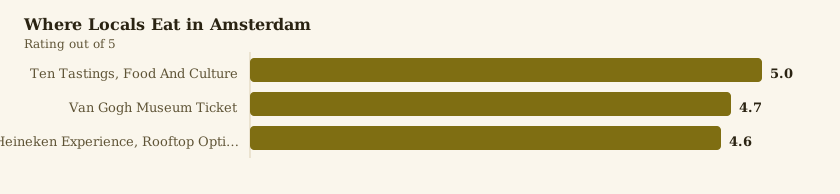
If you would rather have a local walk you through the first round, a guided option exists. The food and culture walking tour covers ten tastings across three and a half hours with a guide who lives the route, rated 5.0 across 1,157 reviews, from $92. Check availability if that suits your first evening; it is the fastest way to calibrate what the city actually eats.
What Are the Classic Dutch Dishes Locals Actually Order?
Order bitterballen in a brown cafe, haring with onions from a fish stall, stamppot when a menu has it, a broodje for lunch, and rijsttafel or Surinamese roti for dinner. Skip anything described as a photo opportunity. The dishes that survive on local menus are cheap, filling and unglamorous, and that is exactly why they have survived.
The Dutch table is not a restaurant culture at heart. It is a lunch counter and a snack bar culture, and the classic foods reflect that. Haring, raw herring served with chopped onions and pickles, is eaten standing at a fish stall, held by the tail. Stroopwafels are bought warm at a market. Bitterballen arrive unbidden with your second beer. The full Dutch dinner, stamppot, mashed potato with vegetables and a sausage, is home cooking that appears on brown cafe menus because it is what the neighbourhood wants on a wet Tuesday.
| Dish | What it is | Where locals eat it | Typical setting |
|---|---|---|---|
| Bitterballen | Fried, breaded ragout balls, served with mustard | Any brown cafe, with a beer | Standing or at the bar |
| Haring | Raw herring with onions and pickles | Fish stalls and the Albert Cuyp Market | Street, eaten by the tail |
| Stamppot | Mashed potato with greens and a rookworst sausage | Traditional restaurants in the Jordaan | Dinner, winter especially |
| Broodje haring | A herring and onion sandwich | Fish shops and lunch counters citywide | Lunch |
| Rijsttafel | An Indonesian rice table of many small dishes | Indonesian restaurants, especially in Oost and the centre | Dinner, booked ahead |
| Roti | Surinamese flatbread with chicken and a spiced sauce | Surinamese takeaways on the Javastraat and in De Pijp | Takeaway dinner |
| Poffertjes | Small, puffy pancakes with butter and sugar | Market stalls and winter food trucks | Snack |
The rijsttafel deserves its own sentence because it is the one local dinner ritual that visitors consistently underuse. It is a Dutch colonial-era invention, a table of a dozen small Indonesian dishes built around rice, and it is eaten in restaurants that locals book for birthdays and family gatherings. A good rijsttafel restaurant is the closest thing Amsterdam has to a Sunday roast culture. Surinamese food is the other inheritance on the local table: roti shops sell a chicken-and-flatbread dinner at takeaway prices, and the Javastraat in Oost is the densest strip of them.
For the drinking half of the evening, the Heineken Experience is the one brand-name stop that still functions as a genuinely local story, because Heineken is. The attraction sits in the original 19th-century brewery, runs about an hour and a half, and holds a 4.6 rating across 39,581 reviews, from $23. It is not dinner, but it is the standard pre-dinner stop for a lot of visiting groups and plenty of Dutch ones, and the rooftop option gives you a view with your glass.
The brewery visit slots neatly into a local eating day because of where it sits: the building is on the Stadhouderskade, a short walk from both De Pijp and the museum quarter, so a late-afternoon glass there feeds straight into a dinner reservation south of the canal ring. Book a start time online, since the listing runs timed entry, and keep the evening flexible afterwards.
What Is a Brown Cafe and Why Does Every Local Evening Start in One?
A brown cafe is a traditional Dutch bar with dark wood, low light, sand on the floor in the oldest ones and a maximum of about eight things on the menu, and it is the institution that anchors Amsterdam social life. Locals use them the way other cities use living rooms: for one beer after work that becomes three, with bittergarnituur, a platter of fried snacks, arriving somewhere in between.
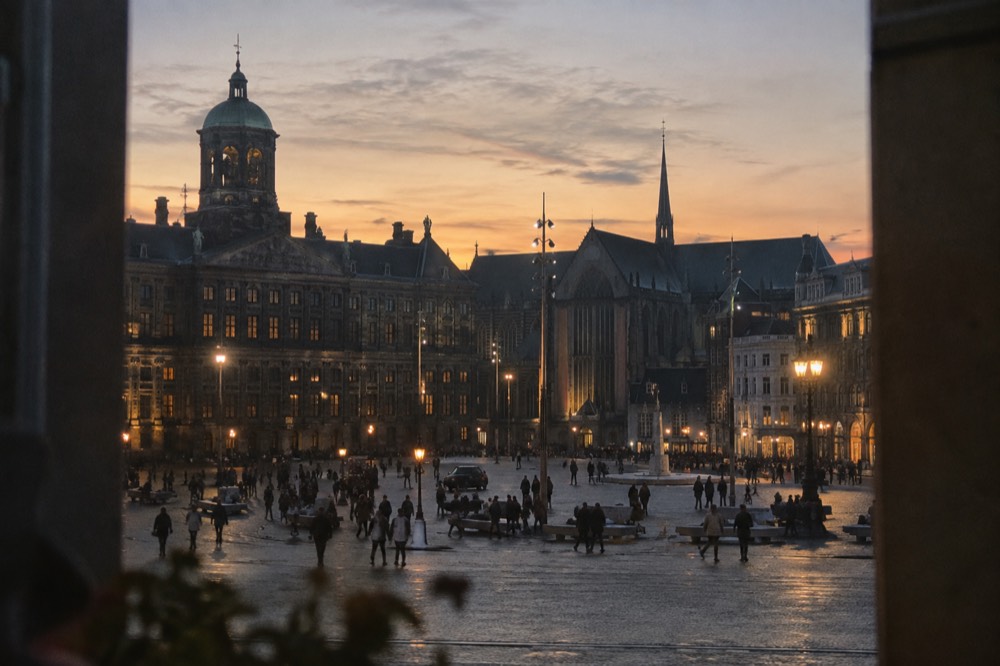
The name is literal. Decades of pipe smoke and candle soot stained the walls brown, and the cafes that survived kept the stain as a badge of honour. What marks a real one out is what is absent: no music beyond a radio, no cocktails, no food beyond cheese, soup and the fried-snack platter, and no pressure to leave. The Amsterdam brown cafes guide lists the best of them by neighbourhood, and the Jordaan guide covers the densest cluster in the city.
The order that matters is bittergarnituur, a shared platter of bitterballen, kaassouffles, cubes of Gouda and fricandellen, bought for the table and eaten with toothpicks. It is the local answer to tapas and it exists purely to keep the conversation going. A round of drinks plus a platter for two is a complete Amsterdam evening, and it costs a fraction of a restaurant dinner. Tipping is optional and light: service is included in menu prices in the Netherlands, and rounding up is normal practice rather than an obligation.
Two habits will mark you as a visitor faster than anything else: sitting at a table when the bar has space, and asking for the bill the moment your glass is empty. Brown cafes run on tabs you settle when you leave. Take the hint.
Where Do Locals Shop and Snack at the Markets?
The Albert Cuyp Market is the largest day-to-day street market in the Netherlands and the city's default lunch counter; the Dappermarkt in Oost is its unpolished, cheaper sibling; and the Foodhallen in Oud-West is the indoor, sit-down version for evenings. Stroopwafels at Albert Cuyp are made fresh on the iron, and haring stalls cluster at both outdoor markets.
The Albert Cuyp Market runs the length of the Albert Cuypstraat in De Pijp and is where the neighbourhood does its shopping and its lunch at the same time. The stroopwafel stalls bake the waffles on pressed irons in front of you, which is the only version worth buying: the supermarket ones are a different, sadder product. The fish stalls sell haring and kibbeling, fried battered fish, and the Surinamese and Indonesian stands sell the lunch the neighbourhood actually eats. The Amsterdam markets guide covers opening days and the smaller neighbourhood markets worth a detour.
The Dappermarkt, behind the Oosterpark in Oost, is where the guidebooks thin out. It serves the Dapperbuurt rather than the visitor economy, which means the prices are local prices and the food stands lean Surinamese, Turkish and Moroccan. If you want to see what Amsterdam looks like when it feeds itself without an audience, this is the market to walk.
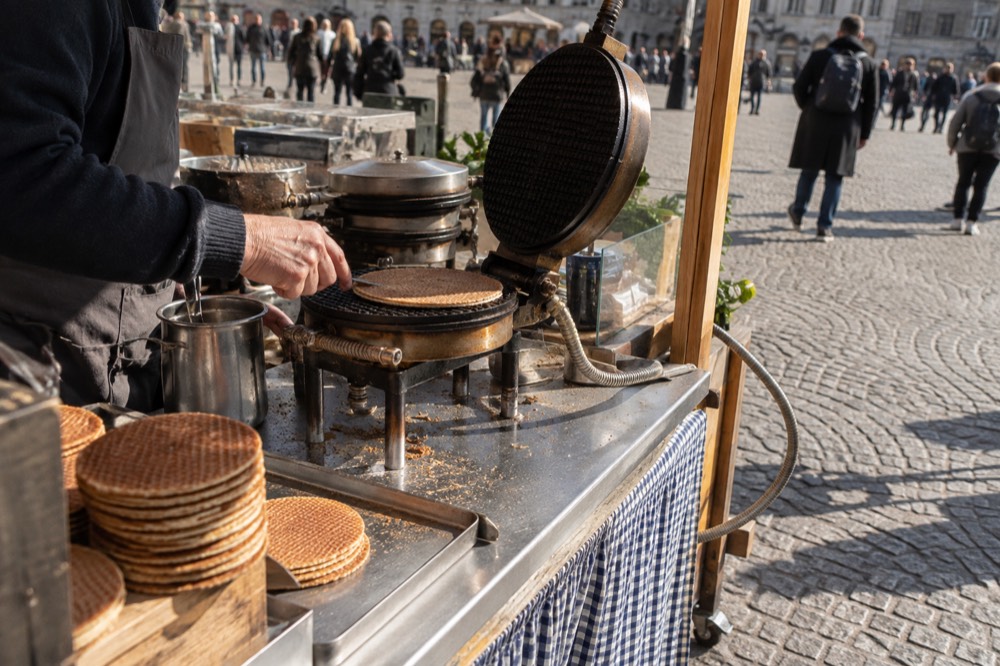
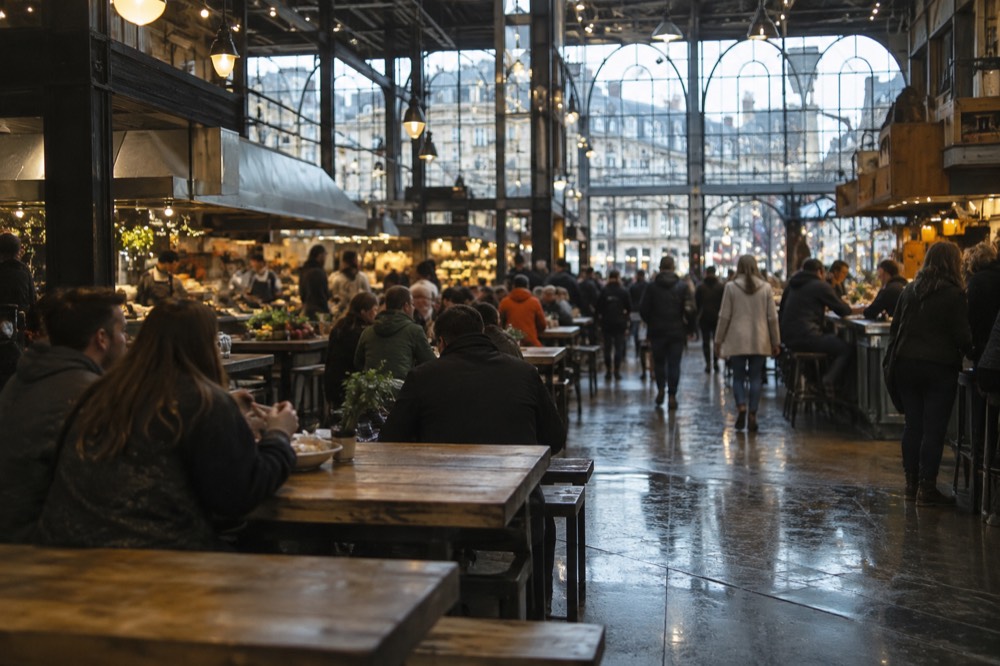
The Foodhallen, a converted tram depot in Oud-West, is the newest of the three and the most evening-friendly: an indoor hall of independent stands where you order at the counter and eat at shared tables. It is tourist-known but still local-used, which is the balance every food hall in Europe tries to strike and most miss. The Foodhallen guide covers which stands are worth the queue.
What About Coffeeshops and the Munchies?
Coffeeshops are legal, licensed and open to tourists in Amsterdam, because the national residents-only rule exists on paper but the city has never applied it. A coffeeshop may sell no more than 5 grams of cannabis per person per day, and smoking it outdoors is prohibited in the city centre, so it happens inside the coffeeshop, not on the street. Food is not sold there; coffeeshops sell cannabis and drinks, and the classic pairing is a snack run afterwards.
The legal position is genuinely nuanced and worth stating precisely. Under the national tolerance policy, coffeeshops may sell at most 5 grams of soft drugs per person per day, a limit published on the government's gedoogbeleid page. The same national policy contains a residents-only criterion, but Amsterdam has never enforced it: there is no tourist ban, and every coffeeshop in the city serves visitors on the same terms as locals. The city's own visitor rules page, How to Amsterdam, adds the practical restriction that matters most: smoking cannabis outdoors is prohibited in the centre, including the Wallen area, so consumption happens inside.
None of this is food, but the munchies question is a real one and the local answer is consistent: the snack run after the coffeeshop is a Dutch institution in itself. The classic circuit is fries with satay sauce or mayonnaise from a snack bar, a fresh stroopwafel, or a Surinamese roti. The coffeeshop rules guide covers the full etiquette, including what not to order and how the no-photos rule works.
What Does Eating Like a Local Actually Cost?
Budget roughly €10 to €15 for a market or takeaway lunch, €18 to €30 for a casual dinner main plus a drink, and €5 to €8 for a beer in a brown cafe, with service included in menu prices and tipping a rounding-up gesture. A 24-hour GVB transport ticket at €10.00 covers the riding between meals, and the city adds a 12.5 percent tourist tax to your hotel bill, not to your restaurant bill.
| Meal or drink | Planning range per person | Notes |
|---|---|---|
| Market or takeaway lunch | €10 to €15 | Haring, broodje or roti plus a drink; check the stall's board |
| Casual dinner, main and a drink | €18 to €30 | De Pijp, Oost and Oud-West pricing; the centre runs higher |
| Rijsttafel dinner | €30 to €50 | Per person, shared table of dishes; book ahead |
| Beer in a brown cafe | €5 to €8 | Depends on the cafe and the beer; check the board |
| Bittergarnituur platter | €12 to €20 | Shared between two with drinks |
| 24-hour GVB transport ticket | €10.00 | Unlimited tram, bus, metro and ferry; children €5.00 |
The tax that catches visitors out is not on the menu. Amsterdam charges a tourist tax of 12.5 percent of the overnight price on hotels and holiday rentals, so your accommodation bill carries it, not your dinner. Restaurant prices already include service and VAT, which is why the menu numbers look high and the final bill looks the same as the menu numbers. Nobody tips twenty percent here, and nobody expects it.
The savings move is structural rather than clever: eat your big meal at lunch, when market stalls and lunch counters sell the same food for less, and keep dinner to a brown cafe platter or a takeaway. The Amsterdam on a budget guide builds a full two-day plan on exactly that logic, and the what to eat in Amsterdam guide goes deeper on individual dishes than this page does.
Can You Eat Like a Local and Still See the Sights?
Yes, because the local food neighbourhoods sit beside the main attractions rather than across town: De Pijp is next to the museum quarter, the Jordaan borders the canal ring, and Oost is a short metro hop from the centre. The standard local day pairs a museum morning with a market lunch and a brown cafe evening, and the museum quarter's Rijksmuseum costs €25 with free entry for ages 18 and under.
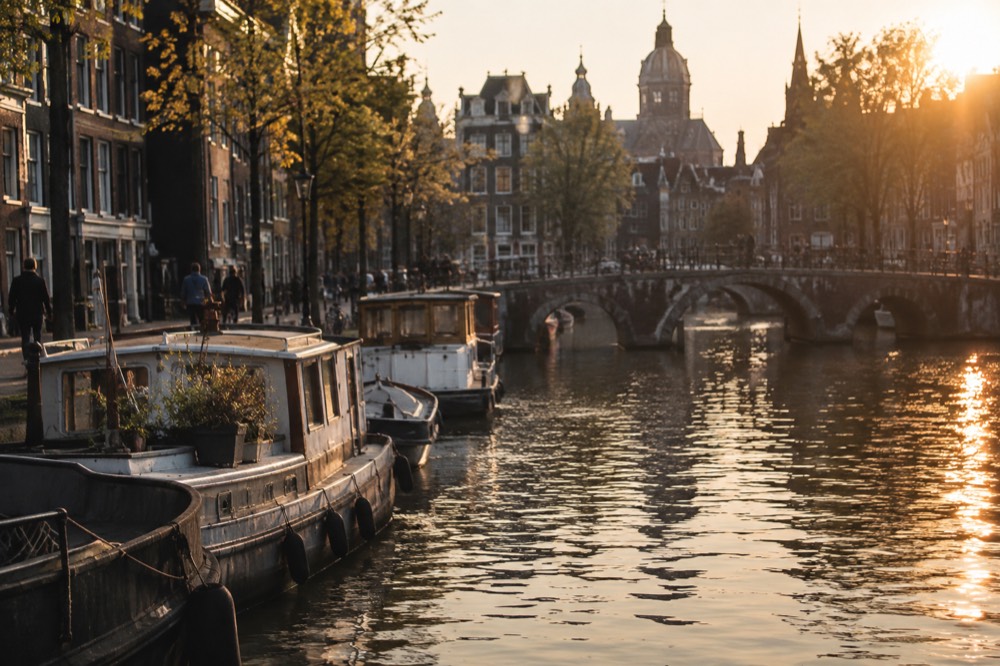
The geography does the work for you. Museumplein, where the Rijksmuseum, Van Gogh Museum and Stedelijk sit in a row, is a ten minute walk from the Albert Cuyp Market, so the classic local Saturday is a museum morning, a market lunch in De Pijp, and a slow afternoon. The Rijksmuseum charges adults €25, admits ages 18 and under free, and opens daily from 9am to 5pm with a pre-booked start time, per its own opening hours and prices page.
The Van Gogh Museum is the same deal at the same price, €25 for adults and free for under-18s, and it is the museum most worth pre-booking because timed tickets sell out; a skip-the-queue entry ticket is available from $31 and holds a 4.7 rating across 57,096 reviews. If your day pairs one museum with one market and one brown cafe, you have eaten and seen the city almost exactly the way a resident does on a free Saturday.
One caution worth repeating: the Anne Frank House is not part of any eating plan and not part of any pass either. Its tickets are sold only through the museum's own website for a specific time slot, with no door sales and no legitimate reseller, and the Anne Frank House guide explains the release schedule. Book it separately if it is on your list, and build your food day around the slot you actually get.
A Sample Day of Eating Like a Local
Start with a broodje or haring near a market mid-morning, lunch on stroopwafel and Surinamese food at the Albert Cuyp Market or the Dappermarkt, take a museum or canal hour in the afternoon, and spend the evening in a Jordaan brown cafe with a bittergarnituur platter, or at a rijsttafel restaurant in Oost. Total spend lands between €40 and €70 per person before drinks escalate.
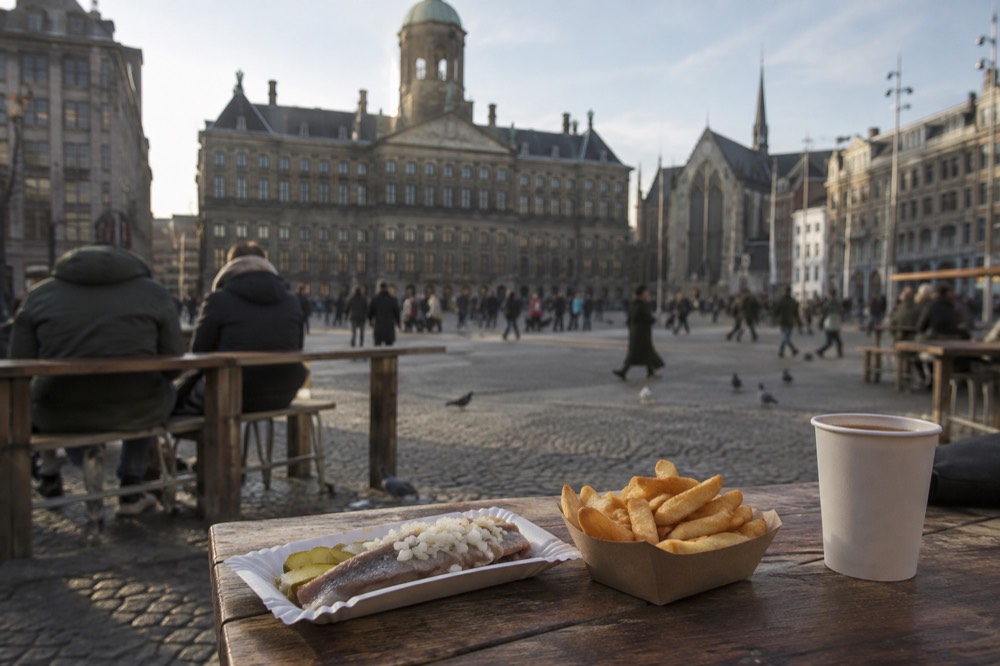
Here is the shape of it, in the order the city itself runs. Morning: coffee standing at a bar, which is how the Dutch drink it, plus a pastry. Midday: the market, whichever one your day is nearest. Afternoon: one museum, one canal walk, or one long sit in a park; the Vondelpark sits directly between Oud-West and Museumplein and is the city's default picnic ground. Evening: the brown cafe or the rijsttafel, chosen by how much standing versus sitting your legs still want.
The point of the day is not the individual items. It is that every one of them happens in a place that serves the neighbourhood first, and the prices, the pace and the company all follow from that. This is what Things to Do in Amsterdam means by eating like a local: not a secret restaurant, but the correct neighbourhood at the correct hour.
Common Questions About Where Locals Eat in Amsterdam
Where do locals eat in Amsterdam?
Mostly in De Pijp, the Jordaan, Oud-West and Amsterdam Oost. The restaurants within a few streets of Dam Square largely serve transient visitors, while the neighbourhoods a short tram ride out serve residents, which shows up in the prices, the menu length and the pace of service.
What is the most typical local food in Amsterdam?
Bitterballen in a brown cafe, haring from a fish stall, stamppot on traditional dinner menus, and rijsttafel or Surinamese roti for dinner. Stroopwafels belong to the markets, where they are pressed fresh on the iron.
Is it expensive to eat like a local in Amsterdam?
Less than eating in the centre. Plan on €10 to €15 for a market or takeaway lunch and €18 to €30 for a casual dinner with a drink. Service and VAT are included in menu prices, so the bill matches the menu, and tipping is a rounding-up gesture.
Do locals eat dinner early in Amsterdam?
Yes, by southern European standards. Many kitchens open at 17:30 or 18:00 and the good small places fill by 19:30. Arriving at 18:30 usually gets you a table without a reservation anywhere except the most booked rijsttafel restaurants.
Is Indonesian food really a local thing in Amsterdam?
Very much so. The rijsttafel, a table of small Indonesian dishes built around rice, is a Dutch institution, and Surinamese roti shops are the city's default takeaway. Amsterdam Oost along the Javastraat is the densest and cheapest strip for both.
Can you combine the main museums with local food areas?
Easily. Museumplein is a ten minute walk from the Albert Cuyp Market in De Pijp, so a museum morning with a market lunch is the standard local Saturday. The Rijksmuseum and Van Gogh Museum both charge €25 for adults, admit under-18s free, and require a pre-booked time slot.